


Likes
Comments
Share


@Moss420
Follow
Run-off got pretty high on the plants in the main tent when I tested it this week (2300ppm) so I flushed the plants down to around 900 over a few water events with half-strength nutes (~450). I think this, plus (mainly) the plants being too close to the LED caused them to throw some foxtails - particularly the middle plant (although I still think that spindly shit is also partly due to the bag seed pheno). Noob mistake on my end and I didn't realize until it was too late. Now the light is turned down and the run-off is back in a good range. It got high because my auto-watering halos were mostly running off the pots and not sinking in - this is because I filled the pots to the brim with coco (another noob mistake). Looks like I'm hand watering until harvest :)
Big Mumma in the blurple tent on the other hand is still killing it..
Apologies for having to upload videos of the microscope - too hard to hold it still and press the button for photos lol.

Processing
Likes
15
Share


@DeStarr_GhettoGrows100
Follow
Upgraded my grow light. Did a little LST. So far its looking good. The GG4 is really slow though. But again from my research strains like this start slow but they are robust in the stretching phase soooo I will let her do her thing. On to the next week.

Likes
35
Share

@RakonGrow
Follow
+
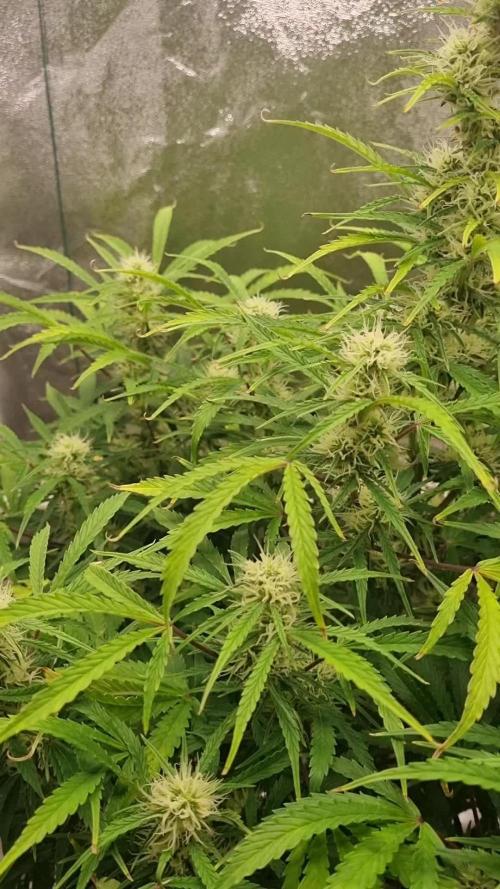
data+charts online rakongrow.lima.zone/growme-mango-kush-auto-015.html
Tag 71 :
so langsam gehts los bei den Buds :)


Likes
5
Share


@littlefoot
Follow
Started LST, topping soon and its already bushy so defoliation is in the future as well.
Likes
24
Share


@Kountryboi90
Follow
Day 75 since seed and and day 5 since flipping to flower. New light came in last Wednesday so I did another round of light defoliation and LST before flipping. The new Spider Farmer G4500 light is AWESOME! LOVE IT! This plants has basically filled half of my 2x4 tent, essentially, filling up a 2x2 tent! I must say I've impressed myself by being able to keep her healthy this long. I hope she rewards me very well I'm the end! Let me know what yall think or what I can improve on.

Likes
16
Share


@thefrozenking
Follow
What a great week!
They stretched out quite a bit!
That fat banana is kinda a baby! it will wilt its leaves if it is the slight bit dry. it will also wilt about 3 hours before bed time. i dont quite understand it.
The BubbleGums have given me no trouble. pretty hardy!


Likes
7
Share


@BushDoctor740
Follow
These two girls are moving along just fine in the 3 gal pots.Was going to transplant these two into bigger pots earlier on but decided not to.They are in a 60 inch high tent and I want to keep them short and stout.I did a lot more defoliation and fed some cal mag and recharge this week.I did top dress with Gaia green power bloom and they seem to be taking it nicely.
Likes
14
Share


@GardenOfHerbs
Follow
right before harvest pics day 132 total and 65 days off flowering. last 10 pics are taken with a nikon camera

Likes
10
Share


@steadfast_grower
Follow
#########################################
HARVEST (Day 93 / June 4)
#########################################
-----------------------------------------------------------
GROW SUMMARY
-----------------------------------------------------------
Grown in 4x4 tent - but I only used 2x2 space because of heater and dehumidification and other plants (Outlier Z). This plant used a dedicated CMH 315 light. The plant was grown in hydroponics using a custom single-site PA hydroponics clone RDWC system with Advanced Nutrients Sensi Coco line, Microbial Mass and Orca for beneficials. I also experimented with Rapid start in the RDWC system, but I didn't see explosive root growth relying on Rapid Start as an additive to the system verse using it when starting in rapid rooters which worked well.
All around a pretty easy grow and things went very well. Topped twice for a mainline structure and she really spread out. Sparkling golf ball size nugs down the branches and spaced out nicely. The scent off her was like burned rubber/tires or maybe fresh blacktop. A single water change which was only performed when switching to bloom nutrients around week 7.
-----------------------------------------------------------
HARVEST
-----------------------------------------------------------
No dark period and no flush. On day 93 she was chopped and hung to dry.
-----------------------------------------------------------
DRYING
-----------------------------------------------------------
Entire plant hung upside down for 15 days. The temps were dialed in at 60F by using the S6 intake fan pulling air from the AC through intake vent on side of the tent. Humidity was dialed in at 63%/60F for 24hr, 62%/60F for the next 48hr. Then 60%/60F for the third day and onward. AC Infinity T6/S6 exhaust and intake fans were on the setting of '2' during drying until day 7, then I could turn down to a setting of '1' once the plants were not transpiring excess moisture. Trimmed on day 18. Then the jars were left open in the tent for another 12 more days for a full 30 day dry at 60%/60F while rolling the jars frequently. Also ran dehumidifier in the tent but it only ran for 1-2 minutes every hour because the AC was doing most of the dehumidification on the intake.
-----------------------------------------------------------
TRIMMING
-----------------------------------------------------------
Trimming was an absolute breeze. All swelled nuggets, very little sugar leafs left to trim.
-----------------------------------------------------------
CURING
-----------------------------------------------------------
Flower product was transferred to 1L mason jars averaging 35g of product per jar. I added a mini hygrometer to each jar and chose not to use a boveda this time. The RH averaged 62-64% when trimmed flowers went in jars.
Jars were left open in the tent for a total dry time of 30 days from harvest keeping the tent at 60%/60F.
Once closed, the jars were burped once a day for the first seven days, once every other day for the next seven days, rolling jars often. The burp was only for 3-5 second for air exchange until a. 62% was maintained in the jar.
-----------------------------------------------------------
YIELD
-----------------------------------------------------------
* Weight calculated at 62% humidity after 30-day dry and 14-day cure.
==============================
FLOWER PRODUCT
==============================
180.41g (6.44oz)
==============================
TRIM PRODUCT
==============================
57g (2.03oz)
** All major fan leaves, stems, and branches removed from trim product.
==============================
TOTAL OVERALL YIELD
==============================
Total: 238.41g (8.51oz)
==============================
SPACE YIELD
==============================
238.41g / 4 sqft (2x2 canopy) = 59.60g per sqft
==============================
WATTAGE YIELD
==============================
315 Watts / 4 Square Foot (3x4 canopy) = 78.75 watts per sqft.
238.41g / 315 watts = 0.76 grams per watt
-----------------------------------------------------------
PRODUCT TEST
-----------------------------------------------------------
Bag appeal is top-notch. Trichome covered, with aromas of that unique 'kush' you can quickly identify based on experience.
Best OG Kush I've ever tried, hands down! The flavour is kushy, smoke is smooth and definitely my favorite strain in my tote of cured harvests at the moment. I can't keep my hands off of the jars. Definitely not a daytime strain, even for experienced users, although I'll use it in the afternoon when life is throwing curve balls. The effects rise you up, then sets you right down and will wash away all that anxiety after a long day. Put it this way....if I puff a few hours before bed, I still feel it the next morning when I peel my eyes open. No joke.
I'll definitely be growing this one again, maybe even next run because I'll be sad when I run out.
-----------------------------------------------------------
REGRETS
-----------------------------------------------------------
Not running more of this amazing plant.
-----------------------------------------------------------
NEXT RUN
-----------------------------------------------------------
This was the first run at my new residence so it will take some time to get it dialed in. I had some calibration issues which are now fixed. I'm going to be shooting for 1gram per watt on the next run.
-----------------------------------------------------------
FINAL THOUGHTS
-----------------------------------------------------------
DarkOwl is the best autoflower I've grown yet. I'm now eager to give the Bruce Banner #3 they released a run and will surely acquire future releases from DarkOwl.
-----------------------------------------------------------
THE END
-----------------------------------------------------------
Thanks for checking out my diary! I typically journal in my notebook but I put some time and effort into documenting my grows on this platform in hopes it will help a new or experienced grower with their DWC journey. Any questions or suggestions are welcomed.
Happy growing!

Processing
Likes
27
Share


@Dunk_Junk
Follow
She's looking lovely this week!!!!!!!
Flowering in full swing.
Grew another 9cm too!!!!!!!!!!!

Likes
9
Share


@Dmon013
Follow
The missing star Due to the weight and growth that is different from other numbers But she still has a highlight that is covered with snow Make us all want to have a relationship with this little girl once🍬🍒🍭❄️
This After harvest 14 Day
Living soil🥦🥦
Notill💚💚💚


Likes
11
Share


@Chubbs
Follow
420Fastbuds
FBT2309
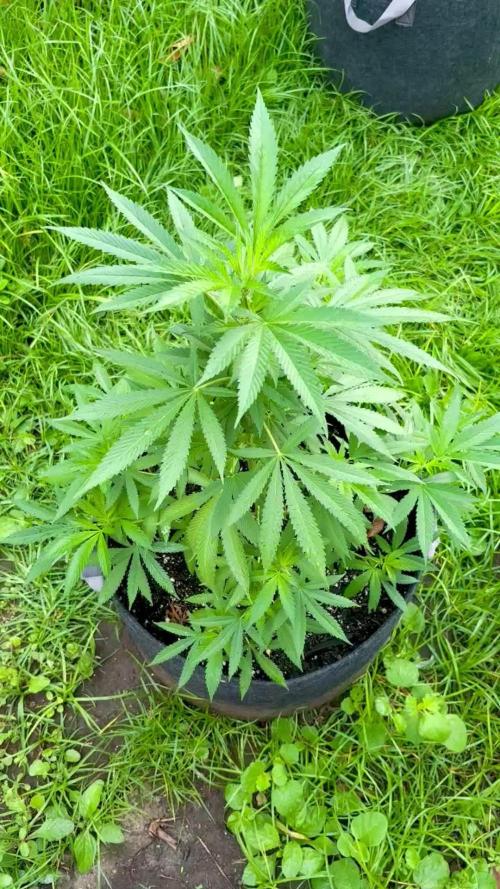
Germination Week
Time has come yet to start another amazing Tester strain from 420Fastbuds FBT2309. Started germination on 2/7 by soaking the seed in just water for 48hrs then planting it directly in the soil (Roots Organic 707) in a 3gal fabric pot. I spray the top soil with my gallon sprayer keeping it moist for the next week. After 48hrs in the soil we have sprouts that emerged that appear to be healthy and happy. All in all Happy Growing




Likes
9
Share


Likes
51
Share


@eldruida_lamota
Follow
Esa familia, traigo la última semana de floración de las cookies gelato, increíble lo prietas que están , son flores muy compactas y llenas de tricomas.
Un híbrido increíble, ya se ve productor y además se aprecia potencia en su flor.
Ya deseando pegar machetazo y en unas semanas podré apreciar los resultados.
.
La humedad esta al 45% la temperatura está entre 21/25 grados , y como siempre el ph , ya que es de lo más importante,está en 5,8/6,0.
.
AgroBeta:
Ya tenemos el lavado de raíces realizado, hemos retirado los nutrientes y finalizamos con un estrés hídrico.
.
Hasta aquí todo familia 🕸️ , un saludo y buenos humos fumetillas💨💨💨.


