


Likes
Comments
Share

@Fabroking
Follow
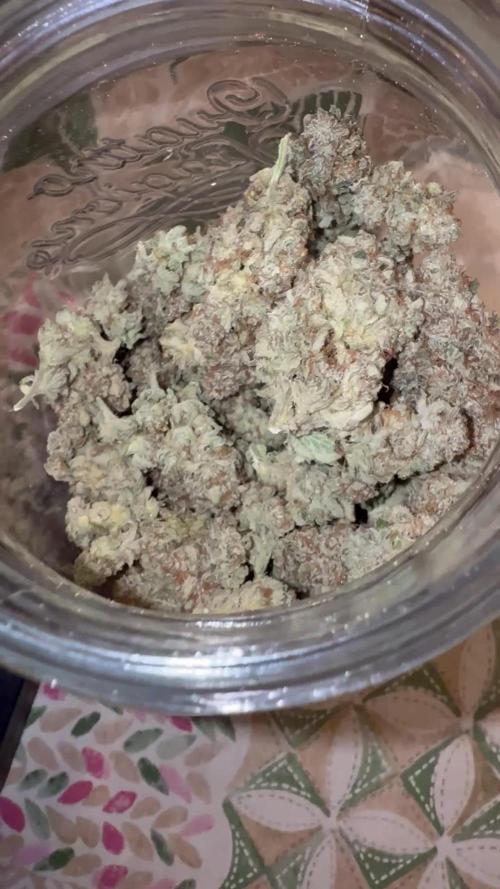
Sono soddisfatto di essere riuscito a far sprigionare tale potenziale in questa genetica tanto vecchia quanto valida e stabile, che dire una delle più belle varietà di tutti i tempi grazie al team di greenhouse per rendere disponibili tali ceppi con tale stabilità e affidabilità 10/10🔝

Likes
2
Share

@Growfather2
Follow
Hello everyone,
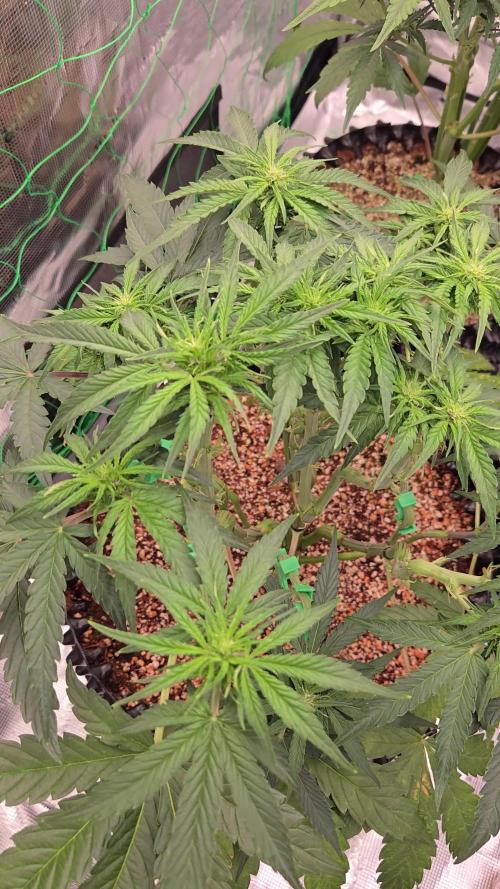
I don't know what is happening with one of my Afghan skunk plants she is flowering under 24 hours of light per day that should not have happened she sits in a 10 gallon pot and i wanted to keep her in vege for 2 more weeks.
The other two are transplanted this week and I hope they will stay in vege for 2 more weeks.
Thanks for stopping by and have a nice day.
Growfather

Likes
3
Share


@factoryofweed
Follow
¡ÚLTIMA SEMANA!
Esta semana fue la última para estas preciosas 🍇PURPLE PUNCH🍇
todas han estado aumentando el peso de las flores estas dos semanas atrás, engordando hasta tal punto de doblarse enteras, tuve que agarrar dos fenotipos bastante pesados al armario.
en total estuvieron 9 semanas en floración.
De los 6 fenotipos x3 han cogido tonalidades muy bonitas como podéis ver en las fotos.
⬆️90cm
☀️Interior
⏳64 días
🏺11L
😶 Indica: 90% / Sativa: 10%
🚀THC: 25%

Likes
13
Share


@Rob691
Follow
D-56 : The girls are great, beautyful and starting to stretch fast. No deficiency, no watering or feeding trouble, the temperature is a bit high but this variety are really comfortable with temperatures between 27 and 30°C, so I maintain it around 27-29°c during the day time.
The horizontal space is fully occupied already. But, I hope the Choco Haze won't be too bushy, even if I'll continue to reasonably defoliate to let light and fresh air go through the canopy.
As I start the second flowering week, the flowers should apear... can't wait to see the first ones !
One of the four ChocoHaze is growing a bit slower. What is weird, is that it's the one in the center of the grow room. Isn't it supposed to be the one that have the bigest amount of light ? I guess it comes from this specific phenotype.... we'll see, maybe she'll explose in the next days ! Who knows !

Likes
52
Share


@GuerrillaNo_4
Follow
She's really starting to bush out. Still looking very healthy.
GENETICS:
-MSNL - Gorilla Glue Auto ~ my favorite strain, as you can tell by my username!
WATER:
-Condensed (Starting at 40ppm)
-Disinfected prior to adding nutrients etc. (Using COOSPIDER UVC - 253nm & 187nm bulb)
CLIMATE:
- Ambient Air Temp = 27/28'C ~ 26/27'C LST ~ Leaf to air temp variance of between 1-2'C
- Night Temp = 21/22'C ~ Day/Night temp differential 6-7'C
- Under Canopy Temp: 26'C (Day) ~ 21'C (Night)
- Relative Humidity = 50-60%RH (Avg. 55%RH)
- VPD = 1.30kPa (Avg.)
- Co2 ranges from 900ppm to 1500ppm (Avg. 1200ppm)
AIR PRESSURE:
- Ambient Air Pressure (outside tent) = up to 1010 mbars (101 Kilopascals)
- Actual Air Pressure (inside tent) = up to 1005 mbars (100.5 Kilopascals)
- Air Pressure Differential = up to 0.5 kPa range between inside & outside
LIGHT:
- Warm White 3000K/White 5000k/Far Red (660nm)/Infrared (730nm)/UV(260-400nm)
- At plant canopy = PPFD 900-1000umols/s/m2 ~ Lux 45,000-55,000 ~ Daily Light Integral 55-65
- Under canopy lighting ~ Blue (460nm)/ Red (630nm)
NUTRIENTS:
- Mostly Advanced Nutrients (For base nutrients and most additives, as only company I could find scientific data on)
- Canna (For Calmag Agent and Cannazym)
- Plant Success (Great White Mycorrhizae)
ADDITIONAL GROW TECHNIQUES:
- Mostly getting out of the plants way and letting nature take its course.
- Some LST. (i.e. tying down branches and tucking large leaves away)
- No HST or Defoliation.
INFECTION PREVENTION & CONTROL:
Infection control practices i.e
-PPE, Alcohol Hand wash
-Gray room outside tent,
-Carbon filter
-HEPA filter
-Plasma Ionizer
-Inline UV-C germicidal bulb
- Also using an additional higher powered COOSPIDER (UVC) 253nm & 187nm bulb, to disinfect the gray room outside of the tent once a week for 30 mins.
- Ozone (o3) gas that is produced using the COOSPIDER, is then directed into the tent to further control any unwanted pathogens.
- Ed Rosenthal (Zero Tolerance organic pesticide), sprayed once a week as preventative measure. On hand for heavier use (Once every 3 days before lights out for 15 days) in the case of an outbreak
(No outbreaks yet, due to aforementioned preventative measures)

Likes
10
Share


@biggreens420
Follow
been a great week for cookies shes turning into a nice Bush did some more defoliation and lst removed some lower nodes tried opening her up as much as possible will be dropping silicon and adding buddy next week thanks for reading happy growing guys
Likes
15
Share


@Sinnerhesh
Follow
Ladys are getting a bit thicker. Everything seems to be going well outside of the timeline I'm on. Not gonna train as hard the next run, I think I'll let them go O' natural. 👍🤞🤙🤙

Likes
4
Share


@knnabisgrower
Follow
En la 4ta semana aumentamos la dosis del fertilizante para crecimiento, regulamos su p.h en 6.0 e hicimos una poda apical en el 4to nodo de cada una de las plantas.

Likes
25
Share


@Kakui
Follow
Veg30, las plantas crecen bien, necesitan una pequeña defoliación y ajuste de LST, quizás mañana.
Veg31, este será la última defoliación y entrenamiento durante un buen rato, se puede decir que ya tienen la forma deseada, ahora solo hay que dejarlas crecer.
Veg34, se regó con pH 6.0 y EC 2.0, el drenaje tuvo los mismos valores, entonces el próximo riego será con una EC mucho más baja. Las plantas siguen creciendo bien, se quitaron un par de hojas, ahora tendrán 1~2 semanas más para que estiren antes de pasarlas a 12/12.

Likes
4
Share


@jamaljackson
Follow
About 60 days in now and the plants are done getting taller. Buds are starting to get bigger and everything is starting to get nice and frosty, still have a long way to go on this one I think. I just got done with a res change and filled it back up with more Cropsalt at 3.4 g/Gal Bloom A and 1.74 g/Gal Bloom B. This stuff seems great so far, PH is super stable and the plants seem to like it.

Likes
111
Share


@Herbalize
Follow
Hello folks
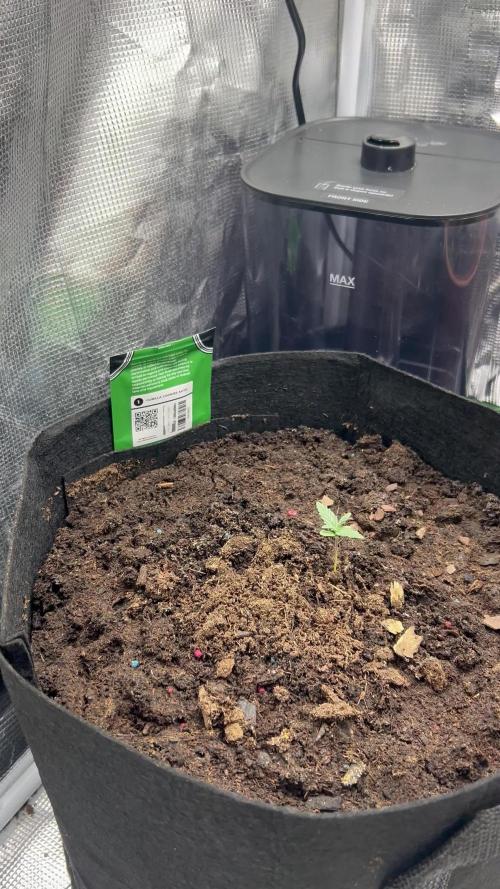
Welcome for the first week of flowering 😺 ( 38 days veg )
These Toxic are growing really fast with a lottt of secondary branch ! they responded very well to fimming.
Still no nutrients, just rhizotonic and cannazym with aprox 4.5 liters of water every 5/6 days
i like CANNA super soil a lot, no need to put fertilizers before bloom, ( good for 6 weeks atleast) and the roots like it 😍
Regarding defoliation, I take off some leaves every day, i dont like removing too many leaves at once
I will change the MH for the HPS next week and make a little prayer so that the days are not too hot this summer 😅
I also have 2 another diaries with Rqs/Ripper strains if you want to see
Peace Love & Weed GD Fam😍👊



Likes
8
Share

@AestheticGenetix
Follow
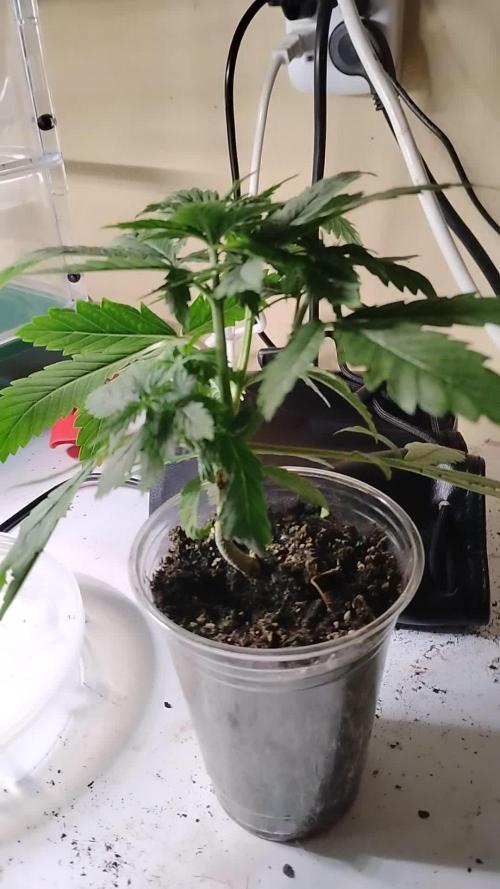
Growing funky as hell but she's healthy and surviving. I like the funky ones. Let's see what she can produce. I'm probably going to transplant and then flower here soon.
Haven't had to feed her or anything yet. Reusing your soil. Adding worms to your old soil and then reusing it, creates a very strong soil. Not hot but strong and healthy. The worms basically keep the soil fresh and healthy.
Check out my YouTube. It's growing quite quickly. Come join the community over there. Say hi if you're from growdiaries and let's keep growing. I may be opening up a tester program soon

Likes
21
Share


@Rollex420
Follow
This week flushing the wedding cake i thought that was the problem was an excess of nutrients, but instead the water was quite clean, around 1100ppm at the first drain, after several flushes water is now on 600ppm..
It seems that the others are starting to have the same deficiency that hit wedding # 2 .. now I'm treating them with 0.5ml of cal-mag adding it to the other nutrients for once a week (except wedding # 2)
I will wait for the soil to dry out, to give her only clean water since the final harvest is not long.
⚠️ UPDATE DAY 45 ⚠️
Yesterday flush for dos si dos and today flush for (wedding cake 1) they are having a nutrient lockout too..😪 The (wedding cake 1) is clearly healthier than her sister (wedding cake 2) by looking at her color, but unfortunately she had excessive PPM / EC too.. So i did the same procedure by using only tap water, but this time added only 0,5ml of cal-mag. Water was at 6.5 ph until I got a better runoff, it went from 5.7 to 6.0 PH and from 1800 to 700-600ppm 😬 I have never thought of overdoing nutrients so much.. I will certainly learn a lot from these mistakes 🙌🏻
Likes
10
Share


@Ultraviolet
Follow
Voltage, also known as electric pressure, electric tension, or (electric) potential difference, is the difference in electric potential between two points. In a static electric field, it corresponds to the work needed per unit of charge to move a test charge between the two points. In the International System of Units (SI), the derived unit for voltage is named volt.
The voltage between points can be caused by the build-up of electric charge (e.g., a capacitor), and from an electromotive force (e.g., electromagnetic induction in generators, inductors, and transformers). On a macroscopic scale, a potential difference can be caused by electrochemical processes (e.g., cells and batteries), the pressure-induced piezoelectric effect, and the thermoelectric effect. Since it is the difference in electric potential, it is a physical scalar quantity.
A voltmeter can be used to measure the voltage between two points in a system. Often a common reference potential such as the ground of the system is used as one of the points. A voltage can represent either a source of energy or the loss, dissipation, or storage of energy.
Dropping the temps will slightly raise the humidity, air holds less % water the colder it is. Lights on 25-35rh% the same water content will spike to 50rh% + at night just by dropping the temps.
At night all the juice photosynthesis has been storing up is mashed and mixed up to make all the goodies we need for bud, water is used to transport all these things everywhere, like little solvent transport devices, once a nutrient/protein has been delivered to destination the plant needs to get rid of all this excess water molecules it was using to transport. The only solution at night is to spit it back out into the air at night. During the peak of flower, this can catch a grower unaware, with a 4x4 full tent it can be a challenge to control all that moisture exhaust overnight especially if you're really pushing the limits.
We live in a water world, above or below, our misconception is we live on dry land, we don't live in less watery conditions than above or below. We fit into a very narrow band of moisture that just so happens to be full of lots of air and everything else required for life.
Got my first full whiff of the smell of purple lemonade, always surprises me how accurately the smell fits names, the dominant terpenes in the Purple Lemonade weed strain are carene, linalool, limonene, and myrcene. Carene gives this strain its sweet, citrus flavor and some woody notes, whereas the linalool I recognize so well from Granddaddy Purp. Myrcene has been shown to have sedative qualities while bringing musky, earthy elements to the flavor profile.
Trichome production started to ramp up, and the plant that grew taller/closer to UV showed noticeably thicker coatings. The taller plant shows slight yellowing of lower leaves, and the smaller plant is green and lush but the buds are slightly less progressed, interesting.
I super-cropped the main stem of the tall one just over a week ago (clean). I expected it to be the one slightly behind in development.
The plant has roughly 10-15% "Total resources" that it keeps in case emergencies arise. Reserves if you will.
My rationale behind breaking anything goes hand in hand with slowing things down as production is lost due to the time it takes to repair damage.
I recall watching a YouTube video, where a curly hair gentleman would super crop in a manner to damage but not disrupt using a twisting method, using fingers and thumbs placing them close together one goes clockwise other counter clock this varies a lot depending on the thickness of stem but what you wait for is a tiny snap, it may take several rolls to weaken if walls are tough I found. No snapping or bending of the stem, you want just to fracture it but not puncture this way the xylem and phloem channels remain flowing,the damage is repaired almost instantly and the 10-15% is dispatched with very little repair time. Everything in the general vicinity of the stress will now grow stronger so as to prevent further similar damage.
This is why I had expected the tall one to lag behind in development once I had cropped it but low and behold it worked and the tall one has slightly more developed buds.
The effects of birdsong on plant life may at first glance be far-fetched. Nigh on ten years ago an article appeared in Nexus Magazine on the discovery or invention of a method of growing plants using bird sounds. Christopher Bird and Peter Tompkins describe the development of Dan Carlson’s Sonic Bloom in their book The Secret Life of Plants. Many others have, it seems, recognized the role of birdsong in the growth of plants, and influenced or directly helped Carlson to develop his invention.
Dan Carlson’s desire to see that no one need be hungry through shortage of food sought to understand the optimum growth of plants. He discovered that plants also feed from ‘the top down’ as well as the roots. Underneath all leaves are pores called stomata which open to take in nutrients and moisture from the air. Carlson’s observation that the more bird life there is on the farm, the more abundant is plant life, has been echoed by farmers throughout history, except in modern times. Where there is little bird life, plants are stunted, and dwarfed. Nature has the birds sing at dawn and dusk, which dilates the stomata, and so feeds the plants. One can immediately see the importance of trees.
The development of Sonic Bloom was to create birdsong, which is played to the plants, while a foliar nutrient is sprayed onto the plants at the same time as they are being stimulated by the sound, to enhance their growth. This method produced fantastic results in the amount of abundantly nutritious produce from one plant, often in poor soils and in drought conditions. Carlson showed that the breathing leaves of plants are the source of the nutrient intake for growth. This of course is also true for humans—the breath is food. We shall discourse on this on another occasion. Plants transfer nutrients to the soil via this breathing, and Carlson showed that his plants improved the soil and helped earthworms proliferate.
The secret of Sonic Bloom was the development of the music of the same frequency as the dawn chorus of the birds. With the help of a Minneapolis music teacher, Michael Holtz, a cassette was prepared. It seems that both birds and plants found Indian melodies called ragas delightfully suitable. This is actually quite profound, although the American farmers, especially women, who had to endure this music whilst it was played to the plants, found it irritating. Holtz found the “Spring” movement of Vivaldi’s The Four Seasons appropriate and concludes: “I realized that Vivaldi, in his day, must have known all about birdsong, which he tried to imitate in his long violin passages.
Holtz, it is related by the authors Bird and Tompkins, also realized that the violin music dominant in “Spring” reflected Johann Sebastian Bach’s violin sonatas broadcast by the Ottawa University researchers to a wheat field, which had obtained remarkable crops with 66 percent greater yield than average, with larger and heavier seeds. Accordingly, Holtz selected Bach’s E-major concerto for violin for inclusion on the tape. “I chose that particular concerto,” explained Holtz, “because it has many repetitions but varying notes. Bach was such a musical genius he could change his harmonic rhythm at nearly every other beat, with his chords going from E to B to G-sharp and so on, whereas Vivaldi would frequently keep to one chord for as long as four measures. That is why Bach is considered the greatest composer that ever lived. I chose Bach’s string concerto, rather than his more popular organ music, because the timbre of the violin, and its harmonic structure, is far richer than that of the organ.
Birdsong has long been loved but also studied with reference to the musical scale and harmonics. As Holtz deepened his study he said, “I began to feel that God had created the birds for more than just freely flying about and warbling. Their very singing must somehow be intimately linked to the mysteries of seed germination and plant growth.
The spring season down on the farms is much more silent than ever before. DDT killed off many birds and others never seem to have taken their place. Who knows what magical effect a bird like the wood thrush might have on its environment, singing three separate notes all at the same time, warbling two of them and sustaining the others.
Tree and bird life are essential to Earth's existence, which Carlson, Holtz, and others have shown, but indeed others see and feel. “Plants”, says Steiner, “can only be understood when considered in connection with all that is circling, weaving, and living around them. In spring and autumn, when swallows produce vibrations as they flock in a body of air, causing currents with their wing beats, these and birdsong, have a powerful effect on the flowering and fruiting of plants. Remove the winged creatures, Steiner warns, and there would be stunting of vegetation. Nothing more needs to be added here.
It has been said that you cannot hurt the humblest creature or disturb the smallest pebble without your action having a reaction upon something else...You cannot think of an evil thought, no matter how private, without it having an effect upon somebody else. Whatsoever you do in life sets up some form of resonance.
When I say the morning chorus of the birds awakens the earth I mean that the characteristic song of the birds sets in motion a series of vibrations which react upon other forms of life. Remember, the soil of the earth is full of living microorganisms. The plants are also living organisms. You, yourselves, are living organisms. Now, this is the beauty and wonder of it all—when one aspect of nature has been moved into a state of resonance it immediately relays its vibrational motion to something else.
So when I say the dawn chorus awakens the earth I literally mean what I say. I do not suggest that the earth would come to a standstill without the bird song, but I do mean that life on earth would be sluggish and ineffectual without that first instigating outburst of vibrational power poured forth at just the right pitch and tone to set off a chain effect.
I know some of you will say, what happens in those parts of the world where there are no birds? Well, what does happen? Very little, I assure you. The hot deserts and the polar regions where there are few, if any, birds are not renowned for their wonders of nature. It is as though they are asleep. Nothing grows, few things live. Little resonates and there is a great stillness over everything.
You see, that outburst of sound just before dawn is like the little lever that works the bigger lever which turns the wheel which moves the machine…and so on. Never underestimate small things.
Animals are blessed with instantaneous and unthought-out wisdom. They are in direct contact with God and they act and live as though they are fully aware of it. Men are also in contact with God, but most of them act as though they have never heard of God because they are largely veiled from their divine center by their own thinking minds of which they are so proud.

Likes
59
Share


@JeyGanesha
Follow
Gente !! sono arrivate alla 4° Settimana di fioritura...pensavo diventassero hermafrodita, per il forte stress subito,ma invece ho visto che ha solo fatto un paio di nanners(bananine)...sto controllando giornalmente che non c'è n'è altri e specialmente che non rilasciano polline altrimenti mi impollina tutto.e per ora non ho bisogno di semi,🤣😂💪.cmq stanno bene
Likes
28
Share

@BudVision
Follow
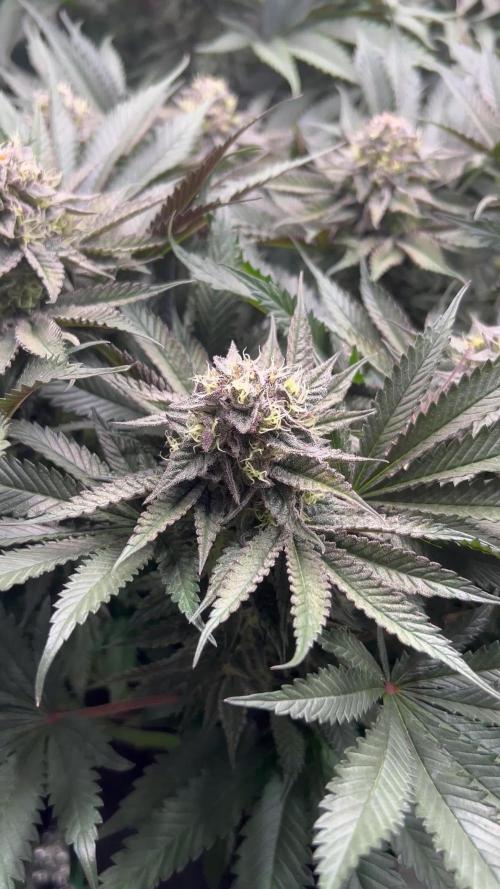
Hello growers!
It’s been a calm week. I’m just watering and watching the buds grow bigger each day. It’s pure joy to see everything developing just the way it should.
Peace and happy growing! ✌️


Likes
86
Share


@Roberts
Follow
Banana kush autoflower was a okay grow. She was very hungry and threw my ph off several times. So she had some leaf damage through flowering. She had more potential then I got out of her. Still a good grow and lots of sweet flower. Thank you Medic Grow, and Athena nutrition. 🤜🏻🤛🏻🌱🌱🌱
Thank you grow diaries community for the 👇likes👇, follows, comments, and subscriptions on my YouTube channel👇. ❄️🌱🍻
Happy Growing 🌱🌱🌱
https://youtube.com/channel/UCAhN7yRzWLpcaRHhMIQ7X4g

Likes
22
Share


@Gorey
Follow
they grow fast and are very strong, the branches are thick. a good smell is already emerging. I think the 5 will largely fill the tent. I added led bars on the uprights

Likes
190
Share


@Burmese
Follow
Hi everyone, here’s the update for this week along with some beautiful videos... 😉
Soil-Organic-LST
Day 78~84
The autumn colour effect is more visible.This week, I topped up my soil with Tea leaves fertilizer (25g) and bone meal (25g).I love growing organic.The buds are looked like what they will become when they are growing in nature.I’ve already used my potting mixed for my last grow.This one is even better than the last potting.But I still want to test and know each and every of the NPK and other micro nutrient ratio.So still need to learn alot.No overdose, only got what is in the pot.But need to top dressing.Love those buds’ colour very much... 😊
Soil
RO water
Amino power - 1ml/L
Baking soda - 0.25tsp/gallon
pH-6.0
ppm-60
Run off
pH-6.8
ppm-900
Soil Potting Mixed Recipe
-Coco peat: 30%
-Soil Compost: 20%
(Soil,Sand,Cow manure,Ash)
-Bone meal: 10%
-Earthworm fertilizer: 10%
-Perlite: 15%
-Marble stone: 5%
-Crash egg shell: 3%
-Chicken manure: 3%
-Banana peels: 2%
-Gypsum: 2%
Coco-Inorganic-ScrOG
Day 78~84
I increased my Bloom and Micro feed and cut of Grow.The leaves are becoming lighter in green colour than before.It was right about cutting nute for one week.I will also stop feeding with Cal-Mag plus for a while.Her buds are totally different from Soil girl.Not so many pistils but denser than soil girl.For this Coco girl, I still need to learn the right concentration nutrient amount for each growing stage.Here’s my watering and other details...
Coco
RO water
Bloom- 3.0ml/L
Micro- 3.0ml/L
Bud Candy- 0.5ml/L
B52-1.0ml/L
pH-6.5
ppm-1100
Run off
pH-6.3
ppm-1000
Coco potting mixed recipe
Coco peat : 70%
Perlite : 30%
Transplanted from 1gallon coco/soil mixed pot at Day-42.
Scrog size
Area : 1ft x 1ft (30cm x 30cm)
Hole size : 2” (5 cm)
Material : iron welded by four steel pillars.
Height from base: 6” (15cm)
Stay tune friends.Happy growing to you all... ✌️ 🇲🇲
