


Processing
Likes
Comments
Share


@Wollywinkah
Follow
*ADVISE NEEDED*
The day before yesterday I discovered a huge error in my system. I placed filter material in the feed-throughs of the breeding boxes. This is to prevent the roots from growing together over time.
However, what I caused with that is very difficult to explain. The bottom line is that the distribution of food and circulation was actually not good at all.
This also explained the differences in the water temperature, but also PH and EC values. That is now completely under control because it now runs stably for 2 days.
However, you can see that the records have had a bad start. I am thinking about starting over.
Week 3. Week 2 was looking for the correct settings for my system. I found out that the temperature in the bins is quite different. When I set the water chiller to 19 degrees, it all flows fine into the first container. There it rises about 0.5 degrees per bin. The margin of the chiller is about 1 degrees, causing too many fluctuations in the system, with tray 1 becoming too cold and the last one too cold.
I solved this by shielding the box at the inlet of the tent with heat-protective foil. I also put a fan on the water chiller. If that catches on, the entire loft heats up, whith more fluctiations.
However, I have enough space to measure very precisely and I am getting more and more control.
I think the brown leaves were the cause of much too hot water. Since I have the water temperature under control, I see that the new leaves are growing nicely. Moreover, since yesterday (13-5) I received the nutrition. 10 days late.
I just finish the root scheme I think. That is still 3 days a 70 mm per day combined with BioBizz Heaven.
I tried to take some pictures of the roots and some close ups.
I hold the lid with my left hand and with my right hand I try to take a picture zoomed in (max). While the wind makes the roots dance past my lens😵
Something different than usual ... Hope you like it.
If you see something that needs to be addressed, let us know. It is my first breeding so there will undoubtedly go wrong.
This week I also connected the water reservoir with which I can flush the entire system at once. With this I also control the Ph in the system. Will post photos soon.

Likes
3
Share


@Joaka
Follow
como preventivo aplique tierra de diatomea via foliar. solo realice un apical por variedad de semilla ya que las otras aun según mi criterio les faltaba. se espera realizar la otra semana apical en las otras dos para dejar 2 sin manejo para comparar.

Likes
30
Share


@coyote2thick
Follow
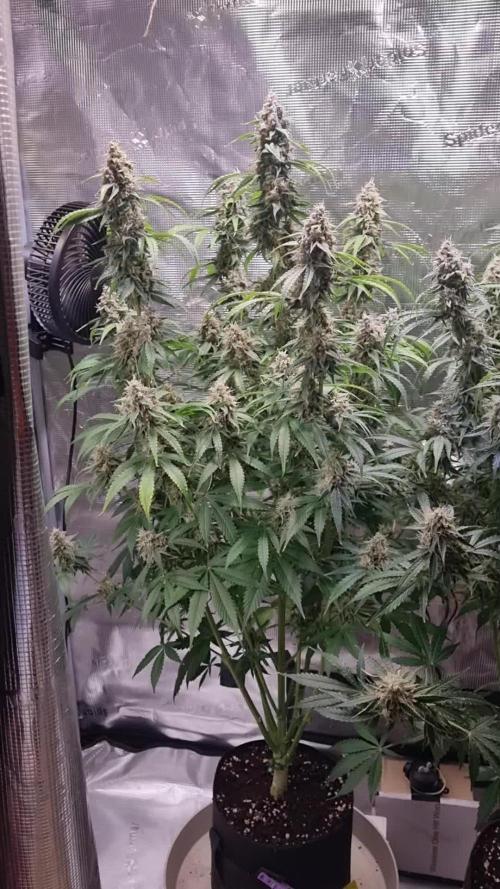
Drinking half a gallon everyday. Very strong smell. Did some minor LST thought out the week and maintained the pH @5.70. Should I start 12/12 lmk what you think?


Likes
8
Share

@RakonGrow
Follow
+
data online : rakongrow.lima.zone/growme-godfeather-og-f1-auto-017.html
+
Likes
53
Share


@DogDoctorOfficial
Follow
Harvest Report: The Swift Journey of Blackberry Auto
Greetings, fellow cultivators! The moment we've all been eagerly awaiting has arrived – the harvest of my Blackberry Auto. This beauty has moved through her life cycle with astonishing speed and grace. Let's take a moment to reflect on her incredible journey from seed to harvest and celebrate the fruits of our labor.
Seed to Sprout: It feels like just yesterday when I planted the tiny seed of Blackberry Auto. Nestled in a Root Riot cube, she sprouted with vigor, her first delicate leaves reaching for the light. The conditions were perfect, with temperatures at a steady 28°C and relative humidity at 95%, creating an ideal environment for her early growth.
Transplanting and Early Growth: As she transitioned to a small pot filled with rich soil and Mycor Mix, Blackberry Auto continued to thrive. The Mycor Mix, with its blend of various mycorrhizae species, worked wonders in enlarging her root system and facilitating nutrient uptake. Her early growth was nothing short of spectacular, setting the stage for the robust plant she would become.
Rapid Vegetative Phase: Blackberry Auto quickly outgrew her initial pot and was soon transplanted into her final home – a 16L AutoPot. This setup allowed her to drink as she pleased, supported by the precise hydration of the AutoPot Aquavalve. With a foundation of Aptus All-in-One Pellets and Mycor Mix Soil, she had everything she needed for explosive growth. Her leaves grew enormous and lush, and her branches spread wide with gentle low-stress training.
Swift Flowering and Stunning Development: Entering the flowering phase, Blackberry Auto didn't slow down. Her buds formed quickly, each one a masterpiece of nature. The colors were a sight to behold – deep purples, vibrant magentas, and hints of dark blue. The aromatic symphony filled the grow room, a testament to her potent genetics and the meticulous care provided.
Natural Brilliance and Final Weeks: Observing her rapid progress, I ceased all feedings to let Blackberry Auto showcase her natural brilliance. Her final weeks were marked by a dazzling display of colors and an incredible pace of bud development. Each day brought new marvels, as her buds swelled and her trichomes sparkled like a constellation.
A Heartfelt Reflection: From the moment she sprouted to her final days of flowering, Blackberry Auto has been a true wonder. Her speed and beauty have exceeded all expectations, and it's hard to believe how quickly she reached this point. This journey has been a testament to the magic of cultivation and the resilience of a well-bred strain.
Acknowledgments and Gratitude: As we celebrate this harvest, I extend my deepest gratitude to @fastbuds_official for creating such a remarkable strain. To Aptus Holland, my main sponsor, your support has been invaluable in nurturing this beauty. A special thank you to Grow Diaries for providing a platform to share this journey, and to the community for your shared passion and camaraderie. 🌱💚
As we move forward, I eagerly anticipate the trim and smoke reports, where we'll dive into the sensory delights of Blackberry Auto. For now, let's revel in the joy of a successful harvest and the extraordinary journey that brought us here.
Genetics Blackberry Auto @Fast_Buds
Food - @aptusholland @aptus_world
As always thank you all for stopping by, for the love and for it all , this journey of mine wold just not be the same without you guys, the love and support is very much appreciated and i fell honored and blessed with you all in my life

Processing
Likes
Comments
Share


@Cannibalgardens
Follow
All I can say is dam about this one , she smells awsome , structure is great and she handles stress and training no problem .. The team @originalsensibleseeds has it down right here with this strain .. I'm getting excited to see how shee will look in the next 3 weeks ..

Likes
4
Share

@Z420Organics
Follow
Fastbuds Auto Update – Unexpected Harvest 🚨🌱
A major issue came up this week — my dehumidifier broke down! 😱
Until it’s repaired or replaced, it will take several days, and in the meantime, the humidity has been spiking up to 80%. 💦🌫️
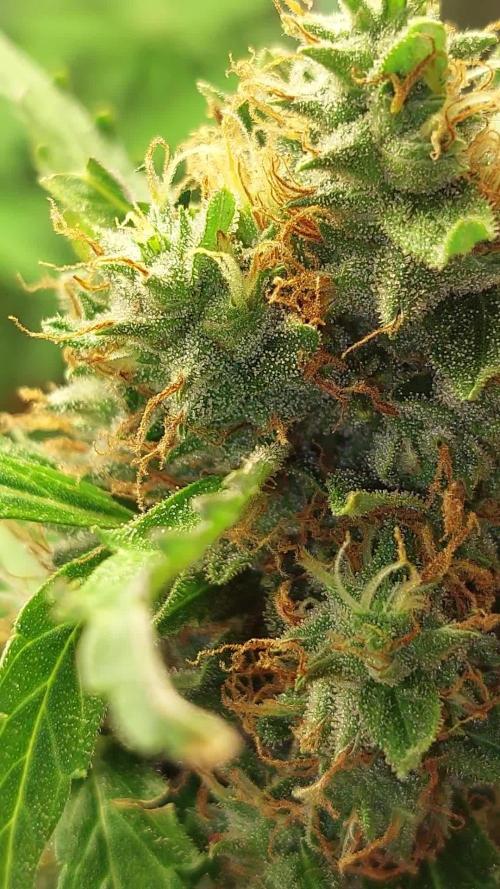
With Botrytis (bud rot) lurking in these conditions, I had to take action. Today, I harvested two plants, even though they weren’t fully ready yet. 🌸✂️ Better to be safe than lose everything to mold!
They went straight into the fridge for a slow dry 🌿 — not the original plan, but it’s the best way to protect the quality under these circumstances.
Fingers crossed 🤞 that the rest will make it through until I get the humidity under control! 🌱💚.
Processing
Likes
12
Share


@Greengirl420
Follow
🤦♀️🏼 😩 Day 40 from sprouting from soil. I think I messed up. I got bloom boost last week that I added in my water and fed them like two days in a row, about 3/4gal total. I started a new seed and added more lights & I also removed about 4 leaves from lower plant that seemed to be causing a lot of shade. Now my baby looks like this. Yesterday the leaves were curled up and some of the hairs are turning brown. I gave it a half gallon of plain water yesterday & today. I was hoping it would grow more buds. I also have had a Fungus knat problem pretty bad. I was trying to use that organic spray didn’t work, I heard Dawn dish soap- that didn’t work (not for long) so yesterday I added those white things on top. Basically it’s a mess. I started this not wanting to put a lot of money into it, but it’s fun & interesting! I just wanna get better now lol! I’ll definitely be changing it up next round

Likes
21
Share


@Esoteric_growing
Follow
One of my best yields to date, rock hard buddy full of flavour. Considering the rocky start I am very impressed with the original mimosa. Over a gram per w.


Likes
3
Share


@Earthsower
Follow
She looks well with her leaves fading the Double Kush Cake is still holding up in the latter stage. Her trichrome bracts are swelling up nicely and her stigmas are beginning to dull off. The lady received no nutrients for the last two weeks to prepare for her final flush. She stands at approximately 60cm from the soil!

Likes
1
Share

@Jungle_James_Grows
Follow
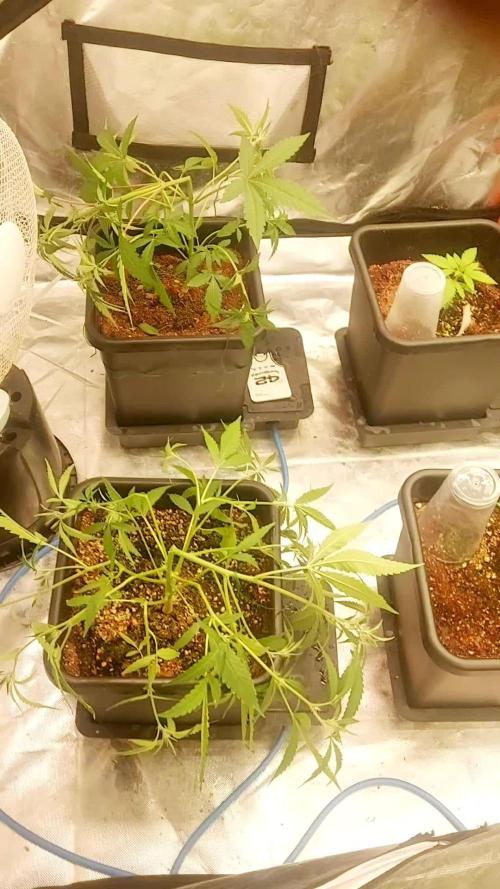
They're showing signs of early flower now, so going to get stuck in there in the next couple of days and do some lollipoping and bending.
Went in today and did a major LST/HST training and took all the small growth under and gave them a feed. So let's see how they bounce back. Which I'm almost sure they will.


Likes
3
Share


@IndoorDubzGro
Follow
Haven’t touched them much besides to look and check them out… fed them lotus nutrients for the last time today… (Week 7 of flowering).
Both plants are Royal Runtz from RQS and have been grown and fed the same exact thing throughout the whole process…. The buds look crystally and healthy.. plant 1 has been having some issue which I’ve noticed the extremely light leaves but other than that she’s fed and buds are healthy so I don’t know… just gonna let her ride out..

Likes
7
Share


@TerpTank
Follow
Welcome to my first growreport.
For this particular run i chose to grow three plants:
A monstercropped clone of a Tangerine Sherbet, a small near dead SFV OG x Purps seedling (both by Growers Choice NL) which survived unexpectedly and a Mimosa x Orange Punch seedling (Barneys Farm). The smallest monstercropped clone in the tent will be a mother for the future and won't be run this cycle.
Both Mimosa and Tangerine Sherbet were planted in Autopots with a 70/30 Coco-Perlite-Mix, fitted with the Airbase and the optional Airdome.
The SFV OG x Purps sits in a 1.5L Pot with the same media as mentioned before and will be handwatered for the whole run.
They currently sit under a 120w 3500K standard Quantum Board, which isn't too powerful but also not perfect for the Veg-Cycle. I suspect that the small leaves and the short internodal spacing on the Mimosa x Orange Punch is caused by the wavelength of this light.


Likes
8
Share


@rorrobz25
Follow
Mi experiencia fue excelente. Muchos puntos a mejorar. Y es el primer diario qué logro terminar desde que pertenezco a esta comunidad. Es complejo actualizar semanalmente. Tanto como sacar las fotos, videos, fertilizar, regar. Pero a pesar de que me faltaron semanas, pude anotar la cosecha para cerrar el ciclo. Agradecido de los comentarios. Me sirvieron mucho.

Likes
57
Share


@Salokin
Follow
Hello Growmies,
Welcome to week 17 of flowering for the Epic Buzz. She's in the twilight of her bloom, draped in deep purples that edge into a near black elegance, standing as a testament to her vigor. The shift to an RO water-only approach has accentuated her natural fading, underscoring the decision to let nature's course run unimpeded. Every branch now requires support; her bountiful colas are a burden of her own success, heavily frosted and radiating a potent aroma that fills the space, betraying her maturity.
Her scent is as intoxicating as it is undeniable, speaking to the culmination of weeks of careful tending and anticipation. A single flower has been reserved for revegging, holding the promise of continuity for this desirable pheno. Her sisters, thriving in a controlled setting, display the same vivacious start, suggesting a robust genetic line.
As this grow diary nears its last entry, it's more than a log of growth—it's a narrative of persistence, skill, and the profound bond between grower and plant. The Epic Buzz has been more than a grow; it's been a journey we’ve taken together.
Stay lifted,
salokin


Likes
16
Share


@Naujas
Follow
119 days!!!! As far as I know, the girl is experiencing a real summer!!!! +35 :) not a cloud, the only pity is that there is little sun on the balcony anyway:) but I'm glad that the weather has improved, and she no longer has to suffer in the rain, and I'm on vacation:) good luck to everyone.:)