


Likes
Comments
Share



Likes
20
Share


@DrGanj
Follow
Mild defoliation throughout this week. Flush imminent so will leave the remaining fans as nute banks.
Next run with these genetics I'll be running a monstercropped clone under this scrog and will go heavier with the defoliation earlier on. I was advised this on here this grow and did a bit but have learned I need more!
Forever learning. Looks like it's gonna be an epic harvest. These girls smell absolutely dank.
Testament to the quality of these Madame Grow Fertilisers. Harvest just get better every time!
Also big shout out to my bro at NatureDelight.co.uk providing some awesome organics to add into the grow schedule. Used The Active Sugar Boost all through flower at 3ml per litre this run and I think the results speak for themselves. I cannot implore you guys enough to go check this stuff out. It's unique and you wont find better customer service.
Lots of vids and content this week as we all love bud shots <3

Likes
Comments
Share

@AlpenZilla
Follow
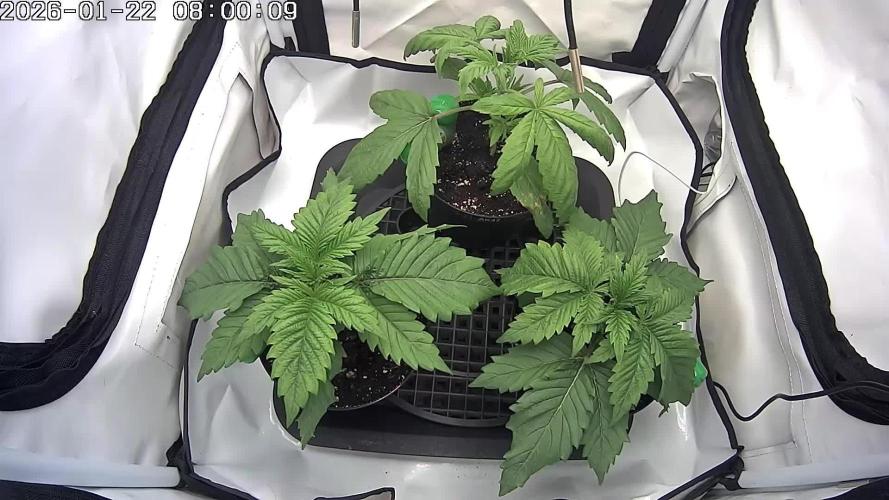
🌸 Flowering – Week 2 | Day 10 (Day 47 overall)
Strawberry AK – Current Status
The plant is currently at flowering week 2, day 10, which marks 47 days since germination.
Height is approximately 33 cm. A significant stretch has not started yet, but it is expected to begin soon.
🌿 Early Issue – Resolved
The initial concern observed earlier was not a genetic failure but rather a CalMag deficiency combined with slightly underpowered feeding.
After applying CalMag as a foliar spray and slightly increasing the nutrient strength, the leaf condition stabilized within a few days. Since then, the plant has shown healthy progression.
💧 Feeding & EC
This run clearly shows that the Strawberry AK has a relatively high nutrient demand compared to previous grows.
Current EC: ~1.5
A few leaf tips are slightly lightened.
This is not classic nutrient burn, but rather an indication that the plant is being pushed close to its optimal limit.
At this stage, increasing EC further would not be advisable.
🌸 Structure & Development
The canopy is dense, overall color is healthy and rich, and flower sites are forming cleanly.
The upcoming stretch phase will be an important indicator of how the plant continues to respond to the current feeding level.

Likes
11
Share


@TOTEM
Follow
Hello buds! I’ve actually splitted the Dance World diary in two since I took the other one out of the grow box and started some hard training with her (see the diary).
This one has FINALLY started flowering, after two weeks passed creating something that looked like flowers, which was definitely not flowers. Like the shape of flowers with no pistils. Pistils now came out from that “shape”, and there we go! After last week flush I’ve started (again) with bloom nutes (week 1). I hope to be able to complete previous weeks with some photos I took, but for the moment, if you want to follow the veg growth of this one, please look at the other Dance World diary. Enjoy and happy growing 😃

Likes
16
Share


@Boomdrawfyah
Follow
Dia 108 en el proyecto A la semana 15 ha sido pasada por agua y tormentas, han aguantado como unas campeonas, aunque he visto dos orugas y eso me preocupa, cuando paró de llover la rocie con xentari un producto agricola que lleva bacilus, esperemos que no vaya a más, y se terminen estos dias de lluvia para poder terminar bien el cultivo
Likes
14
Share


@GODSGIFT_2005_JM
Follow
For LIQUIDS & Nutes ******GREEN BUZZ NUTRIENTS***** organic.
Also i’m using their LIVING SOIL CULTURE in powder form!
MARSHYDRO ⛺️ has large openings on the sides which is useful for mid section groom room work. 🤩
☀️ MARSHYDRO FC 3000 LED 300W
💨MARSHYDRO 6” in-line EXTRACTOR with speed-variation knob, comes complete with ducting and carbon filter.

Likes
10
Share

@Yamamoto420
Follow
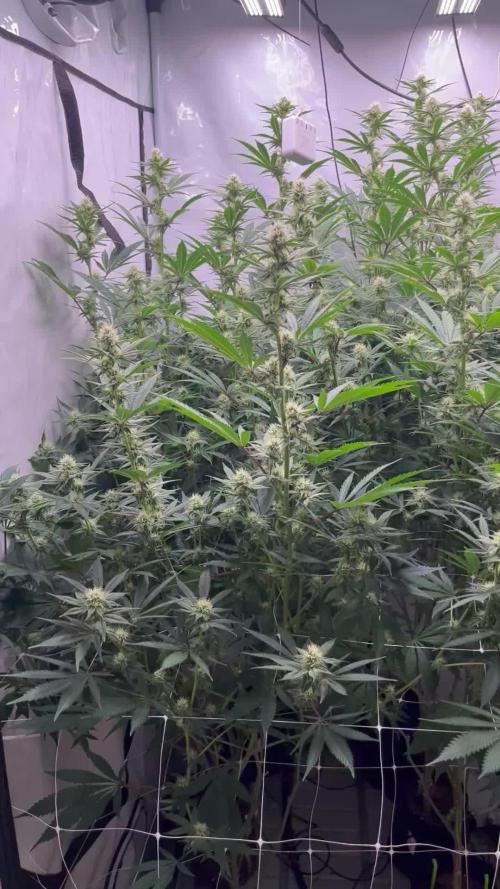
Week 4 day 22 the ladies stop stretching I had to do important deflation for the under canopy and stems where the light is not reaching, I don’t want popcorn buds. So far so good.



Likes
29
Share


@Hashdestroia
Follow
Overall i'm really happy with this strain. First i thought i wouldn't get a high yield but i'm pretty happy with it i got 250grams of top trimmed buds 2g of hashoil 2g of bubblehash and another 80grams of dry plant material for making bubblehash. Super potent strain with an amazing flavour, definitely nit the last time growing this strain.

Likes
166
Share


@Wicket
Follow
I did get some nasty burns, but as you can see on the last picture they look way better now.
They seem to grow fine. Today on the 22th i watered them for the first time after watering them 11 days ago while putting them in the 2l pots. (500-600ml each plant)
The cripple still is slower but it seems like it also recovered.
On the 22th the Special Queen #1 seed did germinate and on the 23th the root did come out so i did put it in the 2l Pot, but this time without Bio Tabs, i only did use mycotrex (2g), the rest will come with the 11l pot then. I think i over watered it a little bit since the new leaves are hanging a little bit (the first leaves did hang from the beginning so i doubt that is water related with those)
I also noticed today for the first time, when i open my tent it does already smell pretty tasty. Didn't thought it would happen that fast.
Also i already learned a lot. Even tho i tried my best to inform myself from the beginning, i made many mistakes which i will never do again. You can prepare yourself as you want, you will still have some failures and that is fine. So im not ashamed of my little plants by now. I will make them survive and a great final result. Looking forward to the next weeks.
/edit
Last day of the week. There were Roots at the bottom of two pots, so i decided to plant them into the final 11l Pots, i also added biotabs (little bit less since both had some of it from the beginning.
Everything went fine. The next days i will give them slowly more ppfd and next week i think i will top them and also tie them a little bit down.
Likes
30
Share


@BC_Green
Follow
It has been another amazing week of the plants growing. I have been watching as the Fruity Freak leaves become progressively more fern-like, and ornamental as a result!
Based on my Banizzle grows, I knew I needed to understand plant nutrients in a more meaningful way if I wanted these plants to thrive. So, I decided to get a soil test (see Ref. 1 below on how to perform a test) to understand what nutrients my plants needed. The report I received advised that I needed to add 200 lbs/acre of nitrogen, 150 lbs/acre of phosphorus, and 190 lbs/acre of potassium (see picture labeled Pic.1 (FYI you can't see these images unless you login to growdiaries)).
I then researched what to do with my results (Ref. 2 helped), and I figured out that my nutrient needs of 200-150-190 fall close to a 2-1-2 ratio. I then looked at different types of organic fertilizers (see Ref. 3 and Ref. 4) and considered that I already had a 3-10-5 fertilizer (Vermibloom) on hand. I discovered Dr Earth’s Alfalfa Meal is 2-1-2 and includes beneficial bacteria and mycorrhizae (to promote healthy plant growth and disease resistance). However, I knew I would be low on nitrogen if I only used those two fertilizers. Therefore, I decided to buy some blood meal (12-0-0). I also liked that blood meal is more fast acting while the other two are more moderate.
I hunted around for a solid fertilizer calculator and found an amazing tool from the University of Georgia Extension (Ref. 5). I entered all three fertilizers into the calculator, and it kicked out the exact amount of each fertilizer I needed to apply to 1 square foot (see Pic. 2). As I am using 10-gallon fabric pots (that can hold 1.5 cubic feet, but I put stone on the bottom and there’s space left at the top) I decided to use the one square foot application rate as I can always add more later, but I can’t take it away.
Not only did I want to understand the nutrients I needed, but I also wanted to understand the structure of the soil (as it was not included in my test results). North Dakota State University has a nice page that discusses this (Ref. 6), and I performed a soil ribbon test (see Video 1) based on this information. I determined my soil to be medium textured (which is great), but I have seen occasional water pooling on the surface, suggesting that it may be more of a medium-fine. This means adding peat moss, coco coir, or other amendments might improve drainage (and plant hydration) and allow for roots to grow more easily. In the long run, I plan to use compost to enhance the soil structure and nutrients.
I filled the bottom of my 10-gallon fabric pots with a ½” of pea stone to allow for drainage (Pic. 3). I then partially filled two 5-gallon buckets with topsoil from near where I will plant (but not in an area the roots will reach). I used a digital scale to measure the amount of fertilizers recommended by the calculator (Pic. 4, 5, and 6) and added it to one of the 5-gallon buckets (see Pic. 7). I mixed the fertilizers into the soil as evenly as possible (Pic. 8 and 9). I then poured a two-inch layer of non-fertilized soil, then peat moss, and then fertilized soil (in a roughly 2:1:1 ratio) and blended them together. I repeated this until the pot was full (getting additional soil as needed), and then I repeated the process for the other three pots.
I set the filled fabric pots in my garage (Pic. 10) for two days to allow any upset bugs to flee into my garage instead of my house. I then moved the pots (wrapping them in a contractor garbage bag to prevent making a mess) into the room with the grow light. I placed a board on top of the fabric pots to insulate the plants (in their smaller pots) from the cold soil (Pic. 11). Once the soil in the fabric pots reaches room temperature, I will transplant.
(Ref. 1) This video shows the method I used to take a soil sample. I didn’t have a field to test, so I took four samples from the area where I will eventually plant outdoors and blended them together. I then mailed my soil sample off to the lab, and about a week later, I received an email with a PDF of my results (included with my pictures this week).
https://www.youtube.com/watch?v=N9AwxmFxBwg&t=8s
(Ref. 2) This video from the University of Minnesota Extension (many universities have agriculture extensions that can assist you with soil testing and growing information for your area) discusses what to do with your soil testing results:
https://youtu.be/HYrkcfE62Pg
(Ref. 3) This is a nice article that discusses organic fertilizer solutions:
https://www.grow-it-organically.com/npk-fertilizer.html
(Ref. 4) This article lists the NPK values of many organic fertilizer solutions:
https://www.epicgardening.com/organic-fertilizers/
(Ref. 5) Many websites tout a fertilizer calculator…but this one is hands down the best I have found. If you scroll down to the bottom, you can enter any fertilizer type you want (and the cost, if you want). It will give you the exact blend of multiple fertilizers to solve your nutrient deficiencies (I included a snapshot of the solution I used in my pictures).
https://aesl.ces.uga.edu/soil/fertcalc/
(Ref. 6) This is an excellent article that discusses how to evaluate your soil:
https://www.ndsu.edu/agriculture/extension/publications/evaluating-preparing-and-amending-lawn-and-garden-soil


Likes
6
Share

@NoProbation4Weed
Follow
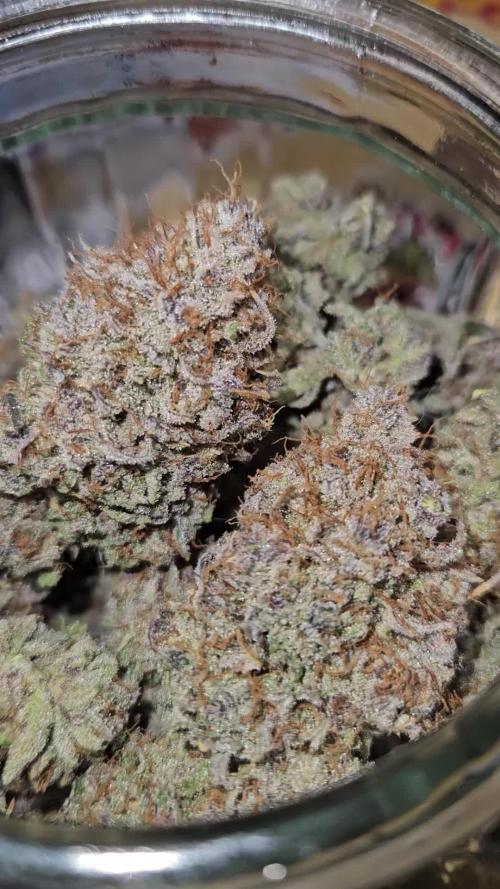
last 3 days no watering and last 48 no light.
drying conditions are RH 50% and temp 14°C.


Likes
18
Share


@VI_Cannabis
Follow
First day went as expected. I put the paper towel in a small see-thru plastic container and put it on the table. With a bit of water and the seeds in side, the germination has now started!
Day 2 no progression, moved the tray into my furnace room (pitch black and warm)
Day 3 major progression. I got them out and started to prep the jiffy pellets. Shortly after I transferred the roughly half inch tarp roots with seeds into the jiffy pellets, root down, seed up, slightly covered with dirt. I soaked them in water (like a beginner i overwatered heavily knowing what I know now). I placed them back in the tray and put them at a window for light.
(Note) the plan was to do outdoor so no light or tent was ordered at this point.
Day 4-7 not much progression seeing as the clouds and rain showed up...
Likes
10
Share


Likes
Comments
Share

@RooftopFarmer
Follow
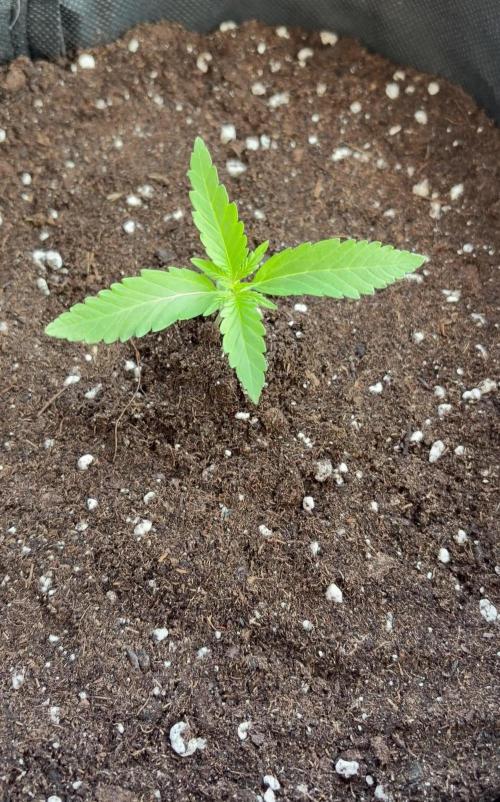
Guava Sundae – Week 3 (Fast Buds Outdoor 2026) ☀️
The weather this week has been absolutely perfect, so she’s been spending almost all her time outdoors. She really seems to thrive in the fresh air and sunlight.
It got a bit windy though, so I added some extra soil around the base to stabilize her. She’s now sitting at about 5 cm tall with a beautiful, deep green color. No complaints at all, looks super healthy and strong.


Likes
8
Share


@Monkeyboy
Follow
OK so we are at day 57 and wer flowering. Looking nice and tall and green. Can't wait for the buds to come.
Not bad just tap water and watered down coffee grounds once a week.
https://home.howstuffworks.com/green-living/use-diluted-coffee-to-fertilize-plants.htm#:~:text=A%20weak%20solution%20of%20coffee,on%20the%20left%2C%20is%20perfect.&text=Don't%20just%20pour%20it,green%20growth%20and%20strong%20stems.


