


Likes
Comments
Share

@eldruida_lamota
Follow
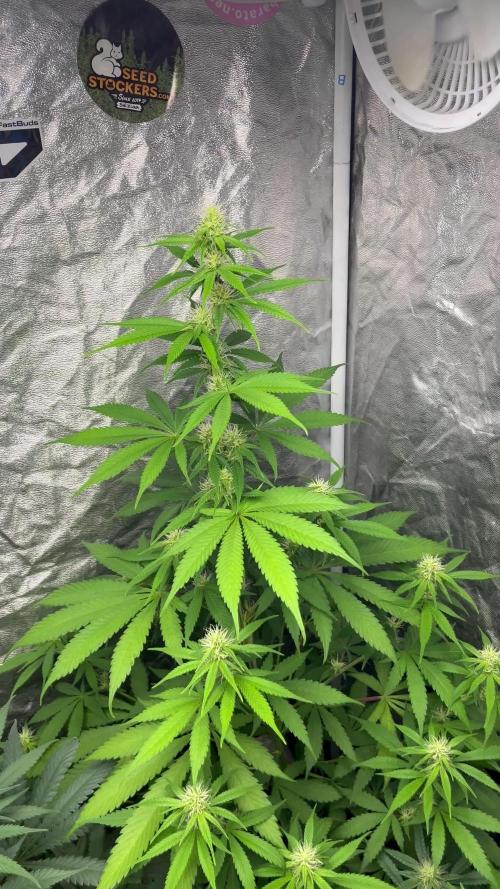
Actualizamos familia, con la tercera semana de floración de estas Gelato 41 de SeedStockers.
Gracias al LST arrancaron a crecer bien los satélites y va pareciéndose a un arbusto, tienen un color bien verde sin carencias por el momento y se ve que están sanas, las plantas están en macetas de 7 Litros definitivamente, con tierra top crop, con una altura similar a 60/65cms.
Como los anteriores cultivos tuve visitantes(trips) estoy rociando aceite de neem y jabón potásico 1 vez a la semana, añadí también tiras de color azul / amarillo para prevenir y controlar mejor el tema plagas.
El riego que aplicamos son 800ml de agua cada 48 horas y el ph se controla en 6.5, la temperatura la tenemos entre 22/25 grados y la humedad ronda el 55% gracias al humidificador.
El mismo día que escribo esto el foco está al 100% de potencia. Me gusta subirlo muy progresivamente, las manías.
- os dejo por aquí un CÓDIGO: Eldruida
Descuento para la tienda de MARS HYDRO.
https://www.mars-hydro.com
- los nutrientes directamente desde https://agrobeta.com/agrobetatiendaonline/36-abonos-canamo
Hasta aquí todo, Buenos humos 💨💨💨


Likes
72
Share


@MiyaguiOkPolilla
Follow
Hola amigo!
🤜💐🤛 Octava semana para las Green Crack F1 Automatic. Simplificando muchísimo el trabajo con la increíble controladora TrolMaster TentX 🤜💐🤛
🌄El clima se establece como una simulación de día real, con salida y puesta de sol más el pico de mediodía donde todas las lámparas se encienden llegando a temperaturas de 28-30 C⁰ y una baja humedad, no lo veo negativo para las plantas, el clima se siente bastante natural aquí adentro.
Hice un nuevo artefacto para distribuir la humedad de manera homogénea en toda la carpa.🌅
_ FLORES GRUESAS Y PEGAJOSAS _
Plantas verdaderamente rápidas y con un aroma dulce afrutado y diésel .
La línea de @xpertnutrients en el orden adecuado sigue siendo épica! Trabaja a la perfección. Ahora ellas beben cantidades increíbles, 1 litro al día para las dos plantas, intercalando dos riegos con nutrientes y uno de enzimas para no generar sobrecargas.
Ph: 6.4 - 6.6
EC: 1000 PPM 100+/100-
HR: 55% 10+10-.
C⁰: 20 - 29
. !! 20 hs 2 x TS600 + 19 hs TS 1000 led max dim !! . En medio del ciclo 4 horas de CMH 315watts
Los soportes laterales se encienden antes y se apagan más tarde que la iluminación central en el ciclo lumínico diario 🤜🤛 🌅🌄🌌

Likes
60
Share


@m0use
Follow
This week has been descent, plants recovered just fine from the LST issues from before. Its like they never were really phased by it. and that's impressive for the strain it really can take abuse and grows well. I was away for a extended weekend and tossed in 1Gal of ph'd water to the plants and hopped for the best, So far so good. Will need to water them again tomorrow. Had a bit of burning on some leaves from the soil/transplant so its good to know the stuff is feeding em well. I really think the fulvic acids are helping them take in the nutrients as I'm using less of it compared to other grows with Gaia Green.
I topped all the plants this week and this should set them back a bit in vertical growth. I think they will be ready for flip in a week or two, they should have established themselves in the new pots with all their roots by now. Maybe give them a bit more and then pinch them all into the SCROG net, Might need a 2nd net to support the colas if they grow really tall. Aim for week 10 flip as of now.
Clones are also doing well, one of them dried out a bit more and can see the growth was stunted.
I also gave away the 4th plant that was a runt, they will be keeping it in a window still till its time to transplant them outside in the spring and let it grow into a monster plant outdoors hopefully if it does not get stolen. Hard to tell what will happen to it. Lota dumbasses in their neighbourhood.
Other then that not much else to report on,
Big shoutout to Medic Grow for sponsoring the lighting in my tent, They have provided me with 2x Mini Sun 2's in the 240w configuration, They use the v1 growing spectrum that is a all purpose seed to harvest spectrum so their is no hassle of switching it mid grow. If you interested in learning more about Medic Grow products please visit the web link below.
https://medicgrow.com/
https://growdiaries.com/grower/MedicGrowLED

Likes
9
Share


@Miguels_Fuego
Follow
Both are veging good. Will start LST this week if they stretch out a bit more. It appears the AK received a partial FIM when topped. Should be an interesting grow.

Likes
5
Share


@CalGonJim
Follow
3/3 MONDAY 12 am. They are doing great, the supplemental lights are helping. they cost about 60 for the AC Infinity germination kit. I think the 2 lights are enough so it’s cheaper to get another Germination setup with the lights for my 2.8x2.8 tents. 3pm they all took quite a bit of water. feeding into the bottom of the container is very beneficial to the plants. Wish I would’ve known about that sooner I made a video of how I do it.
3/4 4am looking good. 130pm


Likes
115
Share


@DogDoctorOfficial
Follow
Cherry Cola's Grand Flourish in the Floral Symphony
Greetings, fellow cultivators! Week 4 has unfurled its petals in the mesmerizing floral journey of our beloved Cherry Cola Auto. The tent is now a stage for a grand botanical opera, and our green queen stands as a testament to the wonders of cultivation. Let's dive into the details of this flourishing spectacle!
As we venture deeper into Week 4, the floral elegance of Cherry Cola Auto takes center stage. What was once a lush bush has evolved into a breathtaking beauty, a true testament to the success of our horticultural endeavors. The topping technique and the release from training supports have paved the way for a regal display of colas and buds.
The decision to set our Cherry Cola free from the constraints of training supports continues to be a triumph. The tent is now a realm of bushy brilliance, and our green queen stands tall, a majestic presence commanding attention. It's a living masterpiece in perpetual motion.
The echoes of our topping tales from previous weeks resonate in the structure of Cherry Cola's colas. Each topped branch has evolved into a flourishing bud-laden entity, contributing to the overall grandeur of our green canvas. The decision to embark on this topping journey has truly paid off.
Our nutrient symphony, now joined by the magical touch of Potassium (K), continues to fuel the botanical brilliance. P-Boost and Topbooster, with their orchestration of phosphorus, organic grace, and now potassium magic, create a harmonious dance of blooming processes. The buds are becoming robust, laden with fibers, resins, and sugars, promising a top-tier end product.
Every day, the visual majesty of Cherry Cola unfolds with new growth, showcasing the resilience and vitality she possesses. It's more than a plant; it's a living testament to the artistry of cultivation.
As we conclude Week 4, Cherry Cola Auto stands as a botanical opera in full swing. The tent is alive with the grand flourish of a floral symphony. Stay tuned, fellow enthusiasts, as we eagerly await the next thrilling act in the Cherry Cola Chronicles!
Genetics Cherry Cola Auto @Fast_Buds @fastbuds_genetics_official @fastbuds_official @fastbuds_espana
Nutrition: @aptusholland @aptus_world @aptus_
Love, Care, and Attention: @dogdoctorofficial
As always, thank you all for joining me on this journey, for your love, and for it all. My horticultural odyssey would never be the same without you. Your love and support are cherished, and I feel both honored and blessed to have you in my life
Friendly reminder all you see here is pure research and for educational purposes only
Growers Love To you All 💚 💚 💚


Likes
2
Share


@Ultraviolet_
Follow
Topped once, turned off IR @ nights, slowed vertical growth back down, and took off both of the very lowest internodes on each plant.
Eisenia fetida
Stratiolaelaps scimitus
Armadillidium vulgare
Red wigglers (Eisenia fetida) are highly beneficial. They are considered an ideal choice for "no-till" or container-based organic growing because they live in the upper layers of soil, feeding on organic mulch rather than the plant's root system. Red wigglers accelerate the breakdown of organic amendments and produce high-quality, nutrient-dense worm castings directly in the root zone. Clover is another exceptional component of an organic rhizosphere, offering a sustainable, self-sustaining alternative to synthetic nitrogen fertilizers produced via the energy-intensive Haber-Bosch process. By forming a symbiotic relationship with Rhizobia bacteria, clover converts atmospheric nitrogen N2 into ammonium NH4, providing a steady, slow-release nutrient source that enhances soil health and reduces environmental impacts. Red clover offers superior nitrogen fixation and biomass production compared to white or yellow clover, making it the premier choice for maximum soil vitality, particularly for improving soil structure and providing a high-volume nitrogen credit for subsequent crops.
If it is fully functional and efficient soil, the rhizophagy cycle is superior long-term than any synthetic delivery when it comes to preventing deficiencies, not because it's "better," per se. The medium will require a very high CEC to make it to harvest without re-fertilization. The rhizosphere acts as a dynamic, interactive exchange where plants and soil microbes trade resources based on immediate needs. When a plant lacks a specific nutrient, it changes its physiology and releases specialized chemical cocktails—root exudates—into the surrounding soil. These exudates, which include sugars, amino acids, and organic acids, serve as a "shopping list" to attract specific microorganisms, which in turn return higher levels of desired nutrients. There is nothing in comparison when using synthetic delivery, which can cause plants to stop producing exudates, effectively "starving" the beneficial soil life, over time turning the soil barren and void of microbial life. Responsible use, applying the right amount at the right time, can minimize these negative effects. Relying solely on synthetic fertilizers without replenishing organic matter is what typically leads to exhausted soil. The use of synthetic fertilizers can utilize the Cation Exchange Capacity (CEC) of the soil, but without a robust rhizosphere and active microorganisms, the efficiency of this process is significantly reduced. This makes synthetic growing more difficult to prevent deficiencies overall compared to an efficient organic living soil with a robust rhizophagy cycle, as there is no "one size, fits all" when it comes to different nutrient profiles of strains/genetics, making it trickier to "guess" and prevent creeping deficiencies.
CEC does not contribute towards EC. Add more CEC using biochar, problem solved. If you keep pH between 6.3 and 6.7, hydrogen is exudated to cycle the medium's CEC for its needs. Keeping the pH between 6.3 and 6.7 creates an environment where plants release H+ to displace positively charged nutrients (like Ca2+, Mg2+, K+ held on soil particles or within artificial media this cycle through nutrients via the medium's Cation Exchange Capacity (CEC)
Microorganisms generate a stable potential of approximately 0.5 V EC. The rhizosphere creates its own food, similarly to chelation, using 1000's of varying combinations to create its own food.
Start to finish, just add water. Eventually, more materials will need to be added at the beginning of each new grow, but very attainable to go from seed to harvest without ever fertilizing.
ATP is important when it comes to biomass accumulation. Cellular root respiration and cellular respiration are essentially the same biological process, the breakdown of glucose to create usable energy (ATP) in the presence of oxygen, just taking place in different parts of the plant. Synthetic (salt-based) grows have significantly lower levels of total rhizosphere respiration, often referred to as root-zone activity, compared to organic living soil grows. While the plant roots themselves may respire in both systems, the surrounding soil ecosystem in a living soil setup is vastly more active, teeming with bacteria, fungi, and beneficial microorganisms.
2 pools of ATP, it won't double in growth buuuut, but improving root respiration by ensuring high oxygen in the soil is crucial. Good aeration ensures roots can fully utilize glucose to generate the ATP necessary for nutrient uptake, leading to healthier and more productive plants, even if growth isn't exactly doubled. The ATP created using root respiration is dedicated to rootzone growth; the ATP created using regular cellular respiration in a synthetic system would have to dedicate a lot of ATP to the roots when there is little or no root respiration. It's true that there is less of an initial ATP cost in breakdown when nutrients are already in their final form (synthetic), but you lose a solid chunk of ATP when the entire plant is reliant on cellular respiration alone; a large portion of ATP is dedicated to root zones for "forced" nutrient uptake rather than traded. Making it overall less efficient, even if the initial cost of breakdown is higher. Not sure if I butchered that but one can hope It makes sense.
Oxygen is of critical importance when growing in living soil compared to synthetic soil because it supports the metabolic needs of the microbial, fungal, and insect ecosystem, rather than just the root respiration required by the plant itself. While synthetic grows can survive in lower-oxygen environments with precise mineral feeding, living soil systems rely on aerobic microbes to decompose organic matter (microbial mineralization) to create plant-available nutrients, which is an oxygen-intensive process. While a specific fair percentage is difficult to guess, my experience points to a massive, compound difference between the two methods and the amount of oxygen required. All the ATP spared is used on more biomass, not only that, but the extra root respiration can achieve a much higher CO2 compensation point naturally than you could with synthetic and atmospheric CO2 alone.
As a plant grows faster and increases in size, its demand for nutrients to support that growth increases, requiring a higher rate of nutrient uptake. As plants enter phases of rapid vegetative/floral growth, their metabolic demand for nutrients increases exponentially. Without a robust buffer zone—whether in the soil (cation exchange capacity) or in a hydroponic reservoir—deficiencies will occur rapidly because the instantaneous demand for specific nutrients can quickly exceed the rate of supply.
A growing body of evidence suggests that organic living soil provides superior long-term soil health and environmental benefits compared to synthetic fertilizers, which are often criticized for promoting a cycle of dependency and degradation. While synthetic fertilizers offer short-term convenience and high yields, they often come at the expense of long-term soil health, sustainability, and increased corporate control over growers/ farmers. Organic living soil, while slower and requiring more care to establish, creates a sustainable, resilient, and, ultimately, more fertile environment.
We don't really grow; we facilitate energy conversions, and energy is just numbers. Because the universe works the same way today as it did yesterday, there is a single, fundamental mathematical quantity that remains constant. We call this quantity energy. You cannot put "energy" under a microscope. You observe matter and forces (like heat, motion, or light), but energy is just a scalar number calculated to help predict how these things will change and interact. When an object falls, or when a battery powers your phone, matter shifts and changes form. Through it all, the universe ensures the "total score" of the numbers remains exactly the same.
Once all water is removed, approximately 95% to 97% of a plant’s dry matter consists of carbon, oxygen, and hydrogen. These three elements form the structural backbone of all plants. NPK & all the rest 3-5%.
Indigenous Amazonians created, or at least significantly enhanced, the fertile, dark soil known as Terra Preta de Índio (Portuguese for "Indian Black Earth") by incorporating biochar and other organic materials into the soil. This anthropogenic (human-made) soil technique, which dates back roughly 2,500 to 8,000 years, allowed ancient civilizations to flourish in regions with naturally poor, acidic, and nutrient-poor tropical soils.

Processing
Likes
8
Share


@TheFairyBudMother
Follow
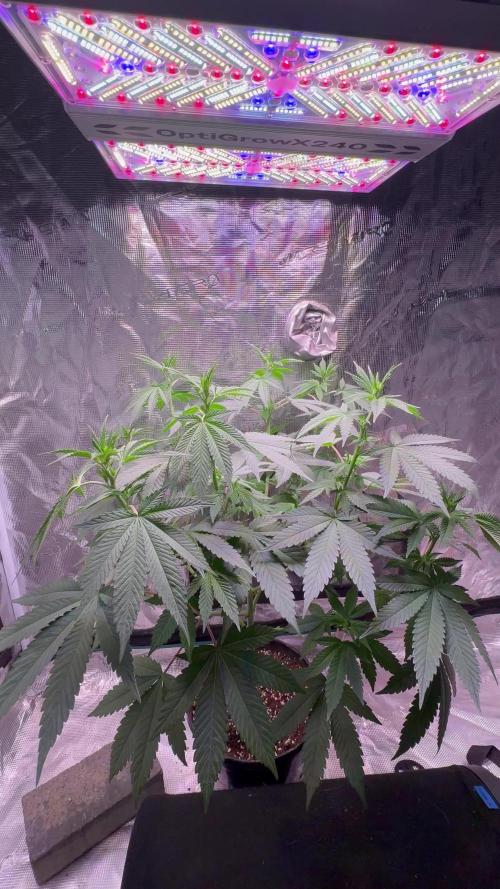
Adding in a 65 W Horticulture Lighting Group quantum board has really helped my dessert cheese develop! This plant has nice even growth and thick stems and branches! It’s shorter than the sativas, with fatter leaves.
The ambient humidity has been dry. I used a cool steam vaporizer with some lavender and eucalyptus oils to add some h2o to the air and gas out potential insects. Having the remaining pots in larger containers has helped stabilize the humidity.
Added nematodes day 37

Likes
15
Share


@Uwish
Follow
Nothing special, everything is actually working. Clearly once my water was at the right temperature, no more worries.
The flowers arrived at 12/12 + 11 with the trichromes that pop, it starts to be pleasant! So of course, I'm not going to break any records on this RUN but in any case, I've eliminated a lot of "novelty" and mistakes that I'll make more. I'm counting on the run I'm re-launching to blow all that up, I'm going to go for a performance goal
The stretch is off to a good start, it should settle down around 12/12 +21 - 28, so I will place my second net next week.
I have done a defoliation.
I change the soup in 2 days, so my solution lasts 10 days. I have a slight over-fattening, but really nothing serious, I will switch to an EC of 1.8 - 1.9 instead of 2.0. and I will observe.
Here we can see the delay of one of the plants, it's as if I was shooting with only 3 plants. Next time, only one strain, same size of cuttings and passage by cuttings and RDWV DIY mandatory before passage in the V-system.
Next week, I change the brand of fertilizer for the RDWC, I go to Athena, I will introduce the PK of Athena which according to their recommendation starts at the 21st day at a rate of 2ML/L.
I turn with the base sensi bloom a and b + athena pk
Otherwise, I receive the parts this week for my RDWC DIY system for growth, I'll make it with my friend and I'll test it and I'll give you a feedback on the next update, especially since I'm going to restart right away, I'm going to do 10-15 days in cuttings and then I'll go to the RDWC DIY system for growth until I finish the FLO of the V-SYTEM and then I'll go straight to the next one.
I'm going to put my LEDS at 80% which is the MAX recommendation of SANlight without c0² ( I don't forbid myself to grow at 100% in week 5-6, I'll see... )

Likes
Comments
Share


@PhinolaGreen
Follow
9. Woche
Ja sieht soweit gut aus, sie legt einen ordentlichen Stretch hin und beginnt mit der Bloom 😄
Likes
15
Share


@MrJones
Follow
MrJones Ztrawberriez Auto
🍓╰⊰🍓´🍓⊱╮🍓╰⊰🍓´🍓⊱╮🍓╰⊰🍓´🍓⊱╮🍓╰⊰🍓´🍓⊱╮🍓
💧 Feeding - Using Gaia Green Grow / Bloom and Compost Teas
🍃Training / LST-Defoliation-Topping TBA
🕷️ IPM - Will be using Green Cleaner" 1 OZ per Gallon, and CannControl from Mammoth alternating between products each month for Integrated Pest
🍓╰⊰🍓´🍓⊱╮🍓╰⊰🍓´🍓⊱╮🍓╰⊰🍓´🍓⊱╮🍓╰⊰🍓´🍓⊱╮🍓
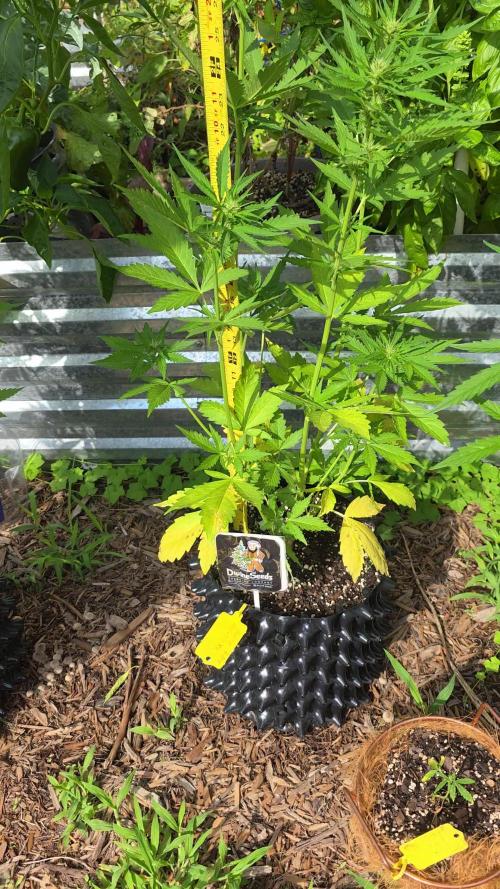
▶️Saturday 11.04.23 - One of these girls is looking good, but the other is a bit small, not sure I am going to keep it, this is the start of week 3, and going to set the light cycle to 18/6 pretty straightforward.
🍓´🍓⊱╮🍓╰⊰🍓´🍓⊱╮🍓╰⊰🍓´🍓⊱╮🍓╰⊰🍓´🍓⊱╮🍓
▶️Bud Description Ztrawberriez Auto produces long and fat buds with a beautiful light green shade with oftentimes purplish hues and a thick layer of resin that starts at the top of the flowers and continues all the way to the tip of the sugar leaves. It’s the typical bud structure you would expect from hybrid varieties topped with an explosion of fruity terps that’ll hit you in the face with a blend of creamy, fruity, and sweet aromas as soon as you break the buds open. Definitely a must for terp heads and extractors looking for exaggerated flavors and aromas
🍓╰⊰🍓´🍓⊱╮🍓╰⊰🍓´🍓⊱╮🍓╰⊰🍓´🍓⊱╮🍓╰⊰🍓´🍓⊱╮🍓
▶️SOIL MIX
40% ProMix HP
40% Coco Coir 70/30
15% Worm Castings
05% Malibu Compost
🍓╰⊰🍓´🍓⊱╮🍓╰⊰🍓´🍓⊱╮🍓╰⊰🍓´🍓⊱╮🍓╰⊰🍓´🍓⊱╮🍓


Likes
12
Share


@CropHouseLew
Follow
Was in a rush to finish these due to unforeseen circumstances, so I started the Overdrive feeding early in hopes to compensate for this.

Likes
3
Share


@Shmoopy_me
Follow
Getting close to the finish and it’s very pungent smelling it’s hard to pin a nose on her! Still filling out and getting dense towards the end!




Likes
7
Share


@hinterhofgrower
Follow
.
🌱 : Partial harvest on day 100, 211,5g + 252,8g, 357g on day 101
💧 :
💡 :
🤔 :
Likes
7
Share

@Patras19
Follow
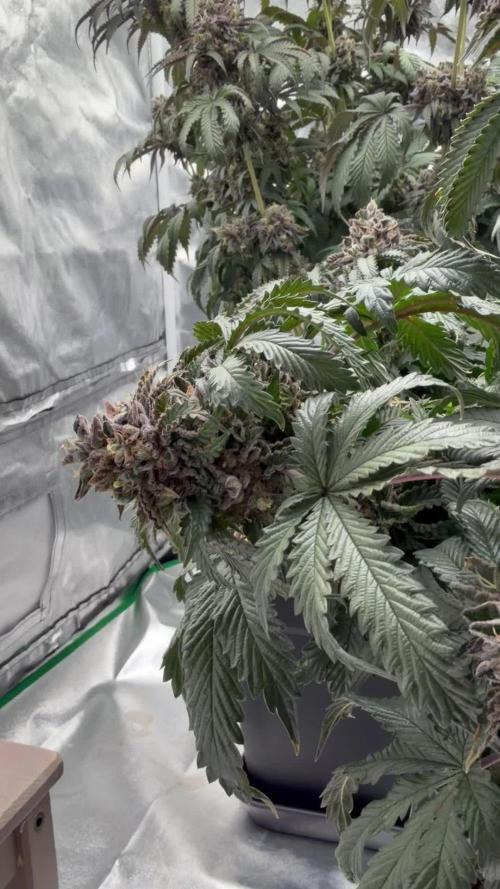
Čusan tak proběhl sekec mazec. Mam rad spíše energii model tak jsem to sklidil bych řekl tak akorad. Na nějaký kouř tam bude za me spokojenost. Je cítit taková sladká zem, hodně intenzivní. Těším se mega na ochtnávku
Likes
31
Share


@MadeInGermany
Follow
Info:
Unfortunately, I had to find out that my account is used for fake pages in social media.
I am only active here on growdiaries.
I am not on facebook instagram twitter etc All accounts except this one are fake.
Flowering day 43
since time change
to 12/12 h.
Hey everyone :-).
The buds keep getting bigger and tastier :-)
This week it was poured 3 times with 1.2 l each.
The tent was cleaned and everything checked and refilled.
Stay healthy 🙏🏻
You can buy this Strain at :
www.Zamnesia.com
Type:
Runtz
☝️🏼
Genetics:
Zkittlez x Gelato
👍
Vega lamp: 2 x Todogrow Led
Quantum Board 100 W
💡
Bloom Lamp : 2 x Todogrow Led
Cxb 3590 COB 3500 K 205 W
💡💡☝️🏼
Soil : Bio Bizz Coco
☝️🏼
Nutrients : Green House Seeds Company Powder Feeding Bio
☝️🏼🌱
Water: Osmosis water mixed with normal water (24 hours stale that the chlorine evaporates) to 0.2 EC. Add Cal / Mag to 0.4 Ec Ph with Organic Ph - to 5.8