


Likes
Comments
Share


@Ageddd
Follow
------------------------
HARVEST 1:
------------------------
Harvested this girl because she stopped eating and was drinking less water, and the weird flowers, so she was finishing, and im looking for something psycoactive, so the trichs are cloudy too... I expected less flowers, but there are some material behind leaves.
The smoke is really nice flavored, and it hits you with psychoactivity. Despite the production and weird buds it is really tasty and gets you in a really nice sativa mood.
The flavor would be like: An apple with Gasoline touches (i suppose its because of the Sour Diesel heritage)
15 gr.
------------------------
HARVEST 2:
------------------------
This plant was harvested in the optimal point to me, with cloudy trichs and a nice production. She really added weigth in the last weeks.
The smell is really like the original Lemon, has deep citrous notes.
Taste is very good, more powerful than the smell(Will complete this in a couple months when properly cured in jars).
I like the psychoactivity, its a nice day smoke, and a tasty one.
Overall a very good plant, i love the therpene profile (citrous/fruity), it is so refreshing when you smell the citrous flavour.
90 gr.


Likes
26
Share


@Ukfarmer420
Follow
Day 28 flower, things are doing well, humidity and heat are stable, plucking off leafs as I go along now anything blocking bud sites.
I'm on week 7 of the biobizz feed schedule full dose, these girls not showing any nute burn or stress so far either I could probably push them more.
Day 33 from flip.
Heat and humidity are under control. Sitting at 27°c and 40-47% humidity with lights on. And 20°c and 47% humidity lights off.
Ph levels on feeds and watering is 6.5, there really loving the biobizz range and the marshydro tsl2000 combo. So today the plants are getting fatter and nice and dense. Its super sticky and stacking on trichomes.
These 3 beans came from The same pack, and each one smells diffrent.
Closest pheno is a really lemon citrus smell and its strong.
Middle pheno is like a sherberty smell and really tickles the 👃.
Pheno 3 at the back is like a lemon skunk, really pungent and its got the fattest buds so far too.
Day 34 flower,
Feeding molasses today in 6.5ph water, I will start the next week tomorrow and will be starting on week 8 of the bio bizz nutes schedule.
Thanks for all your support so far.
Keep on growing

Likes
2
Share

@PharmaZ
Follow
Tuesday 4th August (day 38) 2-4am
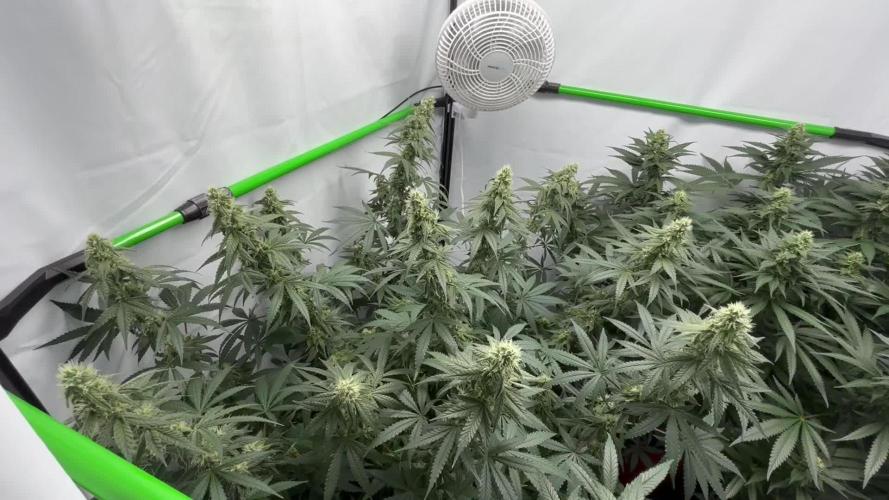
Heavy flushing EC keeps rising PH hasn’t come down below 2 after heavy watering and light feeding. I’m resorting to a reset flush now put roughly 15L of 1.0EC nutrient mix just Calmag and A&B through each pot and finished off with a Balanced feed for day 38
0.5ml/L - Calmag
1ml/L - Canna A&B
1ml/L - Big Bud
2ml/L Clean fruits
PH5.6 EC
Have removed the plant stands so I can bottom feed them extra when the lights are off, or if I can’t be home in time for watering. I’ve reduced light intensity when it’s too hot, battling high humidity.
As you can see they are surviving they are a dark green colour and bud development has been super slow due to all the issues when growing in summer.
I shouldn’t have had dry backs early flower should have just soaked them and worked with the humidity. Lessons learned as always with growing it’s never just plain sailing.
I might knock the pure coco on the head and start adding perlite again in the winter.
May get the autopots out haven’t decided yet.

Likes
3
Share

@smoking_hills9
Follow
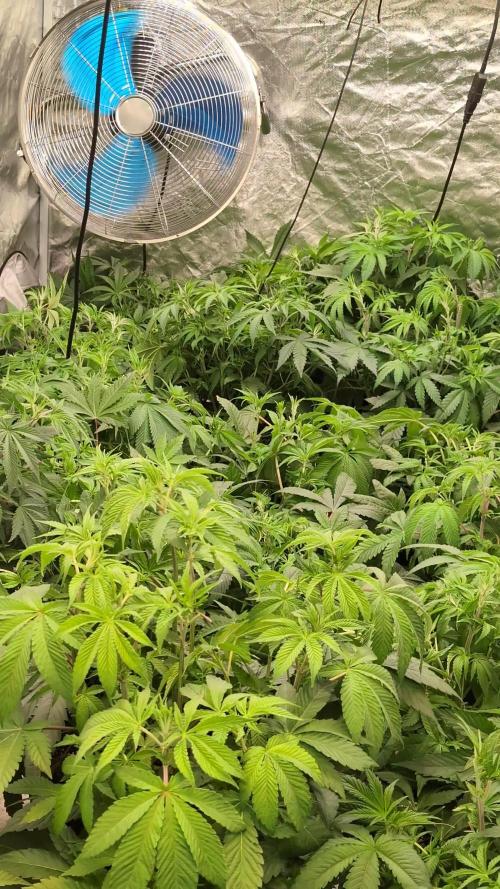
Plants are huge( most of them anyway) and I forget about 2 weeks preflower stretch , so I am switching to bloom mode from today. Defoliated again.


Processing
Likes
20
Share


@UK420
Follow
Been a slow week for root development, but finally witnessing roots moving towards solution. Also been a slow week for height growth. But plenty of sideways and new growth
2/9 Update. Completly changed res today and cleaned system. Added a humidifier and move air pump to under room floor

Likes
6
Share


@MadeInGermany
Follow
Flowering day 49
since time change
to 12 / 12 h
Hey guys :-)
All ladies look very healthy and delicious :-)
We're slowly getting closer to the end.
Watering was done twice this week, each time with 1.2 l (sewing materials see table above)
At the next watering there is a very light rinse with Clean Fruits so that the last nutrients can be slowly used up.
The trichomes are now checked every day.
I'm looking for my microscope with an app so I can take pictures of it 👍.
I wish you a lot of fun with the update and stay healthy 💚🙏🏻
👇🏼👇🏼👇🏼👇🏼👇🏼👇🏼👇🏼👇🏼👇🏼👇🏼👇🏼👇🏼
You can buy this Nutrients at :
https://greenbuzzliquids.com/en/shop/
With the discount code: Made_in_Germany you get a discount of 15% on all products from an order value of 100 euros.
👇🏼👇🏼👇🏼👇🏼👇🏼👇🏼👇🏼👇🏼👇🏼👇🏼👇🏼👇🏼
You can buy this strain at :
Clearwater Seeds
Water 💧 💧💧
Osmosis water mixed with normal water (24 hours stale that the chlorine evaporates) to 0.2 EC. Add Cal / Mag to 0.4 Ec Ph with Organic Ph - to 5.8 - 6.5
MadeInGermany

Likes
14
Share

@ChickenWing1024
Follow
All 3 Pheno's have been topped - This strain seems to have more thicker indica like growth as opposed to a more stretched out sativa hybrid.
No negative response to the topping - Waiting for lower nodes to come up.
Overall healthy growth.

Likes
6
Share


@Elguacho420
Follow
Buenas a tod@s... Octava semana de flora de las Green poison de sweet seed... Más allá de las marcas de "excesos" en las hojitas, q no se x q x q no me paso y a pesar de que podría estar más grande ( fallo mío) la planta está DPM..🔥⚡🤯😱 está y se la ve compactada y tanto está como las demás, se las nota que pesan, que prometen y que yo no subestimaria x su altura, están muy bien y ya en la etapa casi final... Ya no les queda mucho, en verdad el calendario marca que ya está en etapa final, pero les falta aún más días, disfruten del paisaje que en breve se nos va 🙏🏻🙌🏻💪🏻💪🏻😎⚕️
🇦🇷🤝🏻🇪🇦


Likes
2
Share


@Reelaxx
Follow
Kings juice , amazing strain flavors 10/10 , great without curing aswell as soon as it dried I started smoking it and left abit to dry final yield was 71 grams per plant my light was kind of ass . I was using blurples but still the quality of the harvest was really good
Likes
26
Share


@MrHightimes
Follow
Got them at home in their flowering tent. Everything is looking great!


Likes
4
Share

@CheeRz
Follow
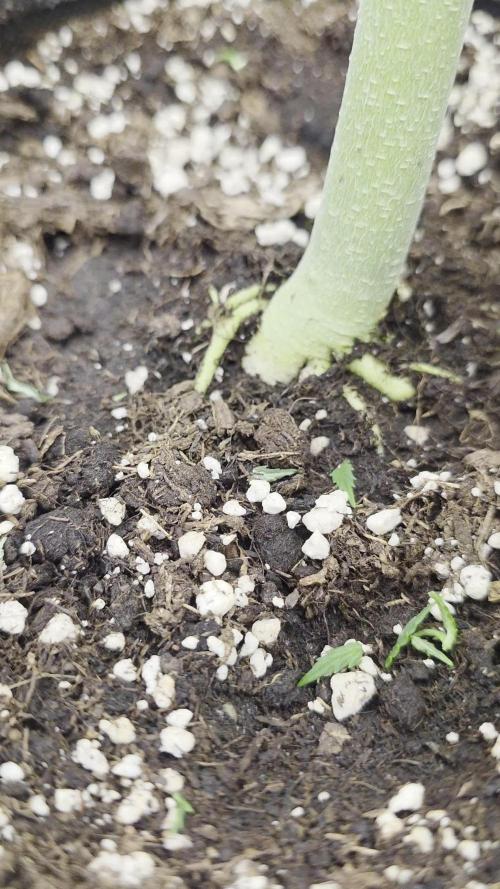
It's week three of flowering, and the ladies are doing really well. The net has been installed, and the plants have been moved into position. The Fishmix has been removed, and the Bio Grow fertilizer has been applied for the first time. I also defoliated and lollipopped both plants. Small buds are forming, and you can start to smell them. 💚💚💚


Likes
110
Share


@SlowpokeFuegobud
Follow
💜 💚 😍🥤💜💜 💚 😍🥤💜💜 💚 😍🥤💜💜 💚 😍🥤💜💜 💚 😍🥤💜
Dear growmies, welcome to week 13 which only has 2 days!! ❤️
This was the most spiritual grow ever! 💜🙏On day 1 of flowering week 8 she started to throw out bananas, and I took that as a discreet sign that she is finished. 😅 Magically just right. ✨
So happy with this! I will miss her! Can't wait for the smoke report. 😍
Thanks @Fast_Buds for your awesome genetics, growing Fastbuds is always a bit like riding a ferris wheel! Woohooo!! 😜 🙏 💚
Thanks to my sponsors @Green_Buzz_Nutrients, their nutes never ever let me down!! Check out my diaries on how well they work! 💚 😘 In case you want to give them a try, you can find a generous discount code in the setup description further down the road ⬇️
You can find more brand hot updates on my IG, where I share real time events from my growroom, don't miss this! 😝
_______________________________________________________________________
Purple Lemonade FF
As refreshing as cold lemonade on a hot Summer day. 🌞
• Quench your thirst. Just as good as lemonade on a hot Summer day.
• The gentle giant. Up to 550 g/m2 of gorgeous pinkish-purple buds.
• Refreshing for the mind and body. The ideal all-day strain with a perfectly balanced effect.
• Sweet n’ sour terps. Mouth-puckering lemon flavors that’ll hypnotize your taste buds.
• Properly purple. The perfect choice for purple hash and extractions. As refreshing as cold lemonade on a hot Summer day.
Arising from a cross between purple and citrus Cali genetics, Purple Lemonade FF (Fast Flowering) offers a complex high made up of perfectly balanced cerebral and body effects that are ideal for daytime use. Expect an extremely enjoyable high that boosts your mood while deeply relaxing your whole body and getting
rid of muscle pain. This meticulous cross produces up to 550 g/m2 of some of the most beautiful purple buds, with pinkish and reddish hues that will catch everyone’s attention. The beautiful purple buds are ready for harvest in 7-8 weeks and come hand-in-hand with unbelievably sugary citrus terps that are just as refreshing as a cold lemonade on a hot Summer day. It’s the ideal variety for the sweet-tooth stoner seeking strains that deliver both in quality and quantity of resin.
Bud Description 🦔
Purple Lemonade FF grows chunky, spade-shaped buds that boast a whole range of pinkish-purple hues with rich, dark orange pistils shooting out of every direction. This variety stands out for the, oftentimes, lilac trichomes that give them a gorgeous pink tint and make for outstanding purple concentrates. The buds give off a delicious tart lemon aroma that reveals a sweeter, more fruity scent as you break the buds open. Definitely a must for flavor chasers and those looking for pungent terpene profiles.
Smoke Reports 💨
Purple Lemonade FF offers an effect that’s just as unique as the flavor. Expect a potent uplifting high that gives you that energy boost you need to get things done while 100% happy and stress-free. The effect gradually transforms into a wave that works its way along the limbs and through the muscles, deeply relaxing your body and putting you in the right mindset to go through a busy day with a huge smile on your face. This is an excellent all-day smoke as it not only increases energy but can also help combat chronic pain, migraine and stress.
Plant Appearance 💄
This feminized photoperiod variety develops a thick and strong structure, growing a medium-sized main cola with multiple shorter side branches, typical of hybrid strains. Purple Lemonade FF develops fairly short internodal spacing with gorgeous purple buds growing stacked on top of each other, making it the perfect choice for growers of all levels looking to get lots and lots of top-shelf purple weed, as this variety can produce up to 550 g/m2 in a 7-8 week flower cycle.
Grow Tips 🤓
This is a super fast feminized photoperiod version that takes approximately 7-8 weeks to flower with a 5-week vegetation cycle,, this means you can have faster harvests by shortening the veg cycle or have a longer veg cycle for bigger yields. Purple Lemonade FF (Fast Flowering) makes for a great candidate for growers of all levels as it’s a vigorous strain that will thrive with basic maintenance both indoors and outdoors. This is a resin powerhouse so make sure to have your trim bin close by as all the resinous sugar leaves will make for the most mouth- watering hash and extracts.
Flavor 😋
Expect a long-lasting citrus zest that taste just like it smells. Purple Lemonade FF reeks of a delicious blend of sweet fruits and tart citrus that’ll make your mouth water. On the inhale, expect sour flavors that taste just like lemon candy with hints of orange and a really subtle earthy background. And on the exhale, the citrus flavors open up, giving place to a more sugary berry fruitiness that leaves your whole mouth tasting like an extremely sweet weed-infused lemonade.
https://2fast4buds.com/seeds/purple-lemonade-fast-flowering
_______________________________________________________________
Setup:
140x70x200 cm Spiderfarmer tent
2x Monkey 16W fans (not oscillating)
1x Secret Jardin 30W
1x box fan 50W oscillating (on lowest level)
LED
Full Spectrum 320W AGLEX AGL-320W-MA
5,6 kg
foldable, dimmable
864 pieces Samsung LH301H
864umol/s
2,7umol/J
full spectrum white
RED 660nm
IR 740nm
wavelength range 380-780nm
covering 3x4ft
Green Buzz Nutrients https://greenbuzzliquids.com/
❗ Use code GD42025 for generous 25% discount (for orders of minimum 75€)
Biobizz Lightmix
coco
wormcastings
perlite
Carbon Active Granulate Filter 125/360 cm³/h
PrimaKlima exhaust EC 125-400/240 cm³/h
Likes
28
Share


@GaiaGreenGiant
Follow
New strain, new led grow light, new organic dry amendment fertilizer, new climate controller. Kicking it up a notch this round.

Likes
17
Share


@ScouseCityLX
Follow
Really suffered in the summer with heat waves. Temps in the tent when the lights were on was going as high as 93⁰f (33.88⁰c). The buds have foxtailed as a result and I beleive I had pheno #1 hermy in its final days. 0 seeds found in both phenos so I got lucky. It flew through the veg stage, growing faster than the runtz muffin it was sharing the tent with. Flower period felt fast too, it was looking stacked already in week 5.

