


Likes
Comments
Share


@DogDoctorOfficial
Follow
🚂 8×8 Adventure – Week 14 🌸
Cash Express – Pheno A
💚 The Main Cola Is Gone, But This Girl Is Still Full Speed Ahead!
Welcome back to another chapter of the 8×8 Adventure! 🌱💚
Well, my friends...
Let's start with the elephant in the room.
Or, in this case...
the missing main cola.
😂💔🌸
Yes, we lost her.
And no matter how many times I say it, it doesn't make it any less of a bummer.
She was a beautiful cola, and losing her was definitely not part of the plan.
But you know what?
We're still here.
Cash Express is still here.
The remaining flowers are still developing.
And this girl?
She's still moving FAST!
🚂💨💚
That's one of the things that stands out when I look at her alongside the rest of the room.
Unlike our Blueberry Muffin sisters, who seem perfectly comfortable taking the scenic route, Cash Express is continuing to move forward at a much quicker pace.
She's developing.
She's changing.
She's getting on with her own journey.
And although losing that main cola hurt, I'm not going to let one unfortunate chapter overshadow everything else this girl has going for her.
We acknowledge what happened.
We learn from it.
We keep observing the remaining flowers.
And we continue documenting her journey honestly.
Because this is the 8×8 Adventure.
Not every week is perfect.
Not every flower makes it to the finish.
But every chapter has something to teach us.
So let's put a smile back on our faces, give this girl the spotlight she deserves, and appreciate what she's still showing us.
🚂🌸✨
────────────────────────
💚 THE MAIN COLA IS GONE — BUT CASH EXPRESS IS STILL HERE
Let's get this out of the way first.
Yes, we lost the main cola to bud rot.
And yes, it was a bummer.
A big one.
😂💔
When you've spent weeks watching a plant develop, photographing her, documenting her changes, and looking forward to seeing how everything turns out, losing one of the major flowers is frustrating.
There's no point pretending otherwise.
But growing is not a perfectly scripted journey.
Sometimes something goes wrong.
Sometimes we have to remove part of a plant.
And sometimes the best thing we can do is accept what happened and focus on what remains.
That's where we are now.
The affected main cola was removed, and we're continuing to observe the remaining flowers.
We're not going to pretend the loss didn't happen.
We're also not going to let it define the entire plant.
Because Cash Express Pheno A still has her own structure, her own flowers, and her own story to tell.
The main cola was one chapter.
It wasn't the whole book.
🚂💚
────────────────────────
🚂 FULL SPEED AHEAD — THIS GIRL IS STILL MOVING!
And this is where Cash Express really starts to separate herself from some of the slower plants in the room.
She's moving.
She's progressing.
She's continuing her journey without waiting for everybody else to catch up.
😂💨
We've seen a very different rhythm from the Blueberry Muffin sisters.
Those girls are beautiful, but they're taking their time.
Cash Express?
She seems to have somewhere to be.
And apparently, she's already late.
😂🚂💨
The difference is fascinating because we're watching these plants share the same general room environment while expressing very different patterns of development.
The same calendar doesn't mean the same biological timetable.
Some plants progress more quickly.
Some develop more slowly.
And some seem to change noticeably every time we return with the camera.
Cash Express belongs firmly in that last category.
Even after losing her main cola, she's still giving us plenty to observe.
She's still moving forward.
And that's what I want to celebrate this week.
────────────────────────
🌸 LET'S FOCUS ON WHAT REMAINS
It's easy to keep thinking about the flower we lost.
I get it.
I do it too.
But if we spend the entire report looking backward, we miss what's happening right in front of us.
And there's still plenty happening.
The remaining flowers have their own structure and character.
The plant is continuing to develop, and we're following that progression through the photographs.
This is why I want to keep documenting her individually.
Because Cash Express Pheno A is more than the one flower we had to remove.
She's a complete plant with a whole collection of flowering sites, and the rest of her journey deserves attention too.
So let's turn the camera toward what remains.
Let's appreciate the flowers that are still here.
Let's keep observing.
And let's give those remaining parts of the plant their own moment in the spotlight.
💚🌸📸
────────────────────────
🌱 THE 8×8 ADVENTURE — SAME ROOM, DIFFERENT STORIES
For anyone discovering this diary for the first time, welcome to the 8×8 Adventure!
The idea behind this project is simple:
Different genetics and phenotypes sharing the same general growing environment.
Same room.
Same lighting ecosystem.
Same 12/12 schedule.
Same general nutritional approach.
Same grower.
Different plants.
Different structures.
Different personalities.
Different timelines.
And sometimes...
very different experiences.
😂🌿
The Blueberry Muffin sisters are taking their time.
Cash Express is moving faster.
Other plants have their own patterns of development, their own structures, and their own responses to the shared environment.
That's what makes this experiment interesting.
We're not trying to make every plant behave identically.
We're documenting what actually happens.
And that includes the beautiful moments, the unexpected moments, and the moments when we have to admit that something went wrong.
The loss of this main cola is part of Cash Express Pheno A's story.
But so is everything she's continuing to do.
And we're here for all of it.
────────────────────────
💡 SAME ARTIFICIAL SUN — DIFFERENT RESPONSES
The lighting setup remains unchanged this week.
The Future of Grow Black Series LEDs continue providing the main lighting, with the two additional Black Series 600W fixtures supplied for this experiment remaining part of the upgraded setup.
After introducing those extra fixtures, we reduced the output to approximately 59% from the plug rather than simply running everything at maximum.
Our working reference remains around:
☀️ Approximately 1,500 PPFD across the upper canopy.
Actual intensity varies with plant height and position, so this is an upper-canopy reference rather than a claim that every flower receives exactly the same intensity.
And Cash Express?
She's continuing her journey under the same general lighting environment as the rest of the room.
Same artificial sun.
Same general setup.
Different genetic expression.
This is one of the most interesting parts of following multiple plants together.
We can provide a shared environment, but we shouldn't expect every plant to respond in exactly the same way.
The lighting is one part of the picture.
The plant's genetics, physiology, developmental stage, and overall condition also matter.
And Cash Express is giving us her own version of the story.
💡🌿🚂
A massive thank you to Future of Grow for supplying the additional fixtures and helping us expand the lighting capability of the 8×8 Adventure!
────────────────────────
❤️ A LITTLE RED LIGHT — WHAT ARE WE ACTUALLY DOING?
Now, let's talk about the extra 15 minutes of red light after the main lighting period.
We're including this in our lighting routine and documenting it as part of the setup we're exploring.
But I want to explain the science properly, because red light, far-red light, and the transition into darkness are related topics — not interchangeable ones.
Plants have photoreceptors that help them interpret their light environment.
One important group is the phytochromes, which respond to red and far-red wavelengths.
These photoreceptors can help plants detect changes in light conditions and participate in signalling processes associated with development and environmental responses.
Red and far-red light can influence plant responses in different ways, depending on the spectrum, intensity, duration, timing, and surrounding conditions.
That's the interesting part.
However, a 15-minute red-light period after the main lights switch off should not automatically be described as a proven way to improve flowering, increase yield, or help every plant transition into darkness.
Those outcomes depend on the actual conditions and the response being measured.
For this run, we're documenting the treatment we're using rather than promising a result we haven't established.
And that distinction matters.
We're growers, but we're also observers.
It's perfectly fine to explore an idea while remaining honest about what the evidence does and doesn't tell us.
❤️💡🌱
────────────────────────
🔬 QUICK SCIENCE BREAK — THE EMERSON EFFECT
Since we're talking about light, let's take a little detour into photosynthesis.
The Emerson effect is a real phenomenon discovered through experiments investigating how plants use different wavelengths of light.
In simplified terms, researchers observed that photosynthetic activity could increase when certain red and far-red wavelengths were supplied together, beyond what would be expected from their individual effects under the conditions studied.
Why is that important?
Because photosynthesis involves two cooperating photosystems:
🌿 Photosystem II (PSII)
🌿 Photosystem I (PSI)
Both participate in the light-dependent reactions of photosynthesis, helping drive the processes involved in converting light energy into chemical energy.
Different wavelengths can contribute differently to the activity of these systems.
Under suitable conditions, combining wavelengths can improve their overall cooperation and increase photosynthetic performance.
That's the fascinating science behind the Emerson effect.
But here's the important distinction:
The Emerson effect is not simply another name for adding 15 minutes of red light at the end of the day.
The classic effect concerns photosynthetic responses under particular illumination conditions.
An end-of-day red-light treatment is a different lighting situation, and we shouldn't assume that it automatically reproduces the same effect.
The actual spectrum matters.
The intensity matters.
The timing matters.
And the biological response matters.
So, yes, the Emerson effect is a fascinating part of plant science.
But we're not going to claim that our short red-light period triggers it or guarantees a better result.
We're documenting the setup, learning about the science, and keeping our conclusions grounded.
That's how I prefer to approach these things.
Curiosity first.
Observation second.
Claims only when the evidence supports them.
🔬🌱💡
────────────────────────
🌙 RED LIGHT AND THE DARK PERIOD — A USEFUL DISTINCTION
One more thing worth clarifying.
A plant's response to light isn't determined by colour alone.
Photoreceptors respond to particular wavelength ranges, and the plant's overall response depends on how those signals interact with its environment and internal biological processes.
Red light and far-red light are not the same.
A red-light treatment after the main lighting period is not automatically equivalent to a far-red treatment, nor does it guarantee a particular response to the following dark period.
Our main lighting schedule remains 12/12, with the additional 15-minute red-light period recorded separately.
We're keeping that distinction clear in our reports because understanding what we're actually doing is more useful than repeating a claim without explaining it.
And if we learn something interesting from the experiment, we'll have our observations to look back on.
That's the point of documenting the run.
💚🌙
────────────────────────
🌱 NUTRITION — THE ROOM CONTINUES AS BEFORE
We're keeping the general nutritional program unchanged this week.
No new recipe for Cash Express.
No attempt to force her to move faster.
And no special nutritional adjustment simply because we lost the main cola.
The current recipe remains:
🌱 Plagron Pure Zym — 1 ml/L
⚗️ Plagron pH Plus — 0.03 ml/L
🍋 Plagron Lemon Kick — 0.03 ml/L
🌸 Plagron Terra Bloom — 2 ml/L
🌱 Plagron Power Buds — 1 ml/L
🍯 Plagron Sugar Royal — 1 ml/L
🌿 Plagron Green Sensation — 1 ml/L
Current solution readings remain approximately:
⚗️ pH — 6.04
⚡ EC — ~2.05 mS/cm
The overall nutritional approach remains consistent across the room.
We're observing the plants as individuals while maintaining the general setup.
Cash Express is continuing to progress, and that's what we're documenting.
────────────────────────
✂️ NO NEED TO INVENT MORE WORK
After dealing with the affected main cola, there's no reason to turn this into a week of unnecessary intervention.
The important thing was to address the affected flower and continue paying attention to the remaining plant.
Now we're observing.
We're documenting.
We're keeping an eye on the remaining flowers.
And we're allowing the plant to continue her journey.
Sometimes growing requires action.
Sometimes it requires patience.
And sometimes it requires accepting that something happened, dealing with it, and moving on without making the situation bigger than it needs to be.
😂🌿
Cash Express has already had her unfortunate moment.
Now let's give the rest of her story some room.
────────────────────────
📸 THE CAMERA IS STILL COMING OUT
One thing I don't want to change is our commitment to documenting the plants properly.
These photographs become a record of what happened during the run.
They let us look back at the flowers, compare different stages, and remember how the plants developed.
And in this case, they also help us document a less-than-perfect moment honestly.
The missing main cola is part of the record.
So are the remaining flowers.
Both matter.
Because a grow diary shouldn't only show the moments when everything looks fantastic.
It should show the journey.
The good.
The bad.
The unexpected.
And the things we learn along the way.
Cash Express Pheno A is still a beautiful plant worth photographing.
So let's keep the camera on her.
Let's keep documenting.
And let's see what the rest of her journey brings.
📸🚂💚
────────────────────────
💚 A SETBACK DOESN'T HAVE TO BECOME THE WHOLE STORY
I think this is the part I want to leave with everyone this week.
We lost a beautiful main cola.
It sucks.
There's no point dressing that up.
😂💔
But we can acknowledge that disappointment without allowing it to overshadow everything else.
Cash Express is still here.
She's still developing.
She's still moving quickly.
And she still deserves our attention.
The rest of her journey matters just as much as the part we lost.
So we're moving forward with a smile.
We're keeping the diary honest.
We're continuing to observe.
And we're appreciating the flowers that remain.
That's how we grow.
That's how we learn.
And that's how we keep the 8×8 Adventure real.
────────────────────────
🚂 FINAL THOUGHTS — CASH EXPRESS IS STILL FULL SPEED AHEAD
Week 14.
Cash Express Pheno A.
The main cola is gone.
And yes, it's still a bummer.
💔🌸
But this girl is still moving.
She's still progressing.
She's still developing.
And she's continuing to show us her own expression while sharing the same general environment as the rest of the room.
Unlike our slower Blueberry Muffin sisters, Cash Express is moving along at a much quicker pace.
Different plants.
Different rhythms.
Different stories.
That's what this experiment is all about.
This week, we've also taken the opportunity to talk about the extra 15-minute red-light period and the science behind the Emerson effect.
Red and far-red light can influence plant signalling and photosynthetic responses, but we need to be precise about the differences between these treatments and the conditions under which specific effects have been demonstrated.
We're exploring, documenting, and learning — without pretending that every lighting idea automatically produces a guaranteed benefit.
And as for Cash Express?
We're giving her the spotlight.
Not because everything went perfectly.
Not because we got to keep every flower.
But because she's still here, still developing, and still part of this adventure.
🚂💚🌸
The main cola may be gone.
The smile is back.
The camera is ready.
And the story continues.
Keep moving, Cash Express.
Keep showing us what you can do.
And let's make the flowers that remain shine!
────────────────────────
🙏 THANK YOU
A huge thank you to Zamnesia for the Cash Express genetics and for giving us the opportunity to discover these individual phenotypes throughout the 8×8 Adventure. 🌸💚
Thank you to Plagron for supporting the nutritional side of the journey. 🌱
A massive thank you to Future of Grow for the Black Series lighting and especially for supplying the additional Black Series 600W fixtures that have expanded the lighting capability of this room. 💡🙏
Thank you to LumiFlora for helping illuminate the deeper parts of the canopy.
Thank you to TrolMaster for helping maintain the environment behind the scenes.
And, of course, thank you to everyone following along on GrowDiaries.
Thank you for the comments, the questions, the support, and for appreciating the honest side of the journey as well as the beautiful photographs.
Because this is what growing looks like.
Sometimes we celebrate.
Sometimes we learn.
Sometimes we lose a flower we really wanted to see through to the end.
And then we keep going.
Cash Express Pheno A has had a setback, but she still deserves her own story, her own photographs, and her own spotlight.
🚂🌸💚✨
So let's keep watching.
Let's keep learning.
Let's keep documenting the science and the observations behind the grow.
And let's keep giving every individual plant the attention she deserves.
Growers Love, my friends, and happy growing! 🌱💚🚂

Likes
19
Share


@LittleBigTrees
Follow
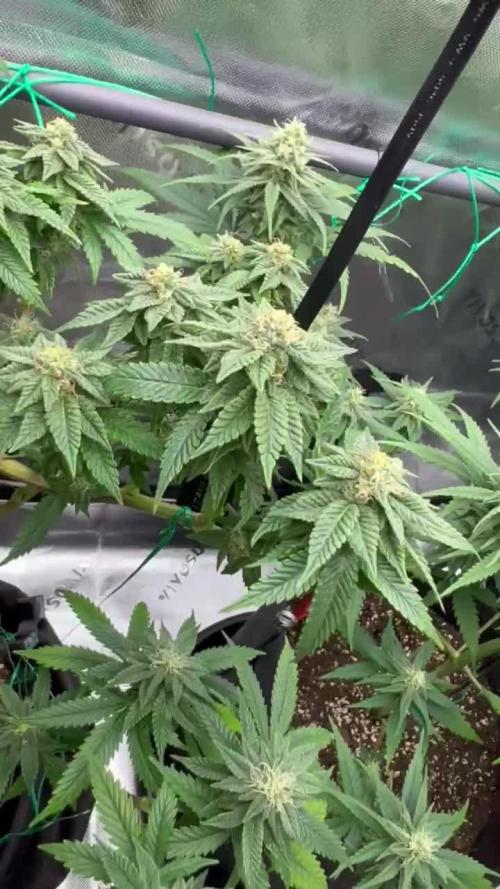
This plant was germinated along side three other strains , it stayed short and compact ,it was very leafy and compact .
If I was to grow it again I would spread and thin out the canopy and defoliate more heavily .
This strain was in a10 litre pot and produced 90g of dried trimmed bud .
It was a low producer but the flower is really nice , a very enjoyable evening flower through a volcano vaporizer.




Likes
Comments
Share

@deseed_uy
Follow
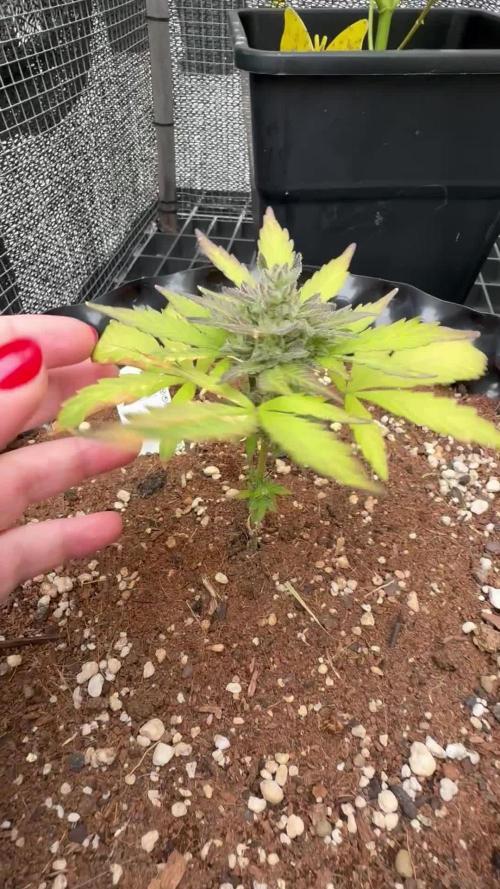
No ha mejorado el clima aun, estamos entre frios y lluvias hace un par de semanas pero ellas van igual. La think esta a unas 2 semanas de la cosecha, igual q la mini north😂
Moby critical y black todavia les queda un rato mas


Likes
45
Share


@AsNoriu
Follow
Day 92. Girls are runing to the end, foxtailing on one of Tangies is crazy, but bud is dence and i let her to go.
Now StrawberryCough have loads space, she loved nutes, leaves are a bit too dark for me, but she is flowering and its fun !
Made on her Fims , tried to understand how deep you need to cut, so she will have some strange grow 4sure.
Day 94. Early Tangie became TheRealFoxtailQueen ;)) thats it, i dont want to smoke tails, so she was choped aswell, sad , was hoping she will be my biggest girl from first 8...
Was puting ice as a test on Early bigger FastDiesel, so part of roots stayed wet, its easy to spot, that those cones in airpots really works great.
Day 95. Eve. Maybe Fatty could hang for 12 hours more, but i am leaving house for a bit and dont want them to overdry. Thats why tops are in seperate jar, not because it looks better ;) inside bigger tops, even when i trim them hard ( i could leave longer colas) still stemp is fat and keeps more mosture, that way its easier to cure them, humidity is more even trough each jar.
So now to the main point .... Weight .....
And the winner is ...... ;))) 69.65 !!!! Never hoped that much from her, my eye scales are way off ;)) i think thats the winner, only late FastDiesel or StrawberryCough can beat.
Bud dried 1-2 days too early for perfectness, but heating is on and its really dry weather in the house and dehumidifier triggers electrics ;)) i am flat out on max usage now ;)
I am in a choping spree ;) Slimmer Fat Tangie falls aswell, she smells crazy, dont know is it smart to dry like i do now, neighbours should smell it 4sure ;))
Smells is fruity from distance and citrus from close up ... Tangie in the best by smell and not so sad by quantity ;))
All girls running well, really happy and that makes me happy. The purpose of Theraphy Room - works !!!!
Day 96. Every day new champ ? ;)) Early Big FastDiesel very sticky, not rock hard, but hard buds in total of 73.61 !!! That strain i have in marks for summer, its a killer ;) if you smoke it, all neibourghood knows about it, maybe even all small town ;)))
Smaller Early FastDiesel is choped today,she easy could make two more weeks and gane weight, but her choped sister is too strong, cant have couch lock weed all day ...


Likes
1
Share


@Huckleberry39
Follow
Stopped feeding this week. I'm pretty sure they should be ready to chop in a week or 2. I hate looking at them with my microscope so I've gotten pretty good a judging when they are finished. I love ILGM. They always come thru with solid genetics!!


Likes
35
Share


@IndicaVibeMe
Follow
Going to yield POUNDs off this girl!!
12/19/23-- Update: Shogun is a big girl- for an INDOOR grow!. She's 3ft tall, and still shows vertical growth!
Considering I did not veg long. Shogun popped up out of soil on Oct 4th 2023, and she was switched to flower same day & time as my Royal Dwarf (aka Itty-Bitty) they've both been on 12/12 for over a month now. Itty-Bittyis an Autoflower, and Shogun is a photoperiod.
I can see now the difference between Autos& fotos in growth &bud development,
Shoguns trichomes have not appeared yet! She's definitely going to be in the flower stage for a few more weeks, perhaps another month?
As I said She's in middle of flowering and still showing vertical growth, and to measure HER I use a yard stick now lol
I think she's my favorite, along with the Cookies gelato (but don't tell my other plants!)

Likes
15
Share


@GreenEldritchGardens
Follow
Still recovering at a slow pace, now her sister is bigger than her. But I still think she is worthy.
moving this week to a bigger a more reflective tent also with more light, let’s see how she responds .

Likes
10
Share


Likes
15
Share


@HurlinghCultiveta
Follow
Buenas cultivetas!
Esta semana el clima tampoco ayudó mucho 😞 A pesar de que no llovio, se esperan lluvias los proximos dias y las temperaturas aun no son las adecuadas. Solo tuve 2 o 3 dias a pleno sol. De todas formas seguimos con los nutrientes de vegetacion el preventivo de plagas una vez por semana con jabon potasico, aceite de neem y canela en una solucion liquida. A pesar del preventivo sigo encontrando algunos bichos que muestro en un video.
La tecnica deLST parece estar saliendo bien. Espero no estresarla mucho y que de buenos resultados.
Buen cultivo para todos y gracias por leer mi diario!
Actualización 5/10:
Tengo algunos vecinos gatos que les encanta sacar el sustrato de mis macetas... Por suerte no han desprendido la planta pero casi... Las acomode de nuevo y parecen estar bien. No tuve mucha suerte con este cultivo sumado a mi falta de experiencia.
Likes
7
Share


@ArucambaAutoflowers297
Follow
So far the floraflex potpro system has been paying off! My time in the garden went from 90 minutes to 15 minutes and the results speak for themselves.
Since theyre all still in veg im expecting some big girls.
Tried to hop on the no calmag schedule but some didnt take to well to it. So i dropped my dosage back to 3gr per gal of B1 and B2.
New growth looks nice and healthy on the affected plant so i might start raising the dosage
Likes
82
Share


@BigBadLion
Follow
Heeeey guys! 👋
Sorry for the very late update! I had so many things going on but now I can finally update the diary!
This is the last week before harvest and I kept an eye on my plants pretty much all the time! When I started to notice more amber trichomes were appearing I knew that my babies were finally ready! I just wanted a small amount of CBN, so probably I reached a good balance! Besides that I believe everything was quite relaxing and simple this week. Their smell was wonderful! I also trimmed by babies almost everyday, I kept removing the most ugly leaves to allow some of the lower buds to develop a little more this final week!
I stopped watering them 4 days before harvest and then I gave them one day of total darkness.
I hope you all enjoy the videos and photos!
Thanks!
Likes
9
Share


@SamDo
Follow
Week twenty-two is officially done on the Pineapple Upside Down Cake.
This week is a turning point, marking the end of vegetative growth and the start of the flowering transition.
I decided to switch the light cycle to twelve-twelve.
Initially, the plan was to wait for a stronger recovery, but the reality is simple: it wasn’t happening.
The plant was given roughly three full weeks to acclimate after stress, and the response stayed limited.
Rather than staying stuck in an endless waiting phase, I chose to move forward.
This means accepting that flowering may not be extremely vigorous or high-energy.
That’s fine. This run is also about observation, learning, and adapting.
Flowering was initiated gently, at around three hundred PPFD, to avoid adding more stress.
At the same time, I switched the nutrient program to Athena bloom and adjusted the recipe accordingly.
The plant has now been under flowering conditions for about twenty-four to forty-eight hours.
Over the coming week, I expect to see the first signs of stretch.
It’s a bit frustrating, because structurally the plant was doing really well.
The LST work created a clean, balanced canopy, and the potential was clearly there.
Now the focus is simple.
No rushing.
No over-correction.
Just letting the plant transition naturally into flower and observing how she reacts.
Next week will officially mark the first true week of flowering.
From there, we’ll reassess posture, stretch, and overall vitality.
For now, the plant is left alone to settle into its new rhythm.
That’s it for week twenty-two.
See you next week.

Likes
27
Share


@adam_pawloski87
Follow
This week went really great! Plants are looking super healthy today at day 22 from seed!! Today they got a dose of just pure water phd at 6.5 ! Temperature an humidity has been staying pretty stable everyday, staying around 70-75 degrees and 58-61 % humidity!! Can’t wait to see what these girls do this week ! Hope you all enjoy , an had a great safe weekend! Peace love an positive vibes to y’all Cheers 😶🌫️💨💨💨If there’s any questions, please ask me 🙏🏻
Likes
14
Share


@Dieselnutz
Follow
Just started 3rd week of flowering. Everything is goin smooth, plants stacking nice and drinking almost a gallon a day.


Processing
Likes
4
Share


@Stick
Follow
In my quest for the perfect modern grow room, I got my hands on a super cool device: SensorPush. Each SensorPush is a tiny low-energy-bluetooth thermomether+hygrometer. I have 1 sensor in the indoor tent and 1 sensor in the outdoor micro greenhouse. Both are connected to the "SensorPush Wifi Gateway", allowing me to access to the datas at anytime from anywhere in the world. SO COOL! I started to collect datas more than a week ago and it has been already so helpful, I noticed that every single adjustment (side fan speed, thermostat mix/max, window opened/closed, driver dimming..) has a direct and immediate impact on the environment, and being able to see the detailed live statistics is the perfect way to adjust the parameters. I had one important issue this week: my timer was acting weird and the light was turning on 40 mins while the plants were in the middle of their night, but thanks to SensorPush I was able to notice the problem immediately and fix what could have gone dramatical. I love these sensors so much that I've started to dig into the SensorPush API, and guess what: after a few minutes I was able to get the datas showing up on my webcam feed, so now my webcam app is also showing me the temp+RH! SO COOL! Thanks for stopping-by and stay tuned for more big-data 😎
