Processing
Likes
Comments
Share
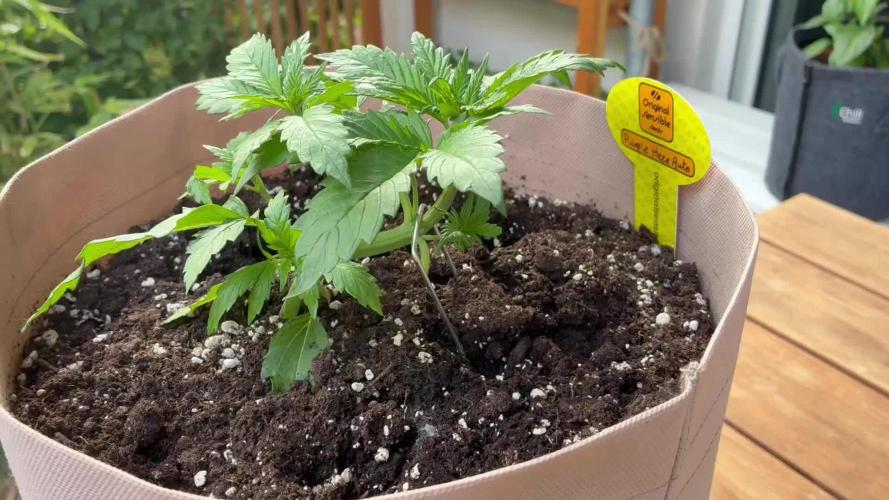
Well I have away the #seedstockers to a friend in need .. The rest are all doing great for week 2 ..The @sweetseeds @futuregenetix and @originalsensible with the @dinafem will be grown indoors and the other @seedsman will be outdoors this year ... They are all very healthy and happy another week or so and they will get there transplant done .. and then we vegetation for a while ...
Likes
25
Share
@Cdaddk
Follow
I see a little amber tricomes on both plants , so i will begin to flush next week ore maybe 14 days , i love the smell from the white widow and the big stone hard buds , it will hopefully give me a nice smoke 💨👍
Likes
8
Share
so, go buy it, go grow it, go get some Euphoria.... you need it
Likes
5
Share
This week, the Diamond Handz by Square One Genetics got........well sticky. She is frosting up nicely and smells like sweet candy. I am surprised by the stacking on these main branches 😃. There is not much to do for her as she has received her last feed already. All that is needed is wellness checks and watering.....I do not mind being in the Tent as the smells are soooooooooo Damn good 😏. I also tend to pluck out any yellowing or dying leaves until the end of flower!
Likes
6
Share
@Simba732
Follow
Week 11 has been completed for wa Lady 🍌🍇 She’s taking on weight nicely so this week I removed any of the lowest buds that won’t really make it big either way. Some shade of purple have started showing out here and there, she’s a cutie indeed 😍 I’m thinking of pushing her for two more weeks, most of the trichomes are still clear and she seems pretty happy with her current conditions. Onto the next weeks Happy growing 💚
Likes
8
Share
Days 106 - 112 (from sprout) 9/6/24 - 9/12/24 Chopped Loompa's Headband x Triangle Kush at day 109 - trichome check looked good enough and most of the leaves were drying out. Cut down according to biodynamic moon calendar for flowers. Blue Nose Pit senescence finally noticeable this week - anthocyanin being it's main display, buds turning more purple The Good Shit has a noticeable fade starting this week now IPM: Applied enzymes (tweetmint) at a rate of 0.5 fl oz to 1/2 gallon and sprayed on cover crops + mulch
Likes
Comments
Share
🌸 Pink Rosay Auto by Zamnesia | Pheno B | Week 6 (Early Flower) 🌱 Small in Size, Huge in Character Not every plant dreams of touching the ceiling. Some choose a different path. While her sister reached upward with remarkable speed, this little Pink Rosay has quietly remained true to herself, growing into one of the most compact plants inside the entire Project Blue Tent. At first glance, some growers might overlook her. I certainly won't. Sometimes the smallest plant ends up telling the biggest story. Running under my ongoing 12/12 From Seed experiment, she has spent her entire life making every decision beneath flowering hours. Instead of investing energy into vertical growth, she has poured everything into building a sturdy framework filled with healthy branches, tight internodes, and an abundance of developing flower sites. She's proof that size has never been the only measure of success. 🌸 Week 6 – Every Flower Has Its Place This week her flowering really began to shine. Those brilliant white pistils are everywhere. Every branch is crowned with fresh clusters that seem to grow larger each day, creating dozens of little stars scattered throughout the canopy. These delicate white hairs are the plant's first invitation to reproduction, reaching outward in search of pollen in nature. Indoors, without pollination, they become the foundation upon which each flower will continue to build. Watching them emerge is always one of my favourite stages. It's the moment when potential becomes visible. The buds are still young, but they already carry that wonderful promise of everything that's still to come. 🌿 Structure & Growth Standing at approximately 55 cm, Pink Rosay remains the smallest plant in the tent. Yet nothing about her feels underdeveloped. Quite the opposite. Her compact architecture has produced incredibly tight node spacing, allowing flower sites to form almost one above another. Instead of long stretches between branches, nearly every centimetre of stem contributes to future flower production. Gentle Low Stress Training has opened the canopy just enough for light to reach deep into the plant while maintaining her naturally balanced form. She isn't trying to become the tallest. She's simply becoming herself. 🍃 Plant Health Health continues to be absolutely exceptional. The foliage displays a rich emerald-green colour from top to bottom, with beautiful leaf posture and excellent turgor throughout the plant. There are no signs of nutrient stress, deficiencies or excesses. Everything looks relaxed. Comfortable. Balanced. Even with rapid flower formation underway, she continues producing vigorous new growth while maintaining the kind of healthy appearance every grower hopes to see when opening the tent each morning. Sometimes perfect health is quiet. This plant is a wonderful example of that. 💧 Hand Watering & Nutrition Like her sister, Pink Rosay continues to be hand-watered rather than connected to the AutoPot system, allowing close daily observation and precise control over her feeding. Current feeding: • Terra Bloom — 1.9 ml/L • Pure Zym — 1 ml/L • Sugar Royal — 1 ml/L • Power Buds — 1 ml/L • Green Sensation — 1 ml/L Maintaining: • EC: 1.78 mS/cm • pH: 6.0 She's responding beautifully, maintaining outstanding colour and steady flower development without asking for anything more than consistency. 🌡️ Environment The environment remains stable, allowing every phenotype to express its own personality without unnecessary stress. Current conditions: • Day temperature: 29°C • Night temperature: 25°C • Relative humidity: 60% • Solution temperature: 21°C • Root zone temperature: 21°C • CO₂: approximately 639 ppm Even during the warmer summer days, the room continues providing the consistency that allows healthy genetics to perform at their best. 🌼 A Lesson in Phenotypes One of my favourite parts of growing multiple plants from the same strain is watching nature write different stories from the same genetic book. If I had only grown this Pink Rosay, I might describe the variety as naturally compact. If I had only grown her sister, I might say she stretches enthusiastically. Both observations would be true. Neither would tell the whole story. That's the beauty of phenotypes. Every seed carries the same family name, but each one develops its own personality, its own rhythm, and its own way of expressing those shared genetics. This little lady reminds me that sometimes the quietest plants have the most interesting stories to tell. 👀 Looking Ahead With the stretch now largely behind her, the next few weeks should be all about building flowers. Her incredibly tight node spacing could become one of her greatest strengths, allowing individual flower sites to merge into dense, beautifully stacked colas. She may never be the largest harvest in the room. But I have a feeling she'll produce something very special. Sometimes the plants that ask for the least attention end up becoming the jars you reach for most often. 🙏 Final Thoughts This little Pink Rosay has become one of my favourite reminders that gardening isn't about chasing uniformity. It's about giving every plant the opportunity to become exactly what it was meant to be. She may be the smallest plant inside the tent, but every day she stands there with remarkable health, vibrant colour, flawless structure and flowers that continue to multiply beneath a crown of brilliant white pistils. Some growers measure success in height. Others measure it in yield. I'm learning, once again, that true success is watching a plant express its own personality while thriving from beginning to end. A huge thank you to Zamnesia for these wonderful genetics, Plagron for providing the nutrition that keeps these plants thriving, Future of Grow for the outstanding lighting, TrolMaster for maintaining such a stable environment, and to everyone following this journey here on GrowDiaries. Your support, encouragement, questions, and shared passion for growing continue to make this adventure even more rewarding. Small in stature. Beautiful in every detail. And quietly preparing to surprise us all. Growers Love and happy growing! 🌱💚
Likes
Comments
Share
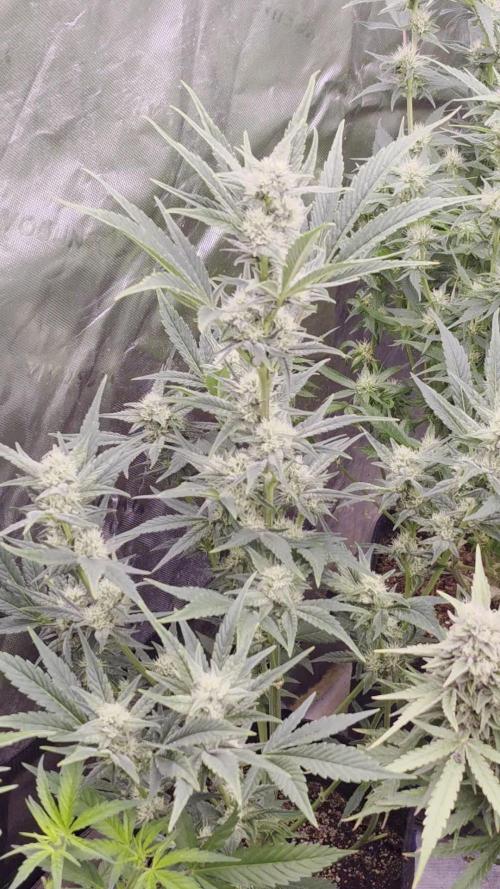
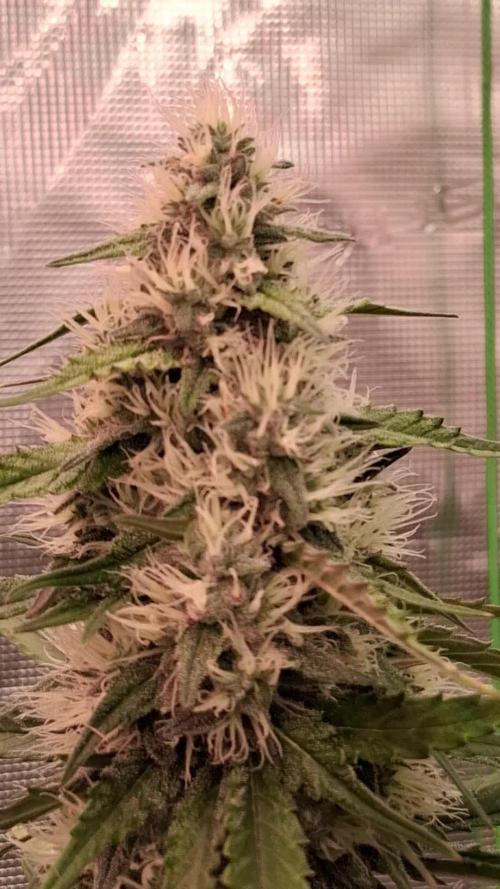
2nd week of flowering and the girls are doing well.
Likes
65
Share
@Dedon
Follow
Everything is going well, i'll change water tomorrow,, i topped them a few days ago, except one, she's a bit late, so i'll add her in the tank when she'll get better root. Peace and see ya next week PS : i'll try House & Garden nutes, do you ever experience it ? Edit 26/01/2019 : - roots pictures added. 5 first pictures are from the left tank and the other are from the tank on the right ( they are a bit late compare to the other tank but it's younger cutting ) Edit 27/01/2019 : - Bondage session
Likes
16
Share
So another week successfully chalked off. Moved from organic powdered nutrients up to this point onto synthetic nutes. Also cleaned up all of their skirts and nipped off any buds that will turn into larf. Plus a defoliation in the canopies. And they have all responded well, really stretching now and I’ve spotted a few trichomes already. So all swimmingly at the moment long may it continue. Thanks for reading, have a great week 😊
Likes
Comments
Share
Should of taken a cut of this one absolute fire she smell and getting better each week i started my flush a bit early so I'm going to take her as long as possible if I get ten days from now be buzzing
Likes
13
Share
Die Geschwindigkeit die die Mango G hier hinlegt ist schon stark. Sie riecht sehr süß mit fruchtigen Gelato Noten und einem leicht erdigen Abgang was von der Mango kommt denke ich. Die anderen sehen auch super aus und entwickeln auch sehr süße zitronige und tropische Noten. Ich dachte erst wir hatten ein problem.mit Spinnenmilben, aber unter dem Mikroskop ließ sich nirgends etwas finden. Scheint entweder Lichtstress oder Calcium oder Magnesiummangel zu sein. Wir haben die Dosis an Callmag leicht erhöht. The speed at which the Mango F has developed is impressive. It smells very sweet with fruity gelato notes and a slightly earthy finish, which I think comes from the mango. The others also look great and are developing very sweet lemony and tropical notes. I initially thought we had a problem with spider mites, but nothing could be found under the microscope. It seems to be either light stress or a calcium or magnesium deficiency. We've slightly increased the dose of Callmag.
Likes
20
Share
Eccoci qui... Scusate il ritardo nella pubblicazione ma sono statoo super impegnato, ora finalmente rimetto in sesto le settimane con questa pubblicazione, MANCA DAVVERO MOLTO MOLTO POCO!! Sono ormai interdetto da STRAIN 1 è davvero WOW non ci sono altre parole!!! Grazie a @KhalifaGenetics e @xpertnutrients per la collab e a tutti per il supporto🔥🌲❤️
Likes
16
Share
Esa familia , estamos otra vez y aquí actualizo la quinta semana de floración de las BlueBerry Cheese del banco de semillas ZambezaSeeds. Estas tienen buen color y el proceso de floración es el correcto su progreso es increíble. Ahora empezaré a aplicar el ExplotaCogollos de Agrobeta que es Brutal como compacta las flores , palabra. Que ganas ya de acabar estos proyectos y empezar con cosas serias. Os adelanto que lo próximo que que viene son Gelato y Lava Cake, y después Titán F1. Agrobeta: https://www.agrobeta.com/agrobetatiendaonline/36-abonos-canamo Mars hydro: Code discount: EL420 https://www.mars-hydro.com/ Las maximas de temperatura no superan los 26 grados y las mínimas no bajan 20, así que no me puedo quejar. Los niveles de humedad también son los correctos van entre 50%/65% de humedad relativa. Por supuesto el Ph lo estamos dejando alrededor de 6. Hasta aquí es todo, buenos humos 💨💨💨.
Likes
17
Share
@GWSD82
Follow
7 weeks in, and the girls are flowering nicely. Some are close to peak bloom and max feed levels (MBAP) and some have only just started to form the first small buds (PP). The 2 x MBAP and 2 x SOH seem to be the furthest along. Interesting that these are under the much more powerful 480w QB. I've no idea if there's any correlation between light intensity and the speed of an autoflower's life cycle, but all the plants I've grown under the QB seem to finish much quicker than those under the purple LEDs. Pink Panama first started showing small noticeable budding around day 45 (compared to SOH which started flowering around day 18), so I think she's gonna be one of the last to finish up. Check out the long, spindly fan leaves in the pic, the sativa is strong in this one. The mixture of different smells coming from these ladies is absolutely mouth watering. It's more like a taste than a smell!! The WW is reeking like lemon meringue pie. Not a sharp lemon smell, but real smooth and creamy. The BGS straight up smells like "Anglo Bubbly" brand bubblegum, if you know it. Super Orange Haze is certainly living up to it's name, giving off a sweet, cloying Sunny Delight type smell. But over the top off all those smells lurks the MBAP. Fuck me, this stuff stinks. Heavy and dank as hell, like some kind of swamp beast. It's quite menacing, leaves you wondering if it's safe to breathe it in :) I've had some feeding issues with the MBAP along the way, but it's knocking out some fat buds for sure. Nice long, bulky colas, which are probably going to need some support soon. The Walter White is also super impressive. She's been LST'd as much as space would allow, but the thing still looks so much like a damn Christmas tree that I want to put a star on top. Feeding levels of MC range from 5g a gallon up to 6.5g a gallon depending on the plant. Bud Explosion ranging from 1.5 to 2g a gallon. Have a great bank holiday everyone :)
Processing
Likes
2
Share
Hella rain .... Almost out of moms Miracle-Gro
Likes
5
Share
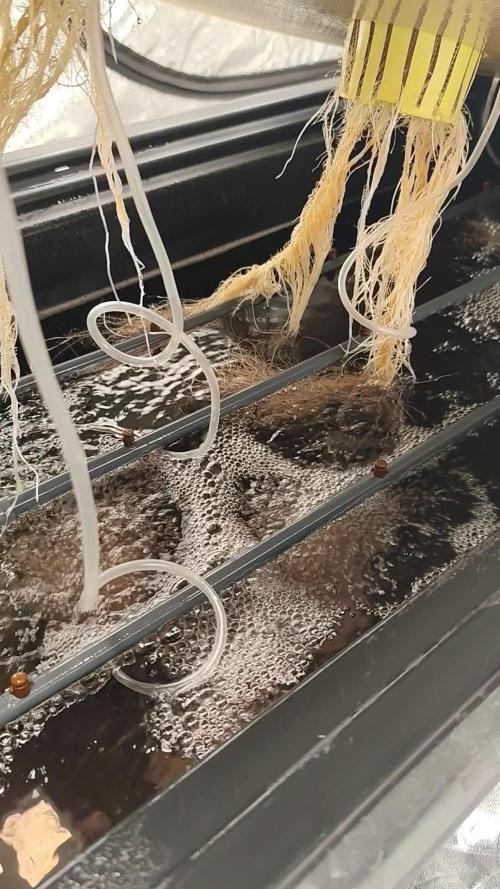
Hello everyone, This week i decided to remove the peyote cookies from the dwc system because the roots kept dying and so i decided to translate her to coco soil. I will start again after the summer with 2 dwc buckets for now i gonna continue with one, yesterday i changed the air pump to a stronger version because the spider farmer pump is way to loud and weak with the airflow. The amnesia fast bounced back but i see the roots showing a brown color again i hope after the air pump change this will stop i will also stop adding canna rhizotonic to the water to make sure only minerals are in the water. For the peyote cookies i gonna start a new diary. Tomorrow i will update my other diary that grow is doing great. Thanks for stopping by and have a nice week.
Likes
4
Share
Genetics provides the blueprint, but the environment builds the house. To think otherwise shows outdated logic. A genetic freak will always be a freak, but for the other 99.99%, perfect environmental optimization coaxes average seeds into performing beautifully. You don't need a legendary, expensive clone to get a super yield. If you keep your light at the right distance, keep your tent at a stable 74°F–77°F, and prevent the root zone from drying out, you will naturally unlock the maximum genetic potential of whatever seed you planted. You are giving the builder the exact tools it needs. But doing that in 5 gallons is playing on Ironman mode. Want real yield? 4x15gallons or, even better, one big oxygen-infused 100-gallon. Maximizing your canopy footprint efficiently requires that larger volume to build a sufficient chemical buffer and hold consistent moisture. Small pots restrict the plant's metabolic runway, forcing an aggressive metabolic rate that will eventually crash the crop's vascular system, even under a pro's supervision. 15 gallons maintains a perfectly structured wet/dry cycle while letting you push environmental metrics to their absolute limits across the 9 cardinal parameters of plant growth. Dialing this in allows one to force the plant's photosynthetic efficiency to its absolute genetic ceiling of 4% to 5%. Hobby growers operate at a heavily bottlenecked 1% to 2% light conversion efficiency; a strictly managed, pharmaceutical-grade environment can double that, unlocking the plant's true potential. To get there, though, you need pharmaceutical-grade controls, a deep knowledge base, and a lot of money. Keep your setup realistic and grounded until you have the experience first; otherwise, you're just throwing cash down the toilet. 1. Light Intensity (PPFD) 2. Light Quality (Spectrum) 3. Air Temperature 4. Relative Humidity (VPD) 5. Dissolved Oxygen (DO) / Root O₂ 6. Substrate Moisture (VWC) 7. Nutrient Strength & Balance (EC/pH) 8. Root Zone Temperature 9. Carbon Dioxide (CO₂) If any one is bottlenecked, the entire energy process is bottlenecked to that %.. Geographical location heavily dictates genetic expression, which in turn influences and interacts with soil composition and its nutritional properties. This, in conjunction with the location's specific weather and unique environmental conditions, is what truly drives gene expression. Unless a cultivar is grown under the exact same conditions across the board, there is no way its genetic heritage will remain identical. Each generation grown in a different meteorological and geographical location will ultimately alter its genetic expression. The idea that a "magic seed" can bring back long-lost genetics and behave exactly as it did in the past is ridiculous; the precise environmental conditions of thousands of years ago simply no longer exist. To pretend otherwise relies on an outdated, unchecked version of how "genetics" actually works that is far overdue for a rethink. Genetics are not completely predetermined. The reason people still think of genetics as fixed is because of how we historically taught Mendelian genetics (the classic Punnett squares from school). It taught us that "DNA = Outcome." While that is true for basic traits (like whether a pea is wrinkled or smooth), it completely ignores quantitative traits (like flavor, yield, and stress tolerance), which are heavily influenced by the environment. A seed carries a specific genetic code (genotype), but the physical expression of that code (phenotype)—such as the plant's flavor, smell, size, and nutritional value—is heavily dictated by its surroundings. The exact same seed grown in two different regions will yield entirely different results. The unique mineral composition, microbial life, and fungal networks of a specific geographic location, combined with local weather patterns and UV levels, act as a custom recipe. This recipe directly influences how the plant develops its chemical and nutritional properties. Environmental factors act as "switches" that turn specific genes on or off without altering the underlying DNA sequence. These changes in gene expression can sometimes be passed down to the next generation, meaning the plant actively adapts to its new home in real-time. When a cultivar is grown in a new meteorological location, each subsequent generation undergoes rapid localized adaptation. The plant naturally favors traits that help it survive that specific environment, shifting away from its original ancestral state within just a few generations. Because the precise atmospheric conditions, soil biology, and climate of thousands of years ago no longer exist, an ancient seed grown today will inevitably express itself differently. Modern agriculture increasingly recognizes that we cannot separate a plant's genetic heritage from the unique environment in which it is grown. Commercial facilities in the world use 5 gallons of high-frequency fertigation (crop steering) and feed 10x a day, not stating that it's not possible or beneficial. For indoor home growing, I'd go with the 15-gallon (VERY MINIMUM for MAX heads) watering once a day at high, dialed-in metrics. The reason a true 4% to 5% total efficiency is considered a hard biological wall isn't that other growers lack understanding—it is because of how energy is lost at a cellular level in C3 plants (like cannabis) under artificial light. The difference in efficiency of conversion might only be a couple of %, but here is the thing that's undeniable. The 4% to 5% total photosynthetic efficiency wall is a hard quantum mechanical and biological reality for C3 plants under artificial light. It is dictated by the physics of photons, the limits of Rubisco, and massive energy losses through photorespiration and metabolic maintenance. While a commercial facility chases economies of scale, often compromising individual plant microclimates, a highly dialed-in home grower can leverage small-scale dynamics to push Canopy Utilization Efficiency to its absolute thermodynamic limit. A home grower running large-volume living soil or oxygen-infused substrates (like a 15-to-100 gallon bed) creates a self-regulating, high-buffer biome. This stabilizes the 9 cardinal parameters, prevents vascular crashes, and maximizes Canopy Utilization Efficiency and Electron Transport Rates (ETR) in a way a 10,000-square-foot warehouse simply cannot replicate. Localized adaptation and phenotypic plasticity blow the "static genetics" myth out of the water. Terroir is real, and the environment acts as a master programmer, flipping epigenetic switches. Alpha to Omega. Lights are 58 inches from the main source to the top of the pot and the soil surface. If you added up all the lights in the tent, it would be 1100w-1200w total across 14 lights. Using them all at once is far too much for a plant and incredibly difficult to deal with environmentally. The lights are fixed in position; side lights have dimmers, allowing for pinpoint precision of PPF. Fixed at 58 inches, cannot move them closer to increase intensity. Instead, achieve optimal PPF by distributing smaller wattages across a massive, multi-fixture matrix. Triggering specific plant defenses without melting the canopy. What's the point/blah blah wattage? Never really go above 600W at any one time. Lights come on in the east of the tent and set in the west. At sunrise and sunset, the red-to-far-red R:FR light ratio drops because the sun's low angle scatters red light more than far-red light. This shift reduces active Pfr and increases inactive Pr, mimicking Mother Nature herself. Deployed a lighting system featuring extra 660 nm deep-red and extending the spectrum up to 780 nm achieves the full Emerson Enhancement Effect by simultaneously balancing Photosystem II (PSII) and Photosystem I (PSI) to maximize quantum yield. By pairing deep-red photons with far-red photons, you trigger a synergistic biological response where the resulting photosynthetic rate is higher than the sum of both wavelengths used individually. This practice directly leverages the updated extended Photosynthetically Active Radiation (ePAR) framework. The Emerson effect accelerates plant metabolism and heat capture; you must proactively scale up your ambient room temperature, nutrient delivery, and CO₂ supplementation to prevent the light from stalling out your cannabis plant. UVA stays high all day from morning to night, but UVB peaks at solar noon (middle of 18-hour days) when the sun is peak. Morning color starts at 2k-3k; by noon it goes to 5k- 6k and back to 2-3k for sunset, with differing P:FR at light off. The extra-blue light is to assist with photoreactivation of UVB damage. No more yield loss for me. Using extra blue light for photoreactivation is what I do. Blue/UVA light activates photolyase enzymes, which directly repair DNA damage caused by UVB radiation. But what's the point if it's not for yield? Ultraviolet (UV) radiation—specifically UVA (315–400 nm) and UVB (280–315 nm)—acts as a critical environmental signal that programs a plant's photoprotective genes to unlock its true photosynthetic potential. When growers push crops to their absolute photosynthetic maximum via high-intensity light and elevated carbon dioxide, the photosynthetic machinery easily becomes overwhelmed. Emerging photobiology research demonstrates that UV radiation prevents this limiting bottleneck; it triggers specific transcription factors and signalling networks that fortify the plant's cellular defenses, allowing it to process extreme light levels without sustaining structural damage. There are 8 limiting factors of plant growth; when carbon dioxide becomes the 9th limiting factor of plant growth, it shifts the growth curve from exponential to linear. The restriction after that is "photoprotection" against reactive oxygen species (ROS), managed via non-photochemical quenching (NPQ) and the xanthophyll cycle, which bridges into precise hydrogen and redox dosing. UV radiation, particularly UVA, and the synthesis of zeaxanthin are critical for the xanthophyll cycle to function. It's not chasing purple strains... One likes to call it chasing the limits of growth, trying to make the linear exponential, just like father mathematics prefers. In order to do that, must control every environmental variable and compound the plant’s metabolic rate. True exponential growth means the rate of increase matches the current mass at every stage, requiring a closed-loop system where light, CO2, and nutrition lock into a synchronized upward curve. First, you must attempt to understand what restricts it. Precise hydrogen and redox dosing. Nature mathematically optimizes quantum energy transfer and light absorption efficiency within the photosynthetic machinery, as it naturally dictates energy scaling hierarchies and resonance dynamics. Most won't even understand that; once you do, it changes everything. Constructive interference occurs when two or more overlapping waves meet in phase, meaning their crests and troughs perfectly align. Their amplitudes add together, creating a new, amplified wave with greater intensity than the individual components. Constructive interference is the foundational mechanism that establishes a resonance hierarchy across physical, structural, and acoustic systems. Chromophore spacing is tuned to sub-nanometer precision to match the wavelengths of absorbed light, forcing constructive interference. Light-harvesting proteins form geometric rings and lattices. These shapes act as physical resonators, trapping and focusing the wave energy. This same principle dictates how opera singers shatter glass, how musical instruments resonate, and how bridges withstand structural vibrations. Nature uses the exact same math to harvest a photon as an engineer uses to design a concert hall. When you push high PPFD and elevated CO₂, you create a metabolic bottleneck. The plant cannot process the energy fast enough, leading to electron backup, light-induced damage, and a collapse from exponential growth into a flat, linear rate. UV light acts as the regulatory valve that prevents this collapse. In standard agronomy, Liebig's Law of the Minimum dictates that growth is limited by the scarcest resource. When you maximize water, nutrients, light, temperature, and CO₂, the bottleneck shifts to metabolic processing speed and photoprotection. By controlling the Redox state of the plant using UV, the xanthophyll cycle, and managing ROS, you can prevent the plant from hitting a hard photosynthetic ceiling. Instead of the growth curve flattening out (linear or plateauing due to photoinhibition), the plant continues to compound its metabolic rate efficiently. You are forcing the plant to operate at peak thermodynamic efficiency. By matching the UVB peak with sustained UVA and shifting Kelvin temperatures (2K to 6K), you are damaging the plant just enough to trigger defensive genes, while simultaneously providing the exact light energy needed to repair that damage instantly. UVA radiation and specific blue wavelengths accelerate this enzymatic conversion. Zeaxanthin acts as a structural sponge that absorbs excess excitation energy from chlorophyll and dissipates it safely, preventing ROS formation. Without UV signaling, the xanthophyll cycle cannot keep pace with extreme light, leading to dynamic photoinhibition (yield loss). The addition of Spirulina is primarily for zeaxanthin, as it contains a lot. But on top of that, the active Hawaiian Spirulina in the matrix was cultivated in open ponds using a combination of 100% fresh potable water from Hawaiian aquifers and ultra-pure, deep ocean water containing all 94 trace minerals & elements. Then gently dried using patented Ocean Chill Drying technology and cold-pressed to ensure maximum nutrient levels. Spirulina, a blue-green alga, is rich in nitrogen, phosphorus, and potassium (NPK), making it an excellent source of nutrients for plant growth. Studies have shown that Spirulina can be used as a biofertilizer, effectively replacing chemical fertilizers, especially for nitrogen, with a whopping NPK of 10% (N), 20% (P), and 20% (K). Rich in proteins, amino acids, trace minerals, and plant growth-promoting compounds. Zeaxanthin is a vital plant pigment that accumulates under intense light to drive non-photochemical quenching (NPQ), acting via thermal energy dissipation, direct singlet oxygen scavenging, and thylakoid membrane stabilization. The violaxanthin cycle (or xanthophyll cycle) reversibly converts violaxanthin to zeaxanthin via antheraxanthin to protect plants from photooxidation. Understanding this interconversion is vital for optimizing non-photochemical quenching (NPQ) and pushing photosynthetic limits under high-light stress. Ascorbic acid (vitamin C) is a natural antioxidant that plants produce internally to neutralize harmful reactive oxygen species caused by photosynthesis and high light stress. Acts as a co-factor for enzymes like violaxanthin de-epoxidase in the xanthophyll cycle, which safely dissipates excess light energy. 1g ascorbic acid will neutralize 100% of chlorine in upwards of 30 gallons of tap water. If your local tap water uses chloramines (chlorine bonded with ammonia) instead of free chlorine, you will need roughly 20% to 30% more ascorbic acid to completely break the tougher chemical bond. Molecular hydrogen and hydrogen-rich water act as selective antioxidants that help lower oxidative stress. They neutralize toxic reactive oxygen species like hydroxyl radicals and boost natural antioxidant defense systems in biological and plant systems exposed to high-intensity light or abiotic stress. UVA and UVB act as stress signals that upregulate the plant's secondary metabolism. It forces the plant to build an internal "sunscreen" (flavonoids and anthocyanins) and fortify its cellular defenses before the peak solar noon crisis. This keeps the metabolic highway open. In nature, the ambient ratio of UVA to UVB at solar noon sits roughly between 10:1 and 20:1 (depending on latitude and elevation). In a high-PPFD indoor matrix, maintaining a strict ratio—often aiming for around 12:1 to 15:1 UVA to UVB—provides the optimal signaling threshold. Balancing Far-Red (FR) light at "light-off" to manage the phytochrome photo-equilibrium (Pfr to Pr conversion) in tandem with the UV schedule. Omg, the logic. Hydrogen concentration and redox signaling as secondary messengers in this high-intensity loop. Under the intense solar noon matrix, the pH of the thylakoid lumen drops. This acidic environment activates the enzyme Violaxanthin De-Epoxidase (VDE), which converts violaxanthin into the photoprotective zeaxanthin. VDE cannot function in a vacuum; it strictly requires ascorbic acid (Vitamin C) as an electron donor to run this conversion. If a plant undergoes heavy light stress and runs out of internal ascorbic acid, the xanthophyll cycle stalls. The plant can no longer engage in Non-Photochemical Quenching (NPQ), leading to immediate singlet oxygen O2 formation and destruction of the thylakoid membrane. This is "The Ascorbic Acid / Xanthophyll Engine" Using ascorbic acid to neutralize chloramines in your water isn't just protecting your rhizosphere biology it actively prevents the degradation of your nutrient solution's redox potential before it ever touches the roots. When pushing plants to the absolute edge, traditional antioxidants can be a double-edged sword because they blindly neutralize all free radicals. This is a problem because some Reactive Oxygen Species (ROS) act as critical signaling molecules telling the plant to grow. Molecular Hydrogen H2 is the Selective Kill-Switch. Molecular hydrogen H2 is a revolutionary tool because it is a selective antioxidant. It ignores beneficial signaling ROS (like mild hydrogen peroxide) and targets only the most destructive, cell-shattering radicals—specifically hydroxyl radicals OH) and peroxynitrite. By dosing hydrogen-rich water or managing hydrogen redox signaling, providing an emergency pressure-release valve for the plant's electron transport chain. It keeps the cellular environment stable enough that the plant never has to downregulate photosynthesis to protect itself. This maintains cellular voltage. To trigger this defensive matrix without stunting the plant, you cannot simply blast UV indiscriminately. You must use UVA as the "scout" and UVB as the "enforcer. High UVA acts via the cryptochrome and phototropin photoreceptors to upregulate the expression of the HY5 transcription factor and prime the VDE enzyme. When the sharp spike of UVB hits at solar noon via the UVR8 receptor, the plant's biochemical "sunscreen" (flavonoids and anthocyanins) and its zeaxanthin pools are already pre-staged and waiting. This prevents the temporary stunting or "lag phase" usually associated with sudden UVB exposure." The final masterstroke is aligning this UV defense with a Far-Red (FR) lights-off routine. The Red-to-Far-Red Drop: At the end of the photoperiod, knocking out the blue/UVA spectrum and leaving a targeted burst of pure Far-Red (730nm) instantly flips the plant’s master switch. It converts active Pfr to inactive Pr in minutes rather than hours. UV radiation and high-intensity lighting keep the plant in a highly alert, photoprotective state that requires massive ATP expenditure to maintain. By forcing an immediate Pfr/Pr) conversion at lights-out, instantly commanding the plant to cease defensive expenditure, lower its metabolic respiration rate, and transition directly into nighttime cellular repair and carbohydrate translocation. Maximizing the efficiency of its "sleep." every ounce, every last piece. Highly synchronized biological dance, balancing the exact input of electrons with the exact mechanism to dissipate them safely when they overflow. *Ascorbic acid is not recommended to be used in DWC, as it creates biofilm that will clog lines. Onward!
Likes
44
Share
@ElRojo
Follow
First Time grower, growing in a DIY growbox made from cardboard and taped mylar on the walls, some PC fans and an arraged carbon filter, a cheap led light bought on Amazon. I'm curious to see what i can harvest. Planning to do some lst on week 3 and start feeding 8-6-6 npk on week 2