


Processing
Likes
Comments
Share


@eldruida_lamota
Follow
Como estáis familia? Yo flipando y es que todo lo que provenga de cheese me encanta, farm cheese del banco genofarm, repleta de polen,parece los Pirineos en pleno enero cuando nieva.
Es una cepa increíble el problema que le veo es su olor penetrante, apesta enserio es muy fuerte su olor, seguimos alimentándola con advanced nutrients quitamos todos los adictivos menos overdrive y la base sigue dando caña y si no mirar su color.
Todo este proyecto e de agradecerlo a mars hydro que sin ellos no es posible este proyecto, enserio este led es bomba.
Ph controlado , humedad por debajo de 50% temperatura entorno a 27 algo alta pero no hay problema alguno.
Muchas gracias a todo el equipo de mars hydro de nuevo, agrobeta que aunque no participen los productos en el diario si van hacerlo en un futuro, y gracias a vosotros que sin grow diaries y sin todos vosotros usuarios , tampoco es posible, así que gracias, muy buenos humos 💨💨💨.

Likes
5
Share

@Bread_n_Buds
Follow
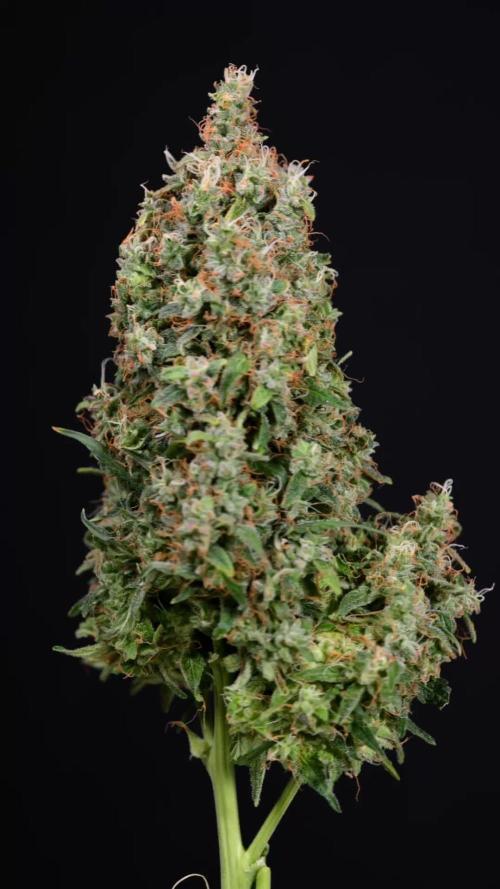
Our Critical Cheese Automatic #1 from Zamnesia Seeds is ready and is a pure spectacle of nature.
It's truly grown with love. I really liked how I cleaned up the lower parts of the plant, eliminating unnecessary growth but giving the top buds plenty of strength, which turned out really well, aligned, and very uniform. The main cola is truly large and majestic.
Maturity Levels - The resin content is excellent. The trichomes are mostly white and milky, with some clear and quite amber hues. Some very beautiful red-headed trichomes are quite common. The pistils are almost all red.
The overall shape of the plant is truly beautiful.
Techniques Chosen: As mentioned, here we only did pruning, lollipopping, and defoliation. Basically, we just cleaned up the lower parts, which, as mentioned, helps us achieve better results at the top. We have another plant processed using LST, which you can find in recent diaries.
We're 100% organic and 1000% Plagron, as always.
The soil we've chosen is the recently launched Plagron Bio LightMix, which will allow us to start with smoother and more reliable watering, without the sudden changes that liquid fertilizers can cause. A week's worth of soil is enough, so don't overdo it.
Choose your preferred style and calculate your results on the website:
www.plagron.com
Visit the new Growshop area on the Zamnesia website:
Z - https://www.zamnesia.io/it/531-growshop
A fantastic strain, not too tall but very bushy! Give it a try!
Z - https://www.zamnesia.io/en/3329-zamnesia-seeds-critical-automatic-feminized.html
Z - Not happy with what they already had in their hands, the expert breeders at Zamnesia Seeds wanted to embark on a journey into the world of autoflowering genetics, aiming to improve a great British classic... the Cheese cannabis strain. They crossed Critical with a high-quality Cheese specimen, enriched with a significant amount of Ruderalis. The result is an extremely potent, therapeutic, and easy-to-grow autoflowering version. This new improved strain has been named Critical Cheese Automatic. Critical Cheese Automatic embodies everything that made the original Cheese so famous, acclaimed, and beloved around the world. We're talking, of course, about the skunky flavors and pungent aromas this strain unleashes, not to mention the overwhelming effects it induces. Lovers of the original Cheese will surely appreciate this feminized reincarnation. Smoking Critical Cheese Automatic produces exceptionally powerful sensations for an autoflowering strain. Its effects are quite strong and highly physical, both in intensity and duration. With these properties (or "body") in mind, it's no wonder so many medical users are the first to want to get their hands on this "skunky" plant. Those suffering from chronic pain, inflammation, stress, anxiety, and migraines (to name just a few of the ailments it can alleviate) will notice their symptoms diminish, if not disappear completely, thanks to this strain's potency. With this autoflowering "upgrade" of Cheese, even novice growers can achieve excellent results. It's a vigorous plant, incredibly easy to grow, and requires little maintenance.
Commercial growers looking to generate income will appreciate Critical Cheese Automatic primarily for its life cycle: from germination to harvest in just 10 weeks. When grown correctly, it can produce harvests of 120-150g per plant. In addition to its excellent yields, Critical Cheese Automatic reaches a rather compact size (1 m), making it highly suitable for any type of grow. That said, Critical Cheese Automatic only thrives when grown outdoors in warm climates (like those of Spain or Italy).
So, in conclusion, whether you're a beginner, veteran, or commercial grower, Critical Cheese Automatic offers great satisfaction to everyone.
You know it, but I recommend it. You'll find so much beauty here, essentially "the best nature has to offer."
Z - www.zamnesia.com
Music // www.radionula.com
+ Feng Shui Music
+ Frequency 432Hz


Processing
Likes
2
Share


@Valedor
Follow
semana de crecimiento de tricomas, ademas las flores presentan un crecimiento muy bueno, ya están madurando de verdad, el próximo cultivo lo documentaré con fotos mas claras, he aprendido mucho de tenerlas en hidroponia, me gusta y lo voy a seguir usando y explotando


Likes
2
Share


@Skinnytalls420
Follow
Stunted but great 👍 very juicy and smells very nice the second plant hasn’t got any purple and has struggled abit but I think it’s still gonna be good
Likes
6
Share



Likes
14
Share


@Bushleague_Botanicals
Follow
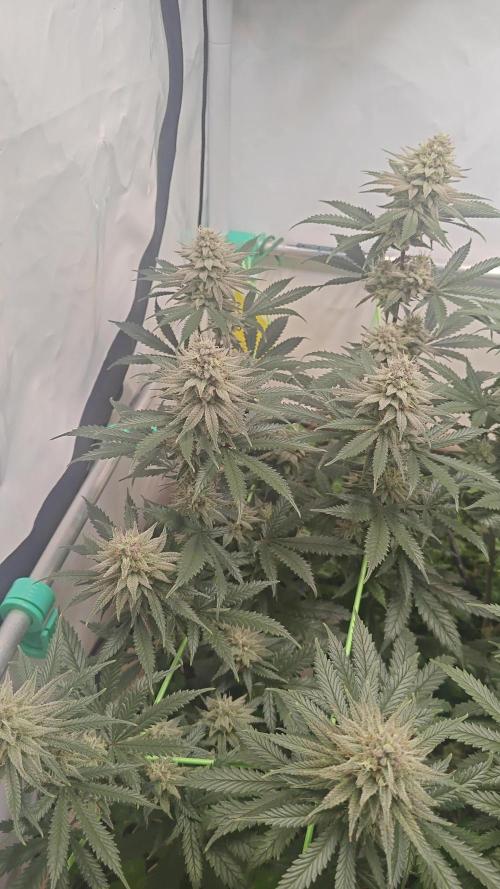
Topped and pruned this week. Probably too late. Definitely watered a lot less. Be fore I am certain that I Was drowning them


Likes
37
Share


@RFarm21
Follow
11/9 - Flush 4L de água para cada. pH 6.5.
17/9 - começo das 48h de escuridão
19/9 - HARVEST DAY!
Likes
2
Share


@Yiyis_Grow
Follow
Lámpara: Bestva Quantum Board LED LM301B
Sustrato: 2 Jiffy fino : 1 Floragard
Especies: Charlotte Dream CBD - Auto Dark Purple - Purple Kush - Triping 25 - Gelato Ice
Acontecimientos
1. Hoy 11/01/2022 se completarán las 10 macetas con tres plantas que ya germinaron y están listas para poner bajo la lámpara. Van a tener 1 semana de diferencia respecto a las otras 7.
2. Agua reposada, viento y Luz 20 h/día.
Buenos humos


Likes
10
Share

@DogDoctorOfficial
Follow
💙 Project Blue Tent – Week 10
Blue Waffle F1 – Pheno A
🌸 Sometimes the Best Thing You Can Do Is Watch
Hello everyone, and welcome back to another chapter inside Project Blue Tent! 💙🌱
If you've been following this project, you'll know that the last few weeks have been anything but quiet.
We had aggressive stretching.
We had to reorganize the entire vertical space.
We moved the carbon filter and extractor outside the tent.
We raised the LEDs.
We installed a second SCROG.
We performed a major defoliation.
We added another fan underneath the canopy.
We adjusted the nutrition.
Basically...
we gave ourselves plenty of work. 😂
But this week?
Not so much.
And honestly...
that's exactly how I like it.
Because when the plants look this good, sometimes the smartest thing a grower can do is step back and watch.
🌿 PHENO A – NOW WE WATCH THE WORK
Blue Waffle F1 Pheno A is looking absolutely beautiful.
She's still standing at approximately 145 cm, with an enormous amount of flowering structure developed throughout the plant.
And this is where I'm particularly enjoying the project now.
We're finally getting to see the results of all those decisions we made earlier.
The long vegetative period created the structure.
The first SCROG helped organize it.
The stretch showed us where we needed more control.
The defoliation opened the plant back up.
The second SCROG gave those tall flowering branches additional support.
Moving the ventilation equipment gave us valuable vertical space.
Raising the LEDs gave the tops more breathing room.
And the additional airflow helped keep everything moving through that newly opened structure.
Now?
We're watching the plant do its thing.
🌸
✂️ THE RESULTS OF THE DEFOLIATION ARE BECOMING VISIBLE
One of the things I'm paying particular attention to this week is the result of the heavy defoliation we performed previously.
At the time, the plants looked dramatically different.
We removed a substantial amount of foliage because the canopy had become extremely dense.
But the objective was never simply to make the plants look cleaner.
The objective was to create a more functional flowering structure.
And now we're seeing why.
There is much better visibility through the plant.
The flowering sites have more space around them.
Air can move through the structure more easily.
The individual branches are much easier to follow.
And most importantly...
the plant doesn't look like it's struggling because of what we did.
Quite the opposite.
She's continuing to develop beautifully.
This is the part of the process I find fascinating.
You make a structural decision weeks earlier...
and then you have to wait.
You don't immediately know what the final result will look like.
Now we're beginning to see it.
And I have to say...
I'm very happy with what I'm seeing. 💙
💡 INTRODUCING THE LUMIFLORA UNDER-CANOPY LIGHT
And because we're apparently incapable of leaving the setup completely alone... 😂
we've introduced another piece of equipment.
This week, we're adding the LumiFlora 150W full-spectrum under-canopy light.
The reason is very simple.
These plants have become BIG.
Really big.
😂🌿
At this stage, the upper canopy is receiving plenty of light from the main fixtures.
But once you have a plant with this much vertical structure and this much foliage, the lower portions naturally receive less direct light.
That's simply what happens inside a dense canopy.
So instead of trying to solve that by constantly removing more foliage, we're experimenting with providing additional light from underneath.
The LumiFlora unit is 150W full spectrum, with additional emphasis toward the red portion of the spectrum.
We're positioning it underneath the canopy so that we're able to provide supplemental light to areas that would otherwise receive considerably less from above.
And I'm particularly interested in watching how the lower flowering sites respond over the coming weeks.
We're not trying to replace the main lighting.
We're complementing it.
The main fixtures continue doing the heavy lifting from above.
The LumiFlora is simply giving the lower canopy another source of usable light.
And now...
we watch.
🌱💡🌸
🕸️ THE CANOPY IS FINALLY WHERE WE WANT IT
The second SCROG is also doing exactly what we hoped it would do.
The flowering branches are now supported within the upper structure, rather than being allowed to move wherever they want.
This is particularly useful with Pheno A because she has so much vertical growth.
The first SCROG helped create the architecture.
The second is now helping support that architecture.
And together they have transformed what could have become a very difficult flowering structure into something much more manageable.
Looking through the canopy now, you can actually see the work we've done.
And that's probably my favorite part of this week.
We're not building anymore.
We're seeing the result of the building.
🌬️ AIRFLOW – LETTING THE CANOPY BREATHE
The airflow arrangement we established last week is also staying in place.
With the additional Zamnesia clip fan underneath the canopy and the upper airflow working across the plants, we're keeping air moving through multiple levels.
That becomes particularly important now that we're supplementing the lower canopy with additional lighting.
The goal is to keep the environment moving and avoid stagnant pockets developing underneath the plants.
Again...
nothing dramatic this week.
And that's good.
😂
When everything is working properly, you don't need to keep changing it.
NUTRITION – KEEP FEEDING, KEEP WATCHING
The girls are continuing with the established PLAGRON Hydro feeding program.
The current recipe remains:
PLAGRON Hydro A — 2.2 ml/L
PLAGRON Hydro B — 2.2 ml/L
🌱 PLAGRON Hydro Roots — 1 ml/L
🌸 PLAGRON Power Buds — 1 ml/L
pH adjustment as required
The plants are responding very well to the feeding, so there's no reason to make unnecessary changes.
That's another lesson I'm learning from this project.
When the plants are telling you that they're happy...
listen.
😂💙
There's no prize for changing something every week.
Consistency is part of the experiment too.
🌸 THIS WEEK'S REAL EXPERIMENT
So, what are we actually doing this week?
Honestly?
We're watching.
😂
We're watching how Pheno A develops after the major structural work.
We're watching how the flowering sites progress.
We're watching how the second SCROG supports the branches.
We're watching how the airflow performs through the opened canopy.
And now we're watching what happens when we introduce supplemental 150W full-spectrum lighting underneath the canopy.
This is the point where I don't want to interfere unnecessarily.
We've already done the work.
Now we need to give the plant the opportunity to show us what that work achieved.
🌡️ CURRENT GROW CONDITIONS
🌸 Flowering: Week 10
📏 Height: approximately 145 cm
💡 Light schedule: 12/12
☀️ Day temperature: 27°C
🌙 Night temperature: 27°C
💧 Relative humidity: 61%
⚗️ pH: 6.01
⚡ EC: approximately 2.49 mS/cm
🌡️ Solution temperature: 26°C
🌱 Substrate temperature: 24°C
🌬️ CO₂: approximately 666 ppm
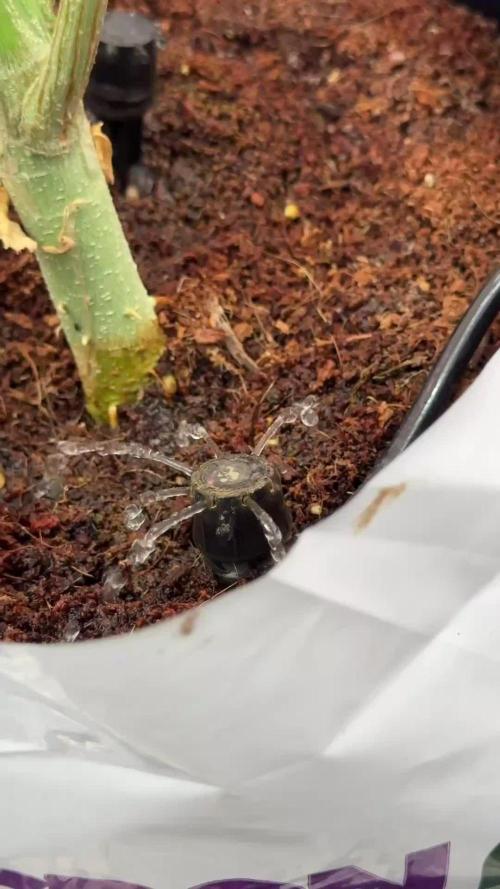
💦 Watering: approximately 1.6 L per plant / 24h
? Pot size: 8 L
💡 LumiFlora Under-Canopy: 150W Full Spectrum
🔬 SAME ROOM. SAME ENVIRONMENT. ONE VERY INTERESTING PLANT.
This is still one of my favorite aspects of Project Blue Tent.
We're documenting individual phenotypes while keeping the overall environment consistent.
Same room.
Same lighting environment.
Same irrigation.
Same nutrition.
Same cultivation philosophy.
And yet each plant still develops its own character.
Pheno A has certainly made herself known. 😂💙
She's tall.
She's vigorous.
She's heavily branched.
And she's giving us a fantastic opportunity to see what happens when a large flowering plant is managed through multiple stages of structural training.
Now we're simply waiting to see the flowers take over the story.
🌸 FROM TRAINING TO FINISHING
We've spent a huge portion of this project talking about growth.
Training.
Stretch.
Canopy management.
Defoliation.
Support.
Airflow.
Lighting.
But now we're entering a different part of the journey.
The structure is established.
The canopy is supported.
The room has been reorganized.
The airflow is in place.
The nutrition is stable.
And now the plant gets to concentrate on finishing.
That's why this week feels different.
There isn't a huge intervention to announce.
There doesn't need to be.
The work has already been done.
Now we're watching the result.
And sometimes...
that's the most exciting part. 💙🌸
💙 LOOKING AHEAD
Over the coming weeks, I'll be watching the response of the lower canopy particularly closely.
The LumiFlora under-canopy light is now part of the experiment, and I'm interested to see how the additional supplemental lighting influences the development of those lower flowering areas.
At the same time, we're continuing to monitor the upper canopy, environmental stability, nutrition, and overall flower development.
No major changes planned.
No unnecessary interference.
Just observation.
Because right now...
Pheno A is doing exactly what we want her to do.
And I'm very happy to let her continue.
🌸💙🌿
🙏 A HUGE THANK YOU
A huge thank you once again to Zamnesia for making Project Blue Tent possible and for giving us the opportunity to explore these Blue Waffle F1 phenotypes individually.
Thank you to PLAGRON for the Hydro nutrient line and for supporting the plants throughout this vigorous cycle.
A massive thank you to Mars Hydro for the irrigation and drainage system that keeps this ecosystem running smoothly.
Thank you to LumiFlora for the 150W full-spectrum under-canopy light, which we're now putting to the test as part of the next stage of this experiment.
And of course, thank you to GrowDiaries for giving us the platform to document the entire journey.
Most importantly, thank you to everyone following Project Blue Tent.
We've spent weeks building this canopy.
We've stretched it.
Bent it.
Supported it.
Opened it.
Reorganized the room around it.
😂💙
And now?
We're finally at the fun part.
We sit back...
we watch...
and we let Blue Waffle F1 Pheno A show us what she's capable of.
Until next week...
More flowers. More observation. Less interference. 🌸💙🌿
Growers Love, happy growing, and take care everyone! 🌱💙
Likes
44
Share


@MadeInGermany
Follow
Info :
Unfortunately, I had to find out that my account is used for fake pages in social media.
I am only active here on growdiaries.
I am not on facebook instagram twitter etc All accounts except this one are fake.
Harvest day 67.
Hey guys :-) .
Finally the time has come the lady has been harvested :-).
In the last week the water was freshly mixed with Canna Flush and an Ec of 0.4 in order to completely use up the nutrients in the last few days 👍.
You can see it on the beautiful autumn yellow leaves :-).
Before harvesting, the lights were turned off completely for 48 hours.
After everything was neatly trimmed by hand, the buds were put into the drying tent, where they are allowed to dry for the first 8-12 days at a humidity of 62% before they ferment with 62% boveda packs in jars.
After another 3-4 weeks in the glasses, the 58% boveda packs come in for the final touch :-).
Of course, the final update comes from the fermented end product 👍.
Until then, I wish you all a lot of fun and stay healthy 🙏🏻
You can buy this Strain at
www.Zamnesia.com
Type:
Runtz
☝️🏼
Genetics:
Zkittlez
X
Gelato
👍
Vega lamp: 2 x Todogrow LED CXB3590 COB 55 W
1 x Sanlight S2W 62 W
💡
Flower lamp : 2 x Todogrow LED CXB3590 COB 55 W
1 x Sanlight S2W 62 W
💡 ☝️
Grow Aero System : Growtool 0.8
☝️
Fertilizer:
Canna Aqua Vega A + B , Canna Aqua Flores A + B , Rizotonic, Cannazym, CANNA Boost, Pk 13/14, Canna Cal / Mag, Canna Ph - Grow, Canna Ph-Bloom
☝️🌱
Water:
Osmosis water mixed with normal water (24 hours stale that the chlorine evaporates) to 0.2 EG. Add Cal / Mag to 0.4 Ec Ph with ph- to 5.6 - 6.4
💦 💧
Likes
46
Share


@Wastent91
Follow
Inazzitutto ringrazio Mars hydro per avermi dato la possibilità di diventare un vostro collaboratore! Per me in Italia dove sono io è un onore poter dialogare con persone del vostro calibro e soprattutto crescere in una community parrallela alla mia reale vita che è qua in Italia, in cui sono un criminale e devo sempre state attento a cosa dico, a cosa faccio.. etc... Mentre qua mi sento davvero libere di esprimere me stesso! La mia passione al 100 x cento! Confido nel vostro supporto! Grazie anche alla fiducia di tutte le case dei semi che per ora sono davvero fantastici! Vi adoro ragazzi! Non vi nascondo che ora mi sono venute le lacrime agli occhi! Perché davvero vorrei che dove mi trovo cambiasse qualcosa e finalmente potrei sopravvivere grazie alla mia passione.. ma purtroppo sono solo sogni per ora molto irrealizzabili.. grazie a tutti cmq del supporto vi adoro a tutti quanti della community di Grow Diaries! Buon 420 a tutti

Likes
13
Share

@Greybeardbud
Follow
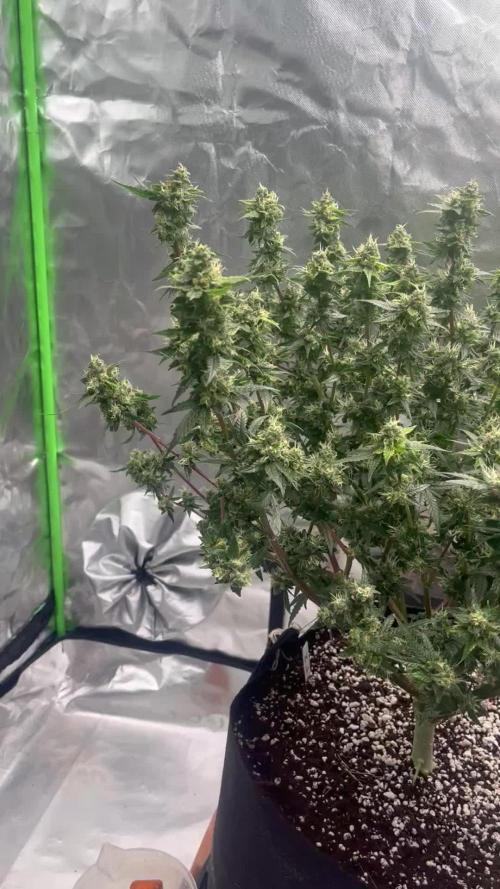
Gave them a corrective flush tonight to drop salts from 1200ppm to 700ppm then fed 5L to each of 620ppm. End result salts have been flushed out to push the final 2 weeks of stacking and finishing. Broke 3 more buds off moving them around for which I’m cranky about but the mrs gets a bit more of an early “test” first bud I broke off went from 10.3g to 2.6g smokes smooth with almost no cough and hits fairly well. Trichomes are roughly 80% milky on the taller one with some ambers appearing on the shorter one.


Likes
21
Share


@blendmedmedman
Follow
This grew really nice and took a lot of beatings by me, she has great smell and I will be growing this over and over again. Just great I made a small handful of seeds but now I understand making seeds is not easy, I did it, it was a great learning experience that is just another part of what this great plant can do. this whole grow started great then took some dives and I was going to give up, I am real glad I did nt. I would have had a larger yield if I did not cut the stem to far when I topped, I was doing this plant as a research project as I know super skunk can take a beating and keep going. The strain is a real winner and bounces back as I put this one through a lot. great strain..

Likes
15
Share


@Shizzlemanizzle
Follow
Topping was great ! Starting now with LST using a wire but gently don’t want to harm the plant they opened up pretty good 🙏🏽 I am increasing water by looks.

Likes
17
Share


@TreeFarmerCharlie
Follow
Day 42 of flower (day 93 since germination). No major changes over the last week. The growth has slowed down, and the buds are fattening up. Each plant was was fed 700mL compost tea, today, that was brewed for 24 hours.
Likes
76
Share


@TheFattyMcCoy
Follow
Hey yall!
Super stoked to show yall some beneficial nematodes in my soil. Lots of other beneficials in there, the nematodes are the most fun to me! Love to show yall what Korean Natural Farming and JADAM can do.
This is all Natural, all organic, all homemade inputs. I just want to prove to you all, the entire community, and the entire cannabis industry that you don't need to drop money on your inputs. You can source everything yourself!
Remember, Bottles are for Babies! 🍼 👶
You don't need to buy into anything, you don't need to invest in anything, but YOURSELF!
You are the most valuable tool, you are the most dangerous thing on this Earth 🌎
I want to be a resource to everyone and anyone who is willing to be open minded and learn. It doesn't matter your background, where you live, what color you are, or what is in your past. Your future and the future of this Earth is in your (our) hands. Togetherness over oneness
Anyways, weekly compost tea applications and quality compost gets you gold!
Also hand crafted inputs with love makes a huge difference. Use what you have near you, if you are wildcrafting inputs, be sure to not take from nature without giving back. Recycle, use less chemicals, pour your extra compost tea in your community.
We can stop this wild climate change, but we can seriously slow it down, almost completely if we all do our part.
I hope these posts inspire you to go down that rabbit hole 🐇 🐰 and get your hands dirty.
Use and reuse the same soil, use larger pots or go in a living bed if possible.
Have fun and learn something each day, pass on love ❤️ 😍 learn from your mistakes, that is what makes us stronger. No matter the mistake in your garden, or in life, we can always learn something new about life and ourselves.
You are not alone on this journey, I got your back, and I truly believe in you.
Peace and blessings to all!
❤️ 💙 💜 💖 💗

Likes
10
Share


@blueslinks85
Follow
had a pretty hot week this week temperatures up into the mid-90s however nights are nice and cool everything is starting to come into really good production Bud production is nice and trichomes are looking well

Likes
19
Share

@Splashy
Follow
16.01.2026
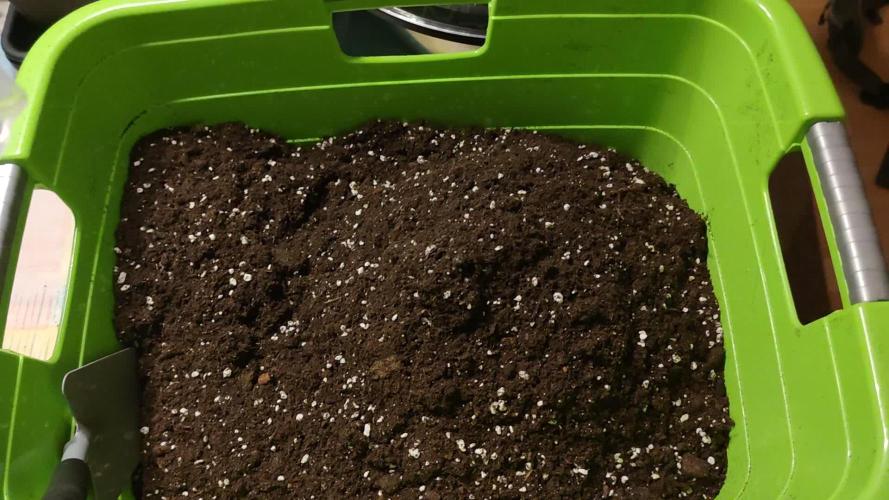
Heute wurde umgetopft in den 11l endtopf. Ich habe biobizz all Mix für den endtopf genommen, da ich noch genug für diesen Durchlauf da hatte. Als dünger habe ich Greenhouse feeding Bio grow genommen , da ich denn all Mix nehme, habe ich die angegebene Menge auf 1,5g/l Substrat verringert und mit der erde vermengt. In das gießwasser habe ich 1g/l Wasser dann noch den Bio enhancer gegeben, wird ab jetzt alle 14 Tage ins gießwasser gegeben. Den ph auf 6,5 angeglichen und das calmag ebenfalls angeglichen mit 1ml/l.
Dieser wird auch mein erster grow sein, in dem ich die neue smarte Steckdose von mars hydro benutze. Mit dabei sind die Sensoren für ppfd, CO2 (das Steuer ich nicht), Substratfeuchte und ec, Luftfeuchtigkeit und Temperatur Sensoren. Ich habe einen luftbefeuchter angeschlossen und lasse das ganze System von der Steckdose steuern. Ich habe meine Luftfeuchtigkeit auf 65 eingestellt und meine Temperatur auf maximal 28°c. Die Abluft geht erstmal nur an, wenn es zu warm oder zu feucht da drinnen wird, sonst ist sie ausgeschaltet. Den Umluft Ventilator habe ich noch mit laufen auf mittlerer Stufe, er ist auf lampenhöhe .
Gegossen habe ich, bis unten drain raus kam, in 500ml Schritten. Es waren ca 3l pro Topf was rein gegangen ist bis unten was raus kam. Jetzt lass ich sie erstmal stehen und fange erst wieder an zu gießen wenn die Substrat feuchte unter 60% fällt. Nächste Woche erhöhe ich die ppfd dann auf 300.