




Likes
34
Share


@Zzenith
Follow
Welcome to the week 6
Day 37
Did some LST, a bit, and normal level defoliation, tho I removed lots of leaves.
I think I will defoliate it once more in a week or so.
I will check on her in couple hours and post "after after" photo.
Day 41
I can smell her sweet smell already. It's unbelievably sweet. But I really got the issue with carbon filter and smell right now. I need to stock up some more Ona Gel, carbon filter is expired, replacing it now will be very difficult if not impossible without damaging the plant...

Likes
10
Share


@FantasticAttempt
Follow
This is where we are at .. I don't know if I should cut the bigger leaves to help with energy 🤔

Likes
69
Share


@Natrona
Follow
*****DIVINE SEEDS *****
*****FRACTAL***** Sponsored grow
Week 1
Germination April 6. After starting seeds in moist cotton pads, I put the sprouted seed in seed starting soil. Their 5-gallon air pots ready and waiting for the girl's final home.
This week 7-13 consisted of plain ph 6.6-6.9 water only. I gave a capful in the morning and evening.
FRACTAL
Fractal is an especially psychedelic strain that Divine Seeds developed for esoteric and mystical experiences, meditation and creativity. A potent and vivid landrace variety from Southern India was crossed with a sticky leaning Indica (mostly Afghani), then Skunk #1 joined this company. Their progeny underwent multiple selection experiments, until its massive built, resin concentration and hypnotizing powers reached an ultimate level. The result is now known as Fractal – resinous, spicy and productive. Best choice for commercial growing: a compromise between bigger yields and fast ripening! A great source of hashish that has something incense-like to its musky smell.
Indoors expect 170 сm height, out of doors plants grow up to 200 сm. Fractal fits for all types of growing environment: grow boxes, hydroponic or aeroponic setups, outdoor plantations, balconies, terraces and green houses. For more weight it is recommended to train Fractal plants to broaden their structure and limit their vertical growth. For that purpose use ScroG or SoG, LST, FIM or topping, supercropping or mainlining – there are no limitations for the strain itself, but certainly low-stress methods are recommended to smaller samples. Fractal has an inherent immunity to molds and insect pests, but since its colas are thick, protect your plants from stale air. Also during rainy weeks your plantation may need to be covered. Ready for outdoor harvesting in October. Big and dense buds the color of olive, hunter green heavily coated with crystals.
Whole Fractal buds smell hashy and earthy, while cedar and fruity hints are noticeable on breaking. Measure your portion carefully: the potency is above average! With Fractal you experience an overall stoning that either keeps you put or slows your motion down, also vertigo is possible. However, in moderate dosage the impact is described as a pleasant sensation of well-being and placidity. Perfect for spending a night by a bonfire without talking, therefore is more often enjoyed as a solo smoke. Efficiently relieves muscle spasms and seizures, inflammations, combats insomnia and increases your appetite. Up to 3 hours of altered state of mind can be expected. Best consumed at night time.
Pots: 5gallon Air pots
Soil Fox Farm Happy Frog Amended with worm castings, dolomite lime and mychorihiza
Seeds provided by Divine Seeds
Divine Seeds breeding company
The link to Fractal Feminized Seeds
Fractal - Divine Seeds breeding company
The link to Fractal Auto Seeds
Auto Fractal - Divine Seeds breeding company
Until the plants are big enough to go outside, I will be using my AC Infinity tent and equipment. Once outside, I will be watering with well water and any additional fertilizers or amendments will be determined at that time.
=================================
Equipment: AC Infinity
CLOUDLAB 844 – Advance Grow Tent 48”x48”x80”
CONTROLLER 69 PRO – Grow Tent Controller
CLOUDLINE LITE 6 - Inline Fan 6"
IONBOARD S44 – LED Grow Light Board 400W
CLOUDRAY S6 – Oscillating Circulation Clip Fan
Carbon Filter 6”
Nutrients: Total Plant Solution
TPS1
Canopy
Signal


Processing
Likes
2
Share


@Patillac31
Follow
●Day 49, end week 7. Added bembe, Boomerang, and blackstrap molasses to the diet. Noticed some brown freckles on a handful of leaves. Hopefully the cal and mag in the molasses will help get me through another week before the big flush🤞 recalibrated my p.h. meters. On to week 8
●Day 44 just picked up a new microscope (Wireless Digital Microscope, ROTEK 50x and1000x Microscope Magnification with HD 1080P 2MP Camera, Mini Pocket Handheld Microscope Camera with Light Compatible for iPhone Android, iPad Windows Mac) via Amazon. So, sorry for the blurry trichome pics. I'll work on it. This diary will focus primarily on Big Bud by Seedstockers for the remainder. But the agent orange will finish her journey. Pretty pleased with how things are going. Any suggestions or comments are always appreciated. Happy Gardening ✌️🌱🤙🖖


Likes
Comments
Share


Likes
1
Share

@Bones_1986
Follow
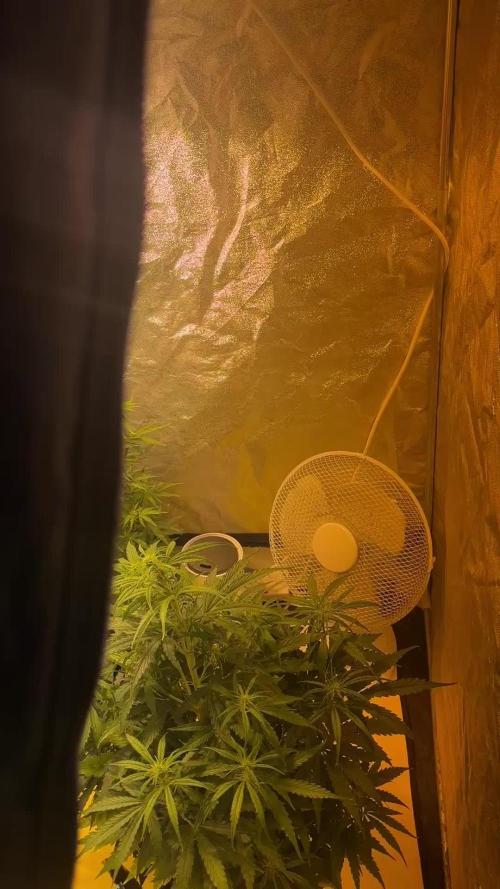
Day 36
Stretching has slowed but not stopped. 28-29” today. Feeding 3L per plant now. The orange haze seems to be flawless, the other 2 needing a little extra calmag and N, but early flower can be expected. Humidity holding at around 50-55% little higher than I want but plenty of air blowing inside and strong extraction, so no problem.
Would like to see the bud sites fill out over the next few weeks, before swelling. White pistils everywhere very exciting to see these blossom.
Lovely mild fruity smell already from the tent

Processing
Likes
12
Share


@DD1FORTY8
Follow
**** WEEK 10 ****
both hulks shaping up to be some real beasts. just can’t beat good ol sunlight
Likes
14
Share

@HazeLiebhaber
Follow
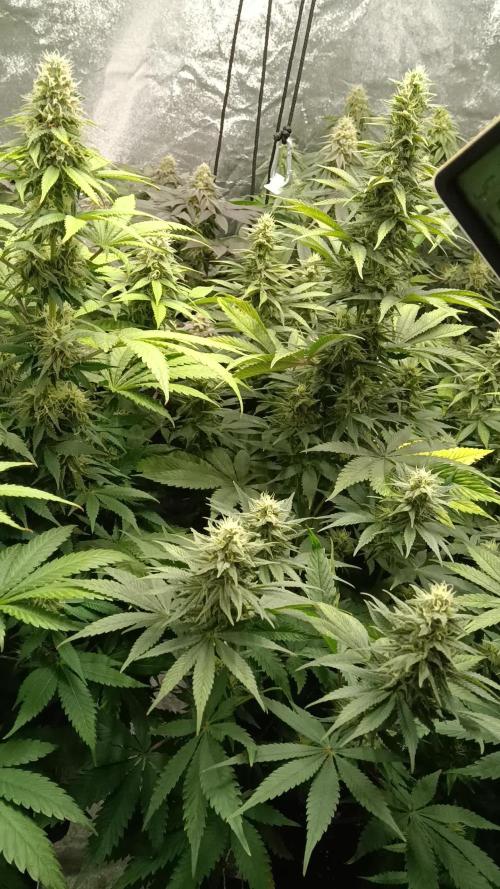
Die Lemon Orange und die Grapefuel Gelato haben bereits ordentlich an Blütenmasse zugelegt und auch so einige Orange-braune Pistillen entwickelt. Die beiden werden wohl als erstes fertig. KISS und Amnesia fangen gerade damit an, an Blütenmasse zuzulegen. Denke die beiden werden mind. eine Woche länger brauchen, um fertig zu werden, als die anderen beiden.
Die Pflanzen im Video: vorne-links Amnesia, hinten-links Lemon Orange, hinten-rechts Grapefuel Gelato, vorne-rechts KISS.


Likes
16
Share


@DevelGrow
Follow
Hallo Freunde 👋 Do-Si-Dos F1 Auto ist 42 Tage Alt und steht schön in Blüte! Es hat noch gerade gepasst das Zwei buds Links und Rechts als Kragen wachsen! Bin gespannt was sie noch zulegen wird! Keep Green and grow High ✌️🍀💙🍀

Likes
48
Share


@DogDoctorOfficial
Follow
Hey hey hey you all , hope that the life is great and the medecine that comes along even better , so one more week on this Queen from Fast Buds so lets get you all updated and not lose much on talks hehehe i fell like i have been bombarding you guys with to much information so i will keep it simple for a few posts or so hihihih <3 <3 <3 so without wasting more of you guys prestigious time here she is :
Not getting so big on the bud department this one, but on the trichome one, thats a all lot of different talk, she is by far one of the most frosty girls i have ever grew in my life, dying here to see what will happens and what wont bt have a felling that these is extractions Mama heheh but lets stay tuned and see were she takes us
As always thank you all for stopping by and for supporting me on this journey, i am super passion about growing and fell blessed to have you all with me on this new journey <3 <3 <3
Genetics - Fast Buds Tropicana Cookies Auto
Ligth - LUMATEK ZEUS 465 COMPACT PRO
Food - APTUS HOLLAND
Tent - MARS HYDRO
All info and full product details can be find in can find @
https://2fast4buds.com/
https://aptus-holland.com/
https://autopot.co.uk/
https://lumatek-lighting.com/
<3 <3 <3 Growers love to you all <3 <3 <3
Tropicana Cookies Auto is the perfect variety for growers of all levels, especially beginners as this strain performs very well outdoors and indoors, and can produce up to 500gr/m2 in 56-63 days without needing extra maintenance. Reaching up to 110cm, this strain grows fairly tall with medium-sized branching, showing its mixed heritage. Definitely the right choice for those with a high tolerance looking to get their hands on the strongest autoflowers out there. Thanks to the 27% THC, you can expect an extremely powerful and long-lasting high that’ll boost your mood and give you that extra push you need to start your days on the right foot. This variety offers the whole range of citrusy and woody flavors with a strong candy-sweet background that will keep you coming back for more and more.
Bud description
Tropicana Cookies Auto produces gorgeous dark purple flowers, so expect really dark buds with gorgeous hues of pink, purple and blue, and thick dark-orange hairs that get completely covered in resin by harvest time, giving them an almost shiny-white appearance.
This variety develops a typical Indica-like structure and very few sugar leaves that will make your trimming sessions a breeze. But make sure to store your trimmings as the gorgeous flowers reek of a mouth-watering blend of lemon peels, orange juice, and sandalwood that gives it almost a citrus candy-like flavor that makes for the most aromatic hash and extractions.Smoke report
Thanks to the 27% THC, Tropicana Cookies Auto’s effect starts with an energizing head rush that gets your mind up and running while leaving you in a nice calm state. As the Indica-dominant side kicks in, the powerful cerebral effect gradually moves downwards and hits your whole body with a deep relaxation that leaves you with a joyful stoney sensation that alleviates chronic pain while leaving you in an overall happy and positive state of mind.
It’s the perfect daytime and nighttime strain as it can boost your mood and enhance a night out with friends but can also quiet your mind as you get ready for a good night of sleep. No matter the scenario, expect a powerful high that lasts for hours on end.Plant appearance
Tropicana Cookies Auto reaches up to 110cm and develops a tall main cola with shorter side branches, typical of hybrid strains. You can expect a stocky yet tall main cola with medium-sized side branches and thin fan leaves that fade into a yellowish hue with a beautiful dark purple tint. Thanks to the excellent selection, this variety develops a short internodal spacing that makes the medium-sized flowers look like they’re growing stacked on top of each other. It’s the ideal choice for growers who want to get big yields without having to deal with huge plants, as this monster yielder can produce up to 150g per plant while growing relatively short.
Grow tips
This variety grows super dense buds so make sure to space out the branches by tying them down, this way you improve airflow which helps prevent mold and other pests. Tropicana Cookies auto reek of a delicious sweet and sour smell so make sure to flush thoroughly to enhance the aromas even more. This terpene heavyweight finishes with lots of resinous sugar leaves that make for fantastic hash and extractions so remember to have your trim bucket ready!Flavor
Tropicana Cookies Auto boasts remarkably sweet flavors that resemble a blend of lemon peels and fresh orange juice, with subtle floral undertones that make it the perfect choice for extractors looking for unique terpene profiles.
Expect an overall citrusy zest that’ll coat your whole mouth and leave a delicious tropical candy-like flavor aftertaste. The sweet and sour flavors get balanced out with a herbal background that gets stronger as you exhale and gradually opens up, bringing out the whole range of woody, floral, and spicy flavors, making it the perfect choice for the most flavorful extracts


Likes
31
Share


@LockDownGrow
Follow
Ok so this week I did a defoliation and a tigh down too the netting , I really was not planning on doing such a big defoliation but the leafs became thick and dense and there was almost no light penitration down too the lower branches of the plant , so she is opened right up now and the humidity and temperature has dropped loads and the air is moving alot better around the leaves and branches , I will not take anything more off her now , I have also added Cal mag too the nutrients for this week only , she is well into pre flower now but the stretch has not yet started so I figured it's no or never too defoliate and tigh them down ,
I am very happy with them so far and being new too all this it's all very exciting ,
Thanks for looking :)
Likes
38
Share


@trelorny
Follow
Day 50, 29.05.2024
- Starting the week at 43cm height
- No action today but to render timelapse for last week & watch them bloom.
Day 51, 30.05.2024
- 600ml with nutrition (1ml grow, 3ml bloom, 4ml TopMax) for each as breakfast shortly after the lights turned on
- removed 4 more leaves there were yellow. I think it has to do with the recent cut down on nutritions. This is why I will get back to the recommended fertilizer schedule in 48h with the next feeding.
Day 52, 31.05.2024
No action today.
Day 53, 01.06.2024
A round of drinks (600ml each) and food (4/4/4ml of grow, bloom & TopMax).
Day 54, 01.06.2024
No action today.
Day 55, 03.06.2024
- I am observing some more leafs getting yellow. I guess the plant is recovering N from the lower leaves to feed the buds.
- Later today they will get their next feeding (600ml each, - again with 4/4/4ml of Grow, Bloom & TopMax)
Day 56, 04.06.2024
"No action today" concludes week 8. All in all until today the grow is quite easy. No big issues. I just hope the yellowing of leafs will stop / revert after resuming to the standard nutrition schedule.
So, I guess there are 3 weeks to go before harvest - let's keep em dry!
Likes
4
Share


@Trixa
Follow
Buds are getting bigger day by day. Had to make some defoliation again. My humidity is much too high. 65%. But by very good Ventilation. Hope nothing starts to rot. Specially the days after watering is horrific.
Wish me luck ppl
Likes
22
Share


@wheedtobeus420
Follow
Literally she’s beautiful. I can’t even tell you how happy I am with how she turned out. The Rosin is crystal clear amber goodness. She tastes so creamy and sweet. The profile is just pure bliss. One of my all time favorite plants. Yields great. Dense as ever nugs. Tastes fabulous. Sweet seeds keep it up 💪🏻💪🏻💪🏻💪🏻


