


Processing
Likes
Comments
Share




Likes
57
Share


@SmokieMcPot
Follow
**EDIT** just an FYI... SmokieMcPot wants NOTHING to do with Seedsman!! Appreciate the response I got from them after replying to one of their spam mailers in dm... lets me know everything I need to know about their company... I'll continue to plug breeders/vendors that I feel deserve the advertising. I won't EVER plug a Seedsman bean!
How time flies... Start of week 6 is it?? I feel I've put these girls a week behind, but then again I'm sure they'll bounce back just as hard as they have already. I just keep stressing these bitches out 🤣. so far have ive topped both, supercropped TF out of em (should have tied em down again too), swazz'd (to an autoflower point I guess)... what else can I do to hurt these girls feelings?? I can tell anyone that actually reads all of this I am going to drill their main right before harvest with the 48hr dark period.. Just put the net in today to keep a hold of em for now. Have another to use for when they need support. I plan on scooting this one up a bit as it stretches and branch them out some more. These branches are pretty stick like, so no more bendy bendy to those or snappy snap will occur.
Day 35- nothing special that hasn't been mentioned already. Running the GHE wk 1 bloom feed at full strength (1237ppm total). Will continue to adjust strength depending on how much TDS drops in 12/24hrs. May update later with a vid to show how thick the main is. BTW I forgot to set timelapse for day 34, so the carnage and immediate aftermath won't be added to the week unfortunately.
Day 36- i accidently farted while working in the closet tonight... i think i may have to burn everything in there now and start from scratch.. it was THAT bad!.. i dont think a million apologies will make up for making these girls inhale THAT, nor flush it out of their systems. damnit!!
Day 37- woke up to a puddle in the catch tray!!! couldn't find it so i ripped out the net. didnt really want it in there yet, but was helping with a few branches. ended up being the silicon light protector pad in the back directing splash from the dripper next to it right out a LST hole i drilled in the bucket. easy fix.. RES change tonight. same week 1 bloom medium strength since its the same as week 2 formulation. ended up being 1327 after PH corrections. water started off 300ppm calmag and started using hydroguard again since the h2o2 did the trick a while back and we're in the clear. plants looking awesome, and have another 19 days before another major defol. uploading vid of a new system im working on as a teaser for the next grow... its far from finished... but the final product will be showcased later on. Bigger version of this waterfarm and its upgrades. Plus something a buddy wants me to try, but I'm waiting on the plated titanium mesh to show from China to finish that piece and bring it to show and tell for everyone to see.
Day 38- PM RES change due to TDS drop from 1327 to 902 in 24hr. WG starting her droop letting me know. She sure does pump right after a fresh change. Must have went light on my measurements cause I ended up in the 1100's. As long as the ratio is right, that's what matters. I don't know exactly WHAT they're eating, just that they are. Adding anything could risk a lockout. Looks like WG is trying to tell me to back off on the Nitrogen?? Maybe dialing it back a bit on accident worked out for the best.. Mild defol tonight to open up those bud sites. supercropped a few more fresh stretch limbs on GC.
Day 39- selective leaf plucking tonight. Bare minimum to keep things opened up. RES change later in their day, tomorrow for me. Will be lowering the nitrogen a hair since 2 or 3 of WG leaves are curled downward at the tip. Will update with the breakdown after the fact.
Day 40- WG has been looking hungry since yesterday. Don't blame her cause RES is down from 1100's to mid 7's. Even with topping off with 300ppm calmag'd water around 2.5L a day now. Changed RES before they woke from their nap. Modified week 2 transition GHE "medium". Breakdown as follows:
2 gal calmag'd water - 300ppm
Micro - 11.6mL
Grow - 11mL
Bloom - 14mL
RES totals after PH corrections - 1253 @ 5.54.
Day 41- WG looking hungry again... RES was already down 200 from its change not even 12hrs ago and down 1.5L. top off, PH adjust. changed RES during their night, right before "sun rise". same modified formula as yesterday. need to bump it up so EC doesnt drop as fast. GC need to pick up the pace, cause i dont want WG getting full on amber by the time GC is done. random plucks here and there to keep things kinda opened up without taking off too much ATM. few leaves on GC showing small brown spots, calmag def?? hmm.. already using 5mL per gallon to get to 300ppm.. *edit* looks like the start of a calcium deficiency. Odd, cause I'm adding 5ml/gal now as per the bottle. Raises ppm from 80 to 300. How much is too much?? Going to try 7mL per gal for a few days and see if we can nip this in the butt.
As always. Thanks for stopping by to check out my current grow. If it's you're first time here, check out previous weeks for their daily updates.
Likes
13
Share


@DeepRootsGrowTrees
Follow
SHERBERT QUEEN AUTO / RQS
WEEK #11 OVERALL
WEEK #6 FLOWER
This week she's doing good nothing negative to report her buds are growing and she's got good trichome coverage and that sweet aroma to her. Stay Growing!!
Thank you for stopping by and taking a look it's much appreciated!!
Thank you ROYAL QUEEN SEEDS!!
SHERBERT QUEEN AUTO / RQS

Likes
19
Share


@hanzSour
Follow
OMG 2021
Ripper Seeds
say hello
to my new little friend
cutting from the neighborhood
Neem oil showered
so far only osmosis water

Likes
1
Share

@0Education
Follow
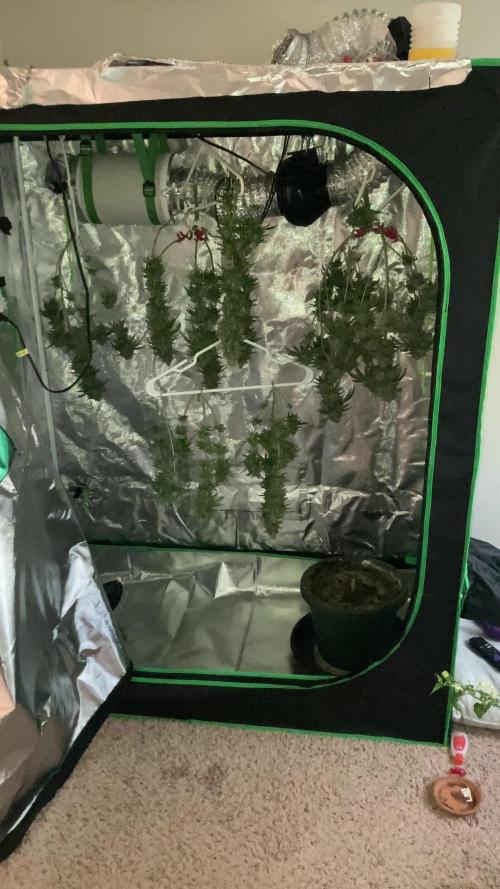
The time has come!
This is the part that makes me nervous!
Got some decent sized nugs. So I really hope I don't run into mold.
Shooting for a 10 day dry, seems to have worked for me so far.
I don't wait for the branches to snap, but just right before. They tend to dry up a little more while trimming and by the time they make it into the jar it's good to go. Next update in 2 weeks.

Processing
Likes
47
Share


@blazin_skywalker
Follow
This week I decided to recruit my husband to get a proper look at this girl's roots. She's gotten so damn big that it's impossible for me to get a shot otherwise.
Her root ball is massive. She's large and in charge. I went through and gave her another thorough round of defoliation.
What I removed was any droopy leaves in the underbrush, as well as any fan leaves that were casting shadows and blocking light from my bud sites.
When I was finished, I was able to stand over my plant, look down, and visibly see through to the base of my plant and grow media. Being able to do this suggests to me that my light source is also able to penetrate down throughout the plant as well. The removal of these leaves also contributed to improved air circulation and decreased humidity - both which are important as we progress through the flowering stage.
This week I also caught my first whiff of this plant's sweet aroma. I'm excited to see how her terps develop over the upcoming weeks! 😋😋😋
I cloned another branch off this plant. Baby Tester FF3s are slowly taking over my house. 😂
Thank you for following along! This has been so fun! ✌️ 💜 🌱

Likes
2
Share


@KannaGrowing
Follow
Semana de transición entre el abono para el periodo vegetativo (Bio Vega) y el abono que utilizaremos durante el periodo de floración (Bio Flores). El primero más rico en nitrógeno y el segundo, en fósforo, magnesio y potasio.
Mezclo Bio Rhizotonic + Bio Vega + Bio Flores y riego con 50 litros de agua, todo el cultivo... Alterno riegos cada tres días, unos con abono y otros con agua.
La próxima semana, elimináremos Bio Vega.

Likes
28
Share


@DutchFarmer
Follow
Flower week 2

Violet BAG · Robin Hood Seeds

Tropicana Cherry · Relentless Genetics

Miami Madness · Solfire Gardens

Cherry Gar-see-ya R1 · ETHOS Genetics

Strawneapple · Exotic Genetix

Black Valentine · LIT Farms (Lost In Translation)

Sugar Cane · In House Genetics

Gorilla Cookies Auto · Fast Buds
Banana Purple Punch Auto · Fast Buds

Cereal Milk · Cookies Seed Bank
Likes
2
Share


@ZJRDUDEZ
Follow
These buds turned out pretty good. Not a whole lot of bud but this was my first grow in the past 2 years. I’m very happy with each strain and how they turned out. The “OG” was definitely a lot more sativa than any of my other strains. Which I didn’t like because naming a strain OG is an indicator of strong indica dominance. But this strain was definitely more sativa. It was actually funny. My “sativa strain” finished earlier than my OG strain. But this is what I get for just getting seeds of the streets to grow. Which is why I’m very excited to be growing the tropic moon by ocean grown seeds. This strain is already doing great. I germinated 3 seeds and all 3 popped and are doing great. Check out my other grow journals if you want to see the progress on my next grow. Thanks for tuning in everyone. I really appreciate all the support and good vibes from everyone. ✌️
Likes
6
Share

@eldruida_lamota
Follow
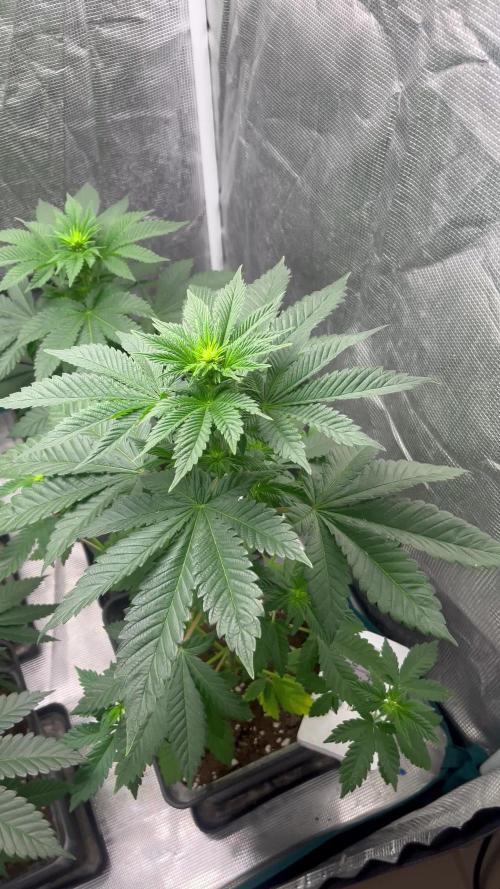
Que pasa familia, vamos con la segunda semana de floración de estas Monster Maker feminizadas de Sweetseeds.
Vamos al lío, las plantas se trasplantaron a macetas de 7 litros.
El ph se controla en 6.5, la temperatura la tenemos entre 24/22 grados y la humedad ronda el 50%.
El ciclo de crecimiento puse 12h de luz, el foco está al 50% de potencia.
Me gustaría estar más encima este cultivo pero la salud me está impidiendo un poco este 100% con el proyecto. Con suerte la semana que viene andaré mejor.
- os dejo por aquí un CÓDIGO: Eldruida
Descuento para la tienda de MARS HYDRO.
https://www.mars-hydro.com
Hasta aquí todo, Buenos humos 💨💨💨

Likes
3
Share


@HookahCli
Follow
d39
ya no me caben dentro del Indoor, debajo del foco pequeño que tengo.
Todavía se espera lluvia para la semana que viene, pero no caben y temo que alguna se ponga a florar por estrés, entonces las sacaré al exterior y las aclimataré.
d40
Las he sacado a exterior , no les da mucho el sol, están a media sobra, esperemos que no se pongan a florar debido al cambio de fotoperiodo, son menos horas que en el Indoor, podía pasar, lo bueno es que las hemos sacado y ahora cada día están aumentando las horas de luz, mas o menos cada día tenemos 2 minutos más de sol, uno por la mañana y otro por la noche, amanece antes y se va más tarde poco a poco, si se adaptan bien, van a crecer mucho, pero si se ponen a floración veremos que hacemos, esperemos que no pase.
Se le han puesto unas piedras para que se aguante la maceta, es de 2LT y con que haga viento la maceta se va al suelo y no queremos que pase eso.
También se ha quitado el primer par de nodos LBP(Lower Branch Pruning), que normalmente salen ramas que no llegan a ser gran cosa.
Se han quemado del sol, se ve que les da directo y no lo han soportado y se han secado, la tierra esta bastante seca al igual que muchas hojas, por suerte me he dado cuenta al cabo de unas horas, no esperaba que el sol ya pegase tan fuerte, las he cambiado de sitio y se han puesto donde no da el sol directo en ningún momento del día y están solamente a la sombra.
Se han regado con un poquito de agua para que se recuperen, les he puesto una maceta más grande por fuera para que si diese el sol, que no le de a la maceta de dentro(2L) que es más pequeña y se calientan las raíces.
d42
Se han regado y añadido aminoácidos(más Pro XXL 42% Aminoácidos) ya que eso ayudará a que la planta se recupere, por la tarde-noche les da el sol, no hay otro sitio que le de menos el sol directo, se han secado un pelín más la hojas, pero los brotes nuevos están blanditos y parece que las plantas seguirán creciendo bien.


Likes
Comments
Share

@Jardin33ro
Follow
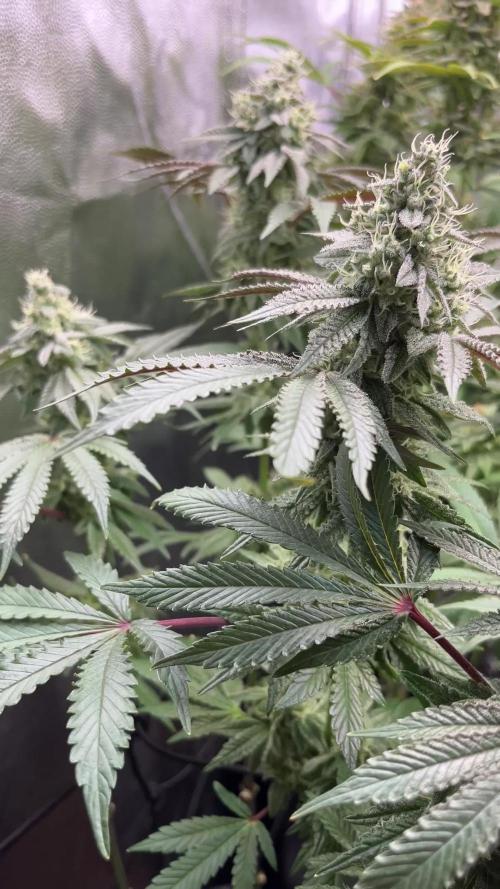
Son 2 plantas de esta genetica. Una es mas vigorosa que ptra, pero son muy similares en cuanto a su fenotipo. En esta semana ya notamos el engorde que se viene propiciando luego del overdrive. Tratamos de a poco ir bajando la EC para llegar 0.0 en el corte. La luz sigue baja procurando mantener una buena seleccion de terpenos y resina.
Likes
11
Share


@Silverback_Guerilla
Follow
SUNDAY 5/5:
Rearranged the gardens..have 17 plants in the 4 x 5 now...yowsa!
MONDAY:
Plucked some dead leaves and did a trichrome check on couple of them...about 30% cloudy at most..
TUESDAY:
I observed some white spots(maybe powdery mildew) on a few leaves here and there throughout the garden, so I sprayed them today with Trifecta Crop Cure, a concoction of a bunch of natural plant oils. I already decreased the humidity in the room to 45% with my new 70L dehumidifier, so I think they'll be fine. I'll spray them again tomorrow and the next day, then I'll have to hope that did the trick, because they'll be entering the harvest window over the next few days.

Likes
32
Share


@Sejnik
Follow
3 dny po posledním tréninku (53 dní od vyklíčení) jsem změnil světelný cyklus na 12/12. Nastavil jsem SCROG síť do finální výšky a nyní zbývá jen čekat až holky vyrostou 🤩 snad se mi podaří vytvořit rovnoměrný baldachýn.
Blumat zavlažování funguje skvěle a rostliny jsou s ním velmi spokojené.
V substrátu se mi rozmnožili springtails. Beru to jako dobrou zprávu poukazující na dostatek organického materiálu kterým se živí. Ale i tak budu jejich počty hlídat a redukovat postřikem substrátu pomocí nimbového oleje (1 polévková lžíce na 1 litr vody + 3 kapky mycího prostředku na nádobí) vždy když mi přijdou jejich počty moc vysoké.


Processing
Likes
12
Share


@SupremeJay
Follow
This is my second time growing this strain and i am much more please this time around. Came out with almost 3 times more than last time and the buds are a lot bigger. Have already ordered another seed because i think this may be my favorite strain!

Likes
Comments
Share


@jporfiado
Follow
Las plantas se ven bien, me hubiese gustado que estén en una maceta mas grande. Intentare hacerlo esta semana aunque no se si sea lo mejor a esta altura.

Likes
11
Share


@Cortez_The_Konqueror
Follow
One of the shorter phenos but I got a feeling she's going to be a bush!
Likes
Comments
Share


@BaNanaGrow
Follow
Wurden umgetopft in 5,7 l Töpfe deshalb stehen die Blätter so tr


Likes
13
Share


@MR_FLEXOPONIC
Follow
Week 11 of veg day 76--------------------------7/30/22-----------------------Week 5 of flower day 34
Got new lights for my Veg tent (viparspectra 1000) and flowering tent (viparspectra 1500) the 1 Runtz in flower the buds are plumpinging up nice and with the new light should do even better
Everything in veg tent is doing great as well and with 3 -4 more weeks of veg, upping the pot size from 3 to 5gal, and the new viparspectra 1500 light the buds should be way bigger then any other grow I've done