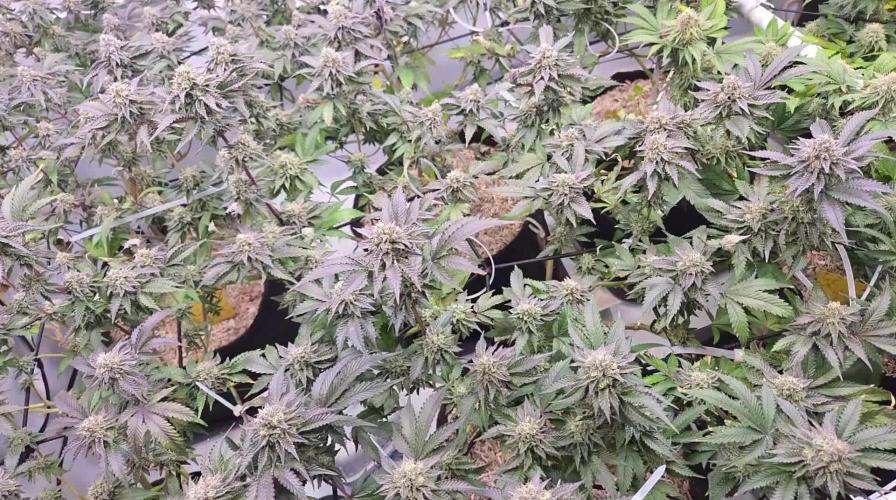
Processing
Likes
Comments
Share


@PrairieFrostGrow
Follow
*
********* Week 11 - June 20 to 26, 2020 - Days 71 to 77 from germination ***********
*
It is the end of flush week and she went into darkness on Wednesday night, day 75, for two days. Saturday will be harvest day and start and the dry process👍
She has certainly been going through the beautiful stage of senescence and her fade is gorgeous. The purples and yellows coming out are great......covers up the brown spots😂😂 Her buds are densing this week as we work on bring down the humidity. Running in the mid 60’s for humidity late in flower is a different experience and one that takes some getting used to. Bring down further to low 50’s has really helped to bring out her frost as well. Kept the humidity high to form big buds......now lowering to make them more sticky👍👍
I am feeling very strongly that the big part of the pH issues this run was a change in feed water. I have always used bottled RO water for all my grows, except outdoors, but this grow I switched to tap water. Dechlorinated the water with air stone and gave it 24 hours min before using. Wanted to save some money and tired of lugging bottles downstairs a couple of times a week☹️ This is worked out nicely and a lot more convenient. However, the city must be putting some crap in the water that is causing issues in my media and raises the pH after the watering. Out of the tap it is 8.4pH and 275ppm. Since ppm were not too bad in my opinion I moved forward without filtering the water.......oops🤬🤬🤬 Out of options on what is causing the issue, I switched back to RO water late last week........all the girls are happier!!!! F......missed the cause for weeks. Always learning from this plant and my own mistakes to get better every run😉👍
Also wanted to add a little more stress to girl to help push out some increased resin. I drilled a 5/16” hole into the main stem to cause her stress. I did this rather than trying to break a branch and will see how it goes this run. Sterilized a new bit in Alcohol and went for it. They went into darkness about a couple of hours later. Excited to see what happens when she comes out to get chopped😃😃
Little more detail......
June 20/20 - Day 71
- Rezin and Liquid Weight @ 2ml/L = 285ppm and 4.0ph
- 8L given to get a good flush
- Runoff in pots already were 7.8pH and 485ppm.
- after 8L water runoff was 7.0pH and 370ppm.
- she is 29” tall and 30” wide.
- tricombs still mainly cloudy.....review again in couple of days.
June 21/20 - Day 72
- Dry out day
- buds are firming up......squeezed a couple🧐
- temps are nice outside so tent able to hold 75 degrees and 51% humidity.
June 22/20 - Day 73
- Rezin @ 1ml/L = 120ppm and pH the water to 2.7!!!!!!!!!
- Given 2L watering.
- No runoff water and I am good with that as I want the low pH water to stay in the medium.
- She will be ready soon. Thinking darkness on Wednesday and harvest on Saturday??
June 23/20 - Day 74
- 2L plain water feed - 80ppm and pH to 2.4!!!!!!
- not excited about these crazy low pH numbers but doing what we can
- her tops are getting really pointy now and her leaves are very yellow.
- checking tricombs, I think we are done and tomorrow will be her last day so that I can take down on Saturday.
June 24/20 - Day 75
- 2L plain water feed - 80ppm and pH to 3.0
- Going into darkness tonight so this was her last bit of moisture.
- drilled a hole into the stem.....was going to do a couple of holes but not trying this method before I decided to leave it with one hole.
- into darkness tonight
So we finish up the week with her in the dark. Next update will be the harvest!!
Thanks very much for taking the time to review my diary!! Sorry for running behind often on this run.........everyone has had a busy life the last couple of months in the world and its been no different here...........a huge Kudos to all the Growmie‘s that are able to keep up with their diaries on daily basis on GrowDiaries.......its a commitment😃👍👍
Mephisto has bread a very nice girl. She is big and sticky and grown very well considering the environment she has been given. Battling the high pH and still turning out as she has is awesome and much respect!!!! Great job Mephisto, can’t wait to run her again.......just so happens I have several more seeds of her😃👍

Likes
10
Share


@Bleko
Follow
Day 45 of flower today. Seedsmans Gelato.OG (far, left) In House Genetics Terple (center, left) Sirius Seeds Critical Plus (center right) Barney's Farms Pink Kush (back, right). Everything really decided to start fattening up in the last few days. Pink Kush is starting to turn Purpleish pink, and fall all over her self like a drunken, top heavy, 30 something, ex-high school prom queen addicted to xanax and boxed wine.


Likes
21
Share


Likes
15
Share


@NokEternal
Follow
Entering the 9th week things are going Splendidly, I had to adjust the lights up a bit as NLA#1, Suffered a little bit of what looks to be Light Burn, Other than that, The Girls are filling out nicely, and the aroma is kicking in good. I also decided too go ahead and start using Fox Farm Bembe, which to my understanding is a Molasses backed with Microbes for the Root Zone, That and I've Heard it's a natural sweetener as well. Thanks everyone thus far for the views and likes, One Love...


Likes
8
Share


@Shellshocked
Follow
Everything is going well I got a raptor hood for my 600 watt so I was able to drop my light right on top of my plants maybe 6 niches away . Noticed she was getting a bit lighter in colour so I brewed up a tea first 1 ever just switched to organics tea looked good hopefully not 2 strong . I also pulled some branches out to open up more branches to get light as she was bushy and I did not want to cut most of the branches off because I'm not trimming larf lol. Now it's smooth sailing to the end I got 1 more top dressing next week and all I gotta do is water once a week

Processing
Likes
12
Share


@Silverback_Guerilla
Follow
5/25:
It rained again today for most of the day, but I managed to get back out there and take some photos after it let up. I also shot a short video early in the a.m while it was sprinkling and the lights were on...
I heard that this strain flowers really fast, but I really don't think she can finish before June 21 (the summer solstice). The other two seedlings (FFT#6 and FFT#7) are in the same boat. The 5 clones outdoors might be able to finish before they get the signal to reveg. I may end up bringing as many of them as I can fit into my closet to finish and starting another batch of beans to grow outdoors this summer...
5/26 - 5/31:
I did some training on her early in the week between rain showers, and foliar fed with Microlife maximum bloom formula. She's more than 36" across now...
She was looking a little N deficient, so I assume the dry amendments have petered out. I top-fed her with another couple tablespoons of cavern culture and on the 31st, they were dry enough to feed them. I gave them big bloom, tiger bloom, grow big, beastie bloomz, silica, endoboost, signal, humic acid, liquid kelp/fish emulsion, and liquid molasses.
It just feels so strange that I'll be harvesting outdoor photos in June!?!
That's it for week 8-

Likes
14
Share

@Naujas
Follow
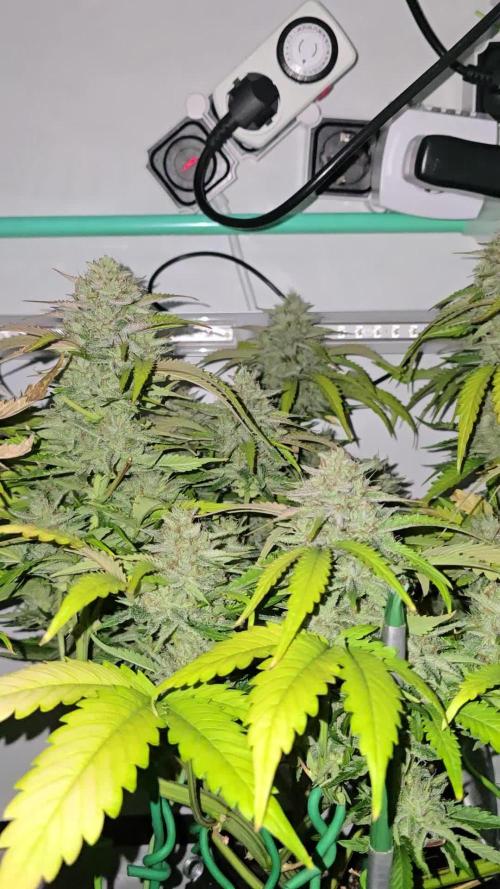
63 days!!!!! Today I gave my girl just clean 6.3ph water without any food, I think she has less than 2 weeks left until the finish, my tent smells amazing :) good luck to everyone :)
Likes
8
Share


@Mistertemps
Follow
One last week and chop chop. Strawberry n cream really looks like it could go another few weeks but I’m done lol. They all smell amazing!!!


Likes
6
Share


@Floryx
Follow
-getting really tight now
-will install scrog-web to use the space fully
-some leafs still have yellow and brown spots
-think i will fetilize twice a week from now on
-getting a lil cold in the night but therefore humidity is now almost perfect
Thankful for any comment :)


Likes
5
Share


@BenChasinBigBudz
Follow
Initiated flower with a 48 hour period of darkness on the 35th day from seed.
#SFgrow

Processing
Likes
12
Share


@Hawkbo
Follow
Pics taken on Monday, video was taken on Tuesday. Doing good chuggin along
Likes
3
Share


@macrocefalo
Follow
Another week for the first-time sailor. I started doing LST as I'm a beginner unfortunately my lack of skill took 3 leaves but the plants apparently did not feel the stress as they continue to grow and with the birth of new leaves. This week reduces the space for watering before 7 days to 5 days the growth is good but as everything in life can improve but I am happy with my performance and learning from my failures.


Likes
9
Share

@Mrs_Larimar
Follow
2025-09-18
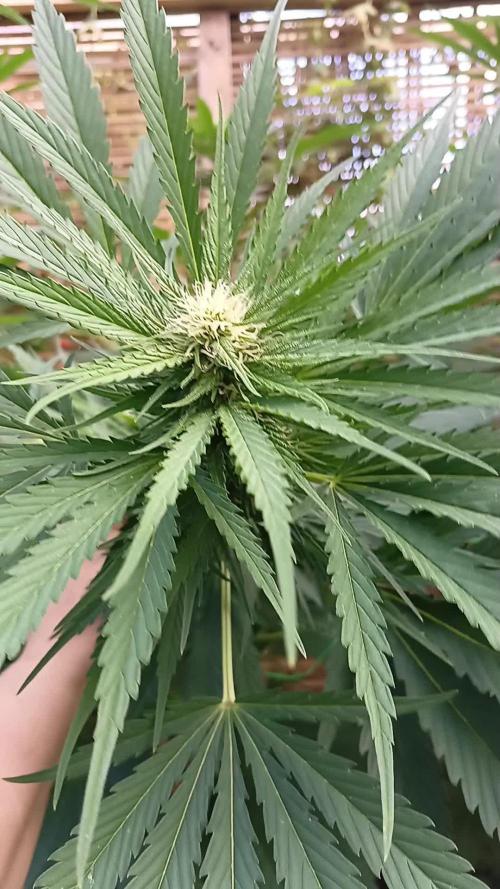
Blac Russian, looking fresh and happy, she stands in 2 SCROGS and under a Roof, so
the autumnwinds dont arm her, we had a couple of very windy and rainy days
but she is safe.
She developed more Buds, and the exisiting budsites are swelling very good-
so i think around 3-4 more weeks
xxxxxxxxxxxxxxxxxxxxxxxxxxxxxxxxxxxxxxxxxxxxxxxxxxxxxxxxxxxxxxxxxxxxxxxxx
Strain Information: Black Russian Early Version
enetics & Background
Black Russian Early Version results from crossing two legendary indicas with potent medicinal effects: White Russian and a splendid Black Domina mother. This is a selection of the famous "domina" phenotype - a real jewel well-known among Spain's best growers.
Growing Characteristics
Cultivation: Very easy to grow
Growth pattern: Moderate stretch during early flowering phase
Structure: Compact yet well-branched - one of the great indica yielders
Flower production: Large amounts of very dense buds
Unique trait: Very few leaves grow between buds
Aroma & Flavor Profile
Resin: Abundant, fruity-smelling with citrusy and earthy notes (likely from Afghan ancestry)
Taste: Denser than the aroma, very sweet and citrusy
Description: Like a fruit salad with lemon juice
Effects & Medical Properties
Type: Markedly indica effects
Duration: Long-lasting and relaxing
Onset: Very rapid - immediately noticeable when inhaled (smoked or vaporized)
Medical use: Highly recommended for medicinal usage
Tolerance: Low tolerance development - remains potent even with extended exclusive use
Why This Strain?
Perfect for outdoor competition due to its early finishing time, robust genetics, and reliable performance. The combination of ease of cultivation and exceptional medicinal properties makes this an ideal candidate for a successful outdoor grow.
Genotype 20% Sativa - 80% Indica
THC 24%
Maturation(Interior) EARLY VERSION - 45 days
Maturation(Exterior) early september
Flavor Sweet fruit
Production 500 g/m2 Indoor | +900 g/pl Outdoor
Odor High
Effect Narcotic
Sex Feminized
Lineage Black Russian x Ruderalis
Cups
3º premio extracción BHO THC Valencia
1º indoor Cannarias Cannabis cup 2012 Copa Asociaciones
2º Categoria Professionale - Secret Cup - Napoli 2018
4º Categoria Exterior- Copa Cata @cogollosdeloeste - Argentina 2022 (@jhonny.jamrock)
2º Premio Categoria Exterior- Copa Cata Cultivadores Primavera - Argentina 2022 (@jhonny.jamrock

Likes
61
Share


@Hou_Stone
Follow
Semaine très tranquille, j'arrose toujours tout les 5 jours environ et en ajoutant 1 fois sur 2 sur BioEnhancer.
Intensité de FC3000: 50%
Ventilation : extracteur 6 pouce mars hydro power 2/10 ( on 24h/24h) + 1 ventilateur oscillant ( on 12h/24h)
🍊👨🚀🍋👨🚀🍋👨🚀🍋👨🚀🍋👨🚀🍋👨🚀🍋👨🚀🍋👨🚀🍋👨🚀🍋👨🚀🍋👨🚀🍋👨🚀🍋👨🚀🍋👨🚀🍋👨🚀🍋👨🚀🍋👨🚀🍋👨🚀🍋👨🚀🍋👨🚀🍊
Venez me voir sur Instagram ✌️👨🚀
https://www.instagram.com/hou_stone420/

Likes
2
Share

@Chucky324
Follow
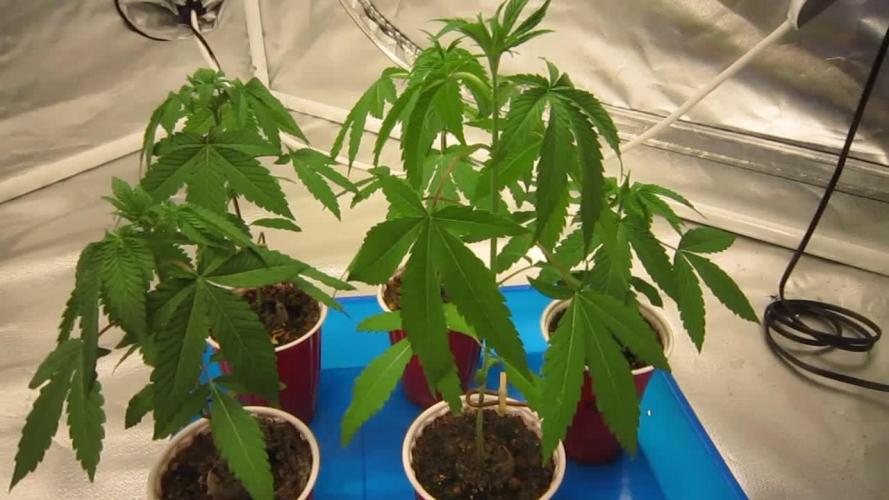
Hello This is the end of week 1 and the beginning of week 2 of veg.
The plants are doing good. I lowered the light a bit today and turned it up to about 32%. to get some bigger leaves going.
They were a bit dry today and got a big drink just after I finished taking the pics.
Was in the grow store and they were out of the frequency altered water I use for the powdery mildew and the clerk suggested this product.
Said it was what the growers have been waiting for. Kills all pests even in the soil with drenches and mold and fungus.
The web site is there to check out. I like that it made from essential oils. Is safe to use right up to harvest. I smell some mint when I spray it.
The Safer Soap Insecticidal Co owner sold the Co and did some research with the money and started a new Co with this product
Got a free insulated wine cabinet for a winter project. I'll add 3 thermoelectric motors in the top hole to cool the cabinet.
And a small dehumidifier to take the moisture out of the air and a fan to circulate the air. should work...
OK Stay Loose.
Chuck.
Likes
Comments
Share