




Likes
6
Share


@MistaOC
Follow
19.12.
5 Tropicana Cookies Auto Samen eingepflanzt.
VPD auf 0,9 (ist ja eine Haube über den seeds)
LED auf 25% (37,5W)
——————————————————————
24.12.
Alle 5 gekeimt. Eine brauch aber noch ein bisschen.
VPD auf 0,7 (ohne Haube)
LED auf 50% (75W)
——————-

Likes
60
Share


@SooSan
Follow
12/12 + 95 jours
Vu qu’il y a 16 plantes mais que sur growdiaries on ne peut mettre que 8 variétés j'ai divisé en 2 diaries pour le bas de la tente
1️⃣
🏠 90x60x90
☀️ FC-E 4800 => puissance a 75%
🍁
1x Black Bomb / Philosopher Seed
2x Amnesia Lemon / PEV Seeds
1x Blueberry / PEV Seeds
1x Blueberry / 00 Seeds
1x Wappa / Paradise Seed
1x Dark Phoenix / Green House Seed
1x Quick Sherbet / Exotic Seeds
1x Mango Cream / Exotic Seeds
1x Banana Frosting / Sensi Seed
1x Hindu Kush / Sensi Seed
4x Fast Mix / Sweet Seed
📎 https://growdiaries.com/diaries/122084-grow-journal-by-soosan
📎https://growdiaries.com/diaries/124052-grow-journal-by-soosan
2️⃣
🏠 30x60x50
☀️TS1000 => 100w = 54g
🍁
Quick Sherbet - Exotic Seed = 12g
Quick Sherbet - Exotic Seed = 12g
Quick Sherbet - Exotic Seed = 17,5g
Quick Sherbet - Exotic Seed = 12,5g
📎 https://growdiaries.com/diaries/122080-grow-journal-by-soosan


Likes
5
Share

@HUUDUUH
Follow
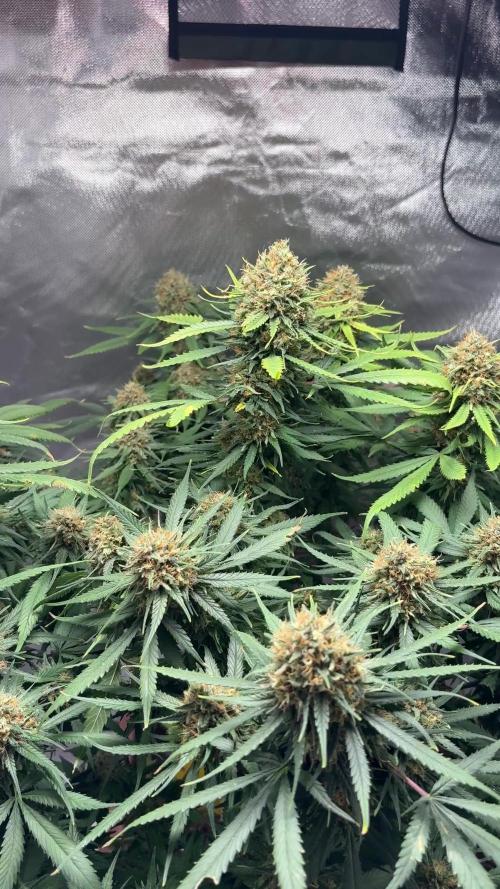
YEAWHH… sooo.. she is back!!
I havent post since weeks, but here we are!
8 weeks of flowering and a fiew days more
and she is ready. So beautiful, so strong.
The kit of Organo Lab helped a lot!!
(Fuel + Bokashi + Ocean Mix)
So happy with this plant, she is stunning!!
So excited to taste it. The buds are huge, hard and smells just great. :)
I think she is gonna give me something around 80 grams of dry herb. I come back here to tell

Likes
16
Share


@ChewiesGrow420
Follow
Today on day 17 from date of birth Iam preparing a worm casting tea. In a cheese cloth bag ,Made up of 2 cups of worm castings 2 tablespoons of unsulfured molasses,2 tablespoons of mineralized phosphate (bat shit) ,2 tablespoons of soluble seaweed extract . 2 tablespoons of alfalfa meal 2 tablespoons of all purpose 4-4-4 all Gia green products other than. I also sprinkled in some great white premium mycorrhizae inton2 gallons of water. Tea will brew for 24 hours before applying.
Likes
4
Share

@Chucky324
Follow
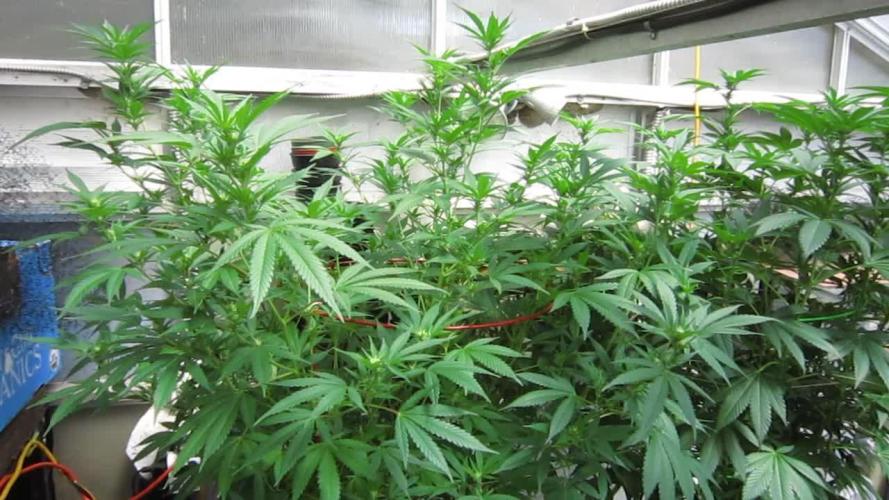
Hello. This is the end of week 2 and the beginning of week 3 of flowering.
The plant is doing good and growing fine.
I've got to get in here and do some trimming up on this plant.
It's got too many low sucker branches on the main branches and I'll take off a few fanleaves too.
The resin starts to flow after the 3rd week, so I like to get the trimming done before then.
OK. Be Great.
Chuck.
Likes
4
Share


@qoodwater
Follow
Just amazing 😉Flushing time! beautiful strain Fast buds! The smell its something magic!! Wtf! Look at the photos and see what is a good auto strain! On my top!! I can wait to harvesT and taste it!! I love og Kush!!
Likes
53
Share


@DogDoctorOfficial
Follow
Greetings, green enthusiasts! Welcome to another exhilarating update on the growth journey of my P.C.R.s. Buckle up, because things are about to get exciting!
I'm thrilled to report that our P.C.R. plants are thriving in their third week of veg like never before. Their vibrant green hues are a sight to behold, and I can't help but marvel at their progress. But the real magic happened when I transplanted them into their final pots—the roots were an absolute spectacle, white and luscious, like something out of a dream. Aptus Holland, you've outdone yourself once again!
Speaking of Aptus Holland, let's talk about the secret sauce behind this green revolution: the Aptus Holland products. My love affair with Aptus Holland runs deep, and it's all thanks to their innovative and effective plant nutrition solutions. When it comes to nurturing my girls, nothing else comes close.
Let's start with the star of the show—the Aptus All-in-One pellets. These little powerhouses are packed with essential nutrients, providing a balanced diet for my plants and ensuring they have everything they need to thrive. Combined with the Mycor Mix powder, they create the perfect symbiosis, enhancing root development and nutrient uptake to levels that even I couldn't imagine.
But that's not all—I've also added a touch of Aptus substrate buffer powder to the mix, ensuring that my super soil recipe is dialed in for maximum performance. With this concoction, I'm confident that magic is bound to happen in the days to come.
Of course, I can't forget to mention the Aptus Holland Veg Mix, which continues to be my go-to solution for watering. With each application, I'm providing my plants with a carefully balanced blend of nutrients, setting the stage for vigorous growth and robust health.
Now, let's talk numbers. My TDS is currently hovering around 370, while the pH remains a stable 5.8. And with temperatures holding steady at 21 degrees, the conditions couldn't be more perfect for our green darlings to flourish.
Before I sign off, I want to extend heartfelt gratitude to Aptus Holland for their unwavering support as my main sponsor. Your products are the backbone of this operation, and I couldn't do it without you. A special shoutout to Art Genetix for bringing the incredible P.C.R. creation into existence, and to Grow Diaries and the entire community for your endless inspiration and camaraderie.
Here's to another week of growth, discovery, and green magic!
Stay tuned for more updates as we continue this green journey together. And as always, a heartfelt thank you to Aptus Holland for providing the nutrients that make it all possible. Here's to another week of growth, discovery, and endless possibilities!
Genetics - P.C.R. @Art_Genetix_Team https://artgenetix.world/
Nutricion @aptusholland https://aptus-holland.com/
LED Power @Lumatek and @viparspectra
As always thank you all for stopping by , for the love and for it all, i fell blessed to have you all with me for one more love journey Thank you Thank you Thank you , you guys are great and have been amazing , thank you for everything !
#aptus #aptusplanttech #aptusgang #aptusfamily #aptustrueplantscience #inbalancewithnature #trueplantscience #dogdoctorofficial #growerslove
With true love comes happiness , Always believe in your self and always do things expecting nothing and with an open heart , be a giver and the universe will give back to you in ways you could not even imagine so !
Growers love to you all

Processing
Likes
8
Share


@Lazuli
Follow
This strain is beautifull.
Theres already crystals coming on the bottom of the upper waterleaves the smell is insane. i cant explain but theres 0% of that citrus weed smell too it. very unique flowery smell i could pick her out of 1000 different plants no problem.
as you can see this plant looks a lot like the Blue Dream from Humboldt, i love these kind of plants i dont want to defoliate her because she looks so perfect 💚 cant wait untill the later weeks in flower.
later this week i have cut of the lower parts of the plant now she will finish like this without any more cuts

Likes
13
Share


@XanHalen
Follow
Mar 24:
Watering till runoff now...
runoff ppm was 2500+...
Will be using very mild nutes to flush over 1 - 3 feeds... or until I am near my input.
Mar 26:
Continuing to use 650ppm feed with bloom focus, 2L per plant gives 15% runoff...
Runoff ppm is still very high...
I wanted to check pH of runoff but the color is so vibrant i cant use the pH drops to view color, need to get a pH probe.
Plants are thriving, no issues at all. the extra fan fixed the post-water droop.
One plant is bushy and has the most bud sites,
One is the smallest but has the most uniform structure, this one has the biggest buds and thickest stalk,
One is about in the middle of the 2.
Mar 29:
one of these girls gets droopy early when its time for water, thought the canopy was too high so i tied down some more, no cigar...
gonna try increasing calmag, if that doesent work im going to reposition in the grow box to a side instead of middle, may not need the upper end ppfd...


Likes
7
Share


@RivenWaters
Follow
Got the new Mars Hydro 3000 this week and we’re super excited! Transplanted to 1 gal pots

Likes
13
Share


@CanabisLoverHobbyGrower
Follow
Great week,.. put some real size on and can honestly see the buds growing daily, check and feed in a morning and at night and can visibly see a difference,.. ones gone purple ones stayed green but both look healthy, really happy so far, roll on next week 👌
Likes
5
Share


@Gingercannacat
Follow
Beginning of week 4 so far so good. The girls are reacting well to there training. Vita race from plagron is a game changer. They are super green and healthy everytime I feed them you see the difference.Did some defoliation. Nothing major just removed any leaf overlapping or blocking light to lower parts of the plant.
Likes
16
Share


@IQuSX
Follow
>>
1. Defoliation (25% green weight) was as 30 on 31 days after the 12/12 lighting change!
>>
2. Cleaner substrate - added 25% nutrients.
>>
3. Downloaded good position rockets’ green.

Likes
14
Share

@Crazy_Doofus
Follow
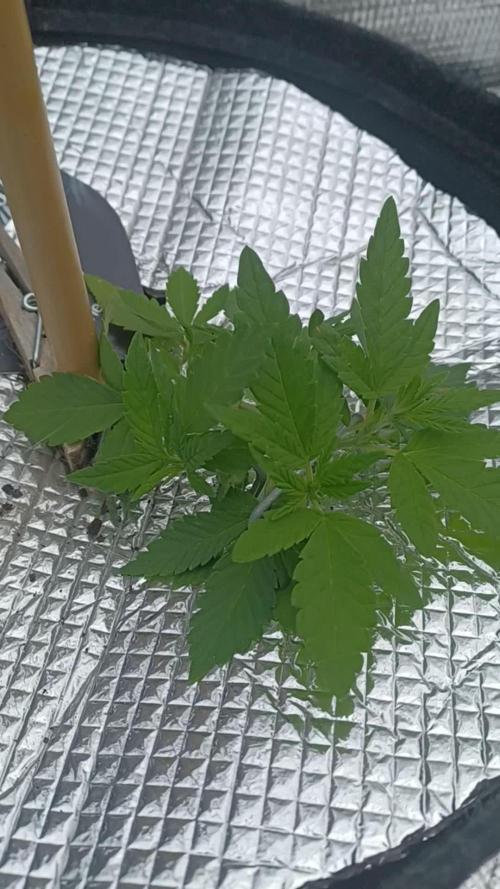
This plant looks sooo cool!! I´m goin 2 top her again only on 1 side. Try a cewl shape 😎😎😎 2nd time topped, only on 1 side. I´m goin 4 a scorpion look 😉 she looks wir war
Likes
5
Share


@banditman1200
Follow
just about to go into week 9 and i noticed a few midges or so i thought.as the next day there were more ..i noticed that they seemed to be coming out of pot bases.upon closer inspection these turned out to be fungus gnats.(never heard of them. Never had a beastie problem).No idea how or why but problem seems to be sorted as you can see from photos ,sticky traps and plant magic Bugicide


Likes
12
Share


@SmylinPupil
Follow
Well I’m closing this one out. I had a lot of problems with humidity outside and bud rot, in hindsight i read a few reviews in the last few weeks and purple kush is susceptible to bud rot. I did 2 separate harvest, one on the 9th and one on the 14th. I collected everything I could smoke, there is still buds left on the plants but because of bud rot and immature buds I’m saying fuck it. Sonoma seeds quotes 9-10 weeks flower i harvested at week 8 and week 9. I harvested just shy of a pound total, and just over and oz of “purple” looking weed. Between you guys and i, the purple one was pretty shwaggy as far as bud goes. Would i grow this again outdoors? NOPE. Would i try it indoors? You will have to stay tuned for my next grow. If you plan to grow this strain outdoors do not do it. The fact that it’s pretty much 100%indica it does not like to get wet,🤦♂️🏻 if you are in the desert, indoors or live in Afghanistan (lineage) go for it. The taste is also not quite what I expected, all the reviews say grapes, but i taste a neutral taste. Some of it smells quite good in the jars but as soon as you smell each bud it smells like spicy woody herb with some dank undertone. Trimming it i had some sort of dank spicy smell i just can’t put my fingers on, except it was all over them. The buzz is “ok”but nothing to knock your socks off with. It is a stimulating feeling followed by a calm “not sleepy” feeling. I haven’t grown many outdoor variety’s but I’m sure most of them turn out the same. I’m waiting for my indoor no name to finish and I can start trying to redeem myself with my leftover seeds, and hopefully get the true quality/if there is, with this purple kush strain.
Fall indoor; here i come. Thanks for tagging along.
Cheers.
Update: decided to make bubble hash with it.
Update 2: pressed some hash into some shatter
Likes
Comments
Share


@Lynx_361
Follow
07.07.2025
Flowering day 9 and rooting day 9. Both, flowers and roots show up now.
08.07.2025, 09.07.2025 | Flowering day 10 and 11
Did some lollypoping
