


Likes
Comments
Share


@Limestone_Island
Follow
Im feeding her steadily at around 825ppm every morning monitoring any possible deficiencies. I did defoliate quite a few leaves from the to[ and bottom once I felt that she is thriving happy and growing more vigorously during the stretch. I raised the light a full 2 feet. during week 1 and now at the end of week 2 the tallest stalk is about 14 inches while most are around 20. reason for a few stalks being taller is because of what happened when our 3rd plant ended up being a male during the transition to 12/12. Im not gna try anything crazy to try and fix it. Obviously there are no problems so dont fix whats not broken I guess. Have a great week !

Likes
10
Share


@asstonmartian
Follow
Fifth week of flower and it was time to defoliate the indoor units as they were starting to get bushy and block exposure to the lower bud sites. Quick work with the bonsai shears and they were ready to soak in the sun. I left the rooftop plants alone as I believe having additional leaf mass enables them to withstand temp and environmental fluctuations better. Whether or not this is the case, it was an experiment.
Likes
8
Share


Likes
49
Share


@masterofsmeagol
Follow
6/1 I'm anxious to get my plants in their final homes. Another 90 degree day today and then it will be cooling off with some showers. I plan to take advantage and utilize that to make the transition. I have some small burns on a couple plants bit considering the weather we've had its nothing. Temperature swings 50 degrees. I hope these girls do OK outside. I was tired and stoned last night and I accidently topped a plant I had already FIMed. Oh well. Transplants soon. Supports screwed in after the heat. Plants have been handling this weather like a champ. Big thick healthy stalks.
UPDATE PUT THE PLANTS IN AROUND 730. Cutting down on light hours I'm poverty close to where we are. It was 95 today. Plants have suprisingly little burning. My fan was taken so they go without that tonight too. In the next few days it's going to cool down and that's when I'll transplant. Only thing left before transplant is sanitizing trellis and supports. Easy peezy. Especially if it's supposed to be in the 50s. And people dent climate change lol. I'm hoping that all this adversity makes my flower a higher quality. I'm glad to have the quantity to pick the best phenos for the BIG POTS. Im trying to stay excited but it's just so dumb hot. Oh well. If the plants can do it so can I. I'm planning to give them some kelp me kelp you next watering and may start some light organic nutes.
6/2 Phone doesn't like uploading my videos. Broke record high temp yesterday 95 and tomorrow we will break the record low 50. Plants withstood the heat well and are doing great. Transplant soon. They were a little light but I held off on the water. Plan on it tomorrow. May transplant tomorrow. I have several videos that haven't uploaded. I thought they did but I was wrong. Oh well.
UPDATE: Forgot to water. Some were light and others could've held off. Did the half a powerade bottle ahain. A litt ke less on the heavier ones. However I'm looking to transplant into final homes tonight and into this weekend. I sanitized a fifty and a forty so my bags and two pots are sanitized. Cage is sanitized and ready and pallets are sanktized and in place. The 40 and 60 fit PERFECT in the small space left from the pallets. Plus the plants always lean the opposite direction so things should go smooth. Only thingvleft is sanitizing stakes, bamboo, plastic garden stakes and all the other plastic training stuff. I'll just soak it while I transplant. Gotta mix the soil first too though.
UPDATE. Heat went higher than expected and hit 90. I figured I'd go back around three and screw in suppirt stakes and begin getting everything ready for transplant (i.e. supports, mix soil, sanitize trellis) before I transplanted tomorrow MORNING was what I had planned. Unfortunately we got a huge thunderstorm with a shot ton of rain and it's gonna continue throughout the night. I think this is God's way of telling me to take a break. I can get up early and get those support stakes screwed in. Then when I get back from the wife's doctor's I can do the transplants. I'm trying to break the labor up into manageable chunks. Looking at my other diaries I can see that my plantscare fine in their three gallon homes. It'd a little disheartening seeing such big clones that I started so much earlier on the other diaries. However I always was fighting SOMETHING (usually more than one thing) and last year was a shit show. At least this year I stay away from anyone else's cannabis any clones and I'm extremely cautious. I've seen my cousin out perform me multiple times with healthy plants like this I'm excited to see how it goes. I really needed the break anyway but tomorrow morning the stakes will be in. Hopefully they'll be outside.
6/3 Broke the record for low days after breaking record for highs. I saw it 94 yesterday and the day before. On the way to my grow at 6am it was 44 degrees and it's not warming up much. Fifties at best. Rainy. I left the door closed. The big door on the otherside got opened as the other end of the garage neededcto he used. If the rain let's up I'm going to set up the grade stakes so I can transplant in the morning and throughout the day. I think I'm going to light dep a couple of them and leave them in the 3's. We'll see.
UPDATE: At 12:30 the temp today was 44. Yesterday it was 94. I can't believe this. Plants are doing great though and are in the garage under lights for the day. The BIG door was open part of the day. Didn't take any pictures (or even enter the grow area) as I sanitized the last 40 gallon pot and a bunch of grade stakes. I drilled the grade stakes to the pallets in the front. The first row is done. Just need to sanitize the plastic trellis itself and finish attaching the other grade stakes. I don't need the fill trellis up by transplant. I just need the bags to not knock over and have SOME support. I'll be back over there either to tonight to put more supports in or tomorrow when I actually plan to start transplanting. I'm getting excited. After dealing witb the stiff that I sanitized I didn't dare go fuck with my plants so I looked through the window. I'll finish sanitizing the net tomorrow. These plants look great. I'm wondering if doing the two diagonal I poles with zipties actually works. It would save me some kone for sure. I'll definitely update in the morning.
6/4 It's warmed up to a balmy 44 degrees. My plantsxare in the garage still. Weather sucks this whole week but after this heavy rain it should be perfect weather to transplant these girls. A little to chilly but it will warm up and I need to get this shit done. I'm trying to do to much at once. I need to just out dirt in bags and get them outside. I'm glad I waited until after this craziness. Breaking temp records for high one day then breaking it for low the next can't be good for the plants. I'll update what gets done today. I may mix soil or I might wait until tomorrow. It will let up some then. Plants still look fabulous 👌
6/5 50 degrees still raining like hell. Rain until Friday. Plants are inside under the onecworking light. Lots of indirect light through the massive windows though. I'm planning on mixing soil today and tomorrow and getting bags and pots half filled. Just trying to break the labor up into manageable pieces. It's probably a good thing I didn't put them in their huge containers before all this rain.
UPDATE: MIXED SOIL 1/3 of each (FOX FARM OCEAN FOREST, HAPPY FROG, AND ROOTS ORGANIC 707). I prepared I believe 11 containers for transplant. I need to sanitize two more containers and I'm good. I got a lot done. Might go back over. Set up extra cams too. I'm excited. Talked to my commercial buddy amd he motivated me. No reason my plants can't handle this shit. I've just had massive personal shit going on. Friday is the next GOOD day but these girls might go out earlier. I'm checking the forecast. I'll sanitize the other containers in the morning and fill them.
6/5 Today is usually my watering day but shit still seems heavy so I'm going to hold off. Despite that i need to transplant. I think they're wet enough. I could do it today. Plants are looking good and weather takes a better turn Friday. It's not raining hard though. It's just sprinkle right now. I may transplant some today depending on how things go. I'll keep the diary updated.
UPDATE: I went back over with the intent to just mix soil and let it acclimate. I decided to try to transplant one. I grabbed a 10th planet and started to go. I had done a bunch of manual labor already so i wasn't thinking. Of course the fucker was dry and didn't wanna come out ofcthe pot and the root ball pretty much decintigrated in my hand so I'm not sure how that will go. Tried again with the Blueberry Cheese Cake. I thought the roots just might not have been rootbound abdcthat could've been the case. After having another rough transplant I recognized I was tired, all the hard stuff is done and it's gonna keep raining until Friday. I wanted to transplant three and put them outside but with the wind and rain and the difficult transplant I let them sit under the light in the garage in indirect light. I had the doors open for a while. Should be open now but i don't want to have to go back over and shut it. Plus I'm not to keen on getting water on my light. Let's hope for a better day tomorrow. This was the only thing I had going good. Phrple punches are still behind. I've decided I'm oing to light dep ttwo of the plants in the 3 gallon pots. The two shittiest or smallest plants (probably purple punch will be light deped.
WENT BACK OVER AT FIVE AND IT APPEARS EVERYTHING IS ALRIGHT. WILL HAVE CHECK IN MORNING. Vid won't upload. Tried multiple times. I'll try again tomm.
6/6 Waiting for a doctor's appointment when I should be transplanting buy whatever. Everything is looking really good. Despite me disint9grating the rootball in my hands the two transplants look great! When I get back I'm planning to get some more work done. It's still lightly raining off and on but the door is up. I'm lettingvthe soil mix acclimate a little bit too. Hard labor is mostly done. Now the intricate part. Wish me luck. Not sure if it will be today bit I'm hoping.
WENT BACK OVER CAUSE IT WASNT RAINING BUT AS SOON AS I WAS CLOSE IT STARTED POURING SO THE PLANTS ARE UNDER THE ONE WORKING 150HPS AND THE AMBIENT LIGHTING FROM THE WINDOWS. TOMORROW IS TRANSPLANT DAY. I WONT HAVE A VEHICKE SO IT WILL BE TRICKY BUT IM GONNA MAKE IT HAPPEN. Opened doors at 530. Video still didn't upload
6/7 Still raining. It's off and on and a nice rain though. It's 53 degrees at noon. I transplanted two 10th planet's into 20 gallon pots. I transplanted these two a little differently. I put the bags in there final spot I side my cage andctransplanted in the misting rain. The first one came out and seemed to be heavier on the bottom and broke off. I tend to "throw" them in the hole before they collapse. With my anxiety I suck at transplanting. Plus these plants haven't filled the 3 gallon pots with roots yet but i want hem in their final homes and its time to go outside. I transplanted the other two plants indoors and let them have days in the garage with the door open and the light on then protection from the elements at night. I've been doing this for awhile. They would all be outside if the weather wasn't so shitty. This rain is supposed to stop. I'm curious as to what will be the fate of the two plantsci transplanted and left outside. I'm praying and hoping for the best. I also put my back tarp up so I have a wind break between rhe buildings. I stopped working because I didn't want to fuck anything up. Anxiety disorders suck. TOOK A BUNCH OF VIDS BUT THEY WONT UPLOAD. GOES FROM 9% TO 65% BUT ALWA7S TURNS RED "FILE FAILED TO LOAD". I'LL KEEP THE DIARY UPDATED. ESPECIALLY IF I GO BACK OVER. WAS ABLE TO LOAD A COUPLE VIDEOS. I GUESS ITS NOT AS BAD AS I THOUGHT. AT LEAST I HOPE. WENT BACK OVER AT 3 AND CHECKED THINGS OUT. THE TWO REXENT TRANSPLANTS I LEFT OUTSIDE SEEMED TO BE IMPROVING. DESPITE THE FACT I DUMPED A SHIT TON OF SOIL ALL OVER ONE OF THEM. IT SNAPPED A LITTLE BRANCH CLOSEST TO THE SURFACE. ITS STUFF I'LL REMOVE ANYWAY BUT STILL. IM REALLY CROSSING MY FINGWRS AND PRAYING THESE GIROS WILL MAKE IT. With everything i have going on tjis is my respite.IM GOING TO TRY TO SEE WHAT I CAN ACCOmplish TOMORROW. SOME OF THE PURPLE PUNCHES ARENT READY FOR TRANSPLANTING THOUGH. I ALSO ADDED TEO TARPS TO THE CAGECTO COVER THE WIND TOWER BETWEEN THE TWO BUILDINGS. THIS IS GOING TO BE A GOOD YEAR! Shut the door at seven. For some reason the two 10th planet's I transplanted (that fell all over the plant and I thought mightve broke it) look awesome lol. Despite the ridiculous pouring rain. It's going to let up soon and we are do fir some good weather. I'm trying to get everything (that isn't getting light depoed) into the cage. Four transplanted. Ten (I mean 8 more) to go.


Likes
23
Share


@Jakobyzone420
Follow
Ottime genetiche con qualche pecca però poca stabilità nel gusto centrale e tende a piegarsi per il peso delle foglie. Hanno lo stesso trattamento delle mendocino e loro sono molto più in salute

Likes
10
Share

@Grow4ever
Follow
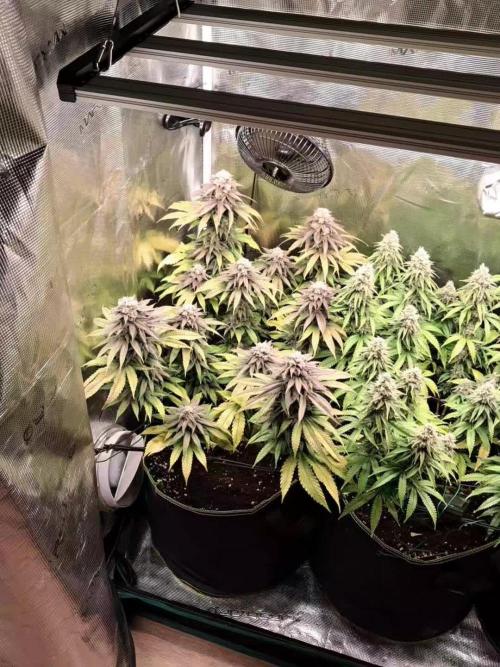
Ende Blütewoche 8.
Die zwei Seitentriebe sind mir ganzschön abgehauen, richtige Brecher. Sie hat auch einen sehr süßen leichten Duft bisher, geht etwas neben der Pineapple Express unter, bin deshalb sehr auf das Glas später gespannt. Overall aber eine richtig tolle Pflanze mit den fettesten Buds im Zelt :D

Likes
4
Share


@cadaver420
Follow
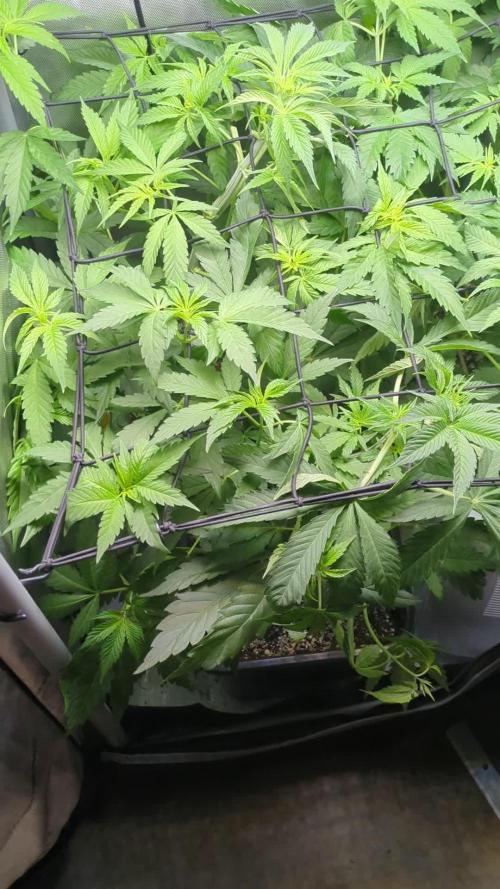
Burn in progress, give them Vera and Alg a mic help in that situat.
I forgot that i put 2 biotabs in soil when i peepare my soil. Do top dress with 20 g of Guano powder in week 2 of flower.So that was to much, because the soil is Guanokalong soil mix and have 350 g of powder inside. OVERDOSE. STILL LEARNING using Guano many components they have. but i love the sugar on buds and taste at end.
ANY one using Guanokalong produ?




Likes
102
Share


@OrganicNature420
Follow
Germination date 🌱 02/12/2021
Day 94 09/03/2022
Strain 🍁 Barney's Farms Biscotti Mintz
(Biscotti x Mintz)
THC% • 30%
💡 Mars Hydro FC-E6500
• Power draw 650W + 5%
• Max coverage 5 x 5
• LED 3978 pcs high quality chips
• Max Yield 2.5g / watt
• Noise level 0 DB
• Removable Driver & Light bars
• Daisy chain
• Fast cool system
https://marshydroled.co.uk/ 🇬🇧
PROMO CODE • (organicnature420) DISCOUNT
https://www.mars-hydro.com/ 🇺🇲
PROMO CODE • (ORG420) DISCOUNT 👍🏻
⛺ Mars Hydro 150 x 150 x 200cm
📤📥 AC infinity 6inch
💧 10lt dehumidifier
❄️ 3.1kw air con system
💉 Nutrients Dr Forest (dry amendments)
Grow
Bloom
Bloom2
🌱 Growing Media • Soil
Notes 📝
It's not been a good week. Had some family time last week and unfortunately caught covid with all the symptoms. I've been bed bound since Monday and today I'm starting to feel slighty better. Not asking for sympathy 🤣 but this explains why some of my girls have switched on me...
Looks like all 3 Frosted Biscotti have gone into reveg. Obviously have a light leak but think I've sorted it now. The mystery is just well under feed as I've run out of Bloom and big Buds and its also gone into reveg. The other coco ones haven't gone into reveg and almost look done. Biscotti Mintz and Bahama Bussdown look 🔥 well impressed. The mutant Biscotti Mintz (soil) has come along nicely and looks amazing. I don't get why that hasn't revegged as its surrounded buy the others that have. The 2 at the back, (Bahama Bussdown) ones taken a slight knock and revegged and the other one has just got to heavy and collapsed. Again looks near enough done so now need to think of a plan of action for curing as tent will be occupied for at least another month. So I think that's it with the problems 🤣 ..
Apologies again for not getting back to anyones dairys over the last 2weeks. I'm going to spend the weekend catching up with you all and sorting out the tent as long as I'm covid clear. My partner has been doing so much for my son and I I couldn't ask her to maintain the tent aswell. She did give them a water but no nutrients 🙈 half effort still wins my heart ❤️
Discount codes in bio for Mars hydro
Likes
36
Share


@nonick123
Follow
Día 51 (22/07) Las plantas han reaccionado bien al 2º topping! 💥 Algunas de ellas ya empiezan a formar los nuevos brotes justo debajo del nudo cortado!
Hoy NO necesitan riego, tras regar ayer con 1 Litro de Té Vegetativo de Lurpe! 💨😁
Día 52 (23/07) Las plantas empiezan a formar rapidamente nuevas ramas tras el topping! 😍
A pesar del alto calor (35 - 38 ºC), gracias al sombreado y el mulch se mantienen frescas y con la tierra humeda, ¡perfecto para los microorganismos del living soil!
Riego: Solo es necesario regar a OnionOG #1 con 1 Litro de H20 pH 6,5
Día 53 (24/07) Riego: Solo es necesario regar a OnionOG #1 con 1 Litro de H20 pH 6,5. Esta planta se muestra muy sedienta comparada con el resto!
Día 54 (25/07) Los nuevas ramas se lanzan al cielo! 💥
Me encanta ver como los nuevos brotes de un color verde palido (casi radiactivo) nacen entre el intenso verde oscuro de las hojas de abanico ya formadas
Hace un dia nublado y con 29 ºC de maxima. No es necesario regar!
Día 55 (26/07) Riego con 500 ml H2O pH 6,5
Día 56 (27/07) Retiro los ajustes de LST a la mayoria de las plantas, para que crezcan libres ahora que se acerca el stretch
No es necesario regar
Día 57 (28/07) Riego con 1 Litro H2O pH 6,5 con 25 ml/L de Humus de Lombriz Liquido
Aplicación foliar Kelp hidrolizado de Lurpe Solutions a 0,25 ml/l
💦Nutrients by Lurpe Solutions - www.lurpenaturalsolutions.com
🌱Substrate PRO-MIX HP BACILLUS + MYCORRHIZAE - www.pthorticulture.com/en/products/pro-mix-hp-biostimulant-plus-mycorrhizae

Likes
16
Share


@CookiesAndCake
Follow
Week 18
Day 120 (11/12/2020):
I checked the girl’s trichomes and they are looking great! They are still mainly cloudy with only a handful of amber ones, but the other girls in the tent are definitely more ready. We will have to take them out at the same time so they can dry in the tent for good air circulation and a controlled environment. The pistils on the DSD are also the least developed compared to the other girls. So I will need to start the flush at the next watering.This one would definitely benefit from a bit more time but I I think since the trichomes are already cloudy she would be ready in 2 weeks anyway 💪
Day 121 (12/12/2020):
The girl is looking good today but actually noticed that some leaves are starting to go yellow. Although I think during this time it is actually good news and I will be happy for her to take up all the nutrients left into the buds to make them extra tasty!🤤
Day 122 (13/12/2020)💧:
Sooo this week is the start of the flush, just 1.5L of water. They are definitely ready for the flush and the buds are looking gorgeous! So gorgeous, in fact, that we cannot wait for the girls to be ready. So I cut some stems off to dry 🙊 We basically realised that they will not be ready and dry by Christmas (plus we would want to still cure them for min 2 weeks) and so I cut some of the smaller stems off to get some buds ready for Christmas celebrations 🎄 I only cut off 2 stems (one from each girl) of the buds that were at the bottom. I’ve put them into a box with holes in a room thathas good airflow. I’ll also make sure to weigh them and add it to the final dry weight. They do look super amazing though and definitely quite purple
Day 123 (14/12/2020):
Didn’t have time today to take pics of the girls but I’m sure they are fine 😉
Day 124 (15/12/2020):
I swear the buds look fatter and fatter every single day that I check her. Looking great, smelling great, and will definitely taste great!
Day 125 (16/12/2020)💧:
Second flush of the week, great stuff. Just gave her 1.5L of water and ripped off some dry leaves. There are some stems at the bottom that are still quite weak and cannot hold their weight. At this point it is too late to cut them off but I have definitely learned to lollipop for the future!
Day 126 (17/12/2020):
What a great end to the week and just 1 more week to go! Buds are looking astonishing at this point. And I swear they are still getting bigger and bigger. My only concern is that the buds still have some white pistils which also determines maturity. I hope they ripen up a bit more over the last week! And next week I will be watering twice and probably harvest after the whole week is finished, so on Christmas day! What a great present 🎁

Likes
6
Share


@Barcelona_Farmers710
Follow
Empezamos nuestro Seguimiento através de Aptus, esta le daremos 3 meses de crecimiento en una maceta de 20L y luego pasaremos a florecer en Invierno. Intentaremos sacar el Máximo rendimiento con las macetas de tela, junto algunas Bacterias para dar vidilla a la cosa Farmers buenos humos!🍁

Likes
2
Share


@Maddadog
Follow
From this week we started to give some extra nutrients to the plant. I used half of the quantity suggested from the fertilizer in order to reduce the overfert risks. She is growing day by day. I used to give water one time each 2 or 3 days during the night hours.

Processing
Likes
8
Share


@Max1973
Follow
Day 14 - Clay balls arrived, all looks good.... 😎
**the rust and damage on the first leaves is nothing to worry about,
the ice cream container water level dropped below the root level, fixed it,
but was cool to learn how fast hyrdo dmg can occur.... 👍
Day 17 - Lookin good... vid....
👍😎👊


Likes
169
Share


@SlowpokeFuegobud
Follow
🍊 🐶 💜 🍊 🐶 💜 🍊 🐶 💜 🍊 🐶 💜🍊 🐶 💜 🍊 🐶 💜 🍊 🐶 💜 🍊 🐶 💜
Welcome to week 5, my fellow growmies!! 💚 💚 💚
The dice have been thrown into the cannabis field... 😜 We have one girl, just as I wished. 🙏 Thanks, Pacha Mama! 😚
Number 4 has revealed herself, she is the most prettiest Tangie ever! ❤️
The others were juiced. Delicious! 😋
DAY 29
Potted into 12L container. 💩
DAY 32
Pre-flowering of number 4 who iiiiis...... A GIRL!!!!11 🎉 💄 Wiiiiiiiiiiiiiiiiiiii, so happy!! 😍
DAY 34
Watered with 3ml grow 4ml more roots 3ml growz + humics 5ml fastbuds 💧
LST
Thanks for stopping by, it's a true pleasure to have you as visitors!! 💚 💚 💚 😘
💜 🐘
______________________________________________________________
About Sour Tangie Dawg cannabis seeds
Sour Tangie Dawg is a sativa dominant cross between the famous Tangie and Chemdawg. Expect a combination of sweet & fruity mixed with a gassy, jet-fuel flavour. The amazing mix of citrus, tangerine, pine and gasoline produces uniquely rich, dank buds. The powerful sativa high is strong, uplifting and long lasting, great for creativity and socialising.
Chemdawg is the parent of OG Kush, all Diesel strain originate from Chemdawg. The Tangie is originally a Skunk hybrid strain but extremely fruity with the trademark Tangerine flavour. This strain is potent with THC-levels over 20% alongside very generous yields of top quality weed, very suited for hash and rosin producers. If you’re looking for a strain to produce the best tasting concentrates this Sour Tangie Dawg is a proven winner! She easy to grow and the perfect choice for SCROG growing due to her growth speed and stretch. We advise switching to 12/12 light when 75% of the net is filled. For outdoor growers the harvest period is early October. Indoors she’s finished after 9 weeks of flower - fast for a sativa dominant strain. We recommend growing in soil with organic nutrients for the best tasting weed.
Get some fantastic genetics here: https://supersativaseedclub.com/ 💜 🐘
___________________________________________________________________________
SETUP:
80x80x180 cm Zelsius
240W Full Spectrum LED IR UV dimmable
DW240H-A6-HS
Heatsink color red
LED Chips:
512pcs SAMSUNG LM301H + 24pcs Osram 660nm + 8pcs Osram IR 730nm + 8pcs UV 385nm
Color mix: 2700K + 4000K
2,8umol/J
Driver HLG-240H-C2100B
Coverage: veg 5x3ft / flower 4x2ft
Product size: 628x205x68mm
Green Buzz Nutrients
Shouts go out to my sponsors @GreenBuzzNutrients, thanks so much for your support! ❤️
If anyone would like to try their amazing organic products, use code GD42025 for generous 25% discount (for orders of minimum 75€) ✨
https://greenbuzznutrients.com/
Biobizz Lightmix
custom exhaust fan 320/270cm³/h
Carbon Active Granulate 240cm³/h
tab water pH 8 - EC 0,25 with Calmag to 0,5
Advanced Hydroponics pH minus Grow + Bloom to pH 6.2
🍊 🐶 💜 🍊 🐶 💜 🍊 🐶 💜 🍊 🐶 💜🍊 🐶 💜 🍊 🐶 💜 🍊 🐶 💜 🍊 🐶 💜

Likes
8
Share


@eldruida_lamota
Follow
Esa familia, abrimos nuevo diario, y os traemos unas candy caramelo fast floración, del banco zambezaseeds.
3/3 un germinado perfecto, ph controlado desde el principio, veremos que tal se comportan bajo un led.
.
Mars hydro ts-600 code discount: an420
No olvidéis que sin ellos esto no es posible 🙏.
Esta semana no usaremos ningún producto, empezaremos abonarlas con advanced nutrients a partir de la segunda semana, mientras os dejo unos vídeos y fotos para que veáis el proceso, un saludo fumetillas.

Likes
4
Share


@ObloTheGrower
Follow
Well, this week clones are done their root job I gave them 2 more days in their box.
4 different small buds are polinated now. I will give them 4 weeks to make seeds. This is my first try to do it in late period. We will see the result.
Processing
Likes
13
Share


@Ledbelieve
Follow
Gave both ladies a topping. Will be pinning down the bottom leaves in a couple of days. Will be doing a whole lot of topping for these girls. Things are really heating up so should pick up the pace here
