


Processing
Likes
Comments
Share


@HeavensHarvest89
Follow
I'm starting to feel like a broken record but week 11 was another easy week finishing out the week with soil ph right at 6..8 and she is just getting fatter and fatter by the day. now day 2 into week 12 with another 2 weeks to go before I chop her.. cant wait to see the final product

Likes
2
Share


@Madeofstardust13
Follow
Week 7- The plant with yellowing tips has healed from too much light. All plants are fed with Mother Earth Grow. February 2nd we will be switching to flower.

Likes
53
Share


@Mz876
Follow
Looking like she might go into flower soon . Excited. No deficiencies so far


Likes
8
Share

@drakkon
Follow
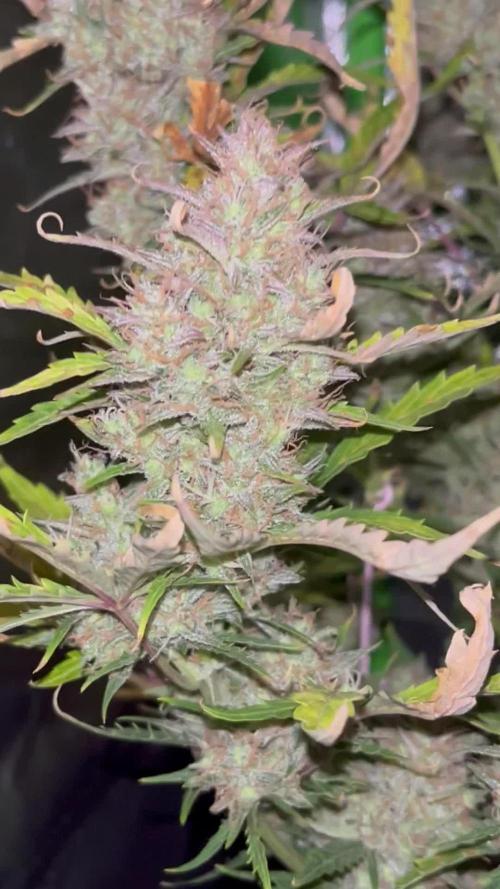
Except for drying, curing, and smoking, this concludes my Medusa F1 grow. I harvested the plant on day 92. Overall, the plant was a thrill to watch grow. It thrived from day one, and I am more than happy with a wet yield of 336 grams given my setup. The buds are large, dense, laden with trichomes, and they have a great calyx-to-leaf ratio. I discovered a few mites on this plant and its neighbor (a Milky Way F1) in the last 7-10 days. However, the Medusa F1 resisted them so well that they barely multiplied. Or, if they did multiply, they left the Medusa for the Milky Way. The final proof of my efforts will be in the dry yield and quality of smoke.
Sometimes I trim wet and sometimes I trim dry. In this case, I'm going to dry trim, so I just cut the plant and hung it upside down from a line in an out-of-the-way room that I can keep dim. There is a little circulation in the room via floor registers.
I will return in due time with a dry weight and smoke report.
SMOKE REPORT
After drying for 6-7 days, I dry-trimmed and jarred up my Medusa F1 harvest. It was a breeze to trim because of its high calyx-to-leaf ratio. To me, that's a big plus. After 11 days in the jar, I had one bud lab-tested for potency, and then decided to proceed with my smoke report out of excitement at seeing the numbers (see below & photos). I added a ton of photos and one video to this smoke report (trimming setup, dried buds in and out of jars, proof-of-smoke video).
Regarding taste and aroma, the buds smell mildly of herbs (sandalwood?) and pepper, and the same aromas carry over in the smoke. Regarding potency & effects, the bud I sampled (3 pulls) was quite strong, non-drowsy, and it came on in a quick rush. The rush peaked about 5-10 minutes after smoking, and I would describe the high as "stoney" in the traditional sense, but also "up." For about half an hour, the effects were enough to disrupt my focus -- definitely a strong high. Then, my focus returned and the sensations changed to a milder pleasant buzz, which lasted a couple hours before tapering off. The material smoked left behind nice white ash.
POTENCY TESTING RESULTS
TAC: 22.5%
THC-A: 21.8%
CBG-A: .68%
Terpenes: Medium (1-2%)

Likes
3
Share

@Lvnsource
Follow
Feed log:
RKA x TCP #1 — D: 70 - 8.5L - [ph 6.2] SI[3ml] ,Vega[6ml] , Flores[20ml],Ca/Mg[4.1g & 3g ] INPUT; [1.486 EC] OUTPUT; 2.5L ,6.1 pH , 3.65 EC
RKA x TCP #2 — D: 65 - 7.5L - [ph 6.2] Si[6ml] ,Vega[6.2ml], Flores[22ml], Ca[4g]/Mg[2.2g] INPUT; [1.58 EC] OUTPUT; 2.5L pH 6.3 [2.398 EC]
Nr. 1 requires an increase in water next irrigation to bring that EC down lol! Nevertheless she’s doing great.
Nr. 2 is nearing harvest, no new white pistils in sight, so I’ll start initiating the flush next irrigation 👍 just plain RO water for 7 days.
For the next indoor batch I’ll be running 50/30/20 soil, coco, and perlite for even better control!
Smell observations;
Pheno #1 — citrus + spice with a slight banana peel note 😅
Pheno #2 — citrus + spice (no banana peel note)
What do you guys think the yield will be? 😱😉
Likes
29
Share


@Smokwiri
Follow
Welcome to week 8 of my Zamnesia seeds - Wedding cake diary
Plant looks great, buds are fattening up a bit now, steep development.
Running towards finish....
10% discount on Zamnesia seeds with code GROWITGD


Likes
Comments
Share


@Dankmark420
Follow
We cut her early due to a block off in the autopot system.. but she was frosty as a mofo for being cut way to early and the taste was surprisingly very sweet with a piney/spicy kind off aroma and taste


Likes
37
Share


@PapaNugs
Follow
A great second week here as the girls stabilize. They got watered two times this week. All good growth. 📈
This girl is also doing real well. Not much to note cause all is on track currently!!
Dimmed to 40%
Here are the lights details:
Medic Grow Mini Sun-2 150W LED
Model: MN150-022
Spectrum mode: V1
Efficacy: 2.8 umol/J
Thanks for stopping by!
You can find the light on Grow Diaries:
https://growdiaries.com/grow-lights/medic-grow/mini-sun-2-150-watts
You can find the light on Medic Grow's website:
https://medicgrow.com/

Likes
48
Share

@PapaNugs
Follow
Everything went well over vacation! The girls are doing okay overall. They needed bigger pots and it's starting to show overall. Another reason not to use autos cause I can't lollipop. But the watering process is going well.
She's not doing hot! The strawberry is looking rough still. I'm considering using synthetic nutrients in this grow to start giving for power. And this girl is the reason for it.
Dimmed to 80%
Here are the lights details:
Medic Grow Mini Sun-2 150W LED
Model: MN150-022
Spectrum mode: V1
Efficacy: 2.8 umol/J
Thanks for stopping by!
You can find the light on Grow Diaries:
https://growdiaries.com/grow-lights/medic-grow/mini-sun-2-150-watts
You can find the light on Medic Grow's website:
https://medicgrow.com/
Likes
4
Share


@Johncann
Follow
Not sure if these girls are ready for the chop yet?? Still sucking up water quickly 🤷♂️🏻
Likes
29
Share


@mrb11
Follow
Had a few mishaps this week with my light schedule. Working nights now so I was not home when the lights were on and it was screwing up everything so I bumped the lights up and hour every night till it was turning on at midnight which is when I get off of work now. Well during that process a few things happened. My ac infinity controller 69 pro had lost wifi so I had been needing to do a reset because it’s still throwing an alert but I don’t use alerts so something’s wrong anyway I unplugged it during lights out and during the process of plugging it back in or something the lights decided to come on for a few seconds I believe is all it was so no worries it’s only once. Well that reset didn’t work so CS told me how to do it another way and I was able to do the reset but it didn’t work and I can’t remember exactly how it happened but later on the afternoon when the lights supposed to be off I realized I had the on for 23 hours 59 minutes and 59 sec lmao oops. So I went over 12hr by 2 hours so I just changed the schedule to give her 12hrs of dark then went back to my normal schedule but she only get 10 hrs of light that day. That was like a 2 or 3 day span of screwing up and I think I had another blip of the light turning on during dark period but can’t remember, trying to put that behind me and hope I didn’t stress her too much. She has been doing well besides that drama. Her ph has been crashing down to 5.5 fairly quick lately but I been on top of it. Got my auto top off setup I’ll see if I can add a pic, very simple gravity feed. I’ve noticed I’m pushing my limits on ppm, seeing some slight tip burn. Oh yeah bumped the light up to 7. Now on 7 of 10 which according to my new meter is not as bright as i expected

Likes
16
Share


@Mopish
Follow
17 Jan - 23 Jan
19 Jan
Kush del Arriero: Looking good in color and size, planning to flush next week, hope those possible nanners don't develop enough, not removing due to harvest time being so close and this one being the one that will probably give me the best yield. Some buds and leaves getting purple colors.
Choco Cookie: Still very small, hope they grow a little more before harvest. Some buds and leaves getting purple colors.
Banana Cake: Small buds, decent trichomes.
I hope that KDA won't cause much trouble to the other two plants, I hope I'm wrong about the nanners... Keeping my plans, finish with nutrients this Sunday and flushing for 7-14 days after that.
I'll add a few more pics later today.
Sat 22
Yesterday a friend with more experience in these things took a look at my plants, he seemed impressed by what I've accomplished on my first grow so far. He also confirmed that the weird things on the KDA buds aren't nanners... phew !
He also confirmed my plans for flushing tomorrow are good.
Likes
87
Share


@ClubRiot
Follow
Zkittlez Feminized by Club Riot Seeds ( www.clubriotseeds.com )
Week 13
11L Pot
LED: Spider Farmer 1000 (100W) for Flow. Stage
Canna COCO
Mineral Nutrients:
👇
Sensi Cal-Mag Xtra:1 ml/L
Power House Part A: 1.5 ml/L
Calcium Plus Part B: 1.5 ml/L
Stimulus: 1.5 ml/L
Bud Explosion: 1.5 ml/L
Strain Info:
👇
Name: Zkittlez Feminized
Genetic: Grape Ape x Grapefruit
Type: Feminized ( Indica Strain )
Indoor Yield: 80 ~ 140 grams/plant ( 15L Pot ) with LST growth technique.
Indoor Height: 70 ~ 110 cm
THC: Very High
CBD: Low
Flavour: Grape , Sweet , Berry .
Effect: Relaxed , Happy and Euphoric.

Likes
16
Share

@DogDoctorOfficial
Follow
🌸 BlueBerry – Week 5 Flower Report
Grower’s Journal | Zamnesia BlueBerry
⸻
🌱 The Girls in Full Bloom
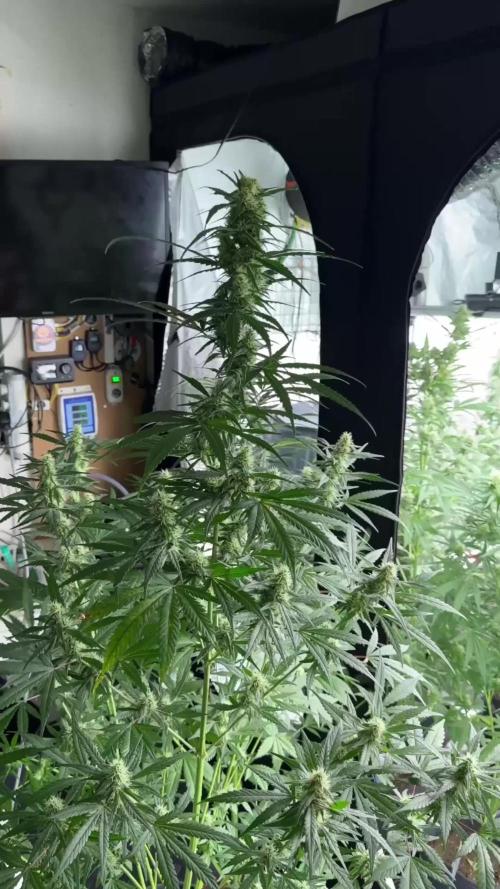
Both BlueBerry #1 and #2 are absolutely stunning this week:
• Size: Towering beauties, full presence in the room.
• Bud Formation: Large, well-stacked flowers building from bottom to top, showing the real effect of the ICL 300 inner canopy lights.
• Pheno Difference:
• Pheno #1 is forming a dominant central cola, reaching tall and thick — a real spear.
• Pheno #2 is slightly more balanced across branches, but still bulking fast.
• Hairs (Pistils): Beautiful white pistils everywhere — vibrant, strong, and reaching out like nature’s way of saying, “I’m ready to bloom.”
This early hair explosion is a promise of dense, resinous flowers soon to come.
⸻
💡 ICL 300 – Fruits of the Light
The inner canopy lights are proving their worth:
• Buds aren’t just forming at the top, but all the way down the structure.
• No wasted shadow zones, no underdeveloped sites.
• It feels like the plant is blooming in 360°, thanks to the way the ICL spreads light deep into the canopy.
The difference between a regular top light and this combination is day and night, and now it’s visible in every flower forming.
⸻
Nutrition Update – Bringing Back All-In-One Liquid
This week we reintroduced the Aptus All-In-One Liquid into the feeding mix. Why?
• To give the plants a broad-spectrum nutritional push right at mid-flower.
• Ensures no deficiency or slowdown during this critical bud development stage.
• Works hand in hand with Top Booster and CalMag to support cell expansion and flower density.
At this stage, the girls are hungry and hard at work, so it’s the right time to fuel them properly.
⸻
🔄 Quick Recap of the Journey So Far
• Cannakan germination → soil prep with Aptus amendments → steady veg → training + defoliation → flower induction.
• Week 4 brought early frost and strong stacking.
• Week 5 now brings real bulk, pistil fireworks, and inner canopy buds rising.
This has been a textbook BlueBerry journey so far — stable, strong, beautiful.
⸻
🔮 What to Expect Next (Week 6 and Beyond)
• More Bud Bulk: Flowers will gain weight and density quickly from here.
• Pistil Transition: Some of those white hairs will start to orange and curl as new sets keep pushing.
• Trichome Explosion: Frost will build across leaves and flowers, giving that snowy BlueBerry look.
• Terpenes Rising: Expect the first real waves of that nostalgic, sweet-fruity BlueBerry scent.
What not to expect: major height gain. The stretch is over, from here, all energy goes into flower expansion and resin production.
⸻
💬 Final Thoughts
Week 5 is the moment where the BlueBerry girls are no longer just “plants” — they are flowering powerhouses. Frost, pistils, bulk, and balance.
With the ICL 300 feeding the canopy from the inside and the All-In-One Liquid giving them the push they need, these ladies are on track to become legends in their own right.
BlueBerry #1’s towering cola and BlueBerry #2’s even structure are both testaments to genetic quality and environmental harmony.
It’s a pleasure to watch them evolve — and even more to share their journey 🌸✨.
📲 Don’t forget to Subscribe and follow me on Instagram and YouTube @DogDoctorOfficial for exclusive content, real-time updates, and behind-the-scenes magic. We’ve got so much more coming, including transplanting and all the amazing techniques that go along with it. You won’t want to miss it.
• GrowDiaries Journal: https://growdiaries.com/grower/dogdoctorofficial
• Instagram: https://www.instagram.com/dogdoctorofficial/ • YouTube: https://www.youtube.com/@dogdoctorofficial
⸻
Explore the Gear that Powers My Grow
If you’re curious about the tech I’m using, check out these links:
• Genetics, gear, nutrients, and more – Zamnesia: https://www.zamnesia.com/
• Environmental control & automation – TrolMaster: https://www.trolmaster.eu/
• Advanced LED lighting – Future of Grow: https://www.futureofgrow.com/
• Root and growth nutrition – Aptus Holland: https://aptus-holland.com/
• Nutrient systems & boosters – Plagron: https://plagron.com/en/
• Soil & substrate excellence – PRO-MIX BX: https://www.pthorticulture.com/en-us/products/pro-mix-bx-mycorrhizae
• Curing and storage – Grove Bags: https://grovebags.com/
⸻
We’ve got much more coming as we move through the grow cycles. Trust me, you won’t want to miss the next steps, let’s push the boundaries of indoor horticulture together!
As always, this is shared for educational purposes, aiming to spread understanding and appreciation for this plant. Let’s celebrate it responsibly and continue to learn and grow together.
With true love comes happiness. Always believe in yourself, and always do things expecting nothing and with an open heart. Be a giver, and the universe will give back in ways you could never imagine.
💚 Growers love to all 💚
Likes
5
Share

@Emerald_Gardens
Follow
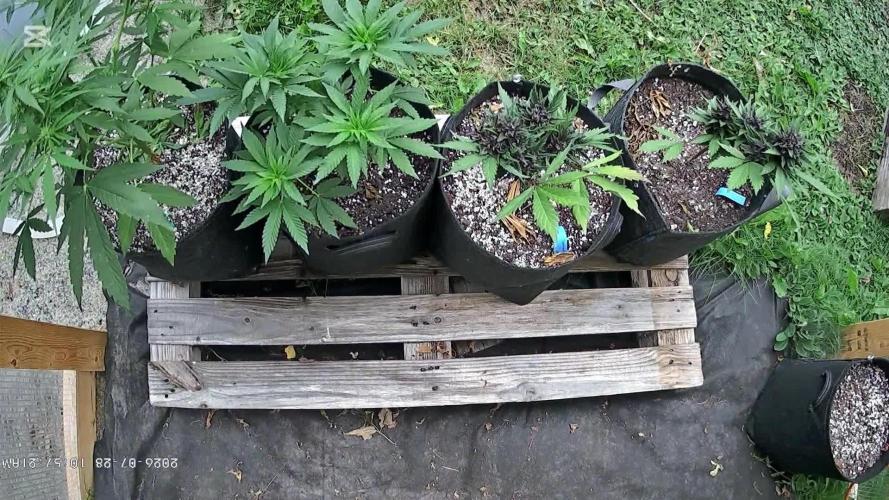
Trimmed weight is about 30grams. Early stress stunted growth. Super fast flowering strain and the smell is super lemony. The color is a very nice dark purple. While inspecting trichomes for ripeness you can see the purple color bleeding into the heads trichomes which looked super cool under the scope
Likes
1
Share

@Olduffybastard88
Follow
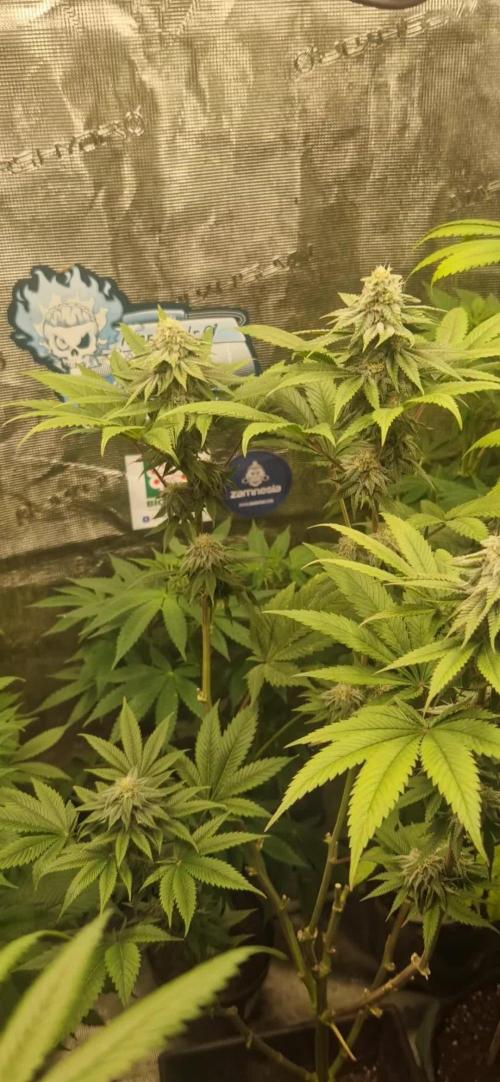
Big change in growth this week and they are stinking the tent out stayed stayed see some change in colour in the leaves and buds themselfs around 2 weeks left for these girls then right onto the next
Likes
16
Share


@GODSGIFT_2005_JM
Follow
🍼Greenhouse Feeding BioGrow & Bio Enhancer
⛺️MARSHYDRO
The ⛺️ has a small door 🚪 on the sides which is useful for mid section groom room work. 🤩
☀️ MARSHYDRO FC 3000 LED 300W
☀️Also special thanks to VIPERSPECTRA P2000 (200W) & XS2000(240w) LED growlights
🌱 DUTCH HEADSHOP SEEDS:
www.dutch-headshop.eu
www.dutch-headshop.nl
ONE STOP SHOP
. 100% germination success on first try! with HUGE seed selection!
. Very friendly customer service
. Best bio-seed packaging
. Sells other products @ best prices:
. Nutrients
. Vaporizers
. Smoking accessories (grinders, cones)
. CBD Tinctures
. Resin Extracts
. Boveda humidity packs
. Ziplock bags
. Other health supplements such as:
. Lion’s Mane Organic Capsules
. Hemp Seed coffee

Likes
4
Share


@RhodiesGrow
Follow
Watermelon Zkittlez is looking much better by the end of this week. Getting ready to take off for sure.
Day 7: Watermelon Zkittlez showing second leaves coming in. Still slightly yellow, might be hungry or slightly over-watered. Will feed nutes in the next few days and see. Temp: 75º RH 75% PPFD: 300 VPD: .41 kPa
Day 8: Just misting no water or nutes yet. Looking good. Temp: 75º RH 75% PPFD: 300 VPD: .41 kPa
Day 9: Fed 2ml Cal-Mag, 2 ml FloraMicro, 1ml FlorGro, 1ml FloraBloom PH 6.2. Temp: 75º RH 70% PPFD: 400 VPD: .72 kPa
Day 10: Responging well to nutes. Looking much darker green today, must have been hungry for nutes. Temp: 70º RH 75% PPFD: 400 VPD: .72 kPa
Day 11: Growing and looking darker green today. New leaf growth. Temp: 77º RH 55% PPFD: 500 VPD: .67 kPa
Day 12: Temp: 73º RH 62% PPFD: 500 VPD: .67 kPa
Day 13: New leaf growth. Temp: 75º RH 60% PPFD: 500 VPD: .62 kPa
Day 14: New leaf growth. Fed 4ml FloraMicro, 6ml FloraGro, 3ml FloraBloom and 2ml CalMag. Temp: 78º RH 61% PPFD: 500 VPD: .76 kPa