





Likes
39
Share


@Hazecat_420
Follow
Las nenas tomaron bien el cambio fotoperiodo se nota como ya se van preparando para lo que se viene que serán otros 2 largos meses en su fase de floración. Se comenzó a aplicar Top Bloom de Top Crop intercalando los riegos entre agua, fertilizantes y micorrizas. Seguimos ...

Likes
4
Share

@StonedSteve
Follow
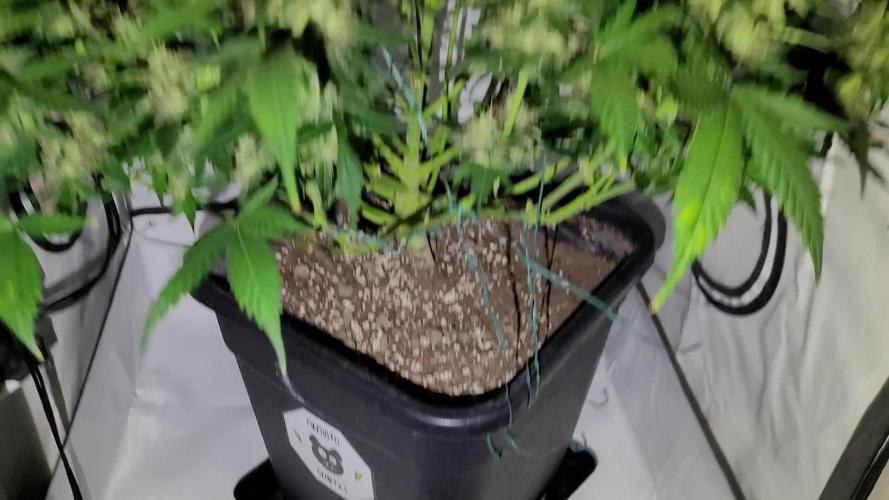
Zdar startujeme 6. týden květu
Apollo kyne, zálivku jsem stáhl na 6L, protože při 7L začalo vytékat až 2L, hnojky jsem taky zreguloval začali mi lehce žloutnout špičky listů, ale teď to vypadá že je vše v pohodě, teď už to jen dokrmit a dotáhnout do zdárného konce.
Vůně je velmi intenzivní, zatím jsem spokojenej snad se nic neposere, za týden zase čau ať se vám daří.
Fotky a video z 02.09.

Likes
17
Share


@JonnyKush
Follow
hey growmies I decided to switch to flowering, I am using ADV nutes with the dosage recommended by them and they seem to me in great shape, tonight I will do a defoliation in order to breathe better and get as much light as possible. I'll keep you up-to-date. good growth and happy day 💚🌳

Likes
56
Share


@nonick123
Follow
Día 8 (28/10) Subo a DLI 20
Spray solo H2O RO en el top del sustrato
Retiro la cúpula de humedad, porque una de las CBD Auto 20:1 tenia el tallo ligeramente doblado por falta de resistencia
Sin la cúpula y con el ventilador a la potencia mínima (1/10), van a tener una suave brisa que va a hacer que se fortalezca el tallo!
Día 9 (29/10) Las plantas se han estirado mucho y se tambalean un poco
Creo que deberían haber tenido un DLI más alto desde el principio!
Día 10 (30/10) CBD Auto 20:1 y LSD-25 Auto se encuentran "tumbadas" porque el tallo se ha estirado mucho!
Hago un soporte casero con una brocheta de madera + alambre + clip de enrejado para mantener los tallos verticales!
Spray solo H2O RO en el top del sustrato
Día 11 (31/10) Las plántulas se muestran verticales y felices! Una de las CBD Auto 20:1 está mostrando un desarrollo muy rápido!
Spray solo H2O RO en el top del sustrato
Día 12 (01/11) Spray solo H2O RO en el top del sustrato
Día 13 (02/11) Las plántulas se están estirando mucho! Creo que las falta DLI
Subo el DLI a 30
Spray solo H2O RO en el top del sustrato
Día 14 (03/11) Introduzco la 1ª BioTab a 5 cm de profundidad, lado derecho
1er Riego! 750 ml de H2O RO + ORGATREX 5 ml/L + BACTREX 1 g/L
💦Nutrients by Bio Tabs - www.biotabs.nl/en/
🌱Substrate PRO-MIX HP BACILLUS + MYCORRHIZAE - www.pthorticulture.com/en-us/products/pro-mix-hp-biofungicide-plus-mycorrhizae
"GDBT420" 15% DISCOUNT code for the BIOTABS Webshop https://biotabs.nl/en/shop/

Likes
15
Share

@tsf_homegrow
Follow
🇩🇪
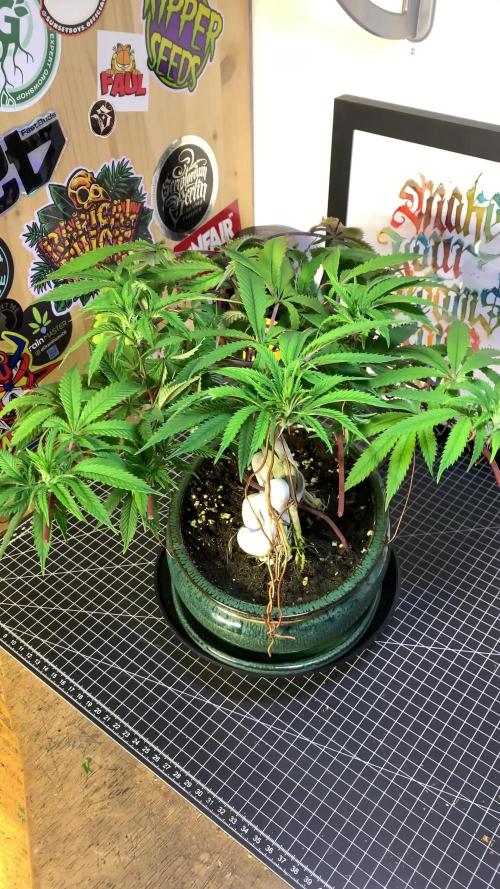
14.2. Tag 97 sie macht sich weiterhin ganz ok, es könnte besser laufen hier und da hab ich sie ein paar mal zu spät gegossen, weswegen sie zwischendurch zwei mal die Blätter recht stark hat hängen lassen. Ein paar Wochen muss sie noch durchhalten bevor es in die Blüte geht. Happy growing.💛✌️
🇬🇧
2.14. Day 97, She's still doing okay, though it could be better here and there. I watered her a few times too late, which is why her leaves drooped quite a bit twice. She just needs to hold out for a few more weeks before she starts flowering. Happy growing! 💛✌️
Likes
3
Share

@kdifiori_
Follow
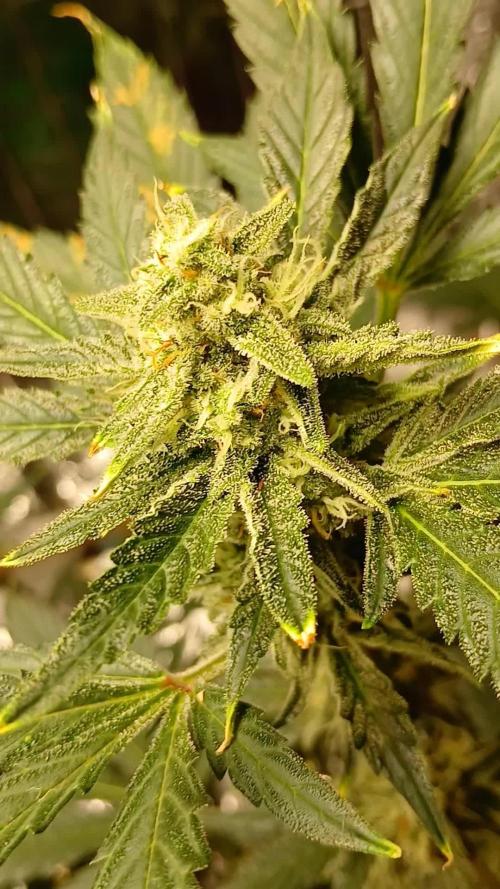
Nine weeks have passed, as you can see from the photos; despite various nutrient-related issues, the flowers are producing plenty of resin. This week, too, they absorbed a liter and a half of nutrient solution. Stay tuned.
Likes
5
Share

@420DeepGrow
Follow
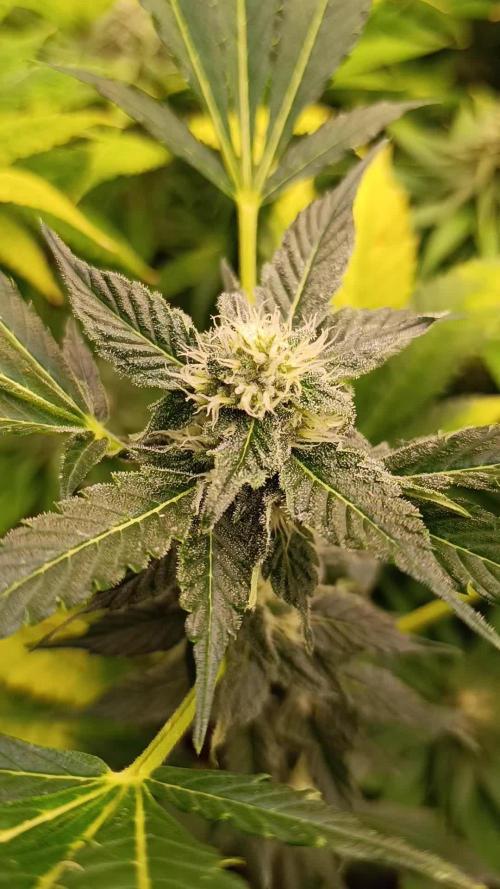
📆 Semana 6
La floración sigue avanzando y los cogollos comienzan a ganar volumen, con los pistilos destacando cada vez más en las zonas florales. La estructura empieza a definirse poco a poco, mientras la planta concentra su desarrollo en las primeras flores.
Con las lluvias, mantengo la estufa de gas para ayudar a estabilizar la temperatura y vigilo de cerca la humedad ambiental. Ajusto la nutrición subiendo la EC a 1.40 y mantengo el Bloom Booster en dosis progresivas.
⚡ EC: 1.45
💧 pH: 6.2
🌡️ Agua: 21°C
🌫️ Humedad: 65%
💡 Intensidad: 800–900 PPFD
🔥 Nota de cultivo: Los cogollos siguen tomando forma y adapto la nutrición y la exposición al UVB, mientras refuerzo el control ambiental ante las lluvias.
¡Seguimos creciendo fuerte! 💪

Likes
5
Share

@spacetimeman
Follow
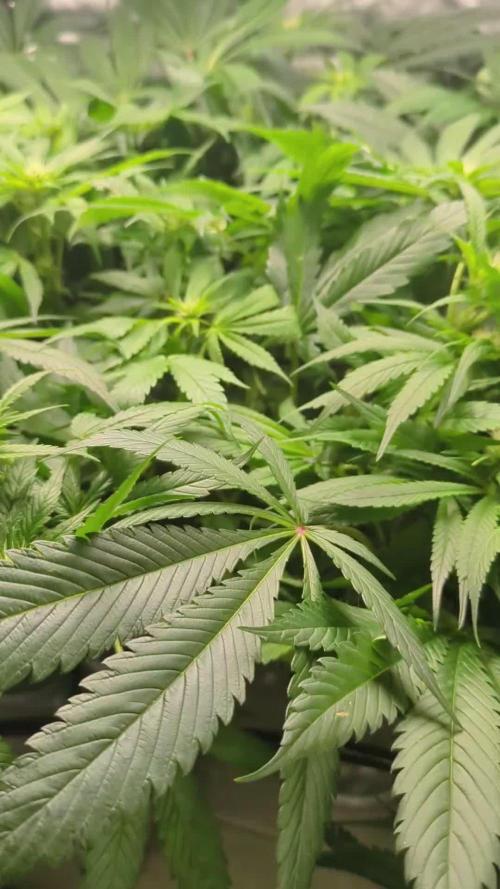
To many leaves, despite the several defoliation attempts.
Some mildew was detected but the anti muldew spray was used. Flowering is going on

Likes
8
Share


@Kirsten
Follow
26.1.25:
I have had a mistake 😕 i spilt some Fish Mix as I was experimenting with a syphon from some aquarium tubing I have. Unfortunately, I forgot to take the syphon out! Ugh 😣
However, it is fish emulsion and very thick consistency. Therefore, I was able to scrape it up with 2 of my business cards up off the counter. So added this extra into the next 2 ltr solution I mixed.
All plants were watered with at least 1ltr of dechlorinated water PH'd to 6.3.
Containing the following nutrients;-
♡ 3ml Seachem Seaweed
♡ 4ml Biobizz Fish Mix
♡ 4ml Biobizz Bio-Grow
♡ 3ml Biobizz Bloom
♡ 2ml Xpert Nutrients Bloom Booster
♡ 2ml Xpert Nutrients Cal-Mag
♡ .25g Ecothrive Biosys.
♡ 2.5g of Bicarbonate of Soda as PH UP.
Unfortunately I have broken my PH pen too. Accidentally submerged it under water, then the readings went crazy.
I'm leaving it to dry by standing it up but I'm most likely going to need a new one, which is extremely annoying 😑
I'm going start implementing the Scrog net probably some point next week if I let the plants that are in flower to just grow up now, as I do believe that I stunted Watermelon 🍉 by using too strenuous LST.
Hopefully the plants still are able to grow upwards at this stage during flower for all the Purple Punch P1, P2 and P3.
We will soon see!
28.1.25:
My PH pen has packed up 😣
I've got to wait to get another.
It's super annoying 😑 so I'm just judging by memory how to regulate it.
Unfortunately, that's my only choice! I'm also out of the dechlorinator 😕 things are not going very well this week so far 😅
I guess we will have to make do, until I can get replenished.
29.1.25:
I removed all the plants, hoovered, and disinfected the tent.
There were several accidents when watering, causing some debris and splashes.
I decided to just go ahead and get a few other things done. It's crazy how quickly things can become neglected! 😣
So I defoliated moderately on all plants except Gorilla Cookies seedling.
I have absolutely dropped the ball on my lighting situation!
My light was much further away than I thought!
I turned it up to 100% and dropped it down to just under 2 feet away.
After I reset the tent, I set up my scrog net. I removed 80% of all LST pegs. I am planning on letting the scrog net take over the training from here.
I really want to minimise the risk of mould, so I decided to start using my dehumidifier. It has raised up to 73% RH this week, so it's necessary.
Hopefully, I will be able to get my dechlorinator and PH pen soon! That's kind of essential to me.
It's been a little bit of a stressful day in the garden, to be honest 😅
30.1.25:
So I am expecting the arrival of my new PH pen today, as well as my new bottle of Ecothrive neutralise.
It is supposed to measure the TDS and EC in addition to the standard TEMP and PH, which I had previously. Obviously, time will tell if it's any good or not.
I realise, much too late now, that my lighting is very insufficient for this many plants. I need double the watts at least, and coverage is very poor.
I remembered I had an old LED floor lamp, which was in a corner being unused.
I decided to take the stand off, and Zip tied the pole onto the tent pole at the back left corner.
I have no idea what the wattage is, and it's quite pathetic 😅 but I mean, I might as well use it, being as I definitely cannot afford more lights! 😣
Next grow, I will probably only grow 2 plants, max 4, and just use larger 7-10 Gallon pots.
Being as I ran out of dechlorinator, I only watered some plants properly because I only had enough to make 6 litres. When my pen arrives, I will get everything properly watered.
31.1.25:
The leaves of several plants are showing signs of iron deficiency. This is likely due to my PH pen packing up earlier. I now have a new pen.
Due to this, I decided to use my Seachem Prime, which I use for my aquariums. As I wanted to get them watered properly, and my Ecothrive Neutralise hasn't arrived yet.
I watered each plant with 1ltr of dechlorinated water PH'd to 6.0. I added .25g Ecothrive Biosys to the water.
May give them a breather on the nutes and just use the Cal-Mag and Biosys.
Being as I've just topped dressed with rich fertilisers, I'm sure that will be OK for the next several waterings.
Snipped another couple leaves which were annoying me 😅
I realised this is one of the pots I put my clay pebbles the bottom of.
So I've probably not been watering enough, as she's right at the back, and assuming all was good because the pot was heavy.
I went ahead and gave all the plants a thorough watering each with:
2ltrs of dechlorinated water, PH'd to 6.2 with:-
♡ 4ml of Xpert Nutrients Cal-Mag amino acids.
♡ 4ml Biobizz Bio-Grow
♡ 4ml Seaweed extract liquid
Going to keep an eye out to see when they need more in next couple of days. They're all looking very well, except the slight colour fade on Bubble Kush
Processing
Likes
3
Share


@Wizardgreen317
Follow
Thanks y’all for being apart of this seeds will be available in the near future.. peace out and check out the pics like or give me your opinions on anything that could help me
Processing
Likes
1
Share


@magicjohnson
Follow
Steady week, all the girls seem to just keep getting bigger and bigger!
Defoliated which I forgot to take pictures of however, they literally replaced the foliage in days!
I Have a slight worry about one of the GG as she seems to be carrying on vegging with no real signs of flowering, just stretching more each day!? This seems strange as the Stardawgs look like they could be ready for flush in the coming weeks.. I am only a newbie so maybe i'm just been a little paranoid!? Either way She's absolutely massive!!
Got the Dawgs out for a little photoshoot!
Likes
4
Share


@cangrowz
Follow
Also bisher finde ich sie sehr klein, Aber denke die stecht sich vielleicht noch machen ja Autos im Regelfall dennoch bisher bin ich sehr zufrieden. Die Blütenstempel sind gut am Wachsen. Jetzt mal schon ob sie demnächst die Farbe ändert. 💜
Likes
28
Share


@Grow_N_Smoke
Follow
I went ahead a flipped into flower and the girls have responded really well!
I had some issues last week but I think adjusting the PH down to 5.9 helped and diluting my nutrient solution to bring down my EC levels helped as well





Likes
54
Share


@Roberts
Follow
Gorilla Cookies is just about done. I checked the trichromes a few days ago and was starting to get the first amber ones. So I flushed with 5 gallons of ph water. I continue to pour 3 gallons more through every other day till next update which is harvest. Plus keeping it wet in between. Full of frost, and she is trying to fox tail. She is definitely ready to go. Just getting the nutrition out of the plant for a better quality bud, and better taste. Thank you Spider Farmer, and Pure Instinto Seeds. 🤜🏻🤛🏻🌱❄️🌱
Thank you grow diaries community for the 👇likes👇, follows, comments, and subscriptions on my YouTube channel👇. ❄️🌱🍻
Happy Growing 🌱🌱🌱
https://youtube.com/channel/UCAhN7yRzWLpcaRHhMIQ7X4g
Spider Farmer G300w: https://amzn.to/3S2zvsd
Spider Farmer 10X20 Heat Mat Kit - https://amz.fun/lsa0J
Spider Farmer Amazon Store: https://www.amazon.com/spiderfarmer
Spider Farmer Official Site: https://spider-farmer.com
Discount code: saveurcash (stackable)

Likes
6
Share


@IQuSX
Follow
Hi, topman!
In my opinion, this would be an important performance!
The roots of the second plant replace the first plant in the root ecosystem! I have not seen such experiments! And I think this method will be used next time by other growers!
For comparison, there are ordinary processes!
Follow the process and be one of the first to witness the AUTO stimulations Revolution!
Now the left one is 15 days old, and the right one is 31 days old from moving under the light!





Likes
4
Share


@Tropical_Growerz
Follow
Hi everyone, the plants are stretching well. The fastberries are starting to take on shades of purple. The grapefruit is already producing trichomes, as is Rhino Ryder. In any case, for the moment, everything is going well. Thanks to those who follow me and read my comments.
Likes
15
Share


@CG420
Follow
Tras acabar la segunda semana de floración así se presentan las pequeñas.
Hemos ido defoliando alguna hoja de la parte baja de la planta, aireando un poco a las niñas por la zona baja .
Las plantas ya empiezan a mostrar sus primeras bolitas y empezamos a añadir en la solución top Candy y pk13-14 para ver engordar esas bolitas💚.
