


Likes
Comments
Share


@Qaggy
Follow
Harvested 1 plant. Still have the bigger 2 to fatten up a bit more. I’m guessing another 2 weeks before they are ready.
Just a waiting game now.
Plant 1 seems to be drying nicely. Looking forward to getting the cure on and bringing them terpenes out.

Likes
48
Share


@AsNoriu
Follow
Day 71. Girls are still stretching !!! Will supercrop biggest Blue Dream this Monday or maybe Sunday if i am lucky. I think next watering is on Saturday and it takes 2 days , so i can do it only before watering, less damage to plant and hopefully quicker recovery !!!
But they reach sky, so no other way !
This week will be updated after main actions.
Amazing run !
Day 72. Supercrop and watering day, before this - plants look amazing, but they reach sky and will go hermie in shade most of the time.
Will update AFTER ... ;))
Job done ! Moved monster to the corner and supercroped her hard, left two colas untouched. Think Blue Dream #2 could need same drastic measures ;)))
All girls got feed, raised lights to max. Hope stretch is over, otherwise half of harvest larva buds and i already cleared plants heavily ...
One more round of defoliation for sure !
Day 75. Blue Dream took supercroping like nothing, still reduced watering on 25% for two goes, tops already standing up, leaves reverted to new horizont and hopefully no bananas !!! ;))
Girls got water with CalMag and video is straight after last round, i water in 3 rounds, 30 min inbetween, have no run off most of the time.
Happy Growing !

Likes
20
Share


@Naujas
Follow
it still holds :) I was very afraid that I could do it, but the further I go, the more I start to believe it :)

Processing
Likes
3
Share


@Ogbangbang2981
Follow
this week was a lil challenging, had to get out of LST due to the fact that I broke a branch and that just tripped me off and I took off all my ties , apart from that i started giving her bloom products because I noticed a few hairs. I started applying tiresias mist to one of my branches so I can get pollen sacks to produce my own fem seeds, as I plan on crossing my fortune cookies autoflower with my ak48 autoflower and creating a new strain called "DRAKO" AUTOFLOWER well till next update . O.G. Bang Bang !! out.....

Likes
23
Share


@DeepRootsGrowTrees
Follow
MATARO BLUE by KANNABIA
Week #18 overall
Week #4 Flower
She's doing great this week looking good and her buds are starting to dense up she's getting nice trichome coverage as well. Stay Growing!!
Kannabia.com
MATARO BLUE

Likes
9
Share


@420keef
Follow
I will be getting 1000 phyto mites to kill the spider mites in my tent & in the meanwhile i chaugt about 50 ladybugs & put them on my plants, i hope they both do the job right haha

Likes
56
Share


@KingSalomonsWeed
Follow
Das war ein aufregender Lauf. Problemlos, aber aufregend sexy.
So ab Blüte fühlte es sich an wie das Video. Aufregend, Anziehend.
Das ist total geiles Weed!
9 Punkte
Sehr Empfehlenswert für Feinschmecker, die wenig Zeit haben.
Und trotzdem ne starke Brise um die Ohren gehauen bekommen wollen.
03. Februar
Oh Jungs?
Knallt gut!
Schmeckt gut!
SWEET SEEDS, SUPERSORTE!
06. Februar
Munchies und ein tiefer zufriedener Schlaf inklusive. " GEIL "

Likes
10
Share

@Thedibber
Follow
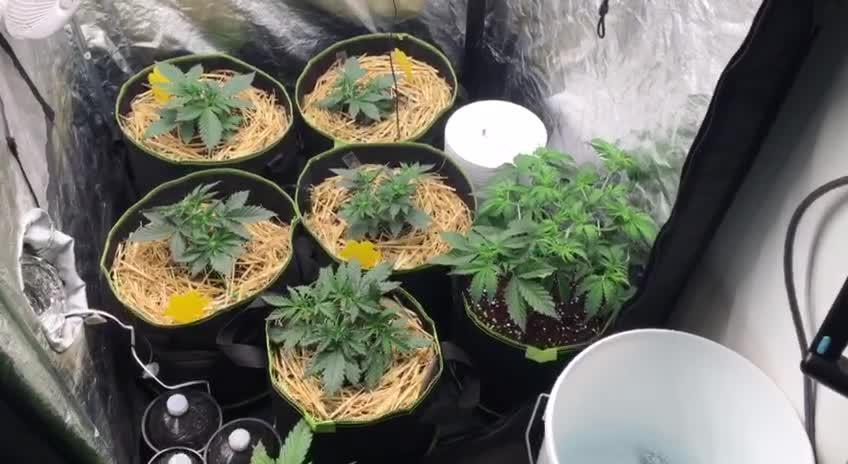
Week 3 starts Poundcake #1 is on Day 15 as of 25/07 the rest are between day 11 and 14
Poundcake #1 suffering slight light burn from me putting the se3000 power up to 75%. Its back down to 65% now 😅
The two smaller pots on the right are in coco not living soil. Just keeping them indoors for now why not 👌
Added a organic seedless straw mulch for more microbe friendly activity and help prevent the fast drybacks I'm getting with the current heat 😰


Likes
1
Share


@Filiaes
Follow
01.12 - Stretch has stopped, so I decided to change my nutrient plan and also lollipopped all of the girls during the week when I watered them. They develop really well and I look forward to see the buds growing.

Likes
13
Share


@Silverback_Guerilla
Follow
2/7:
Did a thorough feeding today, and also foliar fed with Microlife Maximum Blooms. Added humic acid.
2/12:
Fed today..no time for anything else..

Likes
13
Share

@Bread_n_Buds
Follow
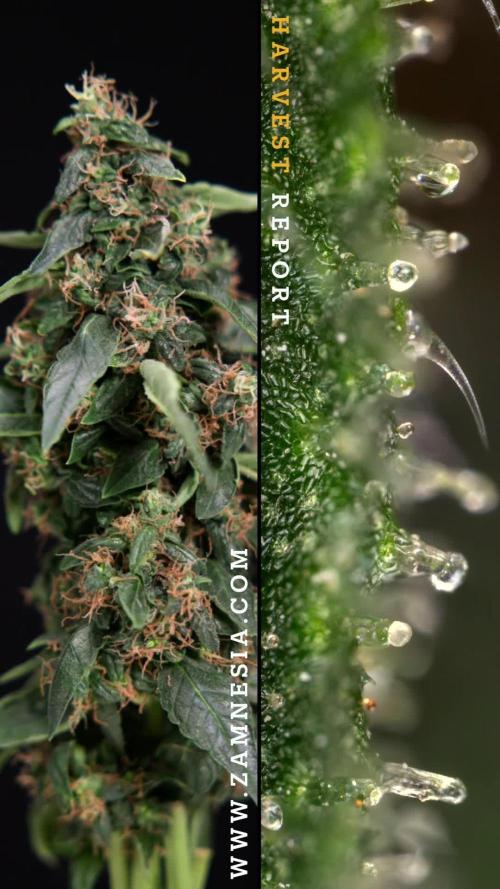
This week you'll find the HARVEST of CBD FIX Autoflowering #2. This plant was treated with a practically "original" main lining, which is naturally applied to autoflowering plants. This means topping the third internode at most, otherwise it will go into flowering.
I think of Green Cure F1 Autoflowering, which when we grew it was more stable and a champion at the 2025 Autoflower World Cup. CBD FIX competed in 2026, but unfortunately, it didn't give us any success.
The plant is beautiful, with beautiful flowers and a sufficiently distributed resin layer, although not the best.
Pot and Soil - This plant was grown in an 11-liter pot with Plagron's BioLight Mix organic soil.
Lighting/PPFD - A Zamnesia Phytonaut 480W LED lamp was used from mid-flowering until fruiting. We achieved a PPFD (photosynthetically active photon flux density) between 800 and 1200 μmol/m²/s, with a cycle of 24 hours, then 23 hours, then 20 hours, and finally 18 hours.
150 mm activated carbon filter
Z https://www.zamnesia.io/it/14526-led-grow-lamp-phytonaut-480.html (National link if Google doesn't work)
Growing system: Zamnesia Ecosystem, fan, extractor, and grow tent, all made by Zamnesia.
Trichhomes: We harvested the plant halfway through the harvest period because we had to send samples to the Autoflower World Cup. We still have a good amount of amber trichomes, starting at 25%. There are still 40-45% opaque and clear trichomes, but with a sativa, it's best to harvest early anyway. Remember, amber is a sign of oxidation and means the plant is transitioning to indica effects, so sativas should not be harvested too late to preserve their daytime effects.
Nutrients: Grown with Plagron Official, a 100% organic base fertilizer, and all recommended additives.
Visit www.plagron.com for growth cycle calculations, product selection, and general information.
All nutrients are available on the Zamnesia website. Also check out the live substrate and the fantastic new Zammi product line.
You can find this excellent strain here:
https://www.zamnesia.io/en/5103-zamnesia-seeds-cbd-fix-Auto-feminized.html
(Google it if the link doesn't work; it's a national link)
Zamnesia Description - Creating the perfect balance of CBD and THC in a cannabis strain is truly difficult to achieve. At Zamnesia, we've always had great respect for our CBD-conscious customers. Thanks to our experience and determination, we now offer you the only CBD-rich strain you should truly consider. The incredible CBD Fix Auto contains incredibly high CBD concentrations of up to 20%, making it truly award-winning. Not content with breaking the mold, this plant also boasts a truly unique THC content of less than 1%!
CBD enthusiasts are true experts in the magical properties of this powerful cannabinoid. If this is your first time venturing into the world of CBD-rich cannabis strains, look no further. Its ability to relieve stress and induce feelings of calm and serenity are just some of the benefits appreciated by CBD users. Its beneficial properties are complemented by seductive herbal and pine aromas. The pungent lemon notes may be familiar to cannabis connoisseurs and hint at this strain's incredible genetic heritage.
Using Northern Lights Auto as a base to perpetuate its autoflowering nature, its best qualities were expressed during flowering. Although the yields are modest (a patient grower can obtain up to 325 g/m²), we are certain that the true essence of this wonder lies in the quality of its splendid buds. Its stability both indoors and outdoors allows it to reach heights of 60-120 cm. Its resilience and ease of cultivation have been further improved thanks to careful clone selection. Savor the delicious and rare essence of this strain. You'll experience everything except the side effects associated with high-THC cannabis strains.
Musical frequencies 432 Hz and 528 Hz
Black music from www.radionula.com
www.zamnesia.com
Likes
16
Share


Likes
42
Share


@iLoveGoodWeed
Follow
Week 11 - both ladies look amazing can't wait for the smoke.
9L Pot she is almost ready to harvest so I on next watering she will receive the final part for 7 days then flush and water for 3 days.
12L Pot she look amazing a lot of buds and she have 2 weeks left till harvest
Likes
24
Share


Likes
18
Share

@BlaKX
Follow
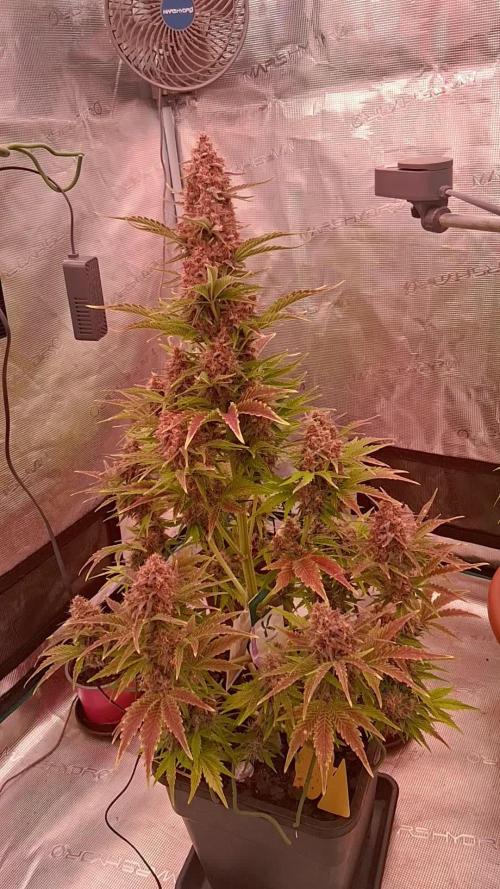
High Growmies, die BPP hat in der Woche nochmal ordentlich an Masse und Harz zugenommen! Auch die Terpene kommen jetzt voll zur Geltung.
Habe mit meinem neuen Smartphone Mikroskop 300x die Trichomen gecheckt und festgestellt dass fast alle Milichig geworden sind auch vereinzelt Bernsteine aber noch hier und da durchsichtige.
Da ihr Durst noch nicht abgenommen hat werde ich ihr noch eine Woche mehr geben um die Trichomen Reifen zu lassen und Festigkeit zu steigern.
Likes
4
Share


@MaestroBud
Follow
The journey of a legend begins: Acapulco Gold.
Carefully selected seeds, allowed to hydrate in water for 12 hours, then transferred between two sheets of absorbent paper in a propagator heated to 25°C.
After 48 hours, the first roots break the shell: a sign that life has won once again.
At the time of the transplant, a light and draining Light Mix bed awaits you, enriched with Cellmax Rootbooster, Extreme Garden and Dynamyco: a welcome designed to immediately stimulate a strong, vital and mycorized radical structure.
A simple but fundamental start: here the foundations are laid for healthy and productive plants

Likes
18
Share


Likes
141
Share


@Anonymous_2022
Follow
Thanks for stopping by.. Please hit the like button if you like what you see and ill be sure to check you out too Growmies 🌱
Week 6 of flower .. sooo nearly there.
Last week developed a calcium deficiency and some of the leaves are deteriorating 😡
Added Calgel(CalMag) at a 0.3ml per L dose hopefully there perk up abit again,
Will also be adding a NPK booster this week as there starting to fade quite abit early,
Dehumidifier is doing its job dropped the humidity around 15-20%
Temps 21-28 ✅
Humidity 45-55 % ✅
Overall happy with the progress this week now to focus on getting through this deficiency 👍👍👍
Likes
20
Share


@ukterpdoc
Follow
Sorry for late update friends been in Jamaica for 10 days 😀
So plants look amaizin gonna flip them tomorrow i think its time any opinions guys.

Likes
28
Share


@PrairieFrostGrow
Follow
Week 9 .......... Flower Week.........June 6 to 12, 2020 ........ Days 57 to 63 from germination
She took a lot of shape this week and buds are swelling. She has reacted well with Massive and has increased her nodal spacing. Now she needs to work bulking up and filling in that spacing😀👍
A little more leaf strip at the end of the week to let more light into the middle of her. Focussed on the leaves on the inside of her and left a number of the fan leaves on the perimeter of her to help with sugar production.
Her hairs have never really been long but the buds are swelling in nicely. They started off a little small but have grown a lot wider in the last week.......as expected in week 9.
Starting to see some possible nutrient issues forming as she is aging and some of her leaf tips are starting to curl down a bit. Red hairs have started so we should be less than three weeks to go and guess at roughly 2 weeks to go. Will be feeding next week but that might be the end......see what the week brings.
Environment has been hovering at 79 degrees and 61 percent humidity for most of the week. Yeast and sugar CO2 in use.
Still feel there is going to be trade off battling the pH issues of the pots by feeding her 4.5 water and feed. I have to keep it that low to have a runoff of 6.6pH🤪🤪🤪🤪🤪 Going to start letting the pH drift higher the next couple of days though and give a couple of waterings at 5.6 to ensure she is taking up enough phosphorus and potassium.
The frost coming out on this girl now but she is a little slower coming on. Anticipate the last two weeks here should see good frost coming out. Have not even really looked at it too much yet to be honest.
Changed up some of the supplements this week and added in some Advanced Nutrients Big Bud and Overdrive. Always liked Overdrive and when moving the bottles had more than I realized so figured I would change it up a bit......she is already fighting pH issues so no further harm.
She is a very pretty little girl and she has beautiful shape. Not bending over her top seems to have been okay for this girl. Just keeping the side branches pulled apart so the light gets done the middle to bud sites😃 Nice work Sweet Seeds.....she is looking great so far.........freaking resilient dealing with pH so high!!!!!!!!!🙏🙏
Little more detail:
June 6, Day 57
VPD - 1.2
3L feed - Big Bud, Vitathrive, Rezin, Liquid Weight, Velokelp, CalMag, Dual Fuel.
1150ppm and 5.0pH.......pH little higher today.
Lots of runoff as fed late last night.
Keep an eye to see the result of the higher pH.
Colas more defined today. Standing up nice and looking thick today.
Fairly green though so keep and eye on the nute levels.
June 7, Day 58
VPD - 1.2
7L water - 285ppm and 4.4pH......checking pH in medium
Runoff was 580ppm with 6.8pH
Hairs are whiter now and buds are wider and stacking.
June 8, Day 59
VPD - 1.2
Dry out day.......
She is dark and bushy.
June 9, Day 60
VPD - 1.2
4L Feed - Sensizym, Rezin, Vitathrive, Liquid Weight, Massive, Terpinator, Dual Fuel.
1150ppm and 4.2pH.......pulling down a little more since last runoff number.
Fair bit of runoff from the feed.
Starting to fatten up a bit more.....branches are looking larger.
June 10, Day 61
VPD - 1.2
3L Feed - Overdrive, Rezin.
485ppm and 4.5pH
Just some supplements and feed tomorrow.
Her side branches are reaching up more and increasing the nodal spacing.
Now she needs to fill that gap in😃👍
Noticing a pattern with Massive and nodal spacing?????
June 11, Day 62
VPD - 1.2
Dry out day.......
June 12, Day 63
VPD - 1.2
4L Feed - Terpinator, Overdrive, Rezin, Vitathrive, Sensyzime, Liquid Weight, Dual Fuel.
1380ppm and 4.5pH
Hitting her and Sweet n Sour harder as they get closer to the end.
She is 19” tall now and 24” wide
Leaf strip to increase light penetration......lots of small leaves.
Tricomb production getting going now.
Nice little Cannabis plant😋😋😋