


Likes
Comments
Share


Likes
11
Share


@Mo_Powers
Follow
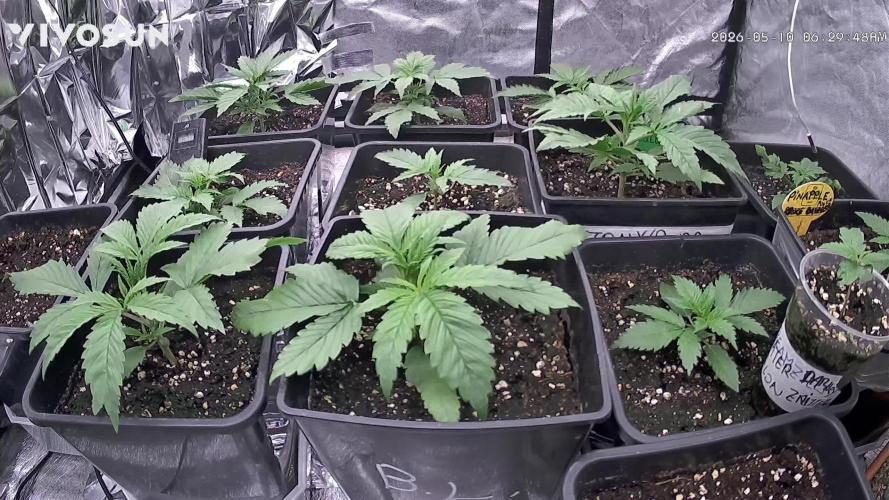
summer is slowly coming to germany. this beautiful plant is growing tall and bushy. unfortunately, it is not yet showing any signs of flowering. harvest is planned for the end of october or mid november. so there is still plenty of time for her to grow. she is vigorous and healthy.💪😋




Likes
47
Share


@Master_weeda
Follow
Bonjour à tous les padawans et maîtres jedis
Franchement cette plante est magnifique
J'arrose toujours avec 2 litres d'eau ph6.3 à laquelle j'ajoute la tablette rqs pour la floraison
Je me régale!
Likes
2
Share


@TheBudWhisperer
Follow
12 days to full transplantable roots. Right on schedule as expected. Moved 6 of the 12 clones (1 per plant) into a new 45L Rez that I cobbled together in an evening. Just small enough to fit into the cabinet. Hopefully the roots don’t choke each other out for territory while we work to reveg, re-flower and ultimately seed em all for the new F3 line. We’ll pick the best buds from the lot for the next testing run once we see what the pheno variation looks like from the main run in the tent. It’s a process and annoyance not to be yielding bud off a grow cycle but it is what it is if you want your own signature stuff. Alls good for now. Let’s just hope that the 6 coats of paint I threw on the lid is enough to keep out the grow light penetration🤞. Shoulda used black, whatever.
Likes
31
Share


Likes
20
Share


@Wackytabacky_420
Follow
🚨 CHOP DAY!! 🚨
So my Northern lights by @growerschoiceofficial has finished her life cycle at 79 days old. Upon chopping all the girls this plant is prob heavier than the other 3 put together!!! She did amazing in flower under her new light by MarsHydro the tsw2000!! Can't wait to see how this light treats the girls through the whole life cycle of a plant.
💡light sponsor💡
@marshydro_amazonled
@marshydro12
@marsnier
#marshydro
#TSW2000
Low stress training clips-
@madmadameplant
@madmanplant
Www.madmanplant.com
Other companies in this grow-
@foxfarmsoilandfertilizer - 100% ffof
@acinfinityinc - fabric pots
@generalhydroponics - flora trio line
@vivosun.official - inline exhaust fan
@opulent_systems - 4x4x80 grow tent
@growerschoiceofficial - 1 Northern lights seed
@inkbird_official - temp and rh controls
Well that's a wrap 4 this grow!! Till next grow growmies best of luck and Happy Growing!! Stay Zooted!!🌱💚💨🔥🔥🔥👊🏼🤟🏻

Likes
24
Share


@olli0420
Follow
Harvest time! Finally! Super happy with this grow! I'll update harvest with pics of jarred buds after it dried 💚
Last values were 200 ppm💚

Likes
19
Share


@sneakymexican712
Follow
Ok this was my first grow and I made mistakes.
-forgot to buffer coco
- nutrient burn
-started the manlining to early
- probably worried to much about every stage these plants.
-ended up with fungus gnats
And probably appt more I can’t rmeber in the moment.
But i learned so much from all of my mistakes and spent so much time researching and seeing in real time how these plants react and grow.
I did do some experimentation
just a normal top with one blue dream.
I topped twice one another blue dream and did a 3 times topped on all the blue dreams and I see why you should at least top three times the eight main colas and spread out the plant I see some of the buds on the one I only topped once not matured at all because there was minimal light other buds were growing so fat it suffocated it basically. I could have probably defoliated and manliness better but ayy. Beginners wil make
Mistakes and I’m happy with what came out of these girls. Not excited for trim hail but I am at the same time 😅😅

Likes
9
Share


@Luv2Grow
Follow
Day 57 - Starting off week 9 and she’s looking gorgeous still. Decided that I’m going to give her straight pH’d water from here on out. Trichs are mostly milky and caught a couple amber today. Thinking another week or two and she should be ready to chop but will keep a close eye on everything. Has been such an easy grow so far, just didn’t end up as big as I expected but buds are really fat and frosty.
Day 58 - Nothing new to really report. Going to continue giving her straight water and cal-mag. Didn’t notice much change from yesterday, thinking she might of stalled out a bit but hopefully these last two weeks she’ll really start packing on.
Day 59 - Not noticing too much of a change the last couple of days, no new pistils showing and she’s starting to shrivel. There’s a few amber trichs in there but pretty much completely cloudy. Debating on a partial chop this weekend. Still flushing and giving her just water. Hopefully I can hold out chopping until the end of week 10 at least.
Day 60 - She’s still looking good and REALLY frosty. Half the pictures I take almost look fake, she’s so frosty. Continuing just water to flush her out till the end. Decided I’m not gonna do a partial chop and just let her go till I think she’s done and hopefully more amber trichs.
Day 61 - She’s still holding strong and still seems to be fattening a bit. Going by the trichomes, she should be ready for a harvest by the end of week 10, next weekend. Just going to continue watching her and if she needs more time, I’ll give her more time!
Day 62 - No big changes, still looks like she’s on track for chopping next weekend. Will check her out again tomorrow and give her some more water. Can’t wait to start drying this girl, she’s smelling amazing.
Day 63 - Last day of week 9 and she’s smelling really good. Still flushing her and think I might chop next Saturday. Will be 10 weeks total but we’ll see, continue watching the trichs.
Likes
6
Share

@Kushncheeseplz
Follow
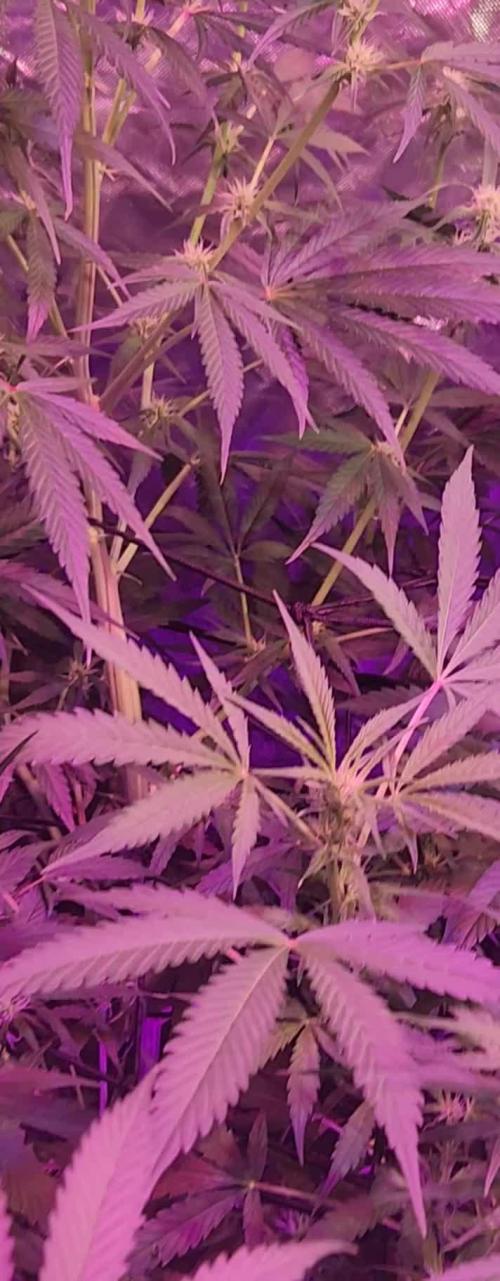
I had to change the light this week. To smaller lights because of some fan leaves was turn at the tips away from the lights


Likes
11
Share


@Shenelly78
Follow
Start of week 5 . Flowering is really picking up. And the ladies seem happy. Fed with straight water today. All the girls have received a defoliation and lst adjustments. Watered with phed 6.2. On January 20th. Blondie is short and bushy so far only measures 11 inches tall. She has started to show signs of flowering but no real flowers yet. She's running behind alittle for sure. The Banana Purple Punch is measuring at 20 inches tall by 22 inches wide. Fast Bud Mixed Auto Pat Benatar is 15 1/2 inches and 18 inches wide. Mixed Auto Blondie is 11 inches tall and 13 inches . End of week 5. Watered the girls with a gallon each of 6.5 ph water. Blondie is a short girl and she's a little behind in her flowering.


Likes
57
Share


@AsNoriu
Follow
Day 85 since seed touched soil.
Trim jail !!!
2.40 cm of hanging buds !!!
Happy Growing !!!

Likes
9
Share


@DrBud420
Follow
03.07.
Girl Scout Cookies
Day 69#
Nothing special is happening, it's been 4 days since the last update, I was a little late last time, so here I am so I won't be late again.
Tomorrow is the end of the tenth week for the plants, this morning I fed them, before that I gave them only water for 2 waterings, that is, they were in water for a whole week.
It's hot right now and I'm watering them every 3 days, this morning they each got 30+ liters, anyway, except for the ones in smaller pots, they got a lot less.

Likes
71
Share


@Roberts
Follow
Blue Dream Xtreme Is doing her thing. I have been having the most issue with this plant. Curious to see how she turns out. She is in a New Level Hydro bucket, under a Spider Farmer SE5000 light. Thank you New Level Hydro, Spider Farmer, and Amsterdam Marijuana Seeds.💪❄️🌱🤜🤛
Http://amsterdammarijuanaseeds.com
Thank you grow diaries community for the 👇likes👇, follows, comments, and subscriptions on my YouTube channel👇. ❄️🌱🍻 Happy Growing 🌱🌱🌱
https://youtube.com/channel/UCAhN7yRzWLpcaRHhMIQ7X4g
SE5000
https://amzn.to/3qFpAML
Spider Farmer Official Website Links:
US&Worldwide: https://www.spider-farmer.com
UK: https://spiderfarmer.co.uk
CA: https://spiderfarmer.ca
EU: https://spiderfarmer.eu
AU: https://spiderfarmer.com.au
Coupon Code: saveurcash
Www.newlevelhydro.com
Www.hygrozyme.com

Likes
19
Share


@GoldenWeedGrower
Follow
Legend
Timestamp: 📅
Measures: 🛠️
Water: 🌊
Actions: 💼
Thoughts: 🧠
Events: 🚀
________________________________
📅 D29/V27 - 21/09/23
🛠️
🌊 1L
💼
🧠 She's growing very fast now and she looks healty. Maybe the silica made his job or maybe can be the CO2 dispenser effect ? We'll see.
🚀
________________________________
📅 D30/V28 - 22/09/23
🛠️
🌊
💼 I cropped the main bud by mistake and then topped it
🧠 It's ok, I have about 10-11 buds now to keep until the end
🚀
________________________________
📅 D31/V29 - 23/09/23
🛠️
🌊
💼 Mounted the SCROG. Made LST, big defolation and a couple of timelapse videos
🧠
🚀
________________________________
📅 D32/V30 - 24/09/23
🛠️
🌊 3L
💼
🧠 The total energy of the plant remain the same, so I expect (or better hope) a big grow of secondary buds in the next days. Let's see !
🚀
________________________________
📅 D33/V31 - 25/09/23
🛠️
🌊
💼 Added Rhino Skin to the RES
🧠
🚀
________________________________
📅 D34/V32 - 26/09/23 - and added water and nutes.
🛠️ EC is 1.0, pH 5.5.
🌊 6L of water and nutes
💼 Made LST with Timelapse
🧠 She seems ok 👌
🚀
________________________________
📅 D35/V33 - 27/09/23
🛠️ EC is 1.0, pH 5.5
🌊
💼 LST almost HST
🧠
🚀
Likes
4
Share

@GoodTimesOrganics
Follow
Welcome Back!💚
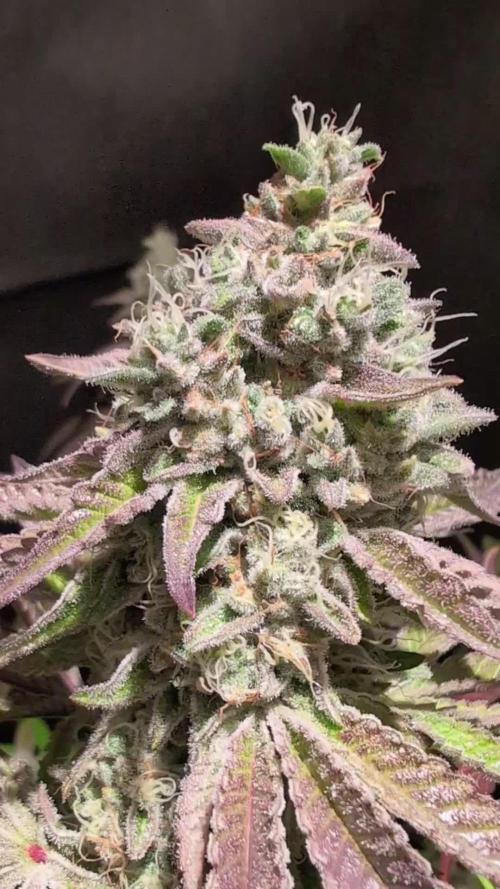
Nach der siebten Blütewoche, bilden sich die Blütenköpfe immer noch weiter aus.
Die Blütenbildung entwickelt sich prächtig und es wirkt, als hätte man überall wundervolle Inseln mit richtig schönen Buds.
Die Blätter im oberen Bereich fangen an sich langsam rötliche bis lilafarben zu verfärben.
Diese Woche gab es nochmals einen PK Komposttee zum Boostern.
Das Aroma wird immer intensiver.
Insgesamt hat die Pflanze ein sehr großes und breitgefächertes Wuchsbild und ist insgesamt ziemlich groß.
Die Umgebungsgegebenheiten sind aufgrund des Temperaturabsturzes etwas unregelmäßig aber immer im Rahmen.
—————
🌞 Temp: 22°C
🌚 Temp: 19°C bis 20°C
💨 RH: 46%
VPD: 1,21 kPa👍
😎 PPFD: 830 mqm
—————
Grüne Grüße 💚

Processing
Likes
7
Share


@DarkOG
Follow
4º Semana Pré - Flora
- Poda estratégica nas folhas
- LST nas #2 #4
- Inicio da flora #3 #4 #5
- nao mechi na #1
Todas se ramificando bem, unica que não deu uma crescida foi a #3 . Fiz uma poda nas folhas pra receberem luz pra entrada da flora!
