


Likes
Comments
Share


@Canopyfan86
Follow
i opened the plant ti per in more light and tied whit bands ti allow the smaller branches ti become larger. The beginning of the flowering Is upon us and i hope ther will be a great September



Likes
5
Share


@tupuymisco
Follow
The growth was delayed 5 days, I think it was due to the lack of ca-mg, but they are already 100% recovered to give some good flowers, give them love 💚
Likes
26
Share


@Sickone
Follow
Die wahrscheinlich letzte Woche der 1. Lady beginnt.
Die beiden anderen Ladys hängen deutlich zurück aber ich schenke ihnen gerne die zusätzliche Zeit und Pflege.
Gedüngt wurde ganz normal nach schema, zusätzlich bekommt meine calmag Lady nun das 2. Mal calmag vielleicht fängt sie sich auch noch.
Samstag 15.06.24
Die erste Lady wurde heute geerntet und zum trocknen in den dafür vorbereiten Schrank gehangen, ich entscheide mich hier für die Dry Trim Methode weshalb ich sie noch nicht weiter verarbeitet habe.

Likes
33
Share


@Roberts
Follow
Cali crasher is growing great under the Hortibloom Solux 350. She had a solution change today. light defoliation as well. 🤞🏻 she don't stretch too much in the next few weeks. Everything is looking good at the moment. Thank you Hortibloom, and Doctors Choice. 🤜🏻🤛🏻🌱🌱🌱
Thank you grow diaries community for the 👇likes👇, follows, comments, and subscriptions on my YouTube channel👇. ❄️🌱🍻
Happy Growing 🌱🌱🌱
https://youtube.com/channel/UCAhN7yRzWLpcaRHhMIQ7X4g

Likes
2
Share

@Fyno_TH
Follow
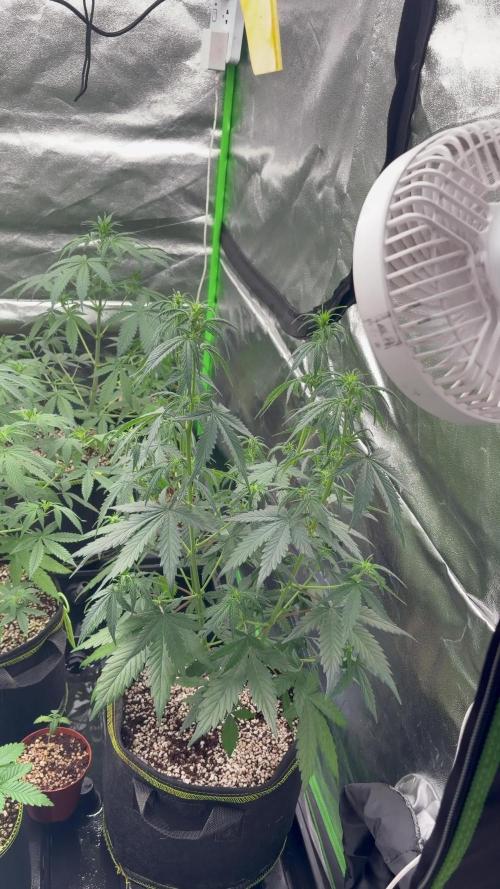
Some strains are hitting their limit—slight nute burn detected. Dialing back the ppm.


Likes
37
Share


@nonick123
Follow
Día 35 (26/05) Velocidad de crucero ON! Pequeñas pero preciosas! 😍
Día 36 (27/05) Riego con 500 ml H2O RO
Las señoritas siguen teniendo un color vibrante!
Día 37 (28/05) Se empieza a extender el color morado por las incipientes flores y las hojas 😍
Día 38 (29/05) Riego con 500 ml H2O RO
Empezamos a regar cada 2 días. Hace bastante calor por aquí! 30 - 32 ºC en la horas centrales del día
Día 39 (30/05) N/A
Día 40 (31/05) Riego con 500 ml H2O RO
Día 41 (01/06) Riego con 750 ml H2O RO solo la planta grande!
Hace muchísimo calor!
🚀 FastBuds 15% DISCOUNT code "NONICK" 2fast4buds.com @fastbuds.official
💦 BioTabs 15% DISCOUNT code "GDBT420" biotabs.nl/en/shop/ @biotabs_official
🌱Substrate PRO-MIX HP BACILLUS + MYCORRHIZAE @promixmitch @promixgrowers_unfiltered


Likes
5
Share


@TJHeadley
Follow
I now see the issue of doing multiple strains under one diary. FB Cherry Cola and SS Bruce Banner have shot hairs everywhere while the RQS Weddding Cake is still verging. Top dressed everything with half a cup of worm castings and an eight cup of BAS Craft blend
Likes
12
Share


@BudXs
Follow
Im not sayin a fkn word about these till Heather says I can.
Ive already said too much
Likes
3
Share

@PlantMike
Follow
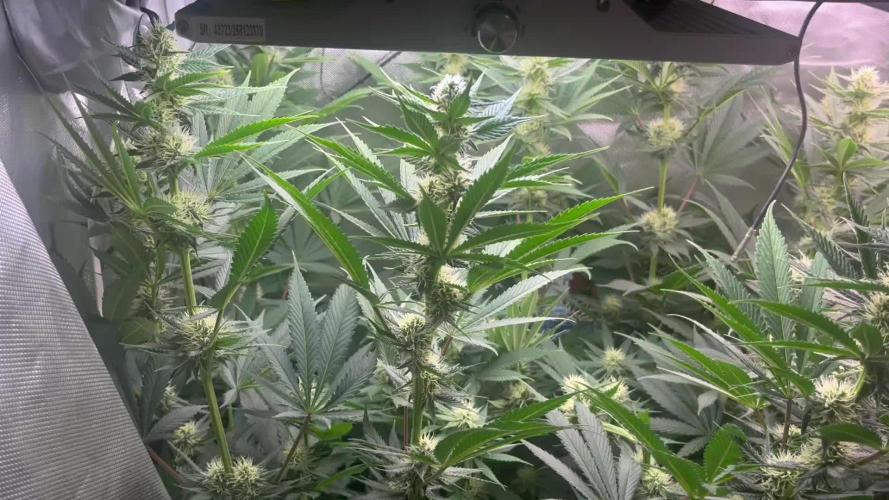
Check these forming buds out this week on BMR. These look like some of the biggest buds I will have ever grown. Not a ton of smell yet, what terpenes are there seem a bit woody with an underlying sweetness. Continuing with the sugar sources for the microbial life, the plants aren't showing any signs of deficiency so I'm just letting them ride at this point. Let's keep swelling!

Likes
4
Share


@Olduffybastard88
Follow
Day and nite shots going into week 4 flower so happy with these girls are there size got new nutrients aswell and will.see if they are better than the biobizz I used before


Likes
59
Share


@DaGrowQueen
Follow
Soaked in a glass of water for 16 hours before moving on to the paper towel for a couple of days until the roots were to my liking and than I planted them in peat pellets.

Likes
21
Share


@gr3g4l
Follow
la semana empiezan mostrando un estado muy bonito y gozan de humidificador nuevo.
Primeras comprobaciones de temperatura y humedad con el humidificador al mínimo, como puede verse en la foto del dia antes, dia 15, apenas no ha cosumido nada de agua por lo que aumentaremos el caudal y tiempo en el temporizador analógico. Así aumentaremos también un poco más la humedad sin tantos altos y bajos
Pasados unos 5 dias volví a podar dejando únicamente un nudo por planta y un doblado de ramitas.
A los 21 dias volví a podar del primer nudo de cada rama, hojas y yemas.

Likes
16
Share


@GYOweed
Follow
I got one Amnesia Lemon Haze seed cross fem pollen for now and looking for more. would make a killer sativa.
I messed up with PK Boost but the plant was pretty lanky weak stems will need support. I think the cross will be a bit better like my pev ALH grow.
100G is not bad. Mostly mids though not hard Ill upload a video. 😬
I used 100w led total (200w shared w/ another big plant) on the sour diesel it wont let me copy from veg and save it :(
I notice its much easier to wait and do this shit on a computer.
2021 and still can't multi select pics on mobile.
You should see the rates growdiaries charges the breeders and only huge companies can afford.
Someday I will make my own platform then. 😆
@growdiaries
Likes
10
Share

@Flavors
Follow
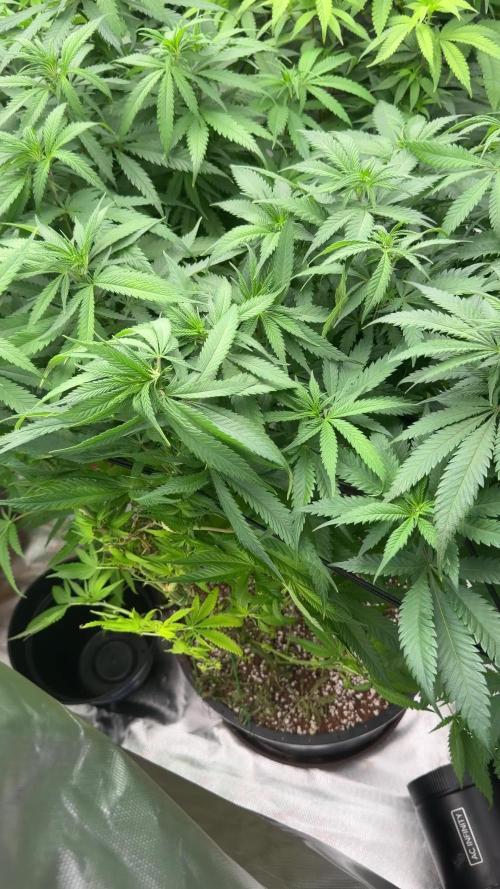
🌱🔥 Week 14 Grow Diary Entry 🔥🌱
Week 14: Still Vegging, But the Plot Thickens 👀🌿
Another week in the books and the ladies are still holding it down in veg mode 💚🌱 No flip to flower yet — playing the patience game because timing is everything ⏳🔥. Want to make sure they’re strong, healthy, and ready to explode once that light cycle changes 💡🌸
This week’s main mission: CLONES ✂️
Before the big flip, it’s time to take some cuts and preserve the winners 🏆🌿 Genetics too good to risk losing 😮💨💨. Need to get the clone station prepped, pick the healthiest branches, and let the next generation begin 🌱👶🏽
Current vibe check:
✅ Plants still thriving
✅ Structure looking solid
✅ Veg growth continuing
⏳ Flower flip pending
✂️ Clone day loading…
Lowkey feels like the calm before the storm 🌩️🌸 because once we flip… it’s go time 🚀🔥
#GrowDiary #Week14 #StillInVeg #CloneSeason #FutureMothers 🌱✂️👑
Likes
11
Share


@Papabro2k
Follow
I harvest her on 20% amber trichromes she smells great I’ve packed her into my dryer now it was a pleasure growing this girl 1st Auto I’ve did in nutriculture . Next time will be 3 of dp glueberry og happy growing and thanks if u tuned in to my diary .. am still learning and I’ll try document more in the future

Likes
27
Share


@w33dhawk
Follow
25.07.21 Tag 51 der vegi hab alle Ladys neu runter gebunden und Lady nr.4 getoppt und ausgehackt werde die Stangen die ich für die Tomaten Halterung gebastelt habe entfernen sobald die Pflanzen aussen herum gewachsen sind und den Ring dann am Topf fixieren zur Spreizung der Äste,ich glaube das die Pflanze sonst die Stäbe einfach hoch drücken wird...........
27.07.21 Tag 53 hab heut morgen mich darum gekümmert das die Riesen Töpfe etwas erhöht stehen damit die Luft unterm Topf zirkulieren kann und die Töpfe nach dem Giessen nicht Klatsch nass stehen sondern noch nach Tropfen können, habe dafür mein altes Gestänge wo ich sonnst mein netzt drauf Spanne zum scroggen verwendet is ja knapp 90x90 gross mit festem Hühnerdraht aufgespannt Steine seitlich an den Ecken drunter und Holz in der Mitte zur Stabilisierung damit der Zaun nicht so stark biegt und die Töpfe somit nicht allzu stark schief stehen hat ganz gut geklappt wie ich finde. Zu den steckies 2 davon sind im Garten in einem 20 l Stofftopf gemeinsam ich weiss jetzt denken viele oh man das geht schief wir werden sehen ich experimentier so gerne. Der 3te Steckling steht beim Kumpel auf dem Balkon hab ich ihm geschenkt hatte kein Platz mehr dafür Bilder von den draussen stehenden Pflanzen werde ich gelegentlich hier mit einfügen will deswegen jetzt kein extra Bericht auf machen,bis die Tage ich komm wieder keine Frage .........
28.07.21 Tag 4 Outdoor die Ladys haben sich in 4 Tagen verdoppelt und das obwohl sie sich den Topf teilen Mal sehen was die nächsten Tage so bringen für die 2 steckies

Likes
2
Share

@Bdog7878
Follow
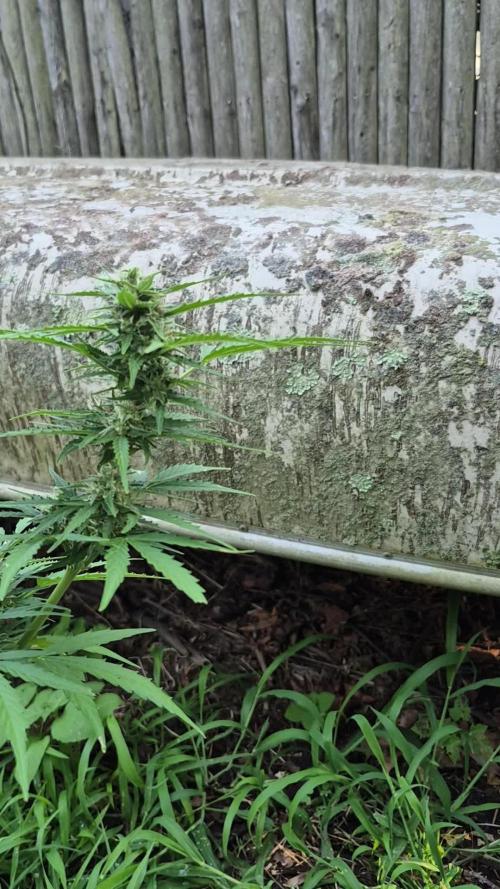
Been sunny no rain all week been watering pretty much everyday. The photos are all doing good. The sour auto is budding nice I am still feeding tiger bloom every 8 days I give 1.5 table spoons to a gallon. Days are shortening quickly expecting photos to start pre flowering soon I

