




Likes
1
Share


@TheOutkast
Follow
2 weeks into flower guys. Looking real nice stayed really short considering they nearly had a 6 week veg , and the write up on them says they have an explosive stretch during the flip not seen they yet but I'm not complaining . Changed the nutrients from pre flower to full flowering feed as stated on the chart . Picked a few fans of all of them yesterday not to much just anything overlapping.
Likes
5
Share


@SurSideCrew
Follow
The NEW fruto de la colaboración con el famoso Sherbinski, nos esperabamos una joya especial dado al alto precio y el hype que tuvo nada mas ser presentada en el Spannabis. Por desgracia nos salio un Pheno bastante vigoroso, muchas ramas pero pocos internodos, se estira mucho en flora y al no cambiar micho de color no fue nada especial para la vista. El producto final fueron cogollos esponjosos con bastante resina pero terpenos muy flojos. Terps a Cookies, cremoso dulce y un toque picante /especiado. High bastante regular. Precio/Calidad = Malo (no recomendable)


Likes
1
Share

@Black_Magic
Follow
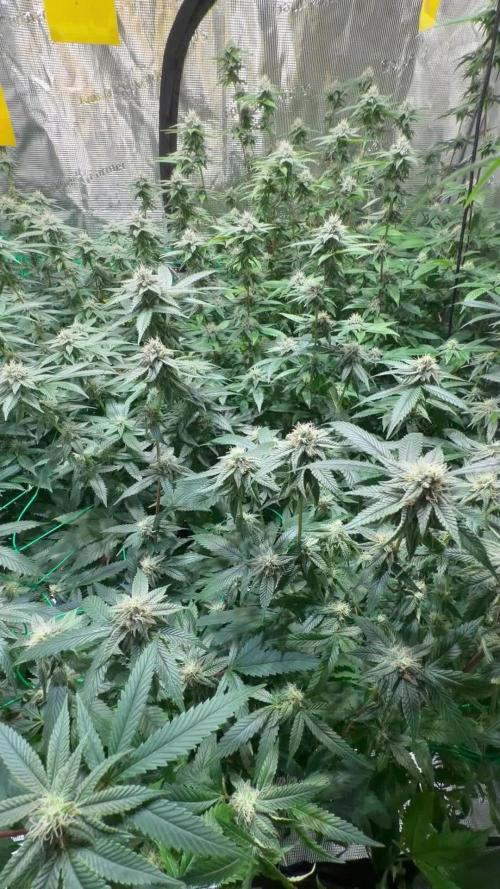
PH is to low at outcome
About 5,8
Watering at moment with bit higher ph
Luckily it hot so shot is drying fast

Processing
Likes
20
Share


@Mr_nugs_lover_David
Follow
She's looking so beautiful,very nice strain to grow for sure,I'm trying to give her a good shape before flowering starts. I add organic liquids nuts only once a week and looks like she loves it,let's keep up the work!! 💚💛❤️🌱🤩

Likes
6
Share

@Hou_Stone
Follow
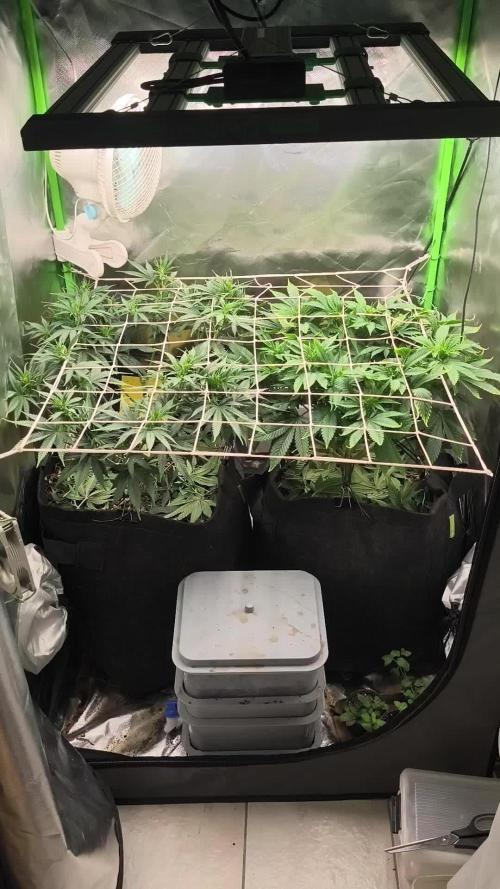
Flowering start this week I have switch the light in 12/12 on/off
Adding 150g of biobloom for my 50L pots. I place itb under the mulch mix a bit with the ground and water :)

Likes
19
Share


@nonick123
Follow
Día 27 (20/05) Riego con 250 ml de Té de Compost
Día 28 (21/05) Vuelven a tener sed! Las riego con 250 ml sólo H20 pH 6.2
Día 29 (22/05) Riego con 750 ml H2O+ Regulator 0,15 ml/l + CaMg-Boost 0,25 ml/l + Startbooster 0,25 ml/l + TopBooster 0,2 ml/l- pH 6.2
Día 30 (23/05) Banana Purple Punch Auto está sedienta de nuevo!
500 ml de sólo H2O con el pH 6.3
Día 31 (24/05) Banana Purple Punch Auto está sedienta de nuevo!
Riego con 750 ml H2O + Regulator 0,15 ml/l + TopBooster 0,2 ml/l- pH 6.2
Día 32 (25/05) Las plantas no paran de crecer! 😍
Día 33 (26/05) Riego con 750 ml H2O + Regulator 0,15 ml/l + CaMg-Boost 0,25 ml/l + TopBooster 0,2 ml/l- pH 6.2
Banana Purple Punch Auto está creciendo unas ramas laterales impresionantes 😍😍😍
💦Nutrients by Aptus Holland - www.aptus-holland.com
🌱Substrate PRO-MIX HP BACILLUS + MYCORRHIZAE - www.pthorticulture.com/en/products/pro-mix-hp-biostimulant-plus-mycorrhizae
Likes
15
Share


@AK1210
Follow
New flowering continues to develop on this lady, she seems to be swelling up day by day.
Yellowing of the fan leaves has started which usually means it's time to flush, I need to check the trichomes to see how amber they appear before I do just in case the flavour or yield could be effected.
Likes
4
Share


@Autower
Follow
This was the topped gorilla cookies got to say I will do this strain again produced some nice size buds could of been a bit more dense but for a wet weight of 431g wet weight I’m happy with this one 4 down 2 to go thanks for viewing
Likes
2
Share

@Thebeardserkers
Follow
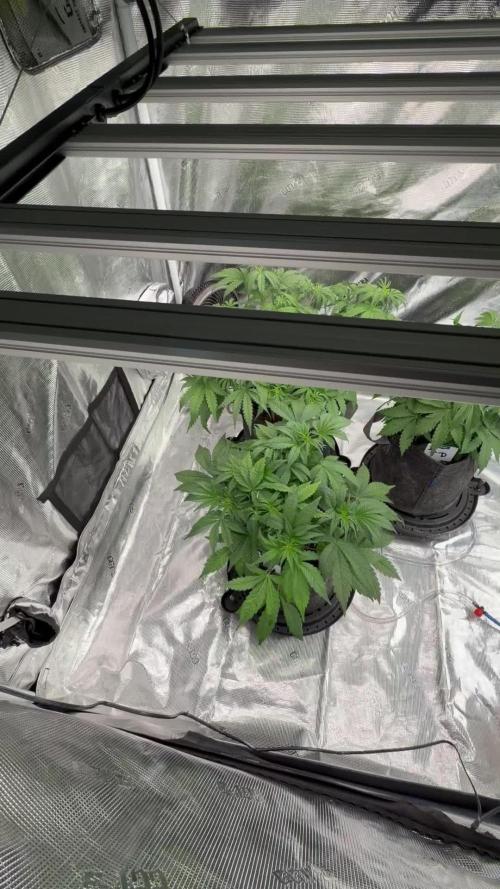
Nous entrons dans la semaine 5 avec une run qui se déroule très bien dans l’ensemble. La tente 4x8 Gorilla abrite 7 plantes en 100% coco sous deux lampes 500w, dont l’AC Infinity IronForge IF500 comme lumière principale, avec un système AutoPot 4 pots AQUAValve 5.0 actif depuis le jour 17, complété par 3 plantes en bases AC Infinity arrosées manuellement via la valve de saignée du réseau.
La Gorilla Cookies est la première à entrer en floraison confirmée dès la fin de la semaine 4, avec des pistils blancs bien visibles sur plusieurs sites. Les Toof Decay devraient suivre dans les prochains jours. Les Mephisto’s Wedding et Hubbabubbasmelloscope sont encore en vég avancée mais la transition est imminente.
On a noté des carences légères en calcium et magnésium sur le Hubbabubbasmelloscope et la Gorilla Cookies, corrigées par des applications manuelles de Cal/Mag directement sur les pots et par une hausse de la dose dans le réservoir à 2 ml/L. Le réservoir tourne actuellement à 545 ppm avec Bud Ignitor, Voodoo Juice, Grow/Micro/Bloom en ratio 1:1:1 et Cal/Mag renforcé.
L’environnement est stable et performant : température 24-25°C, RH 62-64%, VPD 1.17-1.21 kPa, score 100/100 en continu. La consommation du réservoir a atteint 10L par 24h, signe que les racines sont bien établies et que la demande hydrique monte avec la floraison qui s’amorce.
Objectif semaine 5 : surveiller la transition florale des autres génétiques, maintenir le Cal/Mag, et préparer la bascule de la recette vers floraison dès que 3-4 plantes seront en fleurs.



Likes
54
Share


@TheCannaProphet
Follow
~ AirCube Active Oxygen Ebb/Flow System sponsored by GrowAce, featuring Strawberry Gorilla Auto by FastBuds ~
Well guy's and gal's here we go again on another exciting Autoflower run together! This time will be different as I will be doing a 'Hydroponic' run utilizing the AirCube Active Oxygen Ebb/Flow System by GrowAce, who were kind enough to sponsor me for this run, so it should be interesting to see what results I get and have some fun along the way!
•Let me first tell you about this 6 Pot Ebb/Flow system from GrowAce:
"The AirCube system is the one and only Ebb & Flow grow system on the market that combines the benefits of air pruning with a fully automated Ebb+Flow system! With the AirCube's proprietary fabric pot in bucket design, this system is guaranteed to outgrow any other Ebb + Flow system on the market. The results speak for themselves- grow MASSIVE roots that result in MASSIVE fruits!
Air Pruning- Air Pruning only happens with fabric pots. As the roots reach the fabric walls of the pot, they penetrate and grow into the breathable fabric. Once penetrated, the roots are exposed to air, which causes the tips of the root to dehydrate and naturally prune themselves. This natural pruning process forces the roots to grow tons of lateral fibrous feeder roots. This results in a plant that utilizes the entire root zone and fills the entire pot with tons of roots. These fibrous feeder roots are incredibly effective in uptaking water and nutrients, resulting in a plant that grows healthier and more vigorously!
Oxygen Benefits- Without oxygen, nutrient absorption cannot occur. On a molecular level, oxygen is needed to transmit nutrients across the cell walls and into the roots of a plant. With the AirCube's proprietary bottom lifted draining design, the system actively draws all of the water out of the bucket pulls vital oxygen into the root zone.
Maximum Versatility with Any Grow Medium: The AirCube System is the only system on the market that allows you to use any growing medium you like. Use coco coir, soil, peat moss, perlite, vermiculite, hydroton, rockwool or any other medium you wish! This system is the most versatile Ebb and Flow bucket system in today's hydroponics industry.
Temperature Control- with the fabric pots constructed with highly porous polypropylene fabric, heat dissipates easily and effectively. Unlike standard plastic pots, heat isn't trapped in the root zone. Heat in standard plastic containers can reach temperatures of up to 125 degrees. When this type of heat is trapped and unable to escape, it can damage your plant's health and limit the potential of your harvest. Growing in the AirCube System, plant roots grow cooler, healthier, and more vigorous.
Largest Pots in its Class- this system features 5 Gallon grow buckets, the largest pot size of any other ebb and flow hydroponic system in the market.
Modular and Expandable- start with 6 grow buckets and expand up to 36 grow buckets with the optional 105 gallons PopTank reservoir!"
For my medium and nutrients I decided to also switch things up from my regular Organic runs, going with Plagron Nutrients and Root Royale 70/30 Coco/Perlite. When filling the fabric pots with medium, I first added just under a gallon of horticulture perlite from Nor-Cal as a base layer to ensure good drainage and then filled the remainder with the Root Royale.
•Now for one of my favorites, and award winning strain from my friends at FastBuds... Strawberry Gorilla Auto:
I'll be running Strawberry Gorilla Autoflower which is a 55/45 Sativa/Indica Hybrid. "ATTENTION ALL! Due to our continuous efforts in evolving our breeding process, we are proud to confirm that our Strawberry Gorilla Auto has now become one of the most potent autoflowers in the world! Paving the way to our recent success where she ranked on top & brought home the gold at the very first American Autoflower Cup in California. Moreover, she proved that not only modern autoflowers can compete with photoperiods, but they can even beat them in their field. At the most recent edition of the Farmer’s Cup and competing against various photoperiodic strains, Strawberry Gorilla Auto took home the title of 'Highest Combined Terpenes' in the highly sought-after 'Home Grow Hash' category, with an impressive 97.163 mg/g total terpene content! Our exceptional genetic selection's crowning Strawberry Gorilla Auto strain is a spectacular hybrid known for producing yields of up to 600 gr/m2 in 70 days. This is a very manageable grow that can reach heights of up to 150 cm - due to its magnitude we recommend it for more experienced growers, as a huge plant may be a little overwhelming for first-timers. This show stopping sativa heavy hybrid is perfect as an all day smoke, producing a taste bud tingling, pungent berry and diesel terpene-rich flavor combo that leaves you with a grin from ear to ear, a perfect choice for those looking for a day-and-night autoflower! "*
*References: GrowAce.com, 2fast4buds.com
______________________________________________________________________________________________________________________________________________________________________________________________________________________________________________________________________________________________________________________________________________________________________________________________________________________
The Setup:
• AC Infinity 4x4 tent
•AC Infinity Cloudline T6 Exhaust Fan w/ Controller 67
•HLG 650R w/UVA Bar *** For some reason GD does NOT have a listing for the USA version of the 650R so I selected the closest match to it.
•AirCube Active Oxygen Ebb/Flow 6 pot System
•TrolMaster Hydro-X Controller for light
•AutoPilot APC8200 co2 controller fed by a 50# tank
•16" Hurricane oscillating fan and 8" floor fan
•Tent cooling via filtered outside air delivered by AC Infinity Cloudline T6 fan
•BlueLab instruments: PH Pen and Truncheon Nutrient Meter
______________________________________________________________________________________________________________________________________________________________________________________________________________________________________________________________________________________________________________________________________________________________________________________________________________________
Weekly Updates:
10/18- Well here we go into the first real week for the Strawberry Gorilla Auto's from FastBuds!
I've got the AirCube system dialed in now and the plants have responded beautifully! I've upped the nutrients to 650ppm's and am running the PH at 6.0-6.2 @ 74℉. Tent temperatures are running 73/80℉ during lights off/on, RH is being maintained @ 65%, and co2 levels at 1150-1300ppm's. I upped the output of the HLG 650R to 65% via a TrolMaster Hydro-X Controller, and have it hung 28" above the plants.
10/20- Yesterday, I drained and cleaned the reservoir and 'brain bucket', then refilled the system with 60L of well water to which added the following: 100ml each of Plagron Cocos 'A' & 'B', 30ml of Plagron Power Roots and 45ml of Botanicare CalMag+, and 3 tbsp. of Plantonics Amino Bliss amino acids for a final level of 650ppm's. I then checked the ph and adjusted to 6.0 @ 74℉.
I have also set the GrowAce AirCube system to 'Auto' mode and have it set for three 15min feedings a day, six hours apart, beginning two hours after 'lights on'.
10/22- All three Strawberry Gorilla's are looking really good now with great color and vigor. They all have their forth leaf set emerging now and their node spacing is fairly tight currently. With the girls doing well, I'm primarily concentrating on maintaining a consistent environment in the 4x4, paying close attention to temperature, RH, co2 levels and VPD.
The three times a day feeding schedule with Plagron nutrients ( Cocos A & B, Power Roots) continues @ 650ppm. I am also checking the reservoir before each to monitor and adjust the PH and nutrients when needed. I have noticed that after each feed the reservoir PH climbs 0.9of a point to 7.0, so I have been adding 30ml of Safer Grow PH Down which brings the PH down to 6.1.
10/24- Today I drained, cleaned and flushed the AirCube reservoir and 'brain bucket', then filled it with 70L of 74℉ well water. After filling I added the Plagron nutrients separately and also began adding in Plagron Royal Rush.
The feedings of Plagron nutrients continue three times daily, and I'm monitoring the reservoir before each, adjusting the nutrient level to 650-700ppm @ 5.9-6.2 ph. The tent environment has remained dialed in with the VPD averaging 1.40kpa over the last seven days.
The Strawberry Gorilla's are responding well to the feeding schedule, and are also tolerating the increased light output which I now have set to 80% along with setting the co2 levels to 1100-1400ppm.
There goes another week for these beauties and the upcoming weeks promise to be exciting as these girls really take off! See you there!😎❤️
💚 Thank you for checking out my passion in life! Please visit as often as you wish and I hope you enjoy this journey as much as I know I will! Grow what you love, Love what you grow!💚
Likes
32
Share


@LION07
Follow
satisfied with the harvest, fantastic tasty flowers and with a very strong smell!


Likes
28
Share


@FarmZOG
Follow
This one was a monster of plant she took the 140x70 cm like a real champ.
Sexy frosty dense buds with a beautiful blue/Grey shadow
This one can really be the champ of this season 💚

Likes
23
Share

@PapaBlob
Follow
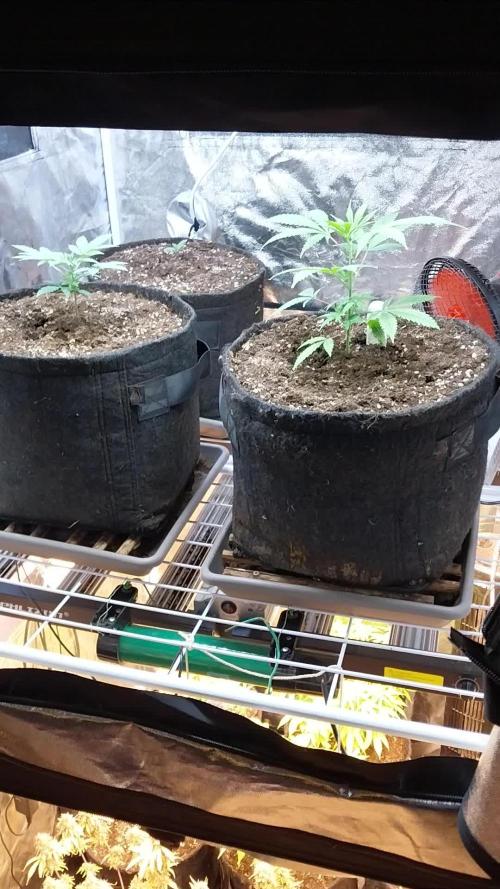
02/11 Elle se porte assez bien je pense. 😁👍
Merci encore à Divine Seeds pour toutes ces superbes souches. Que l'ont peut trouver là : Divine Seeds : https://divineseeds.net/

Likes
Comments
Share

@Budhunter
Follow
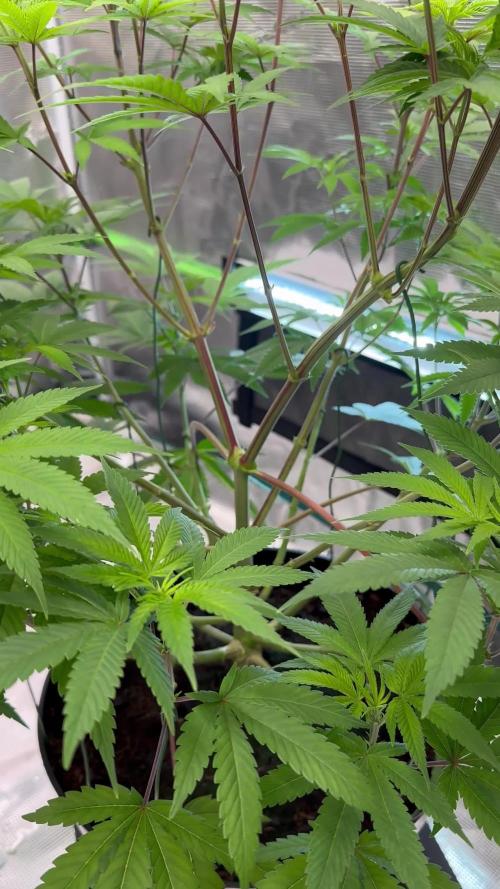
Week 1 flowering - Day 5 of flowering & Day 61 of life
Finally flowering here. It’s been 5 days on flowering, still pre flowering but finally the best is coming.
Jealousy is happy and looking healthy. Bud formation seems not that big but I am optimistic about it.
Let’s go 💪🏼🙏🏼🔥
Likes
Comments
Share


@Deepgrower
Follow
Las dos primeras filas son weddingcake y las otras dos son Skywalker Kush. 12 esquejes por variedad perfectamente enraizados. Los mantendremos una semana más en crecimiento y serán pasados a macetas de 3.5L y entrarán a floración!

Likes
1
Share


@undermink
Follow
Week 8 begins with lots of buds. I let them be for now and let the buds grow. Can't imagine that they will only have about 27 days left.. Lets see if I let them live a little longer, since they were late flowering on week 6 rather than week 5...
They all look amazing in the middle of week 8... Buds all over - everywhere you look :) And they keep on getting taller every day... The tallest one is now about 65cm.

Likes
5
Share


@DBoogie
Follow
Hey Team!
What can I say, my first time grow is coming along smooth. 🍃🍃 🍃 D-Boogie coming along smooth y’all. I think My tangerine dream is getting ready to flower soon. Going to carry out the veg-state as long as I can.
I’m not sure how much water to give them but I’m sticking my gallon a week to keep it safe. Looking forward to next week!

