


Likes
Comments
Share


Likes
62
Share


@MeaCulpa
Follow
4th round.
These were the Special Kush. The buds are very fluffy. Therefore only 83.3g.
But it doesn't matter. I learned so much this grow, it was worth it.
I think the Hulk Berries in 2 days. They're not dry enough yet.


Likes
12
Share


@NorthernChemist
Follow
June 5: Cooler temperatures and no rain this week. Wind has been strong and a couple of nights near or at freezing temperatures. The greenhouses worked really well, but now to expose these seedlings to the full elements. Windy day today so expect them to get a bit beat up. Watered in with well water and covered the stem quite high with soil for more support against the wind.

Likes
8
Share
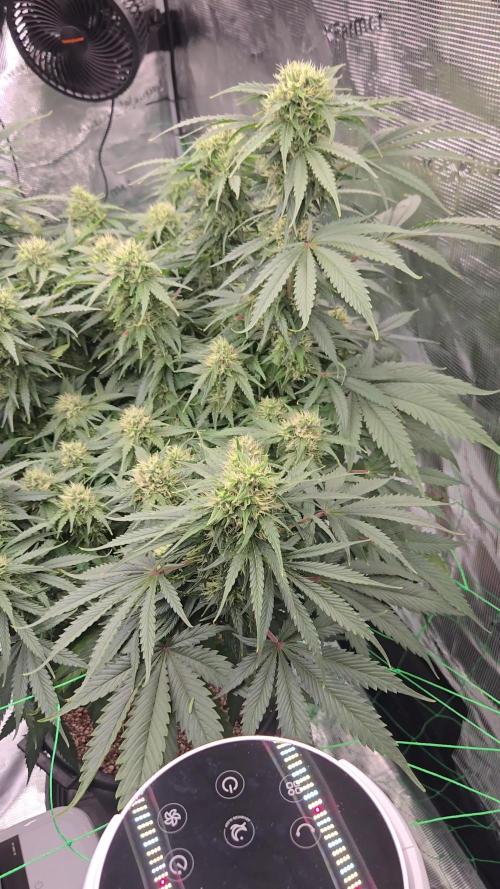

@Growfather1
Follow
Hello everyone,
The growers nightmare occurred the small amnesia haze plant of expert seeds hermied on me, i wanted to take some pictures for the diary when i noticed the pollen sacks this is clearly my mistake as they were easy to spot if i just opened the tent door especially when i know i stressed her big time by defoliating her in the previous weeks.
I removed about 20 buds and trimmed her, the other 2 plants didn't produce any bananas and can't spot any seeds but time will tell.
Today i started with the heavy feed that raised to 910ppm i switched to canna pk13/14 and put 150ml in the 50 liter reservoir.
I hope to have better news next week.
Thanks for stopping by and have a nice week.


Likes
1
Share


@84ruk
Follow
Esta semana aplique kelper y kal & mag (fertilizantes altos en magnesio y fosforo) de rootz.mx ya que la planta comenzo a mostrar manchas oscuras en las hojas, tambien aplique lst en todas las ramas para darle mas volumen horizontal en la planta, al parecer es la ultima en periodo vegetativo.

Likes
14
Share


@FrankFarm
Follow
Hi here is my new diary That start from the old diary
we randomly cross the GDP and Critical xxl into our Bubbathai ( Bubba kush x Thai sativa sakon nakorn)
watering just to keep them moist
Check out my previous Newbie cross if you interested Thank guy 🙏
Likes
44
Share


@XperencdGmanXG
Follow
first week of full flower, plant is looking good. 2nd last foliar spray of the year yay! We are getting there. Should be 7 to 9 weeks from now depending on weather. I'd LOVE to see some rain.
Likes
84
Share


@Terp1
Follow
21.05.2023
Tag 16
- Beide Pflanzen in 15L Endtopf mit BioBizz All-Mix gepflanzt
- Mykhorizza beim Umtopfen hinzugefügt
- Angegossen mit 0,75L Wasser pro Pflanze, da Wurzelballen noch nass
- Aufgedüngt mit 2ml Acti-Vera, 2ml Bio-Heaven und 0.75ml CalMag pro Liter Wasser
Ich weiß, es gibt die Debatte, ob man Autoflower umtopfen sollte oder nicht. Ich habe mich dafür entschieden, damit ich a) eine Chance habe die Wurzeln mit Mykorhizza zu impfen und b) damit die Erde so lange wie möglich locker bleibt.
Ich nutze Mycotrex von BioTabs. Welche Erfahrungen habt ihr mit Mykorhizza gemacht? Gibt es eine bessere Methode als die Sporen in Form von Pulver beim Umtopfen hinzuzugeben? Eine Methode, bei der es vielleicht sogar ohne umtopfen geht?
##################################################################################################################################################################################################
23.05.2023
Tag 18
- Beginn LST
- jede Pflanze soll im Grund wie ein Dreieck geformt sein, um den Platz im Zelt (Quadratisch) optimal zu nutzen
##################################################################################################################################################################################################
24.05.2023
Tag 19
- gegossen mit 3L Wasser @ PH 6.2 pro Pflanze
- gedüngt mit 1ml Bio-Grow, 2 ml Bio-Heaven und 2ml Acti-Vera pro Liter Wasser
Likes
13
Share


@Adriplnks
Follow
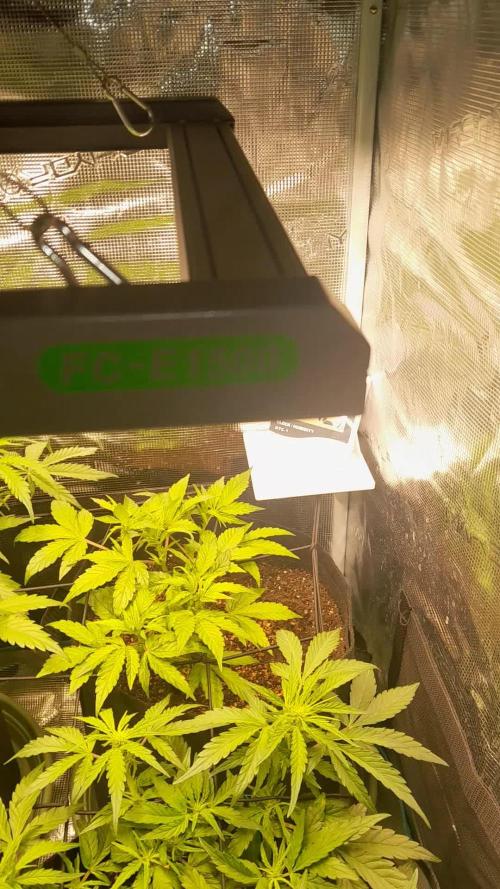
Las 2 más pequeñas, se adelantan y empiezan a madurar antes que las demás, ya tienen algún pelillo marrón, y sueltan una cantidad de resina increíble.
Las más grandes y con cogollos más gordos, empiezan a doblarse, así que voy atando las que no aguantan el peso



Likes
17
Share


@Reyden
Follow
Purtroppo la volta scorsa forse avevo dato da bere troppo ravvicinato e ho visto che questa volta fa più fatica ad asciugare..quindi aspetto che asciuga bene anche dentro, non è mai un buon segno però la pianta 🌱 non sembra proprio stare male..proverò a dare da bere solo dal sottovaso la prossima con una saluzione a 1700 di EC e PH 6.8 ✨✨✨ la Auto Purple OG Punch non è stata sottoposta a nessun tipo di allenamento 🏋️♂️ Perché volevo vedere come diventerà e che conformazione dei rami riesce a sviluppare, visto che ho praticamente cambiato a 12/12 dopo due settimane di crescita…in effetti le Autofiorenti sono fatte per crescere a 18/6 per far emergere il loro massimo potenziale, contando che è cresciuta con 12 ore di luce cercherò di tenerla anche qualche giorno in più per farla maturare come si deve 😀🤞


Likes
33
Share


@dkchgrows420
Follow
Great bud with tones of bag appeal. Cant wait to see how it smells after a few weeks in the jars!
Likes
9
Share


@Djuff
Follow
Week 4 Flower:
Day 1: Fed her with another 10ml/l of Biotabs BudBooster and will no longer defoliate the lady,
Day 2: Quite happy about her progress so far. Hoping that my 125W Purple Alien LED will deliver enough light for thick and dense buds.
FUCK, i just discovered some pollen on a leaf - and i saw the stem evolving pollen. So i cut it. Lets hope that not every bud will be full of seeds.
Are there Nanners or is it a Hermie guys?? (Pictures)
Likes
13
Share


@Herbz_Unkraut
Follow
what a resin monster! such beautiful plants! one of the 2 phenos had straight peanutbutter flavor!


Likes
155
Share


@deFharo
Follow
Bienvenidos cultivadores de marihuana clandestinos y también a los que tienen la fortuna de no serlo!🖐️👨🌾👍
Este es un diario semanal de técnicas de cultivo y Bio preparados orgánicos caseros, los cuales llevo experimentando dos años en cultivos de marihuana interior.
Esta semana dos en uno:
1) ELABORACIÓN DE AUXINAS EN POLVO EXTRAIDAS DE ALUBIAS NEGRAS GERMINADAS.
La primera vez que hice este preparado y lo publiqué en GD fue en Octubre de 2019, lo volví a hacer en Junio de 2020 y llevo dos años usándolo, me ha costado el precio de 2kg de alubias negras.
INGREDIENTES:
- 1kg de alubias o frijoles negros, porque son las semillas que más concentración de auxinas contienen, comparándolas por ejemplo, con lentejas o cualquier otro tipo de leguminosas, también se puede usar granos de maíz.
Preferentemente, se deben usar semillas de alubias nuevas y cultivadas cerca de tu zona.
- Agua pura.
PROCEDIMIENTO:
- Se cubren las alubias con agua y se dejan a remojo durante una noche.
- Al día siguiente se separa el agua. Esta agua la puedes usar para riegos, contienen varios minerales.
- Se mantiene la humedad en el recipiente de las alubias por unos días, hasta que germinen. Se pueden cubrir con un paño húmedo y compensar la perdida de humedad rociando agua. Se debe observar que la mayoría de las semillas hayan germinado.
- Cuando las alubias, en su mayoría estén germinadas, se añade unos dos litros agua pura y se bate todo.
- Ahora filtramos con malla y escurrimos los restos sólidos. (Reservamos esta materia para un segundo lavado)
- Dejamos reposar el líquido durante dos días, hasta que se vea acumulación de materia en el fondo.
- Retirar la mayor cantidad posible de agua clara.
- Dejar al sol cubierto con una malla, hasta la completa deshidratación del producto.
- Moler y guardar en un sitio seco y oscuro, en estas condiciones puede ser efectivo durante años.
-- A los residuos sólidos recuperados del primer filtrado, les añado agua, los bato y los filtro con doble malla, lo embotello y guardo en el frigorífico (no más de 15 días, pues fermenta), lo uso para mezclas de riego. Los residuos finales se aprovechan, para aquellos que tengan tierra en exterior o hagan compost.
QUE SON LAS AUXINAS Y USOS:
- Las auxinas son un grupo de hormonas vegetales naturales, que regulan varios aspectos del desarrollo y crecimiento de las plantas, en la marihuana sobre todo en el periodo de crecimiento vegetativo y en el comienzo de la floración, después no hacen falta.
- Uno de los aspecto más característicos es el efecto que causan en el desarrollo del crecimiento radicular, promoviendo sobre todo la formación de raíces secundarias y adventicias gracias a la estimulación celular que provocan las hormonas.
- Otro aspecto de las auxinas es que distribuye su energía principalmente al ápice primario, reprimiendo el desarrollo de las ramas laterales, lo que provoca dominancia apical, pero esto es en el caso de plantas de marihuana sin corte apical y donde se quiere conseguir un cogollo principal monstruoso, su uso puede dar muy buenos resultados en cultivos SOG... pero ¿Qué pasa si hacemos un corte apical para promover el crecimiento de ramas laterales y que por ende, de buenos cogollos en cada una de ellas? Cuando se hace un corte apical al ápice principal las hormonas se reorganizan por la planta, ahora para mandar energía a todas las ramas y sus ápices, promoviendo el crecimiento!.. es un buen momento, después de un corte apical, aplicar auxinas para potenciar el proceso.
- Finalmente os dejo un gráfico de la actuación de las auxinas en las diferentes etapas de un cultivo, también se ve la importante relación con otras hormonas (Citoquininas o Ácido Giberélico) y los nutrientes claves que no deben faltar para finalizar todo el proceso hormonal. Las Citoquininas y el ácido Giberélico naturales se encuentra en el agua de coco, y es muy interesante conocer como actúan, en la quinta semana de este diario hablo sobre las propiedades del agua de coco.
Bien, una vez dicho lo anterior, yo uso las auxinas en polvo de las siguientes formas.
- Como mezcla del sustrato donde germino las semillas y donde mantengo las plántulas hasta el trasplante a la maceta definitiva, para potenciar el enraizamiento.
- Por la misma razón, lo espolvoreo sobre el cepellón de raíces de la plántula, en el momento del trasplante a la maceta final.
- Lo uso como enraizante de esquejes, impregnando el tallo de polvo antes de enterrarlo.
- 10 días después de realizar el producto, todavía tenía en la nevera un litro de auxinas líquidas, provenientes del segundo lavado de los restos de las alubias molidas... y entonces pensé que sería buena idea incorporarlo a un fermentado, y de aquí vienen esta segunda parte...
2) LACTO FERMENTO DE AUXINAS ENRIQUECIDO CON NUTRIENTES Y MINERALES
En esta ocasión, para la fermentación anaeróbica, elegí hacerlo con suero de leche como base de microorganismos (Ácido láctico, Bacterias Acidolácticas BAL y Lactobacillus) que harán el trabajo de solubilizar los nutrientes y quelatar los minerales, es un preparado muy eficiente para riegos y aplicaciones foliares, en este caso lo hice enriquecido, mezclando diversos materiales orgánicos con otros minerales. Puedes ver la lista arriba.
Sobre esto tengo que decir que después de dos años haciendo diferentes lacto fermentos, ahora los hago más específicos, sin mezclar tantos nutrientes, por ejemplo, si quiero solubilizar guanos, harina de huesos o algas, lo que hago es crear un lacto fermento con cada uno de ellos, en el caso de lacto fermentos con minerales, sigo preparándolo mezclando varios, este preparado es muy eficiente en quelatar minerales, y sobre todo en solubilizar fósforo.
PROCEDIMIENTO:
A veces consigo suero de oveja de un vecino que hace quesos, a veces hago suero de leche cruda de vaca y cuando no tengo ninguna de estas fuentes, hago suero a partir de leche pasteurizada, como el caso de este.
- Mezclo el suero (1l) con la melaza y la miel, lo caliento a unos 30°C.
- Peso los ingredientes. Como regla general, en el caso de componentes orgánicos usar del 8 al 10% como máximo, respecto a la cantidad de líquido. En el caso de minerales del 4 al 5%.
- Añado la levadura al suero con la melaza y la miel.
- Añado los componentes secos al barril.
- Añado el suero con la melaza y la levadura al barril y agito.
- Añado el litro de auxinas líquidas y agito bien.
- Lo cierro hermético con válvula de gases.
- Guardo el barril a oscuras al menos durante 30 días, pero cuanto más tiempo lo mantengas cerrado antes de abrirlo por primera vez el resultado será mejor.
La fermentación comienza violentamente a los pocos minutos dura varios días así y después se hace más lenta.
USOS:
Este es un preparado que uso como complemento a las auxinas en polvo, lo uso para hacer riegos o aplicaciones foliares de disponibilidad inmediata.
- Hago aplicaciones foliares en plántulas, en las primeras semanas de vida.
- Lo uso al comienzo de la etapa de crecimiento vegetativo en conjunto con agua de coco.
- Riego con este preparado después de hacer cortes apicales.
- Lo vuelvo a usar en riego en conjunto con el agua de coco al comienzo de la floración, y esta es la última vez que lo uso en un cultivo.
Una señal inequívoca de la actuación de las hormonas, es que las plantas son más susceptibles al fototropismo, esto se traduce en una respuesta mayor a la incidencia lumínica, las plantas, sus hojas y brotes se inclinan y se dirigen hacia la mayor fuente de luz. Yo lo he visto muchas veces después de aplicar auxinas.
y esto es todo por hoy... 😅
Hasta la próxima semana...
GRACIAS POR ESTAR AHÍ, CULTIVADORES!!🖐️👨🌾💧💦🌞💡
=================================
Likes
12
Share


@Zer0xKira
Follow
Amazing told this run 110 grams of bud and 80 grams of shake. An amazing pungent fruity citrus cream cheese aroma eminates out of my cure vault. The high has been described by my friends as a creative uplifting high followed by intense couch lock.
The grow itself was a breeze. The only real issues i had in the hydro grow was that i needed to to add cal mag because it was growing so fast and i was using distilled water. I basically did not train my plants other than defoliating to make space for air flow and light penetration. I would recommend this for any first time hydro grower that has a decent amount of space.

Likes
37
Share


@AkFarmZ
Follow
14/7/21
Tercer día con muestra de pistilos 😬😍
Hoy le apliqué riego de nutrientes sin variar a la dosis anterior. Desprende un leve aroma muy dulzón.
15/07/21
Riego a base de nutrientes 1ml Base Jungle Juice Bloom junto con 1,5ml Big Bud más 1,5ml Sensizym
17/07/21
Riego a base de h2o 1,5L
18/07/21
Riego a base de nutrientes con las mismas dosis del último, una cantidad de 0,5l.
19/07/21
Riego a base de nutrientes con las misma dosis al anterior, cantidad de 1,5L.