


Likes
Comments
Share


@northern_rookie
Follow
Less is more. Lesson learned. Without training these plants, having the fifth plant has really cramped the tent. Because I have limited space for the tent, access into the sides isn't possible. I have only the front entrance. Next time I think I will stick yo maybe three strains that have been positive and try and find the time to train more.
The WOS-Northern/Skunk has grown out so nicely into a Xmas tree type of posture. She is making her really good friends with her neighbours, perhaps to their detriment.
Seedsman Blueberry continues to be solid and unphased by anything. This is the first time I have smelled a plant that has such a fruity aroma. It really took me aback in surprise. Very cool.
HiFi 4G needs support. Did a McGyver solution for the time being. Doesn't appear to have bulked up much this week.
Jack is about the same. A bit of bulk up but not expecting this one to be a big yielder. Appears healthy overall so I'm happy.
CBD+ bulked up for sure on the main cola's. I'm skeptical she will be done at 60 days at this point....but have to trust what Dinafem are telling me.
Be safe folks.




Likes
11
Share


@TerpyTears
Follow
Nice to see you 💚
The Fat Monkey is developing well. The flowers are developing and I'm really excited to see how it goes on hope it has a lot of the watermelon zkittles 😅
There was Enhancer 1g/l water. So that the solid fertilizer is released even better with extra bacteria and Trichoderma in the substrate.
I love GHSC Bio line
Thank you very much for your time 😊✌️💚

Likes
24
Share


@TerpTurtle
Follow
Strawberry Truffle - White Truffle x Red Pop & limited seed it came with Chem 91 x Red pop
Likes
Comments
Share


@dirtjumper75
Follow
Once the plants made it out of the seedling stage, they finally managed to take off. Zkittlez Glue is leading the charge.


Processing
Likes
12
Share


Processing
Likes
15
Share


@MG2009
Follow
06/02/2020
Gonna feed them today 1tbls of blood meal.
I snapped a branch on #2 (see video) her stems, I don't like break to easy so I will give some micro nutrients to help stems from breaking. Unless she is the HOLY GRAIL. I will cull her clone.
All others handed super cropping well. 🙏
#4 in hydro is in it's own diary called Small Batch Seed making some F1
#1 showed her sex today, clones well took cut on 05/20/2020 is rooting well outside in coco coir, in humidity dome just cut and scrape the stem,once rooted I cut off yellowing leaves i hope her smoke is as good as she looks.
5 days into week 10 and #2, and #4 are male so indoors they go for pollen collection. Will dust one bud of each female with each male and hunt for what I want. Also see what each passes on in the cross.
Likes
2
Share

@NoProbation4Weed
Follow
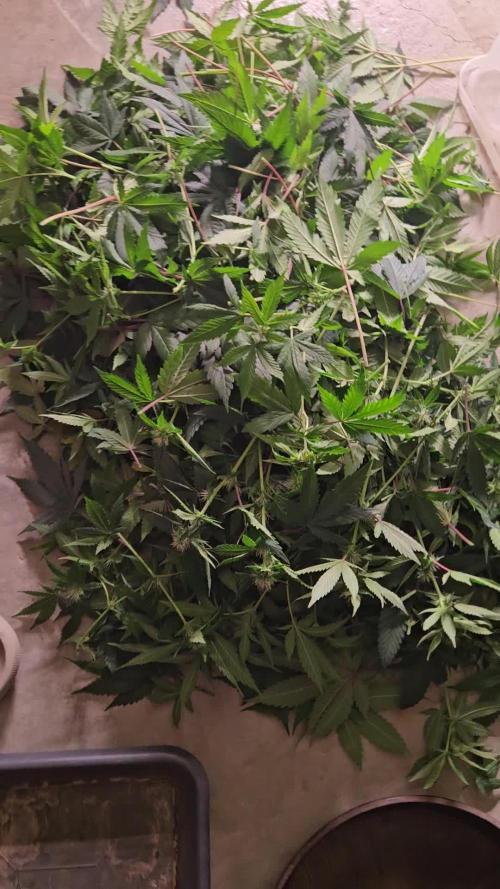
on day 21 of flower the lady have got a new Haircut.
Also some composttea on day 22 of flower.
Light hits the plants with around 950 PPFD.
She grows healthy and vigorous.

Likes
3
Share

@Ninjabuds
Follow
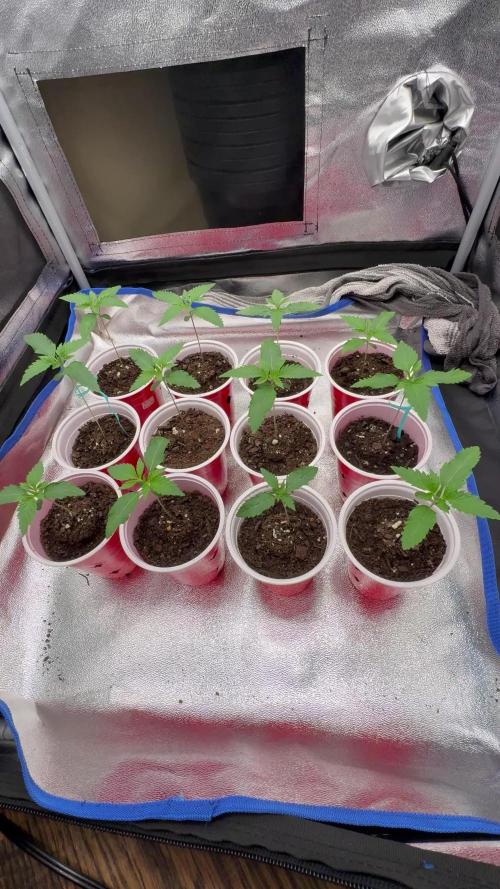
It's been a great week for the seedlings! They've really taken off and are looking strong. I'm planning to transplant them into larger pots in the next few days, so next week's photos should show some impressive growth. I'm so excited to see how they thrive in their new homes! I've been giving them distilled water from the start, and I'm still doing that, but I just started adding 10 milliliters of Fox Farm Big Bloom and 1 milliliter of Fox Farm Grow Big. All of the seedlings are doing really well, and there's not really any visible difference between all the ten strains. I started all ten packs of each strain and kept all the best seedlings, so that's why they're all doing so well.

Likes
13
Share


@40Plug
Follow
Whats up everbody,
the plants turned into flower and looking great so far.
The scOG is doing its work. Love it.
SOG needs so much effort, more than just 2 or 3 Plants. Thats insane. I hope its worth it.
Likes
5
Share


@Renatissima
Follow
* Watering 2l every 3 days
* Always tuck in the leaves to expose lower tops
The plant its handling the cold very well.
Even the trichomes seem bigger than previous plants

Likes
29
Share


@KingSalomonsWeed
Follow
23.10. Day 53 of flower. The buds become flesh. Still wonderful sticky.
She really likes it moist.
Lifted the lamp and switched the white Light off. Just for a while. Because, i think she began to be grilled.
Just a little relax for her.
Switched to 16_8h light nightschedule.
And agaun with white light, FULL POWER.
With greetings from the unexpected colorful Trans Syberia..😛 💪

Likes
32
Share


@LockDownGrow
Follow
So this Week I've started using the green buzz nutrients range , wish me luck , I will update every weeks :)
Update day 3 of week 3 I this morning removed two leaves from the top of this plant because or the formation of this girl so far growing her leaves downwards and then out , so in other words completely shading all light too the lower down growth spots I then tighed down the lower leaves too expose the branches , I think this girl will be a short pheno but think that may well be a blessing with the other 3 fast buds plants growing rapidly and already on there 4th or 6th set of leaves ,
Update ,
Day 5 week 3 , well as you can see compered too the other 3 plants in the same space on the same feed ,
It would appear that this pheno is very small and slow growing ,
Ive today removed the larger leaves covering up the branches too try and develop the branches , but something tells me this will be a very short and stumpy plant ,
But I am sure it will still be very nice bud all the same

Likes
3
Share


Likes
49
Share


@masterofsmeagol
Follow
5/10 Got up super early for wife's appointment at 7 came home and transplanted 4 of the purple punches. Transplants went good. Soil was too dry and a couple fell right in the hole but I was messing around showing my dad. It just got dropped in the hole a little harder lol. The other that happened to is fine though. Definitely make sure your soil is moist enough before transplanting. My transplanting technique for 3 gallon is to put soil on bottom. Set cup in at appropriate distance then replace cup with plant with soil filled cup and fill around it. Leaves the perfect hole. Then you just snip the cups twice on each side, peel it down and fold the cup down and cradle the bottom and in the hole it goes! Holes have mykoscand a little like water. I water a little after transplant. I misted soil whole mixing it up.
5/11 Dad left the windows open last night "because the soil smell was bothering Lynda." I couldn't ficking believe it. They were all fine when I got back but still. Everything is transplanted into 3 gallon containers bit that 1 purple punch that is a little bit dwarfed. I looked at the bottom of the cup and drainage wasn't as good. Must've been the last cup and the jail didn't go all the way through in a couple places. I increased the drainage on that little dwarf and I'll transplant it when I get time. We are going to have some good weather coming up. I need to get my cage moved, my bags sanitized and get on a good watering routine.
UPDATE: Went back over at four and everything's dry as fuck but the leaves are uo and every one of them looks happy so I'm holding off watering. I'll start with a quart probably tomorrow. Also cleaned out tge cage and secured the handles to move it. Only thing left is cleaning and sanitizing. These girls have a south facing window and they LOVE it. It was 80 today. I hope we have an early season.
5/12 Transplanted the last purple punch today. I could easily tell the problem was drainage. It was the last cup I had stacked when I drove the nail threw so it didn't pierce all the way the the other slips and tac holes apparently weren't enough. Used mykos and same soil mixture. Soil was extremely dry. I lifted a pot with dry soil and these were heavier. Commercial buddy said to start with a quart a pliant and see how it goes but I kind pussed out and only gave them 24fl 0z a plant. Half the quart. I asked if I should water more and he said to just wait and see how they like this water and up it to a quart next time maybe quart and a half. Im just leery of overwatering. When i watered SOME of them the water literally just sat there and took forever to absorb. Plants werent wilting though. Soon theyll be going outside during the day and in mdoors at night.
UPDATE: Went back over at two and everything looks AMAZING. Healthiest looking plants I've grown. Leaves all pointed up. I'm taking my commercial dudes advice and hoping the water next watering. For now, they're doing amazing.
5/13 Everything is doing greatcso far. Gotta figure out when to start nutes. Considering adding silica but don't want to raise ph to much. I'll consult with others but my the soil blend I'm using is full of nutes.
5/14 Rushed morning and I wanted to water bit the plants looked great still. Sticking my hands deeper I can feel a little moisture deeper down or in the drain holes so I decided to give the blueberry cheese and the 10th planet a "touch of kindness" which was a small circle of water from a small watering can around the outside edge of whete the rootball should lid be. I'm working on getting a watering g schedule down.
UPDATE: Went back over at five and everything was looking good with leaves praying. Maybe my half measure helped. Doubtful but still. Tomorrow I plan to water. Since the soil has tons of nites ill probably hold off a little while longer before starting the nutrient schedule. I want to make sure I've got the watering down first. One thing at a time.
5/15 The 10th planet and Blueberry Cheesecgot their first REAL watering since transplant. Still being cautious I watered 28fl Oz a plant. I phed the water with an indicator solution and ph down. I gave the purple punches a "cup of kindness" which was a circle of water around the transplant hole. Can't waif to get a watering schedule down. I wanted to start nutes but my soil is full of them and i believe it's too early. I didn't see ANY run off from this watering. I think that's good as I'm not looking to wash away the nutes in the expensive soil I use. I need to start HST as well but I'm doing things proper and "one at a time". That way if I run into a problem I'll know what I did and how to rectify it. At least I hope.
UPDATE: Went back over at 3 leary that I may have "overwatered" but the plants ALL looked AMAZING and had shot up like an inch! Looking into hst and will probable fim a few. Top a few and leave one to grow naturally. Can't wait to see how these girls do outside.
5/16 Wow. Just wow. Plants are doing phenomenal! Since the watering went really well I watered the purple punch bit I only used about 16fl Oz as the plants were a little smaller than the others. I'll up it to a quart next time like I did with the others. I want to USE the nutes in my soil so im not washing them all away by watering to run off. I topped 2 10th planet's and FIMed one of them. I want to see how the respond then I'll begin training the others. Off to a Great Start!
5/17 Glad I held off watering. It's raining today. Just showers. We haven't gotten any of that extreme wind we usually do. I have the plants supported but I still worry. Definitely more than I should. Plants are still doing good and acclikatimg to their new homes.


Likes
3
Share


@Organic_meph_head
Follow
So far just filled up the new earthbox junior I was sent and my main soil seemed to have gotten some bugs cuz saw someone stinging insects crawling thru it and def was chasing stuff inside! Seedling bin tho was all clear so used it instead and improvised! She’ll still rock out I have no doubts! Only on day 4 today but haven’t crawled in to get pick since day 2 as seen in last photo of the baby! In other news didn’t track her on here but just chopped frozen scoops rocbudinc and HOLY MOLEY!!!
Likes
6
Share

@Ninjabuds
Follow
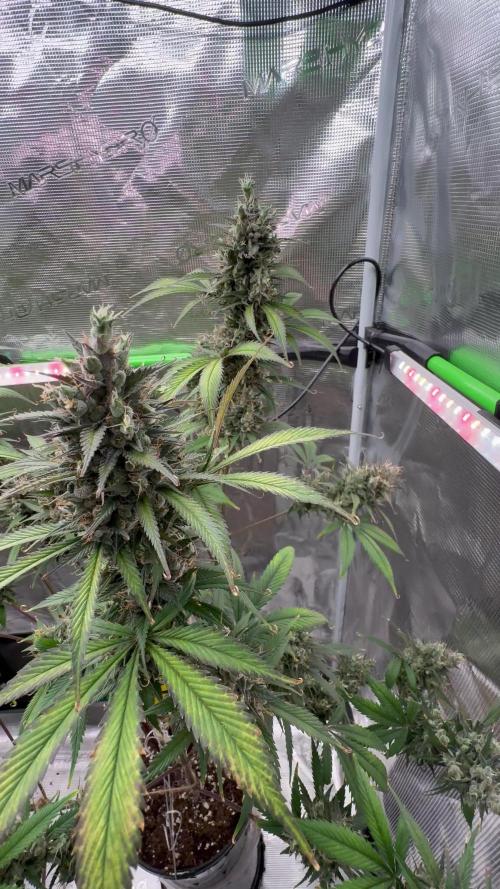
Gorilla cookies is a beast of a plant it can easily fill up a 4x4 with one plant if done right. Really thick white tricombs strong smells big colas. What else can you ask for a good plant all around
Likes
46
Share


@nonick123
Follow
Día 56 (16/06) La floración sigue avanzando. El olor es espectacular
La planta grande huele a Blueberry
La planta pequeña huele a Indica de la vieja escuela. Kush, tierra del desierto, pungente...
Día 57 (17/06) Riego con 500 ml H2O RO
Día 58 (18/06) La planta grande muestra unos cogollos duros como rocas! 😍
Día 59 (19/06) Riego con 500 ml H2O RO
Día 60 (20/06) N/A
Día 61 (21/06) Riego con 500 ml H2O RO
Día 62 (22/06) N/A
🚀 FastBuds 15% DISCOUNT code "NONICK" 2fast4buds.com @fastbuds.official
💦 BioTabs 15% DISCOUNT code "GDBT420" biotabs.nl/en/shop/ @biotabs_official
🌱Substrate PRO-MIX HP BACILLUS + MYCORRHIZAE @promixmitch @promixgrowers_unfiltered


Likes
7
Share


@darb35
Follow
This will be a bit of a challenge, one of the LCC is 45cm while the others are 25cm.
I gave them little ramps to keep canopy even and all 3 are still looking healthy.
Likes
1
Share


@GoldenWeedGrower
Follow
WEEK 24-30 March. Finally a new space for the girls, on an homemade recirculating system that I named AQUALOOP, consisting in 2 drippers connected to a water flow system added with air. Air is also blown directly into the substrate and into the reservoir !