


Likes
Comments
Share


@Chi_K24
Follow
hey guys,
Into week12 and plants are recovering nicely from the fungus gnat issue from week 10-11.
Its time to add another round of organic amendments, this time in a 70/30 ratio 9f 284 to 444. Increasing the P since we are now clearly into flpwer and the ladies will love it! I also found that the amendments needs a few waterings before it really gets in to the system. Have to plan ahead for that to ensure your plants are not starving for npk.
Added d.e. again and another pack of yellow fly traps up.
As for watering, each plant gets 9L ea every 2-4 days since temps are going crazy jn the gta. Few days at 35+ deg c to 14 lows.
As always, have a good one and see you on the next update!


Likes
5
Share

@Frumplepuff
Follow
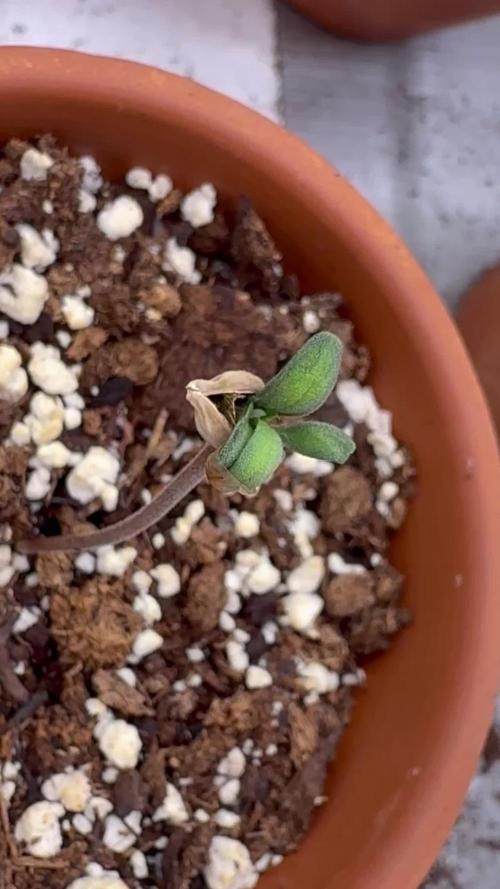
Ah yes the very natural and common 5 leaf seedling to start things off! I’m already so excited. 😭
I’ve decided whatever the outcome of this plant, I’m going to name it the Frumplepuff. I hope it does something as strange and ridiculous as last time.
I have been absent a bit on here because I was lucky enough to have the plant kick start my YouTube account! My purple freak was viewed over 550,000 times 😭 I’m so grateful and excited at the same time. Unreal! ❤️ I’ll make sure to keep grow diaries posted every step of the way!



Likes
101
Share


@Ferenc
Follow
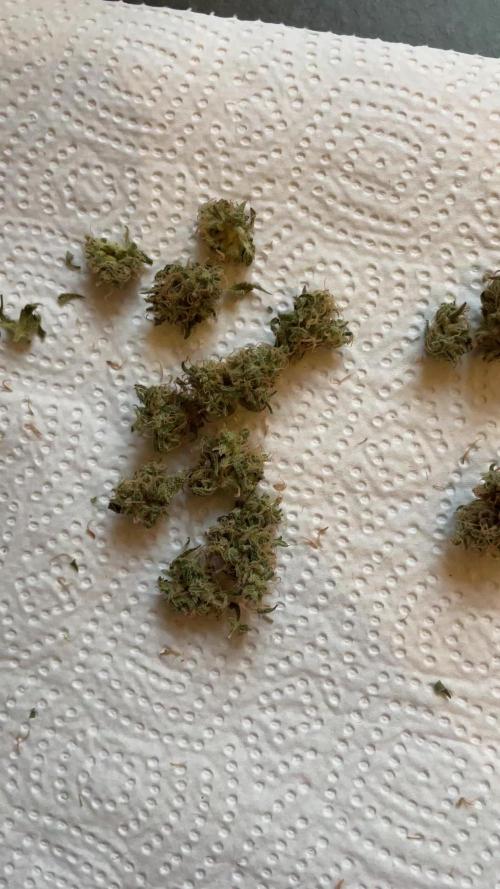
Day 65, 17th of November 2020:
Welcome back at the beggining of the 3rd week of flowering. They seem to be stopped streching and now concentrating on buds.
All of them are gorgeous.....
The 2 Zamnesia genetics Gelato and Kalini Asia are pretty and buds are forming nicely. Kalini Asia might strech a bit more but not long.
The Sweet Seed ones are really nice and I am so happy because Red Hot Cookies is already getting red.... pistils and around the leaves.. I hope the same happens to the Red Mandarine and Tropicanna Poison also. They are so gorgeous. They calmed down I don't expect more strech.
Fertilization still the same every 2nd day with the ratio and mix above.
Some lollipopping (Defoliation) is also done.
I removed all the LST the plant remains in the same shape from now.
The lamp is on 11.30 min and off 12.30 min.
Last week was 15 min longer light cycle....
So every week 15 min shorter light cycle until the 5th week. So far -30 min. It switches on at 6 am and off at 17.30 pm.


Likes
61
Share


@BlumenBot
Follow
3/29 - I'm not sure she needs another topping. I'm just going to spread out the current tall shoots and let her rip upwards!
Also swapped the light for the final veg lamp.
3/30 - training continues and she is taking up more water every day!
3/31 - feeding and defoliation of the larger and lower fan leaves
2L distilled water
5.9pH
65*F
780ppm
Grow 3.02g
Kelp 0.14g
Cal/Mag 0.56g
Amino Acids 0.48g
Enzymes 0.15g
Microbes Grow Stage 0.53g
Real Grows Recharge 0.1g
4/1 - Growth is significant since defoliation, I think it was well timed, she grew an inch overnight
4/2 - Great Friday! Another day of training and she is starting to look amazing!
4/3 - feeding day, took off some large fan leaves and trained just a bit more. I think this week she will be allowed to start growing vertically
2L distilled water
6.0pH
1040ppm
71*F
Grow 3g
Kelp 0.17g
Cal/Mag 0.56g
Amino Acids 0.5g
Enzymes 0.14g
Terpinator 5ml
Real Grows Recharge 1.26g
Great White 0.15g
Likes
10
Share


@Lazuli
Follow
Pretty big plant
I would grow this again when its spring or summer, the yields will be massive
Its winter now -1 outside
I heat the tent with an intake that goes straight above my gas heating downstairs


Likes
14
Share


@Smile_gan
Follow
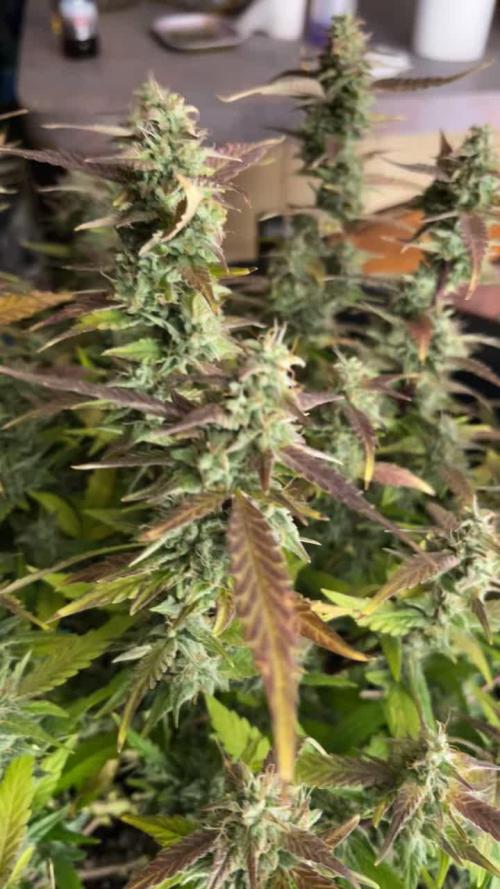
BCN both plant leaf turn to lighter shade and some older leaf turn to yellow-brown
Pineapple still small plant size and low growing rate. Just making a bud size increasing only.
At the end of week 7 BCN both plant some older leaf turn to a brown with a bit purple at the end of week.
In this week, All 3 plant i feed Flower fuel and Myco+




Likes
8
Share

@DogDoctorOfficial
Follow
💎 Black Diamond Auto by Zamnesia – Pheno B
Week 9 | The Other Beast 💎🔥
Welcome back to another chapter of the 8×8 Adventure!
Well...
Her sister is doing her thing.
And if you've been following this adventure, you already know what that means.
Pheno A is in full beast mode. 😂💎
She's massive.
She's loaded.
She's throwing flowers everywhere.
And she's making sure nobody forgets she's in the room.
But then I look at her sister...
And I have to smile.
Because Pheno B is also a beast.
Just a different kind.
And that's exactly what makes these two so fascinating.
Same genetics.
Same room.
Same light.
Same nutrition.
Same irrigation.
Same environmental conditions.
Both beautiful.
Both vigorous.
Both now cleaned up with some selective defoliation.
Both entering this increasingly exciting stage of flowering.
And yet...
very, very different.
That's phenotype hunting.
And I absolutely love it.
🌱 One Room. Two Black Diamond Stories.
The 8×8 Adventure was never about making twelve plants look identical.
Quite the opposite.
The whole point was to give different genetics and phenotypes the same ecosystem and then watch what they decide to do with it.
Twelve plants.
One room.
12/12 from seed.
One general nutritional strategy.
One environmental strategy.
One lighting ecosystem.
And then...
genetics take over.
Black Diamond Pheno A has developed one expression.
Black Diamond Pheno B has developed another.
They're sisters.
But they're definitely not twins.
😂💎
And at Week 9, that difference is becoming impossible to miss.
💎 The Other Beast
Last week, I was talking about Pheno B as the quieter sister.
The more reserved phenotype.
The one that wasn't necessarily trying to dominate the room.
Well...
I may need to revise that description slightly.
😂
Because this girl has been steadily building.
And now?
She's a beast too.
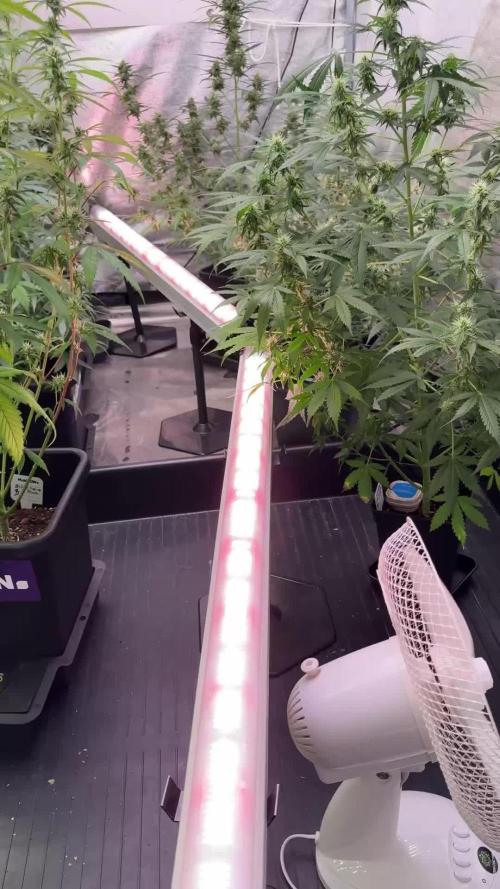
Standing around 160 cm, she's developed into a beautiful, substantial flowering plant.
But her strength isn't expressed exactly like her sister's.
Where Pheno A seems to throw herself into flower production with almost reckless enthusiasm, Pheno B has that more controlled, elegant architecture.
She's still tall.
She's still heavily branched.
She's still carrying flowers throughout her structure.
She's still becoming increasingly frosty.
She's just doing it in her own way.
And that's what I want to document.
Not which sister is “better.”
But how differently two phenotypes can express themselves when everything around them is kept so similar.
✂️ The Beast Got a Little Grooming
This week, just like her sister, Pheno B received some selective defoliation.
Again...
Nothing extreme.
We're not trying to strip the plant down.
We're simply opening some space where the canopy has become crowded.
A few leaves needed to come out.
Some areas benefited from additional breathing room.
And as flowering progresses, maintaining a sensible balance between foliage, airflow and flower visibility becomes increasingly important in a room containing this many plants.
The goal isn't to change her personality.
It's to reveal it.
And I think that's exactly what happened.
After the cleanup, you can appreciate the structure much more clearly.
The flowering sites become easier to see.
The branches become easier to follow.
And suddenly you realize just how much she's actually carrying.
🌿 Similar Sisters. Very Different Personalities.
This is probably my favourite part of this week's update.
Put Pheno A and Pheno B next to each other and you immediately know they're related.
There are similarities.
The overall flower development.
The vigorous growth.
The healthy foliage.
The general Black Diamond character.
But then you start looking closer...
And the differences appear.
Their architecture isn't the same.
Their flower distribution isn't exactly the same.
Their proportions aren't the same.
Their way of occupying the room isn't the same.
Their personalities aren't the same.
And that's the magic.
Same family. Different handwriting.
One sister says:
"Give me the whole tent."
The other says:
"I'll take my space, thank you very much."
😂💎
And somehow...
both are absolutely beautiful.
🌸 Flower Development Is Getting Serious
At this point in the flowering cycle, the flowers are becoming increasingly defined.
The calyxes are stacking.
The pistils remain abundant.
The developing buds are gaining structure and volume.
And the resin is becoming much more obvious.
Looking through this week's photographs, that's one of the first things that catches my eye.
She's getting frostier.
The sugar leaves are beginning to disappear underneath the resin.
The developing flowers are becoming increasingly coated.
And we're still watching that transformation happen week by week.
This is where the earlier weeks of growth start paying off.
The branches we watched develop.
The flowering sites we watched appear.
The structure we watched form.
Now they're all becoming flowers.
And that is incredibly satisfying to watch.
❄️ The Frost Is Arriving
I particularly like the close-ups this week.
You can see that the resin coverage is becoming much more apparent across the developing flowers and sugar leaves.
She's not finished.
We're not at the end of the story.
But the direction is very clear.
She's getting frosty.
And I have a feeling that the coming weeks are going to make these photographs even more interesting.
This is one of those moments where the plant starts changing visually in a way that's immediately noticeable.
Every update seems to bring another layer.
More structure.
More resin.
More density.
More personality.
🍃 Healthy Green, Beautiful Structure
One of the things I continue to appreciate about Pheno B is her overall appearance.
She's maintaining that rich, healthy green.
The foliage remains vigorous.
The plant has enough leaves to support continued flower development while still responding well to the selective cleanup we've given her.
And this is important.
Defoliation isn't the objective.
A healthy, functional plant is the objective.
If a leaf is doing its job, that's valuable.
If removing a leaf improves the overall structure of a crowded canopy, that can also be valuable.
It's always a balance.
And with this girl, I think we've found a nice middle ground.
She's still lush.
She's still green.
She's still unmistakably herself.
But now there's a little more room to appreciate what she's building underneath.
💡 Light From Above and Below
The lighting experiment continues to be particularly interesting with these two sisters.
The main Future of Grow lighting provides the primary overhead illumination.
The Lumiflora under-canopy lighting adds another layer of usable light lower within the plant.
And with Pheno B's architecture, there's plenty to observe.
She's tall enough that different parts of the plant naturally experience different light levels.
At the same time, her structure isn't identical to Pheno A's.
So once again, the same lighting system is interacting with a different phenotype.
That's exactly what I want from this experiment.
Not assumptions.
Observation.
We give them the same opportunity.
Then we watch how differently they use it.
💧 Feeding the Black Diamond
The flowering nutrition continues according to the same general program used throughout the room.
🌸 Terra Bloom — 2.2 ml/L
🌱 Power Buds — 1 ml/L
✨ Green Sensation — 1 ml/L
🍯 Sugar Royal — 1 ml/L
⚗️ pH Plus — 0.03 ml/L
🍋 Lemon Kick — 0.03 ml/L
Current solution is around pH 6.0 with an EC of approximately 2.0 mS/cm.
Watering is around 1.3 L per plant / 24h.
And once again, the important part is consistency.
Pheno B isn't receiving some secret recipe that her sister doesn't get.
She's living in the same ecosystem.
And yet...
she is expressing herself differently.
That's the information I'm interested in.
🌡️ Current Conditions
Current conditions for Week 9:
🌸 Flowering: Week 9
📏 Height: 160 cm
💡 Light schedule: 12/12
🌡️ Day temperature: 29°C
🌙 Night temperature: 25°C
💧 Relative humidity: 60%
⚗️ pH: 6.0
⚡ EC: ~2.0 mS/cm
💧 Solution temperature: 25°C
🌱 Substrate temperature: 26°C
🌬️ CO₂: 636 ppm
? Pot size: 15 L
💦 Watering: ~1.3 L per plant / 24h
The environment remains stable.
And that's exactly what allows the comparison between phenotypes to become so interesting.
The environment stays relatively constant.
The plants write the differences.
📸 This Week's Gallery
The photographs this week really show why this girl deserves her own spotlight.
The wider shots show her overall architecture.
She's tall.
She's developed.
She's carrying flowers throughout her structure.
And after the cleanup, those flowers are much easier to appreciate.
The close-ups tell the other part of the story.
Fresh pistils.
Developing calyxes.
Increasing resin.
More defined flower structure.
More frost.
And then you look at her sister...
And you realize:
These two really are very different.
Similar enough that you immediately know they're related.
Different enough that you could never confuse one personality for the other.
And honestly?
That's exactly what I hoped this experiment would show.
💎 The Sisterhood of the Beast
I think we can officially say it now.
Both Black Diamond sisters are beasts.
Pheno A is doing her thing.
Pheno B is doing hers.
Both have been cleaned up.
Both are carrying serious flowers.
Both are getting increasingly frosty.
Both are looking beautiful.
But they are absolutely not the same plant wearing different labels.
😂💎
And that's the beauty of it.
You can give two sisters the same room, the same treatment and the same opportunity...
and they'll still find their own way.
🔮 Looking Ahead
Now I'm watching for the same things I've been watching across the rest of the room:
🌸 Flower swelling
❄️ Increasing resin production
🌿 Continued canopy health
💎 Development of the lower flowers
🍃 Response to the selective defoliation
🔬 Overall maturation
And, of course...
I'm watching the sisters.
Because now that both are entering this heavier flowering stage, the comparison is becoming even more fascinating.
Will Pheno B continue building at her own steady rhythm?
Will the differences between them become even more pronounced?
Will the flowers develop differently as they mature?
That's what we're here to find out.
💚 Let This Girl Shine
I think this girl has earned her own moment.
She's not Pheno A.
And she doesn't need to be.
She's Black Diamond Pheno B.
She's developed her own architecture.
Her own rhythm.
Her own flower distribution.
Her own personality.
And now she's showing us another version of what this genetic line can produce.
Her sister may be running around the room in full beast mode...
but this girl?
She's right there with her.
Just in her own style.
😂💎🌿
So we cleaned her up.
We opened some space.
We gave her a little room to breathe.
And now...
let's watch her shine.
Because she's earned it.
💎 Final Thoughts
Week 9 is another reminder of why I love this 8×8 Adventure so much.
Two Black Diamond plants.
Same genetics.
Same room.
Same environment.
Same general feeding.
Same lighting.
Same irrigation.
And still...
two completely different stories.
Pheno A is explosive.
Pheno B is more composed.
Pheno A seems determined to turn everything into a cola.
Pheno B has her own way of building.
But both are beautiful.
Both are vigorous.
Both are becoming increasingly frosty.
Both needed a little cleanup.
And both are showing us just how much personality can exist inside the same genetic line.
That's phenotype hunting.
You don't tell the plant what story to tell.
You create the conditions...
and listen.
And this girl is speaking very clearly now.
"I'm not my sister."
"I'm my own beast."
And you know what?
I absolutely love that.
Let's make her shine. 💎💚🌿
🙏 Thank You
A huge thank you to everyone following the 8×8 Adventure and coming back every week to watch these personalities develop.
Thank you to GrowDiaries for giving growers a place to document, compare, learn and share these journeys.
Thank you to Zamnesia for providing the Black Diamond genetics that gave us these two fascinating sisters.
Thank you to Plagron for supporting the plants throughout this adventure.
Thank you to Future of Grow LED for the main lighting driving the room.
Thank you to Lumiflora for bringing the under-canopy lighting into the experiment and giving us another dimension to observe.
And thank you to TrolMaster for helping keep the environment stable behind the scenes.
And finally...
thank you to everyone reading, commenting, asking questions and following these girls week after week.
Two sisters.
One genetic line.
One room.
One experiment.
Very similar.
Very, very different.
And now...
two beautiful beasts. 💎🔥
Let's make this one shine.
Growers Love! 💚🌿💎
Likes
15
Share


@IsseyBukkake
Follow
We have hit day 35 and everything's looking great!
Only 2 girls out of 8 have started flowering in the past day or two, the remaining six have shown sex and I'm anticipating flowering to begin sometime this week.
I gave them a full feeding today.
I'm using H&G Coco A+B, which is used from seed to harvest, unlike many other nutrient brands.
I will start using H&G Bud-XL in the next few days, luckily I got a bottle before the shops close for Christmas.
I didn't expect these autos to get so big so fast, but I'm definitely not complaining.
Update day 37 - 26/12/20
I fed the girls their first dose of bud-xl today.
5/8 girls have started to flower now, hopefully, in the next few days the other 3 start up!
Update: Day 40 - 29/12/20
6/8 girls are flowering now, the two that aren't are the 2 weird pheno runts..
I've submitted a grow question regarding the 2 weird girls.
I'm hoping that they're simply late to flower and not a photoperiod..
I've been feeding the girls 1-2 litres each every day, with a plain PH'd water run every 7-14 days.
Update day 41 - 30/12/20
All the girls have started to flower now :D
I'm incredibly happy to see them so healthy at this point too
I was almost going to put the 2 runts outside but I'm leaving them inside at this point.
Thanks for stopping by!
Merry Christmas/Happy holidays to all :)

Likes
7
Share


@RosQuare
Follow
GLF - 2g - 24” mainline
OLP 2 - 2g - 20” topped
OLP 3 - 2g - 18” topped (and broke 2 branches!)
OLP 4 - 2g - 15” topped, LST & super cropped
OLP 1 - 500ml x4 - 10” super cropped
Little bit of defoliation on bottom and centre.
All doing well. Increased water needs. Flowers starting to develop. The OLPs are a week behind because the timer in their tent was flipping back and forth between 12-12 and 18-6 for about 10 days.. ooosie!
Moms are being maintained as little bonsai plants in solo cups in my back bedroom near the window with a single 100w panel set to 18-6. Being mostly neglected, infrequent watering, lean fertilizer, heavy defoliation.
Likes
10
Share


@CanarianGrow92
Follow
Week 7 for the ztrawberriez from fastbuds 420!!!
We gave the last week of xpert nutrients feeding and will continue now with only water, harvest time is soon and at the moment the buds are looking great, nice smell in the tent and the buds are nice and covered in trichomes!
The plants are not that big but of course i have quite some plants together in the tent
and 7 liter pots so they stayed a little smaller, next time i will do maybe less plants but with the bigger 420 fastbuds airpots!
Likes
27
Share


@Basementganja
Follow
Each plant has been watered/fed, with a glug or two, from a 1 gallon mixture of 1tsp/gal floranova-grow (ph7).
Mother plants are definitely ready for a pruning/cloning!
Likes
40
Share


@valiotoro
Follow
easy trim✂️
The buds are Absolutely perfect,exactly what i was looking for🤩
Green pheno : cookie,diesel & gelato🍪⛽️🍦
Purple pheno : flower,sweet & honey🌸🍯
After 7 days on the dry rack she was ready for the jar to start the curing process.😋


Likes
8
Share

@all_about_420
Follow
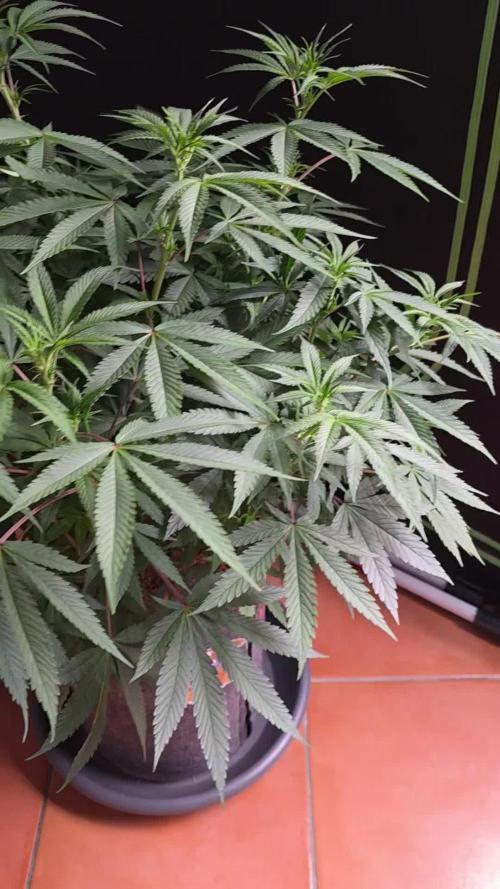
Die erste Blütewoche der Tropicanna Poison F1 Fast Version startet mit maximalem Schwung. Die Lady steht perfekt im Saft, zeigt eine tiefe, gesunde Vitalität und hat den typischen Pre-Flower-Stretch direkt eingeleitet. Besonders beeindruckend ist die extrem kurze Reaktionszeit auf die photoperiodische Umstellung: Bereits fünf bis sechs Tage nach dem Wechsel auf das 12/12-Lichtregime sind an den Internodien die ersten weißen Pistillen (Blütenhärchen) deutlich sichtbar. Dieses frühe Einsetzen der generativen Phase ist ein Paradebeispiel für die Fast-Flowering-Genetik von Sweet Seeds. Durch die rasante Hormonumstellung im Pflanzengewebe dürfte der vertikale Stretch eher moderat und kontrolliert ausfallen, da die Pflanze ihre Energie bereits sehr früh in den Aufbau der eigentlichen Blütenkelche investiert. Das Blütendach ist homogen, der Nährstoffhaushalt optimal eingestellt – die Weichen für eine kompakte, harzige Blütenpracht in Zusammenarbeit mit der Canna-Community-Germany sind perfekt gestellt.
Likes
7
Share


@Dingle_Dangle
Follow
09/10/2023 - Day 98 - Week 15 - Week 10 flower
She's ready.
Last update.
Stunning smell, colors, size and everything.

Likes
37
Share


@Capo420
Follow
Will update throughout the harvest, drying, and curing.
Great grow!!! I honestly could not have asked for a better first time growing experience. A few little bumps along the road, but nothing these ladies couldn't handle.
Very citrus smell topped with a salvating creaminess. Will definitely keep this lady in mind for all future grows. Maybe at least one plant. I can't wait until I can try this girl. Thank you to Fast Buds for these awesome genetics and thank you to the Grow Diaries Cimmunity for all your help along the way.
Happy Growing
💚💪🌱😎🌱💪💚