


Processing
Likes
Comments
Share


@Barcelona_Farmers710
Follow
Se nos fue un poco de altura pero intentaremos arreglar el error farmers... al final quedo simplemente en podas apicales y de momento ramas muy finas. Iremos comentando el proceso Farmers!

Likes
1
Share


@Elguacho420
Follow
Buenas a tod@s!!, bueno pasamos la segunda semana de floración de las red cookies gelato, de momento no tengo problema excepto algunas hojas amarillas, le baje la dosis de los productos e intento mantener una temperatura y humedad adecuada, hay días y días, de momento respondieron muy bien y están creciendo rápido y muy bien, hay una más avanzada q las otras pero bueno, ya florecerán 😅.. algún herror mio. Ya vamos viendo q tal desarrollan más adelante.... Buen finde para tod@s y buenos humos... 🇦🇷🤝🏻🇪🇦👍🏻💨💨💨
Likes
2
Share


@HighZenBerg
Follow
Week 11 and the ducks look great. Especially at direkt sunlight, they smell wonderful. The flowers get bigger and more round every day and so far, none of the pistils get brown. I guess they will have another 3-4 weeks to get ready. The main colas are impressive (for me). Only a little damage occurred because of thirps and leaf miners but nothing serious. I can’t wait to see how they develop further.
Keep in touch !
Cheers
HighZenBerg

Likes
9
Share


Likes
7
Share


@StonedandSteady
Follow
GrowersChoiceSeeds #DivineSeeds #AlienBloodGenetix #SmokinPlantaz #TNBNaturals #Foop 8th W/ Flower 2nd/3rd W/ Veg
Yo!!! Thanks Again for All the Love and Support my fellow Growmies and Growmets!!! These Magnificent and Magical Ladies are Growing into thier 9th Week in our 48×24×60 ViparSpectra Official Club 🌿 ®️ Grow Tent and under our #Osree QB1000w and #GrowStarStore Kokokala QB1000w and our Tomatoes×3, Sunflowers×5 and The 4 Brand New and Fresh Starts are Wonderful with a Huge Hint of Fantastical Fire is my #SalamiLegF3 by Broski #thehumancannabiniod #DankFlowGenetics #EastCoastSeedBank #FireAlienRomulan by Broski #AlienBloodGenetix my #PabloEscobar and #Opium by Team #DivineSeeds #DivineSeedsBreedingCompany Growing under our #Growatt 600w with #FoopOrangicBioSciences and #TNBNaturals The Enhancer Co2 Despersal canister and ph'd them w/ Declorinated watering w/ TNB ph Up and Down! Totally Top Quality Topz all Around! Thanks Again #GallowGlas420 #HarleyGrower #GrowersChoiceSeeds #thehumancannabiniod #AlienBloodGenetix #SmokinPlantaz #TNBNATURALS #FoopOrangicBioSciences #as420.ca #divineseeds #divineseedssquad #divineseedsbreedingcompany #BioFlux #ThrivingDesign Family's and Teams!!! Your Genetics are Merry Magnificent, Mega Marvelous and Mighty Medical! Love um!!! I really Can't stress enough how Thankful and Grateful I am of All of you and what you've Shared with Us! Means the World!!! It's definitely a Pleasure being able to Grow with these Phenomenal Grow Lights! Please Enjoy! BudBrothers4-Life! Cheers Famz!!! Much Props and Much Topz!💯🔥 #Osree #GrowStarStore #Growatt
#Affiliate #WeGrowBetter #TNBNaturals #TNBTeam #FoopOrangics #GrowYourOwn #Bliss
https://instagram.com/growerschoiceofficial?igshid=1pgx0qx86038u
https://www.instagram.com/alienblood_genetix_official/
https://instagram.com/as420.ca?igshid=1t8j7pcf3aw2p
https://instagram.com/tnbnaturals?igshid=1brotdb4385sz
https://instagram.com/divine.seeds?igshid=osxe2v7en33v
https://instagram.com/fooporganicbiosciences?igshid=5bg74agl6e6s
https://instagram.com/growstarstore?igshid=yz71hq8q4eeg
https://instagram.com/youngufireblaze?igshid=atzh9ue6hy1d
https://instagram.com/thehumancannabinoid?igshid=17k159pumklkq
https://instagram.com/gallowglas420?igshid=qzzp2y5llzuj
https://instagram.com/harleygrower?igshid=ndy7zh8y0k5g
https://instagram.com/beardedbudbrothers?igshid=dpow775jzr5j
https://instagram.com/thrivingdesign?igshid=vqhwa4k8ts9g
https://instagram.com/everflux?igshid=1533qou84mpvi
SmokinPlantaz YouTube channel Link: https://youtube.com/channel/UCDKJthWoS6-miAhq_lLb_-w
LEDTonic YouTube channel Link: https://youtube.com/c/LEDTonic
LEDTonic Lights Hints Link: https://youtu.be/XT6e_ZwLVK0
Likes
3
Share


@RedbeardGrow
Follow
G.23: le piante sono in salute anche se la g.p. ha le foglie un po' basse, non noto carenze, ma penso che abbia bisogno semplicemente di più acqua (al giorno 21 ho dato 300 ml, al giorno 23 600 ml).
Controllerò domani per vedere se migliora
G.24: le piante hanno risposto bene all'innaffiatura e oggi i vasi erano di nuovo leggeri come ieri, perciò nuova innaffiatura da 500 ml per entrambe.
G.27: come dalle foto ho messo un piccolo umidificatore a causa dell'eccessivo caldo (30% u.r.). Le piante crescono bene. Sto mantenendo le quantità di fert più basse rispetto alle volte precedenti e mi sta ripagando con un bel verde delle foglie.
Questa settimana le piante hanno iniziato ad avere molta più sete e ad ogni giorno che ho pesato il vaso era sempre leggero.
Continuate a seguirmi per nuovi aggiornamenti.

Likes
3
Share

@captaincondor
Follow
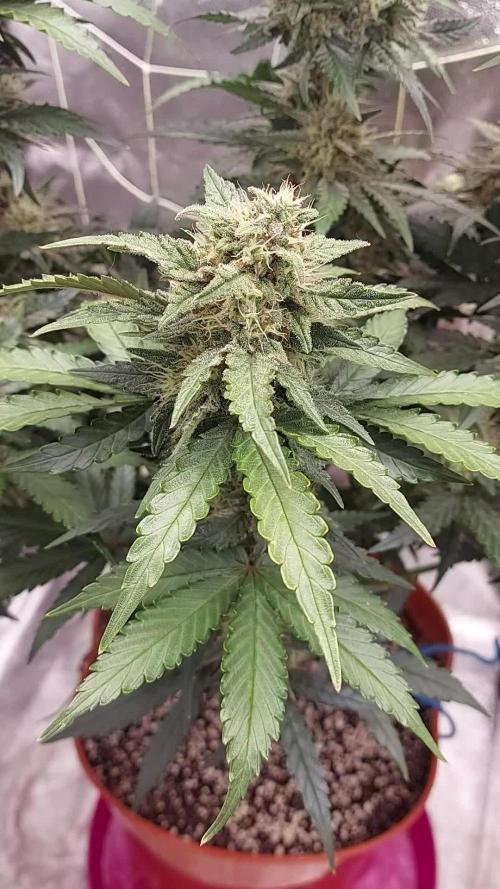
Doing nicely quite pungent, the buds are bulking up and some of the pistols are turning amber she's starting to mature !!!!

Likes
47
Share


@Cannabeast40
Follow
Finally harvest time arrived 🤗
It’s been a great run, though I had to improve a lot along the way. But as usual there was a way to get things done and finished up😎
After a long heatwave I decided to chop the whole tent, just a bit before I actually wanted to. But I see amber trichomes and heavy buds, so I think it’s safe to chop now, so here we go. 🤩
Can’t wait to taste this after so long watching over it🤤
More details to come.

Likes
91
Share


@Salokin
Follow
Hi Growmies,
She continues to develop nicely. The rootball continues to expand and nested itself right above the airstone. She is very thirsty, finishing a good 10l over the course of 5 days. I have opened my last atami rockzbastic tester and added a ml per liter. Seems like the buds start stretching around the colas now, so pretty much half time +- a week.

Likes
13
Share


@Medicanna
Follow
QUESTION TO EVERYONE READING THIS: My tap water is pH 8.3 (yes I know right ?!) Adding the BioBizz nutes brings it down to pH 6.2 - 6.4 depending on the amount which is great. Now, I dont really care about runoff pH that much, doesnt tell me a lot imo but I measured it twice, last time it was 6.8 this time it was 7.1. Is there anything to worry about or is that just irrelevant? Thank you guys :)
Day 48: Watered the G13 Haze with 650ml Water and 2.8ml / l BioGrow, 2.8ml / l BioBloom, 0.7ml / l TopMax which is the equivalent biobizz week 7 feeding schedule with 70% strength on BioGrow & TopMax and 90% strength on the Bloom. Therefore, dont mind the leaves hanging down, I just watered before taking pictures. Also redone some of the LST by changing the "angles" of the side branches to use up space more evenly. Tied down a bit more aswell to even out height differences. Looks great so far, but the G13 Haze is quite a bit behind in budding, the Liberty Haze is throwing Pistils everywhere, the G13 Haze just started showing the first noticeable preflowers with pistils on the nodes.
Day 45:
I really wanted to try serious and "professional" training methods. Defoliation was obviously needed, I couldnt even see what was going on below the plant. Removed all leaves except on the top 2-3 nodes of each branch. Then I did some heavy LST to move the side branches to the outside for filling up space. I hope the center will grow some branches at some point.
MOST IMPORTANTLY, since I wanted the main branch to slow down growth a bit, I twisted and "mashed" it between two fingers until I could hear a snapping noise and the stem became weak like gummy. It takes a lot of courage guy! A LOT. But it seems to have worked, the stem is not broken and I managed to tie it down without bending the whole plant. I am so excited on how this is going to turn out.
~Watered 600ml today
Day 44:
So yeah, definitely stretching ! The internodal space is way bigger than I'm used to from growing short indica quick ones. Funnily enough, the G13 Haze does'nt give off any smell at all apart from typical "green plant" smell (Just noted that because the Liberty Haze smells quite strong even though it doesnt form buds yet).
Did some very very careful LST which looks good for now. I want to remove a lot of leaves and little side branching from the bottom as soon as the plant grows a bit bigger so I can access the bottom part better.

Likes
25
Share


@DrGanj
Follow
Started flush now. I'm adding Nature Delight Active Sugar Boost as it's been recommended to boost terpene production. No idea if it will work this late into flower but trying anyway as apparently it has no need to be flushed and is fully organic.

Likes
14
Share


@Terpyboyz
Follow
Final product is been absolutely amazing on these clones - the jungle came out about average but the clones definitely exceeded expectations there absolute fire in comparison but still just as good hopefully I can just improve a few issues we had on this run and dial right in 100% will be so much better, next few run is going to be special I’ve got a few things lined up. From tester packs to breeders packs I can hunt from. So lots to choose from but what to keep to run will be interesting


Processing
Likes
21
Share


@LittleBigTrees
Follow
Switched from 24/0 to 12/12 at the end of day 14, also switched the 730nm Led's on. Its been 7 days the plants have started growing a lot faster but there's still no pistils showing.
I started feeding biobizz grow @ 2ml/l
At the moment there getting watered every 3-4 days.
The light is showing 25000lux on a lux meter app.
Likes
12
Share


@Huntablunt
Follow
Hello.........Ladies are going into the final weeks!! It is absolutely awesome to see and smell this every day!!! Did not water them for one day, and they were really thirtsty today.
I will give them 2 weeks minimum, at the end of the week I will decide when to cut nutrition. I hope they keep on inflating like last week. Buds are really quite frosty and I was checking weather report and I seem to have perfect timing for harvest, which is absolutely great. This strain will have such an interesting aroma.....
I dont know if it is clearly visible from the photos, but the buds will show some nice different colours. So if they finish on time it will be absolutely high grade in every aspect. Looks, smell and taste/turn. Still I will have to be quiet patient until testing, but this is going to be the most anticipated weed since I dont know when.

Likes
16
Share


@Prop207
Follow
Chasing the Ph down the rabbit hole. These ho's drinking a gallon a day. Had to add a float valve to keep up.
Soaked her in adjusted RO water to clean the salts off.
30ml gro
20ml micro
10ml bloom
25ml cm

Likes
4
Share


@Zywap
Follow
Brewed a Tea for the ladies and there loving it, just transplanted the rest that weren’t into 3gal pots. they’ve all bounced back. Deciding on not using any synthetic nutes an just keep using the tea an maybe some other organic things. But the rest are bag seeds reason i’m not posting them lol but a little bigger then the crown royals tho i did start those about a day or two after




Likes
17
Share


@Leonweed10
Follow
Ya an alcanzado unos 25 cms las nenas,todas bien parejas....en unos dias mas ya paseremos a floracion al alcanzar unos 35 a 40 cms cada una...se viene lo mejor!!

Likes
54
Share


@Hou_Stone
Follow
J'ai fait du HST sur les plus grandes branches des ztrawberry pour essayer d'équilibrer la hauteur.
Bonne idée ? De toute façon c'est fait, on verra bien.
Jusqu'à présent j'utilisais des engrais biobizz ouvert depuis 3 ans. ça n'a pas trop mal marché après tout.
Mais j'ai investi dans des engrais de green house feeding, je vais utiliser ça maintenant. ( 0.6g/l poudre hybride + 0.4g/l booster pk)
-------------------------------------------------------------------
Grow Room: trafika urban hydroponics 100x100x200 cm
Lamp: kit trafika urban hydroponics ballast & lampe HPS : 250-600w
Extractor & carbon filter : Mars hydro 6 inch 402 CFM ( power 3/10 )
Soil : 20% perlite, 20% vermiculite, 60% universal soil
Average daily temperature & humidity : 20 à 29°C 35 à 60%
Average nigth temperature & humidity : 12 à 17°C & 50 à 70 %

Likes
5
Share

@GERGrowDesigns
Follow
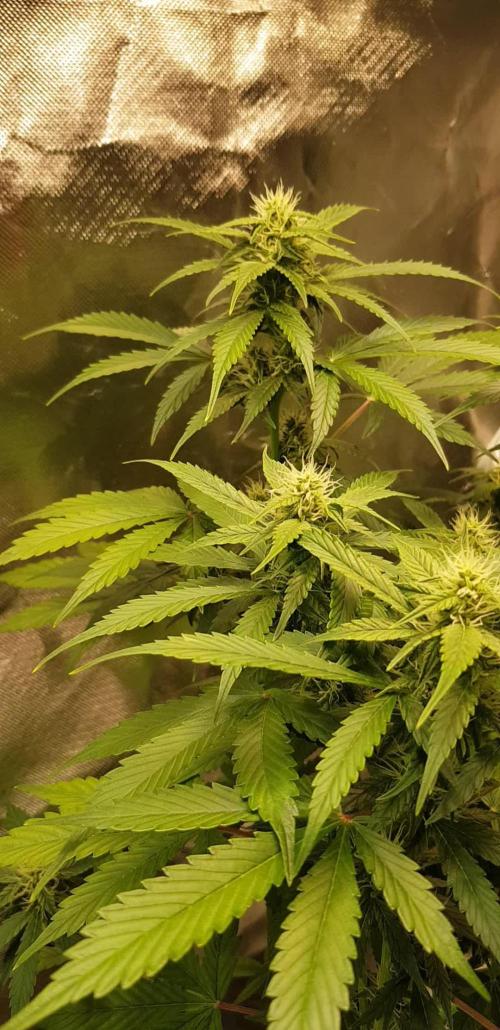
GERGrowDesigns Welcome to Flower Week 1 of Divine Seeds Auto AK-47 XL
I'm excited to share my grow journey with you all as part of the Divine Seeds Autoflowering Competition 2025. It's going to be an incredible ride, full of learning, growing, and connecting with fellow growers from all around the world!
For this competition, I’ve chosen the Feminized Automatic strain: Auto AK-47 XL
Here’s what I’m working with:
• 🌱 Tent: 120x60x80
• 🧑🌾 Breeder Company: Divine Seeds
• 💧 Humidity Range: 60
• ⏳ Flowering Time: 59Days
• Strain Info: 21-24%THC
• 🌡️ Temperature: 26
• 🍵 Pot Size: 0.5l
• Nutrient Brand: Narcos
• ⚡ Lights : 200W x 2
A huge thank you to Divine Seeds for allowing me to be a part of this amazing competition and Sponsoring the Strains. Big thanks for supporting the grower community worldwide! Your genetics and passion speak for themselves!
I would truly appreciate every bit of feedback, help, questions, or discussions – and of course, your likes and interactions mean the world to me as I try to stand out in this exciting competition!
Let’s grow together – and don’t forget to stop by again to see the latest updates!
Happy growing!
Stay lifted and stay curious!
Peace & Buds!
Likes
13
Share


@Robeeriegenetics
Follow
Dropped light hours down to 16 . Topped off nutrient solution with 5.0 ph evened out .removed none chosen phenos to be flowered in separate room no longer tracking those we will only follow the chosen mothers clones i cut clones today as well had the lady friend clean floor with bleach and dawn put clones in ez cloner 32 systems