The Grow Awards 2026 🏆
Processing
Likes
Comments
Share
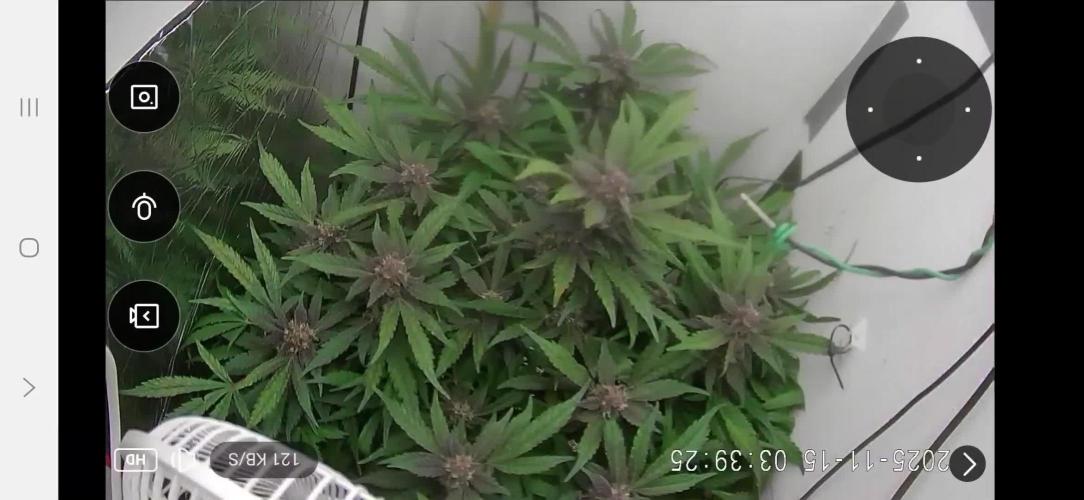
Starting the scrog net, gonna let her stay in veg state till the day 120th. 😎
Likes
4
Share
From sprout, I've been watering every 3-4 days. Been very consistent with this. Yellow tips been appearing. I think it could be Magnesium or Calcium deficiency. Hit it with some Calmag with iron.
Likes
16
Share
@Unkraut
Follow
great strain, it has an awesome scent and taste, average yield but really great buds! it was a pleasure to grow it, i harvested a bit early but due to bad weather and high RH i had to harvest
Likes
229
Share
Hi everyone 😁 Welcome back in another week update! Have to say girls are looking stunning 😍 frost it's almost everywhere. Trichomes on some buds up to 30% amber and progressing by hour. They are gaming weight on buds nicely as well. Aroma OMG I am sensing ripe sweet fruits, a bit woody and gasy. Planning to turn the lights off on Thursday at midnight and harvest by Sunday 😅 Wishing everyone a great week Stay tuned for daily updates Peace and love brothers and sisters ✌️💚 02/10 Day 71 Watered again approx. 2.5l of water and fish shit at 0.4 ml per 1 ltr. Runoff approx. 50-100ml. 04/10 Day 73 Everything going great. More amber trichomes, almost all pistils hairs are brown. These girls are almost ready. The Day it's just around the corner. 05/10 Day 74 Last watering, in the morning approx. 1.5l per pot. At midnight lights out for good. 06/10 Day 75 Uploaded 2 clips from last night. Trichomes are on point. Some buds 50-70% amber and they did gained some weight overnight. Just one more night of darkness and will harvest! 😎 07/10 Day 76 It's done!!! Harvested and trimmed. Soon will return with final update - Harvest 😁 Thank you all for such a great support, likes comments and pm's Peace and love brothers and sisters ✌️💚
Likes
5
Share
week 7 started first time growing in this much summer. it's really hard.
Likes
20
Share
@MeaCulpa
Follow
Iris is definitely a tough fighter. All the ladies showed what they can do this week. I'm very excited to see what happens next. Everything looks very good.
Likes
8
Share
It's Week 01 Flower. For My 2 Kombucha Cream by atlasseed . And For My Snow White & SpliffStrawberry by Spliff Seeds Amsterdam . Today was Feeding Day and I also did a small Defoliation and LST all 4 Plants . My Kombucha Cream 3-Part And Snow White Received 4ml Of Emerald Harvest Nutrients Grow, Micro, Bloom, 6ml Of Emerald Goddess, 4ml Of King Kola, 4ml Honey Chome and 4ml Of Quad.AG Products Fulonic. Ph at 6.0 Ppm at 686. On Runoff My Kombucha Cream 3-Part Ph is at 6.3 and the Ppm is at 1004 I will keep a eye on the ppm on this one for the next few feeds. My Snow White Ppm Runoff is at 696 and Ph is at 6.2. My Kombucha Cream 2-Part & SpliffStrawberry Received 5ml Of Emerald Harvest Nutrient Cali Pro Grow A&B, 6ml Emerald Goddess, 4ml King Kola, 4ml Honey Chome And 4ml Of Quad Ah Fulonic Ph at 6.0 Ppm at 553. On Runoff My Kombucha Cream 2-Part Ph is at 6.5 Ppm is at 657. My SpliffStrawberry had a Ph of 6.1 Ppm is at 756. On my next feed I will ph at 6.2. All 4 Plants had there last transition feed. Next feed I will feed the Roots and give them a nice Flower Feed 😁 Happy Growing Growmies 🤘🏻
Likes
20
Share
When the queens return, champions who have brought so much luck, you have to beat the drums, prepare the parade, Calling Brazilian salsa dancers, flag-waving gluttons and fire eaters: Zamnesia BISCUITS is back. You will remember it as the magnificent purple plant that made me take first place in the Power Buds contest and brought me lots and lots of luck. Below we add some information directly from the Zamnesia website: ZAMNESIA SEEDS - BISCUITS: DELICIOUS BISCUITS TO EAT AND SMOKE "Liven up your grows and add the Biscotti strain to your cannabis seed collection. It offers the best qualities of marijuana: potency, productivity and intense flavors. Biscotti is composed of South Florida OG and Gelato genetics and contains 22–25% of THC, enough to make your body vibrate from head to toe. The genetic profile of this strain is 80% indica and 20% sativa, with effects that will make you feel relaxed and creative at the same time. The plants of the strain Biscuit produces dark green leaves and numerous pistils, while the buds tend to be small and compact. Towards the end of the flowering phase, when night temperatures drop a few degrees, you may also notice purple hues." The seeds of this champion were in the same package as the famous one and having seen both phenotypes I think it could be her, fingers crossed if I see purple we celebrate. Purple like the bottles of the legendary feeding Plagron Alga Grow which we are using in the measure of 3ml/l together with the epic scented Light Mix soil which looks like something to eat. The seeds of this champion and many others including the brand new F1 that carry forward the autoflowering concept can be found on Zamnesia https://www.zamnesia.io
Likes
55
Share
Removed autoflower and put her in her own pot outside the tent. Foliars applied in strong blue 430nm with 4000Hz tone. 20-minute dose prior to application. In essence, you're seeing a combination of the infrared light reflected by the plant, which the camera perceives as red, and any residual visible blue light the plant reflects, which results in a purple hue. I was doing more stretching of the stems, adjusting weights, just a little too much, and it snapped almost clean. I got a little lucky in that it was still connected, wrapped her almost instantly while holding her in place with yoyos. I am hopeful she will recover and reconnect the xylem and phloem channels. Oopsy level stress event. A couple of days later, the stem was tied in place to hold it, and I spent some time gently caressing the stem, bending slowly over time as it becomes more pliable the more you bend it. A little delay, but the core framework is now in place. If your soil has high pH,it's not ideal, you want a pH of 6.4, 6.5, or 6.6, which is ideal. If you are over a pH of 7, you have no hydrogen on the clay colloid. If you want your pH down, add Carbon. If you keep the pH below 7, you will unlock hydrogen, a whole host of new microbes become active and begin working, the plant will now be able to make more sugar because she has microbes giving off carbon dioxide, and the carbon you added hangs onto water. Everything has electricity in it. When you get the microbes eating carbon, breathing oxygen, giving off CO2, those aerobic soil microbes will carry about 0.5V of electricity that makes up the EC, The microorganisms will take a metal-based mineral and a non-metal-based mineral with about 1000 different combinations, and they will create an organic salt! That doesn't kill them, that the plant loves, that the plant enjoys. This creates an environment that is conducive to growing its own food. Metal-based: Could include elements like iron, manganese, copper, or zinc, which are essential nutrients for plants but can exist in forms not readily accessible. Non-metal-based: Examples like calcium carbonate, phosphate, or sulfur, also important for plant growth and potentially serving as building blocks for the organic salt. Chelation in a plant medium is a chemical process where a chelating agent, a negatively charged organic compound, binds to positively charged metal ions, like iron, zinc, and manganese. This forms a stable, soluble complex that protects the micronutrient from becoming unavailable to the plant in the soil or solution. The chelate complex is then more easily absorbed by the plant's roots, preventing nutrient deficiency, improving nutrient uptake, and enhancing plant growth. Chelation is similar to how microorganisms create organic salts, as both involve using organic molecules to bind with metal ions, but chelation specifically forms ring-like structures, or chelates, while the "organic salts" of microorganisms primarily refer to metal-complexed low molecular weight organic acids like gluconic acid. Microorganisms use this process to solubilize soil phosphates by chelating cations such as iron (Fe) and calcium (Ca), increasing their availability. Added sugars stimulate soil microbial activity, but directly applying sugar, especially in viscous form, can be tricky to dilute. Adding to the soil is generally not a beneficial practice for the plant itself and is not a substitute for fertilizer. While beneficial microbes can be encouraged by the sugar, harmful ones may also be stimulated, and the added sugar is a poor source of essential plant nutrients. Sugar in soil acts as a food source for microbes, but its effects on plants vary significantly with the sugar's form and concentration: simple sugars like glucose can quickly boost microbial activity and nutrient release. But scavenge A LOT of oxygen in the process, precious oxygen. Overly high concentrations of any sugar can attract pests, cause root rot by disrupting osmotic balance, and lead to detrimental fungal growth. If you are one who likes warm tropical high rh, dead already. Beneficial, absolutely, but only to those who don't run out of oxygen. Blackstrap is mostly glucose, iirc regular molasses is mostly sucrose. Sugars, especially sucrose, act as signaling molecules that interact with plant hormones and regulate gene expression, which are critical for triggering the floral transition. When sucrose is added to the growth medium significantly influences its effect on floral transition. Probably wouldn't bother with blackstrap given its higher glucose content. Microbes in the soil consume the sugar and, in the process, draw nitrogen from the soil, which is the same nutrient the plant needs. Glucose is not an oxygen scavenger itself, but it acts as a substrate for the glucose oxidase (GOx) enzyme, effectively removing oxygen from a system. Regular molasses (powdered if you can) soon as she flips to flower or a week before, the wrong form of sugar can delay flower, or worse. Wrong quantity, not great either. The timing of sucrose application is crucial. It was more complicated than I gave it credit for, that's for sure. When a medium's carbon-to-nitrogen (C:N) ratio reaches 24:1, it signifies an optimal balance for soil microbes to thrive, leading to efficient decomposition and nutrient cycling. At this ratio, soil microorganisms have enough nitrogen for their metabolic needs, allowing them to break down organic matter and release vital nutrients like phosphorus and zinc for plants. Exceeding this ratio results in slower decomposition and nitrogen immobilization, while a ratio below 24:1 leads to faster breakdown and excess nitrogen availability. Carbon and nitrogen are two elements in soils and are required by most biology for energy. Carbon and nitrogen occur in the soil as both organic and inorganic forms. The inorganic carbon in the soil has minimal effect on soil biochemical activity, whereas the organic forms of carbon are essential for biological activity. Inorganic carbon in the soil is primarily present as carbonates, whereas organic carbon is present in many forms, including live and dead plant materials and microorganisms; some are more labile and therefore, can be easily decomposed, such as sugars, amino acids, and root exudates; while others are more recalcitrant, such as lignin, humin, and humic acids. Soil nitrogen is mostly present in organic forms (usually more than 95 % of the total soil nitrogen), but also in inorganic forms, such as nitrate and ammonium. Soil biology prefers a certain ratio of carbon to nitrogen (C:N). Amino acids make up proteins and are one of the nitrogen-containing compounds in the soil that are essential for biological energy. The C:N ratio of soil microbes is about 10:1, whereas the preferred C:N ratio of their food is 24:1 (USDA Natural Resource Conservation Service 2011). Soil bacteria (3-10:1 C:N ratio) generally have a lower C:N ratio than soil fungi (4-18:1 C:N ratio) (Hoorman & Islam 2010; Zhang and Elser 2017). It is also important to mention that the ratio of carbon to other nutrients, such as sulfur (S) and phosphorous (P) also are relevant to determine net mineralization/immobilization. For example, plant material with C:S ratio smaller than 200:1 will promote mineralization of sulfate, while C:S ratio higher than 400:1 will promote immobilization (Scherer 2001). In soil science and microbiology, the C:S ratio helps determine whether sulfur will be released (mineralized) or tied up (immobilized) by microorganisms. A carbon-to-sulfur (C:S) ratio smaller than 200:1 promotes the mineralization of sulfate, when the C:S ratio is low, it indicates that the organic matter decomposing in the soil is rich in sulfur relative to carbon. Microorganisms require both carbon and sulfur for their metabolic processes. With an excess of sulfur, microbes take what they need and release the surplus sulfur into the soil as plant-available sulfate A carbon-to-sulfur (C:S) ratio higher than 400:1 will promote the immobilization of sulfur from the soil. This occurs because when high-carbon, low-sulfur materials (like sawdust) are added to soil, microbes consume the carbon and pull sulfur from the soil to meet their nutritional needs, temporarily making it unavailable to plants. 200:1 C:S 400:1: In this range, both mineralization and immobilization can occur simultaneously, making the net availability of sulfur less predictable. This dynamic is similar to how the carbon-to-nitrogen (C:N) ratio regulates the availability of nitrogen in soil. Just as microbes need a certain amount of nitrogen to process carbon, they also require a balanced amount of sulfur. Both mineralization and immobilization are driven by the metabolic needs of the soil's microbial population. Sulfur is crucial for protein synthesis. A balanced ratio is particularly important in relation to nitrogen (N), as plants need adequate sulfur to efficiently use nitrogen. A severely imbalanced C:S ratio can hinder the efficient use of nitrogen, as seen in trials where adding nitrogen without balancing sulfur levels actually lowered crop yields. Maintaining a balanced carbon-to-sulfur (C:S) ratio is highly beneficial for plant growth, but this happens indirectly by regulating soil microbial activity. Unlike the C:N ratio, which is widely discussed for its direct effect on nutrient availability, the C:S ratio determines whether sulfur in the soil's organic matter is released (mineralized) or temporarily locked up (immobilized). Applied 3-day drought stress. Glucose will hinder oxygenation more than sucrose in a solution because glucose is consumed faster and has a higher oxygen demand, leading to a more rapid decrease in oxygen levels. When cells respire, they use oxygen to break down glucose, and this process requires more oxygen for glucose than for sucrose because sucrose must first be broken down into glucose and fructose before it can be metabolized. In a growth medium, glucose is a more immediate and universal signaling molecule for unicellular and multicellular organisms because it is directly used for energy and triggers a rapid gene expression response. In contrast, sucrose primarily acts as a signaling molecule in plants to regulate specific developmental processes by being transported or broken down, which can be a more complex and slower signaling process. Critical stuff. During wakefulness (DC electric current) life can not entangle electrons and protons. During daytime, the light is sensed multiple color frequencies in sunlight. Coherence requires monochromatic light. Therefore at night IR light dominates cell biology. This is another reason why the DC electric current disappears during the night. The coherence of water is maintained by using its density changes imparted by infrared light release from mitochondria in the absence of light. This density change can be examined by NMR analysis and water is found to be in its icosahedron molecular form. This is the state that water should be in at night. This is when a light frequency is lowest and when the wave part of the photoelectric effect is in maximum use. 3600
Likes
3
Share
@Joaka
Follow
se ve un incremento en tricomas, ya el olor esta muy penetrante. ademas algunos brazos se doblaron lo que provoco que las amarrara para poder sostenerlas. en la proxima semana se sacara todo nutriente que contenga nitrogeno, dando ya el engorde final.
Likes
6
Share
I’ve been busy but so was her in growing up…a victim of the dogs but she pushed through…I had hope. Give thanks!
Likes
5
Share
This lady has grown up for real what an awesome strain guys, the leaves are exactly the same lookimg on each pheno of runtz muffin, I got 3 plants, and this pheno #2 as you guys can see it's a beauty! I CANNOT WAIT TO TRANSPLANT HER! follow me on this beautiful journey guys! 💛❤️💚
Likes
41
Share
War 10 Tage im Urlaub. Eine Woche wechselhaft, 3 Tage heiß. Sie sind gut gewachsen. Blue mystic: habe eine getoppt und eine gefimmt. Die getoppte skywalker schießt in die Höhe und muss bald wieder getoppt werden. Fat banana ist sehr stark im wuchs. Bald werd ich die mal entlauben.Es läuft gut. Bis nächste Woche ✌️
Likes
4
Share
An immediate feeling of high something relaxing in the eyes, the body becomes active for activities or work. Brings Up Old Thoughts Reflection Watching movies is a great thing to stay focused and better save something sweet to eat. Undoubtedly, the high comes with hunger, something good even for those who have a lack of appetite. Strong sweet and citrus aroma, mild flavor bringing a light guava sweetness. 🤗
Likes
91
Share
@Salokin
Follow
Hi Growmies, She continues to develop nicely. The rootball continues to expand and nested itself right above the airstone. She is very thirsty, finishing a good 10l over the course of 5 days. I have opened my last atami rockzbastic tester and added a ml per liter. Seems like the buds start stretching around the colas now, so pretty much half time +- a week.
Processing
Likes
14
Share
@Christmas
Follow
Since they're all in flower, one is already thickening up and the smell is getting strong right now. Grassy and sweet. Nice. The other once will still stretch a bit more I guess, so they're getting some more nitrogen for the moment.
Likes
9
Share
@Don1daz
Follow
New phone better pics this week. No nutes given last 2 feeds hoping to chop some point over the next week or shall I go another week?
Likes
14
Share
day 26 of flower, gorgeous plant very unique leaf structure, and tall as hell, the experiment of topping on say 4 of flower seems to be paying off, i’m very happy with it at this height. looks like the beginning of anthocyanin breakdown are occuring in the fan leaves
Likes
22
Share
2nd time around is in her 6th week of flower and unfortunately I found 2 bud rot places and a worm on my outdoor grow. Because of this, I am harvesting her a bit early so I don't loose the whole plant. I read an article that said this was the right decision to make because bud rot can travel quickly. HOWEVER, if you look at the magnified pictures of her, you will see a few amber trichomes starting to show which really means it is entering its later stages of ripening. So, I'm okay with harvesting today. @Divine Seed Auto Candy is a beautiful cannibas plant to grow. She is tall and has thick buds. Check out my picture and you will see her heavy cola bending over from her weight. Her flowery/sweet smell is spreading all over my backyard!! Hope the neighbors don't mind:) As usual, I clipped off a bud and took some close up pictures for you to gaze your eyes upon. @Divine Seeds, this was a wonderful plant to grow. It is everything @Divine seeds said it would be. I am excited to hang her up and dry her out for a couple of weeks. As usual, Be Happy and stay tuned for the harvest weigh in and smoke report! Likes and comments are Very Much Appreciated. Susquihanna
Likes
6
Share
Another week for this SOG of Auto's from our friends fastbuds, at the moment they are doing great, i do notice that some genetics required less food than others (they all got the same amount but some showed signs of N toxicity last weeks) At the moment we noticed the stretch and we needed to put the lamp higher, we are growing with a TS1000 at the moment and things are looking good 😊