




Likes
44
Share


@Roberts
Follow
I am dropping Bubba Kush Mintz Auto from Aeque Genetics. I will be growing her in Athena blended line nutrition. She will be under the Spider Farmer G5000/UVR40 lights. Everything is ready to go. Thank you Aeque Genetics, Athena, and Spider Farmer. 🤜🏻🤛🏻🌱🌱🌱
Thank you grow diaries community for the likes, follows, comments, and subscriptions on my YouTube channel. I greatly appreciate all the support. 🌱🌱
🌱https://youtube.com/channel/UCAhN7yRzWLpcaRHhMIQ7X4g
Likes
12
Share


@2Stones1Bird
Follow
Checkout my Instagram @smallbudz to see the Small budget grow setup for indoor use, low watt, low heat, low noise, step by step.
13/12/2019 - Change the light schedule to 12-12h after 8 weeks of no signs of flowering I think is a photo not and auto.
16/12/2019 - Fed her 1.5l of 6.5PH water with 0,5ml of each: Grow, Bloom and Max, and 1ml of each: Heaven, Alga-mic and Vera, noticed about 10% run off, I use about 1/3 of the nutrient dosage on the chart, to achieve about 200/300PPM (500 scale).
17/12/2019 - Did some defoliation on the lower branches mainly.

Likes
26
Share


@DutchAutoFlowers
Follow
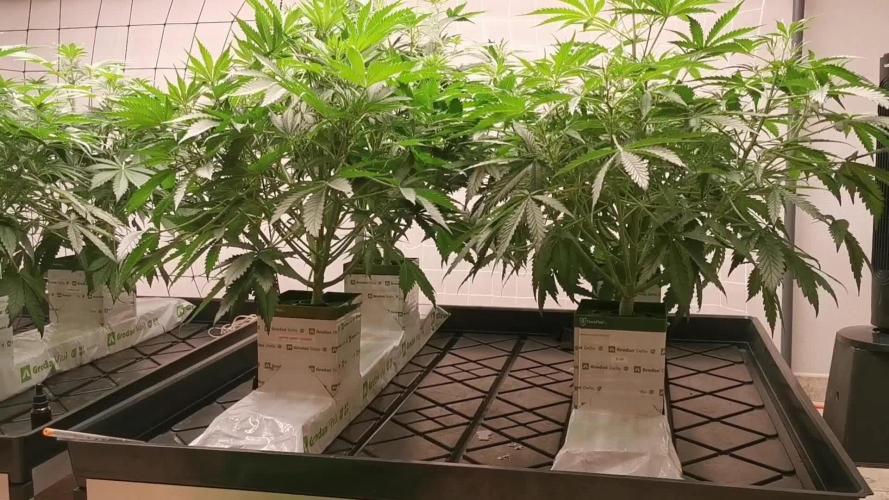
Day #08 - The seedlings are going pretty well into week #02. This week FloraMicro will be added from General Hydroponics, I've started using this since my last growth. I use the hard water version and I really like it. My plants seem to do definitely better with this nutrient added, so I decided to always use this nutrient together with my other nutrients. I also decided to try the FloraGrow and FloraBloom nutrients from GHE, as I've seen very good results with the nutrient line of GHE. At the end I will also use their Ripen, which gives the plants growth boost in their buds at the end of the blooming phase.
Day #09 - I decided to give the ladies a little more water, so I raised the water amount to 0.25 liters per day. Further on, everything is going very well!
Day #11 - The little ladies are going ver, very well if you ask me... Growing like a charm, at the end of the week I must be able to top them without any problem.
Day #14 - I wanted to top the girls, but I decided no to do that, as not all the plants have reached the right height. So topping is postponed until tomorrow.


Likes
8
Share


@CookiesAndCake
Follow
Day 100 | 03/04/2022:💧
I am back from my holiday today but I will only be able to harvest them at the end of the week, so I watered them today. but with a reduced 1L each because I still want them to be more on the dry side when I am taking them off
Day 105 | 08/04/2022:
Today was harvest day and the girls look sooooo dry and yellow omg.. 😅 Maybe that 1L was not enough, but still it's better that they are on the dry side. They just all went so yellow in the last few weeks, obviously they werent getting any nutrients but also I harvested them a bit late
Likes
5
Share


@killerjoint
Follow
8th days/Flowering /little change
10TH DAYS OF FLOWERING
DUE TO RAIN HAD TO TRIM BOTTOM -LITTLE EARLY
MY HUM WAS HEATING 70 TO 76 BLOWING FANS....
AND CHECKING FOR SEX
POP 9 SEEDS 100% SUCESS
AND ALL FEMALE
THANKS TO COPY CAT GENTICS.
11TH DAYS -FLOWERING
RAINING SEASON HAD TO TRIM BOTTOM FOR AIR VENTILATION
MY HUM HITTING 72%.......T T DUE TO RAIN RUNNING EXTRA FAN FOR AIR VENTILATION.
EVERYDAY PLANTS GROWING ABOUT 2 TO 3 INCHES
LET'S GO GOOMIES


Likes
4
Share

@Vet_J
Follow
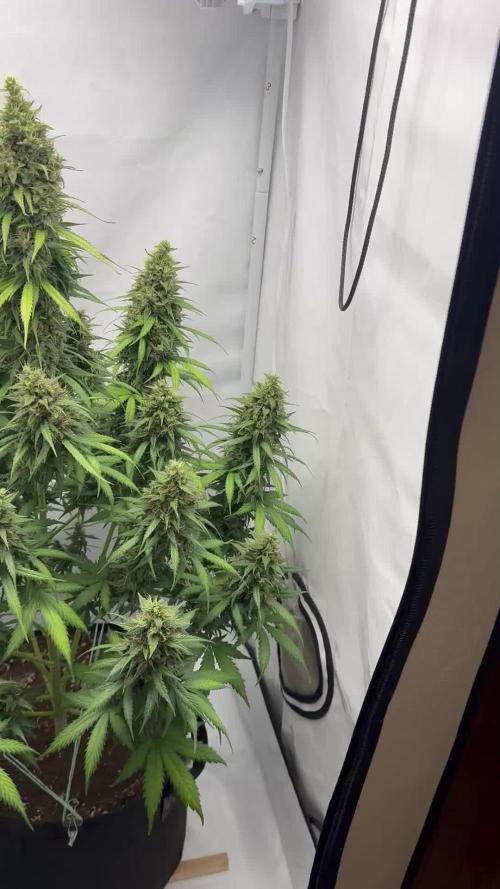
Getting ready for harvest
I flushed the plant with 30 liters of water with Flowless Finish 2ml/l
Input water 60-80ppm, pH 6.5
Output water at the beginning 1200-1300ppm
Output water when finished 150-200ppm
The trichomes of the plant look pretty good before flush about 90% of the trichomes are a cloudy milky color, while the rest are clear and amber.
I'm happy with the condition of the trichomes
I have about 7-10 days left, during which time I'll water it 2-3 times with distilled, pH-regulated water and then leave it in complete darkness for 24 hours
I think that will be enough time for 15-20% of the trichomes to turn amber.
But I'm not completely satisfied with the pistils
Somewhere around 20% of the pistils are white, mostly on massive buds.
The relatively lower buds look perfect.
I would give it more time but I'm out of town and I'm trying to get everything done in this short time, both drying and curing.
Can't wait for the final result.

Likes
13
Share


@TightNugs
Follow
First proper pistils today with some good stretch in the last few days,keeping me busy with defoilation and looking good.Slight smell but smells 👊bangin.
👍👌🍁

Likes
2
Share


@Clyde023
Follow
Thank you for joining for the ride, am looking forward to doing a couple more strains from Divine Seeds👍🏽

Likes
7
Share


@Danger90946
Follow
Day 8 11/01/2021- Welcome to another week of veg. Today I started LST.
Day 12 11/05/2021- Even though you can’t see she has already began to pre flower can see the white pistil coming out. I think I will switch my light to 12/12 on Monday to have my photo lemon start flowering as well.
Day 14 11/07/2021- last day of the week and also last day of Veg.
Likes
2
Share

@hassehujasse
Follow
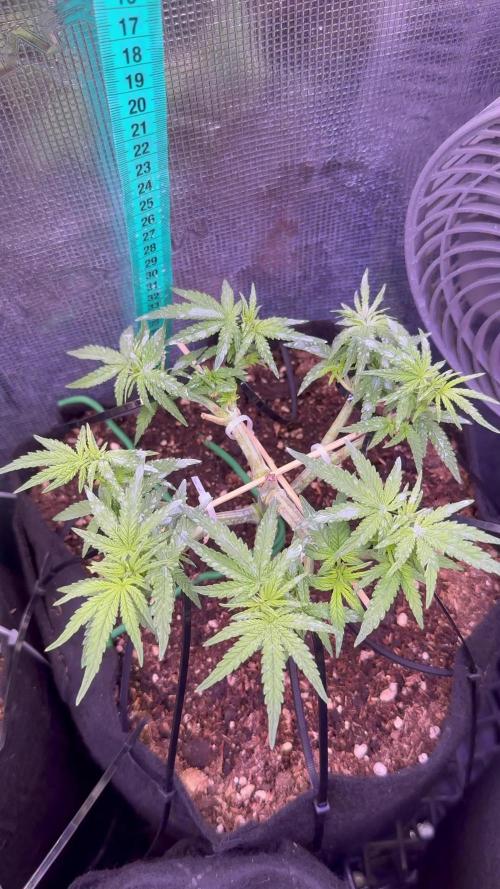
Have you ever been exceptional? 24/7/52/365/48??!!
With every new plant in my box bringing something new in my techniques
Likes
13
Share


@Rob691
Follow
D-70 : Chaco Haze. They just look amazing, even 1/4 is very small (about 40cm). At this stage she should be 60 or 70 cm high... Anyway, the flowers are doing great. I really hope the will continue to grow. I dream of a grow room full of flowers between 1 and 1.4 m high ! Still 8-9 weeks to go, so they have time :)

Likes
7
Share


@JamesBarre
Follow
Soleil, Chaleur, humidité et vent sont au rendez vous cette semaine 👌pour ma Orion F1 il manque juste une semaine ou deux de flushing et je pourrais la récolter. Ma weeding cake m'a fait un énorme bud principal et deux autres latérales, elle ne cesse de grossir 😋. Ma Mimosa et mon apple fritter (60cm) m'ont l'ai plus prometteuse pour une bonne quantité de bud comparer au deux autres (25cm environ) et mes cheese 🧀😁 me donne le smile, réussir des variétés à dominance sativas sur un balcon avec 6h de lumière direct le matin m'étonne moi même 😅
Likes
9
Share

@FireAntTheGrower
Follow
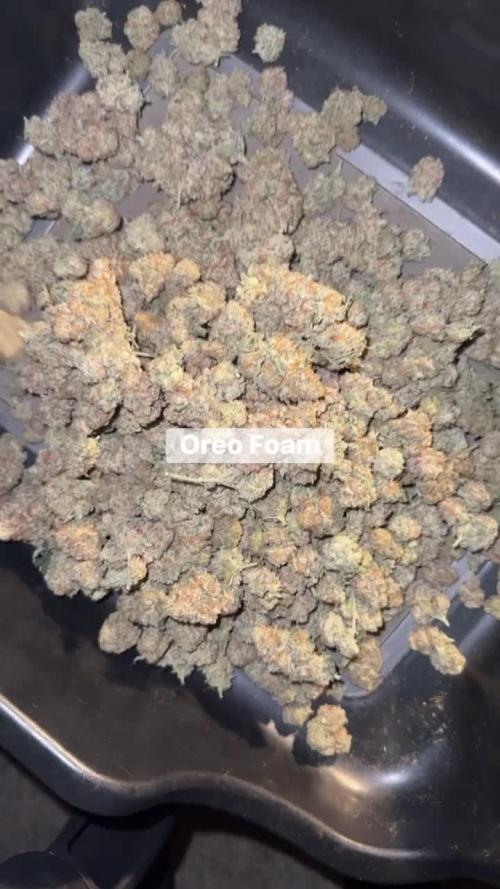
I definitely enjoyed and having cool cure definitely a game changer . Bout to test it out some more by leaving the buds or recent harvest inside the system. Thinking cutting down the time 4 weeks in veg and 8 to 9 weeks in flower to keep it coming and posted..
Likes
26
Share


@Reyden
Follow
LSD-25 deve essere una genetica bellissima dai tratti viola a predominanza indica ma che è capace di portarti con la testa molto in alto! Già da adesso il colore del gambo risulta più scuro più rosso delle sorellastre, questo dice molto del suo tratto genetico…voglio vedere come si svilupperà, non penso di fare dei particolari allenamenti alle piante ma solo una potatura delle foglie e forse qualche piegatura ma steremo a vedere…grazie @Fast_Buds per queste bellissime genetiche 💯
Likes
23
Share


@MissBudReefer
Follow
Amazing week for my girls they doing very well I'm so happy and proud of them. I make some clones from radical juice, washing machine and bubba kush✌️ stay tuned for more 😊 it will be amazing grow 😁

Likes
18
Share


@ganzigunnu
Follow
this week buds getting fat. everything as usual. end of this week gonna give second compost tee. buds are sticky some areas hard to reach therefore impossible to defoliate. I love growing forest.

Likes
6
Share

@kdifiori_
Follow
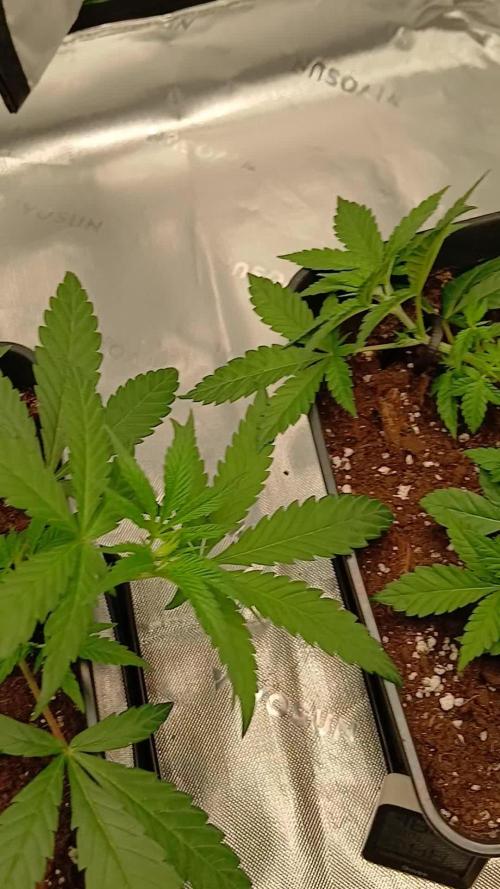
Week four for this beauty!
This week, one and half liter of water, a few tweaks to the LST, and, as always, lots of love! It doesn’t seem to have been stressed by the topping.
You can see how fast it’s growing.
Stay tuned!

Likes
8
Share


@Kirsten
Follow
31.12.24:
I have been readjusting the LST pegs and wire daily. Sometimes, twice a day! (I know, too much time on my hands)! 😆
The plants have responded fantastically! I'm so glad I gave it a go. Some plants have been a bit too tall, and I snapped Do-sì-dos P3, pulling the stem down. Audibly snapped 😬I let it be, though. It seems to have healed mostly, in only 2 days.
I have increased the lighting to 70%. They're getting watered a few times a week, with 1 litre of Dechlorinated water, containing the following nutrients and additives;
1ml of Biobizz Bio-Grow,
1ml Biobizz Top Max,
1ml of Biobizz Bloom,
2ml of cal-mag,
1g of Ecothrive Biosys.
The plants are responding well to this concoction, so it's all good so far. The leaves are looking greener and are getting darker.
Will be monitoring to continue readjusting the LST ties. Also, to monitor the increased lighting level, to make sure they can handle that yet.
1.1.25:
Happy New Year!
I have continued to readjust the LST wire and plant pegs. Several times a day.
Coincidence would have it, I have a 6ft tropical aquarium which was time for cleaning! I always water my Acer tree in the front yard with this water, with beautiful results 😍 👌 🍁 I decided to try it out in my indoor garden. I'll post photos of before and after to see the difference, good or bad 😅
3.1.25:
Plants are doing very well, except for PPP3 I'm quite disappointed in that one, as I feel like it's wasting a space. I guess I'll have to keep it, along with the Do-sì-dos that I snapped twice, which refuses to die 😅
I started to lightly defoliate, which is difficult because I always get carried away with it.
I'm going to water again with the nutrients in description of this week.
4.1.25:
Continuing to defoliate and adjust the LST pegs and wire.
Watered today with 1ltr of dechlorinated water PH'd to 6.0. With the following nutrients;-
2ml Biobizz Bloom,
4ml Biobizz Bio-Grow,
2ml Cal-Mag,
2ml Ecothrive Flourish,
0.2 g/ltr of Ecothrive Biosys.
I've increased the Nitrogen by adding double the amount of Biobizz Bio-Grow. I'm trying to keep them growing for as long as possible! I really want to keep the strength up and keep the leaves nice and lush green! 💚
Will update here with more photos and videos.
Thanks for checking out my diary 🍃 ✌️
Processing
Likes
3
Share


@Grownewgenetics
Follow
we arrive on week 4 and are happy to see the 3 Strains from @sweetseeds are getting ready to switch to blooming also be alert for our next Videos.
