


Likes
Comments
Share



Likes
96
Share


@The_Projexx
Follow
This is the start of flowering ! Day 5 now! Gave the ladies a light defoliation their tops are shooting up nicely I'm not sure if I'm going to have to train them but they are well on their way to getting me some lovely medicine ! I'd like to thank everyone who comes to the diary to show me their love :D much respect stay tuned folks ! The shows only begun !!! <3
-Happy Growing

Likes
15
Share


@Trueorganics84
Follow
I love this girl. She grows tall and fast. Super easy grow so far. Just starting to lst her a little bit more.
Posted 4 videos on how I make my tea. I use this When I start seeing hairs until the last 2 weeks.
Then I flush
Just a compost tea you see here.

Likes
11
Share


Likes
24
Share


@Stinkfox
Follow
She’s bulking up and putting on frost. I added a bit of Cha-Ching to her food this week. Soon I’ll be flushing and waiting. I can’t wait and will be sampling early. Heehee!

Likes
3
Share


@dvr147
Follow
12-16-2024 - Plants continue to do well. Found some rust spots on several of the leaves for the Granite Runtz...could be a bit of over-feeding as I top dressed recently despite being on Grow Dots...not too worried about it though. These guys are drinking like crazy so there is plenty of time between feedings where they're getting a little flush action. I'm going to guess that we're about 3-5 weeks out from chopping these down and I'm impressed with their size so far. Now I'm really just waiting for the buds to continue developing and see what kind of size we can put on these gals. This grow has gone unbelievably well and I feel like I have the tent dialed in pretty good. More to come!
12-17-2024 - Well this morning the girls got a bath in Recharge and Sweet Berry. They were very thirsty! The nuggs on these plants are getting massive and I'm expecting to see branches start to struggle to carry the load. At this point I'd say they're probably 3-4 weeks out from chop...but that is a very loose estimate. I'll keep a close eye on them as we go. Having so much fun watching these girls grow huge. CANNOT wait to weigh these things dry. I really think I'm gonna be close to a pound with this tent.
12-19-2024 - Got some nutrient burn going on with the Granite Runtz...just the top leaves and other than some orange speckles on the leaves the flowers look good and overall the plant looks healthy. The GR's have by far the thickest/most dense flowers of the three. The Frosted Cherry O's look very balanced and is the most attractive plant in the tent. The Mystery Seed, which is the only one I topped, is just growing in every direction and has tons of flowers but is clearly behind the rest in terms of maturity. I'd say in a few days to a week it'll be much thicker. Today I watered each plant with 3 Liters of dechlorinated tap water PH'd to 6.5. I'll take a look at them on Saturday morning and see how dry they are. Basically they're drinking a half gallon of water per day. Probably 4 weeks out from harvest is my best guess right now.

Likes
7
Share

@PavementPunk
Follow
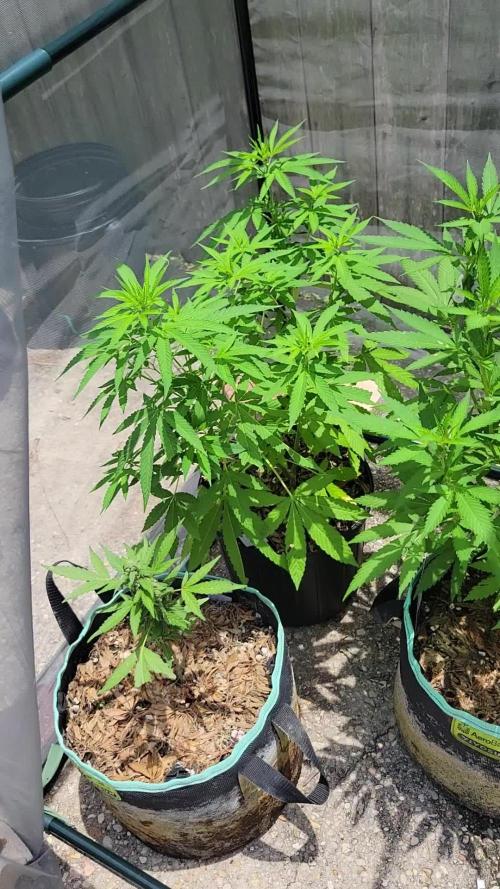
7/8/26 I really dont feel there is much to report on this plant or my whole grow in general. Maybe im just being lazy. I feel like it was just a bit of a normal week everyone got fed twice. I made sure to take my time and water them with care. Only real note is that i got a few spidermites in the tent. I caught it super early and manually squished them and hopefully its done. I did see one outside i believe. And thats got me wanting to lay down some pesticide to get rid of those bastards from around my house. This spit shot has been loving the sun loving it outside and is looking great. Photoperiod plants are the shit. Bad slow start? No worries just veg em longer and bang big gorgeous girl like woah now! 🙃happy growing friends ✌️
Likes
6
Share


@CanadianFillmore
Follow
Start of week 4. This girl did not stretch during week 3, but her bud sites continued to pack on size and take shape. She is very sticky to the touch, almost finger hash sticky, which is really impressive at this stage.
Likes
19
Share


@Lickey
Follow
Starting off the 5th week of flower. Buds seem to be filling out well.
Day32F - some minor trimming of larger leaves blocking bus sites.
Watering 2L about every 3 days. Wish I could lift the pots.
Add recharge about once a week.
Final feeding will be Gaia green 284 bloom treating the plants as 2 or 2.5 gallon rather than 5 since pots are over sized. maybe add some high phos bat guano and a little worm casting and kelp. All top dressed
Likes
8
Share

@BeskarBuds
Follow
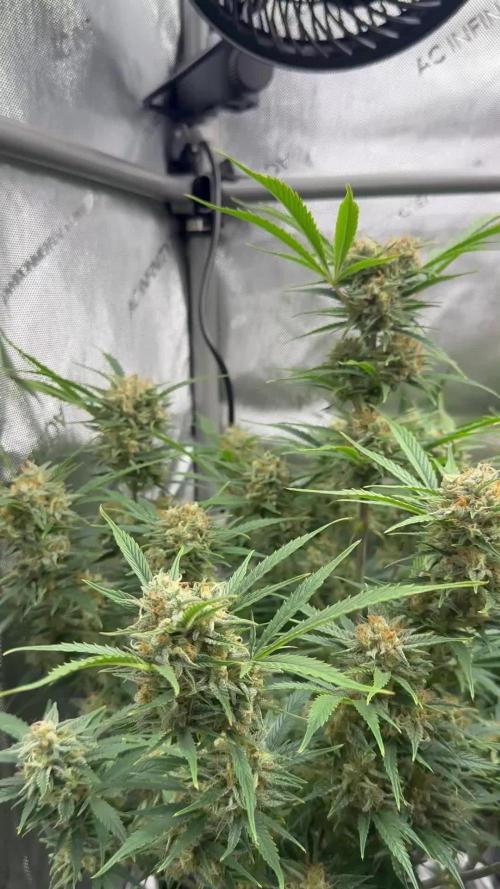
Finally harvest day is here! Bruce Banner Auto #3 was a pleasure to grow! It grew strong through some cold weather at the start and showed no signs of holding back.
Also had spikes of high humidity during late flowering stage which of course stressed me out however no bud rot whatsoever.
Strong easy plant to grow and can’t wait to see what the final bud weight will be for these 3 beauties. 😁
Final dry weight was 5.33 ounces of dried bud. Looks good, smells good, smokes good 👌

Likes
24
Share


@Dingle
Follow
Starting to see the buds really start to bulk up in size over the last few days.
Light is set at %100 power for the final phase.
Have done a good bit more defoliation again this week and am also continuing to back off with the feeds as I begin to flush out the medium.
It’s looking like possibly lights out next week depending on the trichome development.
☺️🤞🏻☘️✌️
🍧🍪🍧

Likes
8
Share

@UnitedStrainsGermany
Follow
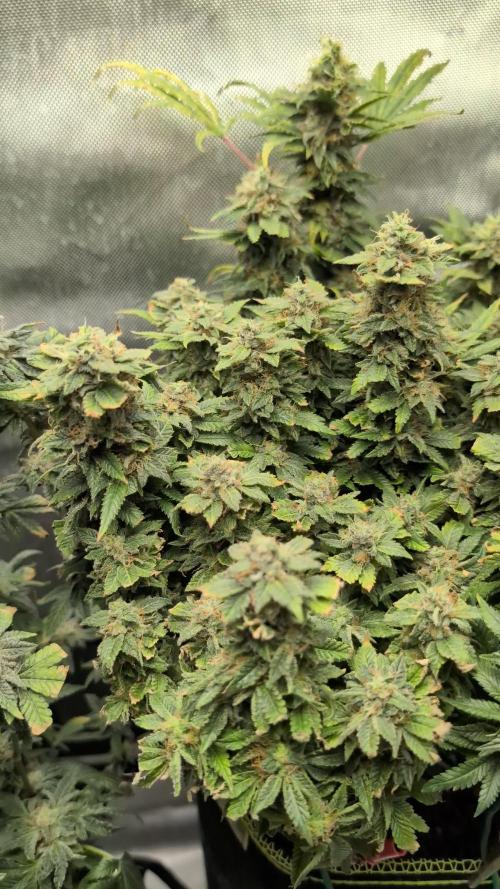
Sie legte soviel zu das gibt es nicht so durstig sie wird doch noch ein Biest!!!!!!!dachte das wird jetzt gar nichts aber sie will so arg Growmies!!

Likes
26
Share


@pifflestikkz
Follow
Day 29
29/07/24 Monday
Nice feeding today with De-chlorinated tap water pH 6.
Gave her 300 ml and she had a small run off.
Getting chunky in the stem now 💪💚
Day 31
31/07/24 Wednesday
De-chlorinated water pH 6 today with Plagron pk13-14 5ml to 5L
Plagron power buds 5ml to 5L
Used 300ml of the 5L solution.
I will be using these on water days from now on as they are advised to be used every irrigation.
We'll see how they perform 💪💚
Day 32
01/08/24 Thursday
Another feed today using de-chlorinated tap water pH 6, there now taking 300ml every evening.
Day 35
04/08/24 Sunday
END OF WEEK 😁
De-chlorinated tap water pH 6 today with Plagron products. 300ml each.
Had a issue with leaf invaders this week, I have treated and am checking every 48 hrs so far seems ok and not progressive.
All plants look great, very healthy, one of the Overdose is way behind and due to space maybe culled at flower I'll see how she gets on.


Likes
132
Share


@BudBoutique
Follow
Welcome to Bud Boutique Grow Diary - really appreciate all your love and support :)
Dont forget to check out my other current grows!
🗓️ This Week:
- bud developing is going further
- really a lot of trichs already on buds and on the sugar leaves itself - see night picture
- in general plants looking a little hungry so gonna increase Plagron Bloom from 4ml/l to 5ml/l and see if further adjustment needed
- started Plagron CalMag (5-5-0) for all
- stopped with Power Buds + Sugar Royal because of their high N to compensate the CalMag
___________________________________________
--- 🌱 Strain ---
🏷️ SWEET CHEESE by Sweet Seeds
https://sweetseeds.es/en/photoperiod-dependent-seeds/48-sweet-cheese.html
---💡 Lighting ---
💡LUMATEK ZEUS PRO 600
https://lumatek-lighting.com/zeus-600w-pro-29/
--- 🥗 Nutrients and Feeding
* 🍸 PLAGRON Algae Baseline grow/bloom + Additives: Power Roots, Sugar Royal, Pure Enzym, Silic Rock, Power Buds, Green Sensation
* 📅💪 baseline grow/bloow: 4ml/l & additives: 1ml/l each
https://plagron.com/de/hobby/produkte
--- 🏭 Grow Setup ---
* 🏠🌿 Indoor: Homebox 120x120x200cm (4x4)
* 📐🌀 PrimaKlima exhausting Fan 1180m3/h (running on 60-80%) & Can Light Filter 800m3/h & 1x Fanbox 1x Dyson fan for Air circulation
https://primaklima.com/de/shop/ventilatoren-de/ec-ventilatoren/pk160ec-tc/
https://canfilters.com/products/filters/
All Likes and comments are highly appreciated!!!
don't forget to check out my Instagram: budboutiquee <3
- Bud Boutique

Likes
3
Share


@High_Grade_Dadli
Follow
Set 1&2 are out the green house in an outdoor setting but still under light....did some transplanting gonna do the rest in the upcoming week hopefully n maybe take some cuts other than that everything else running smooth
Harvest the mother tree at the beginning of the week with would be about 6 weeks....took a few samples n she's hitting to say only dry a few days scent, flavor and effect are on point....still curing her out

Likes
43
Share


@Hilkes_Herbs
Follow
We are in week 2 of the flowering. Today I added Bloombastic. The plants forgot they were superscrogged and just grew as fast as before. The height can be a problem in the next weeks, I hope the stretch is over now and they can concentrate on building flowers.
Day 36 I gave them some more Bloombastic. And I took off almost every leave and small branch under the net because they would not get enough light and they shall concentrate on getting big buds instead of small flowers.
Day 37: Due to size problems I decided not to take a picture of every plant every day but one pictures of all a day. Plus when the flowers are getting bigger, I will stay focused on the growth on some of them (not all, that is business secret 😆). Also I will take pictures of the finished flowers at the end, don't know yet of all or just a few (business secret). But I will definately tell the weight of 'em all in the end so stay tuned 😎
Day 38: I knew I would get size problems again. I brought them all under the net again. A few branches broke during that action. But that's just the way it is. They are too big so I have to find solutions. My solution is "getting them under the net". Kinda works out but I will see the result tomorrow, today it's been kinda tricky not to hurt them.
Day 40: I put one branch under the net it was too high and did not get enough light because of that. Should be fixed now. The flowers are coming nice and slowly. I am so excited, I can hardly wait.
Day 41: I had to put some branches under the net again.


Likes
7
Share


@Busketts
Follow
Si vede la sua prevalenza indica ma dopo una bella defogliazione sono uscize fuori le prime cime. Bellissime non vedo l'ora finisca la fioritura . Sono veramente curioso . Promette bene.

Likes
2
Share

@3rnest
Follow
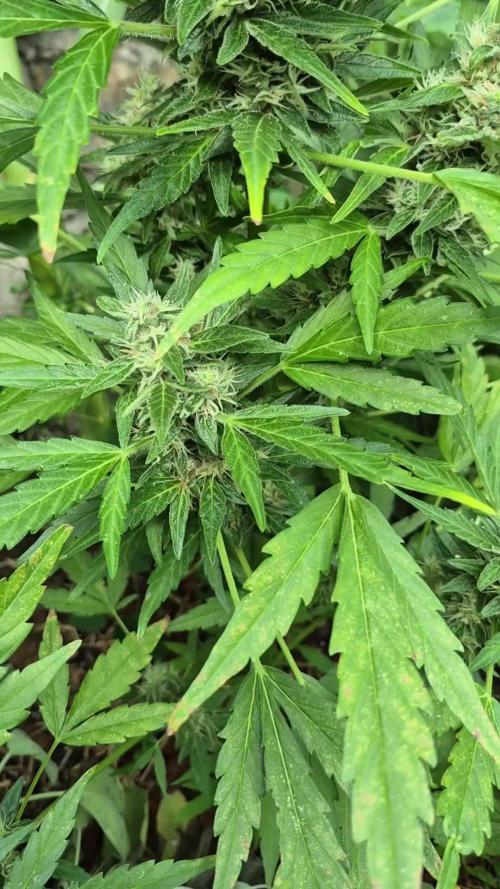
Leider war es im Gewächshaus letzte Woche zu feucht und ich musste die Pflanze etwas früher als gewollt ernten.
Ein Teil der Blüten hatte angefangen Schimmel zu bilden und ich musste die Spitze entfernen.
Likes
5
Share

@AestheticGenetix
Follow
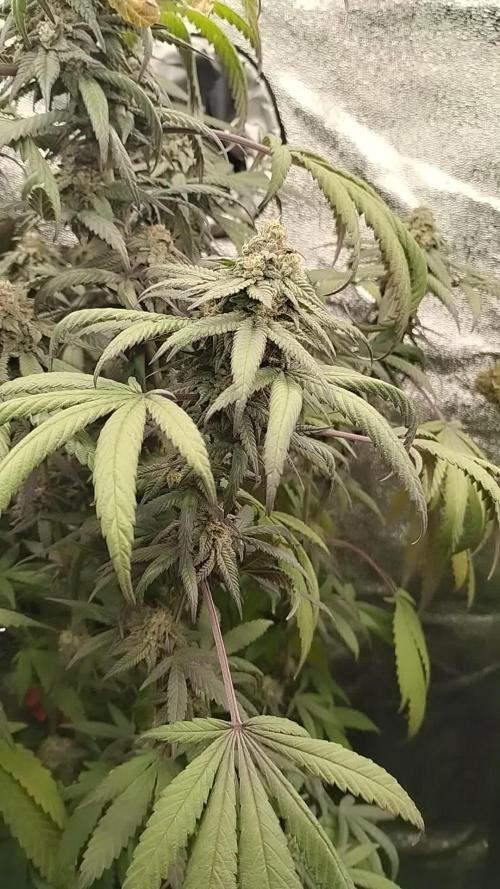
7/15/25 plant is giant. Been purpling since pretty early on. Fed her for the last time. 3tsp roots organics bloom booster, 2tsp microbe charge, 2 tsp uprising foundation
Likes
14
Share

@TherealNICOGREEN
Follow
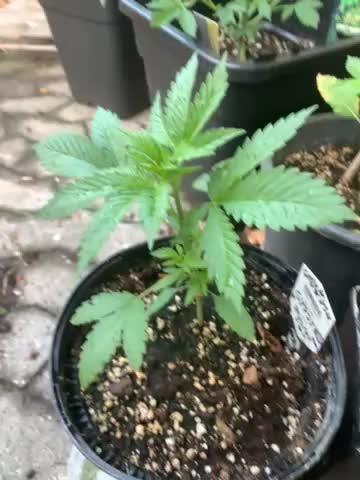
Er virkelig også rigtig glad for at hun kom så hurtigt udenfor og vokse🖤🧡💚☮️det er tydeligt at se at det og selen forskel på den ene KANNABIA 🖤🧡jeg har valgt at holde inden døre i telt . Så jeg holder mig til planen med pulver gødning og om plantning når de skifter fra grow til Blom stadiet 💚☮️🖤🧡.