Likes
Comments
Share


@dank604
Follow
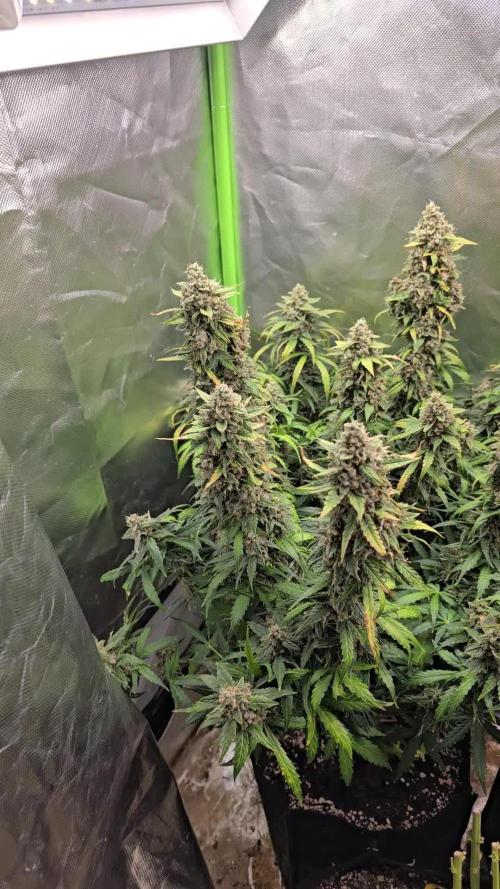
She had a mutant leaf but she kept on growing through it, it's a little funky still but not as bad as it first looked. She seems to be thriving now so all is good.

Likes
5
Share


@Weedganja420
Follow
Ya esta esta Zkittlez produciendo resina! Me esta gustado mucho como va avanzando, espero que se pongan grandes esas flores.
Empezare a aplicrle Silick Rock de plagron a ver como va! Seguro que genial conociendo la calidad de sus productos.

Processing
Likes
13
Share


Processing
Likes
11
Share


@Fibro_Witch
Follow
Still looks like crap but I'm letting her do her thing. I didn't have the heart to cull it, and I wanted to see how resilient this girl could be. I top dressed her and gave her some nutes. She's looking better than she did so that's encouraging. We'll see what happens in the next couple weeks until she finishes.


Likes
11
Share


@Ecogeek
Follow
Lost of changes these last few weeks in addition to changing the light position and duration I back off the feeding and giving both jst purified water. Did a flush today since their looking close to home plate. Had to do a heavy defoliation with some of the leaves on both plants. It looked like some mold developed but after cleaning the tent and letting the girls get bone dry to avoid it’s return everything is a go! It’s been a exciting and knowledgeable grow

Likes
2
Share

@Altitonans_Fulmen
Follow
The thoughts shared in this journal are my own—a snapshot of personal understanding at the exact moment of writing. It is not intended as a reference of absolute fact, but rather as an exercise in ἐπίνοια (epinoia): an exploration of thought, intuition, and creative insight.
Epinoia(ἐπίνοια) is a Greek term meaning thought, intention, purpose, or conception, stemming from "mind" (nous) and "upon" (epi), representing the mind's reflective or creative process, used in philosophy (Aristotle, Gnosticism) and theology to discuss understanding and divine names, appearing once in the New Testament for the "intent of your heart" (Acts 8:22). It signifies the mind's operation to form ideas or designs, contrasting with raw data or innate perception, and in Gnosticism, it's an emanation of divine wisdom (Sophia).
"Φsis" is a stylized spelling of the Ancient Greek word φύσις (physis), which translates directly to "nature" or the intrinsic essence of a living thing.
Exploring the deep intersection of science, intuition, and creative insight often leads to breakthroughs that challenge our understanding of what is possible. When we approach high-performance cultivation not just as a hobby, but as an exercise in pushing a biological system to its absolute genetic ceiling, the results can transform from simple data points into profound proof of concept. Achieving a highly optimized environment requires a shift in mindset away from empty promises and directly toward verifiable proof, building true confidence through a detailed archive of past lessons and strategic adjustments.
This philosophy turns a standard space into a precise mass and energy balance equation, where every variable is managed to eliminate biological bottlenecks entirely. In a recent project four individual plants produced 344 grams, 280 grams, 445 grams, and 255 grams respectively, resulting in a total harvest of 1,324 grams, or 47.2 ounces, of dry product. Operating with a 600-watt light source inside a four-by-four footprint, this brings the final efficiency to an exceptional 2.21 grams per watt.
To put this in perspective, the standard traditional indoor benchmark has long been established at 1.0 grams per watt, while expert commercial operations target 1.5 grams per watt, and elite commercial systems push the envelope between 1.8 and 2.0 grams per watt. Reaching 2.21 grams per watt places the outcome squarely within the top 0.1 percent of global benchmarks, acting as a true statistical outlier that demonstrates what happens when flawless environmental parameters meet a cultivar pushed to its maximum potential. Reaching this level of mastery demands that we move past the common trap of the mirror fallacy, where the ego mistakes its own limited perspective for universal truth and views different ideas as personal threats. True progress requires curiosity and dismantling the illusion that our immediate viewpoint is the objective standard, shifting the focus instead toward how a system actually operates under the absolute laws of physics. In a high-performance setup, maximizing output is never about adding random additives or forcing growth, but rather about systematically removing the limitations that hold the organism back. By maintaining a perfect vapor pressure deficit, ideal root-zone oxygenation, and precise structural canopy training every single minute of the cycle, the plant is freed to express 100 percent of its DNA potential without any lingering genetic latency.
Managing a dense canopy inside a tight footprint presents the ultimate challenge of mitigating stagnant air and preventing moisture issues. Overcoming this bottleneck relies on a sophisticated synganic approach, which seamlessly marries the precise control of synthetic mineral inputs with the natural resilience of active organic living soil. This method transforms the room into a closed-loop system where the internal microclimate is entirely isolated from external weather fluctuations and pests. Rather than openly exhausting the atmosphere, the air is continuously recirculated, enriched, and scrubbed using 264-nanometer ultraviolet light.
The foundation of this thriving ecosystem is a comprehensive substrate composition designed to provide perfect aeration, structural integrity, and biological buffering. The primary media base integrates expanded clay aggregates, coir chunks, premium coco coir, sphagnum peat moss, horticultural perlite, vermiculite, pumice, and volcanic basalt rock. To continuously condition the soil and fine-tune mineral availability, the mixture is amended with agricultural gypsum, wollastonite, dolomitic limestone, basalt rock dust, micronutrient-rich volcanic ash, greensand, crushed seashells, biochar, and shungite. This mineral architecture creates an incredibly stable environment where active soil biology naturally prevents salt toxicity and ensures steady, reliable nutrition throughout the entire life cycle.
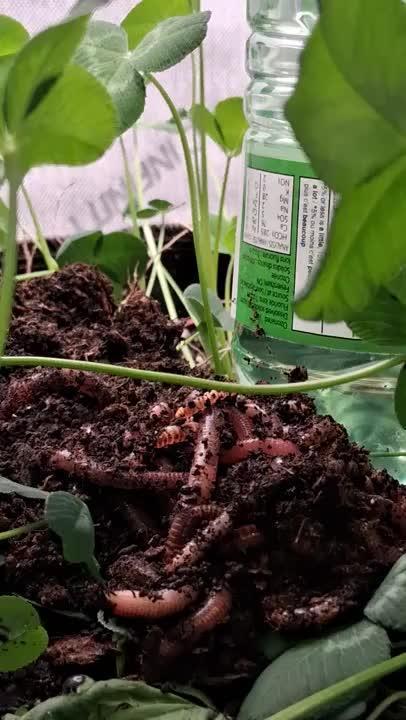
Living organisms within the substrate play a vital role in maintaining this delicate biological balance and breaking down organic material. Red wigglers continuously process organic matter into easily accessible plant nutrients while aerating the media; specialized predatory mites offer excellent biological control against common soil pests, and pillbugs excel at breaking down tough, woody elements. These biological components are further supported by a rich layer of organic amendments including high-phosphorus steamed bone meal, high-nitrogen dehydrated blood meal, fish bone meal, cold-processed kelp meal, dehydrated moringa powder, spirulina powder, and marine crustacean biomass rich in chitin. Combined with biological inoculants like mycorrhizal fungi, premium worm castings, and concentrated humic and fulvic acids, the entire system operates as a flawless biological transducer of light and energy.
Ultimately, shifting our perspective to view a grow space as a complete mass and energy balance equation changes the entire nature of agriculture. Success ceases to be a matter of luck or anecdotal habits and instead becomes the predictable result of meticulous design, patience, and the strategic elimination of failure. When science, biology, and engineering converge so harmoniously, we gain a deeper appreciation for the intricate natural systems that sustain life and growth. By sharing these detailed insights and refining our techniques, we can continue to unlock the absolute maximum potential hidden within the living world around us.
Comprehensive Substrate Composition:
1. Substrate Base & Aeration Media
Expanded Clay Aggregates (Hydroton Pebbles)
Coir Chunks & Horticultural Coco Coir
Sphagnum Peat Moss
Horticultural Perlite
Horticultural Vermiculite
Horticultural Pumice
Volcanic Basalt Rock
2. Mineral Amendments & Soil Conditioners
Agricultural Gypsum (Calcium Sulfate)
Wollastonite (Calcium Silicate)
Dolomitic Limestone (Calcium Magnesium Carbonate)
Basalt Rock Dust (Trace Mineralizer)
Azomite (Micronutrient-Rich Volcanic Ash)
Glauconite (Greensand)
Crushed Seashells (Calcium Carbonate Source)
Pyrolyzed Carbon Feedstocks (Biochar & Horticultural Charcoal)
Elite Shungite (Carbonaceous Mineraloid)
3. Organic Nutrient Amendments
Steamed Bone Meal (High Phosphorus)
Dehydrated Blood Meal (High Nitrogen)
Fish Bone Meal (Phosphorus & Trace Calcium)
Cold-Processed Kelp Meal (Ascophyllum nodosum)
Dehydrated Moringa Oleifera Powder (Botanical Nutrient)
Spirulina Powder (Arthrospira platensis / Cyanobacteria Nutrient)
Marine Crustacean Biomass (Shrimp & Crab Chitin)
4. Biological Inoculants & Organic Acids
Mycorrhizal Fungi Inoculant (Endomycorrhizae / Ectomycorrhizae)
Vermicompost (Premium Worm Castings)
Humic & Fulvic Acids (Concentrated Humates)
Human Body
65% Oxygen (in all liquids and tissues, bones, and proteins)
18% Carbon (everywhere)
10% Hydrogen (in all liquids and tissues, bones, proteins
3% Nitrogen (in all liquids and tissues, proteins
1,5% Calcium (lungs, kidney, liver, thyroid, brain, muscles, heart, bones)
1% Phosphorus (urine, bones, DNA)
0,35% Potassium (enzymes)
0,25% Sulphur (proteins)
0,15% Sodium (in all liquids and tissues) (in terms of salt)
0,05% Magnesium (lungs, kidney, liver, thyroid, brain, muscles, heart)
Plant
Mother-nutrients: Carbon 47%, Oxygen 43%, Hydrogen 4%.
Macro-nutrients: Nitrogen 3%, Phosphorus1%, Potassium1%, Calcium1%, Magnesium0.5%, Sulfur0.5%.
Micro-nutrients: All the rest combined 1%
More energy, more blueprint.
Although CO2 is a naturally occurring gas that both humans and plants use, it is invisible and odorless and can be fatal at high-levels. If you’re supplementing carbon dioxide in your grow room, ensure there are no leaks in any CO2 devices and always use a CO2 monitor and alarm.
0.02% Life unsustainable
0.03% Life OK
0.04% Current ambient atmospheric co2
0.04%-0.1% =400-1000ppm standard indoor co2.
0.1%-0.2% = 1000- 2000 ppm (prolonged exposure: drowsiness).
0.2%-0.4% = 2000-4000ppm (Headaches, fatigue, stagnation, stuffiness, poor concentration, loss of focus, increased heart rate, nausea).
1% is toxic
5% is quick death.
"Dabo vobis quod oculus non vidit, nec auris audivit, nec manus tetigit, quod in cor hominis non ascendit."
Likes
69
Share


@CHILLING_RACOONS
Follow
We are at the last week of this awesome strain. Now i flushed very well.
___________SOME DETAILS___________
***
this is another cycle with the amazing Vanilla Kush by Barney's Farm, one of the most famous strains in the '80 *.* <3
It is an amazing strain because it is one of the tastiest strain you can smoke, it is noob friendly, easy to grow with a normal flowering period (but it is a high yielding strain). The high is immediate and powerful, and it brings you to a deep state of relaxation.
____________________________________________________________
VANILLA KUSH™️? Cannabis Seeds Strain Specifications
Type: Feminised
Photoperiod: Normal
Genetics: Afghani Kush x Kashmir
Effect: Euphoria, Happy, Calm, Sleepy
Indoor Yield (g):up to 600 gr/m²
Flowering Time (days): 55 - 60
Feminised Outdoor Harvest Month: September
Feminised Outdoor Harvest Month Week: 3rd-4th week
Height (cm): 90/100cm
Height Indoor (cm): 90/100cm
Height Outdoor (cm): 100cm
Height: Medium
Indica %: 80%Sativa %: 20%
Indica/Sativa: Mostly Indica
Taste: Sweet Molasses, Vanilla, Sweet Lavender, Citrus, Earthy
Aroma: Vanilla, Molasses, Floral, Lavender
This is the link where you can buy this must have strain: https://www.barneysfarm.com/vanilla-kush-25
_____________WHAT I AM USING_____________
-LIGHTS:
Quantum board - 480w - 4x120w Boards by Zhoangshan Koray Opto-Electronic Ltd.
Samsung LM301B 288 led/board
+24led/board led Osram 660nm
Efficiency 2.6 umol/J 220 lm/w
Driver: Meanwell HLG-480H-36B
temperature: 3000k
Heat dissipator board: No
Noise: 0dB
Quantum board - 240w - 2x120w Boards by Shenzen Yuanhui Led Ltd.
Samsung LM301H 504 led
+24led/board led Osram 660nm
Efficiency 2.7 umol/J 220 lm/w
Driver: Meanwell HLG-240H-48B
temperature: 3500k
Heat dissipator board: YES 15MM
Noise: 0dB
-ESTRACTION FAN: Blauberg 125 Turbo Pro Series
Power: 42-50W
RPM: 1940-2620 minimum -1
Maximum air flow: 430-560 m³ / h
Sound pressure level at 3 m: 32-44 dBA
-FANS:
A)OSCILLATING FAN
Maximum consumption: 20 W
Minimum consumption: 17 W
Fan diameter: 15 cm
Housing diameter: 20 cm
Height with handle: 35 cm
2100 revolutions per minute
Two speeds
B) COMPUTER FAN Sunon DP200A - 230V
Nominal power: 22/21 Watt
Noise level: 44 / 49dB (A)
Rated speed: 2700/3100 RPM ± 10%
Air delivery: 95/115 CFM
C)Cornawall Electronics Multifan Turbo, three speeds, can be used both on support surfaces and mounted on the wall. High capacity, about 740 m3 / h, can be used in medium-sized rooms. High silence and reliability make it adaptable and versatile.
Technical details:
Rotation range of 90 degrees
Tilt adjustment
Three speeds of rotation
Suitable for wall and ceiling suspension
Power Consumption: 35 Watts
Air Flow: Approx. 740 mc / h
Operating noise: approx. 39 db
Diameter: 20 cm
Voltage: 220-240V
Frequency: 50Hz
Dimensions: L 28 x D 16 x H 28 cm
FERTILIZERS:
MAIN FERTILIZER BRAND: TOP CROP
I use these products:
-DEEPER UNDERGROUND: to stimulate roots system
-TOP VEG: for a excellent growth in the vegetative phase
-GREEN EXPLOSION: to promote creation of bud sites and to allow a faster growth
-MICRO VITA: bacterias for equilibrate the soil and to make the plant healty
-BIG ONE: to stimulate bud sites and to stimulate resin production
-TOP BLOOM: to achieve excellent big and hard buds
-TOP CANDY: to feed the buds with molasses for a tastier smoke and to gain weight
-TOP BUD: to enlarge buds and to gain weight
PLAGRON: PK 13-14 to have big and hard buds and to feed plants with lower effort
ADVANCED NUTRIENTS: Sensi Cal-Mag Extra-> for cal mag deficiency
GROTEK: cAL MAG for cal mag deficiency
HESI: PowerZyme to clean and balance the soil. It feeds the plant cleaning the soil.
GHE: - Final Part (ex Ripen) accelerate the final flowering phase, dissolves minerals in excess
- Flash Clean to flush the plant and to be sure that all excesses are out from plant and pot
These two products improve A LOT the smoke of our babies
____________________________________________________________________________________________
<3 Thank you for being here <3
Please leave a comment with your opinions, it is very important to us to have a comparison.
If you like our job, please, tap the weed button and follow us. It will be really appreciated.
Thank you again
Sweet hugs
CHILLING_RACOONS

Likes
12
Share


@Staffedition
Follow
Привет друзья. Моей растихе сегодня 48 дней.
Начал применять LST технику на 19 дне и продалжаю применять её через день, а 18 августа добавил ДЕФОЛИЗАЦИЮ
С 20.08 ДЕФОЛИЗАЦИЮ делаю каждые 3,4 дня
С 20.08 LST технику делаю каждые 4.6 дней
На сегодняшний день влажность 50%
Три дня назад заметил высокий Ph 7.9
С сегодняшнего дня Ph 5.8
Заказал погладитель влажности, отпишусь в следующем репорте.
Не смотря на высокую влажность и высокий Ph, растение растёт хорошо, генетика радует.
Всем мира и добра!
https://t.me/smail_seeds
#Smail_Seeds
Likes
29
Share

Likes
8
Share

@The_Doctor_Green
Follow
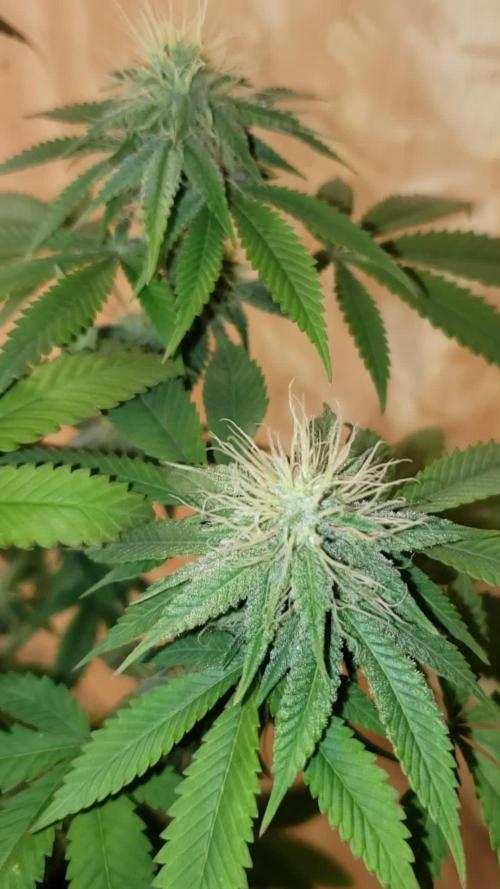
Hola a todos!!
En esta semana he regado con la misma dosis de fertilizantes que la semana pasada 2ml x litro de agua de top candy y top bloom de @TopCrop .

Likes
13
Share


@WhackyTobaccy
Follow
Almost into the home stretch. Will start looking at trichomes this week. Really hope the buds continue fattening on both the ladies.
Day 58 WC - growing strong. Don't know if we should remove any leaves or leave it as is. Thinking of waiting a few days to see how the plant develops.
Day 58 BCN - it's recovered from the lack of watering and the leaves are starting to turn yellow. Think that's normal for this far into flowering. Hope we can finish without further surprises.
Day 61 - fed both plants and did an additional 330ml of blackstrap molasses (5ml/l). Will start moving to flush in 10 days or so. Not sure if they're ready yet. 🤦♂️🏼Added short videos of both ladies.

Likes
2
Share


@johnjoe9525
Follow
new week did a small bit of LST. Not sure if things are imrproving with the calmag but i am seeing more growth but still little brown patched on the leaves but ill stick at it and see how it all goes.
I am wondering if i should remove any of the leaves with the brown patches etc but tempted to just let it grow and see where it ends up


Likes
1
Share


@eLeMeNt3de
Follow
Fast Germination with this one, started to show a nice healthy root in about 7 hours. Easy simple and quick germination.

Likes
1
Share


@PalmaGrow
Follow
12 - 18 noviembre
Se realiza poda apical en el nodo 6 y poda de bajos y hojas

Likes
5
Share

@pareto
Follow
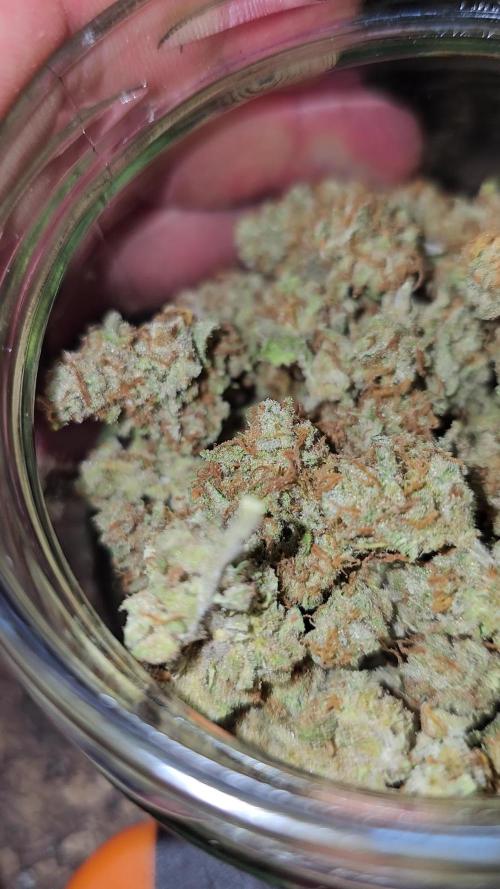
She looked so great but just didnt bulk up.
--------------------------------------------------------------------------------------------------------------------------------------------------------------------------------
Set up cost (fixed costs)
-Lamp: 40€
-Timer: 3,5€
-Pot: 4€
-Total fixed costs: 47,5€
Given 5 years (or 15 grows) usage time translates to around 3,17€ per grow in materials.
Variable costs:
-Seeds: 3,17€
-Soil: 6€
-Fertilizer: 3,50€
-Power (100 days 18h/day): ~25,92€ (exact figure after harvest)
-Total variable costs: ~38,59€
-Total costs per grow: ~41,76€

Likes
4
Share


@Jabbamo
Follow
_______________________________________________________
Mi. 25.3.
- 3,5 Liter pro Pflanze gegossen (ca. 200ml Drain)
- Rainpoint Bewässerungssystem eingesetzt
- 1L auf 3 Pflanzen Nährlösung per Hand angegossen
- Programm: 3min. ON / 3min. PAUSE / 3min. ON
- 2L pro Zyklus.
- 1L klar spülen zur Systemreinigung
1,2 ml / Liter "Calmag"
1,5 ml / Liter "Bio Grow"
4,0 ml / Liter "Bio Bloom"
4,0 ml / Liter "Top Max"
Ph 6,2 / 790 ppm
_______________________________________________________



Likes
8
Share


@DoMoNe
Follow
Following RQS auto guide : https://www.royalqueenseeds.com/blog-how-to-grow-autoflowering-cannabis-n83
WEEK 5: FLOWERING BEGINS#29 12.4. - #35 18.4.
#29 12.4.
-Opened new week with new pics and basic diary structure
-Noticed the temps have gone up to 29'c , raised lamps, will see if i can make the tent cooler by removing some instulations during this week, it should not go to subzero degrees outside anymore.
-Opened the side air intake hatch a bit to give more outside air directly in to tent, also took out the ventilation pipe so that the incoming air now comes in at plant height (not freezing temps anymore)
-Took out few fanleaves again
-Moved temp meter from soil level to middle of the pots
-Topped(or fimmed) the purplematic #2 which is non-LST, unlike the non-topped/fimmed purplematic #1 which is LSTd
-Should water now daily about liter / plant / 24h (with nutes) : Watered 2x 1,75liters with stated nutes
Mostly following https://www.royalqueenseeds.com/blog-how-to-grow-autoflowering-cannabis-n83 on waterings (1ltr/24h, so would mean 4-5liters in my tent)
#30 13.4.
-Opened 'side hatch' fully
-Didnt water, soil was moist
-Hopefully got the in-tent temp now lowered to steady 25'c, outdoors about 0-12'c daily for this week
#31 14.4.
-Once again removed all LST, the form of the plant still stays, might start ScrOG:n next week, possibly
-Added 1½liters Coke bottles to each pot, will see how much the water drains in a 24h, if it really doesn't, ill just lift the bottles tomorrow and let it run.
#32 15.4.
-Nothing here
#33 16.4.
-Removed bottles, added 1,5liters overall to pots and what was left of in each bottle to each pot
-Temps are keeping steady now, also Hum is what it says at the RQS's AF guide
-So far this week about 0,55liters/24h/plant, dunno if i should nor can increase the watering from current rhytm,
will see if i can draw a water line closer to tent so wont have to carry so much water, or get a 20liters containers or something
#34 17.4.
-Nothing here
#35 18.4.
-Water 1,5liter / plant (6liters in total) with normal nutes
-Nice grow after removing LST this week, will start ScrOGin next week
-Also have to defoliate next week way more as the plants are getting a bit too bushy

Likes
Comments
Share