


Likes
Comments
Share


@BudXs
Follow
Herb got my wig fried like a bad burn.
- Method Man
Ive committed to smoking this entire harvest in one sitting, one video take.
It is my Solo Sesh challenge. Join me for prizes.
Pm

Likes
9
Share


@Northstar_cannabis
Follow
Sour Jealousy has had to fight for it's space as its getting crowded, buds look nice, smell is delicious.

Likes
27
Share

@PhinolaGreen
Follow
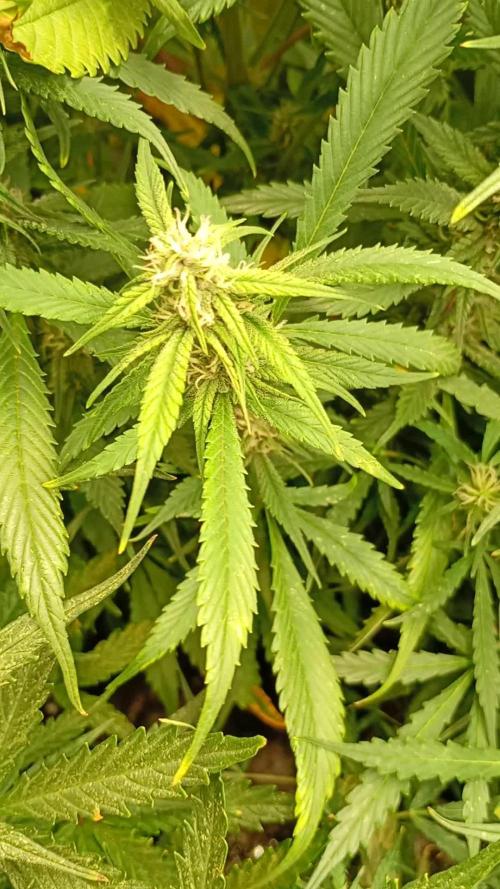
11. Woche
Strawberry Gorilla Auto RF3 Fastbuds entwickelt sich wirklich gut, ich habe letzte Woche einen Super-Cropp gemacht, meinen ersten überhaupt aber schaut euch Strawberry Gorilla an, das interessiert die gar nicht mit dem Cropping, die wächst einfach weiter wtf 🧐🤨😂😊
Likes
2
Share

@eldruida_lamota
Follow
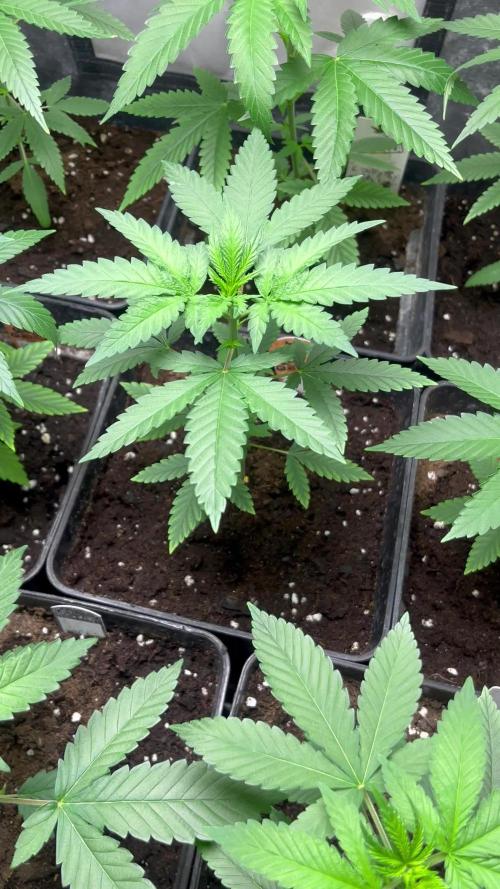
Vamos familia, actualizamos la quinta semana de vida de estas Runtz de MSNL.
La temperatura que estuvo entre los 24-26 grados y humedad dentro de los rangos correctos.
Todavía estamos en el ciclo 16 horas luz, 8 oscuridad, estiraron bien y ensancharon bastante también, el color es verde sano.
Se nota que los nutrientes de la marca Agrobeta hacen sus funciones.
También realicé una poda de bajos que yo si las veo necesarias para explotar después la flor.
- os dejo por aquí un CÓDIGO: Eldruida ,descuento para la tienda de MARS HYDRO.
https://www.mars-hydro.com
Hasta aquí todo, Buenos humos 💨💨💨

Processing
Likes
7
Share


@Kushizlez
Follow
Day 10F-17F
(Day 10F) Everything is looking on point. I’m going to soak in a gallon of lite compost tea diluted to 400ppms on each plant except for #5. I’m still a little worried I won’t make it through the stretch but at the same time I fear N toxicity just as much. I will give one more lite tea before the end of stretch, most likely at the end of this week.
(Day 12F) Ladies responded nicely to the tea except for BBB#1. It just isn’t looking as vigorous as it was last week. It’s the only one without an air hose so I guess it couldn’t hurt to grab one. The air hose does without a doubt prevent overwatering in soil and I’m surprised I don’t see more people using it. It’s cheap, effective and gives me similar results to growing in pure coco. I’m going to give one more light foliar spray of 3ml of calmag, 3ml of kelp and 2.5ml of insect frass.
(Day 14) Got the air hose hooked up to all 5 plants now.
I hate that I’ve been forced to defoliate so much in early flower and it is definitely reducing bud size. Last round my bbb’s had pistil clumps twice the size at this time and they were dealing with severe deficiencies. I’m hoping it’s just genetics or the fact they are larger plants.
(Day 15) I’m starting to see signs of N toxicity on the some of the new growth and overall growth on all plants except #1 has slowed. It was most likely caused by the foliar spray/tea combo. No more feeding anything for the next 12 days at least. Luckily it’s still pretty early in flower but I know that N tox can hit really hard after the stretch stops. I would be pretty upset if I vegged for 80 days only to get severe N tox in mid flower. Since it’s not breaking down in the soil, I should be fine. I’m going to defoliate some more of the large bottom fan leaves as they hold large reserves of extra nutes I don’t need. Hopefully these small defoliations aren’t stressing them at all. Next round I plan to do a big strip one week before flower, at transplant and a second big strip on day 21.
(Day 17) I think I was over-worrying about the seriousness of the N tox. I’ve seen it hit very hard in mid flower and can’t be too careful. It’s almost always caused by water soluble nitrogen so I’ll try to stay away from that unless I absolutely need it. My case does not look to alarming just yet. I noticed the stunting on #3 right after that last tea so I am going to stop giving the last liter of compost tea because of how unbalanced and separated at the bottom it is. It sure helped out the other 4 plants that didn’t get the granulars from the bottom of the bucket. I‘m planning to give a bloom tea around day 26 and a final top dress a few days later. #1 has now out stretched everything else in the tent. I honestly was not expecting that. If #3 didn’t get stunted this whole week I think it would be the taller/heavier plant.
Likes
53
Share


@Schnabeldino
Follow
end week 8.
------------
this week only water
from all Gorillas the buds look very sticky and frosty. when I open the tent, it smells very strong.
The 1 and 2 smelled pretty strong, chemically, the 3. more like citrus.
I will harvest
Gorilla 1 20.10.
Gorilla 2 22.10
Gorilla 3 23.10
I made videos and pictures of the trichomes.

Likes
49
Share


@Mosquito_Haarlem
Follow
Week 10 is begonnen.
De buds zijn flink in massa toegenomen.
Hoofd bud is dikker dan een cola blikje.
Echt een superstrain van Weedseedsexpress!!
Ik zal gedurende de week nog verse foto's updaten dus hou het in de gaten.

Processing
Likes
41
Share


@MadeInGermany
Follow
Welcome to the Sweet Seeds Cup 🏆
Hi everyone 🤗.
Today is day 30 of flowering (day 38 since the time has been changed to 12/12).
It just looks great 😍👍.
@SweetSeeds that's what I call masterful genetics what you conjure up 🤗👍.
It just grows perfectly, the lower shoots have grown to the upper level and have beautiful, steady stems.
They are so robust that I don't have to support them yet 😃.
I increased the Canna Bio Flores food from 3 ml / l to 4 ml / l a week because it now puts all its power into the buds 👍.
It already smells so good that you don't want to wait until it's fermented 🙈.
Of course I took cuttings from this fabulous genetic, and I am already happy to have saved them 🙏🏻.
I'm very excited to see what a taste will develop with these two super genetics by Kosher Kush and OG Kush .
I will go down about 5 cm with the lamp again for a week before I put it a little higher than it is now :-).
I wish you all a lot of fun with the new update, a nice start to the new week 👌, stay healthy and safe 🙏🏻.
Let it grow 🌱
Sweet Seeds Cup 🏆
Type:
San Fernando Lemon Kush
☝️🏼
Genetics:
OG Kush x Kosher Kush
👍
Vega lamp: 2 x Todogrow Led
Quantum Board 100 W
💡
Bloom Lamp : 2 x Todogrow Led
Cxb 3590 COB 3500 K 205W
💡💡☝️🏼
Earth: Canna Bio
☝️🏼
Fertilizer: Canna Bio
☝️🏼🌱
Water: Osmosis water mixed with normal water (24 hours stale that the chlorine evaporates) to 0.2 EC. Add Cal / Mag to 0.4 Ec Ph with Organic Ph - to 6.0 - 6.3
💦💧
You can Buy the Strain at :
https://sweetseeds.es/de/san-fernando-lemon-kush/

Likes
28
Share


@Harrythehat
Follow
Day 1
Top up 1 x 10 lire with 60 ml bloom
nutrient change tomorrow.
nothing near harvest yet
Day 2
nutrient changed refilled @ 60 ml per 10 litres
top ups will be 50 ml now
day 3
1 x 10 litre top up 50ml bloom
day 4
2 x 10 litres with 50 ml bloom in each top up
Still no signs of trichomes turning
used maybe 12/4 litres
nutrient use has dropped a little bit must be getting near to harvesting some soon
day 5
2 x 10 litre top ups with 50ml bloom in each probably used around 17 litres
day 6
2 x 10 litres 50 ml bloom in each used around 16 litres
last day of this week 1 x 10 litre 50 ml bloom



Likes
22
Share


@DevelGrow
Follow
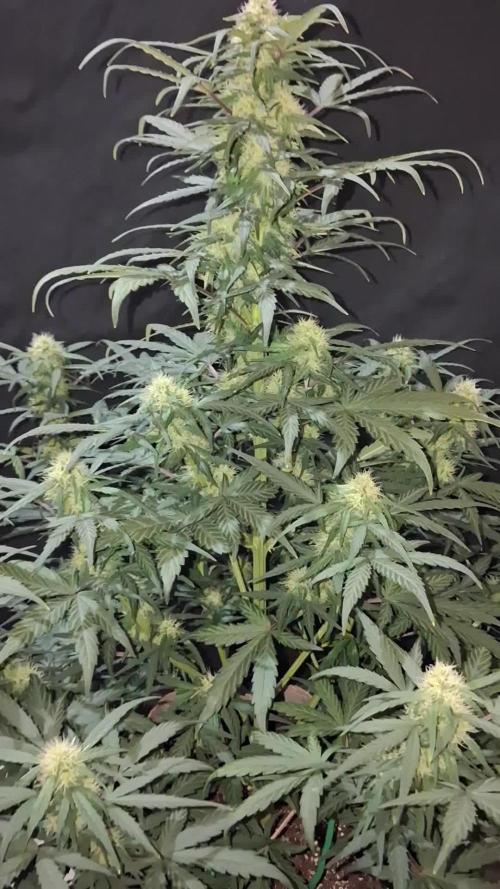
Hallo Freunde des grünen Daumens 👋🍀✌️ die Kleinen sind 14 Tage alt! Und legen einen schönen Start hin. Es Entwickeln sich die ersten Triebe und bin erstaunt wie schnell sie wachsen! Temperatur und Luftfeuchtigkeit liegen stabil in den Werten,im ganzen ein sehr entspanntes Gewächs die Version A ! Schauen wir Mal gespannt weiter wie Sie sich entwickeltn! Allen einen schönen Grow and keep Green 🍀👋
Likes
4
Share


@DivinePineMan
Follow
I have my Electric Sky 180v2 now in instead of the cheap 40$ for 4 lights i bought on facebook. Which were growing but nothing like this thing has been doing the past week. Im still blown away by the light but back to the plants. Doimg great i took some clones. First time ever so hopefully they root. I been sprayin em 4 -6 times a day. My 3rd g6jetfuel i took out of my tent with es180v2 and put in closet by itself with the 40$ cheap leds. It hasnt grown a whole lot compared to the tent plants g61 and 2...i thought maybe it may of had a male or hermi part but honestly i dont think it did bc i cant find it now. But its still in there bc i decided to throw it on 12-12 in closet to find out sex forsure. Ive been foliar spraying in my tent 3 timez a day. And 2 times a week i get 2 little drops of fox farm grow bif in my 10oz spray bottle of water.
Likes
6
Share


@Eauderay
Follow
Slowing down, packing on trichomes/resin, strong fruity skunk earthy smell so far, very sticky and looks very nice, flowers stacking in a rose like position, round and ball like.
Looks like a mini frosty rose! Only water this week.

Likes
14
Share


@b_deal
Follow
Well folks, this was a PPFD and CO2 controlled grow and I didn't use any bloom boosters like the Big Bud or Canna Boost etc.. Results are crazy.
I managed to collect over 760 grams of dried and fine trimmed nugs. The flowering lights is the LEDWisdom Coral 600W IP67 water and dust proof grow lights. For the first two weeks, I used Rosa 400W and Rosette 200W grow lights from LEDWisdom. When Coral arrived, I changed the light setup so the total lights used is 600Watts. Anyway Coral grow lights have near 3.0 umols/J efficacy and makes your garden yield like crazy no matter what. I'm sure I would have collected more if I used a bloom booster but I wanted to show you guys that you can achieve great results with a great grow light even without flower boosters. You can check my other diaries growing with the Rosa 400W and Rosette 200W. These lights are also killing it and they have around 2.7 umol/J efficacy.
Lights were drawing 590 Watts from the power outlet on the wall so I can say that the whole grow yielded more than 1.3 grams per Watt. These strains are not heavy yielders except the Chocolate Chunk but I only had one plant of this strain and she was the smallest plant in the tent. It didn't affect the total yield much. Pink Kush yields are pretty standart but the quality is exceptional. On the crossbreed strain, yield was slightly more than the Pink Kush plants and the yield from each strain is like below;
-Chocolate Chunk: 80 grams
-Pink Kush: 320 grams
-Purple Punch x Pink Kush: 360 grams
I made some COB's and also some kief and has with the trim. there wasn't much to trim in the end because I kept my plants in good shape. This was a joy to grow and now I have an amazing stash of high quality dried material stored in vacuum. I'm ready for another pandemic but I hope we won't have one 😅
Wish you the best of luck in your garden. Stay green 💪

Likes
12
Share


@VeeDro203
Follow
After seeing what Weekend at Garry's was coming along, I took another clone!! 👌
Also 1 lemon grab, 2 creature panics broke soil!!

Likes
Comments
Share


@Elguacho420
Follow
Buenas a tod@s... Vamos llegando al final de este cultivo, es verdad q al principio hubo algunas carencias pero de a poco fuimos solucionando todo, hoy en día están grandes, fuertes y absorben muy bien los nutrientes, en resumida cuenta están espectaculares... En 2 semanas aproximadamente ya estarán listas... Buenos humos para tod@s... 💨💨🤗😱
🇦🇷😎💀
Likes
10
Share


@Growmigos
Follow
Ich habe sie getoppt,hat kein stillstand gemacht und die seitentriebe schießen!! Sie hat sich in der letzten woche an volumen verdoppelt....
Likes
5
Share


@Jays_Not_Here_Man
Follow
#1 Has stretched up and out! If she continues to fatten as tight as the other two, she will probably be the one with the most weight. Her branches are the tallest and reaching up at least 4-6 inches past both her sisters. Her main cola has some light bleaching, nothing I can do about that, we’ll see how she wraps up.
#2 is going to be a producer! She has so many tips and they are all fattening and developing at about the same rate, she is going to be a beast! Her main cola is rock hard. Did a defoliation on her, she is appreciating the extra light penetration 😎💨
#3 is fattening up! She never did stretch, but then again I had her tied and trained pretty far out. She has been thirsty, I have been feeding a dose close to 700 ppm every other feed which has been every 3rd day for her. During the lower feeds, ppm has been around 275. Her tricomes are mostly clear, with some cloudy starting to show. She has the longest to go, but us already dense, and will only get better.


Likes
32
Share


@Bossman
Follow
Looks like I'm going to be satisfied with the autos and the photos their coming along fine very nicely. I super cropped the one outside and that's turning out fantastic


