


Likes
Comments
Share




Likes
6
Share


@HappyPetals
Follow
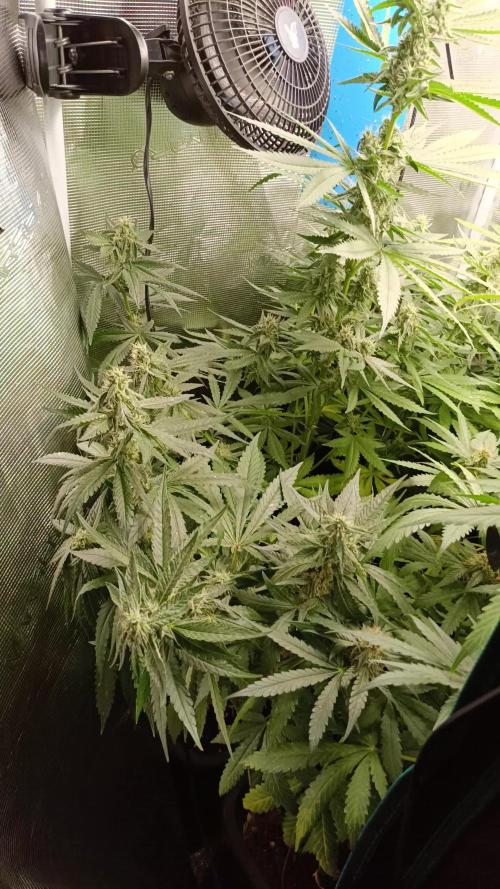
The girls are loving their new home and enjoying the heatwave we are experiencing here in Ontario. There was a big rainfall yesterday to break the heat so that was nice treat. I did spray them with a neem oil soapy mixture as I found a few bugs on the underleaves. Could have been aphids but I'm not 100% sure. Also found a few leaves that were munched on by Japanese Beatles. I've gotten rid of 2 of those Beatles already but seems to be the time of the season as they are all over my veggie garden too.
I'll probably move them closer to my garden beds next to some companion plants. Maybe it'll help with the bugs.

Likes
2
Share


Likes
5
Share


@Ninjabuds
Follow
The snow is really coming down out there. Big fat flakes are piling up on the ground, and it doesn't look like it's going to stop anytime soon. I guess that means no outdoor plans for today. Might be the perfect day to get cozy inside with a warm drink and a good book
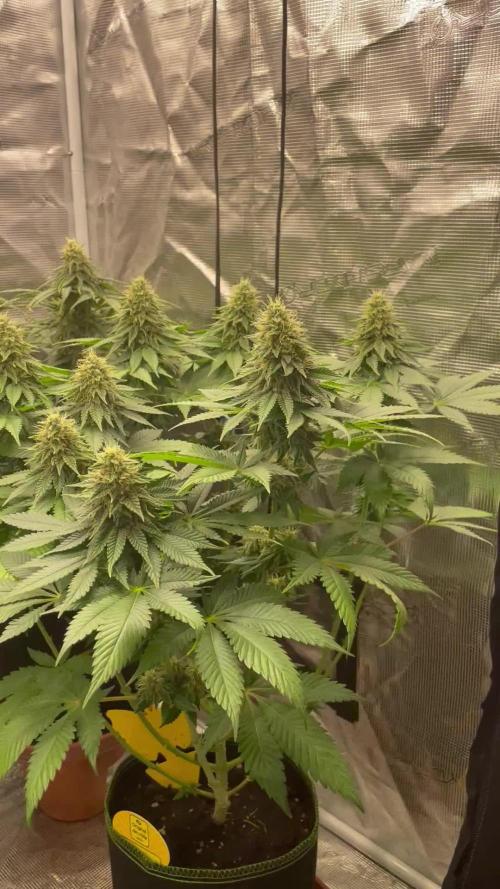
The pound cake auto plant is growing like crazy! I'm so happy to see all the progress we've made. Yesterday, I finally got around to tying it down – it's amazing how much more stable it feels now. I can't wait to see what this plant looks like in a few more weeks.

Likes
2
Share

@IIIStonerIII
Follow
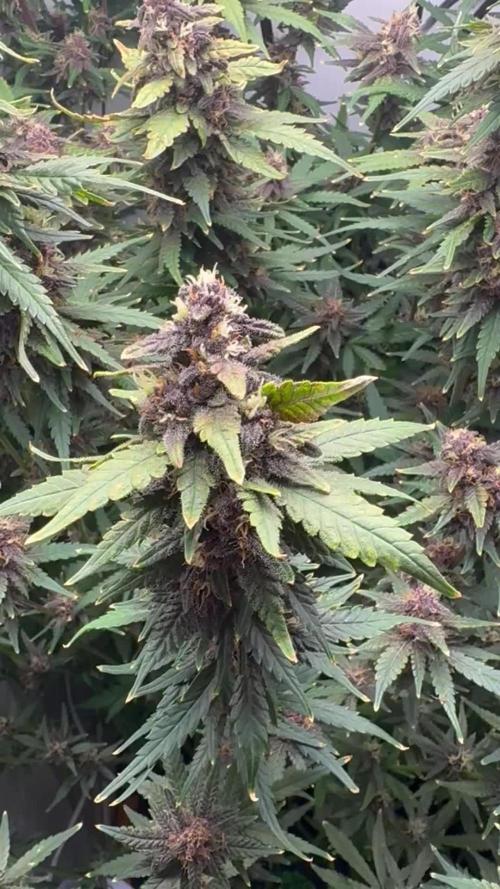
We are starting the last weeks. Ripening and trying to get them salts out before its harvest time. LSD-25 still the Star of the grow. And thats good, because its my favorite strain. 😁
Likes
7
Share


@Sunstonedgrows
Follow
Well the pas week has been a lot! We had some dehydration issues, did some defolitation, and additional LST to prep for flower. Starting today, this plant has been kicked into the flower tent and will be starting its journey!
Before we went to flower, I gave this guy 1tbsp of Dr. Earth tomato blend. Over the next week or so we'll be switching to Dr. Earth flower girl.
Cheers til next time!
-Dj Sunstone

Likes
11
Share


@Lazuli
Follow
These are the biggest buds ive seen on an autoflower, very dwarfy plant with major buds


Likes
52
Share


@GYOweed
Follow
Look at them roots.
Experimenting 2 gal fabric in 2 gal hempy. Easily added mykos by lifting it and also easy to sprinkle dr earth organic nutes doiwn there once you have a strong root structure
Likes
9
Share


@HUMO_Cultiva
Follow
Update of Goofiez 2 !! It’s incredible this strain is so strong and fast grow !! Stay tu ed

Likes
4
Share

@UncleJono
Follow
Hello All!
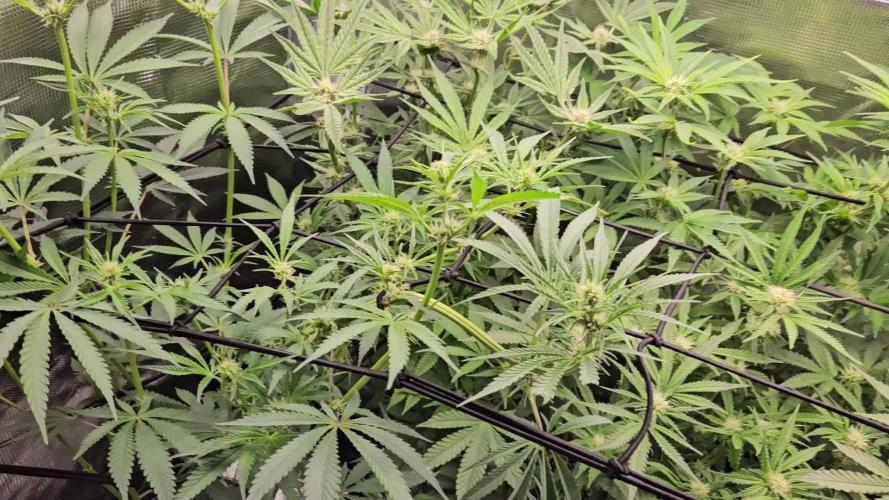
We have reached the end of flowering week 4!
Nothing to much to add except I am feeding the plants full strength jacks plus 1.2g MKP per gallon. The idea is to tap the ppm ceiling during the bulk. The plants are not unhappy and seem to be thriving!
GDP is super frosty halfway through flower- the smell went from grape pixie sticks to something that reminds me of hotel bar soap. I am excited to see howbthis bouquet develops
Purest Indica #2 began taking off this week as well, so it may be a quicker finisher than first expected
Every other plant is looking to finish around week 10 or sooner except sour diesel and strawberry cough. They seem a bit behind.. will keep an eye on their development and adjust their feed as we get later into flower.
As always, feedback and tips are always welcome! See you all next week!

Likes
6
Share


@Leonweed10
Follow
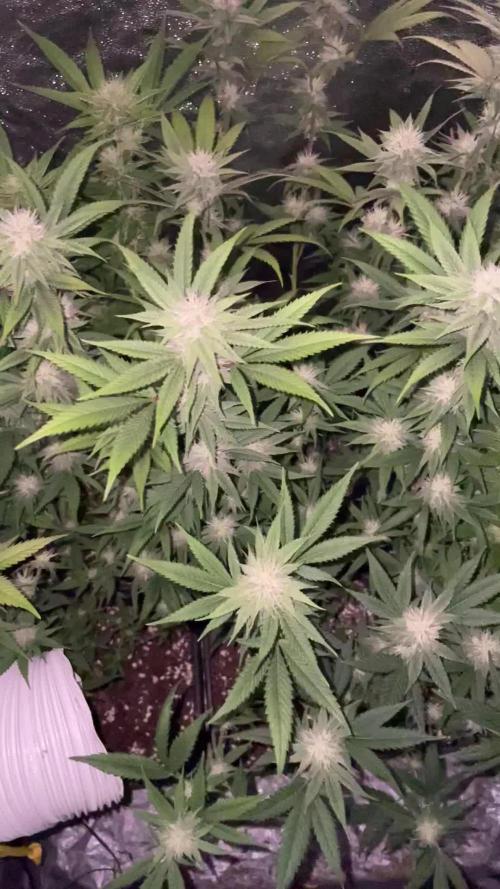
Segunda semana y comienzan a tener cada día más fuerza mis pequeñas hermosas, en el próximo riego ya comenzarán a alimentarce para su vegetacion




Likes
14
Share


@ExterminatorX
Follow
It's a New year, Happy 2024 Grow Diaries. Let's start with the video, I have been keeping an almost 12-12 on the plants, Watering heavy and feeding every 2-3 days. I am using additives to gain a resin boost. We are all in flower and doing fine after ICU 😓
One top cola was burned from the light creating a triple top. 2 seeds are the stars of the diary M1 and M2, although they're all FB420 seeds. I hope you enjoy our variety and the demographic information that I am sharing growing these seeds. Everyone Grow On 🤭😁


Likes
2
Share


@Ultraviolet_
Follow
Wakíŋyaŋ, I am who I am, the salt of the earth.
Thunderbird is an allegory; his conflicts with other forces in nature are then an attempt to allegorize relationships observed in the natural order, such as the changing of the weather. He is essentially an attempt to represent the patterns of activity of a powerful, mysterious force in a way that can be understood simply and easily – sort of the way in which a weather map functions today.
Moving from18x60x60 = 64,800 seconds in 18 hours.
64800x860(ppfd) = 55,728,000 umol per daylight.
Into Flower
12x60x60 = 43,200 seconds in 12 hours.
43200x1145(ppfd) = 49,464,000 umol per daylight.
It's asking a lot of Rubisco regeneration to maintain 50 DLI in the 12 instead of 18. Raised the ambient CO2 to 1200 to 1500 ppm to achieve efficient gas exchange.
Not particularly recommended, but adding sugar to an indoor growing medium is a highly effective way to stimulate microbial activity, which rapidly breaks down the sugars and releases CO2 through cellular respiration. You can safely capture this CO2 to fertilize indoor crops and boost photosynthesis. While this process works, the setup requires precise understanding and management to avoid common indoor growing hazards.
The plant Carbon to Nitrogen C:N ratio defines the balance between structural carbon (sugars/cellulose) and nitrogen (proteins/enzymes). It acts as a master regulator of plant health, growth, and metabolism.
Rubisco (Ribulose-1,5-bisphosphate carboxylase/oxygenase) is the engine of photosynthesis responsible for fixing atmospheric CO2 into sugars. It is intimately tied to the C:N ratio for three primary reasons. It is the Plant’s Biggest Nitrogen Sink, Drives the Carbon Side, and it is the Nitrogen Control Knob. Understanding this relationship allows you to predict how plants respond to environmental stress or fertilizer.
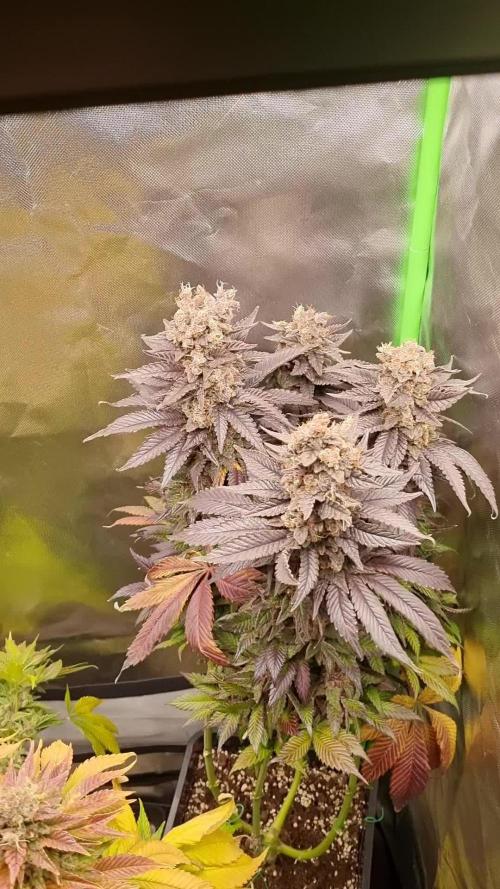
Rubisco acts as the primary storage sink for leaf nitrogen, accounting for up to 30% to 50% of a C3 plant's soluble protein. Deep Green Leaves signal a rich abundance of both chlorophyll and Rubisco proteins. The plant possesses the heavy enzymatic machinery required to handle 1145 PPFD. Pale or yellowing leaves indicate a nitrogen deficiency. The plant is actively breaking down its own Rubisco to salvage nitrogen for newer growth, drastically reducing its light-tolerance threshold. Subtle difference, but understanding is important in order to be able to judge when to dial light intensity up and light intensity down, when to push, and when to back off. An extra dose of magnesium is vital if a plant is going to push through the growing pains of high-intensity lighting.
Foliar application of magnesium is an excellent and rapid way to assist with Rubisco regeneration within a plant, so long as it is applied correctly.
Spray strictly in the early morning or late evening, mixing your magnesium with a little fulvic acid or chelator, but only when she gets a little limey on top.
This, for me, is the experience of growing, akin to "riding the surf" maintaining efficient Rubisco regeneration through visual identification of the shade of green. Surf a razor-thin wave when balancing light intensity, nutrient availability, and transpiration to maximize Rubisco enzyme efficiency. Keeping the Calvin cycle fully charged without tipping into nutrient toxicity, light stress, or the dreaded chlorosis requires paying close attention to the visual cues the plant provides. By monitoring these subtle shifts in color, turgor pressure, and leaf posture, you adjust your environmental controls and surf that exact razor-thin wave.
Nute recycling acts as the vital execution mechanism for autophagy, which defines senescence. Natural senescence is a genetically programmed developmental stage aimed at nutrient recycling, whereas triggered autophagy is a rapid survival response activated by environmental stress. While both processes utilize the vacuole to break down cellular material, their triggers, selectivity, and overall goals are entirely different. Cannabis plant senescence is not separate from nutrient recycling protocols; rather, nutrient recycling is the primary physiological purpose of senescence, and autophagy serves as the core switch mechanism executing both processes.
Takes about 24 to 48 hours to notice visible changes once the signals have initiated the autophagic response. Not too late at all. A little bit of fade from senescence 2 weeks from harvest is normal and genetically expected. Send the C:N 32:1 signal 1 week from harvest for the best effect in your organic grow.
Understanding what makes leaves fade is not always senescence, but also strongly linked to Rubisco regeneration. That's a whole other subject. Vital to understand the differences if you want a correct diagnosis and to transition from hobby grower to master stoner, differentiating between a true genetic fade and a decline in photosynthetic proteins.
Nitrate is nitrate, whether it oxidizes or not is not up for debate. If it's not sunk by the plant you are smoking some if not all of, it's regardless of what your feelings are on the matter. Senescence is highly critical. It is the natural end-of-life stage where the plant redirects energy to ripen flowers. Properly managed, it breaks down harsh chlorophyll, allowing the terpenes (which provide taste and aroma) to peak. Harvesting outside this window leads to an "unripe" or degraded flavor comparable to going without.
To initiate the response you seek, you can trigger it multiple ways, when growing synthetically its triggered by nutrient starvation, generally when the entire medium is flushed. This is more to do with N starvation than being entirely empty. Nonetheless. PK boosters are N starvation through maximizing P and K. (Generally only works for synthetic grows)
Normally, a medium only holds 10-30% of its nitrogen as ammoniacal ta part boosts this to 50% as it triggers the "ripen" signal, but you don't want to keep ammoniacal above 30% for more than 7-10 days if you can help it. Its a trigger mechanism no more.
PK BOOST with 50% ammoniacal N signals floral maturation.
PK BOOST with N starvation signals nutrient recycling/sinking.
Because you are using organic nutes and you want to maintain the rhizosphere, what you want to do is add carbon in the form of sugars (powdered molasses). It's almost impossible to empty a medium enough when microorganisms are constantly releasing nutrients into the direct EC. Very difficult to initiate starvation responses with ammoniacal nitrogen. Manipulating the C:N ratio is the key to triggering an autophagic response and resulting nutrient recycling in the last days using organic nutes and without having to flush.
Generally not recommended for new growers. So do what you want. But if you don't trigger the plant to dump its nitrates into root zones, you will smoke nitrates as NO3- does not oxidize during the dry and cure no matter what you do or how long you dry or cure. Doesn't matter what anyone "feels" about it, how many grows they had with no fade.
"Clover steals valuable nutrients."
Crop and drop the clover come flipping to flower, its benefit comes from creating an airy and porous rootzone. I don't need to crop and drop once the plant fills the canopy, she blotches out the light, and the clovers die. This is the nitrogen the microorganisms use to convert carbon for respiration throughout the flowering stage.


Processing
Likes
14
Share


@Smokwiri
Follow
Welcome to my RQS Roya Gorilla Auto diary
Weather is very cold and a lot of rain, so she's on survival in my outdoor tent
Flowering would set, but i think it was too cold.
so... let's hope for better weather
Likes
13
Share

@ThatsmyGrow
Follow
🌸 Week 7 – Gorilla Cookies Auto Pheno Hunt
Another week has passed and flowering is now in full swing across all 6 phenos 👀🔥
The differences between the plants continue to grow, and it’s becoming easier to see which phenos have the potential to become real standouts by harvest time.
📈 Current observations:
Pheno #1 and #6 have finally started to catch up and are now slowly building buds as well 🌸
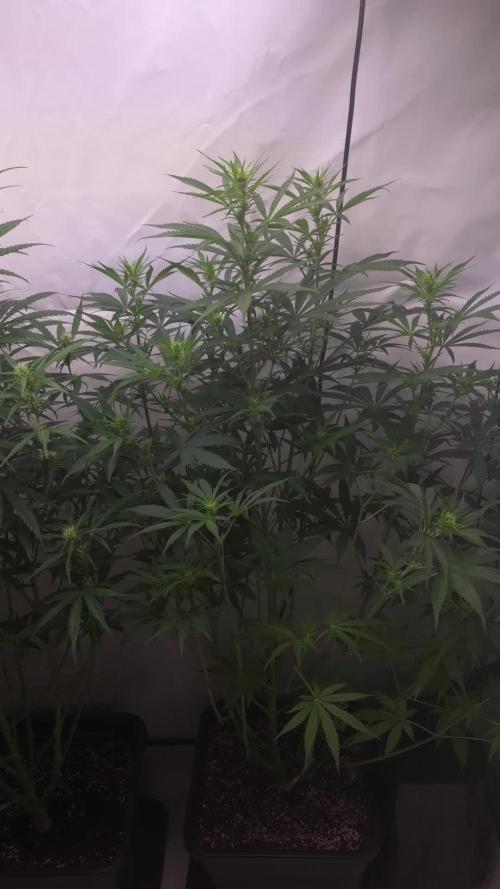
Pheno #5 continues to dominate the tent and has stretched to an impressive 130 cm
The flower development on Pheno #5 is especially promising, with some bud sites already suggesting the potential for 25 cm+ colas if everything continues as planned 🔥
Pheno #2 and #6 are being overshadowed by the larger phenos and are clearly falling behind in overall size and vigor
The structural differences between the phenos are now more obvious than ever, with some focusing on height while others remain more compact and bushy
💡 Environment & setup:
The grow has now reached its current limits in terms of space and lighting:
Light fixture raised to its maximum height
Light intensity increased to 80%
Summer temperatures pushing the tent up to around 32°C ☀️
Relative humidity averaging around 67%
Despite the higher temperatures, the plants are still pushing forward and stacking flowers nicely. The next few weeks will be all about bud development, density, and resin production.
🏆 At the moment, Pheno #5 is definitely demanding attention, but there is still plenty of time for surprises. Sometimes the biggest plant doesn't end up being the best one, and that's exactly what makes a pheno hunt so exciting.
💬 Which pheno do you think will come out on top when harvest day arrives?