


Likes
Comments
Share


@LocoT
Follow
Comenzaré este diario con un esqueje de una Moby - D de BSF, este es un esqueje bastante particular ya que salió por casualidad, se me quebró la planta madre en la punta y tuve que realizar un corte en diagonal con tijeras desinfectadas para completar de cortarla. Esta punta ya tenia aproximadamente unos 4 a 5 centímetros de altura, por lo que inmediatamente lo puse en un vaso con agua. luego de la pena porque se me quebró un lindo apical, pensé en untar el esqueje en un poco de aloe vera y pasarlo a un vaso plástico de 0,5 Litros, en sustrato Light mix de biobizz. pero el sustrato lo mezcle con perlita para intentar mantener mas la humedad. una vez listo el esqueje en su medio de propagación lo deje 24 horas en oscuridad absoluta para luego darle por 4 semanas de luz del tenue de (30w) (14 luz / 10 oscuridad).
23 de octubre: Le agregue mulch de trigo a la maceta.

Likes
95
Share


@Canna96
Follow
Love this strain, will be growing again for SURE!. I can't wait to smoke and press this flower, she is sticky, stinky, and dense..... Perfect strain for mainlining/manifolding. Only took me 3.5 hours to wet trim, and she should yield around 12 zips of frosty sticky nugs. Sweet Seeds knocked it out of the park, and I am a huge fan of African Tai, which is in this lady, and I can't wait to give a smoke report.... Hope everyone is having a great weekend, be safe and blaze On!!!


Likes
33
Share


@HinduGod
Follow
WOW LOOK AT DAT!!!! DAT PLANT IS STARTING TO GET DA FADE ON!!!! IT SHOULD BE DONE IN DA NEXT 10-14 DAYS!!!! TODAY I SET UP DA HINDU DRIP IRRIGATION YOU CAN SEE IT IN DA VIDEO IT WORKS VERY VERY GOOD!!!!!!😎

Likes
18
Share


@Staffedition
Follow
Привет друзья. Моей растихе сегодня 71 дней.
Был в отъезеде, не поливал. В связи этим растение не много подсохло.
Как придёт в чувства. переведу на цвет.
Начал применять LST технику на 19 дне и продалжаю применять её через день, а 18 августа добавил ДЕФОЛИЗАЦИЮ
С 20.08 ДЕФОЛИЗАЦИЮ делаю каждые 3,4 дня
С 20.08 LST технику делаю каждые 4.6 дней
На сегодняшний день влажность 54%
26 дней назад заметил высокий Ph 7.9
С 48 дня Ph не ниже 5.8
На сегодняшний день Ph 6.0
Начал кормить с 60 дня Canna Terra Vega
PPM 550
Погладитель влажности, выполняет свои функции. Посмотрю на динамику.
Всем мира и добра!
https://t.me/smail_seeds
#Smail_Seeds
Likes
2
Share

@MrLahey
Follow
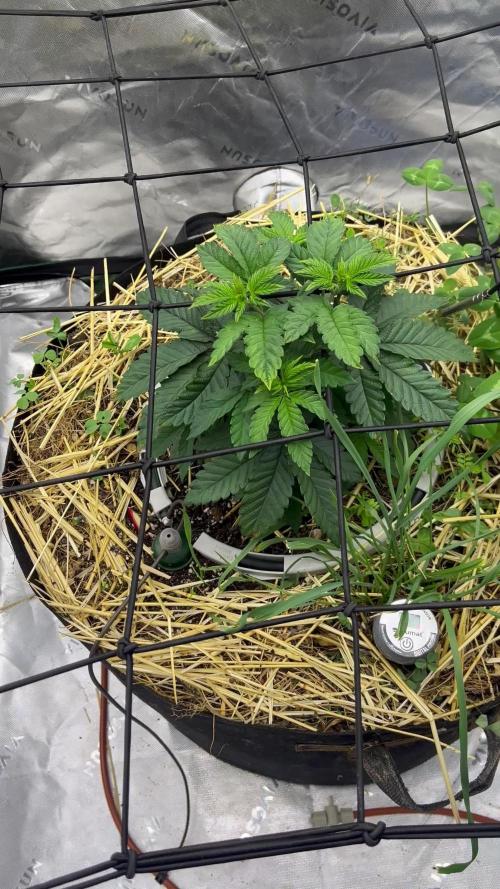
Gotta say I’m absolutely LOVING this blumat system now that I got it dialed in after absentmindedly changing the settings when I first got it. Soil moistness is getting to low 40’s. I turned the valve back a smidge to get it into the 50’s at its moistest.
New fan leaves are looking a little funky. Thinking I may have overdone it on the amendments maybe when I transplanted. Other than that things seem to be going well.
Gonna scrog her out for a few weeks then flip. I need to get those temps up to get some quicker veg growth. That’s the main downside to having my tent in my basement.

Likes
27
Share


@eldruida_lamota
Follow
Bueno pues ya llegamos al final familia, do sweet dos es una variedad bastante productiva. De cuatro plantas casi 180gs y la verdad que bastante contento, no tuve tiempo para poder hacer más fotos y trabajar más este post pero con la prisa y la mudanza pues bueno, bastante e cosechado.
Humedad en el secado relativamente baja al 40% y la temperatura estuvo entorno a 23 grados ambientales.
Hasta aquí todo familia, os recomiendo también la gama de productos de agrobeta, ya que los resultados son llamativos.


Likes
25
Share


@Sators
Follow
Day 43 does some bottom leaves trimming.
Day 46. Watering with 2.5L nutrients mix.
Likes
25
Share


@m0use
Follow
Fun little week for these ones, was making some more LAB serum and one of my containers was contaminated with a fruit fly and it laid a fuck ton of eggs that turned into maggots. the one container that was still safe is getting made into a cheese and the left overs in that where mixed with the water for this week. Giving it a lovely boost of lactic acid and bacteria.
Plants look to be hungry, hard to focus on them outdoors vs indoors and hit the correct PH range plus monitor the runoff for accurate feeding. o well.
Likes
35
Share

@eldruida_lamota
Follow
Vamos familia con la décima y última semana de floración de estás Cereal Milk de RoyalQueenSeeds.
La temperatura está en 22 y la humedad actualmente está en 45%.
La cantidad de agua cada 48h entre riegos no cambia, y por supuesto controlando el Ph entre riegos alrededor de 6.5 - 6.2.
Ya se ven bien sanas estas 5 cereal milk, tienen un color y una salud espectacular, y ya están desprendiendo buenos aromas, vemos como han madurado las flores, ya estallaron.
Ya llevamos 2 semanas solo con agua, les daré machete ya en que acabe secar la maceta.
Mars hydro:
Code discount: EL420
https://www.mars-hydro.com/
Agrobeta:
https://www.agrobeta.com/agrobetatiendaonline/36-abonos-canamo
Hasta aquí todo, Buenos humos 💨💨


Likes
5
Share


@Dunk_Junk
Follow
Wow all her pistils have changed colour! Trichomes all milky!
She's absolutely smashed flowering quick!
She is as frosty and smelly as can be!!
Will be harvested within 24h.
Likes
67
Share

@Mr_und_Ms_Lue_Roots
Follow
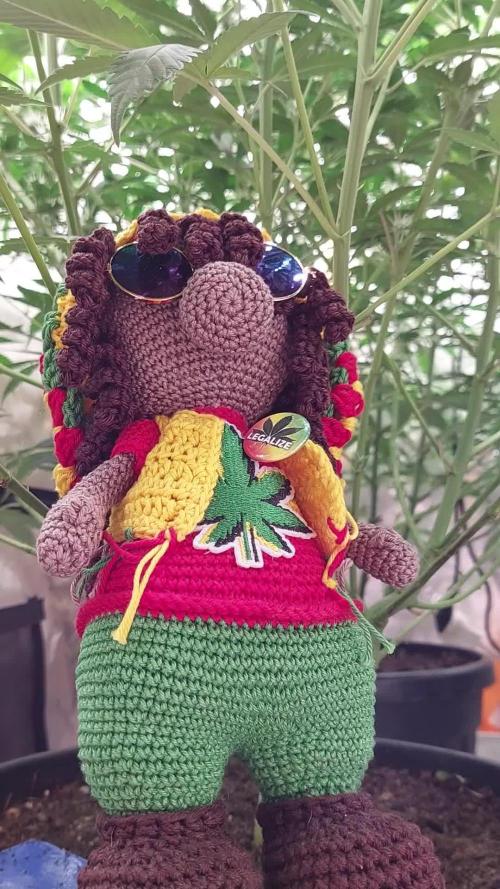
Hallo und herzlich Willkommen in Woche 16/ Blütewoche 4
So die dritte Woche und somit eine sehr aufregende und spannende ist vorüber. Der Phosphor und Kalium Bedarf erhöht sich in dieser arg und zu einem schlich sich ein Calmag/ Kalium- Phosphor defizit ein. Wir müssen das jetzt noch mal Korrigieren. Licht bzw. Wärmestress lässt die Blattspitzen der Sonnensegel auf Mittlerer höhe nach unten zeigen. Viele Symptome überschneiden sich beim nachlesen. Aber das macht es auch so spannend 😉
Zwecks der Hitze werden wir auch die LED Lampe auf 600 Watt stellen.
Wetter:
Da sich durch die Anfangs mistige Erde sich alles um gute 2 Wochen nach hinten verschoben hat, befinden wir uns jetzt eher in einer Periode, mit sehr hohen und Trockenen Temperaturen.
Demnach und das war auch schon lange ein Wunsch, haben wir jetzt ein Klimagerät installiert. Unser Streben darin werden keine absoluten Idealtemp. sein sondern so, dass es den Pflanzen nicht zu unangenehm wird. Das bedeutet das die Höchsttemperatur im Innenbereiches des Zeltes ca. bei 29- 30 Grad Celsius liegen wird.
Ja ansonsten sieht es ganz okay aus :-)
Die höchstwachsende Cola haben wir ein wenig zur Seite runter gebunden und passt jetzt schön zur Höhenebene der anderen Lebensgefährtinnen.
Bisher sind auch keine Anzeichen von HEMA und auch die Trauermücken wurden von den Nematoden Sichtlich unterdrückt.
Zu den Thripsen: Trotz Blausticker müssen einige noch vorhanden sein.
Ansonsten war es das erst einmal und wünschen somit allen Growmies einen schönen chilligen Sonntag und eine Erfolgreiche neue Woche!
Vielen Dank im Voraus, an all diejenigen die unseren Report Besuchen, kommentieren und oder auch liken!
VG!
Likes
57
Share


@DudeGrowsWeed
Follow
Auto Lemon is coming along beautifully 😃 Buds are fattening, white hairs are turning orange, there is frost everywhere and she smells great! Gave her Recharge and Big Bloom again today. Using Recharge at full recommended dosage and Big Bloom at half recommended dosage.
Auto Lemon is back-center in the group pics.

Likes
1
Share


@JBsTastyBudz
Follow
One is almost done... One is way taller than the other for some reason... Wonder if anyone had experienced that.... Like a Sativa dominant pheno and a indica dominant pheno... Pretty wicked man ☺️

Likes
207
Share


@DogDoctorOfficial
Follow
Last week wen smooth as it is supposed to go, girls are loving the conditions so its time to start feedings, for this run I’m using all in one pallets as food and just watering with Regulator ( a must in my water) and some microbiological help and iff and wen needed, only them i will complement extra N, P or K as needed.
Caps off to VIPARSPECTRA , so far so great 🌱🙏💚
All going smooth, not much to say, today I changed the gopro setup to a top view , lets see with one stays better on the time-lapse , fell free to comment and leave your opinion, and if you use gopro or other camera to do your time-lapses, i love to learn about others ideas and ways to do things 💚💚💚
You can check out last week timelapse here https://growdiaries.com/diaries/126067-grow-journal-by-dogdoctor and if you in to timelapse stuff i have just recently uploaded the Magnum auto Timelapse just for fun here https://growdiaries.com/diaries/105893-grow-journal-by-dogdoctor , hope you guys enjoy it 💚💚💚 growers love and one more week up we go 🙏🌱💚
And with enormous honor and pleasure that i start collaborating with Zamnezia and Viparspectra
For this run i will have the pleasure of growing some Runtz genetics from Zamnezia seeds that they wore kind enough to send me for test and review 🙏🙏🙏💚💚💚🙏🙏🙏 and for the testing and reviewing i was blessed with the VIPARSPECTRA model P2000💚💚💚🙏🙏🙏 they wore amazing and send me this LED light for me to do some testing and some reviews. Special thanks to Zamnezia and to Viparspectra for this opportunity, lets make magic together 💚💚💚🙏🙏🙏
All i grow is medicine for myself, for me and for my best friend with is me 😆 nothing to sell, so don’t even ask 😅💚💚💚
All info and full product details can be find in can find @
https://viparspectra.eu/collections/grow-lights DISCOUNT CODE - DOGDOCTOR
https://www.zamnesia.com DISCOUNT CODE - GROWITGD
https://aptus-holland.com/
More info and updates @
https://growdiaries.com/grower/dogdoctor
https://instagram.com/dogdoctorofficial
https://youtube.com/channel/UCR7ta4DKLFMg2xxTMr2cpIg
💚💚💚Growers love to you all 💚💚💚

Likes
11
Share


@Bread_n_Buds
Follow
Time flies, we have arrived in a flash at day 16, it seems like the other day that the first young ladies appeared on September 1st. "Do you remember.....nanannana Septermber"
She is XXX Test 1, the elves of the Zamensia house have been very clear about keeping the name of these beauties TO SECRET and they will soon be available to the public, I am testing them for you. They are growing well, we are only on day 16 but things are going well, we are very slightly under fertilization, I was a little shy with Alga grow fearing going into over but if you follow the table created ad hoc there are no problems, in fact it must be followed otherwise don't complain later...
--- feeding program - As I mentioned I was shy with fertilization and the seedlings are slightly, very slightly faded, let's learn to notice these small signs and with the normal doses after two or three waterings we should be fine. You have to look at the plants guys.
- Power Roots - 1ml/l
- Alga Grow - 2 ml/l (instead of 4 ml/l I made this mistake)
- Sugar Royal - 1 ml/l
- Pure Zym - 1 ml/l - Sugar Royal - 1ml/l
- Vita Race - 0,5 ml/l
- The 100% Organic pack by Plagron can be found on Zamnesia at the link: https://www.zamnesia.io/it/11457-plagron-easy-pack-natural.html We are giving a lot of humidity with a humidifier and we oscillate between 65% and 70%.
// Strain Description // New Strain testing coming soon... -
- Get a seed of this fantastic strain --- new strain coming soon get some others on - https://www.zamnesia.io/
- Soil and Fertilizers entirely organic --- https://plagron.com/en buy on www.zamnesia.io
- Growbox and air sistem --- https://www.secretjardin.com/
- Light - Sp3000 --- https://marshydro.eu/
- Music and sound --- I made my girls listen to 432hz frequencies and music from www.radionula.com
- Z --- You can find these seeds, much more from the world of cannabis, mushrooms and an incredible series of accessories and gadgets on the reference site not only mine but of many growers ---- https://www.zamnesia.io
Sound’n’Buds weekly with Gangstarr - “Work” from “Moment of truth” Album, go and listen!
Likes
10
Share


@Felloffthegrid420
Follow
lil be hide put in the work thought id share with you guys the 30 min ride 20 min walk boy im glad the hard works be hide me time to sit back and injoy the sunshine sound of water i love this beautiful

Likes
126
Share


@WhiteWidow
Follow
Since i applied almost identical training to all of them, i will name them individually once.the flowers start formig and there is an actual difference haha..
Health is perfect, they enjoying food, water, ecosystem, everything seem to be on spot and i am not worried at all, just waiting for flowers :D
I defoliated extremly so all the budsites are exposed to light and there is good airflow, i also lolipoped those branches i am sure wont make it till the end..
Much compliments on remo chemo and spliffs strawberry, i see them as winners here


Likes
13
Share


@Roberts
Follow
Blue Dream Auto is doing good. I lollipopped her some today and defoliated a little in the canopy. I changed her to bloom nutrition yesterday. She is starting her stretch now. Thank you Spliff Seeds, Medic Grow, and Athena nutrition. 🤜🏻🤛🏻🌱🌱🌱
Thank you grow diaries community for the 👇likes👇, follows, comments, and subscriptions on my YouTube channel👇.
❄️🌱🍻 Happy Growing 🌱🌱🌱
https://youtube.com/channel/UCAhN7yRzWLpcaRHhMIQ7X4g.