




Likes
27
Share


@Lordshiva83
Follow
Olá companheiros, estas meninas da barney's farm, estão muito bem tiveram duas semanas a 24 /24h de luz agora passei a 20h de luz e 4h escuro, as meninas foram transplantadas para vaso de 26 litros, a shiskaberry está a crescer muito para cima por isso fiz um pequeno LST, abraço amigos, aceito sugestões ✌️🌱

Processing
Likes
3
Share


@Kushizlez
Follow
Day 40-47 (May 31st- June 7th)
(Day 41) For the first time in this grow these plants are looking halfway decent. Smell is ramping up too. I finally feel optimistic about this grow.
(Day 42) The two jacks and the chunky blueberry are showing early signs of N/Mg deficiencies. I know it’s late in flower but since I’m experimenting with this tent, I’m going to give them one final feeding of nature’s pride 2-5-5.5 (tbsp) along with a teaspoon of oyster shell flour and some rock dust. Everything else I’m going to give a teaspoon of rock dust and oyster shell. There is no way these amendments will fully break down in time to be used by the plant but they could at least use the pH buffering and trace amounts of minerals after their recent leach.
Everything but the BAOGC is covered in pistils that don’t really match their bud size. I hope they fill into their pistils because an over abundance of hairs drops the bag appeal like crazy.
Over the last few cycles, indoor and outdoor, I’ve definitely learned that different strains and phenotypes mature at different times. Sometimes really radically too.
(Day 43) None of the plants are fading at all but they’re still looking good. Black garlic I know should be fading but remains dark green and toxed. I popped a developing seed out of the main bud too. I wonder if that blueberry herm branch pollinated it at all. It seems like plants don’t really like that Destiny dark matter soil by itself. I find it works better mixed with coco or promix 1:1.
(Day 44) I’m starting to think I might be mixing up the TWOG and BAOGC. BAOGC took forever to fatten up last round and the 2 phenos I suspected already look done. I was thrown off by the similar terps. The beauty phenos are definitely TWOG
(Day 45) God these Jack Herer’s smell good. Nothing but fruity funk. Almost like a vanilla or blueberry yogurt. I would say this stuff has the most overpowering smell in the tent now. I’ve noticed they’re starting to foxtail like crazy. Blueberry#1 too.
I’m watering a final low strength feeding of seaweed extract on everything.
(Day 47) Everything really fattened up this week. Even at the beginning of the week I was saying I didn’t think they would fill out. Jack Herer and BAOGC specifically made some big gains and nearly doubled their density and still have quite a way to go on them too! The smell has ramped up and finally, everything is looking happy and healthy.

Likes
12
Share


@Terpyboyz
Follow
Not been active over the past 2/3 weeks, all is now in flowering stage week 1 - day 5
Had a few temps/RH issues but should hopefully be all sorted now got s dehumidifier and I’ve turned off 1 Mars hydro, and lowered then Lumi led to 250w. Just a video and a few snaps.
Added the TNB co2 canister and it was a dud waste of money - going to try a simple home made recipe for co2 see if that works
Thanks🙌🏻🍁💯



Likes
18
Share


@Earthsower
Follow
She has received no water after a full week I have pruned the soil early today to promote co2 for her roots. I think she is recovering her second true leaves have grown at a steady pace with no signs of deficiency I will keep her dry as long as she copes with the drought!


Likes
51
Share


@Chumpkilla
Follow
12/30/23 - Day 54 - Hello All! I started this week a day early. I wanted to update everyone on something I have been thinking about a lot. Curing. I feel if there was a hole in my growing skills it would be curing. Last grow there was more than I had anticipated. I was not set up for curing 1 lb. I threw in an audible at the last minute. It worked out but I know I can improve with some trial and error and hands-on experience. So after reading a ton, and going off of some of my prior builds for drying, I came up with this design.
I have a controller that will turn the air on and will run when the contents inside the box hit whatever RH% I want to set it at. I think the first week I will set it for 78%RH, then every couple of days go down a % until I hit 62%.
The thought is that if the bucket gets above the set RH% then the air will kick on and distribute air across the buds until the RH% is back down to where you want it. It will force the humidity out. I won't need to worry about burping. It will happen on its own.... in theory.
Ill update tomorrow with some pictures after the water change.
12/31/23 - Day 55 - Everything is looking good. The water change completed this morning while I was in the shower. Its adding nutes now and will do so over the next hour or so. She is starting to get stinky. I had to add the extra carbon filter to the room. I've got some pics up top of that.
Happy New Year! Next time I post it will be in 2024! Have a great night and be safe! Dont drink and drive, your life and anyone else involved in an accident is too important! C' YA!
1/4/24 - Day 58 - I have been thinking of trimming her for a while.... I got a comment on the bushy-ness and I got self-conscious and gave her a trim. Lol I have been going bath and forth for a while and that gave me the push to give her a little trim.
She looks great and is growing really quickly. Ill update with more pics as it goes along.
Likes
41
Share


@WolverineGreens
Follow
Day 1 down...will connect the blumats tonite 😁. Blackberry moonrock and girl scout cookie were damaged during transplant but look good and bounced back nicely. Was waiting for them to recover to flip.
Light compost tea bubblin since 8 pm yesterday to help start the process. In the next day or 2 ill get the last trim and take the last few clones.
At the end of week 2 ill quit sprayin labs and em5.
Grow cam still sux but its all i got at the moment so ill have to make due with it and my cell.
Likes
48
Share


@PrairieFrostGrow
Follow
********* Week 7 - January 20 to 26, 2020 (Days 43 to 49 from seed popping)
She is taking shape more this week by getting taller colas and thinning out between nodes.......oh yeah, and fattening of buds😜😎 It was also not without learning though and thats what is so cool about growing this plant.......you always seem to leave a grow feeling like you could do even better next time and therefore challenging yourself to do better......and have bowl while doing it😂
Her nodes are getting taller and giving herself room for packing on weighty buds👍 If left to one cola should be a fatty!!! But then I would be freaking about potential bud-rot....so I am cool with it. Since LST though it will be interesting to see how well she fills in six😳 She has the makings of being a good producer......its up to the grower to now to keep her happy😬 and see if she packs on the weight with roughly three more full weeks to go??
Missed opportunities in CalMag showing.😰 Left a lot of leaves and two branches that should have removed. Potassium excess contributed to by grower learning Terpinator and Massive.😰 Main stem should have been a little lower......further opportunity to improve👍💪
Got a little crazy with the PPM and felt I knew more than the nutrient company and went above the recommended max by roughly 30%😰😎😭 Yeah.......dummy! My defence.....1300 isn’t too high for Advanced Nutrients in late flower😃😃 Anyway, I screwed up and saw tip burn in week 7. Gave a quick little flush with RO water and Sensyzime to clean up the roots of the salts. Didn’t get crazy though because it was just the top leaves burnt. Been building the medium up to this point so don’t want to wash it all away just yet. She seemed to react well and nodes standing up and didn’t show much outwardly as signs of overwatering😬
Reviewing some of the photos this week I have seen the first small parts of a few hairs drying and turning colour.......no full hairs and not on every bud but enough to say they are first ones.......three more weeks?? Curious.....time will tell.....seen Jan 26, day 49. (49 + 21 = 70.......makes sense.) Feed will stop next week.....by end of my week 8.
In the week a head there will be the last push to get her medium in as good a shape as my skills will warrant. I want to get a good 10 + days of flush to see her in the beauty of senescence and how she matures. Run-off has been reasonable so will keep fingers crossed 😄🤞
Little more detail....
Jan 20/20 - Day 43
- Drinking lots right now, close to 4L per day, so 2L plain water only in AM. 6.2pH,.
- Feed in PM was light as well. Sensyzime @ 2ml and LW8 & Rezin @ 1.5ml only. 2L given with 75ppm. 5.9pH
- She was given a good feeding yesterday.
- Buds sites looking taller.
Jan 21/20 - Day 44
- AM - 3L with Dual Fual A&B @ 1.5ml/L. 725ppm and 5.9pH.
- PM hit her again - full feeding minus Rhino Skin, Sensyzime and Vitrathrive and VeloKelp. 2.5L 1000ppm and 5.9pH.
- Runoff - 950ppm and 5.6pH.
- top leaves were droopy so the extra feeding in the evening.
Jan 22/20 - Day 45
- Backing off quantity a bit and down to 3L feed in PM.
- Mass & Terp @ 3ml, Rezin & LW8 & DF @ 1.5ml, CalMag @ 0.5ml = 1300ppm
- Very perky today....standing up all the way down the plant. Liked the feed yesterday.
******this was likely the mistake feed looking back********left the ppm too high and should have added in RO water to bring down around 1000ppm! At least it seems traceable and will go with that😀
Jan 23/20 - Day 46
- Supplemental feeding only today. Happy so don't rock the boat :)
- Sensyzime @ 2ml, LW8 & Rezin @ 1.5ml = 80ppm 6.1pH
- 2L only today.....still some weight to the pot
Jan 24/20 - Day 47
- 2L feed: Massive @ 2ml, DF & LW8 & Rezin @ 1.5ml = 925ppm 6.2pH
- Nute burn on Green Poison but Zkittlez seems fine and she is fine. Maybe a slight lightening on a few tips....
- happy and praying in the evening.
Jan 25/20 - Day 48
- 4L of full strength feeding for this week.
- ppm for that was 1275 so watered down to 1100ppm.....only need 1ml of base nutes at full strength to hit roughly 1,000ppm.
- Runoff: 900ppm & 6.05pH....happy with that.
- she is 28” x 28” now
- Her cola growth was strong, taller for each of the 6 She is in fattening mode….feed her 😀
Jan 26/20 - Day 49
- So no surprise when you push a girl you find her limit. Tips burnt this morning.😥😔
- 6L plain RO water pH to 6.2
- Followed right away with 2L RO water with Sensyzime @ 2ml/L.
- Runoff: 465ppm.
- She responded very well to this and all tips were up still in the evening.....no over watering signs.
- Removed about 15 fan leaves and 4 lower bud sites.
- guessing only another 1.5 weeks of feeding.
- not falling to sleep an hour before lights out anymore either😀
Happy growing fellow enthusiasts and thanks for the time to read🙏🙏
(scrolling back through diary to update........damn.......that is a lot of bottles during these weeks!! There is an upside to organics😄)


Likes
18
Share


@OrganicAutomatic
Follow
Hi guys there goes another week of flowering, the gg got over watering, the gagarin is shape up so is the ww all gelato's growing great no issues so far
Likes
9
Share


@Colo420
Follow
Atrasados con el seguimiento debido a las vacaciones pero aquí regresamos!!
Proximamente 6 comienzan su flora en exterior y 2 en interior


Likes
35
Share


@farahweed
Follow
I used overdrive fertilizer again this week.
My God, girls get more beautiful like this.
The last weeks make me very happy.😍🌷💐💥⚘️👽👽🎍
From now on, I will be very careful because the more I improve the conditions, the better results I get
Especially the temperature difference between night and day.
humidity
Box ambient temperature
👊👊💧♠️


Likes
Comments
Share


@Mallorcannaweed
Follow
Cultivo fullcrop
Thc nutrients
Indica 13 Seeds
Instagram// mallorcannaweed0ficial
Cultivo a doce horas desde su germinación
250w led uno de 150w led marca bioled y otros dos de 50w cada uno marca waterfull
Macetas de 7L
Substrato light mix de biobizz
Todos fertilizantes de la gama thc nutrients
Tanda de Sinatra Orange cream y Orange ice cream
Armario de 80x80


Likes
17
Share

@masterofsmeagol
Follow
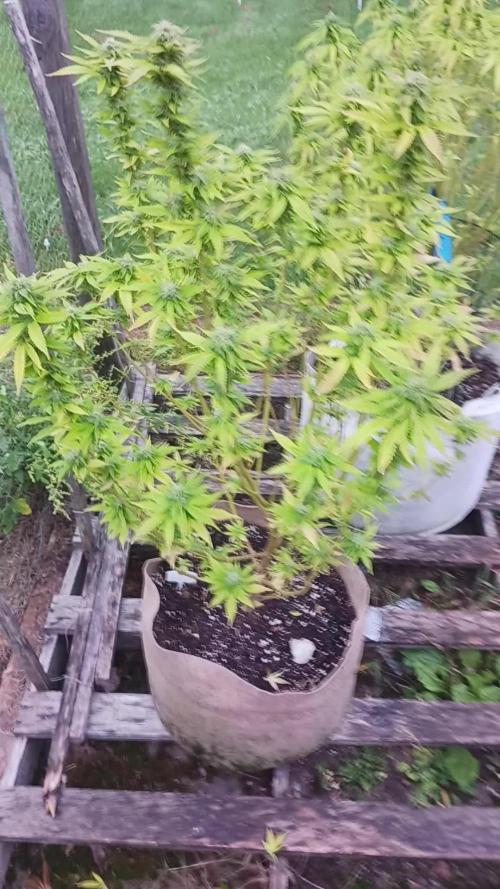
9/20 Man I've been busy. I'm sick too. Looking back at my diaries I get sick this time of year every year it seems. Once I get the important stuff done I'll put some pictures of finished product up. Sunny today and windy as hell. All the plants left seem to be doing good and look like they'll finish. The pink kush might not finish how I WANT but it's stinky and has lots of milky trichs. I'm playing with fire with this mk ultra. It's fucking done. It could get a LITTLE more amber and maybe come together a bit more but I don't know if it's smart to risk it. Frost warning in effect tonight. I'll probably check the forecast and harvest tomorrow. We're having some good weather just cold nights. Then it turns to like a 30% chance of rain for 4 or 5 days. I'll yank it before that. This actually turned out tp be a pretty good year. Haven't tested everything (especially shit in the ground) but what I have sampled I'm incredible happy with.
9/21 IT was a balmy 36° on my way to the garden. My windshield had frost on it. Surprisingly the TIGHT nugs of the pink kush and this phenome of 10th planet didn't seem to mind it. Both strains are still increasing in size, smell and trich development. Not just changing but adding more. Trichs on trichs. Very in hospital environment. It will be interesting to see what happens with these girls. We will be getting some rain. I mean we've had SOME but I mean real rain. If thays the case I'll put these in the garage for a little bit. Honestly I thought these would be goners. I've gotta get to work trimming bucking and manicuring flower. Doing a garden like this sure is an awful lot of work. But the reward is worth every penny. WATERED EVERYTHING LEFT A HALG GALLON APIECE. PROBABLY SHOULDVE GAVE A GALLON BUT THEY WERE STILL A LITTLE HEAVY.
9/22 It rained last night and we got another frost. HAD to cut a main branch of the tenth planet as it had stem rot. Lots more cold weather coming. If I could get it done and I wasnt sick and have all this other material to process I would probably pull then. It's getting really cold. We're going to be getting rain. I'll check the weather and hopfully I can just put the movable ones in the garage. Either way things will work out. Pictures that will be coming will be of the finished product!
9/23 Had a super busy day. Had to but a branch off the pink kush due to stem rot. If I had time I would've taken it. It rained today but I think the plants will be alright. I've been working non stop. I may not have the quantity I'm used too but the quality is AMAZING. I can't wait to do the smoke points and put up finished flower. The other 10th planet seems to be doing really well. I expected nothing off that. I'll keep it updated but it's hard with everything going on.
9/24 Had more emergencies. Raining and cold. Finding stem rot a boytritus but not much. We are getting an inch of rain tomorrow and rain the next day. I wasn't going to watch my shit rot as it was hard as hell and all milky so I quickly waited for a break in the rain and harvested two pink kushes. Still have one pink kush in the 50 and the 10th planet. I cut a cola off 10th planet just in case. This should've been done yesterday but it is what it is. Even with ALL the damage this had been a pretty good year. I can't believe the quality of....well....everything lol. A couple take the cake but I'll wait to do that. I gotta get back to work.
9/25 Heavy rains today and tomorrow. After seeing the damage on the 10th planet and the stripped branches and dying leaves I took out the loupe and checked the trichs. It was a rare break in rain and the plant was luckily dry. After seeing the pistols change on many buds to pure red and seeing lots of cloudy trichomes abd swollen buds I was able to harvest it. I have one pink kush left that sea7s like a willow. I probably should've taken that by looking at it but the trichs had some clear on it. Lots of damage this year on all plants but the first special kush. The quality is amazing though. I havent got to try every strain but I am incredibly impressed with what I have so far. I stopped smoking dabs (for now) in favor of switching my different strains up. I hope that every gardener is able to instil there energy in the plant and gets the same feeling that I do because it's wonderful. I will do an independent review of each strain, and keep updated on last pink kush.


Likes
5
Share

@AcidBurn_41
Follow
28.12.25
BT#51
Hey liebe Growmie's ✌️
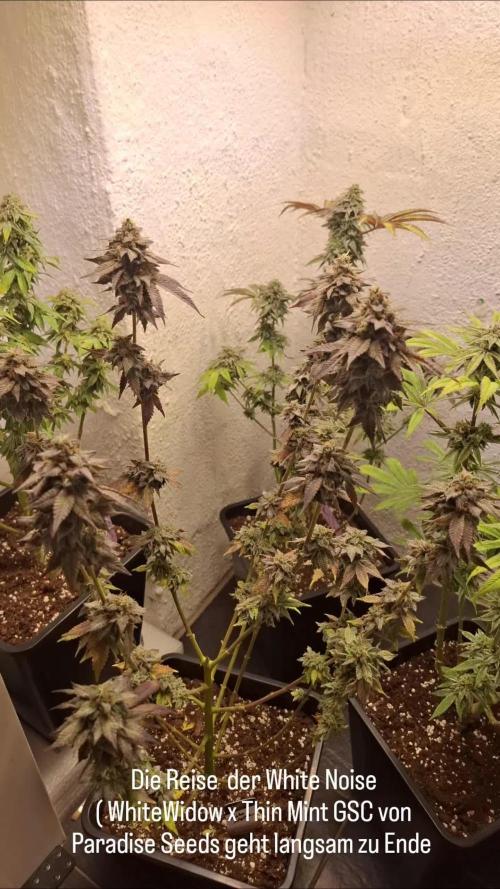
Die White Noise aka White Widow x Thin Mint GSC geht es wunderbar.
Alle Tricome sind Milchig auch viele Bernstein Farbende sind zu sehen,
für mein Geschmack kann Sie noch gute 7 Tage, dann hat Sie es geschafft.
Auch ein Anfang hat mal ein Ende es war ein sehr entspannter Grow wie immer
bei mein Lieblings Züchter @paradiseseeds man merkt es jedes mal aufs neue.
Ihr Arbeitet mit Leidenschaft an den Sorten der Selektion damit wir Gärtner das
beste Endprodukt erzielen. Ganz liebe Grüße an das ganze Team, ganz besonders an
Luc Krol macht immer weiter so seit über 20 Jahren ein Freund eurer Seeds.
Die Nährstoffe sind jetzt komplett raus nur noch Hesi PowerZyme 2ml/L hält im
Medium alles sauber. Der Ph wert liegt bei 6,3 jetzt noch 1x Gießen mit 2,5 L angeglichenen
Wasser danach ist Schluss (austrocknen lassen) und Sie geht noch 24h zum Schluss in die Dunkel kammer.
Nächste Woche gibt es das vor letzte Update für euch Danke das ihr die Reise der
White Noise begleitet habt hoffe Sie hat eurer Intresse geweckt.
Wünsche euch eine angenehme Nacht bleibt alle Gesund and stay high.
Mögen all eure Ladys Gesund und prächtig wachsen und euch
mit schmackhaften Stuff versorgen 💯🔥
■■■■■■■■■■■■■■■■■■■■■■■■■■■■■■■■■■■■■■■■■■■■■■■■■■■■■■■■■■■■■■■■■■■■■■■■
12/28/25
BT#51
Hey dear Growmie's ✌️
The White Noise aka White Widow x Thin Mint GSC is doing wonderfully.
All trichomes are milky, and many amber-colored ones can be seen.
For my taste, it can still go another 7 days, then it will be ready.
Every beginning has an end, and it was a very relaxed grow, as always
with my favorite breeder
– you notice it every time.
You work passionately on the selection of strains so that we gardeners can
achieve the best end product. Warm regards to the whole team, especially to
Luc Krol – keep up the good work, a friend of your seeds for over 20 years.
The nutrients are now completely out, only Hesi PowerZyme 2ml/L keeps
everything clean in the medium. The pH value is now 6.3, water once more with 2.5 L of adjusted
water, then it's done (let it dry out) and it goes into the dark chamber for 24 hours at the end.
Next week, there will be the penultimate update for you. Thank you for accompanying White Noise on its journey.
I hope it has piqued your interest.
Wishing you a pleasant night, stay healthy, and stay high.
May all your ladies grow healthy and magnificent and provide you
with tasty stuff 💯🔥

Likes
19
Share


@buddhi_coop
Follow
This week I just watched them grow. I watered a couple times using the nutrients mentioned & today I watered with just 6.3 ph water that I filtered. These girls are bushing up & I’m not mad about it. I haven’t done much defoliation just the topping I did a couple weeks ago. I’ll Start doing that probably after I flip to flower & add my trellis net.
Likes
15
Share

@GERGrowDesigns
Follow
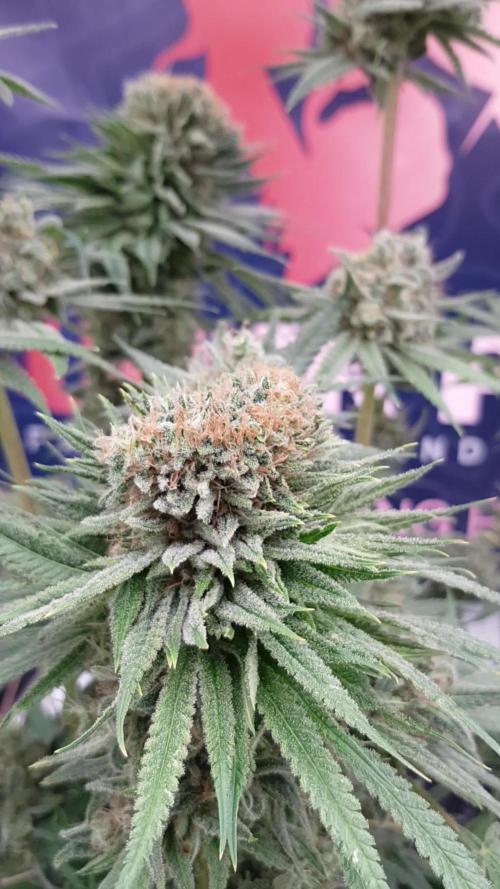
Welcome to Flower Week 10.amd harvest of Divine Seeds Divine Rapier
I'm excited to share my grow journey with you from my
Sensi Seeds Project . It's going to be an incredible ride, full of learning, growing, and connecting with fellow growers from all around the world!
For this Project , I’ve chosen the Feminized Photo Strain Divine Rapier:
Here’s what I’m working with:
• 🌱 Tent: 225x150x150
• 🧑🌾 Breeder Company: Divine Seeds
• 💧Strain Info : 29%
• ⏳ Flowering Time: 6-7weeks

Likes
7
Share


@Staffedition
Follow
Привет друзья.
Наше знакомство продолжается с новым фотоцветущим растением от Smail_Seeds сорт ORIGINAL CHEMZKITTLEZ F1 reg.
Сегодня растению 99 дней.
Шишки наливаются уже тяжелей и тяжелей стоять малышки)
Перевёл на 12/12 1.10.2023
Растение очень хорошо развивается, ни каких сбоев в генетике не наблюдается😀
Сорт выводим сами.
Смотри мой профиль, у нас всегда есть что то интересное.
Не забудь поставить лайк❤️, если понравилась как прошла неделя
И читайте наш TELEGRAM: https://t.me/smail_seeds
#Smail_Seeds 😀