


Likes
Comments
Share


@Firepharmer
Follow
Monkey berries is finished up in 55 days flushed too 0.0 EC . The colours are so beautiful!! She’s went quite purple for me the trichomes are thick what a killer strain to go it was my first exotic mikes genetics looking forward to the next run with exotic genetics.. stated flushing the slurrican IX yesterday she be chopped by day 60 . One last update coming of the final grow in a week or so .. happy growing


Likes
5
Share

@CalGonJim
Follow
9/15 12AM MONDAY!!! THEY ARE ALL DOING GREAT!!! VERY HEAVY AMINOS YESTERDAY, NO DAMAGE.
9/15 11:24PM. In plant cells, glutathione S-transferases (GSTs) act as transporters, facilitating the movement of anthocyanins from the endoplasmic reticulum (ER) to the vacuole for storage, though their exact mechanism is still being studied. The synthesis of glutathione (GSH) itself occurs in the cytosol of mammalian cells through two ATP-requiring enzymatic steps, while anthocyanins are synthesized via a separate phenylpropanoid pathway
9/15 11:42PM glutathione metabolism glutathione S-transferases plantsThinkingKicking off 5 searchesLooking at 71 sitesPutting it all together In plants, glutathione S-transferases (GSTs) are a diverse family of enzymes integral to glutathione (GSH) metabolism, primarily functioning in detoxification and stress response. The core of this process involves GSTs catalyzing the conjugation of the tripeptide GSH with various toxic compounds, or xenobiotics, making them less harmful and easier to sequester or transport. Glutathione (GSH) metabolism in plants GSH metabolism is a tightly regulated process that maintains cellular redox balance and protects against stress. Biosynthesis: GSH is synthesized in two adenosine triphosphate (ATP)-dependent steps:(gamma )-Glutamylcysteine synthetase (GSH1) joins L-glutamate and L-cysteine to form (gamma )-glutamylcysteine. In Arabidopsis, this enzyme is located exclusively in the chloroplasts.Glutathione synthetase (GSH2) adds glycine to (gamma )-glutamylcysteine to produce GSH. This enzyme is found in both the cytosol and the chloroplasts.Oxidation and reduction: GSH exists in two forms: a reduced monomer (GSH) and an oxidized disulfide dimer (GSSG).Oxidation: In the process of scavenging reactive oxygen species (ROS), GSH is oxidized to GSSG.Reduction: Glutathione reductase (GR) uses NADPH to reduce GSSG back into active GSH, which is essential for maintaining a high GSH-to-GSSG ratio inside the cell.Degradation: Glutathione can be degraded in the cytosol, apoplast, and vacuoles by (gamma )-glutamyltransferases (GGTs) and other peptidases, allowing for recycling of its amino acid components.Transport and compartmentalization: While synthesis occurs in the chloroplasts and cytosol, transporters move GSH and its conjugates throughout the cell, including to the mitochondria, peroxisomes, and vacuoles. Functions of glutathione S-transferases (GSTs) GSTs are a large, ancient gene family with diverse roles that extend beyond detoxification. The primary functions involving GSH are: Detoxification of xenobiotics and heavy metals: GSTs catalyze the conjugation of the thiol group of GSH to a wide range of electrophilic and hydrophobic substrates, including herbicides, pesticides, and heavy metals. The resulting GSH-conjugates are then recognized by ATP-binding cassette (ABC) transporters and sequestered in the vacuole, reducing their cellular toxicity.Protection from oxidative stress: Stress conditions like drought, salinity, and high light increase levels of ROS, which cause lipid peroxidation. 🚨Some GST isoforms have glutathione peroxidase (GPOX) activity, using GSH to reduce toxic lipid hydroperoxides to less damaging alcohols, thereby protecting cell membranes.Defense against pathogens: During pathogen attacks, GST activity increases to detoxify microbial toxins and secondary defense-related compounds. This helps to bolster the plant's resistance response.Metabolism of endogenous compounds: GSTs play roles beyond immediate stress response by participating in the normal metabolic processes of plants. Examples include:Hormone transport: Some GSTs act as binding proteins (ligandins) that transport plant hormones like auxins within the cell.Metabolite transport: Specific GSTs facilitate the transport of important compounds like flavonoids and anthocyanin pigments into the vacuole.Tyrosine degradation: The zeta GST class (GSTZ) catalyzes a critical step in the breakdown of the amino acid tyrosine.Redox signaling: By influencing the GSH/GSSG ratio and interacting with plant hormones, GSTs can regulate cellular signaling pathways that control growth and stress response. 🚨GSTs and plant stress response The expression of many GST genes is highly inducible by various environmental and endogenous cues, making them key players in a plant's ability to adapt to adverse conditions. Abiotic stress: Drought, salinity, heavy metals, and extreme temperatures all trigger increased GST expression, which helps plants manage resulting oxidative damage. Overexpression of specific GST genes has been shown to enhance stress tolerance in transgenic plants.Herbicide resistance: The ability of crops and weeds to detoxify herbicides through GST-catalyzed conjugation is a well-studied example of GSTs in stress adaptation. Herbicide safeners, chemical agents that protect crops from herbicide injury, work by boosting the activity of these GST enzymes.Developmental processes: Studies have linked the expression of certain GST genes to specific stages of plant development, such as fruit ripening, root and stem development, and flower formation. ""
9/16 12:32am
AI Overview
In plants, phenylalanine is the precursor for anthocyanin synthesis, a process that involves a multistep pathway in which glutathione (GSH) plays a critical role in the transport of the final pigment to the cell vacuole.
Phenylalanine initiates anthocyanin synthesis
The biosynthesis of anthocyanins begins with the amino acid phenylalanine, which is produced via the shikimate pathway. The conversion process, known as the phenylpropanoid pathway, involves a series of enzymatic reactions:
1. Phenylalanine ammonia-lyase (PAL): This enzyme catalyzes the first committed step of the pathway, converting L-phenylalanine into trans-cinnamic acid.
2. Downstream enzymatic reactions: A series of additional enzymes, such as chalcone synthase and chalcone isomerase, convert the intermediate compounds into unstable anthocyanidins.
3. Glycosylation: Glycosyltransferase enzymes stabilize the anthocyanidins by adding sugar molecules, creating the final, stable anthocyanin pigments.
4.
Glutathione is crucial for anthocyanin transport
After synthesis, glutathione is essential for transporting anthocyanins for storage.
* Glutathione S-transferases (GSTs): These enzymes bind to the newly formed anthocyanins in the cytoplasm. This binding is a key step that facilitates the transport of the anthocyanin-GST complex across the tonoplast (the vacuolar membrane) and into the vacuole.
* Vacuolar storage: Once inside the vacuole, the anthocyanins accumulate and provide color to plant parts, such as flowers, fruits, and leaves.
* Catalytic role: Recent research has also found that certain GSTs have a catalytic role in anthocyanin synthesis. They can catalyze a dehydration step to form specific anthocyanidins, significantly boosting production in engineered systems.
*
The process in summary
The synthesis and accumulation of anthocyanins involve a coordinated process of multiple steps:
1. Production from phenylalanine: The amino acid phenylalanine enters the phenylpropanoid pathway, where enzymes convert it into the basic flavonoid structures.
2. Formation of anthocyanidins: Further enzymatic modifications produce the colored but unstable anthocyanidins.
3. Stabilization and transport with glutathione: These anthocyanidins are stabilized by glycosylation and then bound by GSTs (which use glutathione). This binding enables their transport into the vacuole for storage and visible pigmentation.
9/15 12:46AM https://pmc.ncbi.nlm.nih.gov/articles/PMC7238016/
9/16 1:30AM BKO is looking great!!!
Conclusion
The “butter frosting” resin on Cookie Apple F1, healthy yellow-green fusiform, and Blueberry KO’s pigmented cotyledons show your anthocyanin-glutathione-phenylalanine strategy is working—phenylalanine drives synthesis, glutathione ensures transport. Tweak amino acids to 100–150 mg/L to reduce tip burn.
9/16 3:34am
9/16 4:31AM Anthocyanin glutathione synthesis phenylalanine proline tmg powder relating current project:
* Phenylalanine is a precursor: Phenylalanine is an amino acid and the starting point for the phenylpropanoid pathway in plants.
* Anthocyanin synthesis: This pathway creates various secondary metabolites, including the flavonoid pigments known as anthocyanins, which give plants their red, purple, and blue colors.
* Pathway activation: Multiple enzymes, such as phenylalanine ammonia-lyase (PAL), catalyze the conversion of phenylalanine into the building blocks for anthocyanin.
*
Anthocyanin and glutathione synthesis
* Glutathione S-transferase (GST): This enzyme is crucial for synthesizing anthocyanins in plants. It transports anthocyanins into the cell's vacuole for storage.
* Glutathione (GSH) production: Anthocyanins can promote glutathione synthesis in certain cells. For instance, the anthocyanin cyanidin-3-O-β-glucoside (C3G) has been shown to increase the expression of glutamate-cysteine ligase (Gclc), a key enzyme in GSH synthesis.
* Antioxidant effect: By upregulating GSH production, anthocyanins contribute to the antioxidant defense system, protecting cells from oxidative stress.
*
Proline and glutathione synthesis
* Shared precursor: In some organisms, the synthesis pathways for proline and glutathione share a precursor molecule called γ-glutamyl phosphate.
* Alternative pathway: Research on bacteria and yeast has revealed an alternative, trace pathway where γ-glutamyl phosphate from the proline synthesis pathway can be diverted to produce the glutathione precursor γ-glutamylcysteine.
* Oxidative stress response: Studies in mouse oocytes show that supplementing with proline upregulates genes related to glutathione synthesis (Gclc and Gclm), increases glutathione levels, and reduces oxidative stress.
*
TMG powder, methylation, and homocysteine
* Methyl donor: Trimethylglycine (TMG), or betaine, is a potent methyl donor, meaning it provides methyl groups needed for various biochemical processes in the body, including the methylation cycle.
* Homocysteine regulation: One of TMG's primary functions is to convert the amino acid homocysteine into methionine. This helps regulate homocysteine levels, which is important for cardiovascular health.
* TMG and proline interaction: In plants and some organisms, TMG and proline act as compatible solutes or osmoprotectants, helping cells stabilize against osmotic stress like drought or salinity. However, in human biology, TMG mainly functions through methylation, while proline is involved in different metabolic and antioxidant roles.
*
How they all relate
The listed components are connected through several overlapping metabolic and regulatory pathways:
* Anthocyanin synthesis starts with phenylalanine.
* Anthocyanins can promote glutathione synthesis via upregulation of key enzymes like Gclc.
* Glutathione synthesis can be influenced by the proline synthesis pathway, as they share an intermediate in some contexts.
* TMG powder supports the methylation cycle, which helps regulate homocysteine levels. While TMG and proline serve similar protective roles in some organisms, their primary human metabolic functions differ, with TMG focusing on methylation and proline having distinct roles in antioxidant response and metabolism
9/17 217am Die Hard Christmas Grow
9/18, 11:34 AM. I ordered some square saucers that were cartoonishly too small but they fit inside the AC infinity germination kit and they fit with the Bud Cups perfectly really nice so it’s not a total loss.
9/18 11:45AM mix. Foliar Spray, the rest of the mix ec 0.46
Mixed up Aminos first and separate and use 16 oz for foliar spray. Then mixed up:
Root: 1 mL/L Connoisseur A & B GROW,
.2 mL/L CaliMagic,
.2 mL/L Purpinator.
Setria Glutathione: 150 mg/L(Brand: Emerald 250mg capsule.)
TMG: 150 mg/L = (Brand Nutricost)
Phenylalanine: 150 mg/L (Brand Nutricost)
Proline: 150 mg/L (Brand Nutricost).
9/18 228PM AI Overview
Glutathione influences plant colors by regulating the accumulation of pigmented compounds, primarily anthocyanins. The tripeptide accomplishes this through its role in transporting pigments within plant cells and in protecting against environmental stresses like UV radiation that can cause oxidative damage.
Transporting pigments into plant cell vacuoles
Glutathione works with a class of enzymes called Glutathione S-transferases (GSTs) to transport pigments like anthocyanins into the vacuole for storage.
Anthocyanin transport: In plants with pigmented tissues, such as purple grapes or red flowers, glutathione-conjugated pigments are transported by GSTs across the tonoplast membrane into the vacuole. This process is crucial for the stable accumulation of pigments.
Genetic manipulation: Research shows that manipulating specific GST genes can alter a plant's pigmentation. For instance, silencing a particular GST gene in purple grape hyacinths caused their petal color to shift to a lighter shade of purple. Similarly, defective GST genes in carnations resulted in pale-colored flowers.
Protecting against UV light and stress
Glutathione helps regulate plant pigmentation in response to environmental factors, especially UV-B radiation.
Activating flavonoid production: When plants are exposed to UV light, a surge in glutathione triggers the expression of genes involved in producing flavonoids. Flavonoids, including anthocyanins, can act as protective sunscreens for the plant, and their increased synthesis and accumulation can alter visible coloration.
Balancing oxidative stress: Intense UV-B radiation increases reactive oxygen species (ROS) in plants, which can cause oxidative damage. Glutathione is a master antioxidant that helps detoxify these ROS, preventing cellular damage that can affect a plant's pigment-producing mechanisms.
Indirectly influencing plant colors
By regulating cellular redox status and interacting with other molecules, glutathione also affects pigment expression in more indirect ways.
The xanthophyll cycle: As part of a plant's antioxidant system, glutathione helps maintain the reduced state of other protective antioxidants like tocopherol and zeaxanthin. Zeaxanthin is a carotenoid pigment involved in the xanthophyll cycle, which helps dissipate excess light energy.
Redox signaling: The balance between reduced glutathione (GSH) and oxidized glutathione (GSSG) is a key cellular signal for stress response. A shift in this ratio during environmental stress can influence the production of secondary metabolites like pigments, allowing the plant to adapt. "
9/19 1:41AM AI Overview
The key difference is that anthocyanins are the sugar-containing form (glycosides) of pigments, while anthocyanidins are the sugar-free form (aglycones). Anthocyanidins are the foundational molecules, and when a sugar molecule attaches to them, they become anthocyanins, which are more stable and water-soluble, making them the forms found naturally in plants, such as berries and purple vegetables.
Anthocyanidin (Aglycone)
Structure: The basic, sugar-free molecule of the anthocyanin structure.
Location: Not found freely in nature but is the core component that is then glycosylated.
Properties: Color changes with pH, being visible in acidic conditions but colorless in basic conditions.
Examples: Cyanidin, delphinidin, pelargonidin, peonidin, petunidin, and malvidin.
Anthocyanin (Glycoside)
Structure: Consists of an anthocyanidin linked to one or more sugar molecules.
Location: Found in the vacuoles of plant cells.
Properties: Water-soluble and are the pigments responsible for the red, purple, and blue colors in plants.
Function: The sugar attached provides stability, allowing for accumulation in plants and providing antioxidant properties.
Examples: Cyanidin-3-glucoside and other derivatives like acylated anthocyanins. "
9/19 2:43AM I also saw a good mans immediate accent into Heaven, that perspective matters too. no less angry about it though.
9/19 10AM Heavy Amino spray 250mg each in 1L of Setria Glutathione and Phenylalanine
9/19 10:10PM The sons and daughters of americas real terror organization carried out the last horror show, and the one before that and before that. It's not a foreign country, it's always the anti white anti human black sheets and badges that did this.
9/19 10:43PM AI Overview
Phenylalanine and glutathione contribute to plant colors through different biochemical pathways
. Phenylalanine is a precursor for the pigments themselves, primarily anthocyanins, while glutathione is involved in the transport and stabilization of these pigments within the plant cell.
Phenylalanine: The pigment precursor
The source of aromatic compounds: Phenylalanine is an aromatic amino acid and the starting compound for the phenylpropanoid pathway in plants. This pathway produces a vast number of secondary metabolites, including anthocyanins, which give many plants their red, purple, and blue colors.
Color enhancement: Research has shown that increasing the amount of available phenylalanine can lead to more intense red coloration in some fruits, such as mangoes and apples.
Pathway stimulation: Phenylalanine ammonia-lyase (PAL) is a key enzyme in this pathway that converts phenylalanine into precursors for anthocyanin biosynthesis. An increase in phenylalanine levels stimulates this entire process.
Glutathione: The pigment transporter
Anthocyanin transport: After anthocyanin pigments are synthesized in the cell's cytoplasm, they must be transported into the central vacuole for storage. Glutathione S-transferases (GSTs) are a family of enzymes that facilitate this process.
Color intensity: A functional GST is essential for proper anthocyanin accumulation. Mutations in GST genes can result in a significant decrease in color intensity, as seen in the pale or white flowers of certain gentian mutants.
Mechanism of action: The GST binds to the anthocyanin pigment and moves it from the cytoplasm into the vacuole. If the GST is defective, the pigment cannot be transported correctly, leading to a loss of coloration.
Summary of interactions
The roles of phenylalanine and glutathione are distinct but cooperative in producing plant colors:
Phenylalanine provides the essential building blocks for creating the colored compounds (anthocyanins).
Glutathione, with the help of GSTs, ensures these colored compounds are correctly moved to their storage location (the vacuole).
This cooperative system explains why mutations or deficiencies in either process can lead to reduced or altered coloration in plants."
9/19 10:51PM AI Overview.
Trimethylglycine (TMG) supports the production of glutathione, a vital antioxidant
. However, there is no evidence to suggest a direct relationship between these supplements, the amino acid phenylalanine, and the colors of plants. The concepts are linked indirectly via complex biological processes.
Trimethylglycine (TMG) and glutathione
TMG and glutathione are connected through the body's methylation cycle.
TMG as a methyl donor: TMG plays a critical role in the methylation process by donating a methyl group, which helps convert the harmful amino acid homocysteine back into methionine.
Support for glutathione production: This methylation cycle, which is supported by TMG, is essential for producing glutathione. Glutathione is a powerful antioxidant that protects against cellular damage and is crucial for detoxification.
Supplementation considerations: TMG supplements are sometimes taken alongside other supplements to support health, though consultation with a healthcare provider is recommended.
Phenylalanine and the methylation cycle
Phenylalanine is an essential amino acid, but its role is distinct from the TMG-glutathione process.
Essential nutrient: Phenylalanine is a key nutrient for cellular metabolism.
Potential interactions: A separate medical study on experimental hyperphenylalaninemia (abnormally high phenylalanine levels) in chicks observed a decrease in other amino acids in the brain, including those involved in the glutathione pathway. This demonstrates how excessive levels of one amino acid can potentially influence others, though this does not represent a typical interaction.
Plant colors
The connection between the supplements and plant colors is purely conceptual, as the colors are determined by completely different biological processes.
Anthocyanins: The colors of many plants, including red, purple, and blue flowers, come from pigments called anthocyanins.
Glutathione in plants: While plants contain glutathione as an antioxidant to combat stress, it influences color by regulating the transport and accumulation of anthocyanin pigments, not by being a pigment itself.
TMG and phenylalanine in plants: Plants contain TMG, which functions as an osmoprotectant (protecting against osmotic stress). They also contain phenylalanine, but these substances do not directly determine the plant's visible color."
9/19 11:21PM. !!!!!! this was pointless and im dumber for having read it. !!! Light intensity and spectrum affect metabolism of glutathione and amino acids at transcriptional level: https://pmc.ncbi.nlm.nih.gov/articles/PMC6938384/
9/20 11:08 AM the seedlings and the four autos are doing just great. The amino spray with phenylene and glutathione really had nice effects no burning nice solid growth even seedlings from basil lavender various lettuce all are perfect.🚨🚨🚨👍👍👍👍👍
9/21 2AM I AM BECOME ANTHOCYANID!!! ITS WORKING AND ON A SEEDLING I SEE THE GELATO COLLORS IN BLUEBERRY KO AND THE LEAF SHAPE OF BUBBLES BLUEBERRY,!!!


Likes
6
Share


@Smokyhorizon
Follow
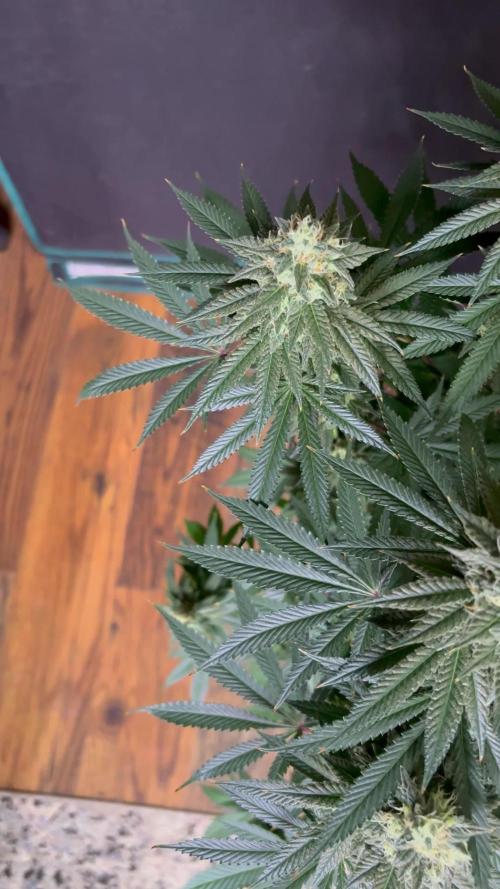
Unfortunately 2 Caligen ladies died.
The weather is pretty good.
Watering once 2-3 days.


Likes
1
Share



Likes
82
Share


@BigBadLion
Follow
Hey guys! 👏
Hope everyone is doing well! This week was interesting. I made a small flush because I wanted to know how much salt my plants had in the soil (considering I've fed my plants with a lot of nutrients the past few weeks) aaaaand the results were quite interesting! They obviously had tons of salts! Here are the results of the runoff water:
Falco
5.94 pH
1139 ppm (2278 us/m)
Max
5.85 pH
2352 ppm (4704 us/m)
Roko
5.64 pH
2453 ppm (4906 us/m)
Boomer
5.72 pH
1765 ppm (3530 us/m)
Surprisingly enough the plants that had the "worst" runoff values were the plants who had the most foliage and their leaves were the greenest. The pH "loss" of all the plants was also within the expected margin so that's good! 👌 The buds look beautiful and I also noticed some of the plant leaves are starting to turn purple 😍 the smell is also getting stronger and it's quite citric, I love it!
Anyway, that's all for now. Thanks for reading! 🙌
Likes
6
Share


@Willy_Balls
Follow
I don’t why is that. It is supposed to be 8-9 week strain. But it is very slow. At week 7 of flower it is barely in the bulking stage. All 3 also did not grew much vertically. Maybe they didn’t like the high plant count I ve had this run or high humidity in the beginning but the other strains seems to be ok. I have all 3 cloned and maybe will give the best of them another shot.
Likes
4
Share


@Finsfan
Follow
I did a heavy defoliation with the green crack for the first time.. the first 3 pics are pre- and the last 3 pics are post-defoliation.
Definitely better air flow now as well as more "tops" being seen.
Tomorrow going to do the durban.. update w more pics then.



Likes
11
Share


@Dendegrow
Follow
Radical Juice – Week 4 of Flowering
The Radical Juice is looking amazing! 🌿 The buds are starting to form beautifully, and the scent is becoming more noticeable with every day! 🌸 The plants are doing great and are getting more and more frosty as time goes on. The first trichomes are appearing, and I’m already excited about the upcoming harvest! ✨
The stretch seems to be slowing down now, and the plant is focusing more on bud development. Everything is progressing as expected. I’m still only using water, and I’m letting the soil and the microorganisms do the work. 🌱
As for the clone trial, the clone that received my homemade fertilizer with every watering is noticeably bigger and healthier than the other clones that didn’t get it. It’s really interesting to see the results! 📈
Stay tuned for more updates, and don’t forget to follow so you won’t miss anything! 😎
---
Radical Juice – Woche 4 der Blüte
Die Radical Juice sieht einfach großartig aus! 🌿 Die Buds beginnen sich wunderschön zu entwickeln, und der Duft wird mit jedem Tag intensiver! 🌸 Die Pflanzen machen sich bestens und werden von Tag zu Tag frostiger. Die ersten Trichome sind bereits sichtbar, und ich freue mich schon sehr auf die Ernte! ✨
Der Stretch scheint jetzt langsamer zu werden, und die Pflanze konzentriert sich mehr auf die Budentwicklung. Alles läuft wie erwartet. Ich gieße immer noch nur mit Wasser und lasse den Boden und die Mikroorganismen die Arbeit erledigen. 🌱
Was die Klon-Versuchsreihe angeht, ist der Klon, der bei jedem Gießen meinen selbstgemachten Dünger erhalten hat, deutlich größer und gesünder als die anderen Klone, die ihn nicht bekommen haben. Es ist wirklich spannend, die Ergebnisse zu sehen! 📈
Bleibt dran für weitere Updates und vergesst nicht zu folgen, damit ihr nichts verpasst! 😎

Likes
Comments
Share


@Cmccart
Follow
Never dialed back the nutes after defoliation but thankfully nothing bad happened

Likes
8
Share


@LokalGrenz
Follow
Really don’t have much to say been a real easy grow even tho temps been getting in mid to high 80’s lately I got a jewelers jewel think it’s cheap cause it’s 10X can’t really see the trichomes to well I seen some amber but I’m sure if it’s not cut down this week may23rd it will definitely be cut next around May 27thish
Likes
25
Share


@GangbudsGenesgdl
Follow
21/12/20
inicio de semana tiene una estructura muy indica pero las hojas muy sativas
es una planta que esta creciendo asta3cmpor dia al igual sus brazos bajos
23/12/20
hoy alcanzo el metro de altura
27/12/20
no pude subir foto con eesto de las fiestas de navida haha pero hoy es su cierre de semna
Likes
3
Share


@Cannabis_Sativa
Follow
Def def and defolation... it started flowering already with quick growing steps

Likes
14
Share


@GardenOfHerbs
Follow
right before harvest pics day 132 total and 65 days off flowering. last 10 pics are taken with a nikon camera

Likes
5
Share


@DerEkstaseHase
Follow
Diese Woche habe ich ein paar gelbe Blätter entfernt.
Die Pflanze wächst weiterhin sehr schön, die Blüten haben sich richtig dick aufgepumpt.
Zum jetzigen Zeitpunkt sind noch alle Trichome klar, das passt sehr gut zum geplanten Ablauf.
In den nächsten zwei Wochen können die Blüten Reifen und das volle THC Potential entwickeln.
Weil mein Leitungswasser sehr hart ist, mische ich dieses 50/50 mit destillieren Wasser um einen erneuten Lockout zu verhindern.
Noch zwei Wochen, dann sollte die Pflanze Erntereif sein! :)

Likes
13
Share


@Ginger_gnome
Follow
Hope everyone had a great Christmas!!!
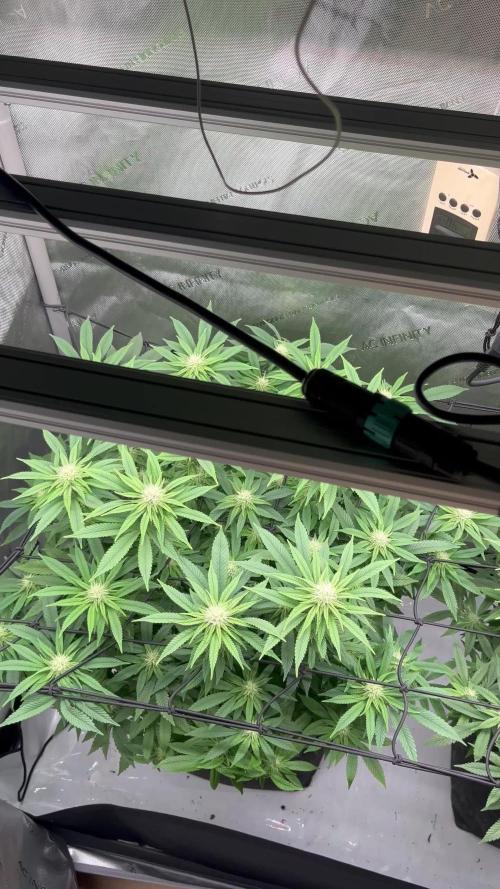
We have had some crazy cold weather here the last 4 days and for the first time in 13 years had snow on Christmas day. So with the cold and snow came grow room issues. My grow space is outside and not attached to the house so maintaining a proper temperature and humidity has been a bit on the difficult side. Even with the lights running 24 hours, it's had a few drops down to 19c and the humidity has gone up to 68% a few times. Now luckly I'm still in veg and the humidity isn't a issue yet but the temperature has been making me worried. Going to put togther a heater with its own temperature switch increase it drops below 20c.
Did some training over the last week with some LST and FIMing. With the LST every 3nd day I've been adjusting them and pulling the plants back a bit more and more. Since I don't think I'll be able to set up a SCRog net this go around (spent to much for Christmas and wont be able to affordthe PVC tubing) ive got to figure out something else and fast. Plants are getting big and it's going to get hard to bend then properly without braking stuff.
Because I was showing some issues with 2 of my plants I started adding a bit of Revive to my res to see if they get better and they have. But because of the cold that's been hitting us my tank has had a hard time staying warm. Even with my 50w tank heater it's been fighting a up hill battle because the area outside the main room where the tank is, has been sitting around 14-17c. So with that the air pump I use to circulate the tank, it is pulling in cold air and thats been fighting the tank heater in getting it up to what I like it at. I tried using my water pump instead of the air pump for circulation and the res went up to 25.6c soooo I would much rather have 19c res then water that could kill my plants.
So let's talk about the plants themselves. Both Special Queen plants are doing great but as you can see from the picture, one is doing absolutely amazing. Great growth (understatement) and has bounced back from training like a pro. The other plant is still doing really good when compared to all the other plants in the room but still could be a little bit better. Depending on what I'm going to do for supporting the plants this might be the last week of veg. Well see.
So this plant was doing great and then about 2 days ago I started to notice issues. Almost looks like leaf rust or a Ph problem but ive tried my best to keep them correct and I'm hopping that like my Ripper badazz plants that they well just grow out of it. Doing a big clean up today in the room so I'm going to keep my eyes open for any pests just incase that's the issue but fingers crossed it isn't.
Well that's everything for now. Happy growing growmies!!!

Likes
12
Share


@Bunterbiber
Follow
We just pushed through another absolute beast of a week, and the first half of it was pure survival mode. The temperatures peaked at a jaw-dropping 39°C, and even the nights offered zero relief, staying at a sticky 26°C minimum. It’s been an intense endurance test for an outdoor grow!
The Daily Hydration & Feeding Strategy: 💧
To keep them from turning into crisp, dry twigs, I had to switch to a strict every-single-day watering schedule. Missing even one day in that kind of heat wave would have been catastrophic.
Amazingly, the ladies are showing incredible resilience—they haven’t displayed any noticeable signs of distress or major issues so far. Development is moving along beautifully, though I'm keeping my fingers crossed that there won't be any delayed fallout from the extreme heat stress. Nutrient-wise I'm feeding them at about 75% of the recommended dosing plan to keep them happy without overdoing it in this heat.
The Strain Breakdown: 🌿
Lemon Cherry Cookies Auto: This girl is absolutely crushing the game right now. She is already stacking up some seriously decent, chunky buds, and the aroma is getting beautifully pronounced and loud! Every breeze brings a sweet whiff of what's to come. 😉
Amnesia Haze Auto: She has turned into an absolute monster! She’s gotten incredibly big and wide, taking full advantage of her outdoor space. You can definitely see that Sativa heritage shining through—judging by her progress, she’s definitely going to take a bit longer to cross the finish line compared to the quicker, Indica-dominant ladies like the Lemon Cherry Cookies.
Bruce Banner Auto & Banana Purple Punch Auto: These are the two shorter ladies of the group, but what they lack in raw height, they make up for in sheer health. Size aside, they are doing exceptionally well, looking super vibrant, healthy, and stacking their own flowers nicely.
All in all, I’m incredibly proud of how these genetics are handling a brutal summer. Now that the worst of the heatwave seems to be behind us, I can’t wait to watch these buds really start to swell!

Likes
4
Share


@HowtoBubatz
Follow
My Strawberry Gorilla Automatic from Fast Buds is now in its third week of flowering, and I couldn’t be happier with how she’s progressing.
She looks incredibly healthy, with vibrant green leaves and strong branches. The stretch phase is nearly over, and she has developed a solid structure with a well-defined main cola.🌱
One of the most exciting changes this week is the first appearance of trichomes on the main bud. Under the light, they’re starting to sparkle, hinting at the resin production that’s about to take off.
The buds are forming nicely, and I can already smell a faint but promising aroma developing.
So far, she’s responding well to the nutrients and environment, with no signs of deficiencies or stress. If she keeps going at this pace, she’s going to be a real beast by harvest time.😊