


Likes
Comments
Share


@Tontsekz
Follow
13/11 - Watered with 2ml/L Soil A & B each, 0.5 grams of Kraken Roots
16/11 - Watered with 2ml/L Soil A & B each, 1.0 gram of Kraken Roots
18/11 - Watered with plain water - PH 6.2 - started LST
20/11 - Watered with 2ml/L Soil A & B each, 1.0 gram of Kraken Roots
13/11 - So far this week the plants are taking off - loads of growth under 20/4 lighting. Plant 3 in particular is growing super strong!
18/11 - Applied LST, wasnt sure if maybe it was too early? Seems to have quite a few nodes but my plants seem pretty short/compact.
20/11 - Plants went a little down hill since LST - removed the LST and watered them - found lights were ~50cm from the plants so moved to 61cm - reduced hours from 20/4 to 18/6.


Processing
Likes
3
Share


@Txumy2020
Follow
Intentando mantenerla baja con lst para controlar la altura.. Quizá una poda apical...? Sería ya xq empiezo con la Floracion.
EC 0.9
Ph 6.0


Likes
13
Share


@Konkookush
Follow
Happy with the result when i started with a seed.
Mother : 100gr dried
Clone 1: 70gr dried
Clone 2 + 3: 90gr dried

Likes
20
Share


@growmcbud
Follow
Harvest, Nr. 3✌️I can say the Dos Si Dos 33 from Barney's Farm is a very nice Strain. Medical Benefits for me=+++++
You have the typical taste of the Gelato in there.
I have 3 different Phenos Types. ✌️🍀
Likes
55
Share


@Ultraviolet
Follow
What's in the soil? What's not in the soil would be an easier question to answer. 16-18 DLI @ the minute. +++ as she grows.
Probably not recommended, but to get to where it needs to be, I need to start now.
Vegetative @1400ppm 0.8–1.2 kPa 80–86°F (26.7–30°C) 65–75%, LST Day 10, Fim'd Day 11
CEC (Cation Exchange Capacity):
This is a measure of a soil's ability to hold and exchange positively charged nutrients, like calcium, magnesium, and potassium. Soils with high CEC (more clay and organic matter) have more negative charges that attract and hold these essential nutrients, preventing them from leaching away.
Biochar is highly efficient at increasing cation exchange capacity (CEC) compared to many other amendments. Biochar's high CEC potential stems from its negatively charged functional groups, and studies show it can increase CEC by over 90%. Amendments like compost also increase CEC but are often more prone to rapid biodegradation, which can make biochar's effect more long-lasting. biochar acts as a long-lasting Cation Exchange Capacity (CEC) enhancer because its porous, carbon-rich structure provides sites for nutrients to bind to, effectively improving nutrient retention in soil without relying on the short-term benefits of fresh organic matter like compost or manure. Biochar's stability means these benefits last much longer than those from traditional organic amendments, making it a sustainable way to improve soil fertility, water retention, and structure over time. Needs to be charged first, similar to Coco, or it will immobilize cations, but at a much higher ratio.
a high cation exchange capacity (CEC) results in a high buffer protection, meaning the soil can better resist changes in pH and nutrient availability. This is because a high CEC soil has more negatively charged sites to hold onto essential positively charged nutrients, like calcium and magnesium, and to buffer against acid ions, such as hydrogen.
EC (Electrical Conductivity):
This measures the amount of soluble salts in the soil. High EC levels indicate a high concentration of dissolved salts and can be a sign of potential salinity issues that can harm plants.
The stored cations associated with a medium's cation exchange capacity (CEC) do not directly contribute to a real-time electrical conductivity (EC) reading. A real-time EC measurement reflects only the concentration of free, dissolved salt ions in the water solution within the medium.
98% of a plants nutrients comes directly from the water solution.
2% come directly from soil particles.
CEC is a mediums storage capacity for cations. These stored cations do not contribute to a mediums EC directly.
Electrical Conductivity (EC) does not measure salt ions adsorbed (stored) onto a Cation Exchange Capacity (CEC) site, as EC measures the conductivity of ions in solution within a soil or water sample, not those held on soil particles.
A medium releases stored cations to water by ion exchange, where a new, more desirable ion from the water solution temporarily displaces the stored cation from the medium's surface, a process also seen in plants absorbing nutrients via mass flow. For example, in water softeners, sodium ions are released from resin beads to bond with the medium's surface, displacing calcium and magnesium ions which then enter the water. This same principle applies when plants take up nutrients from the soil solution: the cations are released from the soil particles into the water in response to a concentration equilibrium, and then moved to the root surface via mass flow.
An example of ion exchange within the context of Cation Exchange Capacity (CEC) is a soil particle with a negative charge attracting and holding positively charged nutrient ions, like potassium (K+) or calcium (Ca2+), and then exchanging them for other positive ions present in the soil solution. For instance, a negatively charged clay particle in soil can hold a K+ ion and later release it to a plant's roots when a different cation, such as calcium (Ca2+), is abundant and replaces the potassium. This process of holding and swapping positively charged ions is fundamental to soil fertility, as it provides plants with essential nutrients.
Negative charges on soil particles: Soil particles, particularly clay and organic matter, have negatively charged surfaces due to their chemical structure.
Attraction of cations: These negative charges attract and hold positively charged ions, or cations, such as:
Potassium (K+)
Calcium (Ca2+)
Magnesium (Mg2+)
Sodium (Na+)
Ammonium (NH4+)
Plant roots excrete hydrogen ions (H+) through the action of proton pumps embedded in the root cell membranes, which use ATP (energy) to actively transport H+ ions from inside the root cell into the surrounding soil. This process lowers the pH of the soil, which helps to make certain mineral nutrients, such as iron, more available for uptake by the plant.
Mechanism of H+ Excretion
Proton Pumps: Root cells contain specialized proteins called proton pumps (H+-ATPases) in their cell membranes.
Active Transport: These proton pumps use energy from ATP to actively move H+ ions from the cytoplasm of the root cell into the soil, against their concentration gradient.
Role in pH Regulation: This active excretion of H+ is a major way plants regulate their internal cytoplasmic pH.
Nutrient Availability: The resulting decrease in soil pH makes certain essential mineral nutrients, like iron, more soluble and available for the root cells to absorb.
Ion Exchange: The H+ ions also displace positively charged mineral cations from the soil particles, making them available for uptake.
Iron Uptake: In response to iron deficiency stress, plants enhance H+ excretion and reductant release to lower the pH and convert Fe3+ to the more available form Fe2+. The altered pH can influence the activity and composition of beneficial microbes in the soil. The H+ gradient created by the proton pumps can also be used for other vital cell functions, such as ATP synthesis and the transport of other solutes. The hydrogen ions (H+) excreted during photosynthesis come from the splitting of water molecules. This splitting, called photolysis, occurs in Photosystem II to replace the electrons used in the light-dependent reactions. The released hydrogen ions are then pumped into the thylakoid lumen, creating a proton gradient that drives ATP synthesis.
Plants release hydrogen ions (H+) from their roots into the soil, a process that occurs in conjunction with nutrient uptake and photosynthesis. These H+ ions compete with mineral cations for the negatively charged sites on soil particles, a phenomenon known as cation exchange. By displacing beneficial mineral cations, the excreted H+ ions make these nutrients available for the plant to absorb, which can also lower the soil pH and indirectly affect its Cation Exchange Capacity (CEC) by altering the pool of exchangeable cations in the soil solution.
Plants use proton (H+) exudation, driven by the H+-ATPase enzyme, to release H+ ions into the soil, creating a more acidic rhizosphere, which enhances nutrient availability and influences nutrient cycling processes. This acidification mobilizes insoluble nutrients like iron (Fe) by breaking them down, while also facilitating the activity of beneficial microbes involved in the nutrient cycle. Therefore, H+ exudation is a critical plant strategy for nutrient acquisition and management, allowing plants to improve their access to essential elements from the soil.
A lack of water splitting during photosynthesis can affect iron uptake because the resulting energy imbalance disrupts the plant's ability to produce ATP and NADPH, which are crucial for overall photosynthetic energy conversion and can trigger a deficiency in iron homeostasis pathways. While photosynthesis uses hydrogen ions produced from water splitting for the Calvin cycle, not to create a hydrogen gas deficiency, the overall process is sensitive to nutrient availability, and iron is essential for chloroplast function.
In photosynthesis, water is split to provide electrons to replace those lost in Photosystem II, which is triggered by light absorption. These electrons then travel along a transport chain to generate ATP (energy currency) and NADPH (reducing power). Carbon Fixation: The generated ATP and NADPH are then used to convert carbon dioxide into carbohydrates in the Calvin cycle. Impaired water splitting (via water in or out) breaks the chain reaction of photosynthesis. This leads to an imbalance in ATP and NADPH levels, which disrupts the Calvin cycle and overall energy production in the plant. Plants require a sufficient supply of essential mineral elements like iron for photosynthesis. Iron is vital for chlorophyll formation and plays a crucial role in electron transport within the chloroplasts. The complex relationship between nutrient status and photosynthesis is evident when iron deficiency can be reverted by depleting other micronutrients like manganese. This highlights how nutrient homeostasis influences photosynthetic function. A lack of adequate energy and reducing power from photosynthesis, which is directly linked to water splitting, can trigger complex adaptive responses in the plant's iron uptake and distribution systems.
Plants possess receptors called transceptors that can directly detect specific nutrient concentrations in the soil or within the plant's tissues. These receptors trigger signaling pathways, sometimes involving calcium influx or changes in protein complex activity, that then influence nutrient uptake by the roots. Plants use this information to make long-term adjustments, such as Increasing root biomass to explore more soil for nutrients. Modifying metabolic pathways to make better use of available resources. Adjusting the rate of nutrient transport into the roots. That's why I keep a high EC. Abundance resonates Abundance.



Likes
2
Share


@eldruida_lamota
Follow
Que pasa familia, vamos con la séptima semana de floración de estas Gorilla Melon feminizadas de fastbuds.
Vamos al lío, de las 3 plantas, me quede con 2 por espacio, siempre pongo alguna semilla de más por si no abriese alguna por no perder ese hueco del indoor.
Y ya superaron el shock provocado por el mismo trasplante.
El ph se controla en 6.2 , la temperatura la tenemos entre 20/22 grados y la humedad ronda el 50%.
Ya empiezan a formarse las flores y progresan a buen ritmo.
Hasta aquí todo, Buenos humos 💨💨💨

Likes
6
Share


@Green_Dream
Follow
This has been one of the easiest grows I had so far.
The feeding was the key. Amending with a ‘Grow’ amendment(rich in Nitrogen) and supplement with Bloom liquid nutrients.
Watering as often as possible and using RO water.
Even though I had a pest invasion the girls did great.

Likes
2
Share


@CannaWolf420
Follow
Last week of veg. And we are looking good. They have grown well above the net and have strong stems ready to take on a stretch and the growing of flower. My canopy is pretty even across the plants. I'm curious to see how this back one turns out because it has a genetic mutation
(whorled phyllotaxy). Where each node has three branches that stem from it. These ladies next feeding will be with the bloom A-B and PK starting the third week of flower.

Likes
136
Share


@CocoTheClown
Follow
Week 5 / Day 35 Flower began today - 15/12/2021.
Plants have definitely started packing on some buds compared to last week. Can’t wait to see how they turn out over the next 4 weeks.
EC is currently a little high, both at 1.6EC, however I believe that it is due to the top layer of the coco drying out leaving salts behind. I think this because there is no symptoms of burn or deficiency, so it can’t be the over nuting, plus I’m using 1/2 of what mills suggest in terms of Base Nutes so I believe it’s the drying out. I will be keeping the EC around 1.4 once it’s stable and only upping the base nutes if they start to seem hungry.
It has been less is more the whole run so I’m gonna keep with it.
To get the EC stable again, and keep the coco wet, I have began multifeeding 3 x per day during lights on. 2 litres at a time per plant every 24hrs - 6l a day. I have read good things about multifeeding so want to carry on doing it as I’m so far impressed with the results.
The string for the “LST” has been left on, but I don’t think it’s necessary at all. I will probably cut them off in time or just leave them on if they don’t harm the plant at all.
Due to starting the C4 a week early, I did not want to use it for an extra week again this week, so I have began using the Mills Ultimate PK a week early at 2ml per litre. This can be used for the last 2-4 weeks of flower, so hopefully it all works out.
Still haven’t been any nute burn or anything this run which I’m happy about, the girls seem to be coming along nicely and just developing without issues. *touch wood*
I am just defoliating a couple of leaves per girl at a time to reduce stress, and only if they are beginning to shade or cover lower bud sites.
Can’t wait to see this week compared to the next too! 😁🤙🏻🙏🏻💚
Likes
Comments
Share


@Alejangrow
Follow
I might check out some other indica dom strains these guys have to offer. I was pleasantly surprised with this strain. These plants grow fast and tall. Responds very good to topping and lst. Great to grow, great to smoke.

Likes
115
Share


@DogDoctorOfficial
Follow
Greetings, fellow cultivators! Week 2 in the flower chronicles of our majestic Cherry Cola Auto is unfolding, and the botanical saga continues with astounding vibrancy. Our green queen, having transitioned seamlessly into the flowering stage, is unfurling her blossoms with an elegance that's truly mesmerizing.
Last week, the anticipation for flowering reached its peak, and oh, what a sight to behold! The once-prominent bush has metamorphosed into a lush haven of blossoms. The topping technique from earlier weeks worked wonders, and the result is a dense and intricate network of bud sites, promising a bountiful harvest.
The freedom granted to our Cherry Cola as we removed the training supports has allowed her to grow wild, like a botanical ballet of branches reaching for the heavens. The bushy bliss is a testament to the success of our training endeavors, creating a flourishing green symphony.
Speaking of success, the decision to venture into topping during the vegetative phase is proving to be a game-changer. The multiple colas that have emerged are like a crown atop her green majesty, and I find myself in awe of the structural beauty it has introduced to the plant.
In the nutrient department, the shift to P-Boost and Topbooster has been a key player in this unfolding floral tale. The phosphorus boost is working its magic, contributing to the formation of robust buds, while Topbooster continues to enhance the overall flowering response, promising an end product that's nothing short of spectacular.
I can't help but marvel at the visual delight our Cherry Cola presents. Every day brings new growth, and the energy in the tent is palpable. It's not just a plant; it's a living masterpiece in constant evolution.
As Week 2 in the flowering stage comes to a close, the Cherry Cola Auto stands as a testament to the joy of cultivation. Topping, training, and nurturing have led to this vibrant spectacle. Stay tuned, green enthusiasts, as the floral drama unfolds in the coming weeks!
Genetics Cherry Cola Auto @Fast_Buds @fastbuds_genetics_official @fastbuds_official @fastbuds_espana
Nutrition: @aptusholland @aptus_world @aptus_
Love, Care, and Attention: @dogdoctorofficial
As always, thank you all for joining me on this journey, for your love, and for it all. My horticultural odyssey would never be the same without you. Your love and support are cherished, and I feel both honored and blessed to have you in my life
Likes
8
Share


@Froggman
Follow
Week 10 was more like week 11 but I dunno how to change the pics. I’ve really lost track of how long it’s been after stunting them so badly a couple months ago. I’m giving them 8 weeks (at least) in flower each regardless.
Processing
Likes
2
Share


@Munchiesfrommars
Follow
Highly recommend and already started a 2nd grow of this perfect strain Auto Brooklyn Sunrise
You can check my new report on my profile page
The best taste ever
The best mood and very happy and powerful all day
Amazing smell of citrus
Amazing look
Best strain from autos that I have ever grew.
Super lucky with this !
Likes
Comments
Share
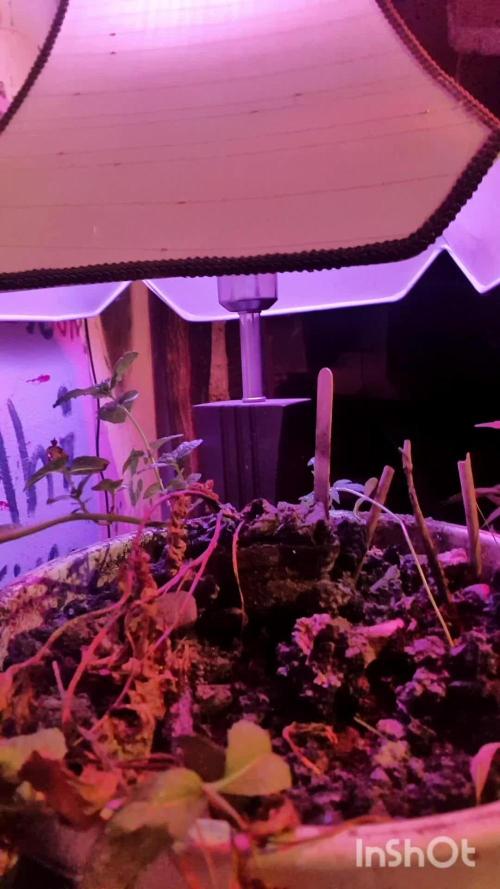

@UDUDUDUDU
Follow
Mysic therapy ? really ? What ? you nVr watched mythbusters ? dey proVed it!


Likes
85
Share


@420DeepGrow
Follow
Comienza la tercera semana de floracion, el medio esta con una cantidad de sales ideales y se nota como va comiendo todos los dias.
📅 Dia 15: Riego con nutrientes EC 1400 Ec escurrida 1750
📅 Dia 16: Riego con nutrientes EC 1450 Ec escurrida 1750
📅 Dia 17: Riego con agua y aplico humus de lombriz para que suba algo el color, esta un poquito clara.
📅 Dia 18: Riego con nutrientes EC 1450 EC escurrida 1950, el humumus ha subido la EC, proximo riego bajare la cantidad de sales
📅 Dia 19: Riego con agua
📅 Dia 20: Riego con nutrientes
📅 Dia 21: Descanso
Likes
18
Share


@MaxMo8
Follow
I transferred it to a half-gallon pot and I mixed the organic fertilizer with the soil.
Likes
18
Share


@Kloud9gardenz
Follow
5.6oz with a 3 week Veg in a 3 gallon, I'd say it was a good harvest
