


Likes
Comments
Share


@LapsekiliTayfur
Follow
Day in and exit fan 15 min off 15 min on Van is full on
Night in and exit fan 30 min off 15 min on Van is off
Lst tranings return
Day 35 Short Flowering 2gr/1L 1Liter Per Pot
Day 40 Short Flowering 2gr/1L Booster 1gr/1L 1Liter Per Pot


Likes
58
Share


@pifflestikkz
Follow
Day 85
Day 35 Flower
26/07/24 Friday
Big feed again today, using de-chlorinated tap water pH 6. 😁 I noticed slight nute burn on leaf tips so I have dialled back all base nutrients by 1ml.
Day 86
Day 36 Flower
27/07/24 Saturday
De-chlorinated tap water pH 6 only today full 5L a little run off.
Did it outside in the sunshine again today 🌞📸💚
Updates 📸
Day 87
Day 37 Flower
28/07/24 Sunday
Feed again today, De-chlorinated tap water pH 6.
She took the full 5L with about 10% run off.
She really is stacking now 💪
Day 88
Day 38 Flower
29/07/24 Monday
Just de-chlorinated tap water pH 6 today. Noticing pistils starting to mature.
Video update
Day 89
Day 39 Flower
30/07/24 Tuesday
Nice feed again today, de-chlorinated tap water pH 6.
Really throwing out trichomes now, density is getting better as well.
Day 90
Day 40 Flower
31/07/24 Wednesday
De-chlorinated tap water pH 6 only today. Full 5L again she's taking this daily now ,😅💚
Day 91
Day 41 flower
01/08/24 Thursday
End of week
Feed today using de-chlorinated tap water pH 6 added nutes brought it up to 6.2.
She just keeps stacking, think I got a fast flower... Or the heat is a little high and just prolonging her process.
May start flushing next week we will see.

Likes
2
Share


@Abreuvoir
Follow
28 august 2022
RECAP:
**photoperiod northen light**
** started from a seed, then made 4 clones in single pot, then removed 3 plants for outside**
** seed: 22-march-22, clones on 15-may-22, flower 20-july-22**
UPDATE:
Some buds have started to show sign of brown pistils
Main nodes are very close from the 240w led (8''/20cm) but no sign of burns
Starting to think I will have a decent harvest considering it's my fist grow

Likes
7
Share


@GreenHouseLab
Follow
I've released the top which was being held down for some LST the last 3 weeks. She slowly started to stretch but I think she will be this size until the very end. Tight spacing between each nod its hard to actually show with pictures how bushy this one actually is. Defoliation will be necessary but I'm giving her another week at least to finish her growth and to avoid any stunt before defoliation.
This week all plants but the Sweet Tooth will be getting Massive nutrients from Green Planet which does wonders for getting those fat colas.

Likes
12
Share


@Northern_Ent
Follow
June 22: planted peat pot in final Fast Buds 4 gallon bag after ripping bottom off and tearing sides. Forecast to be quite warm overnight so she’ll be outside tonight for first time.
June 23: in direct sun but under shade cloth for today.

Likes
9
Share


@GOSHIN_GROWS
Follow
Took some clones 1 week before flipping to flower but forgot to take pictures. The video of the clones are from oct 1st.
The Turnt smelled like chocolate cover strawberries but now are smelling of garlic and pepper with a bit of undertone of strawyberries.
The Diesel smelled like lemon pinesol but now smells of citrus mixed with gas.
The Banana Clipz smells of berries mixed with skunk.
Paradiso smells of citrus mixed with fruit.
Lung Buster smelled lightly sweet at first but now smells like berries mixed with a undertone of garlic,funk, and gas .
Spilt Paint smells of berries mixed with diesel and funk.


Likes
4
Share

@Grow_for_Happiness
Follow
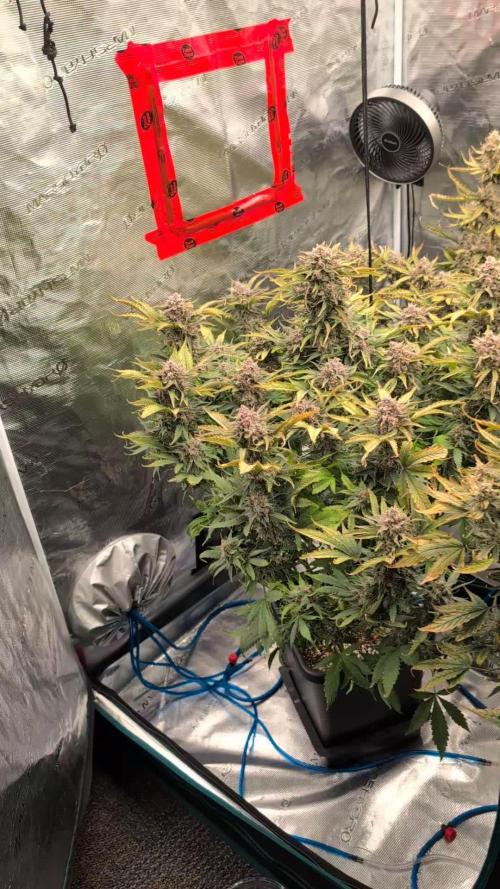
Here we are end of week 9 and this girl is coming right along. Buds have swelled up and are showing some nice colours. Buds got big enough that one of the lower branches broke right at the stalk. No big deal, happens sometimes with no support. A quick garden tie and she's all fixed. Guess no more moving this one around until harvest if I can help it. Speaking of harvest, I would say two weeks at the most, probably closer to 10 days. Trichomes are 70/30 cloudy/clear, with no visible deterioration and no reds. Nice and sticky buds with a stanky fruity smell.
Did give her a small defoliation mid week, just removing and dried/crispy but nothing major. Just removing stuff not producing energy while trying to minimize any shock so she can finish smoothly.

Likes
15
Share


@Organic473
Follow
This week has been really hot you can see it on her leaves as they curl upwards….it’s dry season here on the Caribbean…best time to grow. I am satisfied with her progress this week overall as I see side branches coming out…
Likes
13
Share


@Growgrow27
Follow
Things are starting to frost up now , smell is so strong 💪🏽 swelling is going well too had a slight issue but all fixed and back to it we go

Likes
9
Share


@JohnnyGrower
Follow
Día 14 comenzando la 3ra semana de vida, todas tienen un buen desarrollo, solo hay 1 que presenta una coloración distinta y una morfología diferente a las demás, probablemente sea solo un fenotipo distinto, además plante una nueva semilla en la maceta que estaba vacía
Processing
Likes
4
Share


@Autounderground0513
Follow
This week everything went as I figured it would she has made a little jump 😄. I'm so happy that she has matured.Sorry that I took a minute to post for week 4 . Hopefully she should start to get her bud site started in week 5 I can't wait to post her.


Processing
Likes
19
Share


@Bushman_Genetika
Follow
Week 5: This week was all about battling bugs, adjusting fans endlessly, making bug traps, blood and sweat, and of course the dreaded humidity. I found a few mosquitos and Aphids munching on my girl. Unfortunately mosquitos are a “resident” of the area I live too so had to set a few bug traps. Also ordered some cool equipment and organic insecticide to get her feeling right as rain again, really looking forward to our next week. Topped her and have already starting doing some LST to spread the branches and get more light onto new growth, from which is doing very well. Scary experience as I was afraid of hurting her, tore a leaf here or there but no harm done. Once again the great genetics from Humboldt seed organization and Quality Just Cannabis soil kept her stable and she pulled through! Sipping more water this week a little more than 5L water. Still battling humidity with the fluctuating weather but that should be sorted in the next few days... until next week ✌️

Likes
105
Share


@BioBuds
Follow
One was more bushy and was a little behind. As I said, they had some heat stress and I think the 15-liter pots are too small when the environment is hotter.
Still, they are totally worth growing and joy to smoke. They don't need much curing and the weed is very very strong.
Going to try this strain again very soon!!
Likes
18
Share


@TheHighNews
Follow
Day 8 of Flowering, this babies are stretching hard and starting to show white pistils and i couldn't be happier! Even if the soil is pre
fertilized i just added 0,5ml of Biomagno FiorituraOM to help the plants start flowering,
as @Mangodudu said EC was only 1,2 it shouldn't get them overfert.
The structure il very nice and the plants are vigorous and always with praying leaves, i defoliated pretty hard and fixed every branch to a bamboo stick,
so they don't have to carry the weight of the buds in the next weeks and focus all the energies in the bulking up the buds.
I also just lowered the lights to get some light stress and help the plants stretch harder, and the response was amazing they just doubled the size in this first week of flower,
I'm also very happy with this canna plus pro soil, it takes the water and drys very fast it think it's thanks to all the cocco in it.

Processing
Likes
15
Share


@Dico29
Follow
They are starting to shoot some pistils. I added some random store fertilizer that is 1-4-7 and put it in the 3 gallon. I poured it in a water bottle and just eye balled it pretty slow and not for long. It seems to help


Likes
1
Share
@Olduffybastard88
Follow
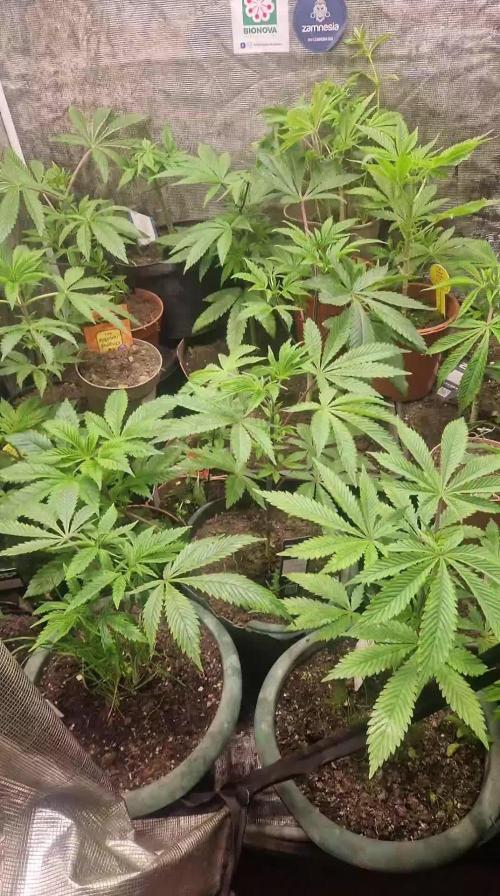
What a difference a week makes afyee all they bad weather the girls pulled through and are loving the better temperatures in the tent and have made progress this week hoping for more movement and shoots this week

Likes
45
Share


@Dirty_Hippy
Follow
They are looking strong and healthy with decent branching before LST. I expect them to be some nice little bushes. I am thoroughly impressed at the rate of growth and maturing on these. I really hope they don't finish in 7 weeks. They are already clearly into their stretch and beginning to make bud sites on day 26.
