


shorts_status_processing


@Weedganja420
Follow
Pues asi va esta bonita cepa con 68 dias desde su germinacion y 30 dias a 12/12 horas de luz.
Me encanta la estructura y la resina que esta produciendo.
Esta oliendo de maravilla!!!


@I_roll_my_own_420
Follow
All plants harvested after 56h of total dark. I love the quantity and even more the quality of buds. Now, time to let them dry. All sugar leaves are in the freezer, ready for cooking oil infusions. I did trim most of them, but some smaller buds will be dry trimmed after drying. I did not measure wet weight, I just dont find it useful at all. I will upload harvest when buds are dry and measure the dry weight. Cheers!


@masterofsmeagol
Follow
6/23 Due To The Two 8 Day weeks this week will only consist of five days to get me back on track. SEE LAST WEEK FOR DETAILS. I DID ANOTHER EIGHT DAY WEEK. I'LL DO THIS WEEK AS SIX DAYS. THAT WAY IM BACK ON SCHEDULE. WATERED 6/22. WENT BACK AT NIGHTCAND WATERED ANOTHER GALLON WITH 1/3 TSP Armor Si. I mixed the solution with kelp you kelp me but I dumped it out. I've mixed silica with other nutes before but I had read something earlier about bioavailability issues and I didn't want to risk it. My plants are the healthiest I've ever grown. I'm considering transplanting the large 10th planet that I'm light depping. I also need to develop my ipm and my nute schedule. Still gonna have to keep an eye onvthe water situation. Luckily I have a buddy in my corner that's co tinualkt Bern a great help.
WENT BACK OVER AROUND NOON. BEAUTIFUL OUTSIDE AND THE PLANTS WERE LOVING THIS SUN. I DEFOLIATED SOME BURNED LEAVES AND MIXED A SOLUTION IF KELP ME KELP YOU THAT I PLAN TO FEED TO THE GARDEN TODAY. IM HAPPY WITH HOW THINGS ARE GOING. WE HAVE SOME RAIN AND THINDERSTORMS COMING. I NEED TO GET MY IPM UP AND RUNNING AND THE NUTES ONLINE. I ALSO NEED TO DECIDE IF IM GOING TO TRANSPLANT THE LIGHT DEP 10th PLANET. Went back over to put the girls to bed at six and if was still 90 degrees. The water from yesterday had dissipated. The tops were dust dry. I mixed two gallons of kelp you kelp me and fed it to the garden. Afterwards I pointed qbd found a couple plants that were more open to the wind were a little lighter. I know tomorrow will be very hot. Maybe quarter inch of rain. However after that it will rain (showers) off and on for days. I wanted to make sure the girls had what the needed to make it through tjis heat wave until they get that rain. I had another gallon mixed up and I'm thinking I should've given it to them. Oh well. I'd rather underwater than overwater any day. I did notice a burnt top on the plant furthest from the tarp that the sun JUST BARELY TOUCHES when the rest are in shade. I'll just raise the tarp a little. These are tiny problems. Can't upload video until tomorrow.
6/24 Good thing u gave the plants that water. I know it wasn't much but we didn't get any rain. Suppised to get a qtr in today and another qtr in tomorrow. Then rain a couple more days. It's working our really good for my watering schedule lol. Yesterday the girls got there first dose of a bottled nute. They got two gallons of kelp me kelp you (1/3 tsp per gallon) and another gallon of just phed water. I was going to do another gallon but held off due to the threat of syring rain. Didn't get it bur it looks like the plants loved the kelp. It had reached 90 yesterday. They look better today. It's 70 at 9 today. I LST the 10th planet in the 3 gallon. It's getting huge. I should start a separate diary for those three light dep plants. Its cool as hell watching this. One of the purple punches is flowering pretty good. I probably should start another diary for them. I'll be starting to feed my plants soon. Wondering if I should pinch plants again. TUCKED THE LITTLE GIRLS IN AT SIX AND SHOT A VIDEO AND TOOK SOME PUCTURES. PLANTS LOOKED PHENOMINAL! GOT HOME AND AROUND SEVEN IT JUST STARTED RORREBTIAL DOWNPOURS! THE TYPE OF RAIN THAT BREAKS STEMS. I SHOULDVE PUT MY OTHET TARP UP BUT I DIDNT. I WISH I HAD. IM A LITTLE NERVOUS. I KNOW THESE GIRLS ARE STRONG THOUGH! TOMORROW. ILL ROLL THE RARP UP AND SECURE THE BOTTOM FOR FAST ACCESS. IM ALSO GOING TO KOOK INTO FINDING A TOP FOR MY CAGE I CAN USE IN INCLIMENT WEATHER.
6/25 That little qtr in of rain we were supposed to get turned into torrential downpours and high winds. Luckily no REAL damage. If you watch the video you'll see what I mean. I'm going to havecto be cognizant moving forward. Noticed a few chunks from leaves butvplants are still healthy. I'm surprised how well these girls withstood this storm. They are certainly resilient. The 2 purple punch 1 10th planet that I'm light depping are flowering nicely now. They missed all the commotion from the storm as they were inside. It's smelling good. I'm happy.
6/26 It's what a friend would say is "maineing") out. That mistcthe plants love. I'm surprised the plants are doing as good as they have been considering the wind. Will be adding nutes soon. Need to add extra supports too. Light dep
6/27 Brief periods or torrential downpours. Light depped 3 gallon 0lants are under an overhanfcwhete the hatsxrain can't hurt them but they still get sun. They are really starting to flower now! I'm going to begin feeding with a base nute and a flower nute I think. I'm thinking about giving the light dep some open sesame or something similar. I need to set up a nute program soon but the plants ALL look so healthy! And it's been raining! I've only watered like once or twice since they've been in the big pots. I've seen zero pests aside from a chunk missing from a grasshopper. Usually by now I'd have battled half a dozen things and be battling another half dozen. However I was posing from clones. These are seeds and boy don't I see the difference!


@GoldenWeedGrower
Follow
D64/F20 - 03/06/23 - The situation is under control now. I'm going to change water asap (maybe tonight)
D65/F21 - 04/06/23 - 👉 Water changed, some hours without nutes...
D66/F22 - 05/06/23 - EC 0.8 ph 7.0
D67/F23 - 06/06/23 - EC 0.8 ph 7.3 - added pH-
D68/F24 - 07/06/23 - Added water and nutes EC 0.9 and pH 6.3
D69/F25 - 08/06/23 - EC 0.9 and pH 6.3
D70/F26 - 09/06/23 - Added water and Calmag, Connoisseur Bloom A-B. Added pH-. EC 1.0 and pH 5.5

@BunnyBud
Follow
Week 3 – Vegetative Stage | Tester Log
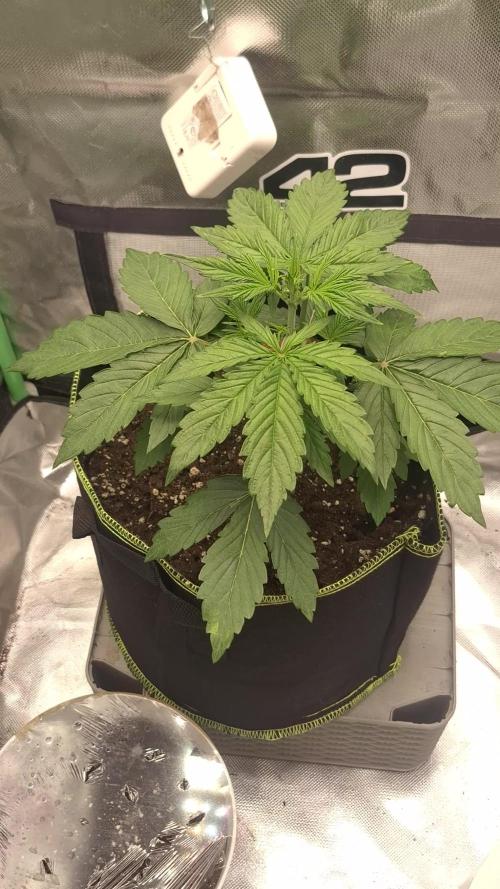
The plant has now entered week 3 of vegetative growth. A light feeding schedule with base nutrients and CalMag supplementation was introduced early to support healthy metabolic activity.
The plant shows good vigor and compact morphology, with short internodal spacing and symmetrical lateral development, indicating efficient light exposure and stable growth. Leaf color is mostly uniform healthy green.
A slight observation: the new emerging leaves show very light yellowing on the tips. At the moment it’s unclear whether this is caused by light proximity or a very mild nutrient excess, but it remains minimal and will be monitored and adjusted if necessary.
The seedling was kept under 12h light during the first week for acclimation, then switched to 18h light, which is currently maintained to optimize vegetative growth.
Overall the Sticky Orange XXL Auto continues to show healthy and stable early development going into the next growth phase. 🌱


@Budhunter
Follow
Week 2 Flowering - day 13 of flower - day 69 of life
Jealousy is another one I am happy with. Leaves seem to be praying 😍
Bud sides are not looking big but overall the plant is great(in my point of view).
I will do a nice defoliation and lollipoping once they complete 3 weeks of flowering.
For now trying my best to help them fatten up and get tasty 🙏🏼


@I_roll_my_own_420
Follow
Another week passed and all plants looking much more tough, healthy and new leaves are not curling at all. So recovery after wind burn went well. Also, yellowing stopped on new leaves, so I fixed mag deficiency I guess. Plants started to produce nice tropical smell, and I know its a good sign. Also lots of trichomes started on all jacks and critical jack. Only the talles plant, Somango, is still not fast as others but I guess its just becouse of the pheno. Cheers guys!


@BruWeed
Follow
Esta planta estuvo dos semanas en etapa de enraizamiento, tres en crecimiento y ocho semanas en floración.
No tuvo ningún problema con nada, me resultó de fácil cultivo.
En esta cosecha obtuve ciento cuarenta y siete g en total.
Utilice una maceta Root House de 10L.
El sustracto que utilice fue de Nube Verde, en su composición se incluye turba de categoría, perlita, humus, compost, tierra, dolomita y vermiculita.
Sin duda volvería a probar esta genética otra vez, supero mis expectativas.


@No_Clout
Follow
Flowering is starting well, starting to see trichs so I’ve gave them their first feed with bloom nutes (C4) which is also 95% organic which is always a bonus imo and I’ve not grown anything using organic products so I’m anticipating to see the end results. Their all 3ft tall or just under which is abit taller than usual but overall we’re looking fine, did some minor defoliation and lollipoping on the bottoms 1/4 of all 3.


@Tropicannibis_Todd
Follow
👉Alrighty Then👈
👉Purple Punch F1👈
So we are now moving into week 4 of flower and everything is looking good 👍
Had some real nice growth this week , had to do a little leaf management👈
Low Stress Training to pull the lower branches out ....
We also did a topping of this one , as she was getting pretty tall 😳
Everything is looking good 👍sidenote , I am using my well water which is hard so I am having slight issues 😅
So ive up'd the nutrients to accommodate the moving to Flower .....
Soil by Promix
Nutrients by Cronks
Lights by MarsHydro.ca FC4800 X UR45 X Adlite Deep Red And Blue
Tent 4x4x6.5 & Equipment by MarsHydro.ca
High reflectivity inner mylar
Thick Oxford fabric
Smooth heavy duty zipper
Sturdy metal frame
Zipper blackout cloth
Good anti light leakage performance
The 6in Inline kicks ass moves alot of air
●Blue Light Effect:
Blue light shortens internodes, resulting in shorter, stronger plants, ideal for supporting fruit development later. During vegetative growth, blue light promotes lateral branch development effectively.
Well this should be fun 🙃
Thanks to all my growmies out there for stopping by its much appreciated 👈
👉Happy Growing👈


@Wastent91
Follow
Eccoci ragazzi, questa nuova collaborazione con Grower choice seeds è iniziata! Dal vigore che ha avuto da subito da quando è germinata, posso dire che stia crescendo una bella ragazza in salute! Se volete sostenermi e acquistare questi semi vi lascio i link qui sotto, che se entrate con il mio link di affiliato avete degli sconti e allo stesso tempo mi aiutate a crescere! Grazie di tutto un buon 420 a tutti!
https://www.growerschoiceseeds.com/ref/445
use code "WARM15" for an esclusive 15% sale on all seeds!


@HighOhioAn
Follow
What can I say mimosa cake auto still frosty and thick as ever which I could’ve had her dialed in sooner truly think this could be an amazing Grow cannot wait to grow her again nice dense buds frosty cola smells of mimosa cake. 🔥💯


@TegridyCal
Follow
The beautiful Purple Lemonade is growing really well, it is very large compared to the other little sisters, bushy has responded well to the topping and the first inflorescences are coming out, honestly we can't wait to see these beautiful purple fruits that promises.





@Bread_n_Buds
Follow
Here our Gush Mintz are starting to give their best.
In this diary you will find the plant worked with the techniques in this case the first topping was done, we cleaned everything else creating the Mainfold and we are going to work everything with the main lining. We are at the first topping and we have two mini branches growing.
The other one you will find in the diary next worked without the application of techniques that involve cuts to preserve its speed.
Comparison is the salt of experience.
We have started the Plagron fertilization program, we are in 100% organic configuration, the soil is recycled Promix + 1/3 fresh soil + 10% Perlite + RQS Mycorrhiza Mix (4gr in the mix, 1 gr under the small fiber pot).
We are administering // 1 ml/l of Power Roots - 1 ml/l of Pure Zym - 1 ml/l of Sugar Royal - 3 ml/l of Alga Grow
I have doubts about the compatibility of Pure Zym with mycorrhizae. If in doubt, ask the experts, do not mix too much at random.
https://plagron.com/en
The doubts about the compatibility Pure Zym / Mycorrhizae have been dispelled, they can go well together according to Plagron experts. If someone tells you that enzymes eat mycorrhizae, which in principle may seem possible, explain to them that it is not true.
https://www.royalqueenseeds.it/growing/452-easy-roots-mix-di-micorrhize.html
Try this strain, it's a top strain of the last few years very high thc level ---- https://www.zamnesia.io/it/11234-zamnesia-seeds-gush-mintz-automatic.html
Brief description of Zamnesia // Gush Mintz Auto is a relaxing hybrid strain that derives from the original Gush Mintz and a high-performance ruderalis specimen. This cross produced a plant with 70% indica and 30% sativa genetics. Her parents have given her a range of interesting traits, including mint and candy flavors and a high THC content of 20%. Smoking these buds provides creative vibes, a sense of euphoria and a pleasant sensation from head to toe. In addition to its enticing flavors and powerful effects, Gush Mintz Auto produces large yields of compact buds in just 9–10 weeks from germination.
Gush Mintz Auto is extremely easy to grow, with plants reaching an average height of 70cm indoors and 120cm outdoors, making her ideal for discreet grows or limited spaces both indoors and outdoors. This strain is well suited to LST (Low Stress Training) and performs best in a ScrOG setup (a technique that optimizes light exposure to maximize yields).
Punching aromas and deeply relaxing effects
As she grows, Gush Mintz Auto's aroma intensifies, releasing sweet and minty notes. This refreshing flavor profile really comes into its own when smoked, offering an inviting combination of minty freshness and sweetness. The effects are deeply relaxing, enveloping the body in a pleasant well-being without being too sedative. Gush Mintz Auto is perfect for those seeking creative inspiration, making writing, painting or music-making sessions smoother and more inspiring.
You can find the whole world of growing on Zamnesia and more, just check out the site and you will find "all the best that nature has to offer" in various shapes and colours.
The new strains are fantastic and the old ones are no exception... p.s. no hermaphrodites so far, can you growers say the same?
---- // www.zamnesia.com


@SleepHuntMadScience
Follow
Getting fat. Minor powdery mildew, starting night dehumidifier this week. Still aiming for 3 lbs dry bud. Ww x gdp from last years seed project.


@HOME_GROWBOOK
Follow
In dieser Phase haben beide Pflanzen – 24K Gold und Gelato 33 – stark an Volumen gewonnen. Das Wachstum ist dicht und gesund, und die ersten Trainingstechniken zeigen klare Wirkung.
Bei 24K Gold wurde ein gezieltes Topping durchgeführt, um die Seitentriebe zu fördern und ein flaches, gleichmäßiges Blätterdach zu formen. Die Pflanze reagierte stressfrei und zeigt bereits neue, kräftige Triebspitzen. Die internodale Abstände bleiben kompakt, die Blätter sind groß und tiefgrün – ein Hinweis auf starke Photosyntheseleistung.
Gelato 33 wurde leicht gebunden (LST), um die Haupttriebe nach außen zu lenken und mehr Licht in die Mitte zu bringen. Das Resultat ist ein schön offenes Wachstum mit vielen gleichwertigen Triebspitzen. Ihr Aufbau bleibt kompakt, die Blätter sind breit und fleischig – typisch für die Indica-Dominanz dieser Genetik.
Die Tropfbewässerung läuft konstant, und das Canna Coco A + B Schema wurde auf 4 ml/l erhöht. EC liegt bei etwa 1.4, pH bei 5.8–5.9. Die Pflanzen reagieren ideal auf die Dosierung, keine Anzeichen von Überdüngung oder Lockout.
Klimabedingungen stabil:
🌡️ Temperatur ~25 °C
💧 Luftfeuchtigkeit ~60 %
💨 Luftzirkulation gut – Ventilator sorgt für kräftige Stämme
Beide Pflanzen wirken vital, aufrecht und voller Energie. Das Fundament für das spätere ScroG-Netz ist gelegt.
24K Gold zeigt kräftige Vertikalpower – Gelato 33 besticht durch ihre symmetrische, buschige Struktur.
Ein sehr erfolgreicher Abschnitt in der Veg-Phase – Training, Nährstoffversorgung und Wurzelentwicklung sind perfekt im Einklang




@Ultraviolet
Follow
Yellow butterfly came to see me the other day; that was nice.
Starting to show signs of stress on the odd leaf, localized isolated blips, blemishes, who said growing up was going to be easy!
Smaller leaves have less surface area for stomata to occupy, so the stomata are packed more densely to maintain adequate gas exchange. Smaller leaves might have higher stomatal density to compensate for their smaller size, potentially maximizing carbon uptake and minimizing water loss. Environmental conditions like light intensity and water availability can influence stomatal density, and these factors can affect leaf size as well. Leaf development involves cell division and expansion, and stomatal differentiation is sensitive to these processes. In essence, the smaller leaf size can lead to a higher stomatal density due to the constraints of available space and the need to optimize gas exchange for photosynthesis and transpiration. In the long term, UV-B radiation can lead to more complex changes in stomatal morphology, including effects on both stomatal density and size, potentially impacting carbon sequestration and water use. In essence, UV-B can be a double-edged sword for stomata: It can induce stomatal closure and potentially reduce stomatal size, but it may also trigger an increase in stomatal density as a compensatory mechanism. It is generally more efficient for gas exchange to have smaller leaves with a higher stomatal density, rather than large leaves with lower stomatal density. This is because smaller stomata can facilitate faster gas exchange due to shorter diffusion pathways, even though they may have the same total pore area as fewer, larger stomata. Leaf size tends to decrease in colder climates to reduce heat loss, while larger leaves are more common in warmer, humid environments. Plants in arid regions often develop smaller leaves with a thicker cuticle and/or hairs to minimize water loss through transpiration. Conversely, plants in wet environments may have larger leaves and drip tips to facilitate water runoff. Leaf size and shape can vary based on light availability. For example, leaves in shaded areas may be larger and thinner to maximize light absorption. Leaf mass per area (LMA) can be higher in stressful environments with limited nutrients, indicating a greater investment in structural components for protection and critical resource conservation. Wind speed, humidity, and soil conditions can also influence leaf morphology, leading to variations in leaf shape, size, and surface characteristics. Small leaves: Reduce water loss in arid or cold climates.
Environmental conditions significantly affect gene expression in plants. Plants are sessile organisms, meaning they cannot move to escape unfavorable conditions, so they rely on gene expression to adapt to their surroundings. Environmental factors like light, temperature, water, and nutrient availability can trigger changes in gene expression, allowing plants to respond to and survive in diverse environments.
Depending on the environment a young seedling encounters, the developmental program following seed germination could be skotomorphogenesis in the dark or photomorphogenesis in the light. Light signals are interpreted by a repertoire of photoreceptors followed by sophisticated gene expression networks, eventually resulting in developmental changes. The expression and functions of photoreceptors and key signaling molecules are highly coordinated and regulated at multiple levels of the central dogma in molecular biology. Light activates gene expression through the actions of positive transcriptional regulators and the relaxation of chromatin by histone acetylation. Small regulatory RNAs help attenuate the expression of light-responsive genes. Alternative splicing, protein phosphorylation/dephosphorylation, the formation of diverse transcriptional complexes, and selective protein degradation all contribute to proteome diversity and change the functions of individual proteins.
Photomorphogenesis, the light-driven developmental changes in plants, significantly impacts gene expression. It involves a cascade of events where light signals, perceived by photoreceptors, trigger changes in gene expression patterns, ultimately leading to the development of a plant in response to its light environment.
Genes are expressed, not dictated! While having the potential to encode proteins, genes are not automatically and constantly active. Instead, their expression (the process of turning them into proteins) is carefully regulated by the cell, responding to internal and external signals. This means that genes can be "turned on" or "turned off," and the level of expression can be adjusted, depending on the cell's needs and the surrounding environment. In plants, genes are not simply "on" or "off" but rather their expression is carefully regulated based on various factors, including the cell type, developmental stage, and environmental conditions. This means that while all cells in a plant contain the same genetic information (the same genes), different cells will express different subsets of those genes at different times. This regulation is crucial for the proper functioning and development of the plant.
When a green plant is exposed to red light, much of the red light is absorbed, but some is also reflected back. The reflected red light, along with any blue light reflected from other parts of the plant, can be perceived by our eyes as purple.
Carotenoids absorb light in blue-green region of the visible spectrum, complementing chlorophyll's absorption in the red region. They safeguard the photosynthetic machinery from excessive light by activating singlet oxygen, an oxidant formed during photosynthesis. Carotenoids also quench triplet chlorophyll, which can negatively affect photosynthesis, and scavenge reactive oxygen species (ROS) that can damage cellular proteins. Additionally, carotenoid derivatives signal plant development and responses to environmental cues. They serve as precursors for the biosynthesis of phytohormones such as abscisic acid () and strigolactones (SLs). These pigments are responsible for the orange, red, and yellow hues of fruits and vegetables, while acting as free scavengers to protect plants during photosynthesis.
Singlet oxygen (¹O₂) is an electronically excited state of molecular oxygen (O₂). Singlet oxygen is produced as a byproduct during photosynthesis, primarily within the photosystem II (PSII) reaction center and light-harvesting antenna complex. This occurs when excess energy from excited chlorophyll molecules is transferred to molecular oxygen. While singlet oxygen can cause oxidative damage, plants have mechanisms to manage its production and mitigate its harmful effects.
Singlet oxygen (¹O₂) is considered a reactive oxygen species (ROS). It's a form of oxygen with higher energy and reactivity compared to the more common triplet oxygen found in its ground state. Singlet oxygen is generated both in biological systems, such as during photosynthesis in plants, and in cellular processes, and through chemical and photochemical reactions. While singlet oxygen is a ROS, it's important to note that it differs from other ROS like superoxide (O₂⁻), hydrogen peroxide (H₂O₂), and hydroxyl radicals (OH) in its formation, reactivity, and specific biological roles. Non-photochemical quenching (NPQ) protects plants from damage caused by reactive oxygen species (ROS) by dissipating excess light energy as heat. This process reduces the overexcitation of photosynthetic pigments, which can lead to the production of ROS, thus mitigating the potential for photodamage. Zeaxanthin, a carotenoid pigment, plays a crucial role in photoprotection in plants by both enhancing non-photochemical quenching (NPQ) and scavenging reactive oxygen species (ROS). In high-light conditions, zeaxanthin is synthesized from violaxanthin through the xanthophyll cycle, and this zeaxanthin then facilitates heat dissipation of excess light energy (NPQ) and quenches harmful ROS.
The Issue of Singlet Oxygen!!
ROS Formation: Blue light, with its higher energy photons, can promote the formation of reactive oxygen species (ROS), including singlet oxygen, within the plant.
Potential Damage: High levels of ROS can damage cellular components, including proteins, lipids, and DNA, potentially impacting plant health and productivity.
Balancing Act: A balanced spectrum of light, including both blue and red light, is crucial for mitigating the harmful effects of excessive blue light and promoting optimal plant growth and stress tolerance.
The Importance of Red Light:
Red light (especially far-red) can help to mitigate the negative effects of excessive blue light by:
Balancing the Photoreceptor Response: Red light can influence the activity of photoreceptors like phytochrome, which are involved in regulating plant responses to different light wavelengths.
Enhancing Antioxidant Production: Red and blue light can stimulate the production of antioxidants, which help to neutralize ROS and protect the plant from oxidative damage.
Optimizing Photosynthesis: Red light is efficiently used in photosynthesis, and its combination with blue light can lead to increased photosynthetic efficiency and biomass production.
In controlled environments like greenhouses and vertical farms, optimizing the ratio of blue and red light is a key strategy for promoting healthy plant growth and yield.
Understanding the interplay between blue light signaling, ROS production, and antioxidant defense mechanisms can inform breeding programs and biotechnological interventions aimed at improving plant stress resistance. In summary, while blue light is essential for plant development and photosynthesis, it's crucial to balance it with other light wavelengths, particularly red light, to prevent excessive ROS formation and promote overall plant health. Oxidative damage in plants occurs when there's an imbalance between the production of reactive oxygen species (ROS) and the plant's ability to neutralize them, leading to cellular damage. This imbalance, known as oxidative stress, can result from various environmental stressors, affecting plant growth, development, and overall productivity.
Causes of Oxidative Damage: Abiotic stresses: These include extreme temperatures (heat and cold), drought, salinity, heavy metal toxicity, and excessive light. Biotic stresses: Pathogen attacks and insect infestations can also trigger oxidative stress. Metabolic processes: Normal cellular activities, particularly in chloroplasts, mitochondria, and peroxisomes, can generate ROS as byproducts. Certain chlorophyll biosynthesis intermediates can produce singlet oxygen (1O2), a potent ROS, leading to oxidative damage. ROS can damage lipids (lipid peroxidation), proteins, carbohydrates, and nucleic acids (DNA). Oxidative stress can compromise the integrity of cell membranes, affecting their function and permeability. Oxidative damage can interfere with essential cellular functions, including photosynthesis, respiration, and signal transduction. In severe cases, oxidative stress can trigger programmed cell death (apoptosis). Oxidative damage can lead to stunted growth, reduced biomass, and lower crop yields.
Plants have evolved intricate antioxidant defense systems to counteract oxidative stress. These include: Enzymes like superoxide dismutase (SOD), catalase (CAT), and various peroxidases scavenge ROS and neutralize their damaging effects. Antioxidant molecules like glutathione, ascorbic acid (vitamin C), C60 fullerene, and carotenoids directly neutralize ROS. Developing plant varieties with gene expression focused on enhanced antioxidant capacity and stress tolerance is crucial. Optimizing irrigation, fertilization, and other management practices can help minimize stress and oxidative damage. Applying antioxidant compounds or elicitors can help plants cope with oxidative stress. Introducing genes for enhanced antioxidant enzymes or stress-related proteins over generations.
Phytohormones, also known as plant hormones, are a group of naturally occurring organic compounds that regulate plant growth, development, and various physiological processes. The five major classes of phytohormones are: auxins, gibberellins, cytokinins, ethylene, and abscisic acid. In addition to these, other phytohormones like brassinosteroids, jasmonates, and salicylates also play significant roles.
Here's a breakdown of the key phytohormones:
Auxins: Primarily involved in cell elongation, root initiation, and apical dominance.
Gibberellins: Promote stem elongation, seed germination, and flowering.
Cytokinins: Stimulate cell division and differentiation, and delay leaf senescence.
Ethylene: Regulates fruit ripening, leaf abscission, and senescence.
Abscisic acid (ABA): Plays a role in seed dormancy, stomatal closure, and stress responses.
Brassinosteroids: Involved in cell elongation, division, and stress responses.
Jasmonates: Regulate plant defense against pathogens and herbivores, as well as other processes.
Salicylic acid: Plays a role in plant defense against pathogens.
1. Red and Far-Red Light (Phytochromes):
Red light:
Primarily activates the phytochrome system, converting it to its active form (Pfr), which promotes processes like stem elongation and flowering.
Far-red light:
Inhibits the phytochrome system by converting the active Pfr form back to the inactive Pr form. This can trigger shade avoidance responses and inhibit germination.
Phytohormones:
Red and far-red light regulate phytohormones like auxin and gibberellins, which are involved in stem elongation and other growth processes.
2. Blue Light (Cryptochromes and Phototropins):
Blue light:
Activates cryptochromes and phototropins, which are involved in various processes like stomatal opening, seedling de-etiolation, and phototropism (growth towards light).
Phytohormones:
Blue light affects auxin levels, influencing stem growth, and also impacts other phytohormones involved in these processes.
Example:
Blue light can promote vegetative growth and can interact with red light to promote flowering.
3. UV-B Light (UV-B Receptors):
UV-B light:
Perceived by UVR8 receptors, it can affect plant growth and development and has roles in stress responses, like UV protection.
Phytohormones:
UV-B light can influence phytohormones involved in stress responses, potentially affecting growth and development.
4. Other Colors:
Green light:
Plants are generally less sensitive to green light, as chlorophyll reflects it.
Other wavelengths:
While less studied, other wavelengths can also influence plant growth and development through interactions with different photoreceptors and phytohormones.
Key Points:
Cross-Signaling:
Plants often experience a mix of light wavelengths, leading to complex interactions between different photoreceptors and phytohormones.
Species Variability:
The precise effects of light color on phytohormones can vary between different plant species.
Hormonal Interactions:
Phytohormones don't act in isolation; their interactions and interplay with other phytohormones and environmental signals are critical for plant responses.
The spectral ratio of light (the composition of different colors of light) significantly influences a plant's hormonal balance. Different wavelengths of light are perceived by specific photoreceptors in plants, which in turn regulate the production and activity of various plant hormones (phytohormones). These hormones then control a wide range of developmental processes.