


Processing
Likes
Comments
Share


@Teamdirtbag2
Follow
Thanks again Short Stuff
Tha Shiznit this one should get real nice. For sure.
Tha Shiznit is an Auto strain of the highest possible quality. The Urban Dictionary describes the phrase, ‘Tha Shiznit’ as ‘The greatest, the best ever, simply the shit…’ and this autoflowering strain matches up to that description.
Tha Shiznit is a complex hybrid of Amnesia kush, Diesel, Master Kush and Jack Herer so you have some serious genetic quality in the mix.
Shiznit produces medium to large, plants which can easily surpass 1m indoor. She has larger internodal spacing with chunky buds forming at each internode. She will generally have a thick central stem and a dominant main cola, large fan leaves and thick clustered buds. This plant is extremely resinous as you would expect for a strain with so much Kush heritage and in a percentage of plants you can expect to see some pink and purple coloration.
Tha Shiznit gives off a classic old school skunky flavour/fruity and some phenotypes express a unique strawberry smell. When smoked you get an intensely strong flavour on the inhale with the fruity aromas coming through on the exhale.
This strain was tested at Spannabis 2014 and recorded THC levels of 20.6% which for an autoflower strain is quite incredible. These high levels of THC mean Tha Shiznit is one of our most potent straisn and produces a powerful cerebral high that keeps you chatty and motivated.
Tha Shiznit is a very straight forward strain which can handle plenty of nutrients and requires little attention. If grown with some care she can easily produce 60g+ per plant.


Likes
20
Share


@420DeepGrow
Follow
Gracias al equipo de Divine Seeds, Marshydro y XpertNutrients sin ellos esto no seria posible.
💐🍁Fractal:
La semilla de marihuana Fractal es una cepa especialmente psicodélica que Semillas Divinas desarrolló para experiencias esotéricas y místicas, meditación y creatividad. La potente y vívida Skunk#1 fue cruzada con una pegajosa Afghani Indica, y el resultado es ahora conocido como Fractal. Este exótico híbrido es resinoso, picante y productivo. La mejor opción para el cultivo comercial: un compromiso entre mayores rendimientos y maduración rápida.
En interiores se espera una altura de 1,70 m, en exteriores las plantas crecen hasta 2 m. Fractal se adapta a todo tipo de entorno de cultivo: cajas de cultivo, instalaciones hidropónicas o aeropónicas, plantaciones exteriores, balcones, terrazas e invernaderos. Para un mejor rendimiento se recomienda entrenar a las plantas de Fractal para ampliar su estructura y limitar su crecimiento vertical. Usar ScroG o SoG, LST, FIM o topping.
Fractal tiene una inmunidad inherente al moho y a las plagas de insectos, pero como sus colas son gruesas, proteja sus plantas del aire viciado. También durante las semanas de lluvia su plantación puede necesitar ser cubierta. Listo para la cosecha al aire libre en octubre. Grandes y densos cogollos.
Los cogollos de marihuana de la variedad Fractral huelen a hachís y algo a tierra, desprenden cedro y notas afrutadas al romperse. Mida su porción con cuidado: su potencia está por encima de la media. Con Fractal experimentas un apedreamiento general que te hace sentarte o frena tu movimiento. Perfecto para pasar una noche junto a una hoguera. Es mejor consumirlo por la noche.
🚀🌻 Consigue aquí tus semillas:
https://divineseeds.net/es/fractal-fem/
💡FC6500: Eficiencia líder en el mercado: la lámpara de cultivo LED FC-E6500, que ostenta un estatus líder en el mercado, es una solución rentable con un PPE de 2,8 µmol/J y un rendimiento máximo de 2,5 g/vatio. Ofrece un PPF alto de 2026 umol/S y es adecuada para una cobertura de vegetación de 1,50 m x 1,50 m y una cobertura de flores de 1,20 m x 1,20 m.
Iluminación versátil y uniforme.
https://marshydro.eu/products/mars-hydro-fc-e-6500-730w-commercial-led-grow-light/?gad_source=1&gclid=Cj0KCQjw1qO0BhDwARIsANfnkv9IIrYSbmJqz8PqpJOIyWwJfp5bc3SGJgUV68USLQ4tjmXDYwoBuAsaAue3EALw_wcB
🚥 MarsHydro ADLITE UV/IR/RED:
Para lograr un crecimiento óptimo de las plantas y maximizar los rendimientos es un arte simple que depende en gran medida de las condiciones ambientales adecuadas. Reconociendo las limitaciones de la iluminación natural y las soluciones de iluminación tradicionales para satisfacer estas necesidades únicas, lanzamos ADLITE. Estas luces especiales UV, IR y roja están diseñadas para llenar áreas del espectro, proporcionando las altas longitudes de onda que las plantas necesitan para un crecimiento y desarrollo óptimos.
Consigue aqui tu Adlite:
https://marshydro.eu/collections/adlite-supplemental-lights/
🏠 : Marshydro 1.50 x 1.50 x 1.80, carpa 100% estanca con ventanas laterales para llegar a todos los lugares durante el grow
https://marshydro.eu/products/diy-150x150x200cm-grow-tent-kit
🌬️💨 Marshydro 6inch + filtro carbon para evitar olores indeseables.
https://marshydro.eu/products/ifresh-smart-6inch-filter-kits/
🍣🍦🌴 Xpert Nutrients es una empresa especializada en la producción y comercialización de fertilizantes líquidos y tierras, que garantizan excelentes cosechas y un crecimiento activo para sus plantas durante todas las fases de cultivo.
Consigue aqui tus Nutrientes:
https://xpertnutrients.com/es/shop/
📆 Semana 6:
Debido a unos cortes en el suministro de luz, ellas han ralentizado algo su desarrollo.
Se siguen formando los cogollos aunque algo mas espigados de lo que me gustaría, algunas variedades han aguantado bastante bien este estres, lo que indica una buena genetica, entre ellas está esta variedad.
Continuo con las dosis de nutrientes recomendadas por el fabricante.
Potencia del foco: 100
Adlite: máximas horas.

Likes
9
Share


@Sativa763
Follow
Hiya Day 40 today. 09.06.
still some problems (as you can see on the most of the leaves).
but we will get this to an end and the smell is already amazing.
really sweet aroma in the tent and I´m already excited what the smoke will taste like.
this week only water. and maybe the last PK boost next week.
fingers crossed 😅
happy growing my friends.

Likes
15
Share


@emeraldlabs
Follow
Things are progressing nicely. Will put it in flower tent in next week or 2.
Second plant of perpetual grow ended up being a dud. A blackberry kush seed has recently been sowed.
Photos/video taken 56 days after breaking soil.

Likes
3
Share


@Unculti_responsable
Follow
Bueno esta semana estaban muy bien la planta pero ya estaba muy alta y estaban por llegar a la altura máxima de la carpa , pusimos una malla así bajaban las ramas y podían recibir mejor luz toda la planta, estamos fertilizando con engorde y guano también abonamos con humus de lombriz, la planta está muy bien así q vamos a ir viendo como sigue

Likes
21
Share


@GERGrowDesigns
Follow
Dear Growers ,
Welcome to Week 9 or Flower week 6 // Harvest from Sweet Seeds Studio 54 Stardust Auto.
Project Setup & Conditions:
• Brand/Manufacturer: Sweet
• Tent: 222cmx150cmx150cm
• Light: 2x 720 Watt Full Spectrum
• Humidity: 50%
• Soil: Narcos Organix Mix
• Nutrients: Narcos Products
• pH Value: 6
If you want Germinitation results like mine , check out Kannabia Seeds with my link [https://www.kannabia.com/de?ref=61966] and grab the germination device or the strains I used . Trust me – it’s worth it for sure !
Get another 20% Discount at all products using the code [GGD] at the Checkout .
Stay curious and keep up Growing —we look forward to welcoming you back for the next Projects soon!
Smoke Report Follow .


Likes
10
Share


@sunshinegroww
Follow
She is definitely came back to life and now under 12/12 so far looking very healthy indeed

Likes
43
Share


@Pearl
Follow
Mixing a ratio of
4ml start
5ml Katana
/ 1 litre water at PH of 6.2
Mix well and spray onto paper towels to soak,
Fold paper towel in half & place seed inside & fold to cover so the seed is in darkness,
Place damp paper towels with the seed inside a zip lock sandwich bag.
I only had to wait 28 Hours and the seed had split
She was planted into her 1st pot last night.
Happy days, looks like a very good start 🏆
😵💫🤘🏼

Likes
54
Share


@Njanne
Follow
Of the four plants Barney's LSD Auto is the most vivacious, with the Strawberry Cheesecake and Onyx only a week or so behind. The Northern Lights Auto is very disappointing with absolutely no branching...and some discolouration in the leaves. If she doesn't show some branching after topping, I'm going to pull her and grow a different plant. Real estate in my grow room is in high demand and I won't waste it on a dud plant :D


Likes
15
Share

@BLAZED
Follow
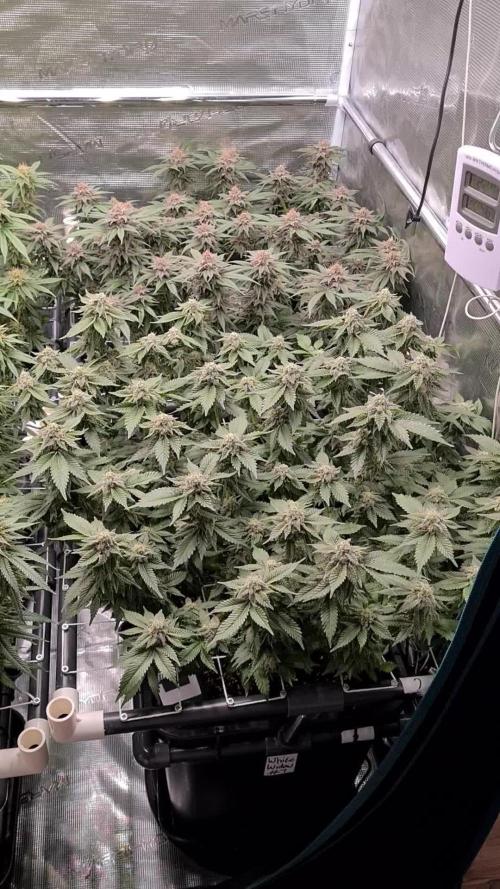
Week 17 (19-5 to 25-5)
19-5
Temps: 19.8 to 25.3 degrees
Humidity: 45% to 57%
Watering: Both 1000 ml. EC: 1.6
Lamp strength set from 70% to 75%
20-5
Temps: 20.1 to 25.4 degrees
Humidity: 46% to 55%
Watering: Both 1000 ml. EC: 0.5
21-5
Temps: 19.9 to 24.3 degrees
Humidity: 45% to 56%
Watering: Both 1000 ml. EC: 1.6
22-5
Temps: 18.2 to 23.9 degrees
Humidity: 43% to 52%
Watering: Both 1000 ml. EC: 0.5
23-5
Temps: 18.2 to 23.9 degrees
Humidity: 47% to 56%
Watering: Both 1000 ml. EC: 1.6
24-5
Temps: 18.7 to 25.4 degrees
Humidity: 50% to 54%
Watering #2: 1000 ml. EC: 0.5
25-5
Temps: 19.4 to 25.8 degrees
Humidity: 50% to 61%
Watering #1: 1000 ml. EC: 0.5

Likes
4
Share


@ChiloteAnonimo
Follow
DÍA 1 - SEMANA 1 FLORACION - [02-06-2022]
* Se empezó a ocupar Calmag de bio bizz en el riego solo con agua.
* A Todas les puse un poco de bokashi y hummus de lombriz para flora.
(06-06-2022)
* Hace unos días empece a regar con ferti de flora y complementos de flora, todo de la línea Lab LAAOS
* He tenido problema con una por el tema de riegos, espero solucionarlo a la brevedad
* Una de las enanas ya va mucho más avanzada que las otras, producto a que empezó a florar antes. Y a la otra enana la pode bastante para ver como reacciona.
#soloestoyjugando


Likes
61
Share


@Dunk_Junk
Follow
She's over doubled her height this week!!!!!!!!!!
Looks like she's going great!
An educated guess says she is just about to enter flowering in the coming week.
Likes
21
Share


@MG2009
Follow
12/24/2021
So far only one male has been identified. Glad I just reviewed my video I didn't even notice how light green #3 is, guess I mix her nutes up separately and see if she just hungry? Or naturally lighter than others. All other plants are using coast of Maine mixed into soil
(her too) so I'll give her a little mirimichi 901C this week and see what happens.
12/30/2021
Noticing that there is two distinct differences between these girls, color light green and dark green.#1,#3,#8 are light green and #2,#4,#5,#6,#7 Other than that there very much similar growth and node spacing, little differences but very happy with uniformity.Both light green and dark green maintained their magenta petiols, gonna make notes on stem rub notes next week and see how they will compare.
Likes
2
Share


@HIAZ_urbanbudfarmer
Follow
Plant at the front #3 has had slowed growth but buds are filling out pretty well now, pretty sure she is a Orange sherbet. Back 2 are on week 3 day 17!!! & Are going Awesome, buds stacking up & down every branch! Going to get some really good Cola's of them! They are loving the 730watts!’ of light, back left plant looks like a Tropicana Cookies, going to do some defoliation on her & tie branches down a bit to open up middle of plant to allow more light & air to lower bud sites.

Likes
52
Share


@DogDoctorOfficial
Follow
Let's realign our cosmic compass and embark on a harvest report for our magnificent Cosmos F1, a pure CBD strain that has taken us on an extraordinary journey. Brace yourself for cosmic revelations and interstellar delights!
After an impressive 11 weeks from seed and 7 weeks of flowering, the time has come to witness the cosmic culmination of our efforts. I carefully hung the entire Cosmos F1 plant to dry, allowing the cosmic energy to infuse every inch of this botanical marvel. It's a sight to behold, with majestic branches reaching for the cosmos, reminiscent of a cosmic dancer frozen in time.
As our cosmic queen gracefully dries, her vibrant hues continue to amaze. The shades of green, intertwined with delicate hints of purple and gold, are a testament to her genetic splendor. It's as if she has absorbed the cosmic essence of the universe, transforming it into a visually stunning spectacle.
Now, let's talk about the cosmic power of CBD. Our pure CBD strain holds the key to a transformative experience. With minimal psychoactive effects, this cosmic treasure offers a realm of therapeutic benefits. It's like a cosmic massage for the mind and body, soothing and relaxing, allowing us to explore the depths of cosmic tranquility.
The decision to hang the entire plant for drying is a testament to our dedication to preserving the cosmic integrity of our harvest. By allowing the branches to hang freely, we encourage a slow and controlled drying process, ensuring that the cosmic essence remains intact. It's a ritual that honors the plant's journey, preserving its cosmic magic for us to enjoy.
As we eagerly await the cosmic transformation, let us express our gratitude to the celestial forces that have guided us on this cosmic odyssey. The cosmos has aligned to bring us the extraordinary Cosmos F1, a gift from the cosmic garden gods themselves. We extend our heartfelt appreciation to the cosmic harmony orchestrated by @James and Royal Queen Seeds.
In the coming days, our dried cosmic buds will be ready for the next stage of our journey. From cosmic concoctions to cosmic culinary delights, the possibilities are infinite. Imagine infusing the cosmic power of CBD into soothing teas, cosmic creams, or cosmic confections. The universe is our canvas, and with our cosmic harvest, we can create cosmic masterpieces.
As we bid farewell to our Cosmos F1, let us cherish the cosmic memories we've shared. The vibrant colors, the pure CBD power, and the cosmic connection we've established with the universe. May our future endeavors be as cosmic and awe-inspiring as this one.
Until we meet again, my cosmic friends, lets keep exploring the cosmic wonders, nurturing our cosmic gardens, and let the cosmic energy guide our cosmic creations. May our harvest be abundant, our cosmic experiences be enlightening, and our cosmic journey be filled with celestial blessings.
As always thank you all for stopping by and for supporting me on this journey, i am super passion about growing and fell blessed to have you all with me on
Likes
55
Share


@nonick123
Follow
Día 92 (14/04) Riego con 500 ml H2O EC 0,45
Ha bajado algo la temperatura promedio
Día 93 (15/04) Riego con 500 ml H2O EC 0,45
Reviso los tricomas y aún le faltan unos días...
Día 94 (16/04) Riego con 500 ml H2O EC 0,45
Día 95 (17/04) Riego con 750 ml H2O EC 0,45
Tiene mucha sed! El tiempo está loco por aquí! Picos de 27 ºC en abril... 😵💫
Día 96 (18/04) Riego con 1.000 ml H2O EC 0,45
Día 97 (19/04) Riego con 500 ml H2O EC 0,45
Día 98 (20/04) Fiesta de la Cosecha!
Reviso los tricomas y están un 10% ambar, 85% nublados y 5% transparentes
Perfecta!

Likes
2
Share

@julianflores
Follow
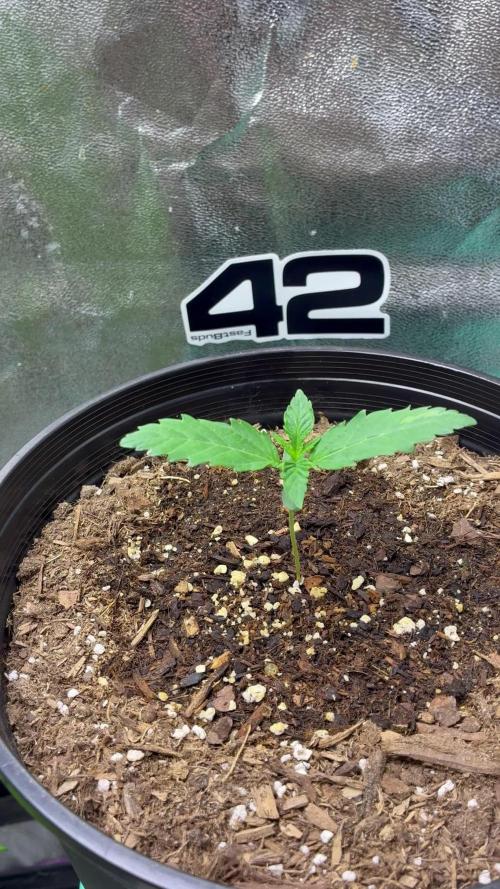
Week 1 went by smoothly. It sustained a leaf burn on single bladed leaf, it’s negligible. The plants genetics are so strong it’s unaffected.
Likes
46
Share


@Capo420
Follow
Awesome Week💚
Following some great discussions with more experienced growers, I really think we got things back on track!
🙏 To those Growmies
I really raised the ppm this week we topped out around 630 PPM
This was in an attempt to balance out some nutrition issues.
I think the ladies have responded very well. 😃🌱💪
Raised the light up to 24in as well a few days later after seeing positive changes due to feeding regiment.
Started preflowering, showing pistols on all plants. Counting down these last 7-8 weeks when the ladies beauty comes out 🤩
Will update throughout the week with photos and videos.
Happy Growing!
🤙💚💪🌱😎🌱💪💚🤙
Likes
9
Share


@Daan_Buds
Follow
Good morning everyone😁😁
Day 16 of the flowering period plant is showing me she want some extra nutes. So i raised it with some extra pk and calmag from aptus just to give her an extra boost. Within the week i wanna see results. Now it s time to slowly dry her out so the lv will be at 40. In the end of her day the lv is between 52 and 42 but i want to lower it to 40 and try to keep it at 40 to max 46. Keep ya all posted
Day 19 already, and got some nutes probs. Runtz is going fine but the ww xl is having some major probs i think it' s missing some pk. Looking also at the Runtz i think she is also missing a little pk so raised pk on both ladies. Hope to see some results before the end of the week.
Day 21 has past and things are not in control yet. Raised my watering to 1.5 liter cause she is so thirsty. Hope to see results in the coming 2 days
Keep m green and grow Big Buds😁💚💯
