The Grow Awards 2026 🏆
Likes
Comments
Share
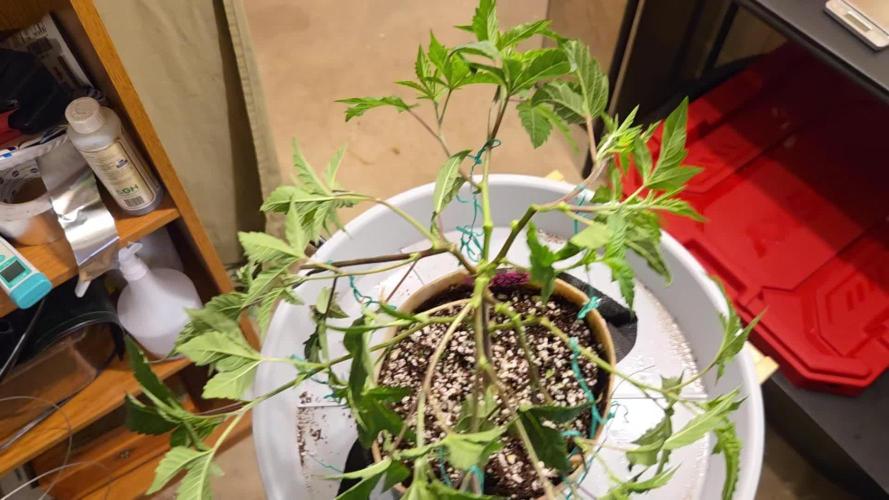
Приветствую, коллеги! 💚💛❤️ В этот раз я захотел вырастить сативадоминирующий сорт, Strawberry Cream от SumoSeeds как раз подходит: "Прямо из района Эр-Риф Марокко, эксклюзивный гибрид Goji Haze с Strawberry Haze, знаменитой фруктовой сативой от Арьена из GHS. При курении этой красотки будет замечен приятный сладковатый аромат клубники." Звучит интригующе.😏 Теперь пару слов о проращивании: обычно после замачивания в стакане воды(RO water), я проращиваю семечки во влажных ватных дисках и зип-пакете(так мне легче контролировать нужную влажность). Но при этом способе нужно следить за корнем, есть риск вростания в ватный диск, что и случилось с одной из семечек. В этом случае извлекать семечку нужно предельно аккуратно(см. видео). Видимо в следующий раз я попробую менее рискованный способ проращивания. Ах да, перед стаканом с водой я слегка подпилил семечки по острой грани маникюрной пилочкой. Итого: 23.01(вечер) поместил в стакан с водой 24.01(утро) поместил в диски 25.01(утро) появились корни 25.01(вечер) корни ≈1см. посадил в кокос 26.01(вечер) взошли На всякий случай отметим, что чуть позже взошла растишка из правой(на фото) семечки, и она же была заметно крупнее. Кокос(уже с перлитом, спасибо линейке Plagron) я зарядил слабеньким компотом(A+B-2, B52-1, CalMag - 0.5 pH5.9 ppm514), полетели! Спасибо, что заглянули, и будьте здоровы! 🙏 Продолжение следует ...😶
Likes
55
Share
@Xpie77
Follow
Almost the end of her cycle! Thanks to Luuk from Seeds Genetics Co. For the support and good communication. Really nice genetics they have. Give them a try. The results you can see here. Just a few words from me: i love to grow plants, i dont care if its marijuana or garden plants. I know a bit in what stage the plant needs. So im not this guy that is constant working with meters and science and showing this or that. The plants speaks for themselves. The plant needs her building block and i try my best to deliver this to lovely Marie Jane. So people do what you want to do, i do it my way and i only care about the end result. On this Diary there are some haters, im not going to give their names, but luckily they are the minority. For the rest, i really love this growers diaries, it really brings this community together and also its a big playground for the breeders, now we can see the results real life! With my grow, i have 2 phenotype. One with red in the buds, this one smells more punchy. The phenotype with some red leafs and more green buds have a more sweet smell. Both is packed with trychromes, really good for making bubble hash or Rosin... The buds are super big and dense. Mould resistance is very good! The buds are super sticky and she smells very like candy and red fruits. Im not a wine drinking person, so dont hold me on that one. She is easy to grow and will get big fast, so one week of 18/6 light is good enough for 60/80 cm plants🌿💚🍀 i have 3 gallon (11L) baskets Nutrition: im not a person who precisely mesures the food for the plants. As long the pH is correct, also im reading the plants. I always give les then is asked on the bottles. I also give weeks in advance the nutrition they need in the cycle, because plants need this to start. Smell: plant already have a nice smell, very punchy, forest fruits and sweet wood. Health: nice strong plants, will grow big and flower fast! -----------Red Wine-------- Red Wine was created by crossing Rozay F2 with Jet A. They are 2 very powerful aromatic Cali hybrids. This exclusive new Cali strain is a very strong and fast flowering indica-dominant strain. It has an aromatic, intoxicating and relaxing effect. That is comparable to enjoying a good glass of wine. Red Wine has an average flowering time of about 7-8 weeks when grown indoors. Outdoors it is ready fairly early, usually around the end of September. The yield is very good. Indoors she has an average yield of 450-650 gr/m². When growing outdoors, 600-800 grams can easily be achieved per plant. Red Wine has an aromatic scent that can be compared to a full red wine. Her full, purple-green buds are very compact with few leaves. This is very convenient when cutting the plants and saves a lot of time. Smoking this weed gives you a nice high with relaxing properties. The taste of Red Wine is very fruity sweet with an aroma of red grapes. Flowering time: 7 – 8 weeks Genetics: Rozay F2 x Jet A 30% Sativa, 70% Indica Plant height outside: 100 – 180 cm Outdoor harvest month: from June to October Yield indoors: 450 – 650 gr/m² Yield outdoors: 200 – 800 gr / plant THC: 25% Red Wine from Seeds Genetics Co. Link: https://seedsgenetics.nl/product/red-wine-gefeminiseerd/
Likes
27
Share
Will be back to update diary with dry weight amounts. Simply so I put only weight of buds and separately a dry trim weight. The smell is absolutely stinking and she looks stunning I cannot wait til she is dry enough to be cured in jars and smoked... I finally got to the end of my 1st photoperiod run. Yay lol man it's stressed me out at times wondering am I doing things right etc but thank grace we at the end of the tunnel . Peace and love growmies
Likes
15
Share
@Saltoa
Follow
Day 57 5 litre water 10 mg sensi bloom ab 5 mg call mag 5 mg nirvana 5 mg owerdrive 5 mg b52 5 mg carboload 5 mg senszym 5 mg revive
Likes
15
Share
@Jd1971
Follow
Biosys instant microbe tea once a week:)))))
Likes
45
Share
The cannabis strain Grape Guava can be a purple strain, depending on its specific phenotype and genetic makeup. While not all phenotypes of Grape Guava are purple, some variations, such as the Zatix Grape Guava, are noted for their striking purple appearance due to the genetic expression of anthocyanin pigments. https://www.youtube.com/watch?v=cKdVmdoKJ5k In a garden of green, Grape Guava gleams, With its fruity aroma, enchanting dreams. Clusters of grapes, guava's sweetness ignite, A strain so divine, in purple and white. Euphoria whispers, a lush fruity haze, Grape Guava's embrace, a tranquil daze. Off and away.@1400ppm. The increased CO2 allows plants to thrive at higher temperatures, which in turn necessitates higher humidity to maintain the ideal VPD for healthy growth and transpiration. 80F -5F = 75F LST with 70% RH = 0.72 kPa. Higher temperatures and humidity promote rapid growth, nutrient uptake, and photosynthesis while maintaining a lower stress level. Temperature influences the rate of enzymatic reactions involved in aerobic respiration. Enzymes, such as those involved in glycolysis, the Krebs cycle, and the electron transport chain, work most efficiently at an optimal temperature range. In low temperatures, enzymatic activity will slow down, thus reducing the rate of aerobic respiration. In high temperatures, enzymes can become denatured, thus impairing their function and stopping the process of aerobic respiration. Glucose is the primary fuel for aerobic respiration. The rate of aerobic respiration increases with the availability of glucose, as it is the starting point for glycolysis. If glucose levels are low, cells may rely on alternative energy sources such as fatty acids or amino acids , but these processes may yield less ATP or be less efficient. To determine this effect, carbon dioxide volume was measured (as carbon dioxide is an output of aerobic respiration) 18/6 with the 6 being IR. The near infrared (IR-a) borders around 700nm up to 1400nm @ photon par flux density of 1.8 instead of darkness, keeping temps overnight a neat 77F-80F. Think of my tent as a lung. What goes in must come out. When the rate of air going out exceeds the amount of air coming in, it creates a negative pressure. Tent concaves (bends in). If set up correctly, your RH will begin to drop slowly to the desired level you set, and the extraction turns off when it reaches 50% RH. The plant, as it performs cellular respiration, will always be releasing more water into the air, so the RH% of the tent overnight will always increase, so long as oxidative phosphorylation is occurring. As soon as the RH% creeps back up to 55%, the extraction turns back on, over and over. This creates a strong pressure differential which will work wonders on your grow. Replicating high and low-pressure fronts in nature. Critical for oxygen diffusion at the critical time of peak cellular respiratory function.. Moisture will not transfer from a saturated atmosphere to another if that air is already at or above its saturation point, meaning the air can't hold any more water vapor. Once I understood that water is produced as a by product during cellular respiration, specifically at the very end of the electron transport chain (ETC) where electrons are finally transferred to molecular oxygen, the higher the RH of the air, the more resistance there is for more moisture to be added to that environment, and effects the ease with which it does so. But none of that water comes from the pot; it's pulled from the air. If you run high daytime RH, your medium/pot is 100% reliant on transpirational root pull to move water. ZERO evaporation happens across the atmosphere if the tent air has high RH%, the medium cannot release its water through evaporation. Once a canopy develops, light no longer slowly wicks and evaporates from the topsoil. The Soil-Plant-Atmosphere Continuum (SPAC) describes the continuous pathway and process of water movement, driven by a gradient in water potential, from the soil, through the plant's roots, stem, and leaves, and finally evaporating into the atmosphere through transpiration. There is evaporation, there is transpiration, and then there is evapotranspiration; Evapotranspiration (ET) is the combined total of two processes: evaporation (water lost directly from soil and surface water into the atmosphere) and transpiration (water released from plants to the atmosphere through their leaves). Evapotranspiration represents the total amount of water that moves from the medium into the air. There is no such thing as a medium with too much water, only a medium that retains too much for too long. The water must always flow efficiently from one atmosphere(Medium) to another(Air) in a timely manner. Moisture is a critical factor for bacterial growth and decay. Dictating how long it's allowed to sit in any one location for any given period is a key preferred control. To ensure a net reduction in a bacterial population, the rate of removal (ET) must exceed the rate of bacterial growth (decay rate), which is often modeled as a growth rate for the specific bacterium under the given conditions. By optimizing daytime VPD, we also optimize conditions for bacterial growth to explode exponentially above 77°F.. If water is allowed to sit in a medium without an escape within a timeframe, nothing good will happen. IF High RH is maintained overnight as well as during the day, placing 100% of water movement at the behest of daytime transpiration, roots can only pull where they can reach, and if soil is compressed above a certain point, moisture will become trapped in a medium with no way of moving day or night. This will begin the countdown for decay to take hold. When water stagnates in a medium, it loses oxygen, creating anaerobic conditions that foster the growth of harmful microorganisms like bacteria and fungi, which can produce toxins and disease vectors. Thigmomorphogenesis, the process by which plants respond to mechanical stimuli like touch by altering their growth and development, results in significant morphological changes to improve survival against mechanical perturbations. This complex response involves sensing touch and initiating physiological and genetic responses, leading to changes in form and structure over days or weeks. The process is triggered by physical forces such as wind, rain, or touch. Plants adapt to these stimuli by changing their shape and structure, which may include slower growth, thickened stems, or altered leaf development. Plants possess sophisticated mechanisms to detect even subtle mechanical stimuli and initiate responses. A variety of molecules, including calcium ions, jasmonates, ethylene, and nitric oxide, are involved in signaling these mechanical inputs. Touch can induce the expression of genes that encode proteins for calcium sensing, cell wall modification, and defense mechanisms. A plant exposed to constant wind may become shorter and sturdier. A plant that is touched frequently might grow more slowly to conserve energy and develop thicker cell walls. These changes increase a plant's resilience and ability to survive in harsh environments. Let's get Thiggy with it.
Likes
3
Share
@Mrb29
Follow
The front left one is some clear mostly cloudy a few amber The rest are some clear mostly cloudy no amber They reak of sweet gassy and very tropical citrusy. They have been getting 1000-1600 ppfd since week 4 . The tops are rock hard but still have some softness to them. I think I’ll harvest day 60-63 we shall see
Likes
13
Share
Chopped at day 60. They’re sweet and gassy. And sticky as 🍯
Likes
18
Share
J’ai investi dans un système d’arrosage automatique Blumat avec 8 detecteurs Tropf. Fini l’arrosage, petite défoliation et c’est roue libre complète pendant un mois ! :) I invested in a Blumat watering system with 8 Tropf sensor. No more watering for me, one more defoliation and we’re set to go for the next month !
Likes
21
Share
Welcome to week 3F of growfessor theatre, 4x4 edition. The ladies are looking happy and healthy. Do-si-dos received a heavy defoliation, there were a ton of small inner branches starved for light, so they got cut. LSD, Green Crack and Mandarin dreams all received a light defo, yellowing leaves were removed. Lighting provided by Mars-Hydro TSW2000. Thanks for stopping by, tune in next week growfessors for the next episode 👽🌳💚
Likes
4
Share
And here we are at the super queen of this round. The Girl Scout Cookies of Zamnesia is having a slow but regular flowering phase, the numerous buds created are swelling at a not fast speed but they are growing regularly, probably because they are numerous and the plant is distributing the power. We really hope to be able to enlarge them properly because everything is very beautiful. On the leaves and on the flowers here is a bit of violet typical of the end of the cycle.
Likes
5
Share
Plants are really flowering still small but plant one has a lot of tops now and plant 2’s buds are already getting dense.
Likes
14
Share
The Sensi Seeds Research breeding project has created eleven cannabis seed varieties. How? By combining new cannabis cultivars with a selection of strains from their long-established cannabis gene bank. For the first time in thirty-six years, they are opening the doors of the Sensi Seeds Research and Development Department. Week #12 Week #3 of flowering, having some issues with 2 ladies. I haven’t been able to check the room during 4 days, one plant has a Nitrogen excess, and the other one run out of P-K, Mg. Check the video, it’s not often that this situation happens, so let’s learn to diagnose the situation. The plant with banana peels style leaves is a Nitrogen excess, it start with the tips of the leaves pointing down, like claws, then it turns into some old bananas peels looking. The other one, with the crispy looking leaves is a lack of P-K, it starts with some kind of dark brown/purple stripes marks on the leaves with the tips starting to points up + a lack of Mag , the leaf is cupping like a taco shell ! The game now is to loose less yield than possible on those two ladies, but from now it’s already 25% gone .... This is a good example to show that every plants are different, all of them are running on the same diet, all others plants are doing great except those 2. Morality is to check your plants daily, those problems can be fixed before it happens, when you know how to diagnose the primary symptom 😉 Week 3 trimming !!! You must clean your plants legs and cut off all the lil shoots, in the bottom, that haven’t reach the top ! Main goal to keep in mind is to spend all the energy on the top, cleaning the legs will help to avoid wasting energy on the bottom of your plants Once again, Mars-Hydro has definitely improved their performance, the shoots structure of the plants under the SP-250 is amazing. The plants have developed so many shoots compared to the plants under the HID’s , it’s really remarkable ! (I’m looking for a job in the Cannabis industry as Master Grower, Mineralogist, Quality Control)
Likes
21
Share
@MrWolfe
Follow
Last few weeks have been fantastic and I can't wait to see how they all respond to the first big stress event. Topping any sites that are at canopy while letting the rest develop but keeping the best 6 primaries and keeping it nice and simple. 3/9 ok so I kept more than 6 on these, I think there's one of them that has 7 but the rest all have 8-9 main branches, if they were within 3-5" of the top of the canopy I just kept them, that much variation will even itself out with just some slight bending. 3/12: So I've topped all primaries once now, should be 14-18 new tops on all of these, I'm hoping to top again next week assuming they can keep growing 1" per day, that should give me an excellent structure for a big fat canopy in the flower room.
Likes
8
Share
Been brewing my ewc tea with as many other ingredients including ewc,kelp,fishbone meal, oyster shell, crab meal, glb fish, and makos. Fed them the tea in the morning and they loved it. That being said fourth node was developing so I topped. After doing some research I may have topped to early but they seem to be bouncing back just fine actually. I did six of the seven. Last one has been slow from the start so probably won’t have much of a yield. Plan on using tea often
Likes
13
Share
NO SMELL YET PK BOOSTER EVERY FEED BUSHY AF I AM TIRED OF DEFOLIATING
Likes
23
Share
@sebino
Follow
HI guys, she made it wonderfully so far entering the tenth week. She is terminating flowering stage and I already begun watering her with just water. Today I flushed the pot two times. Cheers
Likes
3
Share
@Proto420
Follow
Beautiful plants. One was short and stocky, had the largest buds I’ve yet grown/encountered. I’d recommend growing these 👍👌