


Likes
Comments
Share


@Bafforr_autoflower
Follow
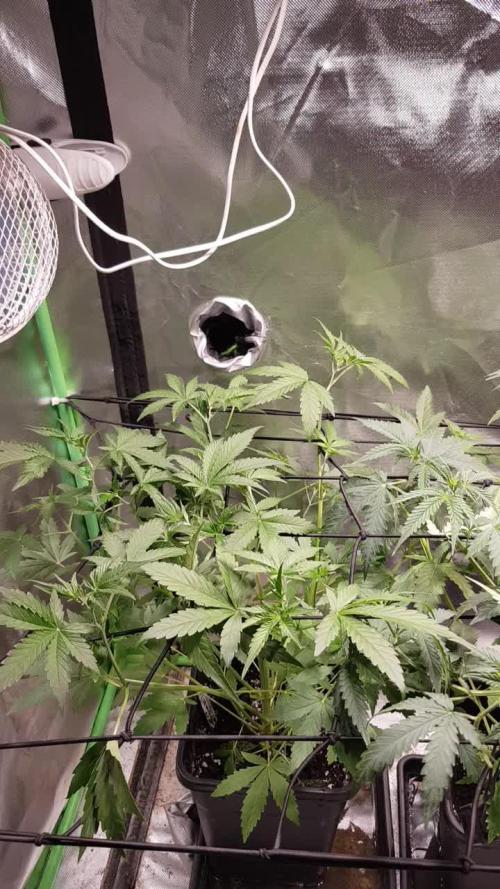
Primera semana de las nenas, van cada día mejor. Los riegos han sido poco pero frecuentes (Dia x medio) con bacterias (colectivo cientifico) más otros tipo de microorganismos, a dEmas de enraizante y base.




Likes
10
Share


@CrystalMagic
Follow
Day 68 and 51 - 10/29/22 - PH has been creeping up after a few days in the reservoir. Looks like it has caused some nute lockout. The sohum should have everything needed.


Likes
19
Share


@Iamdisabl3dsgirl
Follow
Just did a huge 5 gallon flush on these girls they are in 8 gallon pots till runoff was clear will let them dry out completely and give them one more flush then the really frosty one will be ready probably another week week and a half and the bigger one with all the pistils will probably be another 2 or so weeks she has more bulking to do and not nearly frosty yet
Likes
11
Share


@BudBeezy
Follow
Welcome to week 10 of my grow diary. As I mentioned last week, I am now letting the plant grow as it wishes. It has put on a good amount of leaves. The stem is getting thicker and thicker. I like the structure very much and I hope the plant will develop beautiful massive buds in the future. The flowering phase should start in the next few weeks. The weather can stay like this. It only rained on one day.
See you next week ✌️
Likes
12
Share


@SpliffDoc
Follow
The aroma is definitely fully developing now, I'm getting more green apple smell with a creamy sweetness, it's hard to describe 😂
I've started to taper off the nutrients in the past few days, in the next couple of days I'm going to start watering with plain water until the end. Trichomes are getting cloudy.
She is fattening up nicely and she seems to just keep piling on the weight, buds are looking dense. Not long now, probably about 2 weeks give or take 👌🏻🏻💚 have a good weekend, stay high ...
Likes
37
Share


@Smoking_Joe_Frasier
Follow
Week 7: Flowering Stage
Rising Temperatures and Growth
The weather has taken a positive turn, with temperatures rising again. This change should promote some nice growth in the ladies. The increase in warmth will help accelerate bud development, and I expect to see significant progress in the coming days.
Nitrogen Toxicity Banana Purple Punch
After the initial intervention two days ago, the situation has not worsened. I am monitoring the growth of the newly emerging leaves to ensure they do not continue to curl downward. The pH level of the runoff looks good, sitting exactly in the ideal range (6). I hope the plant recovers quickly and that growth and yield are not adversely affected.
Feeding and Watering Adjustments
With the warmer weather, I have adjusted my watering schedule to ensure the plants remain hydrated. I’m now giving each 11-liter pot 3 liters of nutrient solution to prevent salt buildup. This should help keep the plants healthy and promote optimal growth.
Pest Control
A few leaves have slight holes due to snail damage, but otherwise, there are no significant pest problems. The plants are still kept in the greenhouse overnight due to the high snail population. I don’t want to serve the ladies to the snails on a silver platter.
Bud Development
The buds are swelling nicely, and the resin production is increasing. The plants are showing significant signs of maturity, with the aroma intensifying. The trichomes are developing well, and I’m pleased with the progress so far.
Blue Dream: This strain has the largest buds so far, and the smell is the most intense.
Banana Purple Punch: The buds are also looking good, but the aroma is weaker compared to Blue Dream.
Gorilla Cookies: This plant has had a growth spurt and is showing beautiful tops with white hairs.
Tangie: After the initial pre-flowering, Tangie has not formed many buds and is still in the full stretch phase.
Low-Stress Training (LST) Update
I am no longer tying the plants down. Instead, I am bending some branches in different directions to ensure all the shoots receive sufficient light. I have removed very few large leaves but am tucking the leaves out of the way.
Happy growing my friends 🍀🥦
Likes
8
Share


@BuzzingHighAbove
Follow
#1 still not flowering it’s been almost 3 weeks since the flip to 13/11. #3 is loaded with buds!! #4 is also loaded. #3 and #4 aren’t stretching a ton, and I love that they seem to be putting all of their energy into making buds. I’ve defoliated some to keep the budsites in the light.


Likes
32
Share


@MadeInGermany
Follow
COMMENTED BY
MadeInGermany MadeInGermany 5 minutes ago
Unfortunately, I had to find out that my account is used for fake pages in social media.
I am only active here on growdiaries.
I am not on facebook instagram twitter etc All accounts except this one are fake.
Flowering day 49
since time change
to 12/12 h.
Hey everyone :-).
We are slowly getting closer to the last few weeks :-)
There are still 2-3 weeks and The buds develop very well towards the end :-).
It is slowly starting to use up its nutrients.
This week it was poured 3 times with 1 l each time.
Everything was cleaned and checked.
Have fun with the update.
Stay healthy 👍
You can buy this Strain at :
www.Zamnesia.com
Type:
Runtz
☝️🏼
Genetics:
Zkittlez x Gelato
👍
Vega lamp: 2 x Todogrow Led
Quantum Board 100 W
💡
Bloom Lamp : 2 x Todogrow Led
Cxb 3590 COB 3500 K 205 W
💡💡☝️🏼
Soil : Bio Bizz Coco
☝️🏼
Nutrients : Green House Seeds Company Powder Feeding Bio
☝️🏼🌱
Water: Osmosis water mixed with normal water (24 hours stale that the chlorine evaporates) to 0.2 EC. Add Cal / Mag to 0.4 Ec Ph with Organic Ph - to 5.8

Likes
22
Share


@Weedbadk
Follow
Día 1 y todas germinaron súper rápido 3 días
Día 5 desde puesta en sustrato
Ya todas están arriba
Estoy solo pulverizando el sustrato
Temperatura 23c humedad 75%
Likes
Comments
Share

@frigo_camelo
Follow
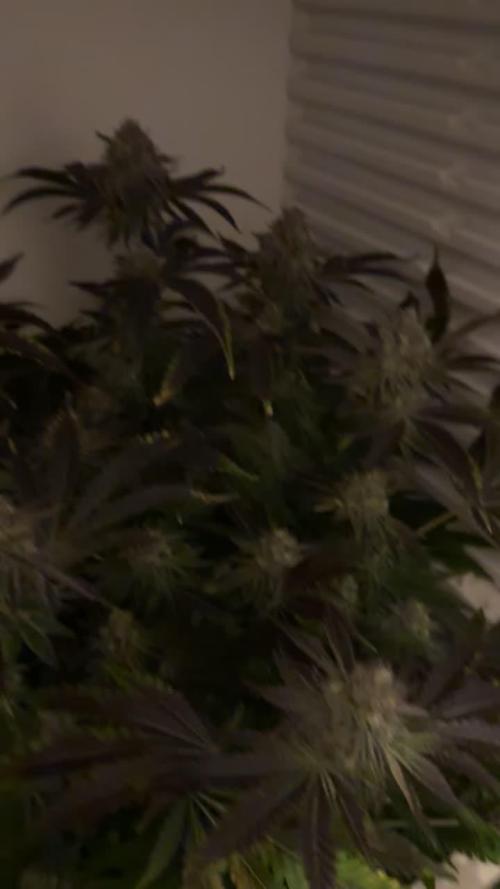
end of week 5 flower 🏻| all looking god | very strong rotten fruit smell | its gerring purple!
Likes
25
Share


@Skyster
Follow
Week of harvest
Pink = Purple Punch smells of earthy cherries
Yellow = Wedding Glue gives off the smell of vanilla
Navy blue = Skywalker #2 desprende olor floral
Light Blue = Skywalker #1 Smells of lemon and haze varieties
I can't wait to taste these varieties
Processing
Likes
10
Share


@Fibro_Witch
Follow
I finally got them in the garden! It was a trip getting out there, so they don't look the greatest because they're stressed.
I broadforked the bed because I have very hard clay soil and put down Ocean Forest potting soil. I have some wire support hoops for the AG19 row cover I'm going to be using for the transition. It's lightweight and breathable but it will cut down on some of the sun so they don't burn and it will also keep them warmer at night since it's still pretty cool.
And please disregard my comment about the Chamomile and Nitrogen... Chamomile sequesters Calcium, Potassium and Sulfur, not Nitrogen😜. Clover sequesters Nitrogen.
I added about 5-10% Biochar in with the Fox farm potting soil which is an excellent source of carbon and helps retain soil moisture. I added some lime to stabilize ph and try to deter lockout which I had last year. I also added mycorrhizal inoculant for root health, it helps to reduce stress in plants and helps them to uptake more sugars which is exactly what we want.

Likes
18
Share


@Kmikaz420
Follow
Voilà dernier jour avant de couper .
Demain la plante aura 14 semaine j ai pousser la flo et le flusch un peut plus que d habitude (histoire d avoir le plus de chance possible d avoir se goût et odeur de chewing-gum à la fraise après curring) voilà voilà encore un grow qui c est super bien passé (chose abituel chez fast bud mais qui mérite d être sous ligné !!! Leur plantes sont vraiment assez simple à faire pousser et surtout elles autorise LES ERREURS DE DÉBUTANT. ...du style ph non ajusté. Excès d engrais ou trop peut ...toutes ces chose font que même des débutant arrive à avoir une weed d excellente qualité après 10..15 semaines (je rappel qu une photoperiodique devrais pousser presque le double de temp!!! )
Et au final l herbe est souvent aussi forte voir plus forte que les strain photoperiodique !!! Et pour tous cela merci fast bud
On se retrouve pour smoke test !!!! J ai hâte
Likes
5
Share


@WickedWeedQueen440
Follow
We are now in week 7 (today MAY 13 2024 DAY 53) going into week 8 getting ready to turn off our veg stage and turn the flower on!
We have introduced the next stage of nutrition for the plant ( Fox Farm Big Bloom next we start adding Tiger Bloom) we plan on doing our flower flip between May 16th and 17th and we are looking forward to a 8 to 10 week flower time frame for this strain. We are slowly introducing videos for our gross this will be the first strain and grow Journal of ours where we will be introducing a time-lapse video of the flower stage.
This is my current plant running for the Growers Gauntlet 2024. If you have not checked it out I definitely would there's some amazing Growers and they're doing their thing. Follow along and watch us produce an amazing flowers with some pretty cool growing techniques.


Likes
39
Share


@Loserofthemonth
Follow
Day 91-92 CPK. WHITE DEATH decended on her neighbors. Mold showed up on one bud in 2 of the other plants in this tent, not on this plant but in plants on either side. Got some great advice from a grower that goes by m0use and thanks so much I followed your advice and am seeing no mold or damage. I removed the top that had the mold growing 2 inches below the affected spot there was nothing under or behind it or anywhere else that I could see so I must have caught it very early. Next I mixed 2 cups of spring water with 2 ounces of 3% hydrogen peroxide, then misted the whole grow until I had used it all. This was done at lights out I placed a fan in front of the tent opened the tent on all sides and let the fan dry her off before the lights came back on. When the lights came back on there were a few places at the back of the tent where I used a paper towel to dab some wet leaves then blow dried with no heat to be sure that section was dry, the blow dry was only a minute or 2. It worked plants looking great checked trichomes and they are all there and clear so mission accomplished. Again thanks to m0use for the help and I plan to start bud washing between chop and dry on all grows, I tried to reply to all answers on my grow questions but once again the techno caveman doesn't know how to do something simple. Copy and pasteing this on the other diaries... Yep that I can do. Ok happiness flush continues and starting to see some cannibal fade.
Day 96 CPK. Finally got some color on this hulk.
Day 97 CPK. Watered ph 5.8 she is so close that I did not check runoff. Got the big Banana out of the tent so I moved her forward and gave her a good inspection. Found one of the small outer tops that had been facing the back wall had a small half inch area of thin white mold which got cut out. I've added a mini dehumidifier in the tent and a large one to the room. I've never had a mold issue until I switched out that big16" oscillating fan for the 6" monkey fan. Strongly suspect there is no substitute for the amount of air that big fan moved. Especially since I added 1 more oscillating fan under the canopy to the 1 that was already there plus the dehumidifiers plus the 2 clip fans that have been there from the start of the grow. My rh is around 50%, CO2 around 1200 ppm. My other theory is over the winter there was COVID in the house and we kept the humidity in the house high to keep from coughing our heads off which has led to a mold bomb effect.
Likes
14
Share

@DE_BW
Follow
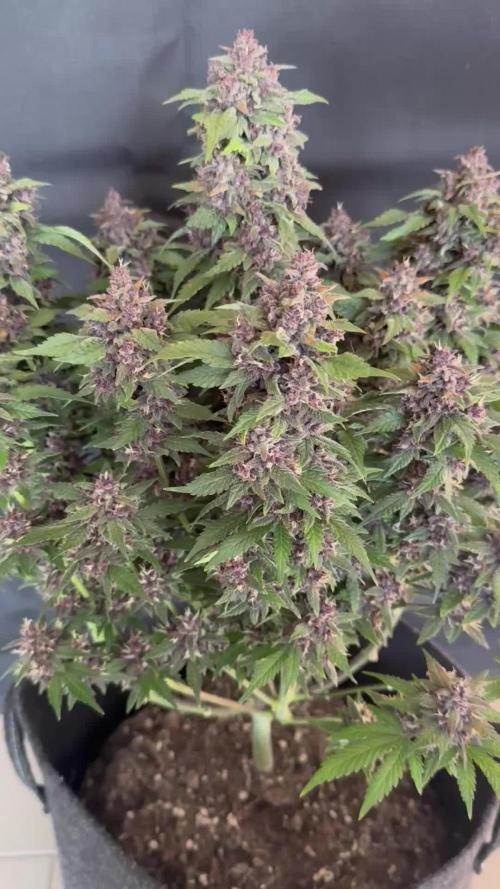
The plant keeps stacking buds nicely and the flowers are visibly thickening every day. Resin production is still increasing and the trichomes are fully milky, showing clear signs of late flower. A light fruity aroma is slowly coming through, getting more noticeable now. Overdrive has been introduced and harvest is expected in around 10–12 days.