


@deFharo
Follow
Bienvenidos cultivadores de marihuana a la sexta semana de floración de esta cepa de dominancia sativa y actualmente "La Reina de mi jardín de la alegría"... God save the Queen!! 😍
Otra semana de fácil y satisfactorio cultivo, la planta a parado el crecimiento vegetativo y se esfuerza en la creación de flores, las mismas flores que aparecen a lo largo de todas las ramas y que avanzan una gran cosecha con largas y gruesas colas.
Las marcas de carencia de Magnesio que aparecieron la semana pasada son historia después de la aplicación en superficie de Dolomita y sal de epsom y la recuperación, para riegos, del Ormus (Ca, Mg).
Durante toda esta semana han habido niveles de humedad relativa muy bajos, alrededor del 30%, y temperaturas altas, he rociado varias veces, las plantas con agua para aumentar la humedad en los armarios, también he activado dos pequeños humificadores y sobre todo he mantenido las plantas muy hidratadas, afortunadamente ayer cambió el clima y ha comenzado a llover con bajada de temperaturas. Como hubo una aparición de arañas en otro cultivo rocié esta planta, también, con jabón potásico.
El consumo de agua de este cultivo es muy alto, y en los días secos aumento todavía más, he mantenido y mantengo el sustrato muy hidratado para favorecer la circulación de líquidos, cuidando a la vez la salud de las raíces. Esta semana riegos alternos con nutrientes y otros con agua pura de manantial, preparando las raíces para aumentar las dosis de nutrientes conforme avance la floración.
DECODIFICANDO EL CULTIVO 😛
- Día 93. Riego multicomponentes, con Microorganismos de Montaña Activados de forma líquida con minerales y nutrientes NPK al 2,6%, Humato potásico de leonardita que añade ácidos húmicos y fúlvicos, materia orgánica y extra de potasio al 1,5% y melaza para dar energía a los Microorganismos. PH: 6.40, EC: 1.70. 1000ml.
- Día 95. Para ayudar a la disolución del riego anterior: Agua de manantial. PH: 6.7, EC: 0.50. 1000ml.
- Día 97. Riego para fortalecer el cultivo. Agua de montaña y garbanzos (EC: 0.44), MMA con calabaza, zanahoria y Quitosano al 3,5% y Ormus (Ca, Mg...+PH) al 0,5%. PH: 6.80 EC: 1.54. 1100ml
- Día 98. Agua de montaña y alubias. PH: 6.62 EC: 0.50. 250ml.
• ORGANIC TIP 😋
Activación de Microorganismos de Montaña con Calabaza, zanahoria, minerales y quitosano para fortalecer las defensas de la planta contra patógenos.
Después de 45 días de fermentación anaeróbica he abierto, lo que espero que sea un gran fertilizante para usar desde la etapa de crecimiento vegetativo hasta la preflora y primeras semanas de floración.
La calabaza y la zanahoria contienen multitud de minerales y vitaminas que ayudan a fortalecer el cultivo y ayudan a la expansión de las raíces. Este preparado es comparable, funcionalmente, con los extractos de algas, aunque mucho más completo. Esta hortaliza es rica en antioxidantes. Destaca su contenido en carotenos, que son los responsables del color característico de la calabaza. ¿Será que esto puede influir en los colores de las cepas?... en observación!!
Gracias a la fermentación anaeróbica con Microorganismos de Montaña, los nutrientes, vitaminas y minerales son quelados por la acción de los MM, consiguiendo así un caldo nutritivo de primer orden que las plantas asimilan de inmediato.
INGREDIENTES:
Agua de manantial alcalino: 2,5L
Suero de leche: 1L
Microorganismos de Montaña Sólidos (varias cepas): 400g
Melaza orgánica: 120g.
Levadura de cerveza y fresca: 10g.
Calabaza y zanahoria fresca: 475g.
Cáscara de camarón deshidratado y molido (Quitosano): 6.5g
• Minerales:
10g de Roca fosfórica: P
7g de Azomite: Ca, Fu, Fe, K, Si, B y trazas de el resto de minerales de la tabla periódica.
8g de Ceniza de palmera: Ca y K.
5g de Piedra Pómez: Si, Al, Fe, Ca, K.
8g de caolin con Illita: Fe, Si.
5g de Sal de Epsom: Mg.
• Elementos contenidos en la calabaza y zanahoria:
Aminoácidos: alanina, arginina, cucurbitina, cistina, glicina, histidina, isoleucina, lisina.
Ácidos: linoleico, aspártico, oleico, palmítico salicílico y fólico.
Vitaminas: Vitaminas A, B1, B2, B3, B6, B9, E, A, C, K
Minerales: calcio, cobalto, boro, magnesio, zinc, potasio, hierro.
Azúcares: sacarosa
PROCEDIMIENTO
En este bio preparado he hecho una pre-hidrólisis de la calabaza y zanahoria, cociéndolas durante una hora con melaza para mejorar luego, en la fermentación, la disolución de todos sus elementos. También he hecho una pre-hidrólisis con la cáscara de camarón, esta vez he hecho una hidrólisis alcalina con KOH, que luego de dos horas añado a la mezcla final y además una disolución en agua, con mucha agitación, de los minerales.
Disuelvo todos los elementos y añado levadura de cerveza y fresca para dar comienzo a la fermentación. Coloco en una bolsa de malla los Microorganismos de Montaña Sólidos de mis dos semilleros, donde reúno los Microorganismos (Bacterias de la familia de los Actinomicetos, Levaduras y Hongos (Micorrizas), Microalgas y Protozoarios) de seis bosque vírgenes de mi zona.
Cierro el bidón herméticamente con válvula de escape de gases, como estamos en Enero y hace frío he puesto una cinta de calor alrededor del bidón para mantener una temperatura constante de aproximadamente 36°C, de esta manera el preparado puede estar listo en tan sólo 30 días, si fuera el caso de dejarlo a temperatura ambiente el preparado demoraría 2 meses más en estar disponible para uso. La fermentación comenzó a los 60 minutos y se ha alargado durante 25 días sin interrupción.
He abierto el bidón a los 45 días, el olor ha fermentado es muy agradable, el color fantástico, algunos Microorganismos se ven prosperando en la superficie, separo medio litro para ir usándolo y cierro el bidón otra vez.
Tengo varios cultivos incipientes donde voy a aplicar este fertilizante y observar sus efectos.
SALUDOS, SALUD Y GRANDES COSECHAS A TODOS!! 😁
===========================================
• CONOCE MIS TÉCNICAS DE CULTIVO Y FERTILIZANTES ORGÁNICOS AVANZADOS.... HACER ES COMPRENDER!! 😉
- ORGANIC GROWING TIPS!! 👇
3M • PURPLE BUD
SEMANA 17: Activación de Microorganismos Sólidos (MMA) y biol de frutas con minerales.
SEMANA 20: Agua de montaña y estructurada.
SEMANA 21: Abono sólido y mulch.
3M • Anubis y Auto Magnum
SEMANA 1: Super sustrato y aireación de macetas
3M • Frodo's & OG Kush
SEMANA 7: Elaboración de auxinas.
SEMANA 10: Humato potásico de leonardita enriquecido con minerales.
3M • Diesel bastard.
SEMANA 11: Sólidos y Mulch
SEMANA 13: Aireación forzada del sustrato.
SEMANA 14: Elaboración de un Lacto fermento de auxinas, nutrientes y minerales.
3M • Sweet Zkittlez
SEMANA 2: Agua estructurada, agua viva.
SEMANA 3: Ormus y agua de coco.
SEMANA 5: Compactación con luces Cool White.
SEMANA 6: Cicatrizante y protector de cortes o podas apicales.
3M • Sweet Clementine
SEMANA 5: Elaboración de Lacto fermento multi frutas y minerales.
3M • Fresh Candy auto
SEMANA 4: Recuperación de esporas de Microorganismos y Micorrizas.
3M • Tropicanna Poison
SEMANA 7: Elaboración de un semillero de Microorganismos de Montaña Sólidos (MMS)
SEMANA 10: Extracción de HBO con el método QWISO
3M • Black Domina
SEMANA 6: Reutilización de residuos: Mulch de palos secos.
3M • Monster Bud Kush
SEMANA 7: Elaboración de un Bocashi de Pasto ensilado enriquecido con nutrientes y minerales.
3M • San Fernando Lemon Kush
SEMANA 5: Reutilización de sustrato orgánico.
SEMANA 16: GD TIP: ¿Lente u objetivo?
3M • Magnum Auto
SEMANA 5: Aprovechamiento de residuos caseros. Cáscaras de frutas. Deshidratación y almacenaje.
3M • Quick Sherbet
SEMANA 12: Crema tópica de karite y HBO.
SEMANA 24: Como el agua -Like a water
3M • Purple Shot
SEMANA 18: Tierra a la tierra.😎
3M • Gorilla Glue
SEMANA 4: Fibra de coco con Microorganismos de Montaña Activados (MMA) para mezclas de sustratos.
SEMANA 7: Activación de Microorganismos de Montaña en modo líquido (MMA)
3M • Diesel S1
SEMANA 17. Humato PK. Hidrolizado potásico de leonardita con fósforo.
3M • Kalini Asia
SEMANA 17. Jabón potásico para control de plagas de insectos y ácaros.
3M • Sage n' Sour
SEMANA 13. Activación de Microorganismos de Montaña Sólidos con Calabaza, Zanahoria, Minerales y Quitosano.
SALUDOS, SALUD Y GRANDES COSECHAS!! 😵


@fabialien
Follow
Semana 7 de vida, seguimiento de lunes a lunes.
Lunes 19 agosto 2024, evidencia de una semana transcurrida, en la cual proporcionamos terpinator a todas, purpinator solamente a Purple cherry de Positronics, a las otras 6 alimentamos con Armor Si.
Próximo riego será de Bases PH perfecto de Advance Nutrients a todas.


@UndergroundGrow861
Follow
This is my very first indoor grow. I decided to gro six autos from fast buds. Paper towel for 24 hours till I saw a tap root went straight to growing medium. I’m doing this first run with pre amend fox farm. One of each plant I’m ocean Forrest and one of each in coco loco. All pots have center of seed starter to prevent burning my seedling. I’m 3 days since I put the seeds in the paper towel and the seedlings are just now starting to break through the soil.


@DreamIT
Follow
🐩👤Sirius Black👤🐩 by 🌍🌱WeedSeedsExpress🌱🌍
👤 22.3 ...
👤 23.3 ...
👤 24.3 ...
👤 25.3 beautiful plant, large and vigorous, I hope it takes a dark / red color, it would be fantastic. but I'll try with other seeds eventually 😀 the lamp is really cool, the plants look just fine under Viparspectra
👤 26.3 ...
👤 27.3 All very well, I can't wait for it to start releasing perfumes
👤 28.3
__________________________________________
👀Are you looking for a good lamp to start?👀
Viparspectra in my opinion has something more than the others, take a look at their site.
➡️ http://bit.ly/pro-seriesproductspro-series-p1500
⏩Use " GDVIP " for an extra discount💯
____________________________________________________________________________________
📜👀 A look at the details of what I'm growing 👀📜
🐩👤Sirius Black👤🐩 by 🌍🌱WeedSeedsExpress🌱🌍
📋 Details 📋
⚧ Gender
▪️ Feminised
➰ Genes
▪️ 70% Indica / 30% Sativa
🎄 Genetics
▪️ Sirius Black
🚜Harvest
▪️ 450 g / m²
🌷Flowering
▪️ 63 - 70 days
✨THC
▪️ 25.0%
✅CBD
▪️ 0.5%
🏡Room Type
▪️ Indoor
🌄Room Type
▪️ Outdoor
🕋Room Type
▪️ Greenhouse
🎂Release Year
▪️ 2020
____________________________________________________________________________________
👀📷 Follow the best photos on instagram 📷👀
https://www.instagram.com/dreamit420/
🔻Leave a comment with your opinions if you pass by here🔻
🤟🤗💚Thanks and Enjoy growth 💚🤗🤟


@Sully55
Follow
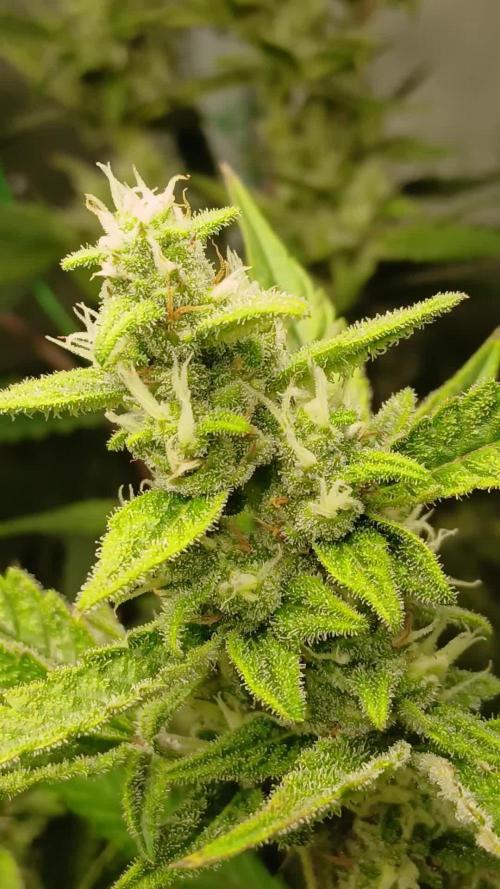
Grow was amazing . Nice heavy frosty buds . Smells like fresh cut banana with a little sweet funk.



@Trinidad
Follow
Day 70. She is looking good. Coming along nicely. Frosty buds. Can't wait to smoke this one.


@VI_Cannabis
Follow
June 14th not a ton happened, I believe I watered them (It seems I am having to water every second day now as they start to get bigger)
June 15th - still just growing away. I went out and got some different ducting so I could pull air from outside better with the ac infinity inline fan. I also received some insulated ducting from Amazon that is a hell of a lot better then the standard stuff I am using. I also grabbed a new 9 inch fan (still deciding the best place to place it, for now it is beside the door). I grabbed a larger oscillating fan aswell to keep air moving around.
June 16th - decided I would do some lst and then I gave them some water. I have been feeding nutrients every second day. I have also on every 3rd watering been doing just ph’d water. The humidity seems to drop quite a bit within 10-20 seconds of the door being open hence the lower reading. I am sitting roughly at 45-55 depending on time of day. As for temperatures I’m still struggling to keep it down during the warm days and it seems the highest I am getting is around 29 since switching the lights off from 11am - 5pm
June 17th - the girls seemed to have perked back up after yesterday’s lst. Not much new today just some growth!
June 18th - Unfortunately I forgot to take pictures today. But not to much difference. I did feed the girls with some nutrient water today.
June 19th - I again forgot to take pictures. They are just growing away and doing there thing. I did check for growth from the topped portion on the bigger plant, no growth from one of the 2 tops. So I indeed cut it to low… I won’t be doing that again haha.
June 20th - finally grabbed something to deal with the heat since it is getting hotter everyday. I picked up a 10,000 btu air conditioner. I have it set at 23 degrees. I also moved the plants around and re-arranged some stuff. I took the inline fan that was taking air out and instead the ac output is going to there. I ended up having to make the vent into a 6inch vent on the trailer. Temps stay around 23 now. Humidity is still 45-55 depending on time of day.


@BettaMushroom420
Follow
The Mandarine Cream is in its second week of flowering and is stretching incredibly. The plant is growing nonstop, and the buds are swelling beautifully. The aroma is becoming extremely strong, shifting to a more citrusy scent, reminiscent of grapefruit. The plant is healthy and looking great.
Ambient Conditions: This week started off warm (with a minimum of 23ºC and a maximum of 30ºC), but a cold front has brought the temperatures down again (with a minimum of 11ºC and a maximum of 20ºC). Humidity remains quite low, around 30-35%.
Training: I’ve kept the main apical tied down, which has resulted in 12 colas. Other than that, I haven’t done any additional training or defoliation.
Fertilization: I applied one final dose of nitrogen this week and nothing else.
Pest Control: The Beauveria treatments continue, and I no longer have any issues with the fungus gnats that had appeared.
Watering: I’ve been watering the plant very minimally, as the substrate has been staying moist on its own.
Looking Forward: From here on, there’s not much left to do except let the flowering progress and enjoy the results.


@Mr_nugs_lover_David
Follow
As always it's just a pleasure to grow this sativa dominant strain which definitely reminds me of a great indica with her extremely fruity and tropical sweet terpenes, very happy to have her in my garden and to be able to smoke such a high quality strain once again, hope you guys have enjoyed as much as me!


@Foggedaboudit
Follow
This is it for these killer kushes! Different phenos, one was ready in 8 weeks, one in 9 and this last one in 10! The quality is definitely here, it’s just the speed that ain’t 🤣! Overall I’m happy with them even though every single one hermied on me (100% my fault)! No seeds in the end though, as I kept plucking balls and nanners every day for a couple of weeks!


@Ninjabuds
Follow
My 2 permanent marker plants they are loving the light being turned up they are praying constantly there internodes are so close together they have not stretched out very far yet. I'm thinking they are going to be on the short end but who knows some plants do complete opposite when they hit the flower strech. I still have not gotten the nutrients down for the one plant I'm thinking when I flip to flower it will it will turn around nicely I love the shaoe and look of it's leaves.
The day has come and it's time to flip these ladies to flower. I was planning on letting them go untill Friday and let the smaller ones grow just a bit more but they will be fine. I have the eternity cup contest in mind and I'm thinking timing so I need to get these lady done and out my tent lol. This past week I turned the light up alot getting them ready to flower they have grown a bunch inhavendone lst maybe 5 it 6 times on the branchs and they arw nit bendy anymore that will help durring flower.


@420StonerLife
Follow
Hey 👋,willkommen zurück die Pflanzen sind mittlerweile in der 9. Woche. Die Woche verlief ohne Probleme, die 4 neuen Pflanzen wachsen gut und schnell ich habe bei ihnen das erste mal Mulchen ausprobiert(mit Stroh). Die großen Pflanzen stecken ihre ganze Energie in die Buds, sind stark angeschwollen und der Geruch ist mittlerweile sehr stark 🤤. Ich habe jetzt schon fast seit einer Woche damit angefangen die beiden Purple Punch zu flushen, sie brauchen sicherlich noch knapp 1 Woche bis sie fertig sind. Beide haben ca. 90% milchige und 10% Bernstein gefärbte Trichome. Die anderen Pflanzen brauchen sicherlich noch mind. 3-4 Wochen bis sie fertig sind. Ich habe auch die Dünger Menge reduziert (Grow-Fish Mix) da sie kaum noch Stickstoff benötigen. Die Wassermenge ist immer noch 2l (pH: 6,5-6,8) aller 3-4 Tage je nachdem wie die Erde sich anfühlt. Die Luftfeuchtigkeit beträgt immer um die 60%-65%. Das war’s auch wieder für die Woche, ich freue mich schon auf die Ernte der beim Purple Punch und ich habe auch einen Haufen Bilder gemacht ,over and out ✌️🏽


@Master_weeda
Follow
Bonjour à tous les padawans et les maîtres jedis
La semaine 4 est déjà là!
Décidément cette plante est vraiment exceptionnelle! Elle représente la force et j'en suis fier 😍
Je me donne pour defi que durant mon LST je fasse faire au tronc un tour sur lui meme.
Ma plante est saine le LST ce passe relativement bien je l'ajuste tout les jour je le combine avec la technique du pincage d'Apex cela me permettra d'avoir une canopé plus homogène donc une meilleure pénétration lumineuse et par conséquent un meilleur rendement.
Le pinçage est une pratique courante en horticulture.
Beaucoup de cultivateurs l'utilisent pour améliorer le rendement de leurs plantations cannabiques ou autres.
Il est souvent question de 'taille' des bourgeons apicaux.
Cette taille se pratique également mais il n'est plus alors, à proprement parler, question de pinçage.
A l'instar d'une taille, le pinçage va permettre de stimuler le développement des ramifications tout en préservant les sommités en vue de la floraison.
Il est très utile pour uniformiser une canopée.
Pour réaliser le pinçage, il vous suffit de presser 'fermement' la tige [entre le pouce et l'index] aux environs de l'apex jusqu'à sentir un léger 'crAck'.
Cela aura pour résultat d'endommager les vaisseaux impliqués dans la circulation de la sève [situés dans le pourtour de la tige], la tige conserve toutefois une certaine rigidité.
Pour obtenir le même résultat, il est également possible de vriller légèrement la tige sur elle-même.
L'interruption du circuit d'alimentation entre le ou les apex et le reste du plant va provoquer un déséquilibre hormonal qui aura pour conséquence le développement des ramifications antérieures au point de pinçage.
Jour 25 j'arrose mon pot normalement avec un quart de son volume en eau toujours avec un PH de 6.3 à cette eau j'ajoute 0.7 gramme de greenhouse feeding enhancer pour favoriser son développement racinaire.
Par la suite je n'aurai plus qu'à ajuster mon LST jusqu'au stretch et surveiller mon arrosage, Je pincerai mes apex suivant la pousse de la plante pour uniformiser la canopé.
Jour 26 à force de patience et de délicatesse j'ai réussi le défi que je me suis fixé en faisant faire au tronc un tour sur lui meme (photo jour 26) ce défi ma permis d'améliorer grandement la technique du LST. Au-delà de ça cela ma permis de donné au tronc une structure en forme de colonne vertébrale ce qui a pour conséquence une meilleure pénétration lumineuse et une belle canopé homogène.
Que la force soit avec vous 💪


@Ultraviolet
Follow
Lacewings seemed to have mostly killed themselves by flying into hot light fixtures. I may have left the UV on which was smart of me :) Done very little to combat if anything but make a sea of carcasses, on the bright side its good nutrition for the soil.
Made a concoction of ethanol 70%, equal parts water, and cayenne pepper with a couple of squirts of dish soap.
Took around an hour of good scrubbing the entire canopy.
Worked a lot more effectively and way cheaper.
Scorched earth right now, but it seems to have wiped them out almost entirely very pleased.
Attempted a "Fudge I Missed" for the topping. So just time to wait and see how it goes.
Question?
If I attached a plant to two separate pots but it was connected by rootzone, one has a pH of 7.5 ish the other has 4.5. Would the Intelligence of the plant able to dictate each pot separately to uptake the nutrients best suited to pH or would it still try to draw nitrogen from a pot with a pH where nitrogen struggles to uptake?
Food for stoner thought experiments!
Another was on my mind.
What happens when a plant gets too much light?
Well, it burns and curls up leaves.
That's the heat radiation, let's remove excess heat, now what?
I've always read it's just bad, or not good, but when I look for an explanation on a deeper level it's just bad and you shouldn't do it.
So I did.
How much can a cannabis plant absorb, 40 moles in a day, ok I'll give it 60 moles. 80 nothing bad ever happened.
The answer, finally. Oh great........more questions........
Reactive oxygen species (ROS) are molecules capable of independent existence, containing at least one oxygen atom and one or more unpaired electrons.
"Sunlight is the essential source of energy for most photosynthetic organisms, yet sunlight in excess of the organism’s photosynthetic capacity can generate reactive oxygen species (ROS) that lead to cellular damage. To avoid damage, plants respond to high light (HL) by activating photophysical pathways that safely convert excess energy to heat, which is known as nonphotochemical quenching (NPQ) (Rochaix, 2014). While NPQ allows for healthy growth, it also limits the overall photosynthetic efficiency under many conditions. If NPQ were optimized for biomass, yields would improve dramatically, potentially by up to 30% (Kromdijk et al., 2016; Zhu et al., 2010). However, critical information to guide optimization is still lacking, including the molecular origin of NPQ and the mechanism of regulation."
What I found most interesting was research pointing out that pH is linked to this defense mechanism. The organism can better facilitate "quenching" when oversaturated with light in a low pH. Now I Know during photosynthesis plants naturally produce exudates (chemicals that are secreted through their roots). Do they have the ability to alter pH themselves using these excretions? Or is that done by the beneficial bacteria?
If I can prevent reactive oxygen species from causing damage by "too much light".
The extra water needed to keep this level of burn cooled though, I must learn to crawl before I can run.
Reactive oxygen species (ROS) are key signaling molecules that enable cells to rapidly respond to different stimuli. In plants, ROS plays a crucial role in abiotic and biotic stress sensing, integration of different environmental signals, and activation of stress-response networks, thus contributing to the establishment of defense mechanisms and plant resilience. Recent advances in the study of ROS signaling in plants include the identification of ROS receptors and key regulatory hubs that connect ROS signaling with other important stress-response signal transduction pathways and hormones, as well as new roles for ROS in organelle-to-organelle and cell-to-cell signaling. Our understanding of how ROS are regulated in cells by balancing production, scavenging, and transport has also increased. In this Review, we discuss these promising developments and how they might be used to increase plant resilience to environmental stress.
Temperature stress is one of the major abiotic stresses that adversely affect agricultural productivity worldwide. Temperatures beyond a plant's physiological optimum can trigger significant physiological and biochemical perturbations, reducing plant growth and tolerance to stress. Improving a plant's tolerance to these temperature fluctuations requires a deep understanding of its responses to environmental change. To adapt to temperature fluctuations, plants tailor their acclimatory signal transduction events, specifically, cellular redox state, that are governed by plant hormones, reactive oxygen species (ROS) regulatory systems, and other molecular components. The role of ROS in plants as important signaling molecules during stress acclimation has recently been established. Here, hormone-triggered ROS produced by NADPH oxidases, feedback regulation, and integrated signaling events during temperature stress activate stress-response pathways and induce acclimation or defense mechanisms. At the other extreme, excess ROS accumulation, following temperature-induced oxidative stress, can have negative consequences on plant growth and stress acclimation. The excessive ROS is regulated by the ROS scavenging system, which subsequently promotes plant tolerance. All these signaling events, including crosstalk between hormones and ROS, modify the plant's transcriptomic, metabolomic, and biochemical states and promote plant acclimation, tolerance, and survival. Here, we provide a comprehensive review of the ROS, hormones, and their joint role in shaping a plant's responses to high and low temperatures, and we conclude by outlining hormone/ROS-regulated plant-responsive strategies for developing stress-tolerant crops to combat temperature changes.
Onward upward for now.
Next!
Adenosine triphosphate
(ATP) is an energy-carrying molecule known as "the energy currency of life" or "the fuel of life," because it's the universal energy source for all living cells.1
Every living organism consists of cells that rely on ATP for their energy needs. ATP is made by converting the food we eat into energy. It's an essential building block for all life forms. Without ATP, cells wouldn't have the fuel or power to perform functions necessary to stay alive, and they would eventually die. All forms of life rely on ATP to do the things they must do to survive.2
ATP is made of a nitrogen base (adenine) and a sugar molecule (ribose), which create adenosine, plus three phosphate molecules. If adenosine only has one phosphate molecule, it’s called adenosine monophosphate (AMP). If it has two phosphates, it’s called adenosine diphosphate (ADP).
Although adenosine is a fundamental part of ATP, when it comes to providing energy to a cell and fueling cellular processes, the phosphate molecules are what really matter. The most energy-loaded composition for adenosine is ATP, which has three phosphates.3
ATP was first discovered in the 1920s. In 1929, Karl Lohmann—a German chemist studying muscle contractions—isolated what we now call adenosine triphosphate in a laboratory. At the time, Lohmann called ATP by a different name. It wasn't until a decade later, in 1939, that Nobel Prize–-winner Fritz Lipmann established that ATP is the universal carrier of energy in all living cells and coined the term "energy-rich phosphate bonds."45
Lipmann focused on phosphate bonds as the key to ATP being the universal energy source for all living cells, because adenosine triphosphate releases energy when one of its three phosphate bonds breaks off to form ADP. ATP is a high-energy molecule with three phosphate bonds; ADP is low-energy with only two phosphate bonds.
The Twos and Threes of ATP and ADP
Adenosine triphosphate (ATP) becomes adenosine diphosphate (ADP) when one of its three phosphate molecules breaks free and releases energy (“tri” means “three,” while “di” means “two”). Conversely, ADP becomes ATP when a phosphate molecule is added. As part of an ongoing energy cycle, ADP is constantly recycled back into ATP.3
Much like a rechargeable battery with a fluctuating state of charge, ATP represents a fully charged battery, and ADP represents a "low-power mode." Every time a fully charged ATP molecule loses a phosphate bond, it becomes ADP; energy is released via the process of ATP becoming ADP.
On the flip side, when a phosphate bond is added, ADP becomes ATP. When ADP becomes ATP, what was previously a low-charged energy adenosine molecule (ADP) becomes fully charged ATP. This energy-creation and energy-depletion cycle happens time and time again, much like your smartphone battery can be recharged countless times during its lifespan.
The human body uses molecules held in the fats, proteins, and carbohydrates we eat or drink as sources of energy to make ATP. This happens through a process called hydrolysis
.
After food is digested, it's synthesized into glucose, which is a form of sugar. Glucose is the main source of fuel that our cells' mitochondria
use to convert caloric energy from food into ATP, which is an energy form that can be used by cells.
ATP is made via a process called cellular respiration that occurs in the mitochondria of a cell. Mitochondria are tiny subunits within a cell that specialize in extracting energy from the foods we eat and converting it into ATP.
Mitochondria can convert glucose into ATP via two different types of cellular respiration:
Aerobic (with oxygen)
Anaerobic (without oxygen)
Aerobic cellular respiration transforms glucose into ATP in a three-step process, as follows:
Step 1: Glycolysis
Step 2: The Krebs cycle (also called the citric acid cycle)
Step 3: Electron transport chain
During glycolysis, glucose (i.e., sugar) from food sources is broken down into pyruvate
molecules. This is followed by the Krebs cycle, which is an aerobic process that uses oxygen to finish breaking down sugar and harnesses energy into electron carriers that fuel the synthesis of ATP. Lastly, the electron transport chain (ETC) pumps positively charged protons that drive ATP production throughout the mitochondria’s inner membrane.2
ATP can also be produced without oxygen (i.e., anaerobic), which is something plants, algae, and some bacteria do by converting the energy held in sunlight into energy that can be used by a cell via photosynthesis.
Anaerobic exercise means that your body is working out "without oxygen." Anaerobic glycolysis occurs in human cells when there isn't enough oxygen available during an anaerobic workout. If no oxygen is present during cellular respiration, pyruvate can't enter the Krebs cycle and is oxidized into lactic acid. In the absence of oxygen, lactic acid fermentation makes ATP anaerobically.
The burning sensation you feel in your muscles when you're huffing and puffing during anaerobic high-intensity interval training (HIIT) that maxes out your aerobic capacity or during a strenuous weight-lifting workout is lactic acid, which is used to make ATP via anaerobic glycolysis.
During aerobic exercise, mitochondria have enough oxygen to make ATP aerobically. However, when you're out of breath and your cells don’t have enough oxygen to perform cellular respiration aerobically, the process can still happen anaerobically, but it creates a temporary burning sensation in your skeletal muscles.
Why ATP Is So Important?
ATP is essential for life and makes it possible for us to do the things we do. Without ATP, cells wouldn't be able to use the energy held in food to fuel cellular processes, and an organism couldn't stay alive.
As a real-world example, when a car runs out of gas and is parked on the side of the road, the only thing that will make the car drivable again is putting some gasoline back in the tank. For all living cells, ATP is like the gas in a car's fuel tank. Without ATP, cells wouldn't have a source of usable energy, and the organism would die.
Eating a well-balanced diet and staying hydrated should give your body all the resources it needs to produce plenty of ATP. Although some athletes may slightly improve their performance by taking supplements or ergonomic aids designed to increase ATP production, it's debatable that oral adenosine triphosphate supplementation actually increases energy.
An average cell in the human body uses about 10 million ATP molecules per second and can recycle all of its ATP in less than a minute. Over 24 hours, the human body turns over its weight in ATP.
You can last weeks without food.
You can last days without water.
You can last minutes without oxygen.
You can last 16 seconds at most without ATP.
Food amounts to one-third of ATP production within the human body.


@MrJones
Follow
mrjones - Slurricane #7 S1
🌱Slurricane #7 S1
@inhousegenetics_official
👨🌾🏽GD Grower: MrJones
🔹🔹🔹🔹🔹🔹GOALS🔹🔹🔹🔹🔹🔹
🌞Environment - 75/80℉ and 60% Humidity Good Old Mother Nature
💧 Feeding - The Green Sunshine Company - Earth Dust All-Natural Plant Nutrients
⚗️Soil - 35% ProMix MP / 25% Ocean Forest / 20% Tupur Royal Gold / 10% lobster Compost / 10% Additional Perlite
🍃Training / So this girl was 60 Inches and spread her out under a 5x5 Trellis
🕷️ IPM - Will be using Green Cleaner" 1 OZ per Gallon, and CannControl from Mammoth alternating between product each month
🔹🔹🔹🔹🔹🔹🔹🔹🔹🔹🔹🔹🔹🔹🔹
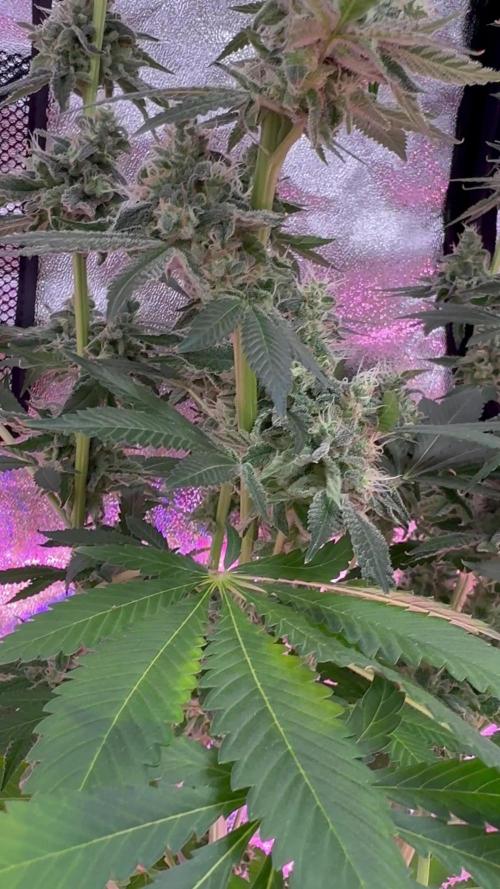
📜 Rambling - Week 16 / This lady was already 60 inches tall, built a 5x5 Trellis, and spread her out, with the whole summer to go she is going to Beast Mode On Me! Going to be top dressing with the Green Sunshine Company - Earth Dust All-Natural Plant Nutrients, Two-part Dry Amendment, Base, and Bloom, will be making compost teas each week, see recipes below, will be doing a vegetarian focus tea, and a flowering focused tea.
🔹🔹🔹🔹🔹🔹🔹🔹🔹🔹🔹🔹🔹🔹🔹
▶️ Sunday - 05.23.21 / Watered today with Dechloranted H20 filtered through a Boogie Brew 40k Inline Filter
▶️ Monday - 05.24.21 / Started a compost tea today - see the recipe below.
▶️ Tuesday - 05.25.21 / Watered plants with the compost tea today, they drank it up!
▶️ Wednesday - 05.26.21/ Plants looking perky! Rain some today.
▶️ Thursday - 05.27.21 / Outside is going well, and a bit yesterday and today, no need to water :) The plant is just looking amazing, will be adding a clone from this one over a few days, this one will be all-natural! The Earth Dust is smoking!
▶️ Friday - 05.28.21 /
▶️ Saturday - 05.29.21 /
🔹🔹🔹🔹🔹🔹🔹🔹🔹🔹🔹🔹🔹🔹🔹
Earth Dust - DESCRIPTION
🔹Earth Dust is our all-natural plant nutrient designed for indoor and outdoor flowering plant growers. You can grow easily by “just adding water” to your soil for the entire growth cycle. It creates a “living soil” so your plants thrive from seedling all the way through flower and harvest. Earth Dust represents an organic dry amendment method of gardening, it’s made of a natural powder of ingredients.
🔹Because you only need to water your soil with Earth Dust, you can concentrate on caring for your plants and getting a healthy crop “on autopilot”. Now you can grow without spending hours of your life mixing chemical nutrients, and you can do it naturally. What’s more, is you will enjoy the cleanest, most aromatic, and flavorful harvest you’ve ever experienced when a plant grows in a rich, organic web of living soil.
Product Highlights
🔹All-Natural Ingredients – Mostly plant-based – Safe around children and pets.
🔹Packaged in kraft paper bags that are recyclable and compostable.
🔹Easy to Use – Just mix the powder into the soil 3 separate times – then water only.
🔹Packed full of rich microbe food & contains billions of beneficial fungi and bacteria! Creates a resilient, living soil that defends against pests and diseases.
🔹Rich in trace minerals and nutrients for full plant expression. Sourced from rock dust, sea-farmed kelp, and land-grown crops.
🔹Soil Conditioners help balance pH and make nutrients more available in the soil. Achieved with ingredients like bat guano, worm castings, limestone, molasses, and humic acid.
🔹The correct balance of N-P-K nutrients for each stage of growth:
🔹Earth Dust Base (3-1-2) contains key nutrients for sustained vegetative growth. High nitrogen (N), Low Phosphorous (P), and Medium Potassium (K).
🔹Earth Dust Boost (2-3-6) contains accelerated-release nutrients for powerful flowering growth. Low nitrogen (N), Medium Phosphorous (P), and High
Potassium (K).
🔹Re-use soil harvest after harvest by simply adding more Earth Dust Base to begin again. Create your own living soil that gets better every time it’s used.
🔹Go organic, save time, and get predictable, healthy harvests.
🔹🔹🔹🔹🔹🔹🔹🔹🔹🔹🔹🔹🔹🔹🔹
Compost Tea for Vegetative Stage
Water 4 Gallons
3 Cups Composr (Your Favorite Worm)
4 TBL Molasses
4 TBL Seaweed Extract
4 TBL Fish Fertilizer
Use air Stone o the tea for 24/3 hours 70/75F, use at full strength for establishing plants and a half strength for younger plants





@DevilsBud
Follow
New week for the 2nd grow
In the new marshydro set-up
Enjoy the video be warned it can get LOUD 😉
there all looking amazing in there own way for separate details per plant go to there diaries 🤘🏻
I believe the new FC-4800 wel i KNOW
This lamp is out of this world for sure it will get your so frosty so quick i was afraid i did something wrong lol nah she is just a absolute BEAST .
AND THE 120X120X200 TENT
Is great for the grow that have going on now there snug like bug in there no netting needed 🤘🏻 the control of heat and humidity is easy as can be winter is my time to grow no problem what so ever
visit www.marshydro.eu
for your best gear and use the PROMO CODE: DEVILSBUD
Some info about the Marshydro FC-4800
Superb Quality LED Chips: The whole light is composed of 1206 pcs Samsung lm301b and Osram 660nm chips. More than two times as many LEDs are used to drive the grow lights at low currents and to avoid overdrive. Quality is guaranteed and efficiency is up to 2.8 μmol/j.
Even PAR Distribution and High PPFD Output: The multi-light bar design and the densely distributed light chips enable the LED grow lights to achieve the optimum PPFD required for plant growth over the entire effective coverage area.
Specifically Designed Spectrum: To ensure even plant growth, blue and red light are enhanced on the basis of a full spectrum combination. Not only does this accelerate plant growth, but it also improves the yield and quality of the plants at the same time.
Dimming Daisy Chain Function: The dimming function saves on electricity costs and enables brightness from 10% to 100% for the different stages of plant growth. A single master light can connect up to 30 lights in a daisy-chain system.
Business LED Grow Light: The light's wavy heat sink dissipates heat quickly and the IP65 waterproof allows the light to operate in humid conditions. 180° collapsible feature for easier installation. All these features provide favorable assistance for commercial cultivation.
And some tent info
●【Lock All Light Insid】MARS HYDRO Grow Tent Interior is made of diamond mylar. Non-toxic to the environment, no harm to plants. High-quality 1680D canvas being double stitched, (ALL OTHERS BRAND grow tent is 601D canvas) which is tear-proof for perfect light locking, No light leaks or rips at all.
●【Durability Grow Tent】Stable Metal corner adapters and poles are the trustful supporters of the tent. No rusting nor paint-falling. Quick easy tool-free installation. Carries strong heavy-duty SBS zippers, double layer lining to create a light-proof seal.
●【Easy Observation of your Plants】Special peeks window made by double layers of cloths. Observe the growing conditions of your plants without opening the tent and avoid disturbing plants. The peek window also serves to dissipate heat and ventilate air.
●【Removable Tray Keep Clean】The package includes a removable waterproof floor tray to hold soil and fallen leaves. The tray can be taken out easily to wash. Removable and water-proof makes cleaning easy.
●【Good Ventilation&Fast Assembly】 Circular double-sleeved vent holes with adjustable nylon strap for air circulation by exhaust fan, ducting, carbon filter, or reflector. Better allows proper light, heat, and airflow. Quick tool-free installation. Reinforced by a sturdy metal frame to ensure security and stability, supports up to 140lb. Perfectly safeguard your plants to thrive even in winter

