




Likes
10
Share


@jayizrollin
Follow
Fast buds genetics are freakin awesome, I can’t wait to try some more soon, Mephistopho is next though.
Total Weight was 78 grams Dry, I dried for 9 days, 65 degrees and avg of 50ish humidity, was perfect but it was stable.
Smells of candy gas, had a lot of larf and buds I just didn’t want to trim so I have 37grams of trim to get some keif out of. Thanks for checking out this awesome grow of mine!

Likes
6
Share

@MaestroBud
Follow
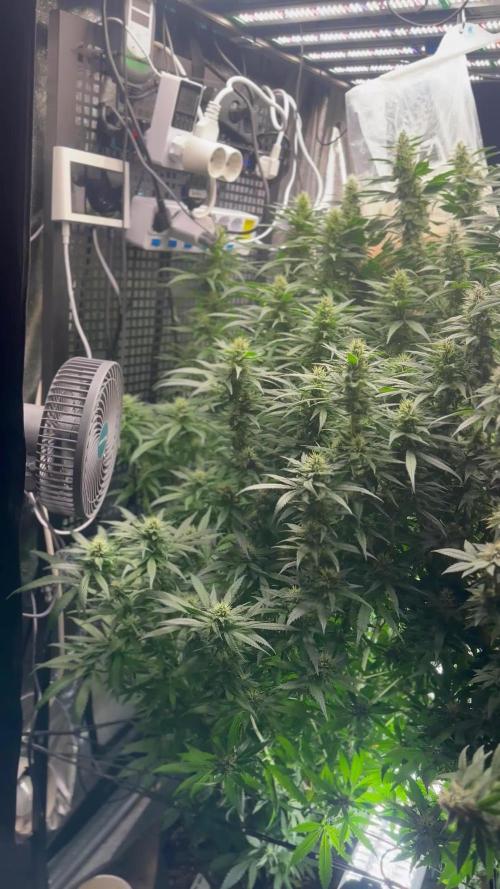
The stretch has stopped with precision, and Skywalker Haze has now set a course for floral compaction and terpene production.
The AN Master Recipe protocol is in full effect with Overdrive just activated. The 3 daily watering cycles via drip kit ensure gradual and balanced absorption throughout the day, adapting to the plant's metabolic rate.
💡 Lighting:
Phlizon FD9600 on maximum
Mars Hydro 100W on low

Likes
10
Share


@Gokou4OG
Follow
These girls are on fire , super dense heavy nugs . Smells incredible and can’t wait . Harvest is expected before the end of the month . Btw this is actually my first grow … I’ve been studying a lot and have certs from thc university.
Processing
Likes
19
Share


@MrSweetLeaf
Follow
First week of flowering going well still got a few leaves here and there that look a bit sad but overall they look healthy and are growing like crazy. Upped the nutrients to 900ppm. Still watering every third day. Got some 13” risers and 18” saucers that work incredibly well with these cloth 5gals.


Likes
4
Share

@GnomesAndStones
Follow
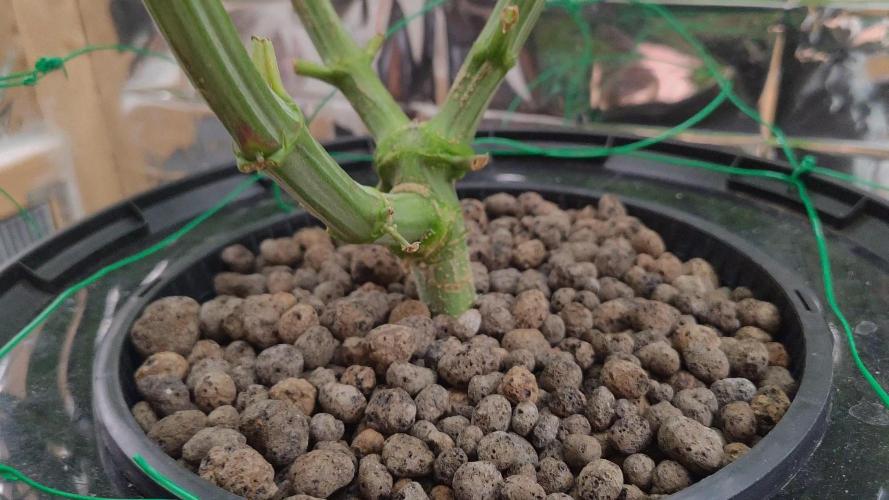
🌱 Another fantastic and eventful week! She is still growing very strongly and loves life, but the Gorilla Cookies outgrew her tent and started some hermit crab action, leading to the Strawberry Lemonade taking home in the 50x100 cm grow closet.
In order to fill out the rectangular instead of square grow space, i supercropped her. First time using that technique but it already looks like a success. The stems partially split vertically, but i taped them shut until she fully recovers.
Day 45
💧 Topped up the bucket with 4 L and setting it to 1000 ppm with preflower ratios (0,8 ml/l row and micro, 0,6 ml/l bloom).
Day 47
🌱 Migrated to the grow closet and got supercropped.
💧 Filled the reservoir up with 2 L. Same nutrients as on day 45.

Likes
60
Share

@squalino
Follow
La Samouraï
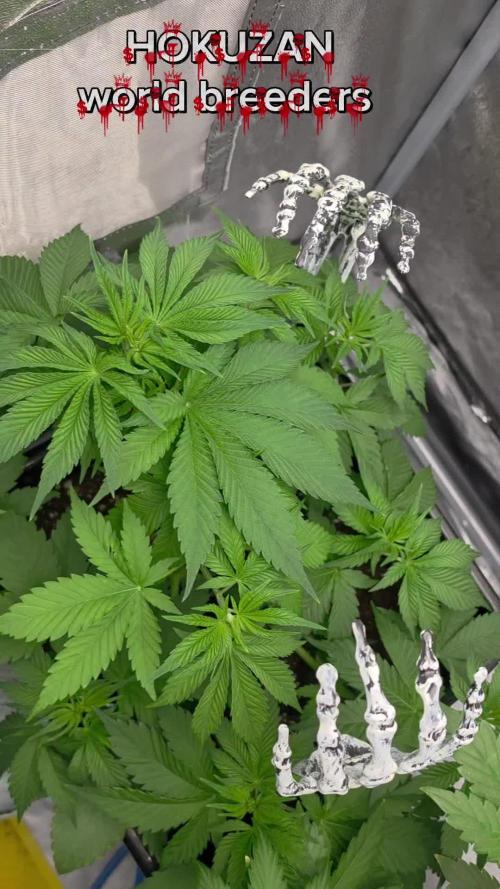
Variété & Breeder : Hokuzan par World Breeders
Date de germination : 9 septembre 2026
Âge : 28 jours (Semaine 4)
Taille : 30 cm (+10 cm cette semaine)❤️❤️❤️❤️❤️❤️❤️❤️❤️❤️❤️❤️❤️❤️❤️❤️❤️❤️❤️❤️❤️❤️❤️❤️❤️❤️
Climat & Climatologie :
Humidité : 50%
Température : Jour 25°C / Nuit 21°C
Lumière : 75%
❤️❤️❤️❤️❤️❤️❤️❤️❤️❤️❤️❤️❤️❤️❤️❤️❤️❤️
📅 Journal quotidien (Jour 22 à 28)
Jour 22 : Aucun apport en nutriments.
Jour 23 : Ouverture du système AutoPot.
Jour 24 : Aucun apport en nutriments.
Jour 25 : Ajustement LST et défoliation.
Jour 26 : Apport de 3 ml d'Orgatrex.
Jour 27 : Aucun apport en nutriments.
Jour 28 : Aucun apport en nutriments.
❤️❤️❤️❤️❤️❤️❤️❤️❤️❤️❤️❤️❤️❤️❤️❤️❤️❤️
📝 Descriptif
Excellente vigueur pour cette quatrième semaine ! La plante franchit la barre des 30 cm. La mise en route du réservoir AutoPot porte déjà ses fruits : le tronc est devenu particulièrement massif et robuste, tandis que le feuillage se développe de façon très dense avec de magnifiques feuilles bien vertes. Le travail de LST permet de conserver une canopée régulière et d'exposer parfaitement tous les départs secondaires.
❤️❤️❤️❤️❤️❤️❤️❤️❤️❤️❤️❤️❤️❤️❤️❤️❤️❤️
💡 Saviez-vous que...
Halloween et le Yōkai du Cannabis au Japon !
Contrairement aux idées reçues, Halloween est devenue une fête gigantesque au Japon (notamment dans le quartier de Shibuya à Tokyo). Mais dans le folklore traditionnel japonais, il existe déjà une créature "d'Halloween" liée au cannabis : le Taima-hime ou des esprits appelés Yōkai qui se cachaient dans les champs de chanvre géants pour effrayer les voyageurs égarés la nuit ! De quoi rester bien accroché à son pot pendant les soirées d'automne... 🎃👻
❤️❤️❤️❤️❤️❤️❤️❤️❤️❤️❤️❤️❤️❤️❤️❤️❤️❤️
Un grand merci à World Breeders pour cette génétique Hokuzan au comportement exemplaire, et un grand merci à tous les lecteurs qui continuent de suivre l'évolution de La Samouraï ! 💚🌱
Likes
15
Share


@RussianGrower
Follow
Привет друзья, всем тем, кто следит за мной. Вновь обновляю свои дневники. Если вы следите за мной, то знаете, что на протяжение всей прошлой недели я брал клоны от своих растений. Вы можете следить за их развитием в соседнем моём дневнике. После того как я взял достаточное количество клонов, я сломал привычку растений выращивать один центральный стебель. Теперь я дам им немного покоя и буду наблюдать, как их внешний вид восстановиться после жёстких тренировок. Я даю растением небольшое питание, в основном из витаминов, гуминовых кислот и бактерий. Когда мои 50 клонов будут готовы к пересадке, я переставлю материнские растения в палатку поменьше и буду дальше экспериментировать над ними.
Если вам интересно следить за приключениями травки в России, подписывайтесь на мои дневники

Likes
18
Share


@Staffedition
Follow
Привет друзья!
И так сегодня 13 день моей малышке.
Выглядит здоровой и счастливой
За 13 дней ни каких сбоев в росте и развитии, генетика хорошая
Всем добра и мира!
#Smail_Seeds
Likes
18
Share


@Canna96
Follow
Hey now, hope everyone is haing a great weekend. The Sundae Driver is doing pretty well, she is 2 weeks from getting wet under the Spectrum X which is only cranked up to 30% so she is putting out close to 230 Watts for the 7 seedlings. I will only keep 5 of them and give a couple away as I think even 5 mainlines will be tight in my 5X5 tent. My plan is to transplant them in a couple days, and then top them for the first time at the third node around day 20, and then hopefully top her again around day 27, then again hopefully around day 30, and then flip her to flower by then end of week 6 or 7 at the latest. If i go much past there I think I will run out of room but we will see how it goes.
First time ever running a Royal Queen Seeds Strain, but I have smoked this Sundae Driver before and she was one of the tastiest strains I have ever tried, so very excited for this run.
I hope everyone has a great weekend, thanks for stopping by, Stay Safe and Blaze On!!! 💪
Website: https://medicgrow.com/
https://growdiaries.com/grower/medicgrowled


Likes
7
Share


@Ninjabuds
Follow
It was a good week just cut down the gran turismo I can’t wait for it to dry and try to smoke a nug it’s so smelly of a plant I bet smoking some wet buds will still taste pretty decent. I will let the rest of it dry and cure for prob 90 days or so b4 I start to smoke on it I wanna let it get to its prime it’s so pretty

Likes
12
Share


@Chuckwaggon420
Follow
Ended up with 4 mooning panties seedlings!!!
Way excited to have these going these genetics will get any weed nerd Gitty. Still just doing declorinated water ph to 5.6-5.7.
Just keep swimming
Just keep swimming
🐠
Stay posted going to get turned up week 2 is always more growth!!
Much love as
Likes
9
Share


@MuzzFuzz
Follow
Things ticking along no real stresses this week. Starting to show some white hairs and still stretching. Temps and humidity much better this week and a lot easier to manage without the co2.
Likes
4
Share


@Kannamar
Follow
25/04/2023 Day 69
I cut the "twins" and finally discovered the inside of the DWC MyPot.
I took lots of pics so you can see the unexpected plant of the seed that I lost in the clay and then germinated anyway and found an awkward path to the surface through a tiny hole! Unbelievable!
I also found that the watering tube from the pump had moved during manipulation, don't know for how long it has been pressed between the upper and lower parts on the DWC.
Pretty sure for that final plants had received less or no feeding solution, and the use of Clean might not have been efficient.
I guess it's also the reason why I found the white (?) on the top of the clay, salts and something else, because of lack of watering.
Will come back in 3 weeks, will be dry and then I'll can trim and weight. And smoke, yeah!
Not expecting much and could be hard to smoke if the cleaning was not efficient.
Anyway, the next one will be better!

Likes
4
Share


@smoking_hills9
Follow
Last final defoliation done, now buds are fully exposed to the lights and the best part, harvest trim will be easier. Still it took me around 8 h altogether to defoliate all of them. Tones of buds and frost , amazing smells. Won't rush will give it a bit more to swell.

Likes
39
Share


@Hazecat_420
Follow
Se regó folearmente Big One para comenzar a estimular la floración, desde hoy día se cambia el fotoperiodo. Se le realizó una defoliación para poder regar de mejor manera y se le pondrán tutores. Seguimos ...


Likes
16
Share


@valiotoro
Follow
Hello everyone 😎
Week 10 of flower for the strawberry banana auto from Fast Buds 🍓🍌
Only one plant left !
She grew fast with beautiful color,for the nutrient 4ml/L terra bloom & 1ml/L power buds next week i will introduce Green sensation at very low doses from Plagron ✔️
Now only plain water💧
Amazing smell 🤤super fruity 🍓🍌
The buds are super sticky ✂️
Mars hydro SP-6500 100%
Have a nice day 😋