


Likes
Comments
Share


@LokaGass
Follow
I had been through a rough week/ kinda i am a first grower i think i do all the mistakes as i can by focus on different problems... I find out she is a He too wonder how good this to me.
Now the pollen sack blowed up marked pictures and the following bottoms could be affected by it. I wonder the out come and i decided i make it in any means.
Upgraded to add in the fan finally i had solutions.
Also cut lower weaker parts to gain more power on the top that is already flowers.
Thanks a lot for a member to keep advice me.

Likes
111
Share


@DreamIT
Follow
There is little to say yet. I recommend everyone to try this technique at least once. Maximize your harvest and increase your personal experience. If you want more serious proof of how mainlining works, take a look at the diaries of @Canamatoes, my teacher and mentor. More updates later, stay high🤘😁🦄

Likes
6
Share


@DogDoctorOfficial
Follow
💙 Project Blue Tent – Week 7
Blue Waffle F1 – Pheno B (Folder 13B)
Hello everyone, and welcome back to another chapter of Project Blue Tent! 💙🌱
If you're joining us for the first time, welcome aboard.
Project Blue Tent follows four individual Blue Waffle F1 plants from Zamnesia, each documented separately from seed all the way through harvest.
All four sisters share the same environment, lighting, nutrition, irrigation and training techniques.
The idea is simple:
Keep the environment as consistent as possible and let the genetics tell the story.
And despite all those similarities, each plant still manages to develop her own little personality.
Today we're checking in with Blue Waffle F1 – Plant B.
And if you've been following her journey...
You might remember that this is the girl who had a rather unexpected visitor last week. 🐛
Don't worry.
She's absolutely fine.
In fact, judging by the way she's growing...
She seems to have completely forgotten it ever happened.
────────────────────────
🌿 Week Seven – The Canopy Is Ready
This week feels like the end of one chapter and the beginning of another.
For several weeks we've been building the canopy.
Topping.
Training.
Guiding branches.
Installing the SCROG.
Tucking shoots underneath the net.
Slowly filling every available space.
And now...
We've done it.
The canopy is essentially where I want it.
Plant B is sitting at approximately 60 cm, just like her sisters, with the SCROG keeping the plants at a remarkably even height.
Looking from above, it's becoming increasingly difficult to distinguish one phenotype from another.
That's actually one of the most fascinating things about this project.
Four individual plants.
Four individual diaries.
And yet, under identical conditions, they're producing an incredibly uniform overall canopy.
Plant B has once again filled her section beautifully.
She's healthy, vigorous and absolutely covered in potential flowering sites.
So now it's time for the final preparation before we flip.
────────────────────────
🕸️ The SCROG Mission – Completed
The SCROG has been one of the most important pieces of the puzzle during this vegetative cycle.
Instead of allowing the plants to develop a few dominant vertical tops, we've spent weeks encouraging the branches to grow horizontally across the screen.
Every time a shoot tried to escape upward, we'd gently guide it underneath the net and into the next available square.
Slowly...
The empty spaces disappeared.
And eventually, the screen became one continuous canopy.
That's exactly what we wanted.
The purpose isn't simply to keep the plants at 60 cm.
It's to distribute the growing tips across the available light and create a more uniform structure for flowering.
And Plant B has handled the entire process beautifully.
Now that the screen is full, however, our priorities are changing.
We're no longer trying to add more foliage.
We're preparing the foliage we already have.
────────────────────────
✂️ Defoliation – The Final Vegetative Cleanup
This week's main event is defoliation.
And this is an important distinction:
Defoliation isn't about removing leaves because they look ugly.
It's not about trying to make the plant look "clean."
And it's certainly not about stripping every leaf from the plant.
Leaves are the plant's solar panels.
They're valuable.
So the objective is selective removal, not destruction.
After several weeks of vigorous vegetative growth and SCROG training, the interior of the canopy has become extremely dense.
There are leaves overlapping one another.
Branches crossing through crowded areas.
And sections of the plant where airflow and light penetration can be improved simply by removing some unnecessary foliage.
That's what we're addressing now.
We're opening the plant.
Creating breathing room.
Improving visibility.
And preparing the structure for the much denser environment that flowering will bring.
────────────────────────
🌬️ Why Do This Before Flower?
This timing is very deliberate.
Defoliation is a form of stress.
Even when performed correctly, removing a substantial amount of foliage temporarily forces the plant to adjust to a new balance between its leaves, roots and active growing points.
So I want that recovery to happen before flowering begins.
We're still running an 18/6 vegetative schedule.
The plants are actively growing.
They have time to recover.
And we're not simultaneously asking them to transition into a completely different developmental phase.
Once flowering begins, I want the plant's attention moving toward flower development rather than recovering from major structural work.
So we're following a very simple sequence:
Build the canopy.
Fill the screen.
Defoliate.
Recover.
Flip.
One step at a time.
────────────────────────
🧠 What Defoliation Actually Achieves
There's a common misconception that removing leaves automatically means more light equals more growth.
It's not quite that simple.
The reason we're doing this is to improve the overall efficiency of the canopy.
We're trying to create a better relationship between:
🌱 Growing sites
💡 Light penetration
🌬️ Air movement
🍃 Leaf density
? Plant structure
The upper canopy is already receiving plenty of light.
What concerns me more is what happens underneath it.
A dense interior can become a maze of overlapping leaves and branches.
By selectively removing some of that congestion now, we're creating a more open structure before the flowers begin developing.
And that's particularly valuable inside a compact tent where four vigorous plants are sharing the same space.
────────────────────────
🌿 Plant B – The Girl Who Bounced Back
And then there's Plant B.
The survivor of the infamous caterpillar incident. 😂🐛
Last week she had a tiny visitor arrive from the outside vegetable garden and apparently decided that one of her leaves would make an excellent snack.
Fortunately, the entire event was almost comically uneventful.
The caterpillar was found.
It was removed.
The affected area was cleaned up.
The entire tent was inspected.
And Plant B simply continued growing.
No meaningful setback.
No visible stress.
No drama.
If anything...
She seems to have responded by growing even harder.
Her foliage is now rich, healthy green from top to bottom.
The new growth is vigorous.
The branches remain strong and flexible.
And the canopy has continued expanding exactly as planned.
So I think it's safe to say:
Plant B won that battle.
The caterpillar got one meal.
Plant B got another week of growth.
I'd call that a draw. 😂
────────────────────────
💧 Drip Irrigation – Doing Its Job
The Mars Hydro drip irrigation and automatic drainage system continues to impress me.
Each plant is currently receiving approximately 1.2 litres of nutrient solution per 24 hours, delivered consistently through the individual drippers.
The runoff is then collected and removed through the automatic drainage system.
That consistency has become particularly valuable now that the plants are getting larger and the root systems are becoming increasingly demanding.
Instead of manually trying to reproduce the same watering pattern every day, the system gives the plants a predictable routine.
And the plants are clearly responding well to it.
Healthy foliage.
Strong growth.
Stable development.
It's one of those pieces of equipment that quietly does its job in the background...
Which is exactly what I want from an irrigation system.
────────────────────────
🥥 Feeding Program
The nutrient recipe remains completely unchanged this week.
There is simply no reason to interfere with something that's working.
Current feeding:
• Plagron Hydro A — 1.9 ml/L
• Plagron Hydro B — 1.9 ml/L
• Plagron Hydro Roots — 1 ml/L
Current EC:
1.92 mS/cm
pH:
5.8
For now, I'm keeping the nutrition exactly where it is.
The plants are showing excellent colour, vigorous growth and healthy structure.
We may increase the nutritional strength next week depending on how they respond after this defoliation and as we move into flowering.
But I prefer to make that decision based on the plants rather than simply increasing numbers because the calendar says we should.
They'll tell me when they're hungry.
────────────────────────
🌡️ Blue Tent Environment
The environmental conditions remain wonderfully stable.
This week's average conditions were:
• 🌡️ Day Temperature: 28°C
• 🌙 Night Temperature: 25°C
• 💧 Relative Humidity: 65%
• 🥥 Substrate Temperature: 24°C
• 💦 Nutrient Solution: 18°C
• ⚗️ pH: 5.8
• ⚡ EC: 1.92 mS/cm
• 💨 CO₂: approximately 450 ppm
• 💡 Light Schedule: 18/6
• 💧 Irrigation: approximately 1.2 L/plant/24h
• ? Pot Size: 8 L
• 📏 Plant Height: approximately 60 cm
The consistency between the four plants is one of the things I appreciate most about this project.
We're trying to remove as many environmental variables as possible so that when differences appear, we can look much more closely at the plants themselves.
And right now...
The similarities are remarkable.
────────────────────────
🌱 Four Sisters, One Canopy
This is perhaps the strangest part of the project at the moment.
When I look across the Blue Tent from above, the four plants almost look like one giant organism.
The canopy is extremely uniform.
The colour is consistent.
The height is consistent.
The growth rate is remarkably similar.
And the SCROG has done an excellent job of bringing everything together.
Of course, if you look closely, you can still see the individual personalities.
That's why these separate diaries exist.
But from a distance?
It's becoming increasingly difficult to tell who is who.
And honestly...
That's a beautiful result.
It means the environment is doing exactly what we wanted it to do.
────────────────────────
🌿 Plant B's Personality
Plant B continues to be one of the more naturally cooperative plants in the tent.
She's responsive to training.
She's vigorous without becoming unruly.
And she has developed an incredibly usable structure beneath the screen.
Her branches have thickened nicely, her internodal spacing remains compact, and the new growth continues appearing with that healthy, vibrant colour I've been looking for.
And perhaps most importantly...
She doesn't seem to hold grudges.
We topped her.
We bent her.
We tucked her.
A caterpillar ate her.
And now we're defoliating her.
And she's still standing there saying:
"Is that all you've got?" 😂🌱
That's Plant B.
────────────────────────
👀 Looking Ahead – Flower Is Coming
After today's cleanup, the most important thing we can do is...
Nothing.
Let her recover.
Let the new growth settle.
Keep the environment stable.
Keep the roots happy.
And observe.
This is where patience becomes just as important as technique.
We've spent weeks building this plant.
Now we need to give her the time to respond.
If everything continues looking this good, the next major milestone will be the transition into flowering.
The screen is full.
The excess foliage has been cleaned up.
The structure is ready.
And the plants are healthy.
We're almost there.
Vegetative growth is coming to an end.
The next chapter is going to be very different.
🌸 Flowering is next.
────────────────────────
💙 Thank You
A huge thank you to Zamnesia for making Project Blue Tent possible and for providing these fantastic Blue Waffle F1 genetics.
A heartfelt thank you to Plagron for the Premium Growbags and Hydro nutrient line, which continue providing the plants with everything they need to maintain this beautiful growth.
A special thank you to Mars Hydro for the drip irrigation and automatic drainage system. It has been performing wonderfully throughout this project and has made maintaining consistency inside the tent considerably easier.
Thank you as well to Future of Grow for the UVC LED bar, which remains another tool within my preventative IPM routine.
And of course, thank you to GrowDiaries for giving growers around the world a place to document, learn, exchange ideas and share these journeys.
And finally...
Thank you.
For following.
For commenting.
For asking questions.
For sharing your own experiences.
And for simply being here.
Plant B has already survived topping, SCROG training and a tiny caterpillar invasion.
Now she's clean, healthy and ready for the next chapter.
The canopy is full.
The room is ready.
The plants are ready.
And soon...
we flip the Blue Tent. 🌸💙
Until next week...
Growers Love, happy growing, and take care everyone! 🌱💙


Likes
12
Share


@cheetah844
Follow
This is a regular photo seed, I'm hoping it'll be a female. If not I have some solid male genetics to cross with. 💚💜 my Blueberry strains. I have both a Blueberry & Blueberry OG in, I'm excited for both.


Processing
Likes
4
Share


@ganjaman24
Follow
I flipped them to flower earlier this week so I can make space for some new stuff and I think they’re doing pretty well...no buds yet will try to stay more consistent with entries. Thanks for tuning in!! Happy growing! XD

Likes
10
Share
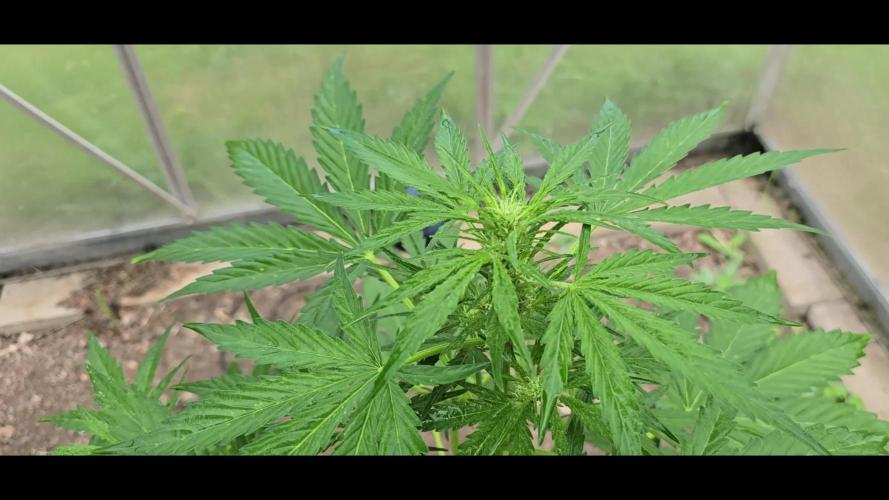

@NSABND
Follow
Day 29... afternoon very sunny and warm temp 👍
Day 30 damn hot and full of sun 😎👍
Day31 warm weather with sun in the morning, laters cloudy with high humidity 😃
Day32 totally fucked up weather...rain non stop and cloudy 😕😫😩
Day33 same damn weather then yesterday oh lord 😒😠😵
Day34 cloudy start in the day but then sunny weather 😍👍😏
Likes
17
Share


@Wizard555
Follow
As the third week draws to a close, our plant continues to thrive, thanks to the nurturing care and high-quality nutrients provided by Xpert Nutrients. Embracing the art of Low Stress Training (LST), our girl has responded with enthusiasm, showcasing new growth and vibrant green foliage. With each passing day, she flourishes under the nourishment of Xpert Nutrients' Master Root and Master Grow series. Their Master Root, at 2ml per liter, and Master Grow A and B, each at 1ml per liter, have become essential components of our feeding regimen. With a balanced pH of 6.2 and a TDS of 250, our plant receives precisely what it needs to thrive. We extend our heartfelt gratitude to Xpert Nutrients for their exceptional products, which play a pivotal role in the success of our grow journey.

Likes
19
Share


@sellem
Follow
Hello hello again!
Starting Week 9 with again some flashlight nighttime shots because i fell in love with that.
Growwise, theres nothing much to report. I keep everything more or less the same.
Watering 2,5L after 5 Days, usually i had a pretty good 4 day rhythm going but last time they had a tad too much runoff so i decided to let her dry out for a day more. they liked that, back to the usual thirstiness. Nutes changed a bit (grow up from 2 to 2.5, bloom up from 3 to 3.2) but thats just because i did an oopsie. PH stays 6.5 in, 6.2 out.
Trichomes i will check later. Pistils are still to white and they dont look ready yet, but its fun taking closeup pictures, so there you go.
Other than that, ill skip my usual ramblings about how i love these, you all know that by now :)
*Added Trichomes, daytime shots and timelapse at the end of week 9, until next week, happy growing! :
Likes
13
Share


@GlassesMan
Follow
Unfortunately I couldn't harvest full plant, because half of it was stolen.
Likes
3
Share


@French__flair
Follow
Suivre les conseils semaine 1.
Une fois que les plantes ont colonisées le pot de 1L, les rempoter dans des pots de 3L (qu'on va arroser avec 3L). Cela doit prendre 4 à 7 jours en moyenne.
Surveiller l'aspect des plantes, les pointes des feuilles. Observer le haut et le bas. La couleur de la plante doit être uniforme entre chaque partie sinon c'est qu'elle a un manque ou un excès. Le plus souvent étant donné les engrais complet que nous utilisons il s'agit d'un excès. Dans ce cas il suffira simplement de faire un arrosage à l'eau au lieu de l'engrais et de reprendre les engrais à plus faible dose.
Les tiges sont un bonne indicateur de la santé des plantes, hors génétique spécifique, elles doivent être verte et tendre, pas dur.
On continue la FIM et la taille de certaines feuilles qui peuvent être gênante.
Likes
6
Share


@jackh3rrer
Follow
End of the first week of flower now. Some of the sites became a bit too alpha, so I decided to pull them towards the sides / corners to attempt to keep an even canopy. So far, they don't seem to be getting too much hungry yet, so I slightly adjusted feeding schedule. I'm going with the "less is more" approach on feeding this run. PPFD in this week is now at 620 PPFD.

Likes
9
Share


@Budzalot
Follow
Day 35 start week 6
Pretty much everything stayed same. They are starting to run out of room in tent.


Processing
Likes
84
Share


@Hempire
Follow
Im doing a bit of defoliation, moreover the leaves that covering the buds, i cut some small branches on the bot of the plants, to keep energy for the distal parts of the branches.
Every 2 day approximately, to no stress a lot the plants, I pinch the apex of MD1, MD2 and BB1, that my secondary branches go up, until the height of the apex central.
Nutriments :
2,0 mL/L of rhizotonic, 2,5 mL/L of cannazym every watering.
2,0 mL/L of terra vega every 2 or 3 watering in case of they need (N) until the final of the strecht (first 2 weeks of bloom).
I will put 5L every watering (pots of 18L) and I will analysed the drain of every plants to check pH and the fertilizer amount.
Im really proud of theses plants, they are strong, resistant (the trunks are huuuge, moreover the Moby dick from Dinafem) and so healthy !! The MD 3 has reacted really really good with the topping ! Im impressed and quite sure do topping next time ;)
I hope they will give me the best of themselves !!!! Lets wait the final of the strecht 😉


Likes
2
Share


@Ninjabuds
Follow
The Bubble OG plants are looking awesome! My tallest one is stacking up with super dense buds. It's crazy to think that the other one is almost ready to chop – the colors are so vibrant. And then there's that short and squat one with the purple leaves. It's definitely the oddball of the bunch, but I kind of like it.
The past few weeks have been so beautiful, watching the plants grow and change. It's amazing how something so small and fragile can turn into something so strong and vibrant. Now that they're getting ready to bloom, it feels a little bittersweet. I'm so excited to see the finished product, but I'll definitely miss having them around while they're growing.


Likes
8
Share


@Lickey
Follow
After 5 weeks of flowering we are in week 6. Grape Apes need water every -45 days and just 1.7L. That ain’t much. Tangerines are about 1.8L every 3 days.
