


Likes
Comments
Share


@Ganjaman19
Follow
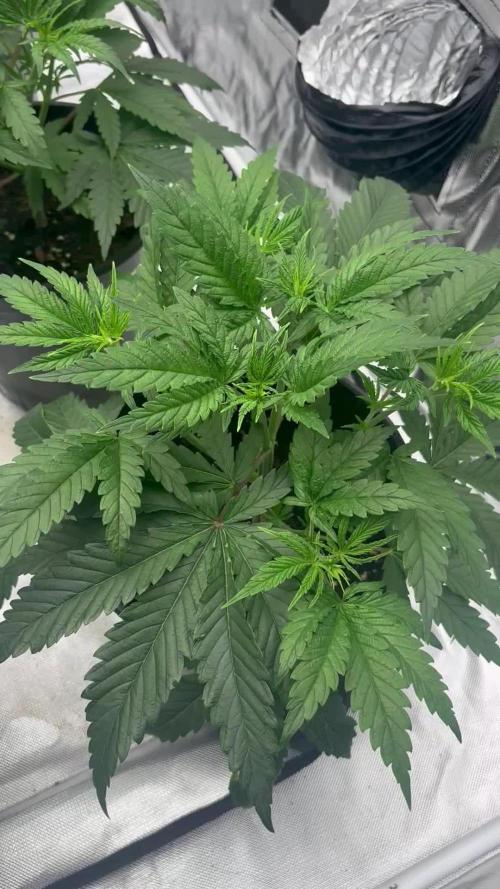
Vegetation over end of week 8 I'm really happy with how these look I've ended up with 8 I'm happy to put into flower they are all different strains and range in size from 90cm to 120cm the strains are
Barney's farm
Wedding Cake
Pink Kush
Mimosa Evo
Runtz Muffin
Divine seeds
Divine Indica
Opium
Anesia seeds
Banana Kush
Pink Starburst
The feed I've used is great I really like this range and would recommend it to any grower and its all I will be using along with the Monkey Nutrients range these for me are the best European and UK Nutrients well worth anyone's money
I will be defoliating and lollipopping them soon so I can get as much exposure as possible
Also some of my cuttings have rooted so I can help my friend out I switched to Clonex rooting gel and have had some luck so I'm really happy (see pics)
Thanks for the help along this journey and thanks always to my sponsors
@HydroproWashington
@anesiaseeds
@Divineseeds
@monkeynutrients
See yous all next week with some better photos of each plant before and after some much needed defoliation
Peace out


Likes
6
Share


@Dopeyvan87
Follow
Pictures coming soon, they will be made by my friend Bean, he studies cinematography as well. I'm excited to see his pictures. Plants are doing very well. Sun has been out and the plants have been growing. Accidentally misread the dosage of fish force but they were able to handle it. I also just received some advanced nutrients, Carboload and Tarantula. It says to give tarantula at the beginning of the veg and flowering state but I was late..Still thought I would give it a try. I also have some leaf discoloration on Walvisje, its just half the leaf. Pictures wil come later!
07/14- Supercropped Pumpkin Scone yesterday, may have gone a little overboard but she still looked good today regardless..

Likes
101
Share


@Ferenc
Follow
Day 58, 11th of November 2020:
I set the lamp 15 minutes shorter to switch off earlier so they receive 11:45 of darkness. I would like to imitate the nature when longer nights come with time till the 4th week (when they will receive 13 hours darkness a day 15 minutes minus 4 times = 1hour) so every week 15 min longer darkness for 4 weeks and then back to 12/12 to have bigger buds from the 4th week....
Wao. Well, all good hopefully they will stop growing soon but the strech is not that much thanks for the trainings such as topping and LST....
Pistils are started appearing so they she the sex I think one more week to go and they will settle down concentrating on bud development.
What to say every 2nd day is fertilization with the mix and ratio above now we are waiting.
Anything else? Well just look atbthe pictures and decide what you think. I am pretty sure they look cool LOL.
This Gleato Zamnesia is very promising I really like the smell already she is nice but all of them I mean I am in love with all so. Kalinia Asia is nice and I am so excited for the Sweed Seeds ones the red girls OMG :)


Likes
4
Share


@L8bloomr1008
Follow
Start of the week, still no issues. Still plucking fan leaves blocking bud sites. Girls have plenty of water from these ac bases. Been alternating morbloom 0-10-10 (at maybe 2.5ml a gal.), recharge, and regular watering with no issue what so ever. Starting to get the purple coming through on the mega minds
This week we’ll set up for the finish. Top dress and a good defol.

Likes
12
Share


@Jays_Not_Here_Man
Follow
The Cookies ladies have been growing along side the Betty’s, doing their thing ❤️
The 2x4 is coming along, not quite as big and plump as my big tent, but producing some nice nugs nonetheless.
The frost is starting! These girls were not as early producers, but seem to be responding well to the wind and light stress! The second trellis was definitely needed, even though they are not quite as tall as their grow mates.
They have been keeping to the same schedule of needing to be watered every 72 hours. I will be switching from cal/Mag to Mag/Sulphur supplements later this week. I ❤️ how readily available these Advanced Nutrients are. 😎
The nutrient burn on some of the tips has not spread or gotten worse. The feed range seems to be the 700-750 range. Still keeping to the feed, water, feed schedule, with the 2nd feed being a much lighter dose of nutrients.
I’ve increased the light intensity of the SF 4000 to 90% and will probably be stopping there. The temps have been getting as high as 81 degrees, and low as 73 at night. I’ve decreased the humidity to fluctuate around 50% , giving a reasonable VPD for most of the time, thanks to the automation of the in-line exhaust fan.
Still have 4-5 weeks for these babies, I’m hoping they continue to plump up, they are showing some great promise. Happy Gardening 🤗❤️👊🇨🇦

Likes
228
Share


@Still_Smoq
Follow
📆 Week 14, Harvest 11-20 January 2024
11 January - I made a determination to cut light power to 25%, and go to a 12/12 schedule, instead of turning light offs for 3 days. After a review of current philosophies and theories - I understand there may be a possibility that coldness, not light, could be more associated with a terpene and cannabinoid boost during this end process. So I will try something new. .
13 January - Harvest Day. When I opened the tent, the smell of fresh berries, sweet, ripe, heavy with a slight scent of pine filled the air. I cut branches and all shade leaves off, without damaging the sticky buds, and hung them to dry. The closet was at a low 35% RH (due to the 0-5 degree F temps outside) and 60 degrees F. It will remain here with circulation for about 5-7 days.
18 January - The buds were small enough and the closet RH staying staying 35%, it was ready to trim and jar up. This wasn’t too bad a process actually. The leaves flaked off prefectly leaving the bud in tact, so most of the trimming was done by hand using my fingertips, not clippers. A delicate process but fast once you get the hang of it. I’ve weighed and jared them up, along with a boveda 62% RH packet #8 in with each. Here they will stay and cure until their peak THC/terpene levels are reached at about 30-40 days, burped daily until a RH of 62% is reached and maintained.
📑 Product Review: Hybrid Indica Dominate
The outcome: 4.2 ounces/119 grams of quality bud in about 90 days. The developer says just under 65 days, this could be done, it would have to be manipulated somewhat. The buds appear large, compact in size, but not so dense, a true bush variety. They are however loaded with trichomes and covered in resin. There is an excessive amount of sugar leaves that make it more challenging for the beginner to know how to care for it in later stages, especially flower. This pheno definately turned purple.
✂️ Harvest on 13 January
🌊 Using reverse osmosis water with EC/TDS at 0
💡 Light power at 25%
That is it for this grow. Thanks for the look, read and stopping by.


Likes
6
Share


@ForbiddenBotanist
Follow
I topped yesterday, watered today without fert. sprayed a mixture of oils on the topsoil for pests.
Any advice or comments always appreciated
-
Likes
Comments
Share
@Wizardgreen317
Follow
These plants where all started on the 6-27-2026 and there here at three weeks out the ground.. this all one hundred organic right now no lotus grow .. but pheno number three is really doing her thing she just looks different and she easy going no transplant shock. But yes this is actual three weeks lol but I do feed compost tea through out the week and I don’t heavy water to keep the organic matter in the pot .. but yes about to flower week four lol have a a great day and keep the genetics growing this is something new and I got these off brotantical gardens .. the bro are pretty good at keeping some fyre..
Likes
26
Share


@BudBoutique
Follow
! this is my current status, gonna upload my last veg weeks within the next week - got a bit busy around Spannabis - thank you for your understanding! 💚
Welcome to Bud Boutique Grow Diary - really appreciate all your love and support :)
Dont forget to check out my other current grows!
🗓️ This Week:
after 48 hours of complete darkness (important for seedlings to make sure all plants switch into flower same time), I finally switched my lights to the 12/12 schedule and sent my ladies into the flower.
- This one Phenos super strong
- more than healthy and going well
- Day 3: Foliar spray with APTUS Regulator and APTUS Nutrispray to give them extra micronutrients and give them a little shell for protection.
! always use APTUS Regulator first and mix well with your water before adding any other nutrients for Feeding or Foliar!
Thank you for still staying with me 💚
___________________________________________
--- 🌱 Strain (Sponsor) ---
🏷️ Blue Cinderella 99 FF by MSNL
https://www.marijuana-seeds.nl/blue-cinderella-99-fast-flowering
--- 🥗 Nutrients and Feeding (sponsored by APTUS: APTUS Ambassador) ---
🍸 APTUS: full nutrient schedule extreme
-- Regulator, N-Boost, P-Boost, CaMg-Boost, K-Boost, Allin1 Liquid, Startbooster, Topbooster, Enzym+ every feeding
-- Fulvic-Blast, NutriSpray as Foliar each once a week
🔗 https://aptus-holland.com/
--- ♻️ Grow Control (Sponsor) ---
TROLMASTER: TENT-X + LM14 Light Adapter to dim/sunrise/sunset lights + Temp & rH Sensor all remote on App
🔗 https://www.trolmaster.eu/
--- 🏭 Grow Setup ---
💡LUMATEK Zeus Pro 600
* 🏠🌿 Indoor: Homebox 120x120x200cm (4x4)
* 📐🌀 PrimaKlima exhausting Fan 1180m3/h (running on 60-80%)
* 🌀 Can Light Filter 800m3/h & 1x Fanbox 1x Dyson fan for Air circulation
🔗 https://lumatek-lighting.com/zeus-600w-pro-29/
🔗 https://primaklima.com/de/shop/ventilatoren-de/ec-ventilatoren/pk160ec-tc/
🔗 https://canfilters.com/products/filters/
All Likes and comments are highly appreciated!!!
👨🌾 don't forget to check out my Instagram for daily educational content: budboutiquee
- Bud Boutique

Likes
47
Share


@terpproducer
Follow
We have day 61 today, next update harvest 💪
---------------------
👇 Week 8 (Pictures are from day 57+58 after 12/12, Trichomes pictures from day 60)
- Just watering 1l / plant with calmag for the last 2 days.
- PPFD at canopy height is approximately 750, with VPD around 1.3
- Harvest is around the corrner
---------------------
Happy growing, and thank you for checking out my report! Your support means a lot to me! 🙏
---------------------
I appreciate every like and comment 👍👊😃


Likes
4
Share


@Bless
Follow
Week 14 Day 98
Almost time, leaves yellowing, drinking slow, white pistols starting to orange and shrink, bottom buds getting bigger, & small amount of amber trichomes starting to appear.
Giving the larger two only full tilt nutes before flushing. Keeping the smallest on extended bloom time.
Likes
10
Share


@Jerrza
Follow
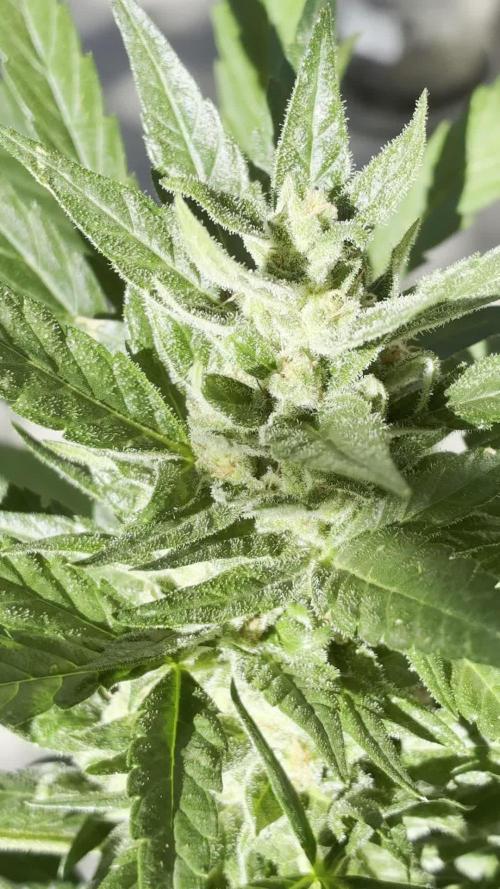
New week, plants start to produce loads of sugar and a strong smell is coming trough

Likes
12
Share

@Bunterbiber
Follow
This week brought a little bit of action on the pest management front. I discovered some spider mites on the clover growing underneath the plant, so the clover got a much-needed haircut.
I immediately scanned the cannabis leaves with my microscope to check for trouble. Thankfully, I couldn’t find any live pests or the typical webbing on the plant itself, but knowing they were nearby, I wanted to play it safe. I sprayed both the clover and the cannabis leaves with a hydrogen peroxide solution, carefully avoiding the buds as much as possible. A day later, I followed up by treating the soil and the remaining clover with a neem oil solution.
Aside from that minor skirmish, the plant is still making a very strong, very good impression and looks super healthy overall. Now it's just a matter of keeping a close eye on her to see if those little critters try to make a comeback, but for now, everything is looking solid!
Processing
Likes
4
Share


@Ogbangbang2981
Follow
week 2 or 14th day I noticed a mutation in my plant but other than that my indoor plant looks so much more healthy than my outdoor plant let's see what the next week brings .....
Likes
8
Share


@Kindbudz
Follow
Forgot to water these ladies for a couple of days but after a heavy watering and a good feeding they perked right back up. I have 2 flower tents running with sunset sherbet right now. Regardless of wether I think they are ready or not I will be switching them to flower in 3 more weeks. Can’t wait to see how these ladies flower!


Likes
9
Share


@Budking420
Follow
Oh my goodness this has to be the most massive bad I've ever had forming. This lady is going to be the densest & most potent plant I've ever grown I can just tell. She loves the environment. I've been trying hard to keep temps cool but was away for a few days and didnt wanna risk leaving the window open to animals without bieng home :/ but I tried hard and the girls look GREAT. I hope you guys enjoy this diary as much as I am. I promise to upload again next week. Check back to see just how fast she buds & remember its 4:20 somewhere!!!!!!!
Likes
13
Share


@Popothamio
Follow
Pues esta es la última semana el sábado 12 corte las red mandarine y hoy martes le toca a la 8 ball
