


Likes
Comments
Share


@russrahl
Follow
Going great! Got the second screen on and managed to DIY a bar for my light mover to get my 1000w HPS up as high as possible. One of my main problem always seems to be vertical space! But I imagine a lot of fellow growers know this struggle. Lol still had a few buds reaching up over the 70 DLI threshold directly under the light that I had to hook down to the second screen but for the most part the second screen is just for support. Been watching my ph and ppm and keeping pm between 5.8 and 6.2 and ppm has been giving around the 600-650ppm mark. Because I spread them out in their own 4’x4’ area each plant they had lots of room the grow and I really haven’t had to
Defoliate at all, with the under netting grow exception of course. Starting to smell citrusy and bud set is happening. 2nd week of flowering is going great! Cheers 💨

Likes
24
Share


@DeepRootsGrowTrees
Follow
COLOMBIAN JACK by KANNABIA
Week #18 Overall
Week #7 Flower
This week no major issues she's got some nice looking buds on her the aroma coming off this lady is amazing. She's dealt with the elements for the most part!!

Likes
57
Share


@BudBoutique
Follow
! this is my current status, gonna upload my last veg weeks within the next week - got a bit busy around Spannabis - thank you for your understanding! 💚
Welcome to Bud Boutique Grow Diary - really appreciate all your love and support :)
Dont forget to check out my other current grows!
🗓️ This Week:
- Day 24: attaching once a week APTUS Foliar with Regulator & Nutrispray with the amazing CannaFogger by Petra Grow
- Day 28: bud development is super beautiful on each pheno #1 and #2
Thank you for still staying with me 💚
___________________________________________
--- 🌱 Strain (Sponsor) 🌱 ---
🏷️ PEACH GIRL by Art Genetix
https://www.artgenetix.world/product-page/peach-girl
--- 🥗 Nutrients and Feeding (Sponsor) - (APTUS Ambassador) ---
🍸 APTUS: full nutrient schedule extreme
-- Regulator, N-Boost, P-Boost, CaMg-Boost, K-Boost, Allin1 Liquid, Startbooster, Topbooster, Enzym+ every feeding
-- Fulvic-Blast, NutriSpray as Foliar each once a week
🔗 https://aptus-holland.com/
--- ♻️ Grow Control (Sponsor) ---
TROLMASTER: TENT-X + LM14 Light Adapter to dim/sunrise/sunset lights + Temp & rH Sensor all remote on App
🔗 https://www.trolmaster.eu/
--- 🚿 PetraGrow (Sponsor) ---
CannaFogger Foliar Spray
🔗 https://www.petratools.com/product/petragrow-cannafogger-atomizer-new-mini-fogger
--- 🏭 Grow Setup ---
💡LUMATEK Zeus Pro 600
* 🏠🌿 Indoor: Homebox 120x120x200cm (4x4)
* 📐🌀 PrimaKlima exhausting Fan 1180m3/h (running on 60-80%)
* 🌀 Can Light Filter 800m3/h & 1x Fanbox 1x Dyson fan for Air circulation
🔗 https://lumatek-lighting.com/zeus-600w-pro-29/
🔗 https://primaklima.com/de/shop/ventilatoren-de/ec-ventilatoren/pk160ec-tc/
🔗 https://canfilters.com/products/filters/
All Likes and comments are highly appreciated!!!
👨🌾 don't forget to check out my Instagram for daily educational content: budboutiquee
- Bud Boutique

Likes
11
Share

@Just_Rabbit
Follow
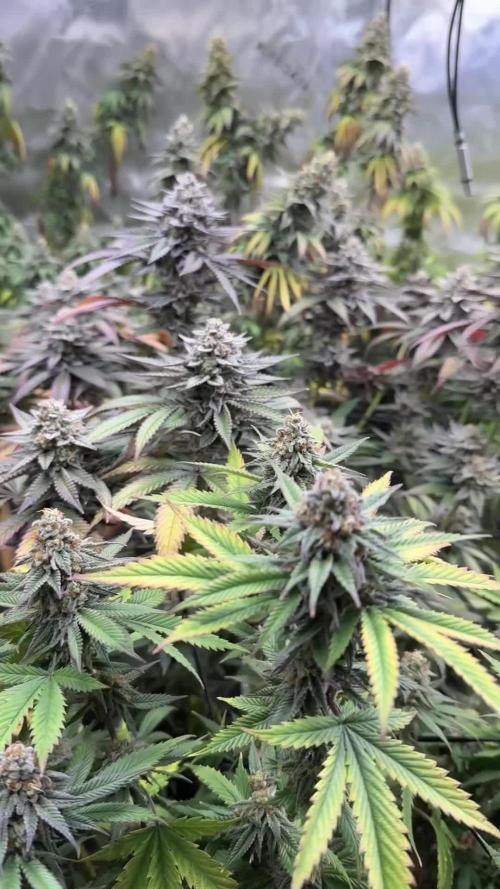
Das letzte Video für die Sammlung 25/26 ..
26 rein aus dem Grund da hier stecklinge noch verwendet wurden die ich 25 gezogen habe ..
Aber die Sammlung findet hiermit ein Ende und es geht weiter mit 26/27 im neuen Report

Likes
3
Share


Likes
8
Share


@Kirsten
Follow
19.1.25:
I have watered all plants with 300ml of dechlorinated water PH'd to 6.3, with 1/3 jar of black strap molasses with Ecothrive Biosys-1g.
I am looking to increase the sugars for microbial life and plant processes.
It'll also add some extra Calcium, Magnesium and trace elements.
I also, watered all plants with Bloom nutrients.
Using dechlorinated water PH'd to 6.3 with the following nutrients: (ml/l) ;-
♡ 2ml Cal-Mag
♡ 2ml Ecothrive Flourish
♡ 2ml Xpert Nutrients Bloom Booster
♡ 2ml Biobizz Bloom
♡ 2ml Biobizz Top Max
♡ 1g of Ecothrive Biosys
I watered around 1-3 litres per plant. Depending on size and requirements.
I'm still spilling water containing the nutrient solution. 🙄
I am using this to rub into the leaves. I think a nice foliar massage won't do any harm, make the most of the situation.
The plants have become very hungry and thirsty. Increased the water by double.
I ran out of my TNC cal-mag. I decided to order the Xpert Nutrients brand, as I like their products. It isn't organic as far as I can tell, but I don't think it matters too much to me, to be honest.
I also want to top dress this week, so I bought some Green Leaf PK bud Booster dry amendment from Amazon, too.
I'll mix it with canna coco, perlite, worm castings, and Ecothrive Life Cycle.
24.1.25:
I went ahead and top dressed all the plants with 4.5 gallons of my supersoil custom mix.
This consists of the following substrate and dry amendments:
♡ 60% Canna coco
♡ 20% Worm castings
♡ 15 % Perlite
The remaining 5% consists of the following dry amendments;-
♡ 10g Ecothrive Biosys
♡ 1 Tsp RHS Mycorrhizal Fungi granules
♡ 3 Tsp Vitalink Bat guano
♡ 4 Tsp Diatomaceous earth
♡ 8 Tsp Ground Cinnamon
♡ 10g Green Leaf Bud Booster PK booster.
♡ 3 Tsp Ecothrive Life Cycle.
•Worm castings for some all round nutrition.
•Cinnamon for mildew and bug repellent.
•Canna coco base substrate.
•Perlite for adding oxygen to the root and soil system.
•Green Leaf Bud Booster PK Booster for blooming. Building strong big buds.
•Vitalink bat guano again for Bloom.
•RHS Mycorrhizal Fungi granules, to boost beneficial microbes.
•Ecothrive Life Cycle for lots of great benefits.
•Diatomaceous earth for Silica.
•Ecothrive Biosys, for an extra microbial boost.
I have removed all LST equipment from both PPP1 and PPP2.
I'm going to let them grow up now, and I plant to implement a Scrog net, if they get any taller, which I hope they will.
However they are most likely finished with their final stretch. My mistake, I went too hard on the LST.
Thanks for checking out my diary 🍃 ✌️

Processing
Likes
Comments
Share


@absolutgrow
Follow
Dear Grow community,
The three RG automatic have grown very well and have so far no complaints. They love the temperature and dont need much water. They have grown very fast and already have a light smell.
Likes
8
Share


@Hippity
Follow
The girls look healthy, happy, and smell delicious, kinda sweet citrusy. I'm overall satisfied so far. They have some crystals forming on them as well. I feel like it's gonna be a successful grow. But don't think I'm gonna use Green-O-Matic again, it's not as short as I wanted it to be, and it has unstable phenotype. I hope the effects are nice and relaxing though.


Likes
6
Share

@russrahl
Follow
We’re back! 💨 Finally was able to get some picks and do an update on these girls. Pushed them 11 weeks into flowering and we cut them down. Took 4 days for me to trim it all! She’s drying in my rack now so I will update the harvest info shortly. I pulled 1 of these already about a month ago that I was growing alongside my peyote cookies and it was some decent buds, not spectacular at first but after a few weeks cutting its coming along better. Ended up with about 11 oz off that one girl and we cut her at the 9 week flowering mark and she had about 2 weeks less veg time as well. So we pushed these 2 girls to the extreme the other way(partially because I just didn’t have the time to cut them…lol) and hopefully we will get some more intense highs from it. I kinda just let these girls do their own thing and really only bent them down over my screen once and tucked a little to fill the screen but other then that she was just blowing up all over and I had a hard time actually containing these 2 girls
In my 4’x8’ tent. We also got a good heat wave again that pushed my temps way up in the 10th week of flowering and these girls grew closer to my light then I wanted or could keep from happening. Lol so we got some major foxtails in the center of my tent but we still ended up with some huge buds. Cheers 💨
Likes
35
Share


@MadeInGermany
Follow
Info:
Unfortunately, I had to find out that my account is used for fake pages in social media.
I am only active here on growdiaries.
I am not on facebook instagram twitter etc All accounts except this one are fake.
Flowering day 43
since time change
to 12/12 h.
Hey guys :-)
The buds are developing really well :-).
They slowly get thicker and thicker and smell better and better the closer we get to the end :-).
She has completely stopped the stretch in order to transport the remaining energy into the buds 👍.
This week it was poured 3 times with 1 l each time (See table above for nutrient addition).
In the coming weeks, the nutrients will be reduced more and more.
The tent was cleaned and everything checked.
Fresh osmosis water has been treated for the past few weeks.
have fun with the update.
Stay healthy 🙏🏻
You can buy this Nutrients at :
https://greenbuzzliquids.com/en/shop/
With the discount code: Made_in_Germany you get a discount of 15% on all products from an order value of 100 euros.
You can buy this Strain at :
https://greenhouseseeds.nl/
☝️🏼☝️🏼☝️🏼☝️🏼☝️🏼☝️🏼☝️🏼☝️🏼☝️🏼☝️🏼☝️🏼☝️🏼
Green House Seeds Company Cup Clone 🏆
Type:
Wonder Pie
☝️🏼
Genetics:
Wedding Cake x OG Kush
👍😍
Vega lamp: 2 x Todogrow Led
Quantum Board 100 W
💡
Flower Lamp : 2 x Todogrow Led
Cxb 3590 COB 3500 K 205 W
💡💡☝️🏼
Earth: Canna Coco Professional +
☝️🏼
Nutrients :
Green Buzz Liquids :
Organic Grow Liquid
Organic Bloom Liquid
Organic more PK
More Roots
Fast Buds
Humic Acid Plus
Growzyme Big Fruits
Clean Fruits
Cal / Mag
Organic Ph - Pulver
☝️🏼🌱
Water: Osmosis water mixed with normal water (24 hours stale that the chlorine evaporates) to 0.2 EC. Add Cal / Mag to 0.4 Ec Ph with Organic Ph - to 5.8 - 6.4


Likes
4
Share

@Borberad
Follow
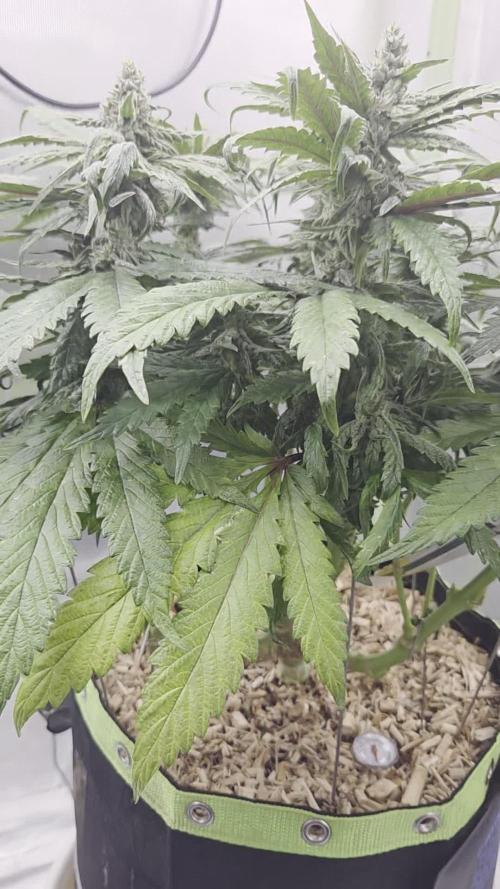
Woche 13
Kaum Stempel, viele Trichome, fast schon fertig. Lustiges Mutantenblümchen. 🤔 Sollen wir sie weiter stehen lassen und sehen ob sie noch etwas Volumen aufbaut? Datum der Kamera setzt sich leider immer wieder zurück, sobald sie vom Strom genommen wird, also nicht wundern, wenn das demnächst mal nicht passt.
Likes
50
Share


@SuggaShane
Follow
First time running hydroponics. And I’ll say it’s pretty easy although running into problems with ph rising cause of not using ro water so it started getting a potassium deficiency. I think I’m prepared for next run.
Likes
15
Share

@pHilosophy420
Follow
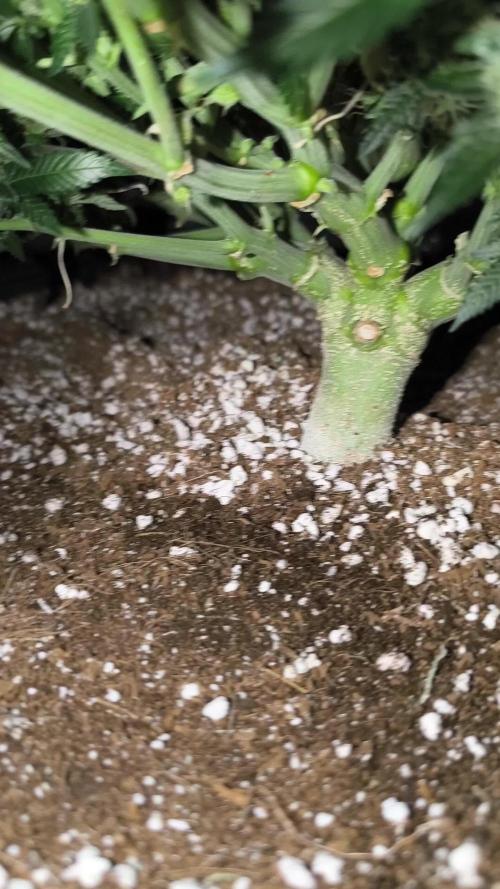
Day 91, Power at 95% and lamp distance at 40cm.
She’s looking almost ready now. Most of the trichomes are cloudy, with about 30% still clear, so I’d say another 7–10 days before harvest. Now ust plain water until chop day.

Likes
55
Share


@Roberts
Follow
Fruity Pebbles autoflower #1 is growing great. She love the Medic Grow Mini Sun-2 light, and distance I have her at. She is looking really good, and I have done some training today. Lst, defoliation, and roots pruned. Can see the ball of roots that developed from prior pruning, and roots spreading out wider vs longer. She looks like she is gonna start her pre flowering very soon. Thank you ILGM, and Medic Grow. 🤜🏻🤛🏻🌱🌱🌱 Merry Christmas and Happy Holidays everyone.
Thank you grow diaries community for the 👇likes👇, follows, comments, and subscriptions on my YouTube channel👇. ❄️🌱🍻
Happy Growing 🌱🌱🌱
https://youtube.com/channel/UCAhN7yRzWLpcaRHhMIQ7X4g
Likes
Comments
Share


@DivineBuds420
Follow
Eine angenehme letzte Woche.
Leider hat die Fäulnis ihre Opfer gefordert aber ich kann es verkraften

Likes
17
Share


@Gardengobblin
Follow
La wedding glue se développe vraiment bien . Les tete se remplisse a vue d'oeuil. Tres surprenante pour un si petit pot .
Elle as vraiment de belle couleur , et que dire de son odeur de cremage a la vanille ses assez fou hate de rouler sa et le fumer 🤣
Likes
9
Share


@Cestlaweed
Follow
Se realizo podas de bajo y comienza segunda semana de LSD 25.
Gran estirón al final de la semana.
Temperatura se comienza a elevar hasta valores de 31 grados.

Likes
45
Share


@masterofsmeagol
Follow
9/24 Busy as fuck and personal emergencies always hit during harvest season. I took a few tops from my favorite gmo just so I have some if the weather fucks me. I'll take more today probably. WATERED YESTERDAY. I'll post pictures of dry flowers and do the reports. Three are still standing. That huge gmo is going to extracts though.
9/25
9/26 We are getting a week of rain. After looking at my trichs I decided to pull the GMO's I had left. I was sick of cutting branches due to grey mold and I was starting to lose buds to botrytis. Trichs got to about 10% amber on most. Maybe more. I worked like a mule. I was going to leave my favorite gmo and the sherb pie. However, my wife had multiple medical emergencies that required hospitalization. I couldn't risk letting my girls turn to mush if she had to stay. I'm glad with my decision. Everyone now I see is asking about bud rot and pm cures. This happened at the same time last year. She was hospitalized during late late flower. I couldn't keep this updated and I took the plants ad quickly as I could and rough wet trimmed some of them. Some plants got hung whole. I have been in trim jail. I have finished two plants and that is working my balls off. The one in the fifty and the event horizon. I'll do the harvest reports and add pictures but with my wife how she is and the work load I'm going to have to wait. I also left buds to ripen right before the rain and got lots of nice amber flowers that I froze to make a temple ball. I have lots of content. I just need time and a place to do it. I have one lone survivor. The seedling in the ten that seems to be a sativa hybrid. She's a beast and I think can handle the rain due to the fluffy buds. If I see problems I could easily carry it inside. I'll be back with some pics and videos but for now breaks.
9/28 Busy as FUCK. SICK. Been in and out of the hospital with the wife. Looking back on diaries she's in the hospital when I'm harvesting the past few years. I got two strains curing right now. I got a shit ton drying and I'm in trim jail. I haven't taken picturesor been on here but ill be more active i just havent hadcthe time. I'll wait until shits dry and I can do my harvest reports. I'll look to see if I have any pictures I can upload My sativa hybrid survived the rain. All this rain has made its leaves turn yellow and start to drop. It needs food I think. I'll check the trichs but I know it's not ready. The buds are like soda bottles but they are loose. Like a string of calyxes. I don't flgrow sativas so I'll have to ask for some help. I'm trying to decide if I should feed it. It looks hungry. I'm going to have to scope it and then I'll feed if necessary. I'll take pictures and a video when I have the chance.
9/29 Rain stopped and the sun came out. I need to take some pictures and put them up here and do a harvest report. My little BIG Sativa hybrid in the ten got scoped today. It's weird it's starting to foxtail some. . I've had tons of emergencies but I've bern kicking asses and taking names. I've got one GMO (one pheno was much faster flowering than the others), one event horizon and the sherb pie all curing. I'm just waiting on the others to dry. I've got a couple gmos that are just going to extract. One is really nice though and I'm keeping it for smoke. That's trimmed too. I have been working on the other event horizon which will be done today because it's time for it to be cured. I am sick and sore as fuck but I know how important this is and it's mine and my wife's medicine for the year. Sherb pie was a let down quantity wise but I let it get eaten by ear wigs for too long. I've got to get back to it but when I get it done I'll take the pictures and do the reports reports but this breaks over. I've got a BUNCH of fresh frozen too that I'm planning on running bubble hash with and aging a temple ball.

Likes
9
Share


@PopsFarm
Follow
Day 52 - Deep Jealousy Auto from @anesiaseeds
Nutrients: @atami_deutschland / @atami.international / @stefan_atami / @daniel_atami
Soil: @promixgrowers_eur / @promixgrowers_global / @promixgrowers_unfiltered / @promixmitch
LED: @powerlux_spain
Tent: @secretjardin_
Thank you to everyone who follows and supports my work 🙏🏻💚
This means a lot to me and you should know you are a part of it and only with you all this is possible, you are the best community 😎
Growers love, love for everyone
