


Likes
Comments
Share


@BossHogg6
Follow
My math on the nutes had been off, so should start resolving this week. For this change, I used 2gl of RO water per plant and introduced some cal/mag to level things off. This is also the first week of using big bud and bud candy. I'll only use the big bud for this week since it's supposed to be for the first 4 weeks of flower and this is week 4. Trimmed off a few bad leaves (after the pics) but not all so the pants wouldn't stress. The system has been adjusted to keep temps below 80 and humidity under 45%.


Likes
11
Share


@BudBeezy
Follow
Welcome to week 10 of my grow diary. As I mentioned last week, I am now letting the plant grow as it wishes. It has put on a good amount of leaves. The stem is getting thicker and thicker. I like the structure very much and I hope the plant will develop beautiful massive buds in the future. The flowering phase should start in the next few weeks. The weather can stay like this. It only rained on one day.
See you next week ✌️

Likes
14
Share


@Patillac31
Follow
Made it 67 days before the chop.
•••03/21/2020 After a 6 day hang I've trimmed and started to jar cure. Had a total flower weight of 85 grams. Over all I'm pleased. Will update with a smoke report in about 3 weeks.
Likes
56
Share


@Ultraviolet
Follow
What's in the soil? What's not in the soil would be an easier question to answer. 16-18 DLI @ the minute. +++ as she grows.
Probably not recommended, but to get to where it needs to be, I need to start now.
Vegetative @1400ppm 0.8–1.2 kPa 80–86°F (26.7–30°C) 65–75%, LST Day 10, Fim'd Day 11
CEC (Cation Exchange Capacity):
This is a measure of a soil's ability to hold and exchange positively charged nutrients, like calcium, magnesium, and potassium. Soils with high CEC (more clay and organic matter) have more negative charges that attract and hold these essential nutrients, preventing them from leaching away.
Biochar is highly efficient at increasing cation exchange capacity (CEC) compared to many other amendments. Biochar's high CEC potential stems from its negatively charged functional groups, and studies show it can increase CEC by over 90%. Amendments like compost also increase CEC but are often more prone to rapid biodegradation, which can make biochar's effect more long-lasting. biochar acts as a long-lasting Cation Exchange Capacity (CEC) enhancer because its porous, carbon-rich structure provides sites for nutrients to bind to, effectively improving nutrient retention in soil without relying on the short-term benefits of fresh organic matter like compost or manure. Biochar's stability means these benefits last much longer than those from traditional organic amendments, making it a sustainable way to improve soil fertility, water retention, and structure over time. Needs to be charged first, similar to Coco, or it will immobilize cations, but at a much higher ratio.
a high cation exchange capacity (CEC) results in a high buffer protection, meaning the soil can better resist changes in pH and nutrient availability. This is because a high CEC soil has more negatively charged sites to hold onto essential positively charged nutrients, like calcium and magnesium, and to buffer against acid ions, such as hydrogen.
EC (Electrical Conductivity):
This measures the amount of soluble salts in the soil. High EC levels indicate a high concentration of dissolved salts and can be a sign of potential salinity issues that can harm plants.
The stored cations associated with a medium's cation exchange capacity (CEC) do not directly contribute to a real-time electrical conductivity (EC) reading. A real-time EC measurement reflects only the concentration of free, dissolved salt ions in the water solution within the medium.
98% of a plants nutrients comes directly from the water solution.
2% come directly from soil particles.
CEC is a mediums storage capacity for cations. These stored cations do not contribute to a mediums EC directly.
Electrical Conductivity (EC) does not measure salt ions adsorbed (stored) onto a Cation Exchange Capacity (CEC) site, as EC measures the conductivity of ions in solution within a soil or water sample, not those held on soil particles.
A medium releases stored cations to water by ion exchange, where a new, more desirable ion from the water solution temporarily displaces the stored cation from the medium's surface, a process also seen in plants absorbing nutrients via mass flow. For example, in water softeners, sodium ions are released from resin beads to bond with the medium's surface, displacing calcium and magnesium ions which then enter the water. This same principle applies when plants take up nutrients from the soil solution: the cations are released from the soil particles into the water in response to a concentration equilibrium, and then moved to the root surface via mass flow.
An example of ion exchange within the context of Cation Exchange Capacity (CEC) is a soil particle with a negative charge attracting and holding positively charged nutrient ions, like potassium (K+) or calcium (Ca2+), and then exchanging them for other positive ions present in the soil solution. For instance, a negatively charged clay particle in soil can hold a K+ ion and later release it to a plant's roots when a different cation, such as calcium (Ca2+), is abundant and replaces the potassium. This process of holding and swapping positively charged ions is fundamental to soil fertility, as it provides plants with essential nutrients.
Negative charges on soil particles: Soil particles, particularly clay and organic matter, have negatively charged surfaces due to their chemical structure.
Attraction of cations: These negative charges attract and hold positively charged ions, or cations, such as:
Potassium (K+)
Calcium (Ca2+)
Magnesium (Mg2+)
Sodium (Na+)
Ammonium (NH4+)
Plant roots excrete hydrogen ions (H+) through the action of proton pumps embedded in the root cell membranes, which use ATP (energy) to actively transport H+ ions from inside the root cell into the surrounding soil. This process lowers the pH of the soil, which helps to make certain mineral nutrients, such as iron, more available for uptake by the plant.
Mechanism of H+ Excretion
Proton Pumps: Root cells contain specialized proteins called proton pumps (H+-ATPases) in their cell membranes.
Active Transport: These proton pumps use energy from ATP to actively move H+ ions from the cytoplasm of the root cell into the soil, against their concentration gradient.
Role in pH Regulation: This active excretion of H+ is a major way plants regulate their internal cytoplasmic pH.
Nutrient Availability: The resulting decrease in soil pH makes certain essential mineral nutrients, like iron, more soluble and available for the root cells to absorb.
Ion Exchange: The H+ ions also displace positively charged mineral cations from the soil particles, making them available for uptake.
Iron Uptake: In response to iron deficiency stress, plants enhance H+ excretion and reductant release to lower the pH and convert Fe3+ to the more available form Fe2+. The altered pH can influence the activity and composition of beneficial microbes in the soil. The H+ gradient created by the proton pumps can also be used for other vital cell functions, such as ATP synthesis and the transport of other solutes. The hydrogen ions (H+) excreted during photosynthesis come from the splitting of water molecules. This splitting, called photolysis, occurs in Photosystem II to replace the electrons used in the light-dependent reactions. The released hydrogen ions are then pumped into the thylakoid lumen, creating a proton gradient that drives ATP synthesis.
Plants release hydrogen ions (H+) from their roots into the soil, a process that occurs in conjunction with nutrient uptake and photosynthesis. These H+ ions compete with mineral cations for the negatively charged sites on soil particles, a phenomenon known as cation exchange. By displacing beneficial mineral cations, the excreted H+ ions make these nutrients available for the plant to absorb, which can also lower the soil pH and indirectly affect its Cation Exchange Capacity (CEC) by altering the pool of exchangeable cations in the soil solution.
Plants use proton (H+) exudation, driven by the H+-ATPase enzyme, to release H+ ions into the soil, creating a more acidic rhizosphere, which enhances nutrient availability and influences nutrient cycling processes. This acidification mobilizes insoluble nutrients like iron (Fe) by breaking them down, while also facilitating the activity of beneficial microbes involved in the nutrient cycle. Therefore, H+ exudation is a critical plant strategy for nutrient acquisition and management, allowing plants to improve their access to essential elements from the soil.
A lack of water splitting during photosynthesis can affect iron uptake because the resulting energy imbalance disrupts the plant's ability to produce ATP and NADPH, which are crucial for overall photosynthetic energy conversion and can trigger a deficiency in iron homeostasis pathways. While photosynthesis uses hydrogen ions produced from water splitting for the Calvin cycle, not to create a hydrogen gas deficiency, the overall process is sensitive to nutrient availability, and iron is essential for chloroplast function.
In photosynthesis, water is split to provide electrons to replace those lost in Photosystem II, which is triggered by light absorption. These electrons then travel along a transport chain to generate ATP (energy currency) and NADPH (reducing power). Carbon Fixation: The generated ATP and NADPH are then used to convert carbon dioxide into carbohydrates in the Calvin cycle. Impaired water splitting (via water in or out) breaks the chain reaction of photosynthesis. This leads to an imbalance in ATP and NADPH levels, which disrupts the Calvin cycle and overall energy production in the plant. Plants require a sufficient supply of essential mineral elements like iron for photosynthesis. Iron is vital for chlorophyll formation and plays a crucial role in electron transport within the chloroplasts. The complex relationship between nutrient status and photosynthesis is evident when iron deficiency can be reverted by depleting other micronutrients like manganese. This highlights how nutrient homeostasis influences photosynthetic function. A lack of adequate energy and reducing power from photosynthesis, which is directly linked to water splitting, can trigger complex adaptive responses in the plant's iron uptake and distribution systems.
Plants possess receptors called transceptors that can directly detect specific nutrient concentrations in the soil or within the plant's tissues. These receptors trigger signaling pathways, sometimes involving calcium influx or changes in protein complex activity, that then influence nutrient uptake by the roots. Plants use this information to make long-term adjustments, such as Increasing root biomass to explore more soil for nutrients. Modifying metabolic pathways to make better use of available resources. Adjusting the rate of nutrient transport into the roots. That's why I keep a high EC. Abundance resonates Abundance.
Likes
38
Share


@GMSgrows
Follow
Put the ladies on straight water for this week. Hairs are changing, and most of the trichs are clouded. Have some fox tailing on some of the buds, being so close to the light. Was kind of expecting it, but really, I don't mind a little fox tailing. The top of this AK is thick, hard and full of trichomes. When the runoff water shows under 200 ppm is when these ladies will be coming down. They will be watered, until just a few drops come out the bottom, as to not flush the final ferts out to quickly.
Plants have stayed good and healthy, without losing any leaves throughout the grow. Limbs are bending down from the weight of the flowers. Didn't support anything this time, so quite surprised that the branches were able to support these nugs, as long as they did.

Likes
11
Share


@Professor_Daank
Follow
Holy moly. She's growing... like a weed.
She's loving the nutrient schedule and environment (finally). I was having an issue maintaining proper humidity levels and after exhausting EVERY possibility with venting, fans and otherwise, I have moved my dehumidifier inside the tent and it's working wonders. I drain the water with a shop-vac as I do the same for my run-off. Things are going great so far, I hope to continue this forward progress in the coming weeks. Going to LST sometime this week, just not sure when.
6/13: Started minor LST phase to open spots to light. Fan leaves are gonna be huge. I also overwatered her... I'm a noob.
6/14: No watering for 24 hours. I removed my LST. She wasn't yet strong enough for the arc I put into her. Another noob mistake and add the overwatering to this, I just wanted to destress her.
6/15: Back to regular 1 liter per 24 hours, also added Armor Si to the nute schedule.
6/16: She's showing signs of getting back to normal. Added Diamond Nectar on this day. I also LST'd her back to position.
6/18: Back to normal. I trimmed 1 fan leaf under the canopy that wasn't going to get any light.
6/19: She's better and growing well. I'm going to try and keep this vegetation stage a little longer. Added a little more water today, just a tiny bit. I have 2 other plants that are a week behind and I want them caught up for the flip as close as possible. Pray for me.

Likes
6
Share

@Wondrej
Follow
One love, growers 🇯🇲💚
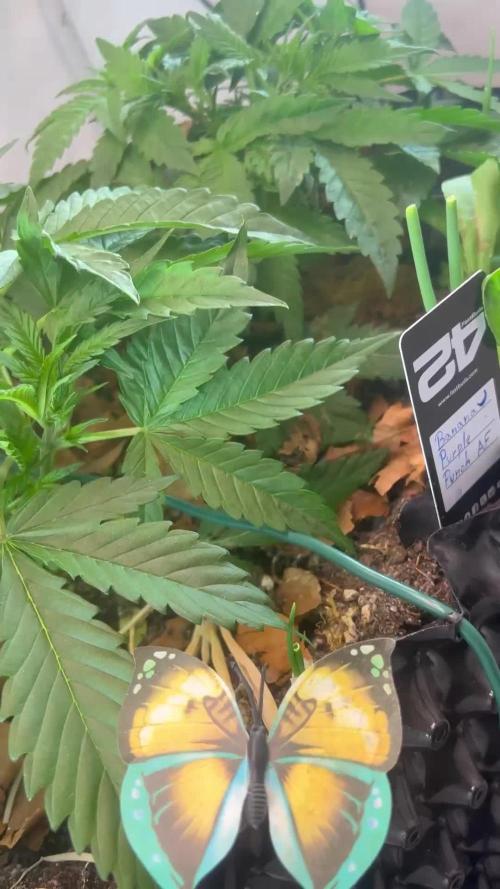
So today we have the first day of Week 4(1.12.25)of vegetation, counting from the first cotyledon leaf.
The girls have recovered quite well since Thursday (27.11.25) when they were topped and bent, and we are going strong without flipping from the stress.
TBH, try putting other autoflowers through that much stress in the middle of Week 3 compared to Fast Buds without flipping into flower 🤲🏻
BIG UP to their genetics. They are really changing the game.
What do yall think of the girls, growmies? Any tips? Btw, the fertrometr finally shows the living soil is OK, it took those little rascals long enough to make it 🐛
2.12.2025 They look so freakin beatifull i needed to shot some random short. Again and again shout out to Fast Buds team. See ya later growmies👽
5.12.2025 🚀 Quick Vibe Check (Day 25)
Just a quick update today, growmies! 💚
It's December 5th, and the girls are cruising into Day 25 of vegetation. What can I say? They look absolutely perfect! 💪 They are beautifully bushy and full of life.
Now the focus is just on keeping that canopy nice and level so every tip catches maximum light and we find that sweet spot.
Everything is running smoothly, catch you at the next update in week 5. Sending everyone one love and happy growing! 🙏
Likes
14
Share


@grower1212
Follow
Ayer hice el primer transplante a un solo cup de litro.
Encontré un gusano, debe ser del humos que le pongo al sustrato que reciclo, lo bueno que ahora puedo decir literalmente suelo vivo.
Les puse de top dress harina de neem como preventivo de plagas, insect frass y harina de malta para los microorganisms.

Likes
9
Share


@SilverBud
Follow
She's almost ready, I,m thinking that in two weeks Iwill cut. Lets see..

Likes
4
Share


@Chlavchalash
Follow
I did small LST to get more light to the buds. Smells really nice, I look forward growing next plant.


Likes
Comments
Share


Likes
46
Share


@eldruida_lamota
Follow
Vamos familia que ya actualizamos la cosecha de estas Candy Rain de Zamnesia, para el concurso POWER BUDS Plagron x Zamnesia CONTEST.
Ya era hora de cosechar, estoy bastante contento con los resultados.
Vaya flores que se han marcado repletas de tricomas, y las flores se marcan aromas dulces y afrutados.
Es una variedad bastante fácil de cultivar y muy resistente, crecieron desde el principio bien vigorosas, sin problemas y al final de todo recompensó.
Las condiciones ambiéntales han sido máximas en 25 y mínimas en 20 y una humedad estable en torno al 36% al final de floración y en el secado.
Os comento que tengo un descuento y para que compréis en la web de Zamnesia de un 20%, el código es ZAMMIGD2023
The discount 20% and the code is ZAMMIGD2023
https://www.zamnesia.com/
Espero que disfruteis este diario, buenos humos 💨💨

Processing
Likes
33
Share


@Ferenc
Follow
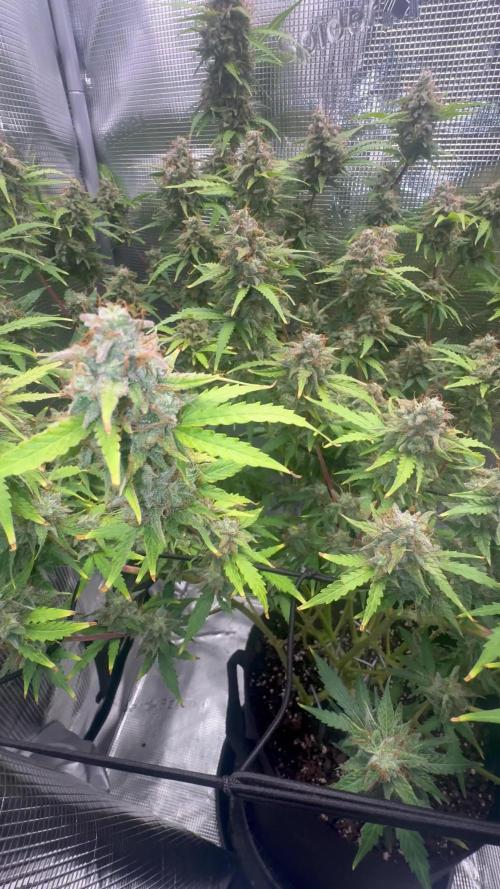
Day 36 : I did LST again plants are growing quick. I set the lamp approx 26 cm away. 600 W LED, 20 hours on 4 hours off the same with ventilation humidity approx 60 percent. Ferlizitaion will continue the same way Monday Wednesday and Friday BioBizz family and Tuesday Thursday and Saturday bat gunao and Epson salt. Water intake 100 ml per day per plant.
Day 39: Pre-flowers are coming BlackBerry Kush is getting purple ❤️. All of them started flowering and colas are coming out.
Day 41: All of them have pre-flowers and pistils are out. BlackBerry Kush started turning into Purple. She and LSD-25 are the most developed. I did more LST on them.



Likes
7
Share


@El_Bottanico
Follow
Somehow I counted weeks in a silly way, so I thought this was week 8 but it's still week 7. LoL.
Plant is doing great anyway,
She's big, exceeding 70 cm diameter, With so many colas at canopy level I expect her to yeld very big fo an Autoflowering strain,
The training succesfully shaped her resulting in 10 branch reaching the top canopoy level. To me the key to a good training is timing, much more than continuous adjustment. This plant was bent just one time on main stem and one another time little later the branches.
We had rainy days so I used a dehumidifier for a day or two, now it's dry again outside so no need for it anymore.
She's still thirsty like a bitch as she drinks 5 liters of water every two day. Maybe I'll make a drip sistem for my next grow, watering has been boring lately.
I'm not giving her anything to the end now, she's doing fine like this. The humus coupled with slow release fertilizer is doing a great job.
She has some nitrogen excess to me, but she's the only plant to show it in a batch of 6. The issue seems very small to me anyway.
Day 48 checked trichomes, some is turning milky already, can't wait for the buds to ripen :)
Ciao Bottanico
Likes
22
Share


@J_diaz420
Follow
Se instala segunda malla para ayudar con el espigamiento y a partir de aquí se bajan las luces y se sigue contemplando la hermosa floración!!


Likes
7
Share


@hooolian
Follow
07/01/22: Pre Flower week - lights have been switched to 12/12 and are at 80% still. The plants are really showing their sativa genes with huge growth. plants are average 70cm although two are 90cm. bud sites have finally started to show growth and lightening of the green toward the end of the the week. humidity is low - the carbon bag seems to have done a good job also.

Likes
7
Share


@HeavyHead
Follow
Starting to flower this week,
Dropped my lights closer to canopy and started giving full strength nutes + big bud and bud candy from here out :)