


Likes
Comments
Share


@OutdoorRebelGenetics
Follow
Can't wait for this one to be harvested back to the future 2 auto by tastebudz yeah more to come enjoy please follow any help and advice is always greatly appreciated she be going greenhouse direct to a 25l pot
after germination 4 more seeds due for delivery Mimosa auto jack herera auto sweet coffee Ryder and mac1 fem 😛

Likes
5
Share


@killerjoint
Follow
10-24-2024
ALL THE STRAIN RECOMMEND FLOWERING TIME IS 7-8 WEEKS
TRY TO FINISH WEEK 8
STILL HAS 19 MORE DAYS...
LAST FEED WITH NUTS .BURNED SOME OF TOP FAN LEAVES ......
BUT CHECK OUT QUEEN,DR SLEEP , WULFF ,POWER... CRAZY FROST TOE TO HEAD
SMELLS .............NEED TO RUN FANS WITH HIGHER SPEED FOR SMELL...
NO MORE NUTS....JUST WATER .....STAY IN THE COURSE...
STAY GREEN ....
10-27-2024
-HIT THEM WITH HUMBOLDT COUNTY NUTS
G10 -5ML PER GAL
SNOW STORM -5ML PER GAL
PURPLE MAXX-7ML PER GAL
EVERY TWO DAY NEED TO WATER....


Processing
Likes
1
Share


@Dooda_mf
Follow
Grown outdoors no nutrients just tap water (about 1Gal/day) on the days with no rain... usually around noon when I can see them sag and the weather forecast doesn't predict rain for the rest of the day.
I add Terpinator (30mL/Gal) when I water manually.
2020 was an exceptionally warm summer in Quebec.
Seeded on May 20th
Sprouted on May 23rd
Kept in nursery (watered with tap water + B1 vitamin (3ml/L) until
Transplanted outside June 16th
No Technique applied, she grows as she feels the needs.

Likes
8
Share


@DogDoctorOfficial
Follow
# 💙 Project Blue Tent – Week 12 💙
## 🥒 Pickle Lemon Haze F1 – Pheno A
### 🌸 Same Tent. Same Ecosystem. Another Ridiculously Frosty Girl! ❄️😂
Hello everyone, and welcome back to another chapter of Project Blue Tent! 💙🌱
And here we go again...
ANOTHER GIRL LOOKING ABSOLUTELY OUTSTANDING! 😂❄️
Seriously, my friends, what is happening inside this tent?
Every time I think the flowers can't look any frostier, I take another look at the plants, grab the camera, and end up spending far too much time staring at the photographs.
And Pickle Lemon Haze F1 Pheno A?
She's giving us plenty of reasons to do exactly that!
Welcome to Week 12 of our journey, where the major structural work is behind us, the ecosystem is running beautifully, and our attention is increasingly focused on the flowers themselves.
The plants are stacking. The buds are developing. The trichomes are becoming increasingly visible, and the entire tent is looking absolutely beautiful.
This week, we decided to keep the photography more focused rather than taking endless individual pictures. But that doesn't mean we spent less time behind the camera!
Quite the opposite.
We created three separate photo stacks, combining a total of 1,452 photographs.
Yes, you read that correctly.
ONE THOUSAND FOUR HUNDRED AND FIFTY-TWO PHOTOGRAPHS!
😂📸❄️
But we'll get to that in a moment.
First, let's give this beautiful girl her own chapter.
## 🌸 WEEK 12 – PICKLE LEMON HAZE IS SHINING
Pickle Lemon Haze F1 Pheno A is approximately 145 cm tall, and the structure we've worked so hard to establish is now supporting the developing flowers beautifully.
The long vegetative period gave us the framework.
The topping and training helped us distribute the growth.
The first SCROG helped organize the canopy, while the second SCROG provided additional support as the plants progressed through the flowering stretch.
We also performed the major defoliation, improved the airflow arrangement, and made room for the under-canopy lighting.
All those decisions happened over several weeks.
Now we're looking at the result.
And honestly, this is one of my favourite stages of the project.
Not because we're doing more.
Because we finally have the opportunity to step back and appreciate what we've built.
The structure is established. The support is in place. The irrigation and drainage systems are working beautifully, and the plants are continuing to develop.
So we're not looking for unnecessary interventions.
We're watching the flowers, monitoring the environment, and allowing the plants to continue their journey.
And Pheno A?
She's looking absolutely fantastic!
💙🥒🌸
## ❄️ THE FROST – I DON'T EVEN KNOW WHAT TO SAY ANYMORE!
Let's be honest.
The photographs speak for themselves.
Look at those flowers!
The close-ups reveal an incredible amount of detail across the developing buds and surrounding sugar leaves.
The trichomes are clearly visible, the pistils remain prominent, and the flowering sites are continuing to develop.
This is the stage where the details become increasingly fascinating.
From a distance, we can appreciate the overall structure and how evenly the flowers are distributed throughout the canopy.
But when we get closer, there's a completely different world waiting for us.
Individual trichomes. Delicate pistils. Resin-covered sugar leaves. The intricate structure of the developing flowers.
And that's why I love macro photography so much.
It allows us to appreciate details that can easily go unnoticed when we're simply looking at the entire plant.
And this week, Pheno A gave us some absolutely beautiful subjects to work with.
She's frosty.
Her sisters are frosty.
And honestly, the whole tent is becoming a photographer's dream!
😂💙❄️
## 📸 THREE PHOTO STACKS – 1,452 PHOTOGRAPHS COMBINED!
Now, let's talk about the photography, because this week's report has something special to show.
We decided not to take quite as many individual photographs this time. Instead, we concentrated on creating three detailed photo stacks.
Here's what we produced:
- One photo stack combining 666 photographs.
- A second photo stack combining 393 photographs.
- A third photo stack combining another 393 photographs.
That's a total of 1,452 photographs combined into three final images!
And yes, this takes considerably more time than simply taking a few pictures and choosing the best ones.
😂📸
Each stack requires patience, attention, and time behind the camera and at the computer.
But I think the results are worth sharing.
These stacks allow us to explore the flowers in much greater detail and give everyone following Project Blue Tent a closer look at the development we're documenting.
We're not simply trying to produce attractive photographs.
We're also trying to preserve a visual record of the plants as they progress through flowering.
And when you look at the finished stacks, you can really appreciate the intricate details across the flowers and the surrounding sugar leaves.
That's what makes this kind of photography so rewarding.
You start with hundreds of individual frames, work through the stacking process, and eventually produce a single image that reveals a remarkable amount of detail.
Three stacks.
Three opportunities to look closer.
And one very photogenic Pickle Lemon Haze F1 Pheno A!
## 🔬 WHY PHOTO STACKING IS WORTH THE EXTRA WORK
For anyone unfamiliar with the process, focus stacking involves combining multiple photographs taken at different focus distances to produce a final image with a greater depth of field.
In macro photography, the depth of field can be extremely shallow.
You can have one part of a flower beautifully in focus while another part, only a short distance away, falls outside that narrow focus plane.
By combining multiple frames, we can bring more of those details into focus in the final image.
Of course, stacking hundreds of photographs takes time, and the result depends on the source images and how well the stacking process handles them.
But when everything comes together, it can be a fantastic way to document small details.
And that's precisely what we wanted to achieve here.
Rather than filling the diary with endless individual pictures, we concentrated on three detailed stacks that allow everyone to appreciate the flowers from a different perspective.
I'm genuinely happy with the results.
And I hope you enjoy looking at them as much as I enjoyed creating them!
📸💙
## 🌿 SAME TENT. SAME ECOSYSTEM. SAME CULTIVATION APPROACH.
One of the most interesting aspects of Project Blue Tent is that we're documenting individual plants while keeping the shared environment consistent.
The plants share the same tent, lighting environment, irrigation system, reservoir, and nutritional program.
That gives us an interesting opportunity to observe their development side by side.
And when I look at Pickle Lemon Haze F1 Pheno A alongside her sisters, I continue to be impressed by the similarities we're seeing.
The overall structure is remarkably consistent.
The flowering development is progressing beautifully.
And the visible frost across the plants is becoming increasingly impressive.
Of course, we're still documenting each plant separately because individual differences remain interesting, even when the plants look remarkably similar.
The subtle details matter.
Flower shape, development, structure, and the way each plant progresses over time are all worth observing.
That's the beauty of keeping individual diaries.
We can appreciate the similarities without losing sight of each plant's own story.
And today, Pheno A gets the spotlight.
She's earned it!
💙🥒🌸
## 💡 UNDER-CANOPY LIGHTING – COMPLEMENTING THE MAIN LIGHTS
Our two LumiFlora 150W full-spectrum under-canopy fixtures remain part of the setup.
The main LEDs provide the primary lighting from above, while the LumiFlora fixtures supplement the lower portions of the canopy.
With plants reaching approximately 145 cm, the canopy has developed into a substantial three-dimensional structure.
Naturally, different parts of the plant receive different amounts of light depending on their position.
That's why we've been interested in exploring supplemental lighting beneath the canopy.
Rather than treating the overhead lights as the only source of illumination, we're experimenting with adding light to the lower portions of the plants.
And now we have another interesting question to follow throughout the coming weeks.
How will the lower flowering sites continue developing under this arrangement?
We're not going to promise a particular result before we have the observations to support it.
We're documenting the setup and watching what happens.
That's the whole point of this project.
Introduce an idea. Keep the other conditions as consistent as possible. Observe the plants. Record the results.
And learn something along the way.
💡🌿
## 🕸️ THE STRUCTURE IS ESTABLISHED – LET HER DO HER THING
Remember how much work went into getting these plants to this stage?
The topping.
The training.
The first SCROG.
The flowering stretch.
The major defoliation.
The second SCROG.
The airflow adjustments.
All those steps helped us establish the structure we see today.
And now, we're not trying to reshape the plant every week.
The branches are supported, the canopy is established, and the flowering sites are developing throughout the plant.
There is always something we could do.
We could move something, adjust something, cut something, or change something simply because the opportunity exists.
But that doesn't mean we should.
At this stage, stability and observation are just as important as the earlier structural work.
The plant doesn't need us to keep proving that we own scissors.
😂✂️
Sometimes the best decision is to leave things alone.
And that's exactly the approach we're taking with Pheno A this week.
## 🌬️ AIRFLOW – KEEPING THE WHOLE CANOPY IN MIND
The airflow arrangement remains part of the established system.
With a substantial canopy, we want to maintain air movement throughout the upper, middle, and lower portions of the plants.
The earlier defoliation helped open the structure, and the airflow system helps keep air circulating through the available space.
This is particularly relevant when we're working with supplemental lighting beneath the canopy.
Light is one part of the environment, but it doesn't exist in isolation.
Air movement, temperature, humidity, irrigation, and nutrition all contribute to the overall conditions the plants experience.
So we continue paying attention to the entire ecosystem rather than focusing on one piece of equipment in isolation.
The goal isn't to make constant adjustments.
It's to maintain a balanced environment and respond when there's a genuine reason to do so.
## 💧 IRRIGATION AND DRAINAGE – KEEPING THE SYSTEM CONSISTENT
The irrigation and drainage system continues to be an important part of Project Blue Tent.
All four plants share the reservoir, allowing us to maintain a consistent nutritional approach across the tent.
The recorded watering volume is approximately 1.6 litres per plant over 24 hours.
As always, that figure is a recorded value rather than a guarantee that every plant consumes exactly the same amount under every condition.
Plant demand can vary, and our observations remain important.
The key point for this week's report is that we're maintaining the established system while observing the plants.
No unnecessary changes.
No need to complicate something that is already working.
Keep monitoring, keep recording, and let the plants show us how they're progressing.
💧🌱
## ⚗️ NUTRITION – GREEN SENSATION IS PART OF THE RECIPE
Now, let's make sure we document the nutrient program correctly.
We're continuing with the PLAGRON Hydro line, and **Green Sensation is included in the current recipe**.
We are not using Hydro Roots in this recipe.
There is also a small documentation correction underway across the earlier Project Blue Tent reports. Some previous entries listed Hydro Roots where Green Sensation should have been recorded.
Those reports will be corrected to reflect the actual nutrient program. The exact week Green Sensation was introduced will be checked against the original records rather than guessed.
For this week's report, we're recording the current recipe as shown in the diary.
### Current nutrient recipe
- PLAGRON Hydro A — 2.2 ml/L
- PLAGRON Hydro B — 2.2 ml/L
- PLAGRON Power Buds — 1 ml/L
- PLAGRON Green Sensation — 1 ml/L
- PLAGRON pH Plus — 0.03 ml/L, as recorded
- PLAGRON pH Minus — 0.03 ml/L, as recorded
The recipe remains unchanged this week.
The recorded pH is 6.01, and the recorded EC is 2.24 mS/cm.
This also explains why the previous discussion about the EC changing alongside a supposed nutrient substitution was misleading: the report had the wrong product listed. We were already using Green Sensation, not Hydro Roots.
That's an important distinction when documenting a grow.
The written report needs to reflect what was actually being used, not simply repeat an incorrect entry from the previous week.
We'll correct the earlier reports as needed, and from here onward, we'll keep the recipe accurate.
Consistency in the reservoir is one thing.
Consistency in the documentation is another.
Both matter!
## 🌡️ CURRENT BLUE TENT CONDITIONS
- Cultivar: Pickle Lemon Haze F1
- Phenotype: Pheno A
- Flowering: Week 12
- Height: Approximately 145 cm
- Light schedule: 12/12
- Day air temperature: 27°C, last recorded
- Night air temperature: 27°C, last recorded
- Relative humidity: 59%, last recorded
- pH: 6.01, last recorded
- EC: 2.24 mS/cm, last recorded
- Solution temperature: 25°C, last recorded
- Substrate temperature: 24°C, last recorded
- CO₂: Approximately 666 ppm, last recorded
- Pot size: 8 litres
- Watering volume: Approximately 1.6 litres per plant per 24 hours, recorded value
- Under-canopy lighting: 2 × LumiFlora 150W full-spectrum fixtures
- Nutrient line: PLAGRON Hydro
- Green Sensation: 1 ml/L
- Hydro Roots: Not included in the current recipe
The temperature and humidity were adjusted slightly as part of the ongoing environmental management. The values above are the last recorded readings, so any newer measurements should replace them when available.
## 🔭 WHAT I'M WATCHING NEXT
At this stage, my attention is on the flowers and how they continue to develop.
I'm watching the bud formation.
I'm watching the visible trichomes.
I'm watching the lower flowering sites and the areas receiving supplemental light.
I'm watching how the plants continue developing under the established environmental conditions.
And, of course, I'm looking forward to creating more detailed photographs as the journey progresses.
These three stacks have given us a beautiful look at Pheno A, but they're only one moment in a much longer story.
There's still plenty to document.
And I'm particularly interested in seeing how the flowers change as flowering progresses.
We're not going to predict the ending before we get there.
We're going to keep observing and let the plants show us what comes next.
That's what makes this journey worthwhile.
## 💙 FINAL THOUGHTS – PICKLE LEMON HAZE IS LOOKING OUTSTANDING!
My friends, Week 12 has been another beautiful chapter inside Project Blue Tent.
Pickle Lemon Haze F1 Pheno A is looking fantastic.
The structure is established, the flowers are developing beautifully, and the visible frost is absolutely impressive.
The irrigation and drainage system remain part of our consistent setup, the under-canopy lighting continues to supplement the main lights, and the nutrient recipe remains unchanged.
We've also put a considerable amount of time into the photography, producing three stacks from a combined 1,452 photographs.
And honestly, I'm delighted with the results.
The stacks allow us to appreciate details across the flowers that a single photograph might not capture as clearly.
That's one of the things I enjoy about documenting these plants.
There is always another detail to discover, another photograph to create, or another observation to record.
And when I look across this tent, I'm reminded of why we started Project Blue Tent in the first place.
Four individual plants.
Two cultivars.
One shared environment.
And a chance to follow their development separately while keeping the growing conditions consistent.
The similarities are fascinating, the flowers are beautiful, and Pheno A is giving us plenty of reasons to keep the cameras ready.
So, for now, we're keeping things steady.
We're observing.
We're documenting.
We're learning.
And we're enjoying the show.
Because sometimes the best part of cultivation isn't doing more.
It's seeing what happens when you've done the work, established the system, and given the plants the time they need.
And this beautiful girl?
She's making that wait worthwhile.
💙🥒🌸❄️
## 🙏 A HUGE THANK YOU
A huge thank you to Zamnesia for making Project Blue Tent possible and giving us the opportunity to document these beautiful Pickle Lemon Haze F1 cultivars individually.
Thank you to PLAGRON for the Hydro nutrient line supporting the project, including Green Sensation as part of our current recipe.
Thank you to Mars Hydro for the irrigation and drainage equipment helping us maintain consistency throughout the tent.
A massive thank you to Zamnesia for the Phytonaut LED lighting, curved scissors, and clip fans that have become important parts of this ecosystem.
And a special thank you to LumiFlora for the 150W full-spectrum under-canopy fixtures that we're using to explore supplemental lighting beneath the canopy.
Thank you to GrowDiaries for giving us a platform to document the journey, share the photographs, and keep a record of the experiments and lessons along the way.
And, of course, thank you to everyone following Project Blue Tent!
Your support makes sharing every individual chapter even more enjoyable.
We're still learning. We're still observing. We're still finding new details to appreciate.
And Pheno A has given us another beautiful week to document.
Until next week...
Same tent. Same ecosystem. Another beautiful girl.
More flowers, more frost, and more reasons to pick up the camera.
Growers Love, happy growing, and take care everyone! 🌱💙🥒❄️

Likes
15
Share


@Zellybelly
Follow
Almost there ..... 4 weeks to go... a little strange because I switched my super loud noisy ass metal 4 inch inline fan for a plastic 4 inch VORTEX brand inline fan and its great for being stealth but I noticed I developed a rust spore problem which is an air circulation issue I have my ph perfect and nutes dialed in I even started cleaning my roots with cannazyme its a dead roots nutrient that enhances the breakdown of old roots and keeps things regular. Now I am just dealing with strange orange colored rusty leaves but the bud development is great and stickier and stinkier than ever .... 4 weeks left for these baby's to swell up and puff out looking forward to this dry chop and trim then the final cure.....

Likes
25
Share


@BudHaks
Follow
As you can see, she is getting thicker as days go by! Looking to harvest her in 2 weeks! Minor light burn on the top cola, but other then that no deficiencies at all.


Likes
6
Share


@GoldenWeedGrower
Follow
Legend
Timestamp: 📅
EC - pH: ⚗️
Temp - Hum: 🌡️
Water: 🌊
Food: 🍗
pH Correction: 💧
Actions: 💼
Thoughts: 🧠
Events: 🚀
Media: 🎬
D: DAY, G: GERMINATION, V: VEGETATIVE, B: BLOOMING, R: RIPENING, D: DRYING, C: CURING
______________
📅 D57/B20 - 11/06/24
⚗️ EC: 1.0 pH: 6.1
🌡️ T: 25°C H: 70%
🌊
🍗
💧
💼
🧠
🚀
🎬 1 TL video
______________
📅 D58/B21 - 12/06/24
⚗️ EC: 1.0 pH: 6.4
🌡️ T: 25°C H: 80%
🌊 8 L
🍗 Calmag - Bloom A-B
💧
💼
🧠
🚀
🎬 1 TL video
______________
📅 D59/B22 - 13/06/24
⚗️ EC: 1.2 pH: 6.6
🌡️ T: 25°C H: 70%
🌊
🍗
💧
💼
🧠
🚀
🎬 1 TL video
______________
📅 D60/B23 - 14/06/24
⚗️ EC: 1.0 pH: 5.8
🌡️ T: 25°C H: 70%
🌊 15 L
🍗 Calmag - Bloom A-B - B52 - Big Bud - Bud Candy
💧
💼 Spinosad and pH-
🧠
🚀
🎬 1 TL video
______________
📅 D61/B24 - 15/06/24
⚗️ EC: 1.0 pH: 5.8
🌡️ T: 25°C H: 70%
🌊
🍗
💧
💼
🧠
🚀
🎬 1 TL video
______________
📅 D62/B25 - 16/06/24
⚗️ EC: 1.0 pH: 5.5
🌡️ T: 26°C H: 80%
🌊
🍗
💧
💼
🧠
🚀
🎬 1 TL video
______________
📅 D63/B26 - 17/06/24
⚗️ EC: 1.0 pH: 5.2
🌡️ T: 26°C H: 80%
🌊
🍗
💧
💼
🧠
🚀
🎬 1 TL video

Likes
6
Share


@Creatorknbsland
Follow
Uuma semana de crescimento dessas meninas do mr soma!so na água e substrato enriquecido com humus de gongolos!(piolho de cobra)essa semana entro com os fertilizantes bem minimo 250 ppm!


Likes
6
Share

@GERGrowDesigns
Follow
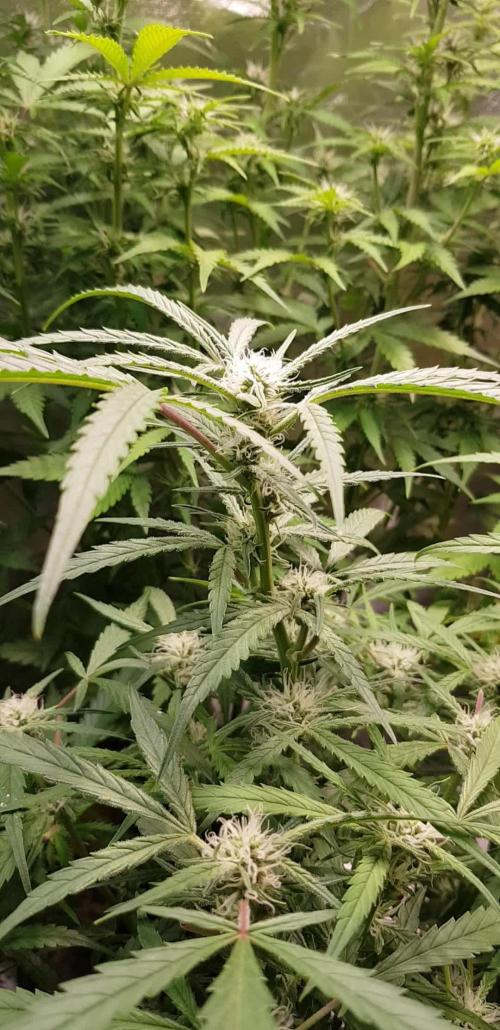
Welcome to Flower Week 3-4 of Divine Seeds Auto Fractal
I'm excited to share my grow journey with you all as part of the Divine Seeds Autoflowering Competition 2025. It's going to be an incredible ride, full of learning, growing, and connecting with fellow growers from all around the world!
For this competition, I’ve chosen the Feminized Automatic strain: Auto Fractal
Here’s what I’m working with:
• 🌱 Tent: 120x60x80
• 🧑🌾 Breeder Company: Divine Seeds
• 💧 Humidity Range: 50
• ⏳ Flowering Time: 60 Days
• Strain Info: 23%THC
• 🌡️ Temperature: 26
• 🍵 Pot Size: 0.5l
• Nutrient Brand: Narcos
• ⚡ Lights : 200W x 2
A huge thank you to Divine Seeds for allowing me to be a part of this amazing competition and Sponsoring the Strains. Big thanks for supporting the grower community worldwide! Your genetics and passion speak for themselves!
I would truly appreciate every bit of feedback, help, questions, or discussions – and of course, your likes and interactions mean the world to me as I try to stand out in this exciting competition!
Let’s grow together – and don’t forget to stop by again to see the latest updates!
Happy growing!
Stay lifted and stay curious!
Peace & Buds!


Likes
44
Share


@ILoVeThiSpLaNt
Follow
Day 35 bloom
Non so più quale pianta è in cima alle mie preferenze. Sono spaziali tutte. Forse quella con una marcia in meno è la Baker Delight ma ovviamente me lo aspettavo 😀
Rainbow Belts 🌈
lime/zkittlez/uva/og
Pink Gasoline #1 crema/zkittlez/pesca
Pink Gasoline #2 crema/gas
Barbara'Pie #1-#2 /frutta(ancora da capire)/gomma da masticare
Barbara'Pie #3 menta/spezie
Baker Delight frutta(ancora da capire) /crema
A settimana prossima e grazie dei commenti e dei Like 🙏 😊


Likes
8
Share

@Growfather1
Follow
Hello everyone,
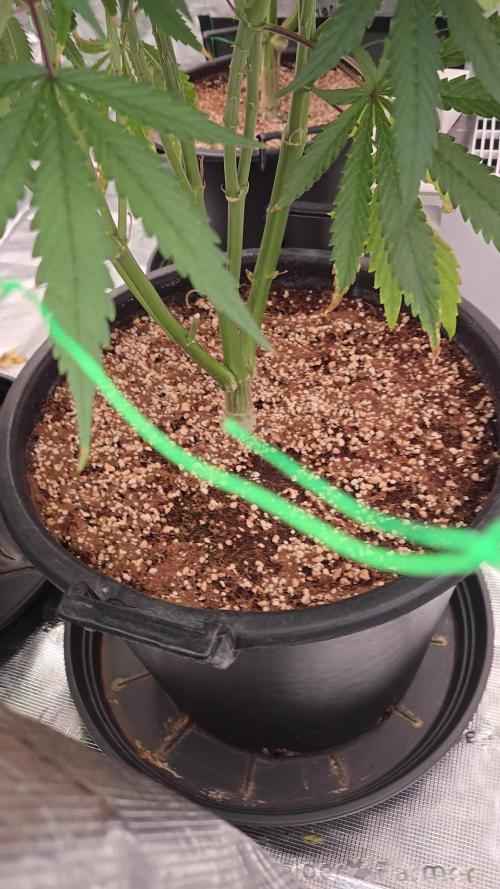
Another week has passed and the three ladies are doing well, the water runoff is under 850 ppm.
The plants are drinking more after watering 5 liters i don't get the 10% runoff so of tomorrow i will raise it to 6 liters per plant each day.
Next week i will raise pk13/14 to 0.5ml per liter now i am giving the ladies 0.25ml per liter.
Thanks for stopping by and have a nice week.


Likes
9
Share


@OrihimeDelta
Follow
Nothing notable this week. The ladybugs continue to have a grand time. LST is continuing well, and it’s looking nice and bushy!

Likes
32
Share


@FlynnRyder
Follow
ugh just hate myself right now lol. I feel like it would have done AMAZING had I flipped sooner and SCROG way better. I was timid and had a lot of personal obligations preventing me from staying in the garden as much as I would have liked. Its a grower! and stretches so much in early flower. Stay on top of her but I think she may make some amazing bud based on what I did have drying recently. I wish I didnt mess up the timing but I just couldnt have the second wave be held up by these mistakes and felt it best to let it go

Likes
15
Share

@India_Calcoen
Follow
09-09-2025
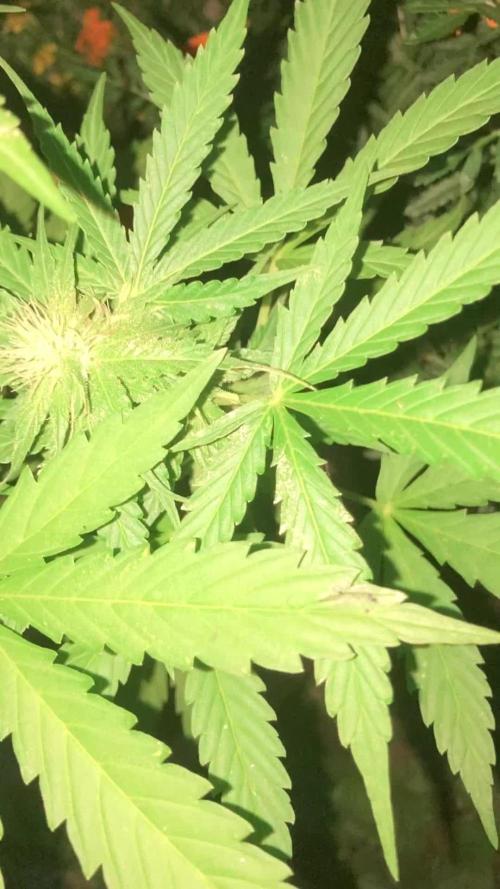
Yesterday evening I noticed some bright yellow spots on the leaves of my White Widow. I didn’t know what it was. Today I saw that the spots turned brown. I tried to wipe it off, but I couldn’t. I think this is downy mildew. I moved the plant to the garage. The garage is quite dry and has a better humidity level than the greenhouse. I hope this will not spread. I don’t know what to do about it…
Likes
11
Share

@DmbTexasRanger
Follow
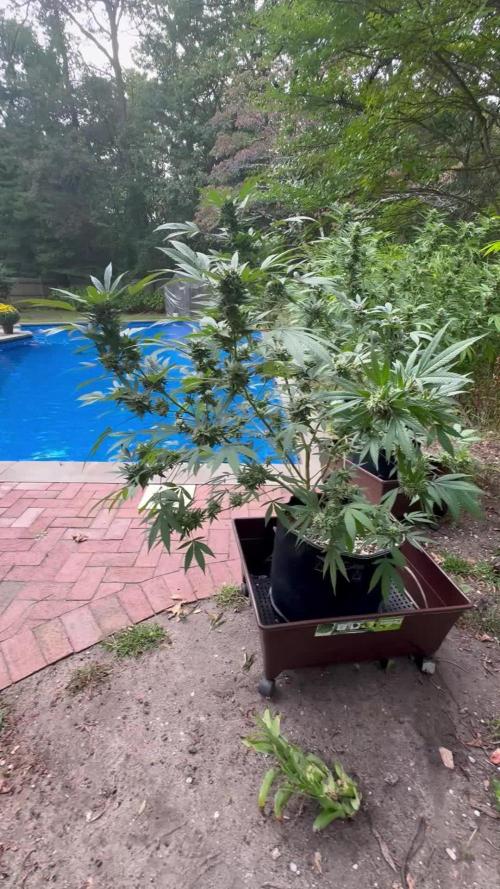
Doesn’t smell great doesn’t look great. Outdoors better than indoors

Likes
105
Share


@PEAKYPLANTERS
Follow
Respect for all of you, brother farmers! masters and beginners! thank you again for gathering on the pages of my diaries! we carry out our work with dedication and live on ambition!
This will be the last week of feeding before moving on to rinsing the roots in the soil
One of the girls is developing artichokes on the tops... nothing but gems😉😄😋💕

Likes
2
Share


@PalmaGrow
Follow
Hermosa floración mucha resina
Defoliación para permitir mejor ingreso de luz
25 - 31 agosto
