




Likes
2
Share


@AestheticGenetix
Follow
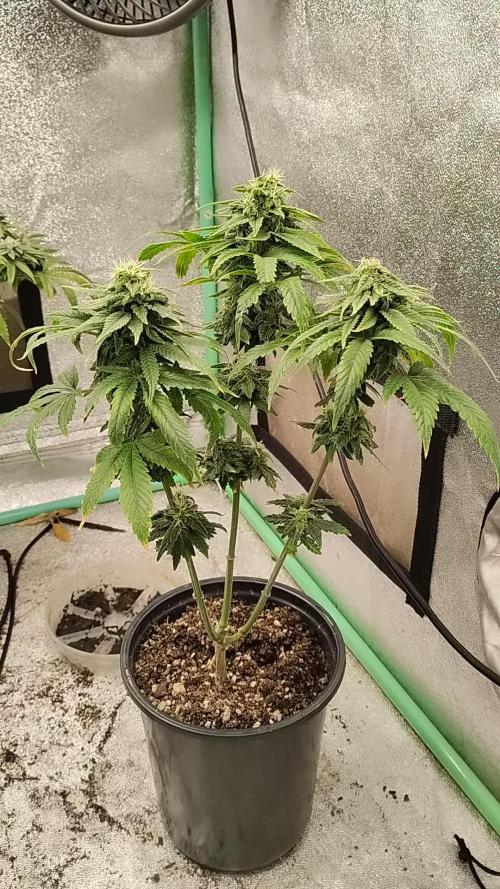
7/5/25 plant is stretching. Not sure if its preflowering or just being outside in a bigger pot. Im just going to let her grow naturally and see how it turns out. I may end up with just one diary of each strain at the moment. But im also not sure whether im going to be doing indoor or outdoor based on personal circumstances.

Likes
2
Share

@phenohunterx
Follow
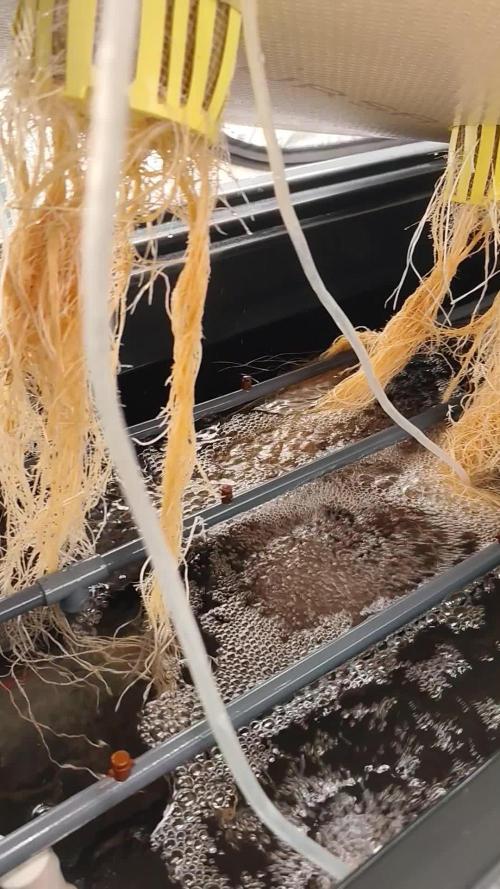
Vegi Tag 23/35 vor letzter Rasur danach erst wieder in der Blüte 3te Woche...
Dank des tollen Wetters gab es H2O Temperaturen von 26 Grad zwar nur kurz aber ansonsten war ich auch bei 22-24 Grad hoffe der Sommer ist jetzt durch...
Zur Sicherheit läuft die Sauerstoffpumpe Voll und es gab jeden Tag eine ordentliche Dosis H2O2
Wurzeln sehen OK aus auch wenn der weiße Schein raus ist Wurzel und wachsen sie feucht fröhlich
Vegi Tag 24 Tank Wechsel um die in den letzten Tagen zu warme NL auszutauschen besser 1x mehr als 1x zu wenig dran wären sie erst in 4 Tagen ....


Likes
16
Share


Likes
5
Share


@Gassynugsgrow
Follow
I think I chopped them too fast. They should be able to bloom for another week.
But I don't have a drying room. Therefore, it must be cut and dried together with other strains.
Likes
13
Share


Likes
11
Share


@Master_weeda
Follow
Bonjour à tous les padawans et maîtres jedis
Jour 25 pratique du main-lining (tutorial video) et arrosage avec 2 litres d'eau ph6.3 à laquelle j'ajoute 4ml de rootboster cellmax et 3ml de cellmax bio 8-2-2 par litre d'eau
Likes
10
Share


@Diegobike
Follow
Esta semana ha Sido súper buena para mí planta cada vez se ven más pistilos y la resina y su olor no dejan nada de que hablar. Simplemente son innumerables los terpenos que tiene esta planta a metros puedo olerla. Últimamente todos los días llueve con gran intensidad gracias a tanta humedad algunos cogollos presentaron botritis pero pude calmarla quitando los cogollos afectados y aplicándoles un poco de agua oxigenada. En resumen va de locos ya quiero probarla

Likes
14
Share


@Peeman
Follow
Dealing with very strong winds this week. Also morning temperatures are below 15°C causing quite a bit of morning dew. Clear tarps are a big help as long as the strong wind doesn’t blow it away ha ha


Likes
17
Share


@CanadianFillmore
Follow
Howdy growfessors 👽, chopped down two LSD, what a great strain! One of these two ladies performed way better than the other and I'm excited to see just how much more weight and bud she packed on.
Thanks for stopping by growfessors 👽🌳💚
July 11 update, one LSD plant 92 grams, the second plant 95 grams, 187 total. Plants have a great fruity, berry taste and great heady high.


Processing
Likes
1
Share


Likes
8
Share


Likes
19
Share


@420DeepGrow
Follow
Gracias al equipo de Royal Queen Seeds, Marshydro, XpertNutrients y Trolmaster, sin ellos esto no seria posible.
💐🍁 Gelato #44:
Los criadores de Tyson 2.0 criaron Gelato 44 a partir de cepas finas. Al cruzar la Sunset Sherbet y la Thin Mint Girl Scout Cookies, crearon un híbrido de dominancia índica que asesta fuertes golpes en el cuerpo y la cabeza.
Su contenido de THC del 22% crea sinergia con terpenos colocantes para ablandar los músculos
Mantenla hidratada y con una dieta constante y pasará por la fase de floración en unas ocho semanas. Las plantas de interior alcanzan una altura máxima de 120 cm y producen 400-450 g/m², mientras que sus homólogas de exterior alcanzan los 180 cm y producen hasta 600 g por planta.
🚀 Consigue aqui tus semillas:
https://www.royalqueenseeds.es/rqs-semillas-cannabis-tyson/664-dynamite-diesel.html
💡TS-3000 + TS-1000: se usaran dos de las lámparas de la serie TS de Marshydro, para cubrir todas las necesidades de las plantas durante el ciclo de cultivo, uso las dos lámparas en floracion para llegar a toda la carpa de 1.50 x 1.50 x 1.80.
https://marshydro.eu/products/mars-hydro-ts-3000-led-grow-light/
🏠 : Marshydro 1.50 x 1.50 x 1.80, carpa 100% estanca con ventanas laterales para llegar a todos los lugares durante el grow
https://marshydro.eu/products/diy-150x150x200cm-grow-tent-kit
🌬️💨 Marshydro 6inch + filtro carbon para evitar olores indeseables.
https://marshydro.eu/products/ifresh-smart-6inch-filter-kits/
💻 Trolmaster Tent-X TCS-1 como controlador de luz, optimiza tu cultivo con la última tecnología del mercado, desde donde puedes controlar todos los parametros.
https://www.trolmaster.com/Products/Details/TCS-1
🍣🍦🌴 Xpert Nutrients es una empresa especializada en la producción y comercialización de fertilizantes líquidos y tierras, que garantizan excelentes cosechas y un crecimiento activo para sus plantas durante todas las fases de cultivo.
Consigue aqui tus Nutrientes:
https://xpertnutrients.com/es/shop/

Likes
11
Share


@Growing420Dreams
Follow
A principios de semana se aplico poda apical en las 6 plantas y ayer defoliación.


Likes
7
Share


@GYOweed
Follow
Doing nicely. Light green strain probably sativa genetics.
Clone sexing and possible fem pollen donor.


Likes
2
Share


@DogDoctorOfficial
Follow
💙 8×8 Adventure – Week 14 🌿
Blueberry Muffin – Pheno A
❤️ Seeing Red Before Bed — Beautiful Flowers, Slow Motion, and a Little Light Science
Welcome back to another chapter of the 8×8 Adventure! 🌱💚
And our little Blueberry Muffin is still doing her thing.
Beautifully.
Slowly.
And, apparently, in absolutely no hurry whatsoever.
😂💙
Seriously, girl...
Could we perhaps pick up the pace a little?
Just a little?
No?
Okay. Fair enough. 😂
The funny thing is that while she may be slow as fuck compared with some of the other girls in this room, I really cannot complain about what I'm seeing.
The colours are beautiful.
The flower structures are beautiful.
The overall development is beautiful.
And she's still evolving.
That's the important part.
We're not seeing a plant that has simply stopped doing anything. We're seeing a plant that continues to develop, but follows a much slower timeline than many of her neighbours.
And it's not just Pheno A.
Both Blueberry Muffin sisters are taking their sweet time compared with much of the 8×8 Adventure.
Same room.
Same general environment.
Same lighting ecosystem.
Same overall nutritional approach.
Yet these girls are clearly following their own clock.
😂💙🌸
So, this week, we're not making dramatic changes.
Actually, we're not changing anything at all in the general setup.
We're continuing to observe, document, and let the plants do their thing.
But we do have something interesting to talk about today:
❤️ Red light at the end of the lighting period.
And, because I love understanding what happens behind the scenes, we'll also have a quick look at the science behind the Emerson effect.
Let's get into it!
────────────────────────
💙 STILL SMALL, STILL BEAUTIFUL, STILL MOVING
Blueberry Muffin Pheno A continues to look beautiful.
And that's what I want to focus on this week.
Not her height.
Not how quickly she's progressing compared with the others.
Not whether she should already be somewhere else in her flowering journey.
Let's look at the actual plant.
The colours.
The flowers.
The structure.
The details.
Because there's plenty to appreciate.
Her flowers continue developing, and the overall structure is looking lovely. There's a visual character to this girl that I really enjoy, and the photographs help show it much better than simply looking at her from across the room.
She's compact.
She's taking her time.
But she's still giving us something beautiful to follow.
💙🌸✨
And honestly, that's what these diaries are about.
We're documenting the plant we have in front of us, not the plant we imagined we'd have when we started.
────────────────────────
🐢 THE BLUEBERRY MUFFIN SISTERS ARE IN SLOW MOTION
Let's be honest for a moment.
😂
These two girls are slow.
Not just a little slower.
Compared with much of the room, they're moving in their own time zone.
While some of the other plants seem to be racing through their flowering development, the Blueberry Muffins are taking the scenic route.
And yet, both are still evolving.
That's an important distinction.
Slow development doesn't automatically mean something is wrong. Different genetics and phenotypes can follow different timelines, and the environment being shared doesn't make every plant develop at the same speed.
That's one of the things this project keeps reminding me.
We can create a shared environment, provide consistent care, and observe the differences.
But we cannot expect every plant to read the same calendar.
😂💙
The Blueberry Muffin sisters clearly didn't get that memo.
And that's fine.
We're watching their actual development rather than trying to force them to match the faster plants.
────────────────────────
🌸 THE COLOURS AND FLOWER STRUCTURE ARE BEAUTIFUL
This is where I really want to give her the spotlight.
Because when I look at this girl, the first things that catch my attention are the colours and the flower formation.
There's something very satisfying about seeing a plant continue to develop while maintaining such a beautiful overall appearance.
The flowers have their own character.
The structure is interesting.
And the photographs capture little details that can easily be overlooked when you're checking the room quickly.
📸💙
This is also why I like keeping individual phenotype diaries.
If we only looked at the room as a whole, it would be easy to focus on the biggest plants or the fastest-moving ones.
But that would mean missing some of the interesting details happening elsewhere.
Blueberry Muffin might not be winning any speed competitions.
😂
But she's still worth looking at.
She's still worth photographing.
And she's absolutely worth documenting.
────────────────────────
🌱 SAME ROOM, SAME CARE, DIFFERENT CLOCK
The 8×8 Adventure continues to demonstrate one of its central ideas.
Different plants can respond differently even when they're sharing the same general growing environment.
We're not creating a separate room or an entirely different program for every phenotype.
We're observing individual plants within a shared setup.
The Blueberry Muffin sisters are a good example of why that matters.
They are moving more slowly than many of their neighbours, but they're still developing.
That difference is part of the story.
And rather than treating it as something that must be corrected, I'm interested in documenting it.
The plants don't have to be identical to make the experiment interesting.
In fact, the differences are precisely what make it interesting.
💙🌿
────────────────────────
💡 THE LIGHTING SETUP — NOTHING NEW THIS WEEK
We're keeping the lighting setup unchanged.
The Future of Grow Black Series LEDs remain the main lighting system in the room, with the two additional Black Series 600W fixtures still contributing to the upgraded setup.
After adding those fixtures, we reduced the output to approximately 59% from the plug rather than simply running everything at maximum.
Our working reference remains around:
☀️ Approximately 1,500 PPFD across the upper canopy.
Actual intensity varies with plant height and position, of course.
And Blueberry Muffin Pheno A continues to share this lighting environment with the rest of the room.
No special lighting arrangement just for her.
No dramatic changes because she's slower.
The setup remains the same, and we're continuing to observe how each plant develops within it.
A huge thank you to Future of Grow for supplying the additional fixtures and giving us the opportunity to explore the capabilities of this lighting setup. 💡🙏
────────────────────────
❤️ RED LIGHT BEFORE BED — A NEW LITTLE DETAIL
Now let's talk about the red lights.
One of the things we're doing at the end of the lighting period is giving the room an additional 15 minutes of red light after the main lighting period.
The idea is to explore how this end-of-day lighting treatment fits into the lighting routine.
And because this is a topic that often gets discussed in growing communities, I want to separate what we know about plant light responses from what we might hope to achieve with a particular setup.
🌱 Plants don't simply experience light as bright or dark.
They respond to different wavelengths, and those wavelengths can influence different physiological processes.
Red and far-red light are particularly relevant to the way plants perceive their light environment and regulate responses associated with the day-night cycle.
But there's an important distinction here:
**Red light and far-red light are not the same thing.**
A red LED treatment isn't automatically equivalent to a far-red treatment, and the exact response depends on the wavelengths involved, the intensity, the duration, and the plant's condition.
So, for our 15-minute red-light finish, I'm treating it as an additional part of the lighting routine that we're exploring, rather than claiming it will automatically produce a specific result.
❤️💡🌱
────────────────────────
🔬 QUICK SCIENCE BREAK — WHAT IS THE EMERSON EFFECT?
Time for a little science!
😂🔬
The Emerson effect comes from research into photosynthesis.
In simplified terms, researchers found that when plants were illuminated with certain combinations of red light and far-red light, photosynthetic activity could be greater than expected from the effects of the two wavelengths used separately.
This helped scientists understand that photosynthesis involves two cooperating photosystems:
🌿 Photosystem II (PSII)
🌿 Photosystem I (PSI)
These systems work together in the photosynthetic electron transport chain.
The classic Emerson enhancement effect is associated with the complementary contribution of different wavelengths to the two photosystems, particularly when red and far-red light are combined under the appropriate conditions.
In other words, the wavelengths can complement each other.
That's the interesting part.
But here's where I want to be careful.
The Emerson effect is **not simply another name for giving plants 15 minutes of red light after the main lights switch off**.
And it doesn't automatically mean that a short red-light treatment at the end of the day will increase growth, improve flower development, or make a plant finish faster.
Those outcomes depend on the actual light spectrum, intensity, timing, and plant response.
The classic effect concerns photosynthetic activity under particular illumination conditions. An end-of-day treatment is a different lighting scenario, and we shouldn't assume the same result without evidence.
So, yes, the science is fascinating.
But we shouldn't stretch the explanation further than the evidence allows.
🔬💡🌱
────────────────────────
❤️ SO, WHAT ARE WE TRYING TO ACHIEVE WITH THOSE 15 MINUTES?
For this run, we're adding a short red-light period after the main lighting period.
The important thing is to be precise about what we're saying.
Red light can influence plant photoreceptors, including phytochromes, which participate in sensing the light environment.
However, the effect of a red-light treatment depends on its spectrum and timing, and red light alone does not guarantee that the plants will interpret the treatment as a signal to enter darkness or "go to sleep."
The transition into the dark period involves a broader set of plant responses.
So I like the idea of exploring an additional end-of-day lighting treatment, but I'm not going to claim that those 15 minutes automatically improve the plants' sleep, boost yields, or trigger the Emerson effect.
That's not how good experimentation works.
We try something.
We understand what it is intended to do.
We keep track of the setup.
And we avoid turning a plausible explanation into a guaranteed result.
💚🔬
That's how I prefer to approach new ideas in the grow room.
Curiosity first.
Evidence always.
And no magic claims.
😂🌱
────────────────────────
🌙 THE LIGHTS GO OUT — AND THE PLANTS CONTINUE THEIR RHYTHM
The plants' dark period remains an important part of the overall lighting cycle.
For our 12/12 setup, the main light schedule continues unchanged.
The additional 15 minutes of red light is a separate finishing period after the main lighting period, not a reason to assume that the plant's normal night-time responses can be reduced to one simple switch.
Plants have internal rhythms and respond to changes in their light environment.
The spectrum matters.
The timing matters.
And the conditions surrounding the treatment matter.
That's why I want to document what we're doing accurately rather than simply repeating something we've heard.
We're experimenting with the lighting routine.
We're observing the plants.
And we're keeping the rest of the setup stable.
That gives us a much clearer picture of the overall run than changing multiple variables at once.
────────────────────────
🌿 SAME NUTRITIONAL PROGRAM — NO CHANGES
And on the nutritional side?
Nothing new this week.
We're keeping the current program unchanged rather than making adjustments simply because the Blueberry Muffin sisters are progressing more slowly than the others.
The current recipe remains:
🌱 Plagron Pure Zym — 1 ml/L
⚗️ Plagron pH Plus — 0.03 ml/L
🍋 Plagron Lemon Kick — 0.03 ml/L
🌸 Plagron Terra Bloom — 2 ml/L
🌱 Plagron Power Buds — 1 ml/L
🍯 Plagron Sugar Royal — 1 ml/L
🌿 Plagron Green Sensation — 1 ml/L
We're keeping the nutritional approach consistent with the current room program.
No sudden changes.
No attempts to force a faster timeline.
And no assuming that a slower phenotype necessarily needs a different recipe.
The plants are still developing, and we're continuing to observe their individual responses.
────────────────────────
🌡️ WEEK 14 — ROOM OVERVIEW
🌸 Flowering: Week 14
💡 Main lighting schedule: 12/12
❤️ Additional end-of-day red-light period: 15 minutes
💡 Lighting system: Future of Grow Black Series LEDs
⚡ Fixture output: approximately 59% from the plug following adjustment
☀️ Upper-canopy PPFD reference: approximately 1,500
🌱 Pot size: 15 L
The overall room setup remains unchanged this week.
We're keeping the environment and general care consistent while observing the differences between the plants.
────────────────────────
😂 THE GROWER IS NOT TRYING TO MAKE HER WIN A RACE
I think this deserves its own section.
Because sometimes it's tempting to look at a slower plant and start wondering what we should change.
Should we do something different?
Should we push harder?
Should we change the environment?
Should we try to make her catch up?
And sometimes, those questions are absolutely worth investigating.
But not every difference means that something needs fixing.
Blueberry Muffin Pheno A is still developing.
Her flowers are beautiful.
Her colours are beautiful.
And she continues to show us her own rhythm.
So I'm not going to change the whole approach just because she's slower than some of the other girls.
She's not competing against them.
She's not trying to win the 8×8 Olympics.
😂💙
She's simply growing.
And we're letting her do that while continuing to observe what happens.
────────────────────────
📸 THE CAMERA STILL HAS A JOB TO DO
One of my favourite parts of this project is looking back through the photographs.
Because individual images capture moments that can be difficult to appreciate when you're standing in the room.
A particular flower.
A change in structure.
A different colour.
A new detail.
And with the Blueberry Muffin sisters, those comparisons are especially interesting because their progress is slower than much of the room.
That gives us a chance to document their development over time rather than rushing toward a conclusion.
I want to see how their flowers continue to change.
I want to see what their individual structures look like as they progress.
And I want to keep those records so that we can compare the actual journey later.
That's what these diaries are for.
Not just the final result.
The whole story.
💙📸🌱
────────────────────────
💙 FINAL THOUGHTS — SLOW AS FUCK, BEAUTIFUL AS EVER
Week 14.
Blueberry Muffin Pheno A.
And she's still doing her thing.
😂💙
We're not changing the setup this week.
We're not changing the general nutritional approach.
We're not trying to force her to catch up.
The Blueberry Muffin sisters are both moving more slowly than much of the room, but they're still evolving.
And the colours?
Beautiful.
The flower structures?
Beautiful.
The development?
Still happening.
So we're going to keep observing.
We're going to keep documenting.
And we're going to let these girls follow their own timeline.
We've also added that 15-minute end-of-day red-light period to the lighting routine, and we've taken a moment to discuss the science behind red light, far-red light, and the Emerson effect.
Because I enjoy exploring these things.
But I also want to be honest about what they mean.
The Emerson effect is a real photosynthesis phenomenon involving complementary contributions from different wavelengths under suitable conditions.
It isn't proof that a short red-light treatment after the main lighting period will automatically improve the plants' performance.
And that's okay.
We don't need to make extraordinary claims to find the science interesting.
We can experiment.
We can observe.
We can learn.
And we can let the results speak for themselves.
💡🔬🌱
As for our little Blueberry Muffin?
She's still slow as fuck.
😂💙
But she's beautiful.
She's developing.
She's giving us something worth documenting.
And she absolutely deserves her spotlight.
So let's keep watching.
Let's keep learning.
Let's keep appreciating the differences.
And let's give this girl the time she needs to finish writing her story.
💙🌸✨
────────────────────────
🙏 THANK YOU
A huge thank you to Zamnesia for the Blueberry Muffin genetics and for giving us the opportunity to follow these individual phenotypes throughout the 8×8 Adventure. 💙🌸
Thank you to Plagron for supporting the nutritional side of the project. 🌱
A big thank you to Future of Grow for the Black Series lighting and for supplying the additional fixtures that have expanded the lighting capability of the room. 💡🙏
Thank you to LumiFlora for helping illuminate the deeper parts of the canopy.
Thank you to TrolMaster for helping keep the environment stable behind the scenes.
And, of course, thank you to everyone following the journey on GrowDiaries.
Every comment, every question, every observation, and every person taking the time to follow these girls means a lot.
And to Blueberry Muffin Pheno A?
Keep doing your thing, little lady.
Keep evolving.
Keep showing us those beautiful colours and flowers.
Take your time.
We're watching. 💙🌸
Growers Love, my friends, and happy growing! 🌱💚💙
See you next week in the 8×8 jungle...
where the faster girls keep moving,
the Blueberry Muffin sisters continue taking the scenic route,
the red lights get their 15 minutes of fame...
😂❤️
and we keep learning something new along the way.
Let's grow, observe, and let every plant tell her own story. 🌱💚💙