






Likes
139
Share

@GreenHobbit
Follow
🌿 The Hobbit Hole – Woche 11
Woche 11 ist geschafft – und langsam wird es ernst im Hobbit Hole. 🍂
Die drei Damen sind inzwischen deutlich in der späten Blüte angekommen. Das Wachstum spielt praktisch keine Rolle mehr, stattdessen geht es jetzt nur noch um Reife, Trichome und darum, wie lange das Wetter mir noch erlaubt, sie draußen stehen zu lassen.
Diese Woche habe ich deshalb nicht nur die Pflanzen und Buds fotografiert, sondern mir auch verschiedene Main- und Seitenbuds unter starker Vergrößerung angesehen. Der Unterschied zwischen den drei Pflanzen wird dabei immer deutlicher.
🌿 Cinderella
Cindy lässt sich von den dreien weiterhin am meisten Zeit.
Ihre Blüten sind inzwischen ordentlich mit Harz überzogen und auch die Pistillen verfärben sich zunehmend, insgesamt wirkt sie aber noch etwas weniger weit als ihre beiden Nachbarinnen.
Die Buds haben weiterhin eine eher offene Struktur und sie wirkt insgesamt noch nicht so „fertig“ wie Purple Punch oder Gelato.
Bei ihr sehe ich momentan keinen Grund zur Eile. Wenn das Wetter mitspielt, darf Cinderella noch eine ganze Weile weiterreifen.
💜 Purple Punch
Purple Punch wird optisch immer interessanter.
Zwischen der dicken Trichomschicht kommen inzwischen wunderschöne dunkle bis lilafarbene Kelche zum Vorschein. Gerade in der Sonne sieht das teilweise wirklich spektakulär aus.
Ihre Buds wirken kompakter und deutlich weiter entwickelt als bei Cindy. Gleichzeitig beginnt auch die Pflanze selbst langsam sichtbar in den Herbstmodus zu wechseln.
Noch ist sie für mich nicht die erste Kandidatin für die Schere, aber sie steht inzwischen klar zwischen Cinderella und Gelato.
🍨 Gelato
Gelato bleibt die Spitzenreiterin – zumindest beim Rennen Richtung Ernte.
Sie zeigt inzwischen das deutlichste Fading der drei Pflanzen und ihre Buds sehen zunehmend ausgereift aus. Viele Pistillen sind bereits braun und eingezogen, die Blüten sind angeschwollen und komplett mit Harz überzogen.
Beim Trichom-Check an verschiedenen Main- und Seitenbuds konnte ich neben vielen milchigen Köpfen auch bereits die ersten eindeutig bernsteinfarbenen Trichome finden. 🔬?
Eigentlich könnte man langsam anfangen, über die Ernte nachzudenken.
Aber genau das werde ich noch nicht tun. 😏
Ich habe keinen Zeitdruck und möchte die Gelato bewusst etwas weiter ausreifen lassen. Mein Ziel ist diesmal nicht der möglichst frühe Erntezeitpunkt, sondern eine deutlich schwerere, entspanntere Wirkung.
Solange die Pflanze gesund bleibt und das Wetter es zulässt, bekommt sie deshalb noch Zeit.
🔬 Trichom-Check
Diese Woche habe ich mehrere Buds jeder Pflanze kontrolliert und nicht nur jeweils einen besonders schönen Mainbud. Dadurch bekomme ich hoffentlich ein etwas realistischeres Bild vom Reifezustand der gesamten Pflanzen.
Besonders bei Gelato zeigen sich inzwischen erste Amber-Trichome, während gleichzeitig noch klare Köpfe vorhanden sind. Der Großteil bewegt sich zunehmend Richtung milchig.
Genau diese Entwicklung möchte ich in den kommenden Tagen weiter beobachten.
🌧️ Jetzt entscheidet auch das Wetter
Und damit kommt langsam der schwierigste Teil eines Outdoor-Grows.
Die Pflanzen können noch Zeit gebrauchen – aber das Wetter muss diese Zeit auch erlauben.
Für die kommende Zeit sieht die Vorhersage deutlich unbeständiger aus. Regen, höhere Feuchtigkeit und schlechtere Abtrocknung werden bei den inzwischen reifen und teilweise recht dichten Blüten zunehmend zum Risiko.
Ab jetzt wird deshalb regelmäßig auf verdächtige Stellen kontrolliert.
Ich werde keine Pflanze nur wegen ein paar Regentagen vorschnell umhauen. Aber zusätzliche Reife ist es natürlich auch nicht wert, dafür am Ende einen schönen Bud an Botrytis zu verlieren.
Das Hobbit Hole geht damit langsam in seine spannendste Phase:
Cinderella darf noch reifen.
Purple Punch kommt näher.
Und bei Gelato läuft ab jetzt der Countdown. ⏳🍨
Noch stehen alle drei.
Mal sehen, ob das am Ende von Woche 12 immer noch so ist. 😏🌿

Likes
42
Share


@Ganjagrandaddy
Follow
Day 14 Flowering: hi all. We have had another very happy week growing with these ladies from Zamnesia. The size and shapes that they are now formed into look so like cabbages with nice thick , green and bushy branching in all of the pots now. Training has been a battle with them pulling the legs overnight and needing re staking further out to keep them flatter. The canopy itself is forming up nice now with the strongest tips being the ones hitting the top now. Once stretch has done, I will be defoliating to feed the lowers that are dying to get involved with the thick supporting secondary branches everywhere.
All 3 of the Amnesia haze are thick leaved, monster fanned and chunky stemmed beasts. I am glad I trained them lower as the growth could have easily become a concern in heights for sure. The huge cabbages that have been created now are perfect for a strip out soon to get light to the stems as much as possible
#1 Amnesia haze f.i.m girl is by far the thickest Bush. She does have a really nice crown on her too with some serious side growth fighting out of the shadows and creating their own mini plants it seems. It will be good to get to what is her actual contenders as she is so thick with growth , it is hard to tell how many mains will be joining the fun.
#2 Is also a great size to work with and will produce some nice yield
#3 is a similar size to #1 and has been easy to work with too they have been lifting the pegs easily as they grow each day now so I will be using wire soon to secure them for the final push.
Both of the Girl scouts cookies are very productive with growing tips. #1 is a slightly different pheno i think and has a slight darker green to her too. Growing in a nice thicket so far but has been pegged along the way too. Her sister #2 is totally different in her structure with an absolute flurry of bud sites dude to the training out of her throughout. She is like a mini manifold of sorts with all that usual popcorn rubbish being able to share more light. I dont expect huge colas with this and from her general limb thickness but i think she will be filled with decent medium sized nugs. They do both need a defol soon to really give all the nodes a chance go shine. I am planning to do some this week and the last bits at around 21 f. All told they are really looking like a great yield already so with a little more training before I let them get on with it , could be the best run yet !!
UPDATE######
Day 15 and i did a defol today. This will allow all those growing tips to find the light. Next few days will be interesting as they recover and get busy.

Likes
4
Share


@Leroybrown
Follow
Well they have germinated now I know some look abit leggy but will pot up in solo cups probably next week. Only give water ATM not even ph

Likes
59
Share


@Rap_a_cap
Follow
Dramatic weather here, 2 violent storms have hitted my tent without mayor damages. I've bought a high density polyethylene film from farmer supplier, God blessed for this choice. Strong. But I've made a great mistake on Thursday because I was very busy cropping and curing Royal Gorilla that I've forget to water the sisters. I've watered them on Friday just before I started putting up the tent and the storm started with 90% humidity. It has become a tropical greenhouse, so to avoid mold disasters I drilled some side holes and raised the lower edge. Fortunately, on Saturday my little ones managed to dry themselves well thanks to a little sun and a dry wind. I've learned the lesson. Now that weather is a little bit better but colder I've realised that my plants now love to live under a greenhouse, flowering is accelerating.
This plant does its own thing, she started flowering very late but is now doing it very quickly. Return my hatred for her with huge frosty buds and gorgeous colors. She has boundless vigor, I don't think it's possible to burn her with fertilizers. It is not a reliable plant for flowering times but if you have extra space in the garden it is the classic plant that can give surprises. It is difficult to describe the scent, very different from what one smells in general, not pineapple but tropical, herbaceous, sweet. Hope to harvest within 15 days. Very difficult to estimate the yeld because is a huge, tall and very leafy plant. After sister's crop she will gain much more room and light.
P. S. Need some help from you guys to trim my Royal Gorilla, need to smoke less, that shit has no respect! 😁😎


Likes
9
Share


@High_Grade_Dadli
Follow
Harvested the second plant she was really ready while trimming up came across 2 seed just about to pop out their sac....the condition stress cause the 2 gen to be created should be female seeds just have to wait and see......the purple paralysis is jus coming into flowing so she have another 7-8weeks
Processing
Likes
2
Share


@TheHonestGrower
Follow
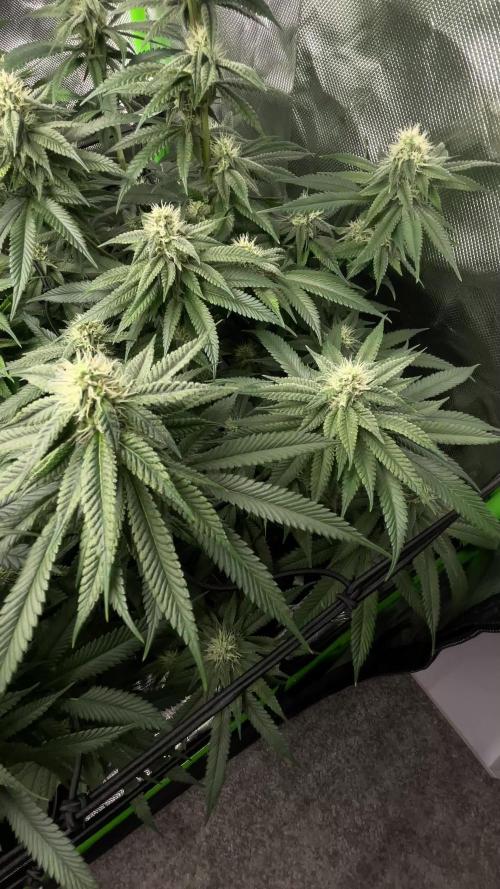
so people are going to ask ? where's the buds well I'm 3 days into drying and soon as everything is dyed I will share the details of everything but long story short..... I wanted to see if I could push my skills, by doing newbie outdoor mistakes like mold, heat and cold issues, pests, animals, nute problems and limiting myself to a budget of £50 for the plant so I could prove you dont need a fancy set up to get good grade cannabis. all it takes is skill, time and love for the plant. bare in mind I stay in Scotland where the misconception is you can't grow cannabis out here at all. well that's wrong I've had lemon haze grow outdoors fine that was a meter and a half tall. and this peyote reached 50cm max until I had to cut the main stem as I was having growth issues with the main stem holding the plant back. but tune in next week when is dried,smoked a little and then after that cured. I know this community is one of the friendliest I have met but I just don't want people making assumptions biased on 1 plant I've posted.


Likes
27
Share


@ClydeGrows
Follow
Bonus material- my cannabutter pics. No smoke report for a while but I can give you an edibles report in a few hours 😂
Plant #1 suffered gravely and thus was harvested early, dried, and turned into beaaautiful butter/edibles hehe. The rest of it is box drying and I'll be doing the same with that. The top of the plant (first harvest of sorts, after bud rot discovered) was 49g dry, not inc ofc what was binned. I'll let you know the dry weight of the rest but no point giving you a smoke report. She was cut early and suffered a looooot
The purple lemonade began as the underdog and quickly took over as my #1 babe. It was far more resilient to environmental conditions and changes- and let's not forget that they went through a hurricane with me and power out for a few days! I don't find her strong on the nose at all despite how big some of her buds are, and how frosty. Very piney, and that dominates everything else. Very excited to see what terps come out more in the cure though- I hear great things about this strain. She was cut today and is hanging in a dark closet with small fan, RH 65% and temp 22c. I did not take a wet weight, but she's heavy. Super looking forward to smoking this one, after a few more weeks of TLC... Sigh. Always we try to wait haha. I will report back when I have more for you all. Thanks to everyone that answered my questions and supported me through my first grow. I've definitely got the bug now and there'll be no stopping me haha
Will be back with smoke report and dry weights laterrr
🇨🇦
---
Nov 12 - Plant dried for 6 days. It is a lot airier than I thought it was going to be, so most of it ended up as shake for edibles or something. I ended up with 38g of big bud, 33 of smaller, and over 40g of larf and shake. Even the big buds are airy though, not dense at all. A little disappointing for sure, but I made a lot of mistakes so it isn't a surprise. It is now in jars with humidity packs and I'll report back in a couple of weeks or so with a smoke report :)

Likes
6
Share


@ellioschka
Follow
Den Trauben Ball Mädels geht es sichtlich gut. Das Topping haben sie gut weggesteckt, und seit drei Tagen werden sie im Bondage Style auf 25 cm Netzhöhe gehalten. Unter der Oberfläche wird fleißig weitergebaut. Das Wurzelgeflecht wächst stetig und hat inzwischen den Topfboden erreicht. Die Wurzeln nehmen langsam die Farbe der Nährlösung an, einige zeigen leicht braune Spitzen.😶
Insgesamt sind die Mädels etwas wenig im Saft. Das macht sie zwar gut flechtbar, bremst aber den Wuchs. Deshalb wurden die Bewässerungszeiten angepasst, tagsüber gibt es 5 Sekunden alle 45 Minuten und nachts 5 Sekunden alle 75 Minuten.
Sobald das Netz zugewachsen ist, wird geflippt und es geht ab in die Blüte. Zeit wird’s ... 😉


Likes
7
Share


@Chucky324
Follow
Hello. This is the end of week 9 and the beginning of week 10 of veg.
Quite week for the plants and us. It's above freezing now, but it's one storm after another here.
The plants are dong well and I'll turn over to flowering next week. I'll make clones at that time.
I'm after the best plant so I'll whittle the 14 plants down to 1 or 2 plants when I'm done.
But I have to take 3 clones of each to be sure I get 1 to regrow when it's done. So I'll be doing that this week.
My next trim/prune will be before the 3 week of flowering, before the resin starts to flow.
Through this veg I've been giving a full feeding and then just watering and then a full feeding and then just watering.... You get the idea...
I let the pots dry and hopefully water/feed before I get any wilting.
We've started a new Freak Bros. book. Comic Book #10 Published in 1987. It's the 3rd in the trilogy.
You'll find the first 2 comic books in the story in other diaries. Have a look around in my other diaries and you'll find them.
OK. Have fun out there.
Chuck
Likes
71
Share


@MarcXL
Follow
At harvest day I just cut off the stem and let them dry hanging over as complete plant and will trim them afterwards. Smell is killing me, whole house is smelling like haze. Had a lot of work to separate the roots off the soil.
Likes
8
Share


@Rinna
Follow
She's doing amazing. Leaving for holiday in a week, so hoping my roommate will be able to take care of it. Was hoping she'd finish before I left for holiday but it doesn't seem like that's happening... She's smelling amazing, a bit kushy and pretty sweet. Looking very icy too.

Likes
15
Share


@valiotoro
Follow
Hello everyone😎
Week 6 of flower for the LCC🍋🍒🍪
All the top buds harvested✂️
I had a lot of fun growing this strain🤩
The smell is absolutely out of this world…the colors…💜
I have 3 different pheno,all purple,some smells more citrus and the others more ripe cherries!
One more week for the lower buds and finito I already feel nostalgic😜
*what’s coming out of the yuzu is essentials oil,every year I make Yuzucello feel free to ask me the recipe🍸🍋
Likes
33
Share


@nerdz
Follow
Chopped and I'll hang them in the he dry tent and keep it around 60rh/17c for as long as I can. 🤑
Update: got the tent at 15c/61rh and wow the buds have a different type of firmness than before. I can't wait...
So far my best grow of the 3


Likes
6
Share


@HolisticCultivators
Follow
New home for the girls. In the tent with the light and fan going ! Just wanted to give you a heads up.... found a couple of spider mites on them this morning.... not sure if that came from your place or from mine. But take a close look at yours and lmk if you notice any damage/irregularities @gbagrow
The homie is popping like bacon on a Sunday morning. This is part of the game unfortunately, glad we are identifying issues early and eliminating them.
Likes
17
Share


@420DeepGrow
Follow
Gracias al equipo de FastBuds y XpertNutrients sin ellos esto no sería posible
💐🍁 Ztrawberriez:
Ganadora de la AAC 2024, con hasta un 25 % de THC, la Ztrawberriez Auto surge del cruce de dos variedades californianas conocidas por sus extraordinarios perfiles de terpenos y su potencia. Esta variedad no solo produce hasta 600 g/m² de hermosos cogollos duros como rocas en 9-10 semanas, sino que también llevará a tus papilas gustativas en un viaje en montaña rusa por toda la gama de terpenos dulces y afrutados
🚀 Consigue aqui tus semillas:
https://2fast4buds.com/es/seeds/ztrawberriez-auto#description
⛽ XpertNutrients: es una empresa especializada en la producción y comercialización de fertilizantes líquidos 🍶y sustratos🐛, que garantizan los mejores resultados y cosechas de la más alta calidad. A través de una cuidadosa selección de materias primas y un proceso de producción avanzado, sus productos son sinónimo de resultados confiables.
🛒 Consigue aqui tus fertilizantes:
https://xpertnutrients.com/es/sobre-nosotros/#:~:text=Xpert%20Nutrients%20es%20una%20empresa,de%20la%20m%C3%A1s%20alta%20calidad.
Gracias al equipo de FastBuds y XpertNutrients sin ellos esto no sería posible
📆 Semana 7:
Por fin se ha acabado este temporal maldito y se pueden apreciar unas lindas preflores. Ahora espero que crezca algo mas y se hagan unos buenos cogollos resinosos.
Todo va bien hasta ahora 😊
Likes
46
Share


@MrJones
Follow
OSS Sherbet Moonrocks
🔹⊱╮🔹╰⊰🔹 GROW Started 03.10.24 INFORMATION 🔹╰⊰´🔹⊱╮🔹
🌞Environment - Maintaining 80F and 65%Humidity
🌾Training - Nothing this week just letting the seedlings veg out.
⚱️2-Gallon 📊6.2 PH
💧 Feeding - Using Horti Grow 8-11-21, Bloom 5-15-26, Late Bloom 0-24-26, Cal 12-0-0
🌞Medic Grow Smart 8 760 Watts
🕷️ IPM - CannControl from Mammoth and Mosquito Bits as needed
🔹⊱╮🔹╰⊰🔹 PLANT UPDATES 🔹╰⊰´🔹⊱╮🔹
📝 Notes - These girls have completely transformed into their new buckets and have started to drink up, increasing the amount of fertigation, (Nutrients and H20), and defoliation to expose the lower growth.
🗓️03.29.24 Maintaining Temps and Humidity - Plants are Looking Great!
🗓️03.30.24 Today fed with Hort-Grow @ 3.3 GRMS Per Gal, and Horti-Cal @ 2.5 GRMS Per Gal. I defoliated the plants to water them better and the middle growth could get more light and develop.
🗓️03.31.24 Maintaining Temps and Humidity
🗓️04.01.24 Today fed with Hort-Grow @ 3.3 GRMS Per Gal, and Horti-Cal @ 2.5 GRMS Per Gal. Check out the amazing growth and recovery after the defoliation!
🗓️04.02.24 Maintaining Temps and Humidity, watching these ladies are just nailing the veg phase.
🗓️04.03.24 Today fed with Hort-Grow @ 3.3 GRMS Per Gal, and Horti-Cal @ 2.5 GRMS Per Gal
🗓️04.04.24 Maintaining Temps and Humidity, closing out week 2 of veg and these ladies will need to be defoliated again, this new nutrient line from Greenpnaet is killing it, and so easy to use!
╰⊰🔹╰⊰´🔹⊱╮🔹╰⊰🔹╰⊰🔹STRAIN INFORMATION🔹⊱╮🔹╰⊰🔹╰⊰🔹╰⊰🔹⊱╮
Introducing our latest powerhouse Sherbet Moonrocks one of our strongest weed strains to date setting a new bar for potency and effect. A combination of US genetics Sherbet Cake and Purple Moonbow create this potent sedative with THC levels, above 30% that will take you to celestial bliss.
An exquisite terpene profile offers a tempting treat of sensational fruity tastes, flavors, and aromas that will seduce your mind and body and take you to a serene place of pure tranquillity. Ocimene, Caryophyllene, and Limonene are the predominant terpenes they produce a wonderful array of sugary berry fruit flavours with floral hints and spicy undertone.
Growing these feminized seeds is effortless and straightforward regardless of your growing skills and at harvest time you will be generously rewarded. Plants will mature to a manageable height with a flowering period of 65 - 70 days and will develop thick dense buds glossed in thick layers of THC resin crystals packed with indica power that will lure into a deep relaxation. Expect an indoor yield of 600 - 700 gr m2 and outdoor production of over 1 kilo per plant.
Indulge yourself, add Sherbet Moonrocks to your shopping cart today, and explore the outer spheres!
