The Grow Awards 2026 🏆
Likes
Comments
Share
@Eauderay
Follow
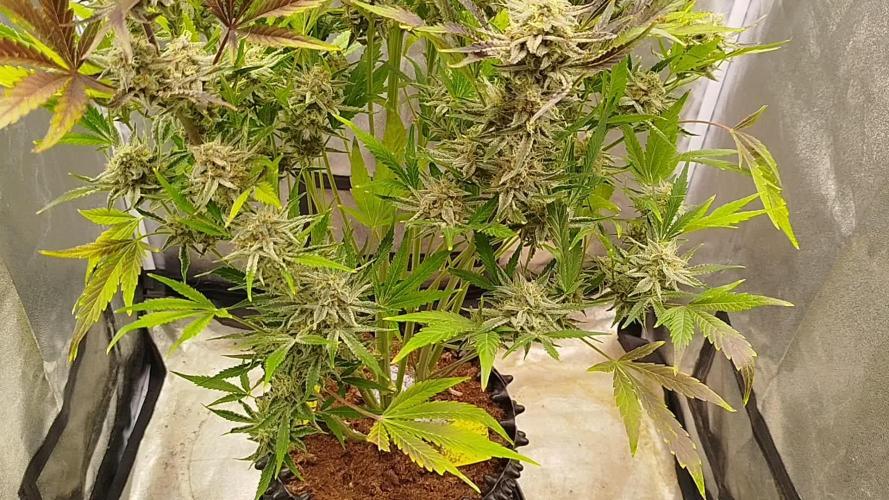
This week I have changed the 400w HPS lights for a 240w Leds, and I have seen great improvements for the rust burn that used to plague me for quite some times seems to have stopped and repair to the parts still viable started, now I know it was due to hight intensity and heat for 12h on those fan leaves that turned them dry and eventually burned them... I still have to watch out because those Leds are powerful and loaded with Deep red, IR and UV! They are at 45 cm the closest and 70cm the furthest no bleaching is seen so far, I am keeping a close eye on those leaves tip and if I see bleaching to those I higher up the lights for a while... I feel like I am dancing around those marvelous plants, sometimes pulling the lights or dimming them, tucking those fan leaves shadowing lower growth whenever I feel they need a break or a hand! Trying to be a cannabis whisperer lol Added 2 tablespoons of fish blood and bones to top layer with worm castings and bat guano a handful. Lots of spiky hair on one and the other those are curly. They look almost the same, lots of trichomes, at least 16% covered and smell kushy and flowery, very nice. Let's hope the leaves do not get worse and the repair continues, not to forget to offer a prayer to Marie Jane so all goes well! ☺️🌹❤️
Likes
9
Share
Took some clones 1 week before flipping to flower but forgot to take pictures. The video of the clones are from oct 1st. The Turnt smelled like chocolate cover strawberries but now are smelling of garlic and pepper with a bit of undertone of strawyberries. The Diesel smelled like lemon pinesol but now smells of citrus mixed with gas. The Banana Clipz smells of berries mixed with skunk. Paradiso smells of citrus mixed with fruit. Lung Buster smelled lightly sweet at first but now smells like berries mixed with a undertone of garlic,funk, and gas . Spilt Paint smells of berries mixed with diesel and funk.
Likes
25
Share
ANTHOCYANIN production is primarily controlled by the Cryptochrome (CR1) Photoreceptor ( !! UV and Blue Spectrums are primary drivers in the production of the pigment that replaces chlorophyll, isn't that awesome! 1. Diverse photoreceptors in plants Many civilizations, including the sun god of ancient Egypt, thought that the blessings of sunlight were the source of life. In fact, the survival of all life, including humans, is supported by the photosynthesis of plants that capture solar energy. Plants that perform photosynthesis have no means of transportation except for some algae. Therefore, it is necessary to monitor various changes in the external environment and respond appropriately to the place to survive. Among various environmental information, light is especially important information for plants that perform photosynthesis. In the process of evolution, plants acquired phytochrome, which mainly receives light in the red light region, and multiple blue light receptors, including his hytropin and phototropin, in order to sense the light environment. .. In addition to these, an ultraviolet light receptor named UVR8 was recently discovered. The latest image of the molecular structure and function of these various plant photoreceptors (Fig. 1), focusing on phytochrome and phototropin. Figure 1 Ultraviolet-visible absorption spectra of phytochrome, cryptochrome, phototropin, and UVR8. The dashed line represents each bioactive absorption spectrum. 2. Phytochrome; red-far red photoreversible molecular switch What is phytochrome? Phytochrome is a photochromic photoreceptor, and has two absorption types, a red light absorption type Pr (absorption maximum wavelength of about 665 nm) and a far-red light absorption type Pfr (730 nm). Reversible light conversion between the two by red light and far-red light, respectively(Fig. 1A, solid line and broken line). In general, Pfr is the active form that causes a physiological response. With some exceptions, phytochrome can be said to function as a photoreversible molecular switch. The background of the discovery is as follows. There are some types of plants that require light for germination (light seed germination). From that study, it was found that germination was induced by red light, the effect was inhibited by subsequent far-red light irradiation, and this could be repeated, and the existence of photoreceptors that reversibly photoconvert was predicted. In 1959, its existence was confirmed by the absorption spectrum measurement of the yellow sprout tissue, and it was named phytochrome. Why does the plant have a sensor to distinguish between such red light and far-red light? There is no big difference between the red and far-red light regions in the open-field spectrum of sunlight, but the proportion of red light is greatly reduced due to the absorption of chloroplasts in the shade of plants. Similar changes in light quality occur in the evening sunlight. Plants perceive this difference in light quality as the ratio of Pr and Pfr, recognize the light environment, and respond to it. Subsequent studies have revealed that it is responsible for various photomorphogenic reactions such as photoperiodic flowering induction, shade repellent, and deyellowing (greening). Furthermore, with the introduction of the model plant Arabidopsis thaliana (At) and the development of molecular biological analysis methods, research has progressed dramatically, and his five types of phytochromes (phyA-E) are present in Arabidopsis thaliana. all right. With the progress of the genome project, Fi’s tochrome-like photoreceptors were found in cyanobacteria, a photosynthetic prokaryotes other than plants. Furthermore, in non-photosynthetic bacteria, a homologue molecule called bacteriophytochrome photoreceptor (BphP) was found in Pseudomonas aeruginosa (Pa) and radiation-resistant bacteria (Deinococcus radiodurans, Dr). Domain structure of phytochrome molecule Phytochrome molecule can be roughly divided into N-terminal side and C-terminal side region. PAS (Per / Arndt / Sim: blue), GAF (cGMP phosphodiesterase / adenylyl cyclase / FhlA: green), PHY (phyto-chrome: purple) 3 in the N-terminal region of plant phytochrome (Fig. 2A) There are two domains and an N-terminal extension region (NTE: dark blue), and phytochromobilin (PΦB), which is one of the ring-opening tetrapyrroles, is thioether-bonded to the system stored in GAF as a chromophore. ing. PAS is a domain involved in the interaction between signal transduction-related proteins, and PHY is a phytochrome-specific domain. There are two PASs and her histidine kinase-related (HKR) domain (red) in the C-terminal region, but the histidine essential for kinase activity is not conserved. 3. Phototropin; photosynthetic efficiency optimized blue light receptor What is phototropin? Charles Darwin, who is famous for his theory of evolution, wrote in his book “The power of move-ment in plants” published in 1882 that plants bend toward blue light. Approximately 100 years later, the protein nph1 (nonphoto-tropic hypocotyl 1) encoded by one of the causative genes of Arabidopsis mutants causing phototropic abnormalities was identified as a blue photoreceptor. Later, another isotype npl1 was found and renamed phototropin 1 (phot1) and 2 (phot2), respectively. In addition to phototropism, phototropin is damaged by chloroplast photolocalization (chloroplasts move through the epidermal cells of the leaves and gather on the cell surface under appropriate light intensity for photosynthesis. As a photoreceptor for reactions such as escaping to the side of cells under dangerous strong light) and stomata (reactions that open stomata to optimize the uptake of carbon dioxide, which is the rate-determining process of photosynthetic reactions). It became clear that it worked. In this way, phototropin can be said to be a blue light receptor responsible for optimizing photosynthetic efficiency. Domain structure and LOV photoreaction of phototropin molecule Phototropin molecule has two photoreceptive domains (LOV1 and LOV2) called LOV (Light-Oxygen-Voltage sensing) on the N-terminal side, and serine / on the C-terminal side. It is a protein kinase that forms threonine kinase (STK) (Fig. 4Aa) and whose activity is regulated by light. LOV is one molecule as a chromophore, he binds FMN (flavin mononucleotide) non-covalently. The LOV forms an α/βfold, and the FMN is located on a β-sheet consisting of five antiparallel β-strands (Fig. 4B). The FMN in the ground state LOV shows the absorption spectrum of a typical oxidized flavin protein with a triplet oscillation structure and an absorption maximum wavelength of 450 nm, and is called D450 (Fig. 1C and Fig. 4E). After being excited to the singlet excited state by blue light, the FMN shifts to the triplet excited state (L660t *) due to intersystem crossing, and then the C4 (Fig. 4C) of the isoaroxazine ring of the FMN is conserved in the vicinity. It forms a transient accretionary prism with the tain (red part in Fig. 4B Eα) (S390I). When this cysteine is replaced with alanine (C / A substitution), the addition reaction does not occur. The effect of adduct formation propagates to the protein moiety, causing kinase activation (S390II). After that, the formed cysteine-flavin adduct spontaneously dissociates and returns to the original D450 (Fig. 4E, dark regression reaction). Phototropin kinase activity control mechanism by LOV2 Why does phototropin have two LOVs? Atphot1 was found as a protein that is rapidly autophosphorylated when irradiated with blue light. The effect of the above C / A substitution on this self-phosphorylation reaction and phototropism was investigated, and LOV2 is the main photomolecular switch in both self-phosphorylation and phototropism. It turns out that it functions as. After that, from experiments using artificial substrates, STK has a constitutive activity, LOV2 functions as an inhibitory domain of this activity, and the inhibition is eliminated by photoreaction, while LOV1 is kinase light. It was shown to modify the photosensitivity of the activation reaction. In addition to this, LOV1 was found to act as a dimerization site from the crystal structure and his SAXS. What kind of molecular mechanism does LOV2 use to photoregulate kinase activity? The following two modules play important roles in this intramolecular signal transduction. Figure 4 (A) Domain structure of LOV photoreceptors. a: Phototropin b: Neochrome c: FKF1 family protein d: Aureochrome (B) Crystal structure of auto barley phot1 LOV2. (C) Structure of FMN isoaroxazine ring. (D) Schematic diagram of the functional domain and module of Arabidopsis thaliana phot1. L, A’α, and Jα represent linker, A’α helix, and Jα helix, respectively. (E) LOV photoreaction. (F) Molecular structure model (mesh) of the LOV2-STK sample (black line) containing A’α of phot2 obtained based on SAXS under dark (top) and under bright (bottom). The yellow, red, and green space-filled models represent the crystal structures of LOV2-Jα, protein kinase A N-lobe, and C-robe, respectively, and black represents FMN. See the text for details. 1) Jα. LOV2 C of oat phot1-to α immediately after the terminus Rix (Jα) is present (Fig. 4D), which interacts with the β-sheet (Fig. 4B) that forms the FMN-bound scaffold of LOV2 in the dark, but unfolds and dissociates from the β-sheet with photoreaction. It was shown by NMR that it does. According to the crystal structure of LOV2-Jα, this Jα is located on the back surface of the β sheet and mainly has a hydrophobic interaction. The formation of S390II causes twisting of the isoaroxazine ring and protonation of N5 (Fig. 4C). As a result, the glutamine side chain present on his Iβ strand (Fig. 4B) in the β-sheet rotates to form a hydrogen bond with this protonated N5. Jα interacts with this his Iβ strand, and these changes are thought to cause the unfold-ing of Jα and dissociation from the β-sheet described above. Experiments such as amino acid substitution of Iβ strands revealed that kinases exhibit constitutive activity when this interaction is eliminated, and that Jα plays an important role in photoactivation of kinases. 2) A’α / Aβ gap. Recently, several results have been reported showing the involvement of amino acids near the A’α helix (Fig. 4D) located upstream of the N-terminal of LOV2 in kinase photoactivation. Therefore, he investigated the role of this A’α and its neighboring amino acids in kinase photoactivation, photoreaction, and Jα structural change for Atphot1. The LOV2-STK polypeptide (Fig. 4D, underlined in black) was used as a photocontrollable kinase for kinase activity analysis. As a result, it was found that the photoactivation of the kinase was abolished when amino acid substitution was introduced into the A’α / Aβ gap between A’α and Aβ of the LOV2 core. Interestingly, he had no effect on the structural changes in Jα examined on the peptide map due to the photoreaction of LOV2 or trypsin degradation. Therefore, the A’α / Aβ gap is considered to play an important role in intramolecular signal transduction after Jα. Structural changes detected by SAXS Structural changes of Jα have been detected by various biophysical methods other than NMR, but structural information on samples including up to STK is reported only by his results to his SAXS. Not. The SAXS measurement of the Atphot2 LOV2-STK polypeptide showed that the radius of inertia increased from 32.4 Å to 34.8 Å, and the molecular model (Fig. 4F) obtained by the ab initio modeling software GASBOR is that of LOV2 and STK. It was shown that the N lobes and C lobes lined up in tandem, and the relative position of LOV2 with respect to STK shifted by about 13 Å under light irradiation. The difference in the molecular model between the two is considered to reflect the structural changes that occur in the Jα and A’α / Aβ gaps mentioned above. Two phototropins with different photosensitivity In the phototropic reaction of Arabidopsis Arabidopsis, Arabidopsis responds to a very wide range of light intensities from 10–4 to 102 μmol photon / sec / m2. At that time, phot1 functions as an optical sensor in a wide range from low light to strong light, while phot2 reacts with light stronger than 1 μmol photon / sec / m2. What is the origin of these differences? As is well known, animal photoreceptors have a high photosensitivity due to the abundance of rhodopsin and the presence of biochemical amplification mechanisms. The exact abundance of phot1 and phot2 in vivo is unknown, but interesting results have been obtained in terms of amplification. The light intensity dependence of the photoactivation of the LOV2-STK polypeptide used in the above kinase analysis was investigated. It was found that phot1 was about 10 times more photosensitive than phot2. On the other hand, when the photochemical reactions of both were examined, it was found that the rate of the dark return reaction of phot1 was about 10 times slower than that of phot2. This result indicates that the longer the lifetime of S390II, which is in the kinase-activated state, the higher the photosensitivity of kinase activation. This correlation was further confirmed by extending the lifespan of her S390II with amino acid substitutions. This alone cannot explain the widespread differences in photosensitivity between phot1 and phot2, but it may explain some of them. Furthermore, it is necessary to investigate in detail protein modifications such as phosphorylation and the effects of phot interacting factors on photosensitivity. Other LOV photoreceptors Among fern plants and green algae, phytochrome ɾphotosensory module (PSM) on the N-terminal side and chimera photoreceptor with full-length phototropin on the C-terminal side, neochrome (Fig. There are types with 4Ab). It has been reported that some neochromes play a role in chloroplast photolocalization as a red light receiver. It is considered that fern plants have such a chimera photoreceptor in order to survive in a habitat such as undergrowth in a jungle where only red light reaches. In addition to this, plants have only one LOV domain, and three proteins involved in the degradation of photomorphogenesis-related proteins, FKF1 (Flavin-binding, Kelch repeat, F-box 1, ZTL (ZEITLUPE)), LKP2 ( There are LOV Kelch Protein2) (Fig. 4Ac) and aureochrome (Fig. 4Ad), which has a bZip domain on the N-terminal side of LOV and functions as a gene transcription factor. 4. Cryptochrome and UVR8 Cryptochrome is one of the blue photoreceptors and forms a superfamily with the DNA photoreceptor photolyase. It has FAD (flavin adenine dinucle-otide) as a chromophore and tetrahydrofolic acid, which is a condensing pigment. The ground state of FAD is considered to be the oxidized type, and the radical type (broken line in Fig. 1B) generated by blue light irradiation is considered to be the signaling state. The radical type also absorbs in the green to orange light region, and may widen the wavelength region of the plant morphogenesis reaction spectrum. Cryptochrome uses blue light to control physiological functions similar to phytochrome. It was identified as a photoreceptor from one of the causative genes of UVR8 Arabidopsis thaliana, and the chromophore is absorbed in the UVB region by a Trp triad consisting of three tryptophans (Fig. 1D). It is involved in the biosynthesis of flavonoids and anthocyanins that function as UV scavengers in plants. Conclusion It is thought that plants have acquired various photoreceptors necessary for their survival during a long evolutionary process. The photoreceptors that cover the existing far-red light to UVB mentioned here are considered to be some of them. More and more diverse photoreceptor genes are conserved in cyanobacteria and marine plankton. By examining these, it is thought that the understanding of plant photoreceptors will be further deepened.
Likes
26
Share
23.09.23- и так мы на 85 дне жизни ) Сильных изменений не замечено . Ветки стали немного толще , цветы развиваются , но вверх она не вытягивается . Имхо может и лучше ) 28.09.23- 90 дней жизни ! За последние пару дней она прибавила в росте и зеленой массе . Она очень кустиста и я принял решение провести несколько щадящих дефолиаций с подрезкой пасынков ,чтобы освободить пространство для света и воздуха . В остальном она здорова , а шишки продолжают набирать . Это очень красивое растение
Likes
35
Share
@Rap_a_cap
Follow
This is exactly the 🇲🇦 morroccan 🇲🇦 way of sifting resin from kief. Traditionally, apart the hand rubbing method, dry sifting through a mesh is the most used way to obtain resin, from 🇦🇫 Afghanistan 🇦🇫 or 🇳🇵Nepalese 🇳🇵 Mountains to 🇲🇦 Morocc 🇲🇦 Rif passing through Bekaa valley in 🇱🇧Lebanon 🇱🇧. The average size of meshes used vary from 90 to 180 microns and are mostly made by silk and for this reason uneven. I think the most productive ways to sift are Dry Ice and  rotating pollinator + CO2, I've tried a DIY pollinator built by a friend and it can reach up to 20/25% of resin extracted at 120 microns and 15% at 90 microns. But smell and taste don't reach that traditionally extracted but this is another story. Morroccan way is good compromise between a stashbox or more evolute methods. It requires less than 10 dollar of expenses. You need: a basin or pot  without handles a heavy-duty plastic bag that contains the basin a pair of chopsticks a good 120 microns net an elastic band tape Kif or trim q.s. Here is the link where I buy my meshes. Very high quality, customable size and material (steel or nylon) and length and very kind vendor on AliExpress https://a.aliexpress.com/_uwfQzq Drum for 3 minutes. .....perhaps you will find that you have an innate talent as a drummer, throw the shit away and put your head right......
Likes
4
Share
@iamdiddy
Follow
i cant remowe weeek 3 is wrong ,veg beggins ,tanks ... @Coast grower...
Likes
3
Share
Blütewoche 5 - Einfach wachsen lassen und zusehen Zeitraum; 19. Juni bis 26. Juni Moin Moin, wir sind jetzt in der fünften Blütewoche, also Tag 29 bis 35, und was soll ich sagen: Ich bin einfach wieder nur happy! 😊 Ich habe diese Woche so gut wie gar nichts gemacht und das war auch völlig in Ordnung so. Die Pflanze hat einfach weiter ihr Ding durchgezogen. Die Blüten entwickeln sich prächtig, sie werden dichter, kompakter und fangen langsam an, richtig schön zu glitzern. Die Trichome verteilen sich über die Zuckerblätter und das Harz klebt wie Sau. Wenn ich den Kopf in die Box stecke, kommt mir ein richtig süßlich-fruchtiger Duft entgegen. Richtig lecker! 😍 Viel mehr habe ich auch nicht gemacht. Ich habe meinen Würmern noch etwas Wurmfutter gegönnt und am 35. Blütetag wieder mit 6 Litern Wasser gegossen. Worüber ich mir gerade Gedanken mache… Manche Buds stehen ganz schön nah beieinander. Ich hab ein bisschen die Sorge, dass mit zunehmender Dichte auch das Schimmelrisiko steigen könnte. Deshalb überlege ich, in der kommenden Woche nochmal etwas zu entlauben, damit die Luftzirkulation besser wird. Außerdem würden sich die unteren Buds bestimmt freuen, wenn da wieder ein bisschen mehr Licht und Luft rankommt. 😜 Ich hab natürlich mal wieder viel zu viele Fotos gemacht. Es war echt schwer mich zu entscheiden, welche ich hochlade will 😅 Viel Spaß beim Anschauen! In dem Sinne: Habt ein schönes Wochenende, lasst es euch gutgehen und bis nächste Woche! 🙌
Likes
20
Share
We are in Flush !! Was giving them GH Flora series + rapid start + cal mag
Likes
19
Share
Let’s go Day 85 from seed !! This has been another great week ,ladies are coming close to the finish line an looking so beautiful!! This week we will continue flushing on these 3 ladies an jump em into there 48 hrs of darkness on Friday or Saturday will see ! Let’s have another great week ,, peace love an positive vibes to all y’all Keep them eyes peeled for next weeks update !! Cheers 😶‍🌫️💨💨💨💨💨🤙🏻
Likes
1
Share
OH. MY. GOD. Smells like chocolate, berries, and skunk. I cannot stress the absolute crazy terpene profile on these man. I am STOKED for harvest in about 4 weeks. A very long growing strain but worth the wait! Bought some rock resinator and starting next week will be using it for a couple weeks before flush and harvest!
Likes
18
Share
2/15 - Plants are all looking awesome. Leaves are starting to fade out a little bit. Buds are bulking up and some orange stigmas are starting to show. Also noticing some slight foxtailing in a few of the colas which I believe to be genetics and not stress related. Thinking one more week of nutrients, then a week of flushing, and then we might be ready for harvest.
Processing
Likes
77
Share
Hello world, 🇬🇷 the previous week was training week for Michelle,who was LSTed and for Lucy who was topped...the girls are fine and growing...they also got fed with the Enhancer,which scares me a bit,but everything went well... WEEK 5:"MAGIC PEOPLE,VOODOO PEOPLE" ☠️Day 29...out in the sun with normal temps and no wind...watered with ph 6,4,about 500 ml...I have changed my water pattern with these girls...I used to water every 3 days with 1,5 L but now I do it daily with less water...What I need now is light...I grow with the sun and the last days haven't been too sunny here...now the weather is changing again...come on Sun,give me some light!Meanwhile when it's sunny it's too windy,so windy that I have to put them inside as they will be seriously damaged... ☠️Day 30...I think instead of topping I may have fimmed Lucy...not sure as I have never done fimming before...Now I inderstand why they call it like that...in my case: Fuck,did I miss???🤣🤣🤣...we"ll see...however new shoots are growing well... ☠️Day 31...as I was watching my girls with pride and love,the sunlight revealed hundreds of tiny white bugs jumping on the soil..I mean they are hundreds...I sprayed with vinegar just the top layer of the soil and waiting to see... I made a grow question and I got a very interesting advice from a fellow grower...I sprayed with cinnamon extract...hope it will help... Today I applied LST to Lucy as she is getting very tall and lunky...she's been topped,LSTed and she will be topped again when time comes... ☠️Day 32...windy and rainy outdoors...the girls are inside...Today I adjusted Michelle's LST... ☠️Day 33...the weather is fucked up...one week ago we had 40°C and today it's cold and rainy...summer is not here yet....I realized I Fimmed Lucy instead of topping her as new growth came up on the cut stem...I cut it off again as I can't experiment now,I have never Fimmed before and don't know what to expect... ☠️Day 34...no sunlight for the girls...its very cloudy and may rain again...meanwhile the bugs are vanished...cinnamon and vinegar did their job... ☠️Day 35...finally we have some sun and the girls are outside...they have stayed a bit behind all those days inside without proper light... the week is ending,thank u all for watching..see u next week ☠️
Likes
4
Share
@QixxGrows
Follow
Day15 - Day17: I had some difficulties to get the humidity right. It was either too high or fluctuating too much. I ended up getting a timer for the plug and running the humidifier 15mins every hour. To help with air flow, I have the main duct fan running 4 times a day for an hour. To ensure that there's airflow around the plant, I have a fan in the light as well as a smaller clip-on fan that runs during light hours. I'm not sure how the camera moved on day17... I only watered it mid-day. Day18: The timer on the humidifier and Duct Fan is now keeping the humidity in a good space. VPD now under control Day19: The Vivosun controller perfectly adapted the lighting schedule to an hour earlier, to ensure 6hrs of darkness. UInfortunately the RPi kept it's 04:00 schedule (makes sense). So I captured an hour of darkness. Adapted everything. Will have 18hrs again from Day20 onwards. Day20: In the next days I'll lift the camera higher for a better view of what's happening up top. My mesh-netting-dingsbums will arrive and I'll use this as a platform for the pi+camera. Day21: I'm not sure if I like this angle. I'll only keep it like this until she goes into veg-mode. It at least shows the new nodes growing from different perspective
Likes
4
Share
Que pasa familia, vamos con la segunda semana de floración de estas Tropicana poison F1 de Sweetseeds. Vamos al lío , las 3 plantas seleccionadas fueron trasplantadas a su maceta definitiva, ya superaron el shock por el trasplante, estas semanas las paremos todas a floración. El ph se controla en 6.2 , la temperatura la tenemos entre 20/22 grados y la humedad ronda el 50%. El ciclo de floración 12h de luz, el foco está al 100% de potencia. Las jodidas estiraron demasiado, veremos como acaban, no me gustan tan altas. Hasta aquí todo, Buenos humos 💨💨💨
Likes
11
Share
Trim done Monday 20th tent was getting a big overgrown plants are still a bit stressed not drinking. Sprayed with bud buddy tuesday 21st Buds are starting to pack on some more mass now
Likes
3
Share
Likes
40
Share
Buongiorno amici! I draghi di coccinella stanno mutando🐞🐞 e la piccola BRUCE LEMON DIESEL AUTO di SUPER SATIVA SEED CLUB sta buttando fuori dei bei fiorellini! Ha un bel tronco pricipale robusto ed un profumo già intenso🚗