


Likes
Comments
Share


@Grindlife219
Follow
Had a few problems this week I lowered my lights some and turned them up and stressed a few plants some and broke one main stem off my plant doing lst


Likes
5
Share


@Scrumie
Follow
She is getting more and more dense everyday, still only week 2 of flower and she is already looking amazing. A lil stretchy but that could turn into some desert colas. Started with some BioBizz top Max. Watering every 2 days now.
really hope she continues to grow and put on some dense colas.
will update with pics and a video towards the end of week 5 which is day 35.
All days are from true leaves. add about 3 days from start of germ
This is first grow and was wondering how she is looking/also look at the shorter and more dense skittles auto on the right in the video above.
Im using my cupboard which has white walls thankfully. Also using a full spectrum LED quantum board 240W, is pumping at full power about 50 cm from top cola
First grow going well
Appreciate any tips with going into full flower and would like to dense up these babies.
Much love
Happy days!
They both doing really great!
feeding every 2 days, about 800/900ml of water (PH between 5.9-6.0) per watering
Bud sights are getting more and more dense, still only about 16 days since first pistols showed. They both still have another 4/6 weeks left. Getting really excited to see how they turn out.
Both starting to smell, very sweat yet pepper smell, can't really put a flavour to smell yet.
Happy days




Likes
6
Share


@KambleFrost
Follow
Stacking up like crazy! These girls are super short and super thick.
Insanely strong smell and if you even brush up against a bud site you will absolutely STINK

Processing
Likes
56
Share


@autoseedsman
Follow
So week 8 has gone by like the others nice and easy although I cant help but think that she is well behind where she should be, on the packet it says 11 weeks to harvest but I cant see her packing on enough bud in 3 weeks to be ready for the chop... im in no rush to chop her down but cant help feel a bit anxious that I have gone wrong somewhere...
She is now sharing a tent with some GSC so a new diary will be going up for that in the coming week or so...
Thanks for popping by again guys and girls
Stay safe out there and Happy growing all...
Likes
10
Share


@GrowerGaz
Follow
Hair been watering and now it's harvest time. Two of the three phenos are super frosty #1 and #2 both more kushy , sweet gassy american OG taste. The third is a lot sweeter. The Mac x pp is blackberry x shoreline aroma.
Likes
8
Share


@SkunkyDog420
Follow
Hallo zusammen 🤙. Habe heute das letzte mal gedüngt ab Tag 78 nur noch Wasser 2 Wochen lang.
Likes
38
Share


@GODSGIFT_2005_JM
Follow
For LIQUIDS & NUTES ******GREEN BUZZ NUTRIENTS***** organic.
Also i’m using their LIVING SOIL CULTURE in powder form!
MARSHYDRO ⛺️ has large openings on the sides which is useful for mid section groom room work. 🤩
☀️ MARSHYDRO FC 3000 LED 300W
💨MARSHYDRO 6” in-line EXTRACTOR with speed-variation knob, comes complete with ducting and carbon filter.


Likes
422
Share


@Crashoverite
Follow
Hi all 🧑🌾
Welcome to my 🍌💜👊 week update.
Hope everyone keeping well and having a great week😁
Thank you so much for so much support on this bananas ride 🙏💜💚💜💚
Everything still going pretty well. Girls are developing and stretching like crazy. Athena currently Dec 14 90cm and main stem of Xena is not far of this height either. Unfortunately noticed first signs of calcium deficiency(my opinion) on Athena. Thankfully started feeding both girls with calmag weeks back but the dosage wasn't not enough for Athena. Started small treatment very next day on Dec 11 (see description below) I belive got my baby back on right track.
Week 9
Dec 11-17
Dec 11
Watering was planned for Tuesday but due to calcium deficiency decided for a little treatment. Watered both girls with mixture of reduced content of growth nutes by 50% calmag at 1.2 ml per ltr. Reduced solution PH to 6.2 as apperently it's ideal for calcium consumption. Over period 4h I have watered Athena with 5ltr with couple runoffs. Xena 3ltr. Total of 7-10 leaves affected mainly at top colas close to the light.
Dec 12-13
Purely observation and all looking well. Of course all affected leaves will progres of showing signs but good news is that growth and development booming and don't see any new leaves with symptoms.
Very nice trichomes development in recent days and more and more colours.
Dec 14
Second watering for this week 6.5l Increased calmag to 1.4ml per ltr and if still things will be looking well reduce to 1 or 1.2 on next feeding.
Dec 15
Very nice respond on yesterday feeding. They definitely fatten over night and getting more and more frosty. Will need to remove some foliage soon as getting extremely bushy again.
Dec 17
Xenas main stem top cola almost touched the light today. Tied her to left side of the cabinet, applied selective defoliation on both girls, tied few branches to netting and on the end of this busy day a third watering for this week. 7 ltrs beetwen both. Runoffs Xena PH6.4 Athena 6.3.
Very nice week have to say. I belive that calcium deficiency on Athena is no longer a case here and both girls developing very nicely. Both are still stretching, buds are gaining in size and both girls started exploding with trichomes,
Thank you all again for such amazing support 🙏peace and love brothers and sisters ✌️💚💜💚💜💚
Stay tuned for new week update 😉🧑🌾✌️💚
Likes
64
Share


@Cheeba_Inu
Follow
April 24, day 35, the plant continues to widen with the LST I am performing, and has nice healthy growth. Lots of branching, but the early stages of the flowering stretch is opening the plant up a little.
I switched from a transition nutrient profile to an early blooming profile, as there are a few pistils popping out here and there on the plant. My guess is that there will be another week or so of growth/stretch so I am hoping to get the plant significantly larger.
April 25, day 36, I raised the light by 5 inches. I should have realized earlier but I was chronically running the light a little too close this run which likely contributed to the stocky tight growth. I figured that if my brightness was not exceeding sunlight and I was not noticing leaf issues it would be fine. However, measuring the ppfd at a 15 inch hang height showed readings of 750+ at the edges and 1000 at the center. This amount is just not helpful for the plants structure even if it is growing vigorously. I raised the lighting to 20 inches which brought the ppfd to 650 at the edges and 850 at the center which is right where I want it. I am not otherwise touching the plant today, but will prune and perform some LST tomorrow.
April 26 Day 37, just letting it grow.
April 27 Day 38, did some training and pruning of the growth. The Euforia's transition to flowering has been slow, but the growth and vigour of the plant has stayed strong so at least it's giving me the time to fill up the tent. It's taking up just shy of 4sqft of growing space, so by the time time the flowering stretch finishes I am hoping to have growth close to all corners of the tent. So far I have been successful keeping the growth low, as this tent is very tight in its height.
April 29, day 40, just letting it grow.
April 30, day 41, switched watering to 3x daily 20 second intervals. The leaf tips are not showing any signs of burn, so so far so good. Took a few leaves off to expose the preflowers as needed.

Likes
59
Share


@JeyGanesha
Follow
Ho portato le mie piccole amiche che mi ripuliranno la mia terapia .forza belle coccinelle 🐞 mie mangiate tutti. Ragni e uova... gnam gnam gnam 😋🤤

Likes
10
Share


@4F1M6
Follow
Buds are already getting nice and dense. Thick coat of trichomes is already glistening. Flower production has been very on point! Very hardy colas flying off these girls. Very excited for this one.
I reduced the nitrogen dose again. I also stopped giving them vigorous. Its a pure bloom mix now as these ladies are booming with flowers. Until next update. Happy growing and stay lit fam.

Likes
2
Share

@pareto
Follow
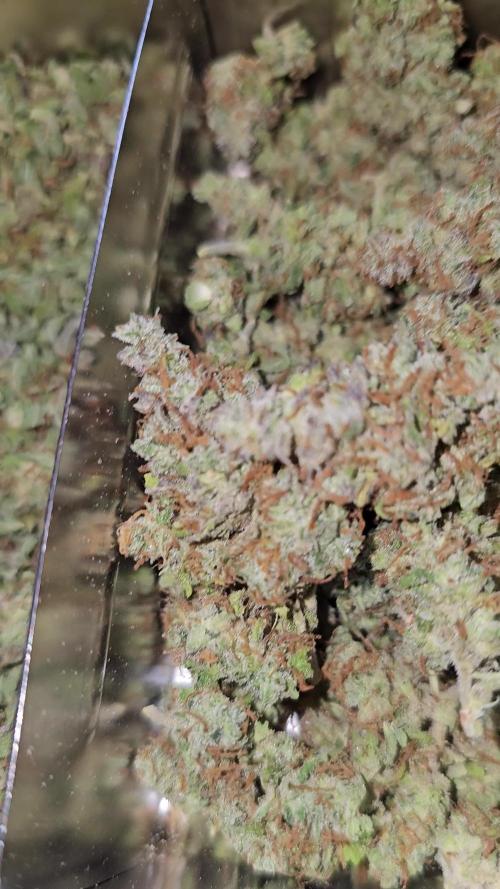
The summer was super wet and humid so she lost 2 of the big buds to mold.
Other than that she did great! really big, vigorous and heavy, dense buds. All arround winner. Really looking forward to the seeds.
These plants are not mine. I am just documenting them.
Total Runtime: 81 days
--------------------------------------------------------------------------------------------------------------------------------------------------------------------------------
Set up cost (fixed costs)
-Lamp: 40€
-Timer: 3,5€
-Pot: 4€
-Total fixed costs: 47,5€
Given 5 years (or 15 grows) usage time translates to around 3,17€ per grow in materials.
Variable costs:
-Seeds: 13,17€
-Soil: 6,00€
-Fertilizer: 3,50€
-Power: 21,00€
-Total variable costs: 43,67€
-Total costs per grow: 46,84€



Likes
23
Share


@SonomaSungrown
Follow
3/14 Transplanted pineapple meatball babies into 1 gallon pots filled with Down to Earth Potting Mix.
(I found out a few weeks later that this soil SUCKS for cannabis due to horrible drainage)
Plants are sitting under my Spider Farmer SF-1000 in a grow tent.


Likes
69
Share

@GreenHobbit
Follow
Woche 14 – Urlaub? Die Buddha kennt das Wort nicht. 🌴🌿
Eigentlich sollte diese Woche ganz entspannt werden. Koffer gepackt, 10 Tage Türkei, Sonne, Meer und abschalten. Zumindest für mich. Meine Laughing Buddha hatte da allerdings ganz andere Pläne. 😄
Bevor es losging, bekam sie noch einmal 8 Liter Wasser, der 40-Liter-Topf wurde zuvor noch mit frischer Erde aufgefüllt und anschließend hieß es: “Bis in zehn Tagen.”
Zum Glück hängt inzwischen eine Kamera im Growroom. So kann ich jeden Tag kurz nach dem Rechten sehen. Es ist schon verrückt, wie beruhigend so eine kleine Kamera sein kann, wenn man hunderte Kilometer entfernt am Pool sitzt. 😅
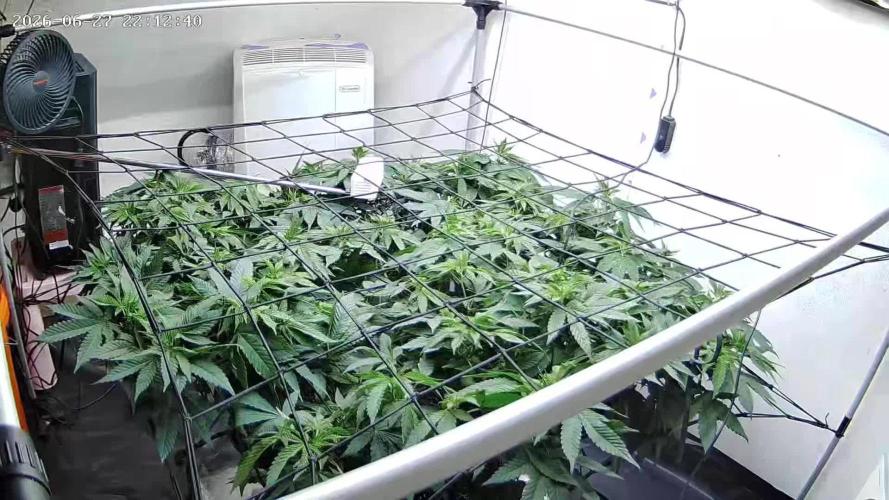
Da ich diese Woche natürlich keine Fotos machen konnte, gibt es diesmal einen kleinen Zeitraffer der Hobbit-Cam, damit ihr trotzdem verfolgen könnt, wie sich die Lady in meiner Abwesenheit entwickelt. 📹🌿
⸻
Das zweite Netz erwacht zum Leben
Eigentlich hatte ich gehofft, dass die Triebe während meines Urlaubs langsam bis zum zweiten Netz wachsen.
Die Buddha hatte offenbar andere Vorstellungen.
Schon wenige Tage nach meiner Abreise schoben sich die ersten Spitzen durch das obere Netz. Mit jedem weiteren Tag kamen neue dazu.
Genau so hatte ich mir das vorgestellt.
Ich wollte vor dem Urlaub bewusst nicht noch einmal trainieren oder auslichten. Die Pflanze sollte einfach wachsen dürfen – ohne zusätzlichen Stress.
Im Nachhinein war das genau die richtige Entscheidung.
Die Triebe entwickeln sich gleichmäßig, die Höhe bleibt erstaunlich homogen und die Fläche wird immer geschlossener. Genau diese gleichmäßige Krone wird mir nach dem Urlaub das Verteilen im zweiten Netz deutlich erleichtern.
⸻
Grow aus der Ferne
Es fühlt sich immer noch etwas ungewohnt an, einen Grow komplett aus der Ferne zu begleiten.
Normalerweise stehe ich täglich im Growroom, kontrolliere jede Spitze und freue mich über jeden Zentimeter Wachstum. Dieses Mal bleibt mir nur der Blick auf die Kamera – und genau das macht dieses Update irgendwie besonders.
Umso schöner ist es zu sehen, dass die Buddha ihren eigenen Plan verfolgt und offensichtlich bestens zurechtkommt.
⸻
Wie geht es weiter?
Noch ein paar Tage Urlaub.
Bis dahin heißt es für die Buddha nur eines:
Wachsen.
Nach meiner Rückkehr wartet dann der wahrscheinlich spannendste Abschnitt der gesamten Vegetationsphase:
* alle Triebe sauber im zweiten Netz verteilen,
* unterhalb gründlich auslichten,
* der Pflanze ein paar Tage Erholung gönnen
* und anschließend endlich den Wechsel in die Blüte einleiten.
Ich habe das Gefühl, dass sich die vielen kleinen Entscheidungen der letzten Wochen langsam auszahlen.
Und wenn ich die Entwicklung über die Kamera sehe, freue ich mich jetzt schon darauf, die Tür zum Growroom wieder zu öffnen.
Ich glaube, die Laughing Buddha nutzt meinen Urlaub mindestens genauso gut wie ich. 🍀🌿


Likes
9
Share


@HollowSource
Follow
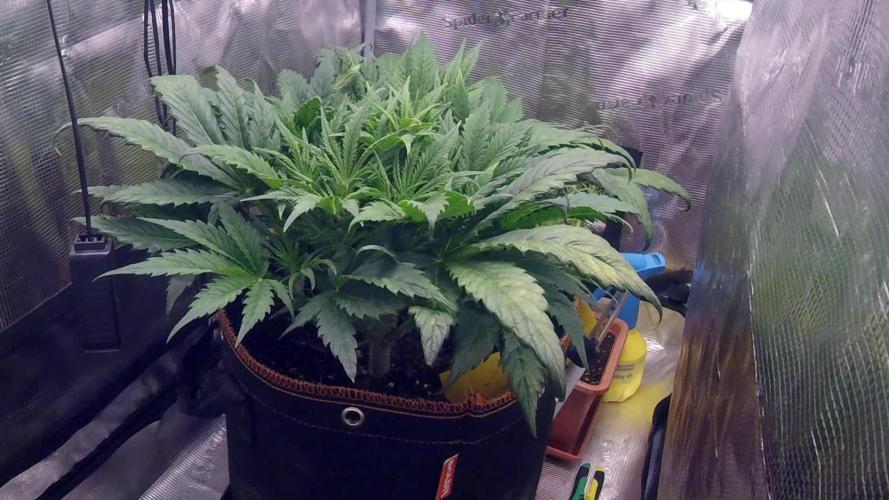
This girl has such a unique smell, like nothing I've smelled before. I can't wait to smoke her. She is coming along nicely, fattening up and started to ripen. I can see her colours changing. Not long till harvest now! Thanks for stopping by!


